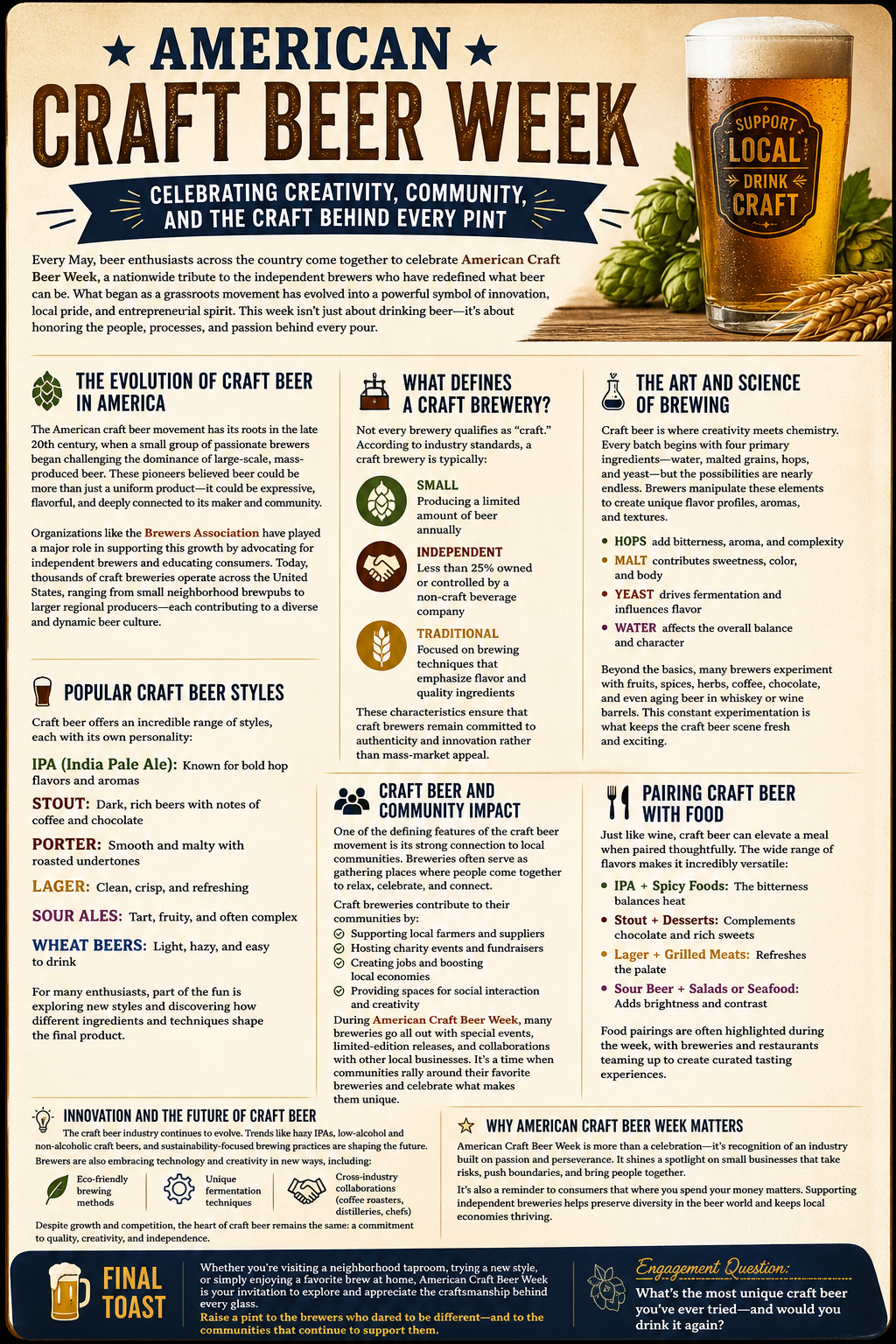
Every May, beer enthusiasts across the country come together to celebrate American Craft Beer Week, a nationwide tribute to the independent brewers who have redefined what beer can be. What began as a grassroots movement has evolved into a powerful symbol of innovation, local pride, and entrepreneurial spirit. This week isn’t just about drinking beer—it’s about honoring the people, processes, and passion behind every pour.
🍺 The Evolution of Craft Beer in America
The American craft beer movement has its roots in the late 20th century, when a small group of passionate brewers began challenging the dominance of large-scale, mass-produced beer. These pioneers believed beer could be more than just a uniform product—it could be expressive, flavorful, and deeply connected to its maker and community.
Organizations like the Brewers Association have played a major role in supporting this growth by advocating for independent brewers and educating consumers. Today, thousands of craft breweries operate across the United States, ranging from small neighborhood brewpubs to larger regional producers—each contributing to a diverse and dynamic beer culture.
🍻 What Defines a Craft Brewery?
Not every brewery qualifies as “craft.” According to industry standards, a craft brewery is typically:
Small: Producing a limited amount of beer annually
Independent: Less than 25% owned or controlled by a non-craft beverage company
Traditional: Focused on brewing techniques that emphasize flavor and quality ingredients
These characteristics ensure that craft brewers remain committed to authenticity and innovation rather than mass-market appeal.
🍺 The Art and Science of Brewing
Craft beer is where creativity meets chemistry. Every batch begins with four primary ingredients—water, malted grains, hops, and yeast—but the possibilities are nearly endless. Brewers manipulate these elements to create unique flavor profiles, aromas, and textures.
Hops add bitterness, aroma, and complexity
Malt contributes sweetness, color, and body
Yeast drives fermentation and influences flavor
Water affects the overall balance and character
Beyond the basics, many brewers experiment with fruits, spices, herbs, coffee, chocolate, and even aging beer in whiskey or wine barrels. This constant experimentation is what keeps the craft beer scene fresh and exciting.
🍻 Popular Craft Beer Styles
Craft beer offers an incredible range of styles, each with its own personality:
IPA (India Pale Ale): Known for bold hop flavors and aromas
Stout: Dark, rich beers with notes of coffee and chocolate
Porter: Smooth and malty with roasted undertones
Lager: Clean, crisp, and refreshing
Sour Ales: Tart, fruity, and often complex
Wheat Beers: Light, hazy, and easy to drink
For many enthusiasts, part of the fun is exploring new styles and discovering how different ingredients and techniques shape the final product.
🌎 Craft Beer and Community Impact
One of the defining features of the craft beer movement is its strong connection to local communities. Breweries often serve as gathering places where people come together to relax, celebrate, and connect.
Craft breweries contribute to their communities by:
Supporting local farmers and suppliers
Hosting charity events and fundraisers
Creating jobs and boosting local economies
Providing spaces for social interaction and creativity
During American Craft Beer Week, many breweries go all out with special events, limited-edition releases, and collaborations with other local businesses. It’s a time when communities rally around their favorite breweries and celebrate what makes them unique.
🍺 Pairing Craft Beer with Food
Just like wine, craft beer can elevate a meal when paired thoughtfully. The wide range of flavors makes it incredibly versatile:
IPA + Spicy Foods: The bitterness balances heat
Stout + Desserts: Complements chocolate and rich sweets
Lager + Grilled Meats: Refreshes the palate
Sour Beer + Salads or Seafood: Adds brightness and contrast
Food pairings are often highlighted during the week, with breweries and restaurants teaming up to create curated tasting experiences.
🍻 Innovation and the Future of Craft Beer
The craft beer industry continues to evolve. Trends like hazy IPAs, low-alcohol and non-alcoholic craft beers, and sustainability-focused brewing practices are shaping the future.
Brewers are also embracing technology and creativity in new ways, including:
Eco-friendly brewing methods
Unique fermentation techniques
Cross-industry collaborations (coffee roasters, distilleries, chefs)
Despite growth and competition, the heart of craft beer remains the same: a commitment to quality, creativity, and independence.
🍺 Why American Craft Beer Week Matters
American Craft Beer Week is more than a celebration—it’s recognition of an industry built on passion and perseverance. It shines a spotlight on small businesses that take risks, push boundaries, and bring people together.
It’s also a reminder to consumers that where you spend your money matters. Supporting independent breweries helps preserve diversity in the beer world and keeps local economies thriving.
🍻 Final Toast
Whether you’re visiting a neighborhood taproom, trying a new style, or simply enjoying a favorite brew at home, American Craft Beer Week is your invitation to explore and appreciate the craftsmanship behind every glass.
Raise a pint to the brewers who dared to be different—and to the communities that continue to support them.
Leave a Reply