Author: Brett Murphy

  • Drink of the Day: Laffy Taffy

    Drink of the Day: Laffy Taffy

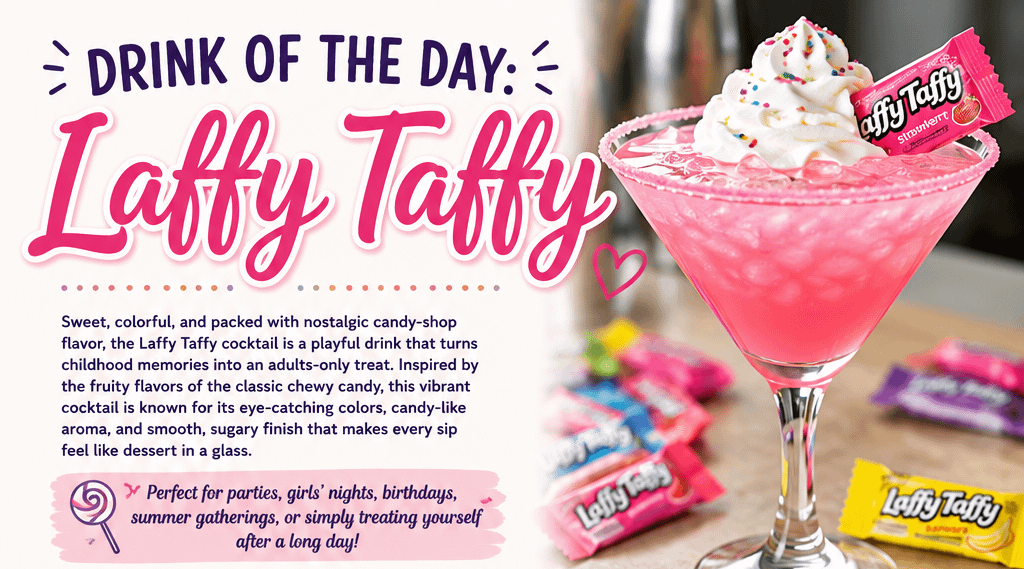
    Sweet, colorful, and packed with nostalgic candy-shop flavor, the Laffy Taffy cocktail is a playful drink that turns childhood memories into an adults-only treat. Inspired by the fruity flavors of the classic chewy candy, this vibrant cocktail is known for its eye-catching colors, candy-like aroma, and smooth, sugary finish that makes every sip feel like dessert in a glass.

    Perfect for parties, girls’ nights, birthdays, summer gatherings, or simply treating yourself after a long day, the Laffy Taffy drink has become a favorite among people who love fun cocktails with bold flavor and personality.

    What Does a Laffy Taffy Drink Taste Like?

    The Laffy Taffy cocktail is typically fruity, sweet, and creamy depending on the variation. Many recipes blend flavored vodka, fruit liqueurs, and mixers that recreate the candy-inspired taste. Common flavor combinations include:

    Banana
    Strawberry
    Blue raspberry
    Grape
    Watermelon
    Cotton candy

    The result is a smooth and vibrant cocktail that tastes more like a candy treat than a traditional alcoholic drink.

    Popular Ingredients

    While recipes vary, many Laffy Taffy cocktails include ingredients such as:

    Flavored vodka
    Sour mix
    Fruit schnapps
    Lemon-lime soda
    Cranberry juice
    Cream or whipped topping
    Candy garnish

    Some bartenders even rim the glass with sugar or crushed candy to make the presentation even more fun.

    Why People Love the Laffy Taffy Cocktail
    1. It’s Fun and Nostalgic

    The drink instantly brings back memories of candy stores, childhood treats, and carefree moments.

    2. Colorful Presentation

    Bright pinks, blues, purples, and greens make this cocktail social-media worthy and perfect for celebrations.

    3. Easy to Customize

    You can create endless flavor combinations based on your favorite Laffy Taffy candy flavor.

    4. Great Party Drink

    Its sweet flavor appeals to casual drinkers and makes it a popular signature cocktail for events.

    A Simple Laffy Taffy Cocktail Recipe
    Ingredients
    1 oz whipped cream vodka
    1 oz strawberry vodka
    1 oz sour mix
    Splash of lemon-lime soda
    Ice
    Candy garnish or whipped cream (optional)
    Directions
    Fill a shaker with ice.
    Add vodkas and sour mix.
    Shake well until chilled.
    Pour into a chilled glass.
    Top with lemon-lime soda.
    Garnish with candy or whipped cream for extra sweetness.
    The Perfect Drink for Sweet Cocktail Lovers

    Not every cocktail needs to be serious or sophisticated. Sometimes the best drinks are the ones that make you smile. The Laffy Taffy cocktail delivers colorful fun, sweet flavor, and nostalgic vibes all in one glass.

    Whether you’re hosting friends, relaxing on the weekend, or looking for a playful new cocktail to try, this candy-inspired creation is guaranteed to add a little sweetness to your day.

    Read More Of Drinks And Cocktails

  • National Taffy Day: Celebrating a Sweet and Chewy Classic

    National Taffy Day: Celebrating a Sweet and Chewy Classic

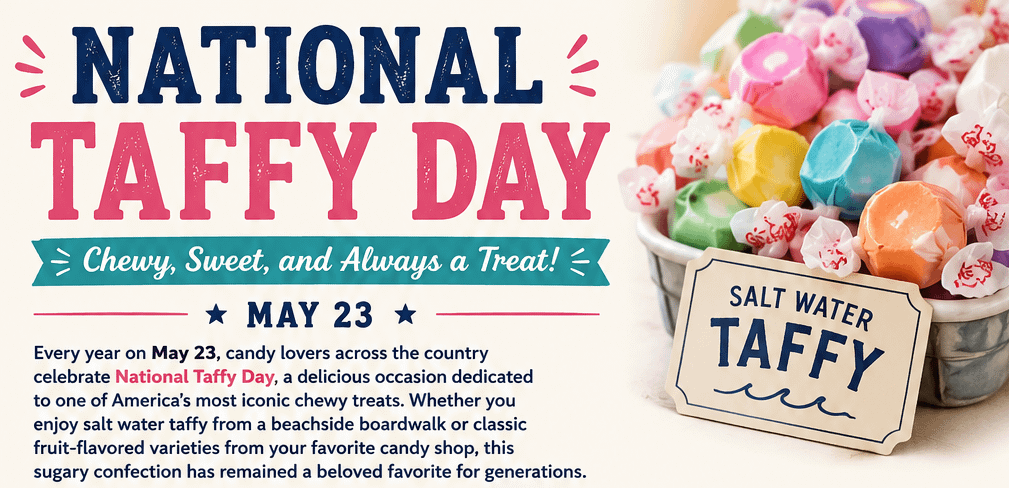
    Every year on May 23, candy lovers across the country celebrate National Taffy Day, a delicious occasion dedicated to one of America’s most iconic chewy treats. Whether you enjoy salt water taffy from a beachside boardwalk or classic fruit-flavored varieties from your favorite candy shop, this sugary confection has remained a beloved favorite for generations.

    The Sweet History of Taffy

    Taffy has a long and colorful history that dates back to the late 19th century. While its exact origins are debated, many people associate the candy with Atlantic City’s famous boardwalk culture. One popular legend claims that after a candy store was flooded with seawater, the owner jokingly referred to the sticky candy as “salt water taffy.” The name stuck, even though the candy itself contains very little actual seawater.

    Traditional taffy is made by boiling sugar, butter, flavorings, and coloring together before the mixture is stretched and pulled repeatedly. This pulling process adds air to the candy, creating the soft, chewy texture people love.

    Why People Love Taffy

    Part of taffy’s charm comes from its variety. From classic flavors like vanilla, strawberry, and peppermint to modern creations such as cotton candy, watermelon, and chocolate peanut butter, there’s a flavor for nearly everyone.

    Taffy also brings back memories of:

    Summer vacations
    County fairs and carnivals
    Beach boardwalks
    Candy shops filled with colorful displays
    Sharing treats with family and friends

    For many people, one piece of taffy can instantly trigger nostalgia and remind them of carefree childhood moments.

    Fun Facts About Taffy
    Salt water taffy usually does not contain ocean water.
    Taffy-pulling machines were invented in the early 1900s to speed up production.
    Atlantic City became famous for selling salt water taffy to tourists.
    Some candy shops still hand-pull taffy the old-fashioned way for visitors to watch.
    Taffy comes in hundreds of flavors around the world.
    Ways to Celebrate National Taffy Day

    Looking for fun ways to enjoy the day? Here are a few sweet ideas:

    Visit a Local Candy Store

    Support a local candy shop and try a variety of taffy flavors you’ve never tasted before.

    Host a Taffy Taste Test

    Gather friends or family and compare different flavors to vote on your favorites.

    Make Homemade Taffy

    If you enjoy baking and candy-making, try creating your own taffy at home for a fun kitchen activity.

    Share the Sweetness

    Bring taffy to work, school, or community gatherings and spread a little joy with others.

    Post Your Favorite Flavor

    Celebrate online by sharing photos of your favorite taffy flavors and candy memories.

    More Than Just Candy

    National Taffy Day is more than a celebration of sweets — it’s a reminder of simple pleasures, nostalgic memories, and the joy that small treats can bring into our lives. In a fast-paced world, sometimes something as simple as a chewy piece of candy can make us smile and reconnect with happy moments from the past.

    So today, unwrap a piece of your favorite taffy, savor the sweetness, and enjoy celebrating one of America’s most timeless candies.

    Read More Holidays & National Days

  • What to Do When You Feel Broken

    What to Do When You Feel Broken

    There are moments in life that leave scars no one else can fully see. Moments when your heart feels exhausted, your mind feels overwhelmed, and your spirit feels worn down from carrying too much for too long. Feeling broken is not always dramatic or obvious. Sometimes it looks like silence. Sometimes it looks like losing motivation, struggling to trust people, isolating yourself, or simply feeling emotionally numb while pretending everything is okay.

    Brokenness can come from many places:

    The loss of someone you love
    Heartbreak or betrayal
    Childhood wounds
    Financial struggles
    Anxiety or depression
    Disappointment in yourself
    Feeling rejected, abandoned, or forgotten
    Carrying years of emotional pain without healing

    When you feel broken, even everyday life can become difficult. Simple things like getting out of bed, answering messages, or finding joy in things you once loved may suddenly feel exhausting.

    But even in those moments, one truth remains important:

    Feeling broken does not mean you are beyond healing.

    Brokenness Does Not Mean You Are Weak

    Many people believe strength means never falling apart. But real strength is continuing to move forward while carrying pain no one else understands.

    Strong people cry.
    Strong people struggle.
    Strong people feel overwhelmed sometimes.

    Being broken is not proof that you failed. Often, it is proof that you have survived more than most people realize.

    The problem is that many hurting people become experts at hiding their pain. They smile while silently suffering. They encourage everyone else while neglecting themselves. They become emotionally drained because they spend so much energy pretending they are okay.

    You do not have to hide your pain to deserve love, support, or healing.

    1. Be Honest About What Hurts

    Healing cannot begin if you constantly avoid the truth about what is hurting you.

    Sometimes people distract themselves to avoid emotional pain:

    Staying constantly busy
    Overworking
    Scrolling endlessly online
    Numbing emotions
    Pretending everything is fine
    Avoiding difficult conversations

    But buried pain does not disappear. It waits.

    Take a moment to ask yourself:

    What is truly hurting me?
    What have I been avoiding emotionally?
    What am I carrying that I never properly processed?

    Honesty may feel uncomfortable at first, but it is often the first step toward emotional freedom.

    You cannot heal wounds you refuse to acknowledge.

    2. Stop Punishing Yourself for Being Human

    One of the most painful parts of brokenness is self-blame. Many people replay every mistake they ever made and convince themselves they ruined everything.

    You may think:

    “I should have known better.”
    “I’m not good enough.”
    “I always mess things up.”
    “Maybe I deserved this pain.”

    But healing requires learning the difference between accountability and self-destruction.

    Yes, everyone makes mistakes. Everyone has regrets. Everyone has moments they wish they could redo. But constantly attacking yourself emotionally will not change the past — it will only deepen the wound.

    You deserve grace too.

    Sometimes people hold themselves hostage to old versions of themselves instead of allowing growth to happen.

    You are not required to remain trapped in your worst moments forever.

    3. Allow Yourself to Grieve

    Many people only associate grief with death, but grief also comes from:

    Lost relationships
    Lost dreams
    Lost trust
    Lost time
    Lost versions of yourself

    Sometimes what breaks you is mourning the life you thought you would have.

    Grief is complicated because healing is not linear. Some days you may feel okay. Other days the pain may return unexpectedly.

    That does not mean you are failing.

    Healing often comes in waves.

    Allow yourself to cry if needed. Allow yourself to miss people. Allow yourself to feel sadness without judging yourself for it.

    Ignoring grief does not make you stronger. Processing it does.

    4. Take Care of Your Mind and Body

    When emotional pain becomes overwhelming, people often neglect themselves physically. But your mental and emotional health are deeply connected to how you care for your body.

    Start small if necessary:

    Drink more water
    Get enough sleep
    Eat consistently
    Go outside for sunlight
    Move your body gently
    Spend less time around negativity
    Reduce things that worsen your anxiety

    You do not need to fix your entire life overnight. Focus on stabilizing yourself one step at a time.

    Small routines can create emotional grounding during chaotic seasons.

    5. Stop Isolating Yourself Completely

    Pain often convinces people to withdraw from everyone. While temporary solitude can help, complete isolation can make emotional wounds feel heavier.

    You do not have to carry everything alone.

    Talk to someone safe:

    A trusted friend
    Family member
    Pastor
    Support group
    Therapist or counselor

    Sometimes healing begins simply by being heard.

    You are allowed to ask for support without feeling like a burden.

    Many people suffer silently because they fear vulnerability. But emotional walls built for protection can eventually become prisons.

    Connection matters.

    6. Give Yourself Permission to Heal Slowly

    One of the hardest parts of healing is patience.

    People often expect themselves to “move on” quickly, especially after heartbreak, trauma, or loss. But emotional recovery does not follow a schedule.

    Some wounds take longer because they affected you deeply.

    Do not compare your healing journey to someone else’s.
    Do not shame yourself for still hurting.
    Do not believe that slow healing means failed healing.

    Some of the deepest emotional injuries require time, reflection, and grace.

    You are rebuilding yourself emotionally, mentally, and spiritually. That process deserves patience.

    7. Protect Your Peace

    When you feel broken, your emotional energy becomes limited. This means protecting your peace becomes even more important.

    You may need to:

    Set boundaries
    Spend less time with toxic people
    Distance yourself from constant drama
    Stop revisiting things that reopen wounds
    Limit negative influences online
    Say no without guilt

    Not everyone deserves unlimited access to your heart.

    Healing sometimes requires creating space between yourself and what continually harms you.

    Protecting your peace is not selfish. It is necessary.

    8. Focus on Small Victories

    When life feels overwhelming, large goals can feel impossible. Instead of focusing on everything that is wrong, focus on small progress.

    Celebrate things like:

    Getting through the day
    Going outside
    Eating a healthy meal
    Reaching out for help
    Choosing not to give up
    Getting out of bed when it felt difficult

    Small victories matter more than you realize.

    Healing is often built through consistent small steps, not sudden dramatic changes.

    9. Remember That Brokenness Can Produce Strength

    Some of the strongest people carry invisible scars.

    Pain changes people, but it does not have to destroy them.

    Many people discover:

    Greater empathy
    Emotional maturity
    Wisdom
    Compassion
    Faith
    Resilience
    through their hardest seasons.

    The very experiences that broke you may eventually become the experiences that help someone else survive.

    Your pain may shape you, but it does not have to define you forever.

    10. Hold Onto Hope Even When It Feels Difficult

    There may be days when hope feels far away. Days when you question whether things will ever improve. But emotions are temporary, even when they feel permanent.

    The version of you that feels broken today will not necessarily be the version of you forever.

    Healing can happen slowly.
    Peace can return.
    Joy can return.
    Love can return.
    Purpose can return.

    Do not let temporary pain convince you that your future is hopeless.

    Sometimes the hardest seasons produce the strongest people.

    Final Thoughts

    Feeling broken can make life feel heavy in ways words cannot fully describe. It can affect your confidence, your relationships, your faith, and your sense of self. But brokenness is not the end of your story.

    You are still worthy of love.
    Still worthy of healing.
    Still worthy of peace.
    Still worthy of a future.

    Take things one day at a time. Be gentle with yourself during difficult seasons. Rest when needed. Ask for help when necessary. Keep moving forward, even if your steps feel small.

    One day, you may realize that the season that nearly destroyed you also taught you how strong you truly are.

    Read More Health & Wellness
  • How Hard It Is to Love Yourself After Years of Pain

    How Hard It Is to Love Yourself After Years of Pain

    There comes a point in life when the hardest relationship you will ever have is the relationship with yourself.

    Not because you are difficult to love, but because pain has a way of changing how you see yourself. After years of heartbreak, disappointment, rejection, trauma, grief, emotional abuse, loneliness, or constant struggle, it becomes easy to believe that you are broken beyond repair. Slowly, the pain begins to shape your inner voice until you no longer speak to yourself with compassion, but with criticism.

    That is what many people do not understand about emotional pain. It does not only hurt your heart — it changes the way you think about your worth.

    When someone spends years fighting silent battles, they often stop seeing themselves as someone deserving of love. They begin surviving instead of living. They wake up each day carrying emotional weight that nobody else can see. Smiles become masks. Strength becomes exhaustion hidden behind determination. Even moments of happiness can feel temporary because pain has trained them to expect disappointment.

    After enough hurt, many people stop asking:
    “Will things get better?”

    Instead, they begin asking:
    “How much more can I take?”

    And somewhere along the way, self-love becomes one of the hardest things imaginable.

    Pain Teaches Survival Before It Teaches Healing

    One of the cruelest things about pain is that it teaches survival habits that are difficult to unlearn.

    People who have been hurt repeatedly often become emotionally guarded. They stop trusting easily. They apologize too much. They overthink conversations. They prepare themselves for abandonment before it even happens. They expect rejection even when someone genuinely cares about them.

    Not because they want to think negatively —
    but because pain trained them to protect themselves.

    When your heart has been broken enough times, vulnerability starts to feel dangerous. Loving yourself becomes difficult because you are constantly fighting against years of emotional conditioning. Your mind remembers every failure, every betrayal, every cruel word, every moment you felt unwanted.

    Pain leaves echoes.

    Even years later, those echoes can still whisper:
    “You’re not enough.”
    “You always ruin things.”
    “You’ll just get hurt again.”
    “No one truly stays.”

    The tragedy is that many people begin believing those lies.

    The Exhaustion of Carrying Emotional Pain

    There is a deep exhaustion that comes from carrying emotional pain for years.

    It is not just physical tiredness. It is soul-level exhaustion.

    It is waking up emotionally drained before the day even begins.
    It is pretending you are okay because explaining your pain feels too overwhelming.
    It is feeling disconnected from yourself because you have spent so much time trying to survive that you forgot how to truly live.

    Some people become so used to suffering that peace feels unfamiliar to them. Calmness feels suspicious. Happiness feels temporary. Love feels unsafe.

    That is what long-term emotional pain can do.

    It teaches people to live in defense mode.

    And when you live in defense mode long enough, you stop treating yourself gently. You become your own worst critic. You replay regrets endlessly. You punish yourself for mistakes. You compare yourself to others. You blame yourself for things that were never entirely your fault.

    Eventually, self-hatred can become a habit.

    Not because you truly hate yourself —
    but because you no longer know how to see yourself through loving eyes.

    Loving Yourself After Pain Feels Unnatural

    People often talk about self-love as though it is easy:
    “Just love yourself.”
    “Know your worth.”
    “Be confident.”

    But after years of pain, those words can feel impossible.

    Because self-love after pain is not just about confidence.
    It is about rebuilding trust with yourself.

    It is learning how to believe that you matter after life made you feel invisible.
    It is learning how to speak kindly to yourself after years of self-criticism.
    It is learning how to stop apologizing for simply existing.
    It is learning how to stop measuring your worth by how others treated you.

    That process takes time.

    Sometimes a very long time.

    For people who have carried pain for years, loving themselves may feel uncomfortable at first because they are not used to receiving kindness — even from themselves. They may reject compliments. They may feel guilty resting. They may struggle to believe they deserve happiness.

    Healing can feel unfamiliar because pain became familiar.

    Grieving the Person You Used to Be

    One of the most painful parts of healing is grieving the version of yourself you used to be before life hurt you.

    Many people quietly mourn:

    The innocence they lost.
    The trust they once had.
    The softness they used to carry.
    The dreams that pain interrupted.
    The person they were before survival became necessary.

    That grief is real.

    Sometimes people look at old photographs of themselves and barely recognize the person smiling in them. Not because they changed physically, but because emotionally they became someone different after everything they endured.

    Pain changes people.

    But healing does not mean becoming who you were before the pain.

    Healing means learning how to become whole again in a new way.

    It means allowing yourself to grow into someone wiser, stronger, more compassionate, and more resilient — not because you wanted pain, but because you survived it.

    Healing Is Quiet

    The world often celebrates dramatic transformations, but real healing is usually quiet.

    Healing is:

    Getting out of bed on difficult mornings.
    Choosing not to give up on yourself.
    Going one more day without quitting.
    Setting boundaries for the first time.
    Letting yourself cry instead of pretending to be strong.
    Admitting you are struggling.
    Taking care of your mental health.
    Learning to say “no” without guilt.
    Looking in the mirror and trying not to hate what you see.
    Believing, even slightly, that your life still matters.

    These moments may seem small to others, but for someone carrying years of pain, they are enormous victories.

    Sometimes survival itself is strength.

    You Are More Than What Hurt You

    Pain has a way of convincing people that their wounds define them.

    But your pain is not your identity.

    Yes, what happened to you matters.
    Yes, your scars are real.
    Yes, your struggles changed you.

    But you are still more than the heartbreaks you endured.
    You are more than the abandonment you survived.
    You are more than the mistakes you made while trying to cope.

    Your value was never destroyed by what hurt you.

    Somewhere beneath the exhaustion, fear, and emotional scars is still a human being worthy of love, kindness, patience, understanding, and peace.

    Including from yourself.

    The Courage to Love Yourself Again

    It takes incredible courage to love yourself after years of pain.

    It takes courage to believe your future can still hold joy.
    It takes courage to open your heart again after disappointment.
    It takes courage to stop defining yourself by your worst moments.
    It takes courage to heal when bitterness would feel easier.

    Most importantly, it takes courage to stop abandoning yourself.

    Because self-love is not arrogance.
    It is not perfection.
    It is not pretending you are never hurting.

    Self-love is choosing to care for yourself even while healing.
    It is choosing to believe your life still has value despite your scars.
    It is refusing to let pain become the final chapter of your story.

    And maybe healing does not begin when all the pain disappears.

    Maybe healing begins the moment you decide:
    “I have suffered enough. I deserve peace too.”

    Even if your voice shakes when you say it.

    Even if you are still learning how to believe it.

    Because after years of pain, choosing to love yourself again may be one of the bravest things you will ever do.

    Read More Of Love & Relationships

  • Motivation of the Day: D.R.E.A.M.

    Motivation of the Day: D.R.E.A.M.

    Every great achievement begins with a dream. Dreams are not just wishes floating through your imagination — they are powerful visions that give direction, purpose, and hope to your life. When challenges arise and motivation feels distant, remembering your dream can reignite the fire within you and push you forward.

    Today’s motivation is centered around the word D.R.E.A.M.

    D — Determination

    Dreams require determination. There will be obstacles, delays, disappointments, and moments when giving up feels easier than continuing. Determination is what keeps you moving when progress feels slow. It’s the mindset that says, “I will keep going no matter how hard it gets.”

    Success rarely happens overnight. The people who accomplish extraordinary things are often the ones who refused to quit during ordinary struggles.

    R — Resilience

    Life will test your patience, strength, and confidence. Resilience means getting back up after setbacks instead of allowing failure to define you. Every difficult season teaches lessons that strengthen your character and prepare you for future victories.

    A dream without resilience can fade quickly, but a resilient spirit turns setbacks into stepping stones.

    E — Effort

    Dreams remain fantasies without action. Effort is the bridge between where you are and where you want to be. Small consistent actions every day create powerful long-term results.

    You do not have to move mountains in a single day. Even slow progress is still progress. Keep showing up. Keep learning. Keep improving.

    A — Ambition

    Ambition gives you the courage to aim higher than your current circumstances. It pushes you to believe that your life can become more meaningful, impactful, and fulfilling.

    Never allow fear, criticism, or self-doubt to convince you to shrink your goals. Your ambition is not something to apologize for — it is proof that you were created for growth and purpose.

    M — Mindset

    Your mindset shapes your reality. Positive thinking alone will not guarantee success, but a disciplined and hopeful mindset helps you endure difficult moments while staying focused on opportunities instead of limitations.

    Train your mind to believe that growth is possible. Replace “I can’t” with “I’m learning.” Replace fear with faith. Replace excuses with action.

    Final Thoughts

    Dreams are powerful because they give life direction. They remind you that your story is still being written and your future is not limited by your past. No matter how difficult life becomes, never stop believing that better days are ahead.

    Let today be the day you recommit to your dream.

    Keep moving forward.
    Keep believing.
    Keep growing.
    And never stop chasing the life you were meant to live.

  • What to Do When Anxiety Hits You

    What to Do When Anxiety Hits You

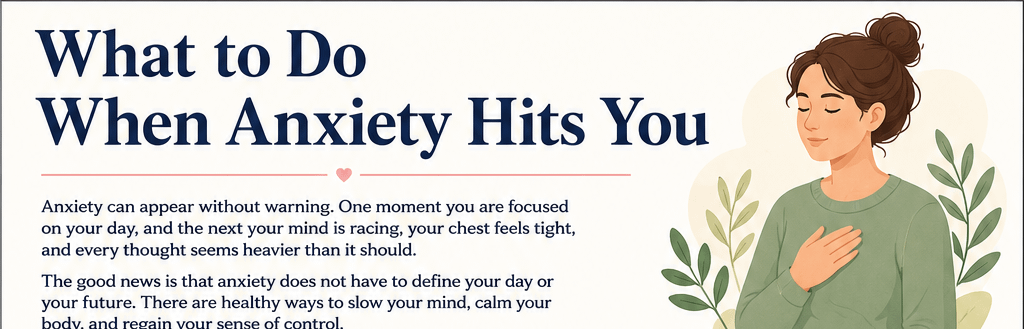
    Anxiety can appear without warning. One moment you are focused on your day, and the next your mind is racing, your chest feels tight, and every thought seems heavier than it should. Anxiety has a way of making small problems feel overwhelming and simple decisions feel impossible. While anxiety is a normal human response to stress, fear, or uncertainty, it is important to know how to respond when it begins to take control of your thoughts and emotions.

    The good news is that anxiety does not have to define your day or your future. There are healthy ways to slow your mind, calm your body, and regain your sense of control.

    Pause and Breathe

    One of the first things anxiety affects is your breathing. Many people begin taking shallow, rapid breaths without realizing it, which can increase feelings of panic and tension.

    When anxiety hits, stop for a moment and focus on slow breathing.

    Try this simple method:

    Inhale slowly through your nose for 4 seconds
    Hold your breath for 4 seconds
    Exhale slowly through your mouth for 6 seconds
    Repeat several times

    Slowing your breathing sends a message to your body that you are safe, helping your nervous system calm down.

    Ground Yourself in the Present

    Anxiety often pulls your mind into “what if” thinking. Your thoughts race toward future fears, imagined problems, or worst-case scenarios.

    Grounding techniques help bring your focus back to the present moment.

    A popular grounding exercise is the 5-4-3-2-1 method:

    5 things you can see
    4 things you can touch
    3 things you can hear
    2 things you can smell
    1 thing you can taste

    This technique helps interrupt anxious thoughts and reconnects your mind with reality instead of fear.

    Challenge Your Thoughts

    Anxiety can convince you that every fear is true. It can make temporary situations feel permanent and manageable problems feel hopeless.

    When anxious thoughts appear, ask yourself:

    Is this fear based on facts or assumptions?
    Am I imagining the worst possible outcome?
    What would I tell someone I care about if they felt this way?

    Learning to question anxious thinking can reduce its power over your emotions.

    Move Your Body

    Physical movement is one of the most effective natural ways to reduce anxiety. Walking, stretching, exercising, or even stepping outside for fresh air can help release built-up tension.

    Exercise helps your body release endorphins, which naturally improve mood and reduce stress.

    You do not need an intense workout. Even a short walk can help reset your mind and lower anxious energy.

    Avoid Feeding the Anxiety

    When anxiety rises, many people begin scrolling endlessly through social media, replaying problems in their mind, or isolating themselves. Unfortunately, these habits can make anxiety stronger.

    Instead:

    Step away from negative news or online arguments
    Limit caffeine if you are already feeling anxious
    Avoid overthinking conversations or situations repeatedly
    Focus on something productive or calming

    Sometimes your mind needs quiet more than stimulation.

    Talk to Someone You Trust

    You do not have to carry anxiety alone. Talking to a trusted friend, family member, mentor, or counselor can help you process what you are feeling.

    Many times, speaking your fears out loud reduces their intensity. Anxiety grows stronger in silence but weaker when shared with supportive people.

    Asking for support is not weakness. It is emotional strength.

    Give Yourself Grace

    One of the hardest parts of anxiety is the frustration that comes with it. People often criticize themselves for struggling or feel embarrassed for having anxious thoughts.

    Be patient with yourself.

    Healing takes time. Emotional strength is built gradually, not instantly. Some days will feel easier than others, and that is okay.

    You are human, not perfect.

    Focus on What You Can Control

    Anxiety often grows when life feels uncertain or overwhelming. Instead of focusing on everything that could go wrong, focus on what you can control today.

    You may not control every situation, but you can control:

    Your attitude
    Your response
    Your habits
    Your effort
    Your choices

    Small positive actions create stability during anxious moments.

    Know When to Seek Professional Help

    If anxiety becomes constant, overwhelming, or begins interfering with daily life, it may be time to seek professional support.

    Therapists, counselors, and medical professionals can provide tools, guidance, and treatment options that help many people successfully manage anxiety.

    There is no shame in getting help. Mental health matters just as much as physical health.

    Final Thoughts

    Anxiety can feel powerful in the moment, but feelings are temporary. You are stronger than the fear trying to overwhelm you. Even during difficult moments, you are still capable of healing, growing, and moving forward.

    Take things one breath, one step, and one moment at a time.

    You do not have to have everything figured out today. Sometimes the bravest thing you can do is simply keep going.

    Read More Health & Wellness

  • 10 Reasons to Love Again

    10 Reasons to Love Again

    Love can leave scars. It can break your trust, challenge your confidence, and make you question whether opening your heart again is worth the risk. After heartbreak, loss, disappointment, or betrayal, many people build emotional walls to protect themselves from future pain. But despite the hurt, love still remains one of the most meaningful experiences life has to offer.

    Choosing to love again is not weakness — it is courage. It is the decision to believe that your future does not have to be defined by your past. Here are 10 powerful reasons why opening your heart again may be one of the best decisions you ever make.

    1. Love Reminds You That You’re Alive

    Real love awakens emotions, hope, passion, and connection. It brings warmth into places that may have felt empty for a long time. When you allow yourself to love again, you begin to feel life more deeply — the laughter, the excitement, the comfort, and even the simple joy of being understood.

    2. Your Past Does Not Define Your Future

    Just because someone hurt you before does not mean everyone will. Every relationship is different because every person is different. Healing begins when you stop allowing old pain to control new possibilities.

    Loving again is not forgetting what happened — it’s choosing not to let it imprison you.

    3. Love Helps You Grow

    Healthy relationships challenge us to become better versions of ourselves. Love teaches patience, communication, forgiveness, empathy, and emotional strength. Sometimes the greatest personal growth happens when we learn how to trust again after disappointment.

    4. You Deserve Happiness

    Many people unknowingly convince themselves they are safer alone after heartbreak. But protecting yourself from pain can also block you from joy. You deserve companionship, affection, support, and the happiness that comes from sharing life with someone who values you.

    Never confuse fear with peace.

    5. Love Can Heal Emotional Wounds

    While time helps wounds heal, genuine love often helps restore the parts of us that pain tried to destroy. A caring person can remind you that kindness still exists, loyalty still matters, and your heart is still capable of feeling safe again.

    Healing rarely happens in isolation alone — sometimes it happens through connection.

    6. Life Is Better When Shared

    The best moments in life become even more meaningful when shared with someone who truly cares about you. Whether it’s celebrating victories, surviving difficult seasons, traveling, building dreams, or simply sitting quietly together, love adds depth to ordinary moments.

    Connection gives life richness.

    7. Love Teaches Courage

    Opening your heart again takes strength. It requires vulnerability and honesty. But courage is not the absence of fear — it’s moving forward despite fear. Every time you choose to love again, you prove to yourself that pain did not defeat you.

    That kind of courage changes a person.

    8. Someone Out There May Need Your Love Too

    Sometimes we focus so much on what we lost that we forget someone else may be searching for the same connection, understanding, and loyalty that we are. Your story, compassion, and experiences may become exactly what another person needs in their life.

    Love is often mutual healing.

    9. Love Creates New Memories

    Heartbreak can trap people inside memories of the past. But loving again creates room for new experiences, new laughter, new traditions, and new moments that remind you life still has beautiful chapters ahead.

    The story is not over simply because one chapter ended painfully.

    10. Love Is One of Life’s Greatest Gifts

    At its best, love inspires people to become kinder, stronger, and more hopeful. It gives meaning to ordinary days and strength during difficult ones. Even though love carries risks, living without it can leave life feeling incomplete.

    The possibility of joy is always worth the risk of healing.

    Final Thoughts

    Loving again does not mean rushing into relationships or ignoring your pain. It means allowing yourself to believe that your heart still deserves connection, happiness, and hope. Healing takes time, but eventually there comes a moment when you must decide whether fear will continue writing your story — or whether courage will.

    Love again when you are ready.

    Not because the world is perfect.
    Not because people never fail.
    But because your heart was never meant to stay closed forever.

    Read More Of Love & Relationships

  • Being Inspired to Be a Better Man

    Being Inspired to Be a Better Man

    A better man is not born in pride,
    But shaped by storms he learns to survive.
    Not by the victories others applaud,
    But by the battles fought deep in the heart.

    He learns that strength is more than power,
    It’s standing tall in the hardest hour.
    It’s choosing kindness when anger burns,
    And learning from every lesson life returns.

    A better man keeps his word when it’s hard,
    Carries his scars without dropping his guard.
    He lifts others up instead of tearing them down,
    And wears humility more than a crown.

    He understands that growth takes time,
    That failure itself is not the crime.
    The real defeat is refusing to rise,
    Or losing the fire behind his eyes.

    He becomes better through love and pain,
    Through sunshine moments and nights of rain.
    Through every heartbreak, every fall,
    He slowly discovers the strength of it all.

    A better man listens before he speaks,
    Finds courage even when feeling weak.
    He protects what matters, stands for what’s right,
    And keeps moving forward through the darkest night.

    He is inspired not by fame or applause,
    But by purpose, integrity, and meaningful cause.
    By becoming someone others can trust,
    A man who is honest, loyal, and just.

    And though perfection may never be found,
    He keeps planting goodness into the ground.
    Because every day is another chance to begin,
    To become stronger, wiser, and better within.

    Read More Poetry

  • Motivation of the Day: F.O.C.U.S.

    Motivation of the Day: F.O.C.U.S.

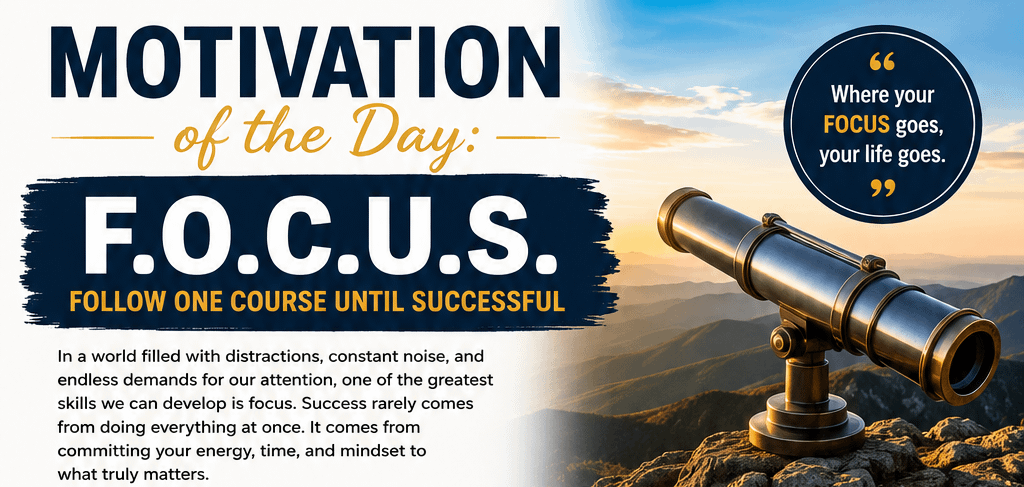
    In a world filled with distractions, constant noise, and endless demands for our attention, one of the greatest skills we can develop is focus. Success rarely comes from doing everything at once. It comes from committing your energy, time, and mindset to what truly matters.

    Today’s motivation word is:

    F.O.C.U.S.

    Follow One Course Until Successful

    Too often, people give up too early. They start something with excitement, but when challenges appear, they lose direction and move on to the next thing. Real growth happens when you stay committed long enough to see progress through the difficult moments.

    Focus is not about perfection. It is about discipline.

    It means:

    Showing up even when motivation fades.
    Staying committed when results are slow.
    Blocking out negativity and distractions.
    Remembering why you started in the first place.

    Every successful person has faced moments of doubt, frustration, and exhaustion. The difference is they kept going. They stayed focused on the mission instead of getting lost in temporary setbacks.

    When your mind is scattered, your energy becomes weak. But when your attention is directed toward a clear goal, your strength multiplies. Focus gives purpose to your actions and direction to your future.

    Stop Dividing Your Energy

    One of the biggest reasons people struggle to move forward is because they are trying to chase too many things at once. When your attention is constantly divided, your progress slows down.

    Focus requires sacrifice.

    Sometimes you must:

    Say no to distractions.
    Walk away from negativity.
    Spend less time worrying about what others think.
    Put your priorities ahead of temporary comfort.

    The more focused you become, the more powerful your momentum becomes.

    Small Steps Still Matter

    Not every day will feel productive. Some days progress will feel invisible. But small consistent steps create lasting results.

    A focused person understands:

    Progress is built daily.
    Discipline beats motivation.
    Persistence creates opportunities.
    Success takes time.

    Even when you feel tired, discouraged, or uncertain, keep moving forward one step at a time.

    Your Challenge Today

    Take a moment and ask yourself:

    What truly matters most right now?
    What distractions are stealing my energy?
    What goal deserves my full attention?

    Then commit to focusing on that one course until you succeed.

    Do not quit because it gets hard.
    Do not stop because results take time.
    Do not lose sight of your purpose because of temporary setbacks.

    Stay focused.
    Stay determined.
    Stay consistent.

    Because focused minds create powerful futures.

  • This Day in American History — May 22

    This Day in American History — May 22

    May 22 has been marked by moments of courage, conflict, innovation, and cultural change throughout American history. From famous battles and political milestones to groundbreaking achievements in aviation and sports, this date reminds us how individual actions and historic events continue shaping the American story.

    The Wright Brothers Receive Their Patent (1906)

    On May 22, 1906, Wilbur Wright and Orville Wright were granted U.S. Patent No. 821,393 for their flying machine. Their invention changed transportation forever and launched the modern age of aviation.

    The Wright brothers’ success at Kitty Hawk just a few years earlier proved that powered flight was possible. Their patent protected the technology that controlled aircraft movement in the air — a critical breakthrough that influenced aviation development around the world.

    Their achievement opened the skies to commercial air travel, military aviation, and eventually space exploration.

    The Golden Gate Bridge Opens to Pedestrians (1937)

    On May 22, 1937, thousands of people walked across the newly completed Golden Gate Bridge for the first public pedestrian day before it officially opened to vehicle traffic the following day.

    At the time, the bridge was considered one of the greatest engineering accomplishments in the world. Stretching across the Golden Gate Strait, it connected San Francisco to Marin County and became an enduring American symbol of innovation and determination.

    Even today, the Golden Gate Bridge remains one of the most recognized landmarks in the United States.

    The Battle of Spotsylvania Court House Continues (1864)

    During the American Civil War, fierce fighting continued on May 22, 1864, at the Battle of Spotsylvania Court House in Virginia.

    Union forces under Ulysses S. Grant and Confederate troops led by Robert E. Lee engaged in brutal combat as Grant pushed south toward Richmond.

    The battle became known for intense trench warfare and staggering casualties. Although neither side gained a decisive victory, the relentless campaign showed the Union’s determination to continue fighting until the Confederacy was defeated.

    Harvey Milk’s Assassin Convicted (1979)

    On May 22, 1979, former San Francisco supervisor Dan White was convicted of voluntary manslaughter in the deaths of Harvey Milk and Mayor George Moscone.

    The controversial verdict sparked the “White Night Riots” in San Francisco as many believed justice had not been served.

    Harvey Milk became one of the first openly gay elected officials in the United States and remains an important figure in the fight for LGBTQ+ rights and equality.

    Pac-Man Arrives in America (1980)

    On May 22, 1980, the legendary arcade game Pac-Man was released in Japan before quickly becoming a cultural phenomenon in the United States.

    Created by Toru Iwatani and developed by Namco, Pac-Man helped transform video gaming into mainstream entertainment.

    Arcades across America filled with players guiding the yellow character through mazes while avoiding ghosts. The game became one of the most iconic symbols of 1980s pop culture.

    A Day to Remember

    May 22 highlights the spirit of invention, perseverance, and transformation found throughout American history. Whether through technological breakthroughs, landmark achievements, social progress, or unforgettable cultural moments, this day serves as a reminder that history is built by bold ideas and determined people.

    From the skies above to bridges across the bay and movements that changed society forever, May 22 continues to hold a meaningful place in the American story.

    Read More History & Culture