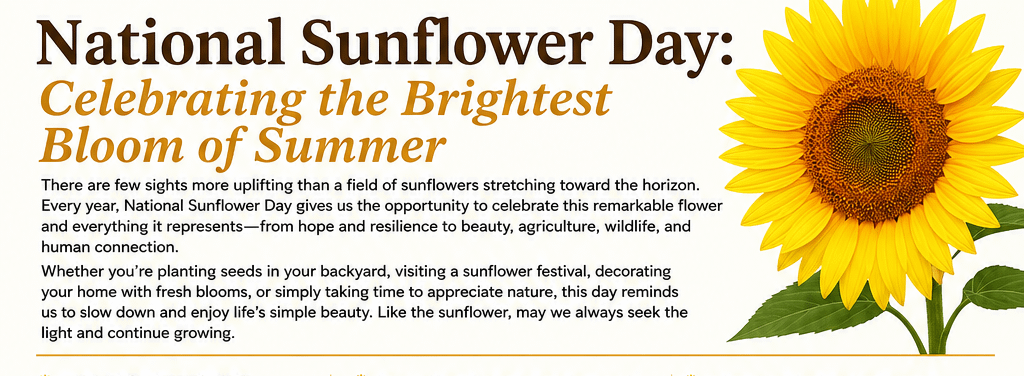
There are few sights more uplifting than a field of sunflowers stretching toward the horizon. Their brilliant golden petals, towering green stalks, and unmistakable faces seem to radiate warmth and happiness wherever they grow. Every year, National Sunflower Day gives us the opportunity to celebrate this remarkable flower and everything it represents—from hope and resilience to beauty, agriculture, wildlife, and human connection.
Sunflowers have captivated people for thousands of years. They have provided food, inspired world-famous artwork, supported pollinators, and become symbols of optimism in cultures around the globe. Whether you’re planting seeds in your backyard, visiting a sunflower festival, decorating your home with fresh blooms, or simply taking time to appreciate nature, National Sunflower Day reminds us to slow down and enjoy life’s simple beauty.
More than just another flower, the sunflower has become a universal symbol of positivity. It encourages us to keep growing, stay resilient during difficult seasons, and always look toward the light.
The Ancient History of the Sunflower
Long before sunflowers became decorative garden favorites, they played an important role in the daily lives of Indigenous peoples throughout North America.
Archaeological discoveries indicate that Native Americans were cultivating sunflowers as early as 3000 BC, making them one of the oldest domesticated crops in the Americas. Tribes carefully selected varieties that produced larger seeds and stronger plants, improving them generation after generation.
Sunflowers served many purposes:
- A dependable food source
- Cooking oil
- Ground flour
- Natural dyes for clothing and baskets
- Medicinal remedies
- Ceremonial and spiritual uses
Unlike many crops grown today, every part of the sunflower had value. Nothing was wasted.
Spanish explorers encountered sunflowers during the 1500s and brought seeds back to Europe. The flower quickly gained popularity across the continent before spreading to Asia and eventually around the world.
Today, millions of acres of sunflowers are planted every year for food production, oil, birdseed, livestock feed, and ornamental gardens.
Why Sunflowers Always Make People Smile
There is something unique about the appearance of a sunflower that instantly lifts people’s spirits.
Its large golden petals resemble rays of sunshine, while its dark center creates the familiar image we instantly recognize.
Psychologists often note that bright colors—especially yellow—are associated with feelings of happiness, optimism, warmth, and energy. It’s no surprise that sunflowers have become one of the world’s favorite flowers.
Unlike many delicate blooms, sunflowers stand tall and strong. Even during wind and rain, mature plants often remain upright, creating an image of perseverance that resonates with many people.
The Amazing Science Behind Sunflowers
One of the most fascinating characteristics of young sunflowers is their ability to follow the sun throughout the day.
This movement is called heliotropism.
During the early stages of growth:
- Young flowers face east each morning.
- They slowly rotate west as the sun moves.
- Overnight they turn back east before sunrise.
This daily movement helps maximize sunlight exposure, encouraging faster growth.
Once the flower matures and becomes heavy with seeds, it generally stops moving and remains facing east.
Scientists believe east-facing flowers warm more quickly in the morning, attracting more bees and pollinators during the early hours of the day.
Nature has created an incredibly efficient design.
More Than Just a Pretty Flower
Sunflowers play an important role in ecosystems around the world.
Their bright blossoms attract numerous pollinators including:
- Honey bees
- Native bees
- Butterflies
- Beetles
- Hoverflies
After blooming, the seed heads become a buffet for wildlife.
Many animals depend on sunflower seeds, including:
- Finches
- Cardinals
- Chickadees
- Blue jays
- Doves
- Squirrels
- Chipmunks
Gardeners often leave mature sunflower heads standing throughout autumn so birds can naturally feed from them.
Sunflowers and Agriculture
Sunflowers are far more important than many people realize.
Around the world they are grown commercially for:
Sunflower Oil
One of the healthiest vegetable oils available, sunflower oil is widely used for:
- Cooking
- Frying
- Baking
- Salad dressings
- Margarine
- Snack foods
It contains healthy unsaturated fats and vitamin E.
Sunflower Seeds
Millions of people enjoy sunflower seeds as:
- Healthy snacks
- Trail mix ingredients
- Salad toppings
- Bread ingredients
- Granola additions
Livestock Feed
After oil extraction, the remaining sunflower meal becomes valuable livestock feed due to its protein content.
Health Benefits of Sunflower Seeds
Sunflower seeds may be small, but they are packed with nutrition.
One serving contains beneficial amounts of:
- Vitamin E
- Magnesium
- Selenium
- Copper
- Zinc
- Healthy fats
- Protein
- Fiber
These nutrients may help support:
Heart Health
Healthy fats may contribute to maintaining healthy cholesterol levels when eaten as part of a balanced diet.
Healthy Skin
Vitamin E is an important antioxidant that helps protect skin cells from damage.
Brain Function
Healthy fats and minerals support normal nervous system function.
Immune Support
Several vitamins and minerals found in sunflower seeds contribute to a healthy immune system.
As with all foods, moderation is key because sunflower seeds are calorie-dense.
Sunflowers in Art and Literature
Perhaps no artist is more closely connected with sunflowers than Vincent van Gogh.
His famous series of sunflower paintings transformed a common flower into one of the most recognizable artistic subjects in history.
Today those paintings continue inspiring millions of visitors in museums worldwide.
Sunflowers also appear in:
- Poetry
- Photography
- Home décor
- Wedding themes
- Greeting cards
- Inspirational quotes
- Children’s books
Their cheerful appearance makes them a symbol of celebration and encouragement.
The Symbolism of Sunflowers
Throughout history, different cultures have attached meaningful symbolism to sunflowers.
They commonly represent:
- Happiness
- Joy
- Loyalty
- Faithfulness
- Positivity
- Strength
- Gratitude
- Hope
- Growth
- Long life
- New beginnings
Many people give sunflowers during major life events because they represent brighter days ahead.
They are popular gifts for graduations, birthdays, recoveries, retirements, and celebrations of personal achievement.
Incredible Sunflower Facts
Here are some amazing facts you may not know.
A Single Flower Isn’t Actually One Flower
The large sunflower head is actually made up of hundreds—or even thousands—of tiny individual flowers called florets.
Each floret has the potential to produce a seed.
Giant Sunflowers Can Reach Incredible Heights
Certain varieties routinely grow between:
- 10 feet
- 12 feet
- 15 feet
World-record sunflowers have exceeded 30 feet.
Seed Patterns Follow Mathematics
The spiral arrangement of sunflower seeds follows the famous Fibonacci sequence found throughout nature.
This pattern allows seeds to pack together with remarkable efficiency.
Sunflowers Help Clean the Environment
Scientists have planted sunflowers in areas contaminated by heavy metals and radiation because they can absorb certain pollutants from the soil through a process called phytoremediation.
This ability has been used in environmental cleanup projects around the world.
Kansas Loves Sunflowers
Kansas proudly adopted the sunflower as its official state flower in 1903.
The flower has become one of the state’s most recognizable symbols.
Visiting a Sunflower Farm
One of the best ways to celebrate National Sunflower Day is by visiting a local sunflower field.
Many farms offer:
- U-pick flowers
- Family photo opportunities
- Hayrides
- Food trucks
- Live music
- Farmers markets
- Sunflower mazes
- Children’s activities
Late summer is the perfect time to experience acres of bright yellow blooms under blue skies.
It’s also an excellent opportunity to support local farms and agriculture.
Growing Your Own Sunflowers
Growing sunflowers is surprisingly easy, making them perfect for beginner gardeners.
Planting Tips
- Choose a sunny location.
- Plant after the danger of frost has passed.
- Water regularly while young.
- Space plants according to variety.
- Protect seedlings from birds if necessary.
Within a few months, you’ll have towering flowers that brighten your yard and attract wildlife.
Children especially enjoy measuring their sunflower growth throughout the summer.
Fun Ways to Celebrate National Sunflower Day
There are countless ways to enjoy this cheerful holiday.
Consider:
- Planting sunflower seeds.
- Visiting a sunflower festival.
- Buying fresh sunflowers for your home.
- Photographing a sunflower field.
- Painting sunflowers.
- Baking sunflower seed bread.
- Making homemade bird feeders.
- Supporting local flower farms.
- Sharing sunflower photos on social media.
- Giving someone a bouquet “just because.”
Sometimes the simplest celebrations create the best memories.
Life Lessons We Can Learn from Sunflowers
Sunflowers have become powerful symbols not only because of their beauty but because of what they teach us.
They remind us that growth takes time.
They show us that standing tall through life’s storms is possible.
They demonstrate that even when circumstances change, we can continue blooming.
Perhaps most importantly, they encourage us to seek the light rather than dwell in darkness.
Everyone experiences difficult seasons. Yet, like the sunflower, we can continue reaching upward with hope, gratitude, and determination.
Final Thoughts
National Sunflower Day is a celebration of one of nature’s greatest gifts. From ancient civilizations to modern farms, from famous works of art to backyard gardens, the sunflower has brought beauty, nourishment, and inspiration to countless generations.
Its brilliant petals brighten landscapes, its seeds nourish people and wildlife, and its symbolism encourages us to live with optimism and resilience. Whether you spend the day exploring a sunflower field, planting seeds for next season, or simply pausing to admire these golden blooms, take a moment to appreciate the joy they bring.
May National Sunflower Day remind us all to keep growing, embrace every opportunity to spread kindness, and always turn toward the light—just like the sunflower.
Read More Holidays & National Days