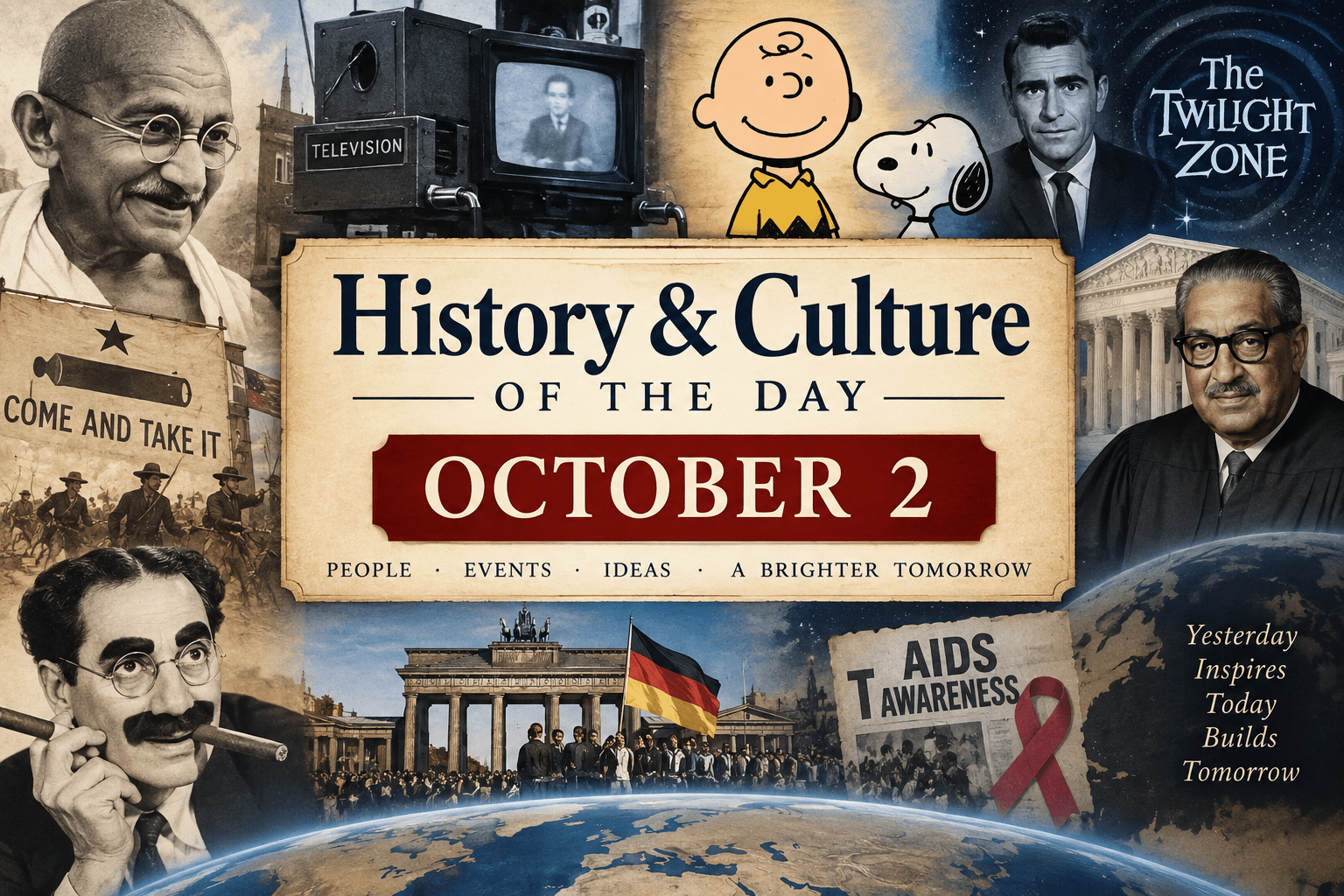
Category: History & Culture

  • History & Culture of the Day – August 1

    History & Culture of the Day – August 1

    History is more than a collection of dates—it is the story of humanity’s greatest achievements, hardest struggles, and most inspiring moments. Every day on the calendar carries events that have shaped nations, influenced cultures, and changed the course of civilization. August 1 is one of those remarkable days, marked by groundbreaking scientific discoveries, milestones in the fight for human freedom, moments of extraordinary courage, and cultural events that continue to influence our lives today.

    From the discovery of oxygen that revolutionized science to the launch of a television channel that forever changed the music industry, August 1 reminds us that a single day can alter history in ways people could never have imagined at the time.

    Let’s explore some of the most significant events that make August 1 an unforgettable chapter in world history.


    The Discovery That Changed Science Forever

    Joseph Priestley Isolates Oxygen (1774)

    One of the most important scientific breakthroughs in history occurred on August 1, 1774, when English chemist and theologian Joseph Priestley successfully isolated oxygen gas during an experiment.

    Using a magnifying glass to focus sunlight onto mercury oxide, Priestley collected a gas unlike anything he had previously encountered. He noticed that candles burned brighter in it and that mice survived longer when breathing it compared to ordinary air.

    Although Priestley called it “dephlogisticated air” because of the scientific theories of his day, later scientists—especially Antoine Lavoisier—recognized it as oxygen and correctly explained its role in combustion and respiration.

    The discovery transformed nearly every field of science, including:

    • Medicine
    • Biology
    • Chemistry
    • Environmental science
    • Aerospace research

    Today, oxygen supports everything from hospitals and scuba diving to space exploration and industrial manufacturing. One scientific experiment performed more than 250 years ago continues to influence billions of lives.


    A Monumental Step Toward Human Freedom

    Slavery Is Abolished Across the British Empire (1834)

    Perhaps the most historically significant event associated with August 1 occurred in 1834, when the Slavery Abolition Act officially came into effect across much of the British Empire.

    For centuries, millions of enslaved Africans had endured unimaginable suffering under the transatlantic slave trade. Families were separated, cultures were disrupted, and generations lived without freedom.

    Although some formerly enslaved people were forced into temporary “apprenticeship” systems before gaining full freedom, August 1 represented a monumental shift toward justice.

    Today, many nations—including Jamaica, Trinidad and Tobago, Barbados, Guyana, and others throughout the Caribbean—celebrate Emancipation Day each August 1.

    These celebrations often include:

    • Cultural festivals
    • Historical reenactments
    • Traditional music
    • Storytelling
    • Community gatherings
    • Educational programs
    • Ceremonies honoring ancestors

    Emancipation Day serves as both a remembrance of painful history and a celebration of resilience, courage, and the enduring pursuit of equality.


    Colorado Joins the United States

    The Centennial State Is Born (1876)

    On August 1, 1876, Colorado officially became the 38th state in the United States.

    The timing earned Colorado the nickname “The Centennial State,” because it entered the Union during America’s centennial year.

    Originally known for mining during the Gold Rush, Colorado eventually became famous for much more:

    • The Rocky Mountains
    • National parks
    • Ski resorts
    • Outdoor recreation
    • Ranching
    • Aerospace industries
    • Renewable energy
    • Technology innovation

    Today millions of visitors travel to Colorado each year to experience its breathtaking landscapes, making it one of America’s premier destinations for hiking, skiing, camping, and wildlife viewing.


    Europe Moves Toward World War

    Germany Declares War on Russia (1914)

    On August 1, 1914, tensions that had been building across Europe for years finally erupted when Germany declared war on Russia.

    Only days earlier, the assassination of Archduke Franz Ferdinand had triggered a diplomatic crisis among Europe’s powerful nations.

    Complex alliances quickly transformed what could have been a regional conflict into World War I, eventually involving dozens of countries across Europe, Africa, Asia, and the Middle East.

    The war introduced:

    • Modern trench warfare
    • Tanks
    • Chemical weapons
    • Military aviation
    • Massive industrial warfare

    More than 16 million people lost their lives before the conflict ended in 1918.

    The effects of World War I continue to influence international politics, borders, and diplomacy more than a century later.


    Extraordinary Courage During World War II

    The Warsaw Uprising Begins (1944)

    One of history’s most inspiring acts of resistance began on August 1, 1944, when thousands of members of the Polish Home Army launched the Warsaw Uprising against German occupation.

    Their goal was to liberate the city before Soviet forces arrived.

    For 63 days, resistance fighters—many of them young men and women with limited supplies—held off one of the world’s strongest military forces.

    Civilians also played remarkable roles by:

    • Delivering food
    • Carrying medical supplies
    • Constructing barricades
    • Providing intelligence
    • Sheltering resistance fighters

    Although the uprising ultimately failed militarily, it became an enduring symbol of patriotism, sacrifice, and the determination to fight for freedom regardless of the odds.

    Every year, Poland pauses at exactly 5:00 p.m. on August 1 to honor those who participated.


    MTV Revolutionizes Entertainment

    Music Videos Become a Global Phenomenon (1981)

    On August 1, 1981, television changed forever when MTV (Music Television) officially launched in the United States.

    Its first broadcast featured “Video Killed the Radio Star” by The Buggles—a fitting introduction to a new era in music.

    Before MTV, artists primarily relied on:

    • Radio
    • Concerts
    • Albums
    • Television variety shows

    MTV transformed musicians into visual storytellers.

    Music videos soon became major cultural events, helping launch or elevate the careers of artists including:

    • Michael Jackson
    • Madonna
    • Prince
    • Bon Jovi
    • Whitney Houston
    • Guns N’ Roses
    • Janet Jackson

    Michael Jackson’s Thriller became one of the most influential music videos ever produced, demonstrating that music videos could become artistic masterpieces rather than simple promotional tools.

    MTV also influenced fashion, language, youth culture, advertising, and eventually reality television.


    August 1 Around the World

    Many nations celebrate important observances on August 1.

    Emancipation Day

    Several Caribbean countries commemorate emancipation from slavery with parades, educational events, concerts, and cultural festivals celebrating African heritage.


    Swiss National Day

    Switzerland celebrates Swiss National Day on August 1, commemorating the founding of the Swiss Confederation in 1291.

    Communities celebrate with:

    • Fireworks
    • Bonfires
    • Traditional music
    • Speeches
    • Family gatherings
    • Local festivals

    The day emphasizes unity, independence, and centuries of Swiss history.


    Yorkshire Day

    In England, Yorkshire Day celebrates the history, traditions, and culture of Yorkshire.

    Residents celebrate with:

    • Local food
    • Historical ceremonies
    • Community festivals
    • Traditional music
    • Regional pride

    Famous People Born on August 1

    Throughout history, August 1 has welcomed influential people from many different fields.

    Yves Saint Laurent (1936)

    One of the greatest fashion designers in history, Yves Saint Laurent revolutionized haute couture by creating elegant styles that empowered women and influenced generations of designers.


    Jerry Garcia (1942)

    Best known as the lead guitarist and vocalist of the Grateful Dead, Garcia became one of the most influential musicians in American rock history.


    Coolio (1963)

    The Grammy Award-winning rapper achieved worldwide fame with the hit song “Gangsta’s Paradise,” one of the defining songs of the 1990s.


    Jason Momoa (1979)

    The actor has become internationally recognized through roles including Aquaman and Khal Drogo, earning acclaim for both film and television performances.


    Interesting Facts About August 1

    • August is named after Roman Emperor Augustus Caesar.
    • The Perseid meteor shower begins increasing in activity during early August.
    • Many ancient agricultural societies viewed early August as the beginning of harvest celebrations.
    • August often represents one of the busiest travel months worldwide.
    • Schools in many regions begin preparing for a new academic year during August.

    Why Preserving History Matters

    History is much more than remembering names and dates.

    It teaches us:

    • How scientific discoveries improve everyday life.
    • Why freedom should never be taken for granted.
    • The importance of standing against injustice.
    • How culture shapes identity.
    • The value of perseverance during difficult times.

    By understanding the past, we become better equipped to make thoughtful decisions for the future.


    Lessons We Can Learn from August 1

    The stories associated with August 1 share several powerful themes:

    Curiosity changes the world. Joseph Priestley’s experiments remind us that asking questions and exploring the unknown can lead to discoveries that benefit humanity for centuries.

    Freedom is worth pursuing. The abolition of slavery across the British Empire and the continued celebration of Emancipation Day demonstrate the enduring human desire for dignity, equality, and justice.

    Courage often comes with sacrifice. The Warsaw Uprising stands as a testament to ordinary people who risked everything for their country and their beliefs.

    Culture has lasting influence. From Swiss National Day traditions to MTV’s transformation of music and entertainment, cultural milestones shape how societies express themselves and connect across generations.


    Looking Back While Moving Forward

    August 1 reminds us that history is created one day at a time. Whether through scientific breakthroughs, the pursuit of freedom, acts of incredible bravery, or cultural innovations that redefine entertainment, today’s date reflects humanity’s remarkable ability to learn, adapt, and inspire.

    Every generation inherits the achievements and lessons of those who came before. By remembering the events of August 1, we honor the scientists who expanded our understanding of the world, the individuals who fought for justice and equality, the heroes who stood against oppression, and the creators whose work enriched our culture.

    As we write the next chapter of history, may these stories encourage us to value knowledge, protect freedom, celebrate diverse cultures, and leave a positive legacy for those who follow.

    History is not just about the past—it is a guide that helps illuminate the future.

    Read More History & Culture

  • This Day in American History – August 1

    This Day in American History – August 1

    History is more than a collection of dates—it is the story of people, discoveries, struggles, and triumphs that continue to influence the nation today. Every day on the calendar carries moments that have helped define the United States, and August 1 is filled with events that showcase the country’s spirit of innovation, expansion, resilience, and cultural transformation.

    From the admission of a new state into the Union to scientific breakthroughs, military advancements, entertainment milestones, and lessons learned through tragedy, August 1 reminds us that history is constantly unfolding. Looking back on these events allows us to better understand where America has been and where it continues to go.

    Let’s explore some of the most significant moments that occurred on August 1 in American history.


    1774 – Joseph Priestley Discovers Oxygen

    On August 1, 1774, English scientist Joseph Priestley conducted an experiment that led to one of the greatest scientific discoveries in history—the isolation of oxygen gas.

    Using a burning glass to heat mercuric oxide, Priestley released a gas unlike any he had previously observed. Candles burned brighter in it, and laboratory mice lived longer when breathing it. Although Priestley did not fully understand oxygen’s role in respiration or combustion at the time, his work laid the foundation for modern chemistry.

    Years later, Priestley immigrated to the United States after facing religious persecution in England. He settled in Pennsylvania, where he continued his scientific research and became an influential figure among America’s early intellectuals.

    His work influenced generations of American scientists and educators, helping establish the nation’s growing appreciation for scientific inquiry.

    Today, oxygen remains central to nearly every field of science, medicine, and biology, making Priestley’s discovery one of history’s most important breakthroughs.


    1876 – Colorado Becomes the Centennial State

    One of the most celebrated events in American history occurred on August 1, 1876, when President Ulysses S. Grant signed legislation admitting Colorado as the 38th state.

    Colorado earned the nickname “The Centennial State” because it entered the Union exactly one hundred years after the signing of the Declaration of Independence in 1776.

    Why Colorado Was Important

    Colorado’s admission reflected America’s continued westward expansion following the Civil War. Rich mineral deposits, especially gold and silver, attracted thousands of settlers during the Colorado Gold Rush beginning in 1859.

    The state’s dramatic landscapes quickly became known throughout the country.

    Today Colorado is famous for:

    • Rocky Mountain National Park
    • Pikes Peak
    • Mesa Verde National Park
    • Ski resorts including Aspen, Vail, and Breckenridge
    • Outdoor recreation
    • Aerospace industries
    • Technology companies
    • Military installations

    Colorado has since become one of America’s fastest-growing states while maintaining its historic connection to exploration and the frontier spirit.


    1893 – Shredded Wheat Receives Its Patent

    Breakfast in America changed forever when inventor Henry Perky received a patent for the manufacturing process behind Shredded Wheat on August 1, 1893.

    Perky originally believed whole wheat could improve digestion and overall health. His innovative machinery transformed cooked wheat into thin strands before compressing them into biscuit-shaped servings.

    The cereal became one of America’s earliest health-focused breakfast foods.

    Shredded Wheat helped launch an entirely new food industry that eventually included brands such as:

    • Kellogg’s
    • Post
    • General Mills
    • Quaker

    Today breakfast cereal remains a multibillion-dollar industry with roots tracing back to inventions like Perky’s.


    1944 – The Warsaw Uprising Begins

    Although the Warsaw Uprising occurred in Nazi-occupied Poland, its significance reached far beyond Europe.

    On August 1, 1944, approximately 40,000 members of the Polish resistance launched an effort to free Warsaw before Soviet forces entered the city.

    The United States supported the resistance through dangerous long-range supply missions. American and Allied pilots flew hundreds of miles over hostile territory to deliver food, ammunition, medicine, and supplies.

    The uprising ultimately failed after more than two months of fighting, but it became one of the greatest symbols of courage during World War II.

    The sacrifices made by both Polish resistance fighters and Allied aircrews remain an important reminder of America’s role in supporting freedom around the world.


    1957 – NORAD Is Created

    The Cold War dramatically changed American defense strategy.

    On August 1, 1957, the United States and Canada officially established the North American Air Defense Command (NORAD).

    Its mission was to detect incoming bombers and missiles that could threaten North America.

    During the Cold War, NORAD became one of the world’s most sophisticated defense organizations by combining radar systems, fighter aircraft, satellites, and command centers into one coordinated defense network.

    Today NORAD continues to:

    • Monitor North American airspace
    • Detect missile launches
    • Coordinate aerospace defense
    • Track aircraft approaching U.S. and Canadian borders
    • Support national security missions

    Millions of families also recognize NORAD each December for its famous Santa Tracker, which began as a happy accident after a child mistakenly called a military operations center asking for Santa’s location.


    1981 – MTV Launches and Changes Entertainment Forever

    On August 1, 1981, a brand-new cable television channel forever changed American music and popular culture.

    MTV (Music Television) officially began broadcasting shortly after midnight.

    Its first words were:

    “Ladies and gentlemen, rock and roll.”

    The very first music video shown was:

    “Video Killed the Radio Star” by The Buggles.

    The timing proved symbolic, representing a new era in entertainment.

    Throughout the 1980s and 1990s MTV helped launch or expand the careers of artists including:

    • Michael Jackson
    • Madonna
    • Bon Jovi
    • Aerosmith
    • Guns N’ Roses
    • Britney Spears
    • Nirvana

    Music videos quickly became an essential part of the recording industry.

    MTV later expanded into reality television, news, documentaries, and award shows, becoming one of the most influential cable networks in American history.


    2007 – Interstate 35W Bridge Collapse

    One of the most tragic infrastructure failures in recent American history occurred on August 1, 2007.

    During the evening rush hour, the Interstate 35W bridge crossing the Mississippi River in Minneapolis, Minnesota, suddenly collapsed.

    More than one hundred vehicles fell into the river or onto the roadway below.

    The disaster claimed:

    • 13 lives
    • More than 140 injuries

    Investigators later determined that undersized steel gusset plates, combined with the weight of construction materials on the bridge, contributed to the collapse.

    The tragedy sparked nationwide inspections of thousands of aging bridges and accelerated discussions about investing in America’s transportation infrastructure.

    Many engineering standards and bridge inspection practices have since been strengthened because of lessons learned from this heartbreaking event.


    Famous Americans Born on August 1

    Several influential individuals celebrate birthdays on August 1.

    Jerry Garcia (1942)

    Best known as the lead guitarist and vocalist for the Grateful Dead, Jerry Garcia became one of the defining musicians of American rock history. His improvisational style and loyal fan base helped create one of music’s most enduring cultural movements.

    Coolio (1963)

    Grammy Award-winning rapper Coolio gained worldwide fame with “Gangsta’s Paradise,” one of the defining songs of the 1990s. His music helped bring hip-hop further into mainstream American culture.


    August 1 by the Numbers

    • 1774 – Oxygen isolated by Joseph Priestley
    • 1876 – Colorado becomes the 38th state
    • 1893 – Shredded Wheat patent awarded
    • 1944 – Warsaw Uprising begins
    • 1957 – NORAD officially established
    • 1981 – MTV launches
    • 2007 – Interstate 35W bridge collapses

    Why August 1 Still Matters

    Each of these events tells a different story about America.

    Scientific discoveries improve our understanding of the world.

    New states strengthen the nation.

    Military cooperation protects future generations.

    Entertainment shapes culture.

    Engineering tragedies inspire safer designs.

    Together these moments remind us that history is built from both extraordinary achievements and difficult lessons.

    As Americans continue writing new chapters in the nation’s story, remembering these milestones helps us appreciate the resilience, creativity, and determination that have defined the United States for centuries.


    Final Thoughts

    August 1 offers a remarkable snapshot of American history. From groundbreaking scientific discoveries and the admission of Colorado into the Union to the birth of modern music television and advancements in national defense, this date reflects the innovation and perseverance that have long characterized the United States.

    History connects us to those who came before us. It reminds us that every discovery, every decision, and every challenge leaves a legacy for future generations. Whether celebrating achievements, honoring sacrifices, or learning from tragedy, August 1 encourages us to reflect on the events that continue to shape our nation.

    As we remember these milestones, we also recognize that today’s actions will become tomorrow’s history. By learning from the past, we gain a greater appreciation for the freedoms, opportunities, and responsibilities that come with being part of the American story.

    Read More History & Culture

  • History & Culture of the Day – July 31

    History & Culture of the Day – July 31

    History is more than a timeline of dates—it is the story of humanity’s journey. Every day offers an opportunity to reflect on moments that changed nations, inspired innovation, sparked creativity, and influenced cultures around the globe. July 31 is one of those days, marked by groundbreaking achievements in space exploration, memorable moments in literature, significant historical events, and traditions that continue to unite communities.

    Whether you’re passionate about history, fascinated by science, or simply enjoy learning something new each day, July 31 reminds us that the past continues to shape our present and inspire our future.


    Apollo 15 and the First Drive on the Moon (1971)

    One of the greatest achievements associated with July 31 occurred in 1971, when NASA’s Apollo 15 astronauts David Scott and James Irwin became the first humans to drive a vehicle on another world.

    The Lunar Roving Vehicle (LRV), often called the “Moon Buggy,” represented a major leap forward in space exploration. Previous Apollo astronauts had been limited to walking relatively short distances from their lunar landers. The Lunar Rover expanded that range dramatically, allowing scientists to explore previously unreachable regions of the Moon.

    The rover traveled nearly 17 miles during the mission and enabled astronauts to collect approximately 170 pounds of lunar rocks and soil samples, many of which continue to be studied today.

    Why Apollo 15 Was Different

    Apollo 15 was considered the first of NASA’s “J Missions,” designed to maximize scientific exploration. The mission included:

    • Longer stays on the Moon
    • More scientific equipment
    • Greater travel distances
    • More extensive geological studies
    • Improved photography and mapping

    The success of Apollo 15 helped scientists better understand the Moon’s volcanic history, surface composition, and geological evolution.

    Today, modern lunar exploration programs—including NASA’s Artemis missions—continue to build upon the discoveries made during Apollo 15.


    Harry Potter’s Birthday: A Global Celebration of Imagination

    For millions of readers, July 31 is instantly recognizable as the birthday of Harry Potter, the beloved wizard created by author J.K. Rowling.

    Interestingly, Rowling chose to give Harry the same birthday she shares herself.

    Since the first novel debuted in 1997, the Harry Potter series has become one of the most successful literary franchises in history.

    The books have:

    • Sold more than 600 million copies worldwide.
    • Been translated into over 80 languages.
    • Inspired eight blockbuster films.
    • Created award-winning stage productions.
    • Led to theme parks on multiple continents.
    • Sparked fan conventions around the world.

    Every July 31, libraries, bookstores, schools, and fans celebrate with costume contests, reading marathons, trivia competitions, themed parties, and charitable events that encourage literacy.

    More Than Magic

    While the stories center around witches and wizards, the series resonates because of its universal themes:

    • Friendship
    • Courage
    • Loyalty
    • Sacrifice
    • Love
    • Choosing kindness over hatred
    • Standing up against injustice

    The books have encouraged countless young readers to discover a lifelong love of literature.


    The End of July: A Time of Transition

    Throughout history, the final day of July has symbolized transition.

    In many countries, July 31 marks the closing chapter of summer before schools reopen in August or early September. Families begin shifting from vacations and outdoor adventures toward classrooms, sports seasons, and new routines.

    This seasonal transition has become its own cultural tradition.

    Many families spend the day:

    • Shopping for school supplies
    • Planning family dinners
    • Taking final summer trips
    • Visiting amusement parks
    • Hosting neighborhood barbecues
    • Enjoying one last beach outing

    These traditions create lasting memories while preparing children for a new academic year.


    County Fairs and Agricultural Traditions

    Across North America, late July represents the height of county fair season.

    Agricultural fairs have existed for more than two centuries, originally serving as gatherings where farmers exchanged knowledge about livestock, crops, and farming techniques.

    Today, county fairs celebrate both agriculture and community through:

    • Livestock competitions
    • Homegrown produce displays
    • Local crafts
    • Carnival rides
    • Concerts
    • Rodeos
    • Pie contests
    • Classic car shows

    These events preserve rural traditions while bringing together people of all ages.

    Many families have attended the same county fairs for generations, making them an important part of local culture.


    Milwaukee’s Brewing Heritage

    July often highlights the rich brewing traditions that helped shape Milwaukee, Wisconsin, into one of America’s most famous beer cities.

    During the late nineteenth century, German immigrants transformed Milwaukee into a brewing powerhouse.

    Companies such as Schlitz, Pabst, Miller, and Blatz became household names while employing thousands of workers.

    The brewing industry influenced nearly every aspect of Milwaukee’s development:

    • Economic growth
    • Immigration
    • Architecture
    • Transportation
    • Community festivals
    • Culinary traditions

    Even today, brewery tours and beer gardens remain major attractions that celebrate this historic heritage.


    Summer Festivals Around the World

    The final days of July are among the busiest festival periods of the year.

    Communities worldwide celebrate culture through music, food, dance, and local traditions.

    Popular celebrations during this season often include:

    Music Festivals

    Outdoor concerts bring together internationally known artists and local performers, creating memorable summer experiences.

    Food Festivals

    Communities showcase regional specialties while supporting local farms and restaurants.

    Art Festivals

    Artists display paintings, sculptures, photography, and handcrafted goods, encouraging creativity and cultural appreciation.

    Cultural Heritage Events

    Many cities celebrate their immigrant communities through traditional music, dance performances, clothing, and cuisine.

    These festivals strengthen community bonds while preserving traditions passed down through generations.


    The Importance of Storytelling

    History survives because people tell stories.

    Whether passed through books, museums, documentaries, oral traditions, or family conversations, storytelling connects us with previous generations.

    Stories teach us:

    • Where we came from.
    • What previous generations experienced.
    • How societies overcame challenges.
    • Why traditions matter.
    • How innovation changes the world.

    Without storytellers, many remarkable achievements would be forgotten.


    Innovation That Changed Daily Life

    The twentieth century saw enormous technological progress, and many breakthroughs reached the public during the busy summer months.

    Advances in transportation, communication, medicine, and computing transformed everyday life.

    Consider how dramatically life has changed in just a few generations:

    • Air travel became common.
    • Personal computers entered homes.
    • The internet connected the globe.
    • Smartphones placed information in every pocket.
    • GPS navigation changed how we travel.
    • Space exploration expanded our understanding of the universe.

    Each innovation built upon the work of earlier pioneers.


    Why Space Exploration Still Matters

    The Apollo missions were about more than reaching the Moon.

    They inspired advances in:

    • Engineering
    • Telecommunications
    • Computer technology
    • Medical equipment
    • Materials science
    • Satellite communications

    Many everyday technologies trace their origins to research conducted during the Space Race.

    Even decades later, images of astronauts driving across the Moon continue to inspire children to dream about careers in science, engineering, and exploration.


    Books That Shape Generations

    Literature has always played an important role in culture.

    Certain books transcend entertainment and become cultural landmarks.

    Stories like Harry Potter encourage readers to imagine new possibilities while exploring timeless human values.

    Libraries around the world often use July 31 to promote literacy initiatives because reading helps develop:

    • Critical thinking
    • Creativity
    • Empathy
    • Vocabulary
    • Lifelong learning

    A single book can inspire someone to become a scientist, teacher, artist, writer, or explorer.


    Preserving Our Shared Heritage

    Museums, historical societies, archives, and cultural organizations work tirelessly to preserve artifacts that tell humanity’s story.

    Everything from ancient manuscripts to spacecraft, family photographs, and historical buildings helps future generations understand where they came from.

    Preservation reminds us that history belongs to everyone—not just historians.

    Every family has stories worth remembering.

    Every community has traditions worth celebrating.

    Every generation contributes another chapter to humanity’s ongoing story.


    Lessons We Can Learn from July 31

    Reflecting on July 31 offers several meaningful lessons:

    • Curiosity leads to discovery.
    • Innovation changes the future.
    • Stories inspire generations.
    • Communities grow stronger through shared traditions.
    • Education opens new possibilities.
    • Preserving history helps shape tomorrow.

    These lessons remain just as relevant today as they were decades ago.


    Looking Toward the Future

    History is constantly being written.

    Tomorrow’s historians will study today’s discoveries, inventions, cultural movements, and acts of kindness just as we examine the achievements of previous generations.

    Each of us contributes to history through the choices we make, the people we help, and the legacy we leave behind.

    Whether inspiring others, preserving family traditions, exploring new ideas, or simply learning something new each day, we all play a role in shaping the future.


    Final Thoughts

    July 31 is a remarkable day that celebrates human achievement, imagination, and cultural heritage. From the historic drive across the Moon during Apollo 15 to the worldwide celebration of Harry Potter’s birthday, this day reminds us that exploration and creativity have the power to change the world.

    It also highlights the importance of community traditions, education, storytelling, and preserving our shared history. Every milestone—whether a scientific breakthrough, a beloved book, or a cherished local festival—adds another thread to the rich tapestry of human culture.

    As we commemorate July 31, let it inspire us to remain curious, honor the past, embrace the present, and look toward the future with optimism. History is not only something we study—it is something we create every single day.

    Read More History & Culture

  • This Day in American History – July 31

    This Day in American History – July 31

    American history is filled with defining moments that have shaped the nation we know today. Some dates are remembered for a single monumental event, while others showcase a collection of milestones that reflect the country’s spirit of courage, innovation, perseverance, and progress. July 31 is one of those remarkable days.

    From the arrival of a young French aristocrat who would help secure American independence to the first U.S. patent, groundbreaking achievements in space exploration, and one of the nation’s greatest unsolved mysteries, July 31 reminds us that history is built through the actions of ordinary and extraordinary people alike.

    Let’s explore some of the most significant events that occurred on this day in American history.


    1777 – Marquis de Lafayette Joins the Fight for American Independence

    One of the most important foreign allies in American history officially joined the Continental Army on July 31, 1777.

    At only 19 years old, Marquis de Lafayette, a wealthy French nobleman, volunteered his military service to the struggling American colonies. Remarkably, he refused a salary and accepted the rank of major general without pay.

    Lafayette believed deeply in the ideals of liberty and self-government. Although France had not yet officially entered the Revolutionary War, he secretly sailed across the Atlantic despite orders from King Louis XVI to stay home.

    General George Washington quickly recognized Lafayette’s intelligence, bravery, and loyalty. Their friendship became one of the defining relationships of the American Revolution.

    Lafayette fought courageously in several major battles, including:

    • Brandywine
    • Monmouth
    • Yorktown

    Perhaps his greatest contribution came off the battlefield. Through his influence in France, Lafayette helped convince the French government to provide troops, naval support, weapons, and financial assistance that proved essential to America’s victory over Great Britain.

    Today, Lafayette remains one of the few foreign-born individuals honored as an honorary U.S. citizen, and communities across America proudly bear his name.


    1790 – America Issues Its First Patent

    Innovation has always been at the heart of the American dream.

    On July 31, 1790, the United States granted its very first patent to Samuel Hopkins of Vermont.

    The patent covered a new process for producing potash and pearl ash, materials widely used in making:

    • Soap
    • Glass
    • Fertilizer
    • Industrial chemicals

    What made this patent especially historic was that it bore the signatures of:

    • President George Washington
    • Secretary of State Thomas Jefferson
    • Attorney General Edmund Randolph

    In the nation’s earliest years, these leaders personally reviewed patent applications before approval.

    Although Hopkins’ invention may sound modest today, the creation of the U.S. patent system laid the groundwork for centuries of American innovation.

    Since that first patent, the United States has issued millions of patents covering inventions ranging from the telephone and airplane to lifesaving medicines, computers, smartphones, renewable energy technologies, and artificial intelligence.

    America’s culture of invention began with this simple but historic document.


    1946 – Norma Jean Signs Her First Movie Contract

    On July 31, 1946, a young model named Norma Jean Dougherty signed her first movie contract with 20th Century Fox.

    She earned just $150 per week, but few could have imagined that she would soon become one of the most recognizable women in history.

    The studio encouraged her to adopt a new stage name:

    Marilyn Monroe

    Throughout the 1950s, Monroe became a global icon through films including:

    • Gentlemen Prefer Blondes
    • How to Marry a Millionaire
    • The Seven Year Itch
    • Some Like It Hot

    Her influence extended far beyond Hollywood.

    Marilyn Monroe helped shape:

    • American fashion
    • Popular culture
    • Advertising
    • Photography
    • Entertainment marketing

    Even decades after her passing, she remains one of the most recognizable symbols of American cinema.


    1964 – Ranger 7 Changes Space Exploration Forever

    The 1960s were defined by America’s race to reach the Moon.

    One major breakthrough occurred on July 31, 1964, when NASA’s Ranger 7 spacecraft successfully completed its mission.

    Unlike previous lunar probes that had failed, Ranger 7 transmitted more than 4,300 close-up photographs of the Moon before intentionally crashing into its surface.

    These detailed images allowed scientists to study:

    • Craters
    • Rocks
    • Surface texture
    • Potential landing sites

    The success of Ranger 7 restored confidence in America’s lunar exploration program after years of disappointing failures.

    The information gathered directly supported planning for the Apollo missions.

    Only five years later, astronauts Neil Armstrong and Buzz Aldrin would safely land on the Moon—a milestone made possible in part by Ranger 7’s groundbreaking work.


    1975 – Jimmy Hoffa Vanishes Without a Trace

    Few mysteries have captured the American imagination like the disappearance of Jimmy Hoffa.

    On July 31, 1975, Hoffa was scheduled to meet several associates at a restaurant near Detroit, Michigan.

    He never returned.

    Hoffa had served as president of the International Brotherhood of Teamsters, one of America’s largest labor unions. He was both admired for fighting for workers’ rights and criticized for alleged ties to organized crime.

    When he disappeared, the nation became fascinated.

    Over the decades, investigators searched:

    • Farms
    • Warehouses
    • Rivers
    • Backyards
    • Empty buildings
    • Stadium construction sites

    Countless theories have suggested what happened, but no definitive answers have ever emerged.

    In 1982, Hoffa was legally declared dead, yet the mystery continues to inspire documentaries, books, films, podcasts, and television specials.

    His disappearance remains one of the greatest unsolved cases in American criminal history.


    1991 – START I Marks a Turning Point in the Cold War

    Although the Cold War was nearing its end, the United States and the Soviet Union still possessed enormous nuclear arsenals.

    On July 31, 1991, President George H. W. Bush and Soviet President Mikhail Gorbachev signed the Strategic Arms Reduction Treaty (START I).

    The agreement required both nations to dramatically reduce:

    • Long-range nuclear missiles
    • Strategic bombers
    • Nuclear warheads
    • Delivery systems

    It became the largest nuclear arms reduction agreement ever negotiated.

    START I represented far more than military policy.

    It symbolized growing trust between former adversaries and demonstrated that diplomacy could reduce the threat of nuclear conflict.

    Many historians view the treaty as one of the defining achievements that helped close the Cold War era.


    Other Interesting Events on July 31

    Throughout history, July 31 has also witnessed several other noteworthy moments:

    1961 – Mercury Astronaut Training Advances

    NASA continued preparing America’s first astronauts for human spaceflight, conducting extensive testing that would soon lead to the Mercury missions.

    1987 – The Last Ford Model A Club Gathering

    Collectors and automotive enthusiasts celebrated one of America’s most beloved classic automobiles, highlighting the nation’s enduring automotive heritage.

    Baseball History

    Throughout Major League Baseball history, numerous milestone home runs, no-hitters, Hall of Fame performances, and memorable pennant races have unfolded on July 31 as teams pushed toward postseason competition.


    The Lasting Legacy of July 31

    When viewed together, the events of July 31 reveal recurring themes that define the American experience.

    Courage

    Lafayette risked everything to fight for freedom in a country that was not his own.

    Innovation

    Samuel Hopkins’ patent marked the beginning of a system that continues to reward creativity and invention.

    Creativity

    Marilyn Monroe became a cultural icon whose influence stretched beyond movies into fashion, photography, and popular culture.

    Exploration

    NASA’s Ranger 7 mission brought humanity one step closer to walking on the Moon.

    Justice and Mystery

    Jimmy Hoffa’s disappearance reminds us that even in modern America, some questions remain unanswered.

    Peace Through Diplomacy

    The START Treaty demonstrated that negotiation can be as powerful as military strength in shaping world history.


    Why Learning History Matters

    History connects us to the people who came before us. Every invention, battle, discovery, and decision has contributed to the freedoms, opportunities, and challenges we experience today.

    Studying history helps us:

    • Understand how America has evolved.
    • Appreciate the sacrifices made for liberty.
    • Learn from past successes and mistakes.
    • Recognize the importance of innovation and leadership.
    • Inspire future generations to build upon the achievements of those who came before them.

    Every day on the calendar offers lessons worth remembering, and July 31 is filled with stories that continue to influence our nation.

    Final Thoughts

    July 31 may not be as widely recognized as Independence Day or Constitution Day, but its historical significance is undeniable. From a young French volunteer who became one of America’s greatest heroes to the birth of the U.S. patent system, from Hollywood legends to lunar exploration, and from Cold War diplomacy to enduring mysteries, this day reflects the diverse threads that weave together the American story.

    As we remember these milestones, we gain a deeper appreciation for the individuals whose vision, courage, and determination helped shape the United States. History is not simply about looking backward—it is about understanding how the past continues to influence our present and inspire our future.

    Read More History & Culture

  • History & Culture of the Day – July 30

    History & Culture of the Day – July 30

    History is a living story that connects us to the people, discoveries, traditions, and moments that have shaped the world we know today. Every day on the calendar holds unique significance, offering lessons about perseverance, innovation, compassion, and cultural identity. July 30 is a day filled with remarkable historical milestones and meaningful cultural observances that continue to inspire people around the globe.

    From the birth of an industrial pioneer who transformed modern manufacturing to an international movement promoting friendship and inclusion, July 30 reminds us that history is created not only by world-changing events but also by individuals who choose to make a positive difference.

    Let’s take a deeper look at some of the most important historical events, influential figures, and cultural celebrations associated with July 30.


    The First International Special Olympics Summer Games (1968)

    One of the most inspiring events ever held on July 30 occurred in 1968, when the first International Special Olympics Summer Games officially opened at Soldier Field in Chicago, Illinois.

    At a time when individuals with intellectual disabilities were often excluded from organized athletics and many social opportunities, Eunice Kennedy Shriver envisioned something entirely different—a world where every person could compete, be celebrated, and reach their fullest potential.

    More than 1,000 athletes from the United States and Canada participated in those inaugural games.

    The atmosphere was unlike anything many spectators had ever witnessed. Athletes competed not simply to win medals but to demonstrate courage, determination, resilience, and joy. Families watched loved ones receive recognition that many had never experienced before.

    A Movement That Changed the World

    What began as a single sporting event has grown into one of the largest humanitarian sports organizations in history.

    Today the Special Olympics includes:

    • Millions of athletes worldwide
    • Programs in more than 190 countries
    • Thousands of annual competitions
    • Leadership opportunities for athletes
    • Health screenings and wellness initiatives
    • Community inclusion programs

    Its famous athlete oath continues to inspire millions:

    “Let me win. But if I cannot win, let me be brave in the attempt.”

    That message extends far beyond sports. It reminds all of us that true success often comes from courage rather than victory.


    Henry Ford’s Birthday (1863)

    On July 30, 1863, one of America’s greatest industrial innovators was born.

    Henry Ford forever changed transportation, manufacturing, and modern business through his revolutionary ideas.

    Although Ford did not invent the automobile, he transformed it from a luxury item available only to the wealthy into something ordinary families could afford.

    His introduction of the moving assembly line dramatically reduced production time and costs.

    Before Ford’s innovations:

    • Cars were expensive.
    • Manufacturing was slow.
    • Production required highly specialized labor.

    After Ford revolutionized manufacturing:

    • Production became dramatically faster.
    • Automobile prices dropped.
    • Millions of Americans gained personal transportation.
    • Industries around the world adopted similar production methods.

    The Impact Beyond Automobiles

    Ford’s influence reached far beyond vehicles.

    His manufacturing techniques helped shape:

    • Household appliance production
    • Aviation manufacturing
    • Consumer electronics
    • Agricultural equipment
    • Military production during wartime
    • Modern supply chain management

    One of his most notable business decisions was introducing the famous $5 workday, nearly doubling the average factory wage at the time.

    Higher wages allowed workers to enjoy better living standards while also becoming customers themselves—a concept that influenced generations of economists and business leaders.

    Today, nearly every modern factory uses principles inspired by Ford’s production methods.


    The Cullinan Diamond and Royal History

    One of history’s most famous gemstones also has ties to July 30.

    The enormous Cullinan Diamond, discovered in South Africa in 1905, was formally presented to King Edward VII on July 30 as a birthday gift from the government of the Transvaal Colony.

    Weighing an astonishing 3,106 carats, it remains the largest gem-quality rough diamond ever discovered.

    The diamond was eventually cut into several magnificent stones.

    Among the most famous are:

    • Cullinan I (“The Great Star of Africa”)
    • Cullinan II
    • Several smaller gemstones incorporated into royal jewelry

    Today these gems are part of the British Crown Jewels and continue to attract visitors from around the world.

    The Cullinan Diamond represents more than extraordinary beauty—it reflects the craftsmanship, engineering, and history involved in transforming nature’s rarest treasures into works of art.


    International Day of Friendship

    One of the most meaningful global observances celebrated each year on July 30 is the International Day of Friendship.

    Recognized by the United Nations in 2011, the observance encourages nations and individuals to build stronger relationships based on:

    • Respect
    • Understanding
    • Compassion
    • Peace
    • Cultural appreciation
    • Cooperation

    The UN recognizes that friendship between people, cultures, and nations helps reduce conflict while promoting understanding across differences.


    Why Friendship Matters

    Research consistently shows that healthy friendships contribute to:

    • Better mental health
    • Lower stress levels
    • Improved physical health
    • Increased happiness
    • Longer life expectancy
    • Greater resilience during difficult times

    Friendship is one of humanity’s most universal experiences. It transcends language, nationality, religion, and culture.

    Simple acts of kindness often become lifelong memories.

    Ideas for celebrating include:

    • Calling an old friend.
    • Writing a handwritten letter.
    • Sharing words of encouragement.
    • Volunteering together.
    • Meeting someone from another culture.
    • Expressing gratitude to someone who has supported you.

    Indigenous Summer Traditions

    For thousands of years before modern calendars existed, many Indigenous peoples throughout North America observed the rhythms of nature rather than fixed dates.

    Late July traditionally marked an important seasonal period.

    Communities often focused on:

    • Fishing
    • Harvest preparation
    • Trading with neighboring tribes
    • Storytelling
    • Ceremonial gatherings
    • Teaching younger generations

    Knowledge was passed orally through elders, preserving history long before written records became common.

    These traditions emphasized values that remain timeless:

    • Respect for creation
    • Stewardship of the land
    • Community responsibility
    • Gratitude
    • Family unity
    • Wisdom through experience

    Many Indigenous communities continue celebrating these traditions today through powwows, language preservation, cultural education, traditional music, art exhibitions, and public festivals.


    Summer Traditions Across America

    By late July, communities throughout the United States are enjoying some of the busiest weeks of the summer season.

    Long before modern entertainment, local gatherings served as opportunities for neighbors to reconnect, celebrate harvests, exchange goods, and strengthen community ties.

    Many traditions remain popular today.

    County Fairs

    County fairs celebrate agriculture, livestock, crafts, food, and local businesses.

    Visitors enjoy:

    • Carnival rides
    • Homemade baked goods
    • Farm animals
    • Live music
    • Rodeos
    • Art competitions

    Baseball

    July represents the heart of baseball season.

    Families gather in stadiums and neighborhood parks to enjoy what has often been called “America’s pastime.”

    The traditions surrounding baseball—from singing during the seventh-inning stretch to sharing hot dogs and peanuts—have become cherished parts of American culture.


    Farmers Markets

    Across the country, local farmers markets thrive during late July.

    Fresh produce often includes:

    • Tomatoes
    • Sweet corn
    • Watermelon
    • Peaches
    • Berries
    • Cucumbers
    • Herbs

    These markets not only support local agriculture but also preserve traditions that have connected farmers and communities for generations.


    Outdoor Festivals

    Many cities host:

    • Music festivals
    • Art fairs
    • Food truck events
    • Community picnics
    • Charity walks
    • Historical reenactments
    • Cultural celebrations

    These gatherings reflect the diversity that makes American culture unique while bringing communities together.


    Famous Birthdays on July 30

    Several influential individuals share this birthday.

    Henry Ford (1863)

    Industrialist whose innovations transformed manufacturing worldwide.


    Arnold Schwarzenegger (1947)

    Bodybuilding champion, Hollywood actor, entrepreneur, and former Governor of California.

    His life story—from immigrating to the United States to achieving success in multiple careers—continues to inspire people pursuing ambitious goals.


    Lisa Kudrow (1963)

    Award-winning actress, comedian, writer, and producer best known for portraying Phoebe Buffay on the television series Friends.

    Her work has influenced comedy and television for decades.


    Christopher Nolan (1970)

    One of the most respected filmmakers of the modern era.

    Known for films featuring complex storytelling and groundbreaking visual techniques, Nolan has redefined contemporary cinema through movies such as The Dark Knight trilogy, Inception, Interstellar, Dunkirk, and Oppenheimer.


    Lessons We Can Learn from July 30

    Although the events connected to this day span different centuries and subjects, they share several powerful themes.

    Inclusion Changes Lives

    The Special Olympics reminds us that everyone deserves opportunities to succeed, compete, and belong.


    Innovation Shapes the Future

    Henry Ford demonstrated that one creative idea can transform industries and improve everyday life for millions.


    Friendship Builds Peace

    The International Day of Friendship teaches that meaningful relationships can bridge cultural, political, and social differences.


    Traditions Preserve Identity

    Indigenous customs and local community celebrations remind us that culture connects generations and strengthens communities.


    History Inspires Tomorrow

    Learning about the past helps us appreciate today’s opportunities while encouraging us to leave a positive legacy for future generations.


    Why Studying History Still Matters

    History is often viewed as a collection of dates and names, but it is much more than that. It is the story of humanity’s successes, failures, struggles, and triumphs. Every invention, movement, tradition, and act of courage contributes to the world we inherit.

    When we study history, we gain perspective. We see how ordinary people overcame extraordinary challenges, how communities grew stronger through cooperation, and how ideas once considered impossible eventually changed the course of civilization.

    History also teaches empathy. By understanding the experiences of people from different eras and cultures, we become more compassionate and better equipped to face today’s challenges with wisdom and humility.


    Final Thoughts

    The history and culture of July 30 illustrate how a single day can encompass remarkable achievements, enduring traditions, and inspiring acts of human compassion. From the launch of the Special Olympics and the industrial revolution sparked by Henry Ford to the global celebration of friendship and the preservation of Indigenous heritage, this date reminds us that progress is built through inclusion, innovation, and connection.

    As you reflect on July 30, consider the people who have shaped your own life through friendship, mentorship, and encouragement. Celebrate the traditions that define your community, learn from the accomplishments of those who came before us, and remember that the actions we take today may become part of tomorrow’s history.

    Every day offers an opportunity to create a legacy of kindness, curiosity, and positive change. July 30 is a powerful reminder that history is not only something we study—it is something we continue to write.

    Read More History & Culture

  • This Day in American History – July 30

    This Day in American History – July 30

    Every day in American history tells a unique story, and July 30 is filled with moments that reflect the nation’s spirit of innovation, perseverance, sacrifice, and compassion. Throughout the years, this date has witnessed the birth of influential leaders, groundbreaking achievements in science and technology, inspiring milestones in sports and inclusion, and acts of extraordinary courage during times of war.

    Looking back at these events reminds us that history is more than a collection of dates—it is the story of people whose ideas and actions helped shape the United States into the country it is today. Whether through industry, exploration, military service, or humanitarian efforts, the events of July 30 continue to leave a lasting impact on generations of Americans.


    Henry Ford Is Born (1863)

    On July 30, 1863, Henry Ford was born on a farm in Greenfield Township, Michigan. While Ford did not invent the automobile, he forever changed how automobiles were manufactured and who could afford them.

    Before Ford revolutionized the industry, automobiles were considered luxury items, handcrafted and far too expensive for the average family. Ford believed transportation should be accessible to everyone, not just the wealthy. His vision led to one of the greatest manufacturing innovations in history—the moving assembly line.

    Introduced in 1913, the assembly line dramatically reduced the time it took to build a car. Production that once required more than twelve hours could now be completed in about ninety minutes. This breakthrough lowered manufacturing costs, allowing Ford to sell the famous Model T at a price many American families could afford.

    The impact reached far beyond automobiles. Ford’s manufacturing techniques transformed factories across countless industries, influencing everything from household appliances to airplanes.

    Henry Ford also introduced the revolutionary idea of paying factory workers a higher daily wage, helping many workers achieve a better standard of living and strengthening America’s growing middle class.

    Today, Ford’s influence can still be seen in modern manufacturing, robotics, supply chains, and production systems around the world.


    The First Special Olympics Begin (1968)

    On July 30, 1968, history was made at Soldier Field in Chicago when the first Special Olympics International Games officially opened.

    Founded by Eunice Kennedy Shriver, the Special Olympics sought to create opportunities for individuals with intellectual disabilities to experience the joy of athletic competition while promoting dignity, inclusion, and respect.

    At the time, many people with intellectual disabilities faced discrimination and were often excluded from organized sports and community activities. Shriver believed athletics could build confidence, improve health, and demonstrate that every individual possesses unique talents and abilities.

    Approximately 1,000 athletes from the United States and Canada competed in events that included:

    • Swimming
    • Track and field
    • Softball throw
    • Wheelchair races
    • Other athletic competitions

    The event exceeded expectations and quickly became an international movement.

    Today, the Special Olympics serves millions of athletes in more than 170 countries, providing year-round sports training, competitions, leadership opportunities, and health programs.

    Its message remains powerful:

    Every person deserves the opportunity to compete, grow, and be celebrated.

    The success of the first games helped change public perceptions and encouraged greater inclusion in schools, workplaces, and communities throughout America and beyond.


    Apollo 15 Launches to the Moon (1971)

    One of America’s greatest achievements in space exploration began on July 30, 1971, when Apollo 15 launched from Kennedy Space Center aboard a mighty Saturn V rocket.

    The mission carried astronauts:

    • Commander David Scott
    • Command Module Pilot Alfred Worden
    • Lunar Module Pilot James Irwin

    Apollo 15 was the fourth mission to successfully land astronauts on the Moon, but it differed significantly from earlier Apollo missions.

    NASA classified Apollo 15 as the first of the “J Missions,” designed for longer stays and more extensive scientific exploration.

    Among its historic accomplishments were:

    First Lunar Rover

    Apollo 15 introduced the Lunar Roving Vehicle, commonly called the Moon Buggy.

    The battery-powered vehicle allowed astronauts to travel farther across the lunar surface than ever before. Previous missions required astronauts to remain relatively close to the Lunar Module on foot.

    With the rover, Scott and Irwin explored several miles of the Moon’s surface, dramatically increasing the amount of scientific research that could be completed.

    Extensive Scientific Research

    Apollo 15 astronauts spent nearly 19 hours walking on the Moon, collecting approximately 170 pounds of lunar rocks and soil.

    One of the mission’s greatest discoveries was the famous Genesis Rock, believed to have formed over 4 billion years ago, providing scientists with valuable insight into the Moon’s earliest history.

    Technological Achievement

    Apollo 15 demonstrated America’s growing expertise in engineering, navigation, communications, and space science during the height of the Space Race.

    Even decades later, the mission remains one of NASA’s most scientifically valuable lunar expeditions.


    The Tragedy of the USS Indianapolis (1945)

    While July 30 includes remarkable achievements, it also marks one of the darkest moments in U.S. naval history.

    Shortly after midnight on July 30, 1945, the heavy cruiser USS Indianapolis (CA-35) was struck by two Japanese torpedoes while sailing in the Philippine Sea.

    Just days earlier, the ship had completed a highly secret mission delivering components for the atomic bomb that would later be used in Hiroshima.

    The Indianapolis sank in approximately 12 minutes.

    Nearly 300 sailors went down with the ship.

    About 900 crew members survived the sinking only to face unimaginable conditions in the open ocean.

    For nearly five days they battled:

    • Severe dehydration
    • Exposure to the scorching sun
    • Hunger
    • Exhaustion
    • Saltwater poisoning
    • Shark attacks

    Many sailors died before rescue aircraft accidentally spotted survivors floating in the vast Pacific Ocean.

    Only 316 men survived.

    The disaster became one of the worst naval tragedies in American history and stands as a solemn reminder of the tremendous sacrifices made during World War II.

    Today, memorials and documentaries continue to honor the bravery and endurance of the crew.


    America’s Spirit of Innovation

    When examining July 30 throughout history, a common thread emerges: Americans consistently pushed beyond what seemed possible.

    Henry Ford transformed manufacturing.

    NASA expanded humanity’s reach into space.

    Eunice Kennedy Shriver challenged society to recognize the abilities of every individual.

    Members of the USS Indianapolis displayed extraordinary courage under unimaginable circumstances.

    These stories reveal different expressions of the same American ideals:

    • Innovation
    • Determination
    • Compassion
    • Service
    • Courage
    • Leadership

    Each generation has faced unique challenges, yet Americans have repeatedly found ways to overcome obstacles and leave the nation stronger than before.


    Lessons from July 30

    History offers more than facts—it offers wisdom.

    The events remembered on July 30 teach us valuable lessons that still apply today.

    Innovation changes lives. Henry Ford proved that one idea can transform an entire nation and influence the world.

    Inclusion makes communities stronger. The Special Olympics reminds us that everyone deserves opportunities to succeed and be celebrated.

    Curiosity drives discovery. Apollo 15 demonstrated that exploring the unknown expands knowledge for future generations.

    Sacrifice deserves remembrance. The crew of the USS Indianapolis reminds us of the cost of freedom and the bravery of those who serve.

    These lessons encourage us to think beyond ourselves and contribute positively to our families, workplaces, and communities.


    Remembering America’s Past While Building Its Future

    Every day adds another chapter to the American story.

    The events of July 30 remind us that history is shaped by inventors who dream bigger, athletes who overcome barriers, explorers who seek new frontiers, and ordinary men and women who perform extraordinary acts of courage.

    By remembering these milestones, we honor those who came before us while finding inspiration for our own lives. Whether through acts of kindness, innovation, service, or perseverance, each of us has the opportunity to leave a positive mark on the future.

    As we reflect on July 30, may we celebrate the achievements, remember the sacrifices, and continue striving toward a nation defined by opportunity, courage, compassion, and hope.

    History is not only about where America has been—it is also about where we choose to go next.

    Read More History & Culture

  • History & Culture of the Day – July 29: Exploring the Moments That Changed the World

    History & Culture of the Day – July 29: Exploring the Moments That Changed the World

    Every day in history tells a story, and July 29 is no exception. Across centuries, this date has been marked by groundbreaking discoveries, unforgettable achievements, influential cultural moments, and events that continue to shape our understanding of the world. From explorers charting unknown lands to scientists expanding humanity’s knowledge of the universe, July 29 reminds us that history is a collection of ordinary days made extraordinary by the people who lived them.

    Whether you’re a history enthusiast or simply enjoy learning something new each day, these notable events from July 29 offer a fascinating glimpse into humanity’s journey.


    Jacques Cartier Reaches the Gulf of Saint Lawrence (1534)

    One of the earliest European explorations of what is now Canada reached an important milestone on July 29, 1534, when French explorer Jacques Cartier entered the Gulf of Saint Lawrence during his first voyage across the Atlantic.

    Commissioned by King Francis I of France, Cartier was searching for a western passage to Asia and valuable resources. While he never found the route he sought, his expedition dramatically changed the future of North America. During this journey, he claimed parts of the region for France, paving the way for future French settlements, including what would become Quebec.

    Cartier also made contact with Indigenous peoples living in the area, beginning a complex history of trade, cooperation, and conflict that would influence the development of Canada for centuries.

    Today, Cartier is remembered as one of Canada’s most significant early explorers, and the Saint Lawrence River remains one of North America’s most important waterways.


    Vincent van Gogh’s Legacy Lives Beyond His Lifetime (1890)

    On July 29, 1890, Dutch painter Vincent van Gogh died at the age of 37 following injuries from a gunshot wound sustained two days earlier.

    During his lifetime, Van Gogh struggled financially and emotionally. Despite producing more than 2,000 works of art—including around 860 oil paintings—he achieved little commercial success and reportedly sold only a handful of paintings while alive.

    His unique style, characterized by expressive brushstrokes, vivid colors, and emotional depth, would later revolutionize modern art.

    Today, masterpieces such as:

    • The Starry Night
    • Sunflowers
    • Irises
    • The Bedroom
    • Café Terrace at Night

    are among the most recognized paintings in the world.

    Van Gogh’s life also continues to inspire conversations about creativity, perseverance, mental health, and the importance of supporting artists during their lifetimes.

    His story reminds us that true impact is not always recognized immediately and that greatness often transcends one’s own era.


    The Wedding of Prince Charles and Lady Diana Spencer Captivates the World (1981)

    Few royal events have attracted as much global attention as the wedding of Prince Charles and Lady Diana Spencer on July 29, 1981.

    Held at London’s magnificent St. Paul’s Cathedral, the ceremony attracted an estimated 750 million television viewers worldwide, making it one of the largest televised events in history.

    Diana’s elegant ivory silk wedding dress, featuring a dramatic 25-foot train, instantly became one of the most iconic bridal gowns ever created.

    The wedding symbolized hope and optimism for many people around the world during the early 1980s. Although the marriage later ended in divorce, Princess Diana’s humanitarian work, compassion, and connection with ordinary people earned her the title of “The People’s Princess.”

    Even decades later, the wedding remains one of the defining moments in modern royal history.


    NASA Announces Evidence of Flowing Water on Mars (2015)

    One of the most exciting scientific announcements of recent history occurred on July 29, 2015, when NASA revealed compelling evidence that liquid water flows seasonally on the surface of Mars.

    Using data collected by the Mars Reconnaissance Orbiter, scientists observed mysterious dark streaks running down Martian hillsides during warmer months. These formations, known as Recurring Slope Lineae (RSL), were found to contain hydrated salts, strongly indicating the presence of flowing briny water.

    This discovery was groundbreaking because water is considered one of the essential ingredients for life.

    The announcement had major implications for:

    • Future human missions to Mars
    • The search for microbial life
    • Planetary science
    • Space exploration planning
    • Long-term colonization possibilities

    NASA’s findings renewed worldwide excitement about Mars and inspired a new generation to pursue careers in science, engineering, and space exploration.


    The 1932 Summer Olympics Showcase Hope During Difficult Times

    The 1932 Summer Olympic Games, held in Los Angeles, California, officially opened on July 30, but many key arrivals, ceremonies, and preparations culminated on July 29, making it an important day in Olympic history.

    Taking place during the depths of the Great Depression, the Games demonstrated the resilience of the international community despite severe economic hardship.

    Several innovations introduced during these Olympics became lasting traditions, including:

    • The first Olympic Village built specifically for athletes
    • Automatic timing equipment for improved accuracy
    • Victory podium ceremonies gaining greater prominence
    • Enhanced international broadcasting and media coverage

    Athletes from around the world competed not only for medals but also as symbols of unity and peaceful competition during challenging global circumstances.


    July 29 in Science and Innovation

    Throughout history, July 29 has highlighted humanity’s desire to explore, invent, and understand the unknown.

    Whether crossing oceans in wooden sailing ships or studying distant planets millions of miles away, the events associated with this date reflect our endless curiosity.

    Scientific progress is often built upon countless small discoveries, each one contributing to breakthroughs that improve daily life and expand human knowledge.


    July 29 in Art and Culture

    Art preserves emotions long after moments have passed, and few artists demonstrate this better than Vincent van Gogh.

    His paintings continue to influence:

    • Modern artists
    • Museums around the world
    • Popular culture
    • Fashion
    • Film
    • Literature

    Similarly, royal ceremonies such as the wedding of Charles and Diana became cultural landmarks that influenced fashion trends, media coverage, and public fascination with royal families across generations.

    History isn’t just about politics and wars—it is also about music, art, architecture, traditions, celebrations, and the people whose creativity enriches our lives.


    Why Learning About History Matters

    History helps us understand how today’s world came to be.

    Every scientific discovery, artistic achievement, cultural celebration, and historic decision builds upon the experiences of previous generations.

    By studying the past, we gain perspective on:

    • How societies evolve
    • Why traditions develop
    • The importance of innovation
    • Lessons learned from success and failure
    • The resilience of the human spirit

    Learning history encourages critical thinking and reminds us that even seemingly ordinary days can become extraordinary chapters in humanity’s story.


    Reflecting on July 29

    The events remembered on July 29 demonstrate the remarkable diversity of human achievement. Explorers expanded our maps, artists transformed the way we see beauty, scientists brought us closer to understanding other worlds, and cultural events united millions of people across continents.

    Each of these moments continues to influence our lives today, proving that history is never truly in the past—it lives on through our knowledge, traditions, creativity, and shared experiences.

    As another July 29 arrives, take a moment to appreciate the explorers who ventured into the unknown, the artists who poured their hearts onto canvas, the scientists who continue pushing the boundaries of discovery, and the countless individuals whose actions helped shape the world we know today.

    Which July 29 event inspires you the most—the courage of early explorers, the brilliance of artistic creativity, the excitement of space exploration, or the cultural impact of historic world events? Share your thoughts in the comments and celebrate the incredible stories that make history worth remembering.

    Read More History & Culture

  • This Day in American History – July 29

    This Day in American History – July 29

    History is filled with moments that changed the course of a nation. Every day on the calendar carries stories of courage, innovation, sacrifice, and determination that continue to shape the United States. Looking back at these events reminds us that the freedoms, technologies, and opportunities we enjoy today were built through the efforts of countless individuals who dared to dream, lead, and serve.

    July 29 is one such day. From the founding of NASA during the height of the Cold War to important developments in military medicine and the lasting influence of artists and innovators, July 29 highlights America’s pursuit of discovery and progress. It is a day that reflects the nation’s willingness to face challenges head-on while constantly striving toward a brighter future.

    Let’s take a closer look at some of the most significant events in American history that occurred on July 29.


    1958 – President Eisenhower Creates NASA

    The most significant event associated with July 29 in modern American history occurred in 1958, when President Dwight D. Eisenhower signed the National Aeronautics and Space Act, officially creating the National Aeronautics and Space Administration—better known as NASA.

    The decision came during one of the most tense periods of the Cold War.

    In October 1957, the Soviet Union shocked the world by launching Sputnik 1, the first artificial satellite to orbit Earth. Americans suddenly realized they were behind in the race for technological and scientific supremacy.

    The launch of Sputnik created widespread concern across the United States. If the Soviet Union could place a satellite into orbit, many feared it could also develop missiles capable of reaching America.

    Rather than responding solely through military expansion, the United States invested heavily in science, engineering, education, and exploration.

    NASA was born from that vision.

    Replacing the older National Advisory Committee for Aeronautics (NACA), NASA officially began operations on October 1, 1958. It started with nearly 8,000 employees, several research laboratories, and a clear mission:

    • Explore space
    • Advance aeronautics
    • Promote peaceful scientific discovery
    • Strengthen American innovation

    NASA’s Incredible Legacy

    Over the decades, NASA has become one of America’s most respected institutions.

    Its accomplishments include:

    Project Mercury

    America’s first human spaceflight program proved astronauts could survive and work in space.

    Project Gemini

    Gemini missions developed techniques like docking spacecraft and performing spacewalks, preparing astronauts for lunar missions.

    Apollo Program

    The Apollo missions culminated in one of humanity’s greatest achievements.

    On July 20, 1969, Apollo 11 landed Neil Armstrong and Buzz Aldrin on the Moon while Michael Collins orbited above.

    Armstrong’s famous words—

    “That’s one small step for man, one giant leap for mankind.”

    —became one of history’s most recognizable quotes.

    Space Shuttle Era

    Beginning in 1981, reusable space shuttles dramatically expanded America’s ability to conduct long-term scientific missions and deploy satellites.

    International Space Station

    NASA partnered with numerous nations to build humanity’s largest orbiting laboratory, where astronauts conduct research that benefits life on Earth.

    Mars Exploration

    NASA’s robotic explorers—including Spirit, Opportunity, Curiosity, Perseverance, and Ingenuity—have transformed our understanding of the Red Planet.

    James Webb Space Telescope

    Launched in 2021, the telescope continues revealing galaxies billions of light-years away, helping scientists better understand the origins of the universe.


    NASA’s Impact Beyond Space

    Many people don’t realize how often they benefit from NASA research.

    Technology developed for space exploration has improved everyday life through innovations such as:

    • Memory foam
    • Scratch-resistant eyeglass lenses
    • Improved firefighting equipment
    • Water purification systems
    • Satellite communications
    • GPS improvements
    • Weather forecasting
    • Medical imaging technology
    • Lightweight materials
    • Wireless tools

    NASA demonstrates how investing in science often creates benefits far beyond its original purpose.


    1775 – The U.S. Army Medical Department Is Established

    Another important milestone occurred on July 29, 1775, when the Continental Congress established the Army Medical Department during the Revolutionary War.

    The Continental Army faced enormous challenges.

    Disease claimed more soldiers than battlefield combat.

    Medical supplies were scarce.

    Doctors often lacked formal training.

    Hospitals were primitive.

    Recognizing the urgent need for organized healthcare, Congress created an official medical department to coordinate physicians, surgeons, hospitals, medicines, and patient care.

    Although medicine has changed dramatically since the eighteenth century, this decision laid the foundation for today’s Army Medical Department (AMEDD).


    A Legacy of Military Medicine

    Since its creation, Army medical professionals have served Americans during:

    • The Revolutionary War
    • The War of 1812
    • The Civil War
    • World War I
    • World War II
    • Korea
    • Vietnam
    • The Gulf War
    • Iraq
    • Afghanistan

    Military medicine has introduced countless innovations including:

    • Trauma surgery
    • Emergency transportation
    • Blood banking
    • Infection control
    • Prosthetics
    • Burn treatment
    • Rehabilitation medicine

    Many civilian hospitals use techniques first developed through military medical research.


    1862 – Confederate Spy Belle Boyd Is Arrested

    During the American Civil War, intelligence gathering became just as important as military strength.

    One of the most famous Confederate spies was Belle Boyd, who was arrested by Union authorities on July 29, 1862.

    Born in Virginia, Boyd became known for collecting military information from Union officers and delivering valuable intelligence to Confederate commanders.

    Legend says she often used charm and social gatherings to overhear conversations before secretly passing information through coded messages and trusted couriers.

    Her activities eventually led to multiple arrests.

    Although controversial, Boyd’s story illustrates how espionage influenced military decisions during the Civil War.

    Today she remains one of the conflict’s most recognizable female figures.


    Espionage During the Civil War

    The Civil War saw the emergence of organized intelligence networks.

    Both the Union and Confederacy relied on:

    • Secret codes
    • Couriers
    • Hidden documents
    • Signal flags
    • Underground supporters
    • Railroad communication
    • Double agents

    These early intelligence efforts helped shape modern military espionage techniques still studied today.


    1890 – The Death of Vincent van Gogh Influences American Culture

    Although Vincent van Gogh was Dutch rather than American, his death on July 29, 1890, would eventually have a profound influence on American art.

    Van Gogh sold very few paintings during his lifetime.

    Today, his work is considered among the greatest artistic achievements in history.

    His masterpieces—including Starry Night, Sunflowers, and Irises—are studied in American schools, displayed in museums, and celebrated across popular culture.

    His story reminds us that greatness is not always recognized immediately.

    His influence continues to inspire artists throughout the United States.


    1957 – International Cooperation in Nuclear Science

    Another significant event connected with July 29 occurred when the International Atomic Energy Agency (IAEA) officially began operations.

    The United States became one of the organization’s major supporters.

    The agency works to:

    • Promote peaceful nuclear technology
    • Improve global safety standards
    • Prevent nuclear weapon proliferation
    • Encourage scientific cooperation

    American scientists have played leading roles in advancing nuclear medicine, cancer treatment, agricultural research, and energy production through peaceful nuclear technology.


    The Cold War Context

    Many of July 29’s historical events reflect America’s determination during the Cold War.

    Competition with the Soviet Union extended beyond military power.

    It included:

    • Science
    • Education
    • Engineering
    • Medicine
    • Technology
    • Space exploration

    These investments transformed American universities, industries, and research laboratories.

    Many of today’s technological advances can trace their roots to this era.


    The Lasting Importance of Scientific Investment

    History shows that scientific discovery often creates opportunities far beyond its original purpose.

    Government investment in research has contributed to breakthroughs in:

    • Aviation
    • Artificial intelligence
    • Robotics
    • Computing
    • Communications
    • Renewable energy
    • Medicine
    • Environmental science

    NASA remains one of the best examples of how exploration inspires innovation.


    Lessons We Can Learn from July 29

    Looking at the events of July 29 reveals several important themes that remain relevant today.

    Innovation Changes the Future

    NASA was created because leaders chose to invest in knowledge rather than fear.

    Innovation continues driving economic growth and improving everyday life.

    Preparation Matters

    The Army Medical Department showed the importance of planning ahead to protect those who serve others.

    Preparedness saves lives.

    Intelligence Has Always Been Important

    From Revolutionary War scouts to Civil War spies and today’s cybersecurity experts, information has always been a valuable resource.

    Greatness Takes Time

    Vincent van Gogh reminds us that success is not always immediate.

    Many of history’s greatest achievements were appreciated only years later.

    Exploration Inspires Hope

    Whether exploring new continents, scientific discoveries, or distant planets, Americans have continually pursued the unknown with courage and curiosity.


    Why Remember This Day?

    Studying history helps us understand how today’s America was built.

    Each milestone reminds us that progress comes through persistence, collaboration, and vision.

    The events of July 29 encourage us to embrace curiosity, invest in education, value scientific discovery, and appreciate those who dedicate their lives to serving others.

    Whether through military medicine, technological innovation, artistic inspiration, or space exploration, the people connected to this day have left a lasting mark on our nation.


    Final Thoughts

    July 29 stands as a remarkable chapter in American history. The creation of NASA sparked a new era of exploration that continues to expand humanity’s understanding of the universe. The establishment of the Army Medical Department helped create a legacy of compassionate care for those who serve. The stories of Civil War intelligence, international scientific cooperation, and enduring artistic influence remind us that history is shaped by individuals willing to think differently and act courageously.

    As we reflect on this day, we are reminded that every generation has the opportunity to build upon the achievements of those who came before. The challenges of yesterday became the opportunities of today, and the discoveries we make now will inspire future generations for years to come.

    History is not simply about remembering the past—it is about learning from it, celebrating it, and allowing it to guide us toward a better future.

    Read More History & Culture

  • History & Culture of the Day – July 28

    History & Culture of the Day – July 28

    Every day on the calendar holds stories that have influenced nations, inspired generations, and changed the course of history. July 28 is no exception. From scientific discoveries and political milestones to cultural achievements and unforgettable moments, this date reminds us how the past continues to shape our present.

    Let’s take a journey through some of the most notable historical and cultural events connected to July 28.


    World War I Officially Begins (1914)

    One of the most significant events in world history occurred on July 28, 1914, when Austria-Hungary declared war on Serbia. This declaration marked the official beginning of World War I, a conflict that would eventually involve more than 30 nations.

    The assassination of Archduke Franz Ferdinand one month earlier set off a chain reaction of alliances and declarations of war. By the end of the conflict in 1918:

    • More than 16 million people had lost their lives.
    • Entire empires collapsed.
    • The political map of Europe was permanently changed.
    • Conditions were created that would eventually contribute to World War II.

    This event serves as a reminder of how quickly diplomatic tensions can escalate into global conflict.


    The 14th Amendment Ratified (1868)

    On July 28, 1868, the 14th Amendment to the United States Constitution was officially certified.

    This amendment became one of the most important civil rights protections in American history by:

    • Granting citizenship to anyone born or naturalized in the United States.
    • Guaranteeing equal protection under the law.
    • Protecting due process rights.
    • Becoming the foundation for numerous Supreme Court decisions involving civil rights, education, marriage equality, and equal treatment.

    More than 150 years later, the 14th Amendment continues to influence American law and society.


    The First World Nature Conservation Congress

    July 28 has often been associated with international conversations surrounding environmental protection and conservation. Throughout modern history, late July has frequently hosted conferences focusing on wildlife preservation, sustainable development, and protecting natural ecosystems.

    These efforts remind us that preserving history also includes protecting the natural world for future generations.


    NASA’s Continuing Exploration

    Late July has been an active period in the history of space exploration. Throughout the decades, NASA missions, satellite launches, and scientific discoveries have frequently occurred during this time of year.

    Space exploration continues to expand humanity’s understanding of:

    • The solar system
    • Climate science
    • Earth observation
    • Deep space
    • Future human exploration of Mars

    Each mission represents another chapter in one of humanity’s greatest adventures.


    Cultural Traditions Around the World

    Peru’s Independence Celebrations

    July 28 marks Peru’s Independence Day, commemorating the country’s declaration of independence from Spain in 1821.

    Across Peru, celebrations include:

    • Military parades
    • Traditional music
    • Folk dancing
    • Fireworks
    • Cultural festivals
    • Family gatherings

    It remains one of Peru’s most important national holidays and is celebrated with tremendous national pride.


    A Day for Literature and Learning

    Many libraries, museums, and historical organizations use late July to promote reading programs, historical exhibits, and educational events during the summer months.

    It’s an ideal time for families to:

    • Visit local museums.
    • Explore historical landmarks.
    • Learn about their community’s heritage.
    • Read biographies of influential historical figures.

    History becomes more meaningful when we actively engage with it.


    Famous Birthdays on July 28

    Several influential people share this date, including:

    • Beatrix Potter (1866) – Beloved English author and illustrator best known for The Tale of Peter Rabbit, whose charming stories have delighted children for generations.
    • Jacqueline Kennedy Onassis (1929) – Former First Lady of the United States, remembered for her elegance, historic White House restoration efforts, and dedication to preserving American culture.
    • Terry Fox (1958) – Canadian humanitarian whose Marathon of Hope inspired millions around the world in the fight against cancer.

    Their contributions continue to inspire readers, leaders, and communities worldwide.


    Why History Matters

    Studying history isn’t simply about memorizing dates.

    History teaches us:

    • How societies change.
    • Why cultures evolve.
    • What mistakes should never be repeated.
    • How courage often appears during difficult times.
    • Why freedom and justice require continual protection.

    Every generation writes a new chapter, but understanding previous chapters helps us build a better future.


    Ways to Celebrate History & Culture Today

    Honor July 28 by taking time to connect with the past:

    • Visit a local historical museum.
    • Read about World War I or the 14th Amendment.
    • Learn about Peruvian culture and cuisine.
    • Watch a historical documentary.
    • Explore your family’s genealogy.
    • Support your local library.
    • Share an interesting historical fact with someone else.

    Even small acts of curiosity help keep history alive.


    Final Thoughts

    July 28 reminds us that history is made through both extraordinary moments and everyday people. From landmark constitutional protections and world-changing events to inspiring authors, courageous humanitarians, and vibrant cultural celebrations, this date reflects the resilience, creativity, and determination of people across the globe.

    As we remember the events of July 28, we are reminded that today’s actions become tomorrow’s history. By learning from the past, celebrating diverse cultures, and preserving the stories that shaped our world, we help ensure those lessons continue to inspire future generations.

    Read More History & Culture

  • This Day in American History – July 28

    This Day in American History – July 28

    July 28 has been a day marked by significant moments in American history, from constitutional milestones and scientific achievements to military actions and cultural events that shaped the nation. Looking back at these events reminds us how individual decisions and historic turning points continue to influence life in the United States today.

    Let’s take a journey through some of the most important events that happened on July 28.


    1868 – The Fourteenth Amendment Becomes Part of the Constitution

    One of the most important moments in American history occurred on July 28, 1868, when the Fourteenth Amendment to the U.S. Constitution was officially ratified.

    The amendment granted citizenship to all persons born or naturalized in the United States, including formerly enslaved people. It also guaranteed equal protection under the law and due process, becoming one of the cornerstones of American civil rights.

    Its impact continues today through Supreme Court decisions involving:

    • Equal protection
    • Civil rights
    • Education
    • Marriage equality
    • Voting rights
    • Immigration issues

    The Fourteenth Amendment remains one of the most frequently cited constitutional amendments in legal cases across the nation.


    1914 – World War I Begins

    Although the United States did not enter the conflict until 1917, July 28, 1914, marked the beginning of World War I when Austria-Hungary declared war on Serbia.

    The war dramatically changed America’s role on the world stage.

    When the U.S. eventually joined the Allies:

    • More than 4.7 million Americans served.
    • Over 116,000 American soldiers lost their lives.
    • The nation emerged as a major global power.

    World War I also accelerated advances in medicine, aviation, manufacturing, and international diplomacy that affected America for decades.


    1945 – B-25 Bomber Crashes Into the Empire State Building

    On July 28, 1945, during heavy fog over New York City, a U.S. Army Air Forces B-25 Mitchell bomber accidentally struck the Empire State Building.

    The crash:

    • Killed 14 people.
    • Started fires on several floors.
    • Damaged the building significantly.

    Despite the tragedy, the Empire State Building’s steel structure remained intact and reopened for business just two days later, becoming a symbol of American engineering strength and resilience.


    1957 – The First National League Game Broadcast Coast-to-Coast

    Television continued transforming American life during the 1950s.

    On July 28, 1957, baseball fans across the country were able to watch a National League game broadcast nationally, helping expand Major League Baseball’s popularity beyond local markets.

    National broadcasts helped create:

    • Household sports stars
    • Larger television audiences
    • Increased revenue for professional sports
    • A shared American sports culture

    1976 – The Tangshan Earthquake Highlights American Humanitarian Response

    Although the devastating Tangshan earthquake occurred in China, the disaster prompted widespread humanitarian discussions throughout the United States.

    American scientists studied the catastrophe to improve:

    • Earthquake preparedness
    • Disaster response
    • Emergency communications
    • Building safety standards

    The event also demonstrated America’s growing role in international disaster relief.


    1984 – Opening of the Los Angeles Summer Olympics

    The 1984 Summer Olympics officially opened in Los Angeles, becoming one of the most successful Olympic Games ever held in the United States.

    Highlights included:

    • Record television audiences
    • Carl Lewis winning four gold medals
    • Financial success unlike many previous Olympics
    • Spectacular opening ceremonies showcasing American culture

    The games helped reshape how future Olympic events were organized and financed.


    Famous Americans Born on July 28

    Several notable Americans celebrate birthdays on July 28, including:

    Jacqueline Kennedy Onassis (1929)

    America’s beloved First Lady became an international symbol of elegance, grace, and historical preservation during the Kennedy administration.


    Sally Struthers (1947)

    Award-winning actress and activist Sally Struthers became famous through the television sitcom All in the Family and later for her humanitarian work.


    July 28 in Military History

    Throughout American history, July 28 has witnessed numerous military developments including:

    • Training operations during both World Wars
    • Naval advancements
    • Cold War defense initiatives
    • Military technology testing

    These events contributed to the evolution of the U.S. Armed Forces and national defense strategy.


    July 28 in Science and Innovation

    American researchers and inventors have used this day for announcements involving:

    • Space research
    • Medical discoveries
    • Engineering breakthroughs
    • Telecommunications advancements

    Innovation has always been one of America’s defining characteristics, and July 28 reflects that ongoing pursuit of progress.


    Why July 28 Matters

    History isn’t just about dates—it’s about understanding how today’s America was built.

    The ratification of the Fourteenth Amendment alone changed the course of constitutional law and civil rights forever. Combined with milestones in engineering, sports, military history, and scientific advancement, July 28 reminds us that progress often comes through perseverance, innovation, and the courage to improve society.

    Every generation leaves its mark, and the events remembered on July 28 continue to influence the freedoms, opportunities, and institutions Americans enjoy today.

    Final Thoughts

    From the constitutional protections established by the Fourteenth Amendment to unforgettable moments in sports, aviation, and national resilience, July 28 occupies a meaningful place in American history.

    Remembering these events honors those who shaped the nation while inspiring future generations to continue building a stronger, more united America.

    History is more than something we read—it is the foundation upon which tomorrow is built.

    Read More History & Culture