Author: Brett Murphy

  • National Hugging Day: Why a Simple Embrace Means More Than We Realize

    National Hugging Day: Why a Simple Embrace Means More Than We Realize

    Every year on January 21, National Hugging Day offers a meaningful pause in our busy lives—a reminder that human connection doesn’t always need words, explanations, or grand gestures. Sometimes, the most powerful message we can give or receive comes through something incredibly simple: a hug.

    In a world where digital communication often replaces face-to-face interaction, National Hugging Day brings us back to something deeply human. It encourages warmth, empathy, and presence at a time of year when many people are feeling the weight of winter, post-holiday letdowns, or emotional fatigue.


    The Story Behind National Hugging Day

    National Hugging Day was founded in 1986 by Kevin Zaborney in the United States. He noticed that many people felt uncomfortable showing affection publicly and that emotional expression often became restrained after the holidays ended. Choosing January 21—squarely between Christmas and Valentine’s Day—was intentional. It’s a period when morale tends to dip, daylight is limited, and feelings of loneliness can intensify.

    What began as a modest idea has grown into a day recognized around the world, embraced by schools, workplaces, healthcare providers, and communities as a way to promote kindness, mental health awareness, and emotional connection.


    The Science and Healing Power of Hugs

    Hugs are not just emotionally comforting—they are biologically powerful. When we hug, our bodies release oxytocin, often referred to as the “bonding hormone.” Oxytocin helps reduce stress, lower cortisol levels, and promote feelings of trust and emotional security.

    Research has also shown that regular, positive physical contact can help:

    • Reduce anxiety and depression

    • Lower blood pressure and heart rate

    • Strengthen immune function

    • Improve overall emotional resilience

    In moments of grief, fear, or uncertainty, a hug can calm the nervous system in ways words simply cannot. It reassures us that we are seen, supported, and not facing life alone.


    Emotional Connection Without Words

    One of the most powerful things about a hug is its ability to communicate emotion instantly. A hug can say:

    • I’m proud of you.

    • I’m here for you.

    • I understand your pain.

    • You matter.

    In times of loss or hardship, people often struggle to find the “right thing” to say. A hug removes that pressure. It allows empathy to flow naturally, offering comfort without explanation or judgment.


    Hugs in Relationships and Community

    Hugs play an essential role in strengthening bonds—whether between partners, family members, friends, or even within broader communities. They help reinforce trust, deepen intimacy, and maintain emotional closeness.

    For children, hugs provide a sense of safety and stability. For adults, they serve as reminders that vulnerability and care are not weaknesses, but strengths. Even brief, genuine embraces can leave lasting emotional impressions.

    In workplaces and social spaces, appropriate and consensual hugs can also help build camaraderie and mutual respect, fostering environments where people feel valued and supported.


    Respect, Consent, and Alternatives

    While National Hugging Day celebrates physical connection, it also emphasizes respect. Not everyone is comfortable with hugging, and personal boundaries should always come first. True connection is rooted in understanding, not obligation.

    For those who prefer alternatives, warmth can be shared through:

    • A sincere compliment

    • A handwritten note or message

    • A kind smile or thoughtful gesture

    • Simply listening without interruption

    The heart of National Hugging Day is not the hug itself—it’s the intention behind it.


    How to Celebrate National Hugging Day

    Celebrating National Hugging Day doesn’t require anything elaborate. You might:

    • Hug loved ones who welcome it

    • Reach out to someone who may be feeling lonely

    • Share messages of encouragement or gratitude

    • Promote kindness and emotional awareness in your community

    Even small acts of connection can create ripples of positivity that extend far beyond a single day.


    A Gentle Reminder We All Need

    At its core, National Hugging Day reminds us that connection is essential to our well-being. In a time when many feel isolated, overwhelmed, or unheard, a simple embrace can restore a sense of belonging and hope.

    Whether through a hug or another heartfelt gesture, today is an invitation to slow down, open up, and remind one another that none of us are meant to navigate life alone.

    Read More Holidays & National Days
  • National Coffee Break Day: Take A Moment To Pause And Recharge

    National Coffee Break Day: Take A Moment To Pause And Recharge

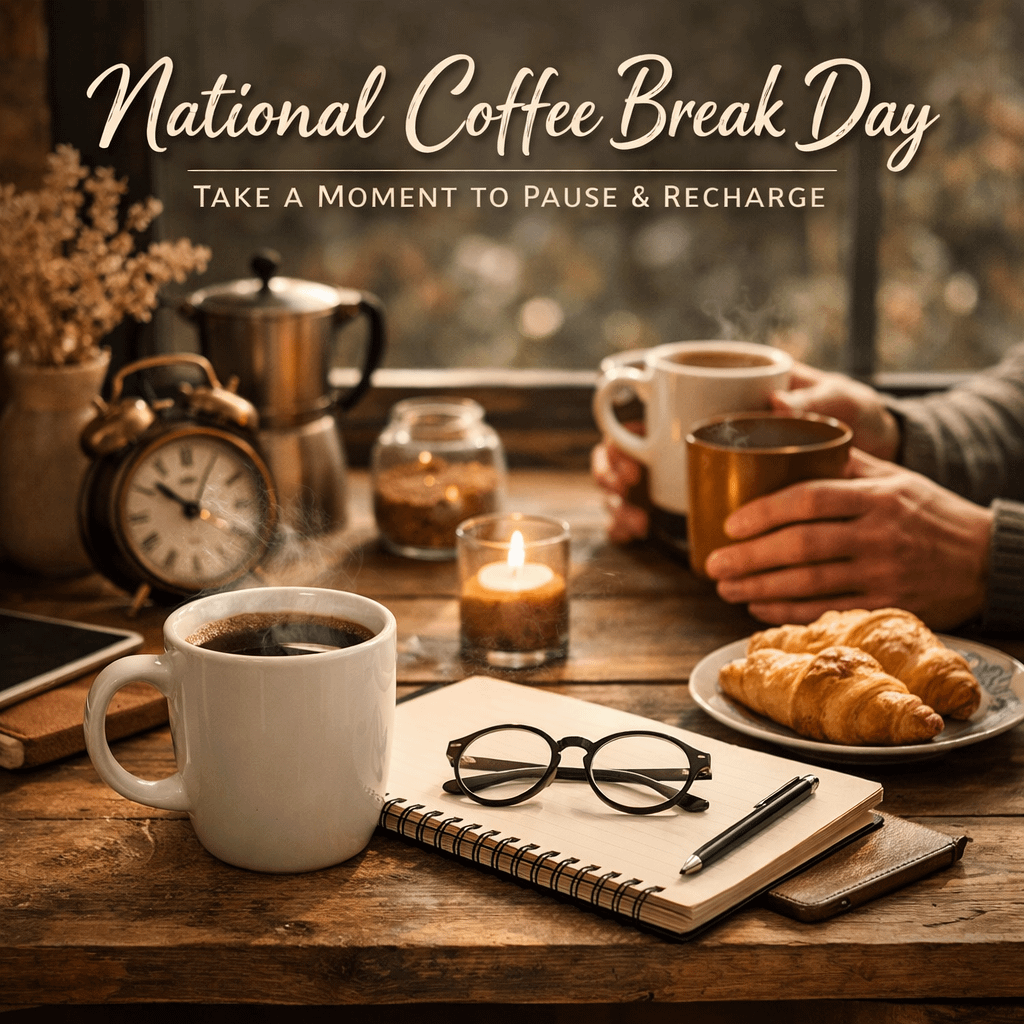
    In a society driven by deadlines, notifications, and nonstop expectations, slowing down can feel almost rebellious. Yet once a year, National Coffee Break Day, observed on January 20, invites us to do just that—to pause, pour a cup, and take a moment for ourselves and each other. What may seem like a simple ritual carries a deeper meaning rooted in history, wellness, and human connection.

    The Origins of the Coffee Break

    The concept of the coffee break traces back to the early 1900s, when factory and office workers began taking short, informal pauses during the workday. These moments were not initially designed for productivity—they were meant for rest. Over time, employers noticed something important: workers returned more focused, energized, and engaged.

    By the mid-20th century, the coffee break became woven into workplace culture across America. It was no longer just about caffeine; it was about conversation, community, and collective breathing room. National Coffee Break Day exists to honor that tradition and remind us that progress doesn’t always come from pushing harder—it often comes from stepping back.

    The Coffee Break as a Cultural Ritual

    Across cultures, sharing a warm drink has long symbolized hospitality, trust, and connection. Coffee breaks became a modern version of this age-old ritual. In offices, cafés, kitchens, and break rooms, these pauses turned into spaces where ideas were born, friendships formed, and stress softened.

    Even today, some of the most meaningful conversations don’t happen in conference rooms or over email—they happen over coffee. A quick break can become a bridge between people, breaking down hierarchy and creating moments of genuine connection.

    The Wellness Benefits of Taking a Break

    Science continues to confirm what people have intuitively known for generations: regular breaks are essential for mental and emotional well-being. Stepping away from tasks helps reduce stress, prevent burnout, and improve creativity.

    A coffee break, in particular, offers multiple benefits:

    • Mental clarity through brief disengagement from demands

    • Emotional balance by allowing space to breathe and reset

    • Social support when shared with others

    • Physical relaxation through warmth, movement, and posture change

    Even the ritual itself—holding a warm cup, inhaling the aroma, savoring the taste—can be grounding and calming. It turns an ordinary moment into a mindful experience.

    Redefining Productivity

    In today’s hustle culture, breaks are often seen as distractions or indulgences. National Coffee Break Day challenges that mindset. Productivity isn’t about constant output; it’s about sustainability. Without rest, focus deteriorates, mistakes increase, and motivation fades.

    A short coffee break can act as a reset button. It allows the brain to process information, solve problems subconsciously, and return with renewed perspective. In many cases, stepping away is exactly what helps us move forward.

    How to Meaningfully Celebrate National Coffee Break Day

    Celebrating National Coffee Break Day doesn’t require grand gestures. Its power lies in intention. Consider:

    • Scheduling a true break without screens or work talk

    • Inviting a colleague, friend, or family member to share a cup

    • Supporting a local café or small business

    • Trying a new roast, brew method, or non-coffee alternative

    • Using the time for reflection, journaling, or gratitude

    Whether alone or shared, the goal is presence—not multitasking.

    Beyond the Day: Making Pauses a Habit

    While National Coffee Break Day is observed once a year, its message is timeless. Life moves quickly, and without intentional pauses, meaningful moments can slip away. Incorporating small breaks into daily routines can lead to better mental health, stronger relationships, and a deeper sense of balance.

    The coffee break reminds us that rest is not weakness, and slowing down is not falling behind. Sometimes, the most powerful act is simply stopping long enough to notice where you are—and who you’re with.

    A Simple Cup, A Powerful Reminder

    At its core, National Coffee Break Day isn’t about coffee at all. It’s about humanity. It’s about choosing connection over chaos, presence over pressure, and balance over burnout.

    So on January 20—and any day that feels overwhelming—pour a cup, take a breath, and allow yourself the pause you deserve. The world will still be there when you return, and you just might meet it with clearer eyes and a lighter heart.

    Read More Holidays & National Days

  • Farmhouse Breakfast Week: Honoring Hearty Mornings, Family Tables, and Timeless Traditions

    Farmhouse Breakfast Week: Honoring Hearty Mornings, Family Tables, and Timeless Traditions

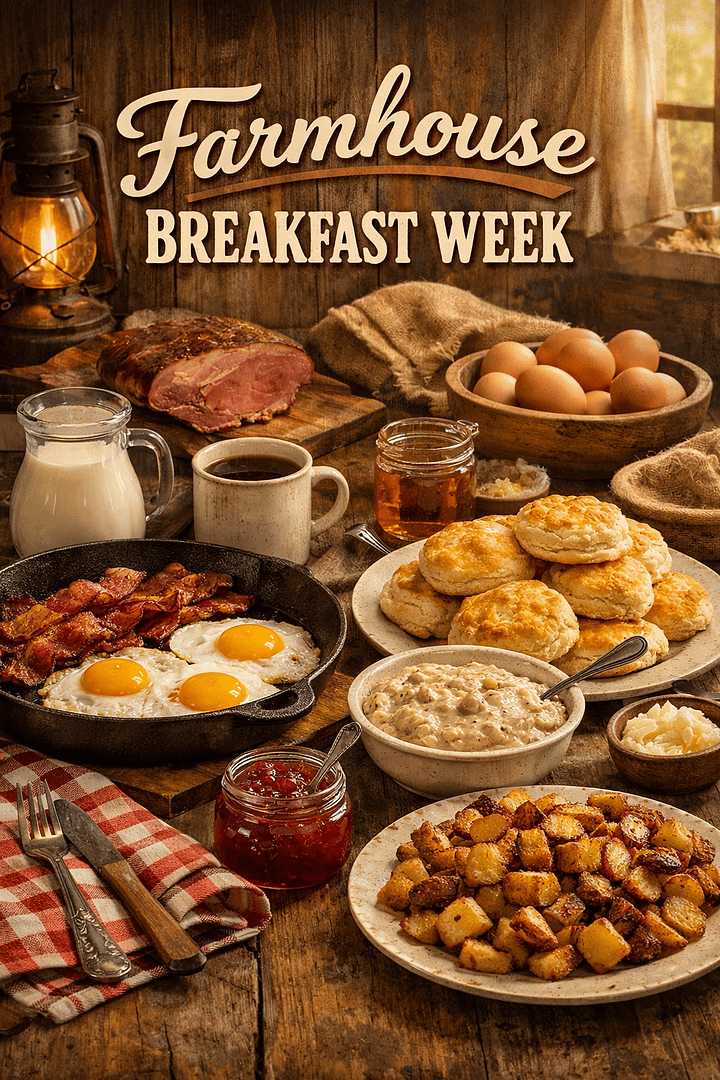
    Before alarm clocks buzzed and mornings became rushed, breakfast was the most important ritual of the day. In farmhouses across the country, the day began with the creak of wooden floors, the warmth of a cast-iron skillet, and the smell of coffee drifting through the kitchen. Farmhouse Breakfast Week celebrates those mornings—where meals were built with care, meant to nourish both body and spirit, and shared around a table that welcomed everyone.

    This week isn’t just about what’s on the plate. It’s about slowing down, reconnecting with tradition, and remembering that some of life’s simplest meals are also its most meaningful.

    Where the Farmhouse Breakfast Began

    Farmhouse breakfasts were born out of necessity. Farmers, laborers, and families needed meals that would sustain them through long, physically demanding days. Ingredients were local, seasonal, and often grown or raised just steps from the kitchen.

    Eggs were gathered at dawn. Milk came fresh from the barn. Flour, lard, and butter were pantry staples. Nothing went to waste, and every meal served a purpose. What emerged from those kitchens were breakfasts that were filling, comforting, and deeply satisfying—meals designed not for speed, but for strength.

    The Classic Farmhouse Breakfast Plate

    While farmhouse breakfasts vary by region and family tradition, certain elements remain universal:

    • Eggs, fried, scrambled, or baked into casseroles

    • Smoked bacon, ham, or sausage, often homemade or locally cured

    • Biscuits, cornbread, or thick-cut toast, warm and buttered

    • Country gravy, rich and peppery

    • Potatoes, fried crisp or roasted until golden

    • Homemade jams, preserves, or honey

    • Fresh milk or strong black coffee, served generously

    Each dish is humble on its own, but together they create a meal that feels abundant and welcoming.

    More Than a Meal—A Morning Ritual

    What truly defines a farmhouse breakfast is not just the food, but the experience. These meals were unhurried. Family members gathered before heading out to work or school. Stories were shared. Plans were made. Laughter filled the room.

    Farmhouse Breakfast Week reminds us that breakfast can be a moment of connection, not just a necessity squeezed between obligations. Sitting down together—even for twenty minutes—creates space for conversation and grounding before the day takes over.

    The Comfort Factor

    There’s a reason farmhouse breakfasts feel so comforting. The flavors are familiar, the portions are generous, and the recipes are often passed down through generations. They remind us of childhood kitchens, grandparents’ homes, and a time when life felt a little less complicated.

    In moments of stress or uncertainty, comfort food has a way of anchoring us. Farmhouse breakfasts do just that—offering warmth, reassurance, and a sense of home no matter where you are.

    Farm-to-Table Before It Was a Trend

    Long before “farm-to-table” became a buzzword, farmhouse kitchens lived it. Ingredients were fresh, local, and minimally processed. Farmhouse Breakfast Week highlights the value of knowing where food comes from and supporting local farmers and producers.

    Shopping at farmers’ markets, buying eggs from a neighbor, or making your own bread connects modern kitchens to traditional roots. It’s a return to intentional eating—one that values quality over convenience.

    Bringing the Farmhouse Breakfast Home

    You don’t need acreage or livestock to embrace farmhouse breakfasts. Anyone can recreate the spirit with a few mindful choices:

    • Cook from scratch when possible

    • Use simple, whole ingredients

    • Serve meals family-style

    • Set the table, even on weekdays

    • Slow down and eat together

    A skillet, a warm oven, and a little extra time can turn an ordinary morning into something memorable.

    A Week to Pause and Appreciate

    Farmhouse Breakfast Week is an invitation to pause. To wake up earlier than usual. To cook something with care. To sit down and truly enjoy the first meal of the day.

    In a world that often pushes us to move faster, this week reminds us that slowing down can be nourishing. Sometimes the most meaningful moments are found in simple breakfasts, shared with the people we love, over food that has stood the test of time.

    So pour another cup of coffee, pass the biscuits, and savor the moment. Farmhouse Breakfast Week isn’t just a celebration of food—it’s a celebration of home.

    Read More Holidays & National Days

  • NATIONAL POPCORN DAY – A Crunchy Celebration of History, Flavor, and Togetherness

    NATIONAL POPCORN DAY – A Crunchy Celebration of History, Flavor, and Togetherness

    Every year on January 19, people across the country celebrate National Popcorn Day, honoring one of the most iconic snacks ever to grace a bowl. Light, crunchy, and endlessly customizable, popcorn has become a staple in homes, theaters, stadiums, and snack aisles everywhere. But this beloved treat is more than just a movie-night companion—it’s a symbol of comfort, creativity, and shared moments.

    From Ancient Kernels to Modern Bowls

    Popcorn’s origins date back thousands of years. Archaeologists have discovered popcorn remnants in caves in New Mexico that are believed to be over 5,000 years old. Indigenous peoples of the Americas not only ate popcorn but also used it in ceremonial attire and decorations. To them, popcorn was both nourishment and cultural expression.

    The snack entered mainstream American life in the 19th century, when Charles Cretors introduced the first commercial popcorn machine. His invention allowed popcorn to be freshly popped in public spaces, quickly making it a street-corner sensation. During the Great Depression, popcorn became even more popular because it was affordable and filling—an inexpensive luxury in difficult times.

    Popcorn and the Movies: A Perfect Pair

    Few pairings are as iconic as popcorn and movies. At first, movie theaters resisted selling popcorn, worried it would create a mess. But as attendance declined during economic hardships, theaters embraced popcorn as a revenue booster—and audiences never looked back.

    Today, the smell of freshly popped popcorn is inseparable from the moviegoing experience. It heightens anticipation, enhances comfort, and adds a sensory layer to storytelling that audiences instinctively associate with entertainment and escape.

    A Snack That Adapts to Every Taste

    Popcorn’s lasting appeal lies in its versatility. It can be:

    • Savory: butter, sea salt, garlic, ranch, cheddar

    • Sweet: caramel, kettle corn, chocolate drizzle

    • Spicy: chili powder, cayenne, sriracha seasoning

    • Gourmet: truffle oil, rosemary parmesan, matcha sugar

    From homemade air-popped popcorn to artisanal gourmet blends, popcorn has evolved to fit every palate and occasion. It can be dressed up for parties or enjoyed plain as a simple, satisfying snack.

    The Health Side of Popcorn

    Popcorn often surprises people with its health benefits. When air-popped, it’s a whole grain that’s naturally low in calories and high in fiber. It can support digestion, help manage hunger, and serve as a smarter snack alternative to processed foods.

    Of course, toppings matter. While butter and sugar can turn popcorn into an indulgence, moderation allows it to remain both enjoyable and nutritious—proof that balance doesn’t have to be boring.

    Popcorn as a Social Experience

    Popcorn isn’t just about eating—it’s about togetherness. It’s shared at family movie nights, passed around at sporting events, and enjoyed at fairs and festivals. Making popcorn can even be an activity itself, bringing people into the kitchen to experiment with flavors and laugh over kernels popping in every direction.

    In many ways, popcorn represents simple joy—the kind that doesn’t require planning or perfection.

    How to Celebrate National Popcorn Day

    National Popcorn Day is an invitation to slow down and enjoy something familiar in a new way. You might:

    • Create a popcorn tasting night with friends or family

    • Try a new seasoning you’ve never used before

    • Support a local gourmet popcorn shop

    • Enjoy a classic movie marathon with fresh popcorn

    Whether you keep it traditional or adventurous, the celebration is about appreciating the little pleasures that make everyday life better.

    A Snack That Never Goes Out of Style

    Trends come and go, but popcorn endures. It has survived centuries, economic shifts, and changing tastes—proving that the simplest ideas often last the longest. On National Popcorn Day, we’re reminded that comfort doesn’t need to be complicated, and happiness can sometimes be found in something as small as a popped kernel.

    So grab a bowl, listen for the pop, and enjoy the crunch. Some traditions are worth savoring.

    Read More Holidays & National Days
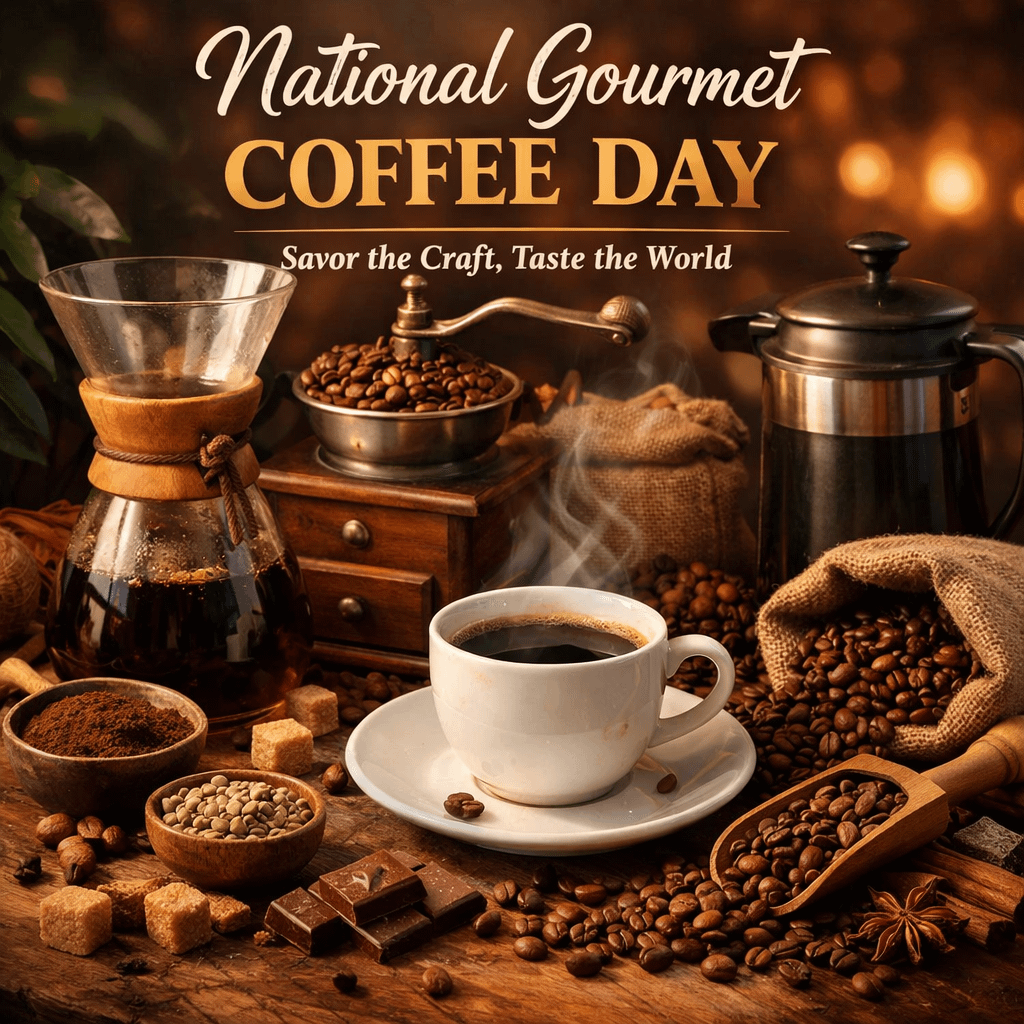
  • National Gourmet Coffee Day: A Celebration of Flavor, Craft, and Connection

    National Gourmet Coffee Day: A Celebration of Flavor, Craft, and Connection

    There are few daily rituals as universally loved as coffee. For some, it’s the first warm sip that eases the transition from sleep to wakefulness. For others, it’s a companion during late nights, creative bursts, or deep conversations. National Gourmet Coffee Day celebrates more than a beverage—it honors the craftsmanship, culture, and connection found in every thoughtfully brewed cup.

    From Bean to Brew: The Journey of Gourmet Coffee

    Gourmet coffee begins long before it reaches your mug. It starts in carefully tended farms located in regions with ideal growing conditions—high elevations, rich soil, and balanced climates. Coffee cherries are often hand-picked at peak ripeness, ensuring consistency and quality that mass production simply can’t replicate.

    After harvesting, the beans undergo precise processing methods—washed, honeyed, or natural—each influencing flavor and aroma. Skilled roasters then take over, using small-batch techniques to highlight the bean’s natural characteristics rather than masking them with heavy roasting. The result is a coffee that tells a story through taste: bright acidity, subtle sweetness, smooth body, or lingering chocolatey depth.

    What Truly Defines “Gourmet” Coffee?

    The term “gourmet” isn’t about luxury—it’s about intention. Gourmet coffee focuses on:

    • Quality over quantity

    • Flavor clarity instead of bitterness

    • Ethical sourcing and sustainability

    • Respect for the people behind the product

    Single-origin beans, fair-trade practices, and transparent sourcing have become cornerstones of gourmet coffee culture. When you choose gourmet coffee, you’re not just selecting a superior flavor—you’re supporting farmers, local roasters, and environmentally responsible practices.

    A World of Flavor in One Cup

    One of the joys of gourmet coffee is its diversity. Each region offers a unique sensory experience:

    • Ethiopian coffees often showcase floral notes and bright citrus acidity

    • Colombian beans are known for balance, mild sweetness, and smooth finishes

    • Sumatran coffees bring earthy, bold flavors with low acidity

    • Brazilian roasts often deliver nutty, chocolate-forward profiles

    This diversity allows coffee drinkers to explore the world without leaving home—transforming a simple drink into a global tasting journey.

    Coffee as Culture and Connection

    Coffee has long been a social catalyst. Across cultures, it has served as a symbol of hospitality, conversation, and community. Today’s coffee shops continue that tradition, acting as modern gathering places where ideas are shared, relationships are built, and creativity thrives.

    For many people, gourmet coffee is woven into meaningful moments—morning routines with loved ones, quiet reflection during stressful days, or long talks with friends that stretch late into the night. It’s comfort in a cup, offering familiarity even as flavors evolve.

    Brewing as an Experience

    Gourmet coffee encourages mindfulness in preparation. Methods like pour-over, French press, AeroPress, or cold brew allow drinkers to engage with the process, controlling variables like grind size, water temperature, and brew time. Brewing becomes less about speed and more about savoring the moment.

    Even small changes—using freshly ground beans or filtered water—can elevate the experience, making each cup feel intentional and rewarding.

    How to Celebrate National Gourmet Coffee Day

    This day is an invitation to explore and appreciate. Consider celebrating by:

    • Trying a new single-origin roast you’ve never tasted

    • Supporting a local roaster or independent café

    • Learning about the farmers and regions behind your favorite beans

    • Experimenting with a new brewing method at home

    • Sharing a cup of coffee with someone and slowing down together

    A Moment Worth Savoring

    In a fast-paced world, gourmet coffee reminds us to pause. It encourages us to appreciate quality, craftsmanship, and the beauty of small rituals. National Gourmet Coffee Day isn’t about indulgence—it’s about awareness, gratitude, and connection.

    So today, take a moment. Inhale the aroma. Savor the flavor. And remember that sometimes, the simplest pleasures—like a perfectly brewed cup of coffee—can be the most meaningful.

    Read More Holidays & National Days
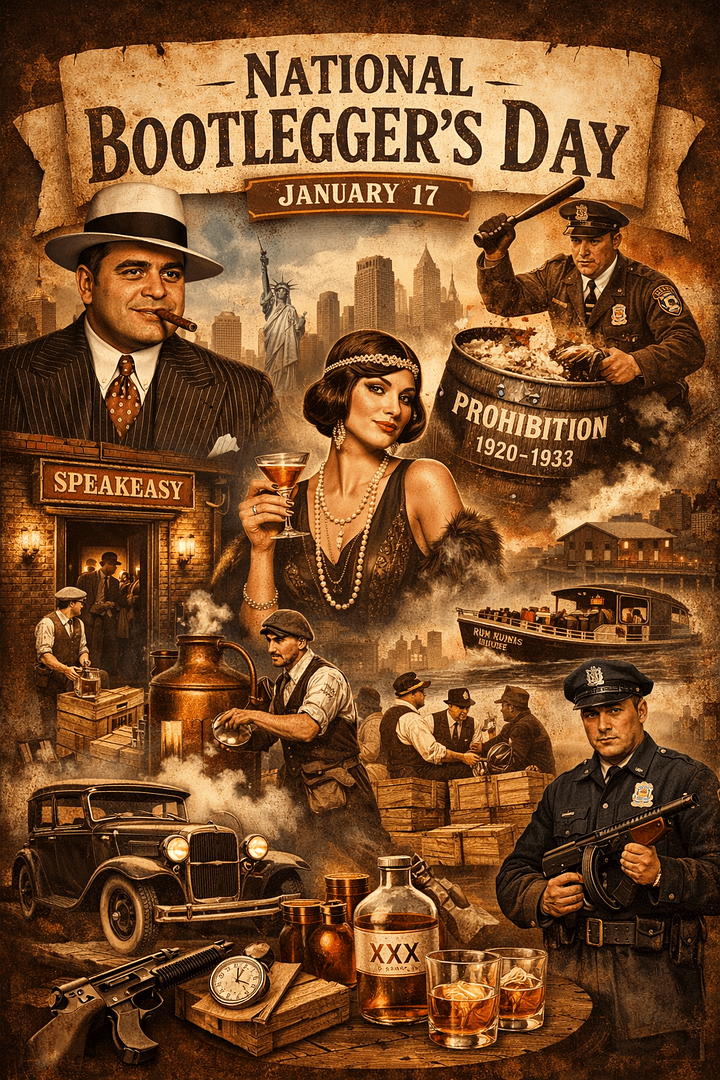
  • National Bootlegger’s Day: A Toast to Rebellion, Ingenuity, and American History

    National Bootlegger’s Day: A Toast to Rebellion, Ingenuity, and American History

    Every year on January 17, National Bootlegger’s Day takes us back to one of the most paradoxical chapters in American history—Prohibition. What began as a moral crusade to clean up society instead fueled rebellion, creativity, and an underground economy that forever changed American culture. This day is not about glorifying crime, but about remembering how laws, culture, and human nature collided in a way no one anticipated.

    Prohibition Begins: A Noble Idea with Flawed Execution

    On January 17, 1920, the 18th Amendment officially went into effect, banning the production, sale, and transportation of alcohol throughout the United States. Supporters believed alcohol was the root of crime, domestic violence, and poverty. By eliminating it, they hoped to create a healthier, more orderly nation.

    Instead, Prohibition created a massive vacuum—one quickly filled by bootleggers.

    Alcohol didn’t disappear. It went underground.

    Who Were the Bootleggers?

    Bootleggers ranged from everyday citizens trying to survive to large-scale criminal organizations running sophisticated smuggling operations. Some brewed alcohol in basements and backwoods stills. Others smuggled liquor from Canada, the Caribbean, and Europe using boats, cars, and even hidden compartments in coffins and ambulances.

    The term bootlegger likely comes from the practice of hiding flasks inside boots or pant legs. Over time, these small acts of defiance evolved into sprawling networks that supplied an entire nation unwilling to give up drinking.

    For many Americans, bootlegging wasn’t about rebellion—it was about necessity. Farmers lost income, factories closed, and jobs were scarce. Illicit alcohol became a way to survive.

    Speakeasies: Where Culture Thrived in the Shadows

    As bootleggers supplied alcohol, speakeasies became the heartbeat of the Prohibition era. These hidden bars—often accessed through passwords or secret doors—offered more than drinks. They provided escape.

    Jazz music flourished. Women gained new social freedoms. Racial barriers blurred in music and nightlife in ways rarely seen before. The Roaring Twenties found its voice behind closed doors, fueled by illegal cocktails and fearless expression.

    In many cities, thousands of speakeasies operated openly despite the law. New York City alone was rumored to have over 30,000 at the height of Prohibition—more bars than before alcohol was banned.

    Organized Crime and Corruption

    Prohibition didn’t eliminate crime—it professionalized it.

    Criminal figures like Al Capone, Lucky Luciano, and Meyer Lansky built empires on bootleg alcohol. Smuggling routes were guarded like military operations. Violence increased as gangs fought over territory, and corruption spread through police departments, courts, and political offices.

    Law enforcement agencies were understaffed, underpaid, and often bribed. The law became impossible to enforce consistently, eroding public trust in government and the justice system.

    The Fall of Prohibition

    By the early 1930s, it was clear Prohibition had failed. The Great Depression worsened the situation, and Americans wanted legal jobs, tax revenue, and an end to widespread corruption.

    In 1933, the 21st Amendment repealed Prohibition, making it the only constitutional amendment ever reversed. Breweries reopened, jobs returned, and bootlegging slowly faded—though its legacy remained.

    The Cultural Legacy of Bootlegging

    Bootlegging left an indelible mark on American culture:

    • Classic cocktails were invented to mask the harsh taste of illegal liquor

    • Jazz and nightlife exploded in popularity

    • Pop culture embraced the anti-hero outlaw

    • Distrust of overreaching laws became deeply ingrained

    Even today, the fascination with speakeasies, vintage cocktails, and Prohibition-era style reflects our enduring curiosity about that rebellious time.

    What National Bootlegger’s Day Means Today

    National Bootlegger’s Day is not a celebration of illegal activity—it’s a historical reflection. It reminds us that when laws clash with culture, people adapt in unexpected ways. It’s a lesson in unintended consequences, resilience, and the power of human ingenuity.

    Today, people mark the occasion by:

    • Learning about Prohibition-era history

    • Visiting speakeasy-style bars

    • Exploring classic cocktails

    • Reflecting on personal freedom and social change

    A Spirited Reminder from History

    National Bootlegger’s Day invites us to remember a time when America tried to legislate morality—and discovered that human behavior is far more complex. The bootlegger became a symbol of resistance, survival, and innovation, shaping an era that still influences how we drink, socialize, and question authority.

    History doesn’t just live in textbooks—it lingers in the stories we tell, the music we play, and the glasses we raise.

    Read More Holidays & National Days
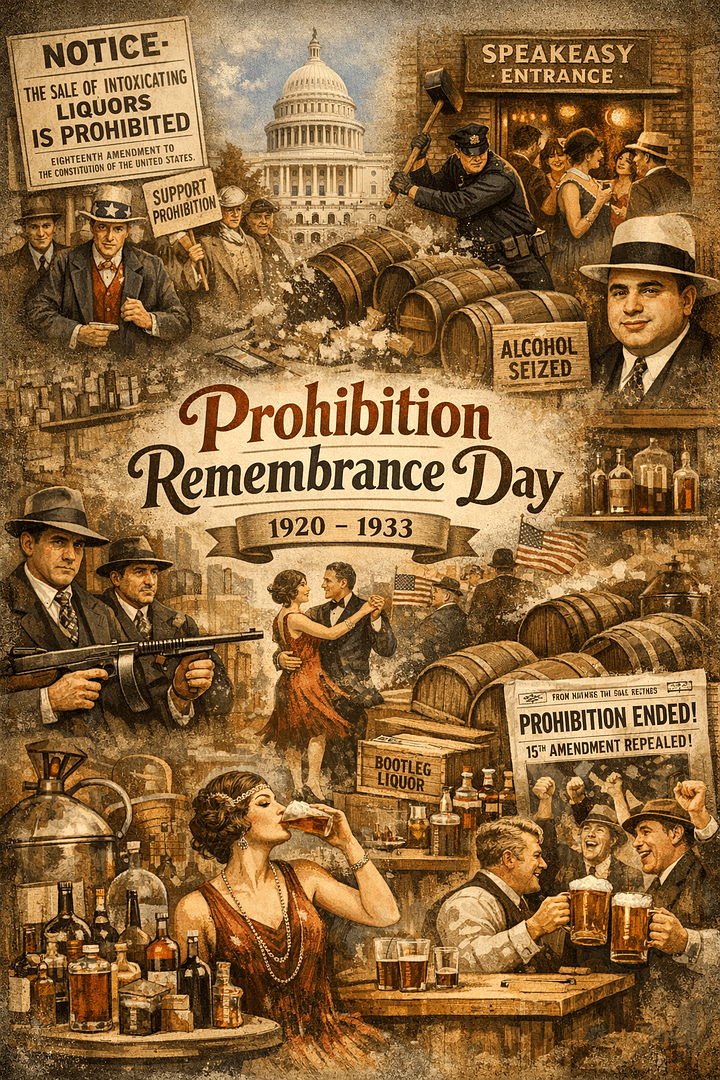
  • Prohibition Remembrance Day: Remembering a Ban That Changed America

    Prohibition Remembrance Day: Remembering a Ban That Changed America

    Each year, Prohibition Remembrance Day invites us to reflect on one of the most ambitious and controversial social experiments in American history—the nationwide ban on alcohol. More than a footnote in the past, Prohibition reshaped politics, culture, crime, and everyday life in ways that still echo today.

    From 1920 to 1933, the manufacture, sale, and transportation of alcoholic beverages were outlawed under the 18th Amendment to the U.S. Constitution. What began as a moral and social reform effort became a defining lesson in the limits of legislation and the resilience of human behavior.

    Why Prohibition Began

    The movement for Prohibition did not arise overnight. For decades, temperance advocates, religious groups, and social reformers argued that alcohol was responsible for poverty, domestic violence, workplace accidents, and moral decline. Saloons were seen as breeding grounds for corruption, especially in working-class communities.

    By the early 20th century, these concerns had gained powerful political backing. World War I further fueled support, as conserving grain and promoting discipline were framed as patriotic duties. In 1919, the 18th Amendment was ratified, and in January 1920, Prohibition officially went into effect.

    Life Under the Ban

    While lawmakers hoped Prohibition would create a healthier, more orderly society, the reality proved far more complex.

    Alcohol did not disappear—it went underground. Speakeasies flourished in cities, bootleggers smuggled liquor across borders, and homemade spirits became common. What was once a regulated industry transformed into an illicit economy controlled by criminal organizations.

    Perhaps most famously, organized crime expanded rapidly during this era. Figures like Al Capone built empires on illegal alcohol, fueling violence and corruption. Law enforcement agencies were overwhelmed, underfunded, and often compromised. Instead of reducing crime, Prohibition unintentionally made it more profitable.

    Cultural and Social Impact

    Prohibition also reshaped American culture. The Jazz Age, with its defiance of traditional norms, was intertwined with secret clubs, coded passwords, and a rebellious spirit. Women, newly empowered by the right to vote, became visible participants in nightlife, challenging long-standing social expectations.

    At the same time, many families and communities felt the strain of the law. Ordinary citizens who once enjoyed alcohol legally were suddenly criminals for maintaining familiar customs. Respect for the law eroded as millions ignored or openly violated the ban.

    The End of an Era

    By the early 1930s, public opinion had shifted dramatically. The Great Depression added urgency, as Americans recognized that legalizing alcohol could generate tax revenue and create jobs. In 1933, the 21st Amendment was ratified, repealing Prohibition and restoring the legal sale of alcohol.

    It remains the only time in U.S. history that a constitutional amendment has been repealed.

    Why We Remember

    Prohibition Remembrance Day is not about celebrating alcohol, but about honoring history—and learning from it. The era stands as a powerful reminder that well-intentioned laws can produce unintended consequences when they clash with deeply rooted human behavior.

    It also highlights enduring questions that still shape public policy today:
    How much should government regulate personal choices?
    What happens when legislation moves faster than cultural change?
    Can morality be enforced by law?

    By remembering Prohibition, we remember the importance of balance—between reform and freedom, idealism and realism.

    A Lesson for the Future

    More than ninety years after its repeal, Prohibition continues to shape discussions around drug policy, public health, and personal liberty. It teaches us that social progress requires not only good intentions, but also practical understanding of human nature and society.

    Prohibition Remembrance Day invites us to look back—not with nostalgia or judgment, but with clarity. History’s most ambitious experiments often leave the strongest lessons behind.

    What lessons do you think modern society can still learn from the era of Prohibition?

    Read More Holidays & National Days
  • When You Get Disappointed and Hurt: Learning to Breathe Through the Break

    When You Get Disappointed and Hurt: Learning to Breathe Through the Break

    Disappointment and hurt rarely announce themselves with noise. They don’t always arrive as dramatic endings or explosive confrontations. More often, they slip quietly into moments that were supposed to feel safe, meaningful, or hopeful. A promise that wasn’t kept. A person who didn’t show up. An outcome that fell painfully short of what you believed was possible.

    And suddenly, something inside you tightens.

    Disappointment is not just about what happened—it’s about what should have been. It is the gap between expectation and reality. Hurt is what follows when that gap cuts deeper than we anticipated. Together, they form a kind of emotional ache that doesn’t always have words, but carries weight all the same.

    We all live with expectations, whether we admit it or not. We expect honesty when we offer trust. We expect care when we give love. We expect effort when we invest time, energy, and emotion. These expectations are not unreasonable—they are human. They come from our desire to connect, to belong, and to believe that what we give to the world will, in some form, be returned.

    But life does not always meet us where we stand.

    Sometimes people fall short of what we hoped they would be. Sometimes circumstances undo our best plans. Sometimes dreams we nurtured quietly for years dissolve in a single moment. And when that happens, the pain can feel personal, even when it isn’t meant to be.

    What makes disappointment especially heavy is that it rarely exists in isolation. It often reawakens old wounds—past betrayals, broken relationships, moments when you felt overlooked, abandoned, or misunderstood. One new hurt can echo a hundred old ones. You may find yourself thinking, Here it is again. This always happens. Why do I keep believing?

    That question can be more painful than the event itself.

    When you are disappointed, it’s easy to turn inward with blame. You might question your judgment. You might replay conversations, searching for the moment where things went wrong. You might wonder if you expected too much, trusted too easily, or cared more than you should have. Hurt has a way of making us doubt not only others—but ourselves.

    Yet disappointment does not mean you were foolish for hoping. Hurt does not mean you were weak for caring. In fact, these emotions are evidence of something profoundly human within you: your capacity to believe in better, to invest emotionally, and to imagine possibilities beyond what already exists. The pain is there because something mattered.

    Still, knowing this doesn’t always make it easier to carry.

    There are days when disappointment feels heavy in your chest, when it follows you into quiet moments and interrupts your thoughts. You may withdraw, emotionally or physically, as a form of self-protection. You may become cautious with your words, guarded with your heart, afraid of opening yourself up to another letdown. This instinct to protect yourself is natural. Pain teaches us to be careful.

    But there is a difference between protecting your heart and building walls around it.

    When hurt hardens into isolation, it can begin to limit your life. You may stop sharing your hopes. You may avoid deep connections. You may settle for less than you truly want simply to avoid the possibility of being disappointed again. In trying to prevent pain, you may also prevent joy, intimacy, and growth.

    Healing does not mean pretending you are unaffected. It does not mean forcing yourself to “be strong” or telling yourself that it doesn’t matter. Healing begins with honesty—allowing yourself to feel what you feel without minimizing it.

    Name the disappointment. Acknowledge the hurt. Write it out. Sit with it in stillness. Speak it to someone you trust. Emotions lose some of their power when they are brought into the light rather than buried in silence. You do not have to justify your pain for it to be real.

    It is also important to gently separate what happened from who you are. Being disappointed does not mean you are unworthy. Being hurt does not mean you are broken. Sometimes it simply means that two realities did not align. People make choices from their own fears, limitations, and struggles—many of which have little to do with your value as a person.

    Not every loss is a reflection of your inadequacy. Not every rejection is proof that you are “too much” or “not enough.” Often, it is simply evidence that something—or someone—was not able to meet you at the depth you deserved.

    Over time, disappointment can become a teacher.

    It reveals what you truly need, not just what you hoped for. It shows you where your boundaries need strengthening and where your expectations need clarity. It helps you distinguish between those who are capable of showing up consistently and those who are not. And sometimes, it redirects you—away from paths that were never meant to sustain you, and toward ones that better align with who you are becoming.

    This doesn’t make the pain meaningless, but it can make it purposeful.

    There is also a quiet strength that grows from surviving emotional hurt. You learn that you can endure moments that once felt unbearable. You learn how to hold grief without letting it define you. You learn that vulnerability is not a flaw, but a form of courage. Each time you choose to keep going—to keep trusting, to keep caring—you prove that disappointment does not get to write the final chapter of your story.

    And yes, you will be disappointed again. Life is imperfect. People are imperfect. Dreams sometimes unravel. But you will also experience moments of unexpected kindness, deep connection, and quiet fulfillment. You will meet people who show up in ways you never imagined. You will find meaning in places you once overlooked. You will discover that your heart, though wounded at times, is also remarkably resilient.

    Most importantly, do not let disappointment convince you to stop hoping.

    Hope is not naïve—it is brave. It is the choice to believe in possibility even after you’ve been let down. It is the decision to remain open in a world that has given you reasons to close off. Every time you allow yourself to hope again, you are choosing life over fear.

    When you are disappointed and hurt, be gentle with yourself. You are not weak for feeling deeply. You are not wrong for wanting more than what was offered. You are human, navigating a world that does not always make sense.

    And one day, what once broke your heart will simply be a chapter—a reminder that even in the midst of disappointment and hurt, you kept breathing, kept believing, and kept becoming.

    Read More Of Inspiration & Motivation

  • Everything Starts With Honesty

    Everything Starts With Honesty

    Honesty is often described as a virtue, a character trait, or a moral expectation. But in reality, it is something far more fundamental: it is the starting point of everything that truly matters. Before trust can be built, before healing can begin, before success can last, and before relationships can deepen, there must be truth. Without honesty, progress is an illusion. With it, even the most difficult realities become workable.

    We live in a world that often rewards appearances over authenticity. Social media filters reality. Professional environments sometimes value performance over transparency. Even in personal relationships, people hide parts of themselves to avoid rejection, conflict, or vulnerability. But while dishonesty may feel safer in the moment, it always comes at a cost. Eventually, what is hidden becomes heavier than what is revealed.

    Everything starts with honesty—especially the life you are trying to build.

    The Courage to Be Honest With Yourself

    The most important truth is also the hardest: the truth you tell yourself.

    Self-honesty requires facing uncomfortable realities. It means acknowledging when you are unhappy instead of pretending everything is fine. It means admitting when you are afraid, when you have made mistakes, or when you are holding onto something that no longer fits who you are becoming. It means recognizing patterns that repeat in your life and accepting your role in them.

    Many people avoid this kind of honesty because it threatens the stories they have built about themselves. We tell ourselves we are “just tired,” when we are actually burned out. We say “this is fine,” when something inside us knows it is not. We blame circumstances, other people, or bad luck when the deeper truth is that we are afraid to change.

    But growth does not begin with motivation. It begins with truth.

    You cannot heal what you refuse to acknowledge. You cannot improve what you will not examine. Self-honesty is not about self-judgment—it is about clarity. Once you are honest about where you are, you finally gain the power to choose where you are going.


    Honesty in Relationships: Where Trust Is Born

    Every meaningful relationship stands or falls on honesty. Trust is not built through perfection; it is built through truth. People do not need you to be flawless—they need you to be real.

    Dishonesty in relationships does not always appear as obvious lies. Sometimes it shows up as silence when something matters, avoidance when conflict is needed, or half-truths meant to “keep the peace.” Over time, these small omissions create emotional distance. What is not said becomes heavier than what is.

    Honesty does not mean brutal honesty. It does not mean speaking without care or compassion. True honesty is rooted in respect—it is about sharing truth in a way that seeks understanding, not harm. It means expressing your needs instead of expecting others to guess them. It means addressing problems before resentment grows. It means being willing to have difficult conversations because the relationship matters more than temporary comfort.

    When honesty is present, relationships gain stability. When it is absent, even the strongest bonds begin to fracture.


    Integrity: When Honesty Becomes Action

    Honesty is not only about what you say—it is about what you do. This is where honesty becomes integrity.

    Integrity is the alignment between your values and your behavior. It is choosing what is right even when no one is watching. It is keeping your word, admitting when you are wrong, and taking responsibility when it would be easier to shift blame.

    In a culture that often celebrates shortcuts and appearances, integrity can feel slow and inconvenient. But what is built without honesty is never secure. Success that depends on deception eventually collapses. Relationships built on falsehood eventually break. A reputation created through manipulation eventually fades.

    A life built on honesty, however, endures.

    When your actions reflect your values, you gain something more valuable than approval: self-respect. And self-respect is the foundation of confidence, leadership, and lasting influence.


    Honesty and Emotional Freedom

    There is a unique kind of freedom that comes from telling the truth. When you stop pretending, hiding, or performing, your mind becomes lighter. You no longer carry the burden of maintaining versions of yourself for different people. You simply exist as who you are.

    Honesty allows you to set boundaries. It gives you permission to say no without guilt, to ask for help without shame, and to walk away from what does not align with your well-being. It teaches you that protecting your truth is not selfish—it is necessary.

    Living honestly also means accepting your limitations. You are not required to be everything to everyone. You are allowed to admit when something is too much, when you are uncertain, or when you need time to grow. This kind of honesty fosters emotional maturity and strengthens resilience.

    When you live in truth, you no longer waste energy maintaining what is false. You use that energy to build what is real.


    Honesty in Healing and Growth

    Every journey of healing begins with acknowledgment. Whether the pain comes from loss, betrayal, failure, or personal struggle, progress does not start with positivity—it starts with honesty.

    You must first name what hurts.

    Avoidance delays healing. Minimizing pain does not make it disappear. But when you allow yourself to say, “This affected me,” or “I am not okay,” you take back control. Honesty gives pain a voice, and once something has a voice, it can be understood, processed, and eventually transformed.

    The same is true for personal growth. Change does not begin with ambition alone. It begins with an honest assessment of where you are, what you need, and what must change. Without that clarity, goals remain fantasies. With it, they become plans.


    Choosing Honesty Every Day

    Honesty is not a single decision—it is a daily practice. It shows up in small moments: telling the truth when it would be easier to stay silent, admitting mistakes instead of defending them, and choosing transparency over image.

    This practice requires courage. Truth is not always comfortable. It may disrupt relationships, challenge routines, or force you to confront realities you would rather avoid. But discomfort is temporary. The consequences of dishonesty last far longer.

    Every time you choose honesty, you strengthen the foundation of your life. You create relationships that are real, goals that are achievable, and a sense of self that does not depend on approval or illusion.


    The Foundation of Everything

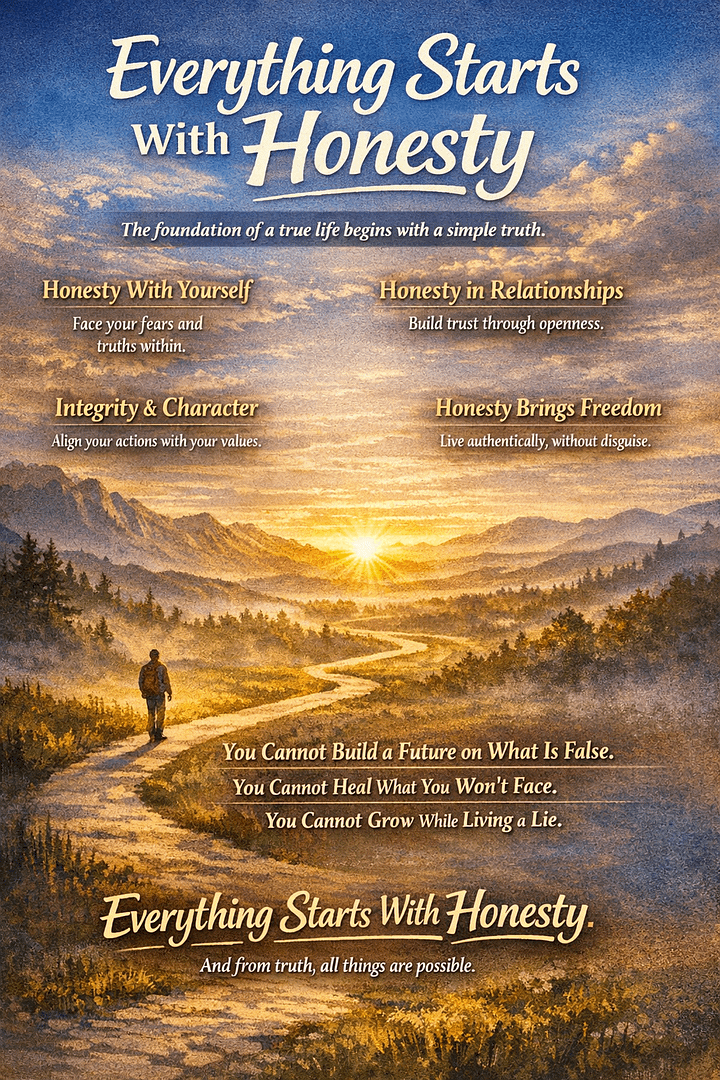
    You cannot build a future on what is false.
    You cannot repair what you refuse to acknowledge.
    You cannot become who you are meant to be while hiding from who you are.

    Whether you are trying to rebuild trust, heal old wounds, pursue a new path, or redefine your identity, the starting point is always the same.

    Everything starts with honesty.

    And from that truth, everything else becomes possible.

    Read More Of Love & Relationships

    Read More Of Inspiration & Motivation

  • Ratification Day: When a Nation Became a Constitution

    Ratification Day: When a Nation Became a Constitution

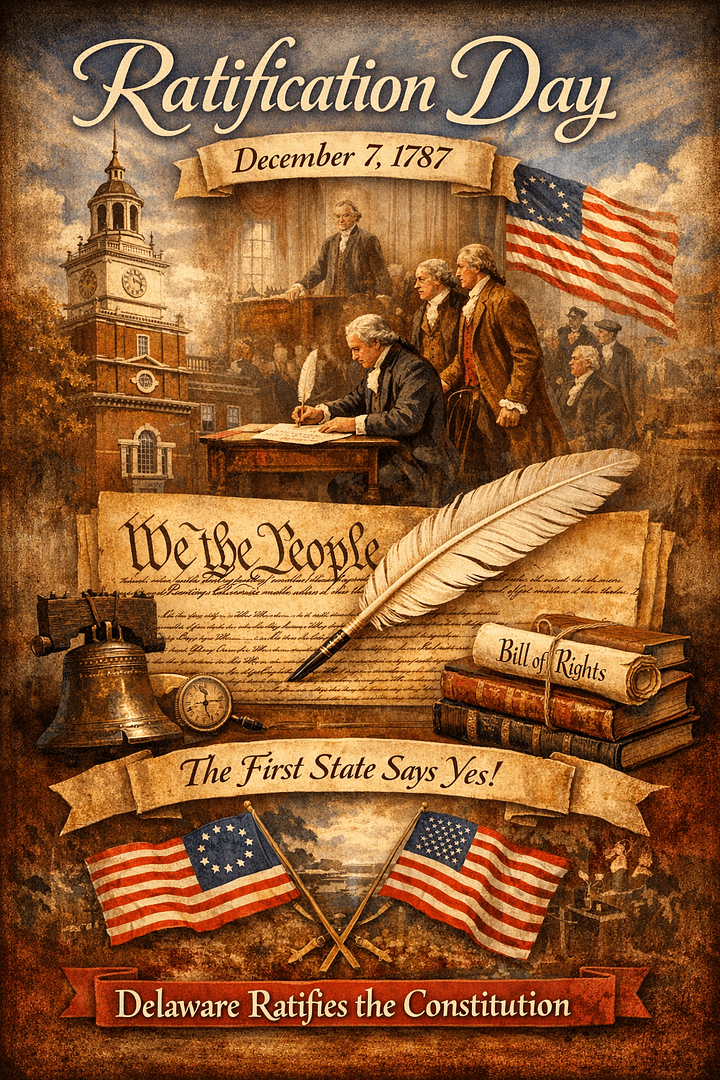
    Every year on December 7, the United States quietly marks a moment that forever shaped its identity—Ratification Day. On this date in 1787, Delaware became the first state to ratify the U.S. Constitution, setting in motion the legal and political foundation of the nation we know today. While not as widely celebrated as Independence Day or Constitution Day, Ratification Day represents the moment when the idea of America officially became a governing reality.

    From Revolution to Framework

    After winning independence from Great Britain, the newly formed states faced a daunting challenge: how to govern themselves as a unified nation. The Articles of Confederation, the country’s first attempt at national government, proved too weak to manage economic instability, interstate disputes, and national defense.

    In 1787, delegates from across the states gathered in Philadelphia for what became the Constitutional Convention. Their goal was bold—design a system that balanced federal authority with states’ rights, individual liberty with collective security, and democratic participation with stable governance.

    The result was the U.S. Constitution, but writing it was only half the battle. For it to take effect, at least nine of the thirteen states had to formally approve—or ratify—the document.

    December 7, 1787: The First Yes

    On Ratification Day, Delaware became the first state to ratify the Constitution unanimously. Eager to secure its place in the new republic and strengthen the fragile union, Delaware proudly earned the nickname “The First State.”

    Other states soon followed. By June 21, 1788, New Hampshire became the ninth state to ratify, officially establishing the Constitution as the supreme law of the land. By 1790, all thirteen original states had ratified, fully uniting under the new system of government.

    Why Ratification Matters

    Ratification Day is not just a historical footnote—it symbolizes:

    • The birth of American democracy in action
      Citizens and state conventions debated, challenged, and ultimately chose their governing framework.

    • The power of compromise
      The Constitution exists because people with different interests found common ground.

    • The foundation of individual rights
      Ratification led to the addition of the Bill of Rights, protecting freedoms such as speech, religion, and due process.

    Without ratification, the Constitution would have remained a proposal rather than the living document that continues to guide the nation.

    A Living Legacy

    More than two centuries later, the Constitution remains one of the oldest written national constitutions still in use. While it has been amended to reflect social progress and changing values, its core principles—liberty, justice, and representative government—remain intact.

    Ratification Day reminds us that democracy is not something handed down effortlessly. It is built through participation, debate, and the courage to believe in a shared future.

    How to Observe Ratification Day

    You can honor this day in meaningful ways:

    • Read the Constitution or explore the Federalist Papers

    • Discuss the importance of civic responsibility with students or family

    • Reflect on the rights and responsibilities you hold as a citizen

    • Visit a historic site or watch a documentary about America’s founding

    A Moment Worth Remembering

    Ratification Day is the day a bold experiment in self-governance became real. It marks the moment when thirteen diverse states chose unity over division and laid the groundwork for a nation still striving to live up to its founding ideals.

    In remembering Ratification Day, we are reminded that the strength of democracy lies not only in its documents—but in the people who continue to uphold them.