
Author: Brett Murphy

  • Dealing With Grief When It Hits You Hard

    Dealing With Grief When It Hits You Hard

    Grief has a way of showing up when you least expect it. One moment you may be managing your day, completing tasks, talking with friends, or even laughing at something on television. The next moment, a memory, a song, a photograph, or a random thought can knock the wind out of you. Suddenly, the pain is back, and it feels as if the loss happened all over again.

    If you are experiencing grief that hits hard and unexpectedly, you are not alone. One of the most misunderstood parts of grief is its unpredictability. Many people assume healing follows a straight line, becoming easier with each passing day. In reality, grief often moves in waves. Some days are calm. Other days feel like a storm. This is a normal part of the grieving process.

    When Grief Takes Your Breath Away

    There are moments when grief feels manageable. Then there are moments when it feels impossible.

    You may wake up with a heavy heart and no clear reason why. You may suddenly break down while driving, shopping, or sitting alone in your living room. You may feel an overwhelming ache in your chest that reminds you of everything you have lost.

    For parents who have lost a child, these moments can be especially devastating. A birthday, graduation season, a holiday, or simply seeing someone the same age as your child can trigger a wave of emotions that feels unbearable.

    The truth is that grief is not something you “get over.” Instead, you learn how to carry it. The love you have for the person you lost does not disappear, and neither does the impact they had on your life.

    Why Grief Comes in Waves

    Many grief experts describe grief as a series of waves. Sometimes the water is calm. Sometimes it crashes over you without warning.

    These waves can be triggered by:

    • Anniversaries and special dates
    • Holidays and family gatherings
    • Familiar songs
    • Certain smells
    • Places you visited together
    • Photographs and videos
    • Unexpected memories
    • Stress or exhaustion

    Sometimes there is no obvious trigger at all. Your heart simply remembers.

    Grief is deeply connected to love. The stronger the bond, the deeper the loss can feel. What often surprises people is that grief can intensify months or even years after the loss because certain experiences awaken memories that have been quietly resting beneath the surface.

    Give Yourself Permission to Feel

    One of the worst things you can do when grief hits hard is convince yourself that you should not be feeling this way.

    People often tell themselves:

    • “I should be over this by now.”
    • “I need to be stronger.”
    • “I shouldn’t still be crying.”
    • “Everyone else has moved on.”

    Grief does not follow a schedule.

    Your pain is not a sign of weakness. It is evidence of love.

    Allow yourself to cry if you need to cry. Allow yourself to be angry if anger surfaces. Allow yourself to feel whatever emotions arise without judging them.

    Healing begins when we stop fighting our emotions and start acknowledging them.

    The Physical Side of Grief

    Many people do not realize that grief affects the body as much as it affects the mind.

    When grief hits hard, you may experience:

    • Fatigue
    • Trouble sleeping
    • Loss of appetite
    • Changes in weight
    • Headaches
    • Muscle tension
    • Difficulty concentrating
    • Anxiety
    • Physical exhaustion

    Some people feel emotionally numb. Others feel emotionally overwhelmed. Both reactions are normal.

    Grief is not just sadness. It can involve anger, guilt, loneliness, fear, confusion, regret, and even moments of relief. These emotions can appear separately or all at once.

    What To Do When Grief Becomes Overwhelming

    When a powerful wave of grief arrives, try not to panic.

    Instead:

    Pause

    Stop what you are doing for a moment. Take a few deep breaths.

    Ground Yourself

    Look around the room.

    Name five things you can see.

    Name four things you can touch.

    Bring yourself back to the present moment.

    Let the Emotion Pass Through

    Instead of resisting the pain, acknowledge it.

    Say to yourself:

    “I miss them.”

    “This hurts.”

    “This is grief.”

    Naming your emotions can reduce their intensity and help you process them more effectively.

    Reach Out

    Call someone you trust.

    Send a text.

    Join a support group.

    Sometimes the most healing thing we can do is allow someone else to sit beside us in our pain. Community and connection can make difficult moments more bearable.

    The Loneliness That Comes With Grief

    One of the hardest parts of grief is how isolating it can feel.

    The world continues moving forward while your heart feels stuck in a moment that changed everything.

    Friends return to their routines.

    Coworkers move on.

    Life continues around you.

    Meanwhile, you may still be trying to understand how to live without someone who meant so much to you.

    This loneliness can be especially painful after the loss of a child. Many grieving parents find that others eventually stop mentioning their child because they are afraid of causing pain.

    What they do not realize is that your child is already on your mind every single day.

    You do not need people to forget your child.

    You need people to remember them with you.

    Finding Ways to Honor Their Memory

    One of the healthiest ways to navigate grief is finding meaningful ways to stay connected to your loved one’s memory.

    You might:

    • Write letters to them
    • Keep a journal
    • Create a photo album
    • Celebrate their birthday
    • Support a cause they cared about
    • Share stories about them
    • Continue traditions they loved

    Honoring someone does not prevent healing.

    In many ways, it becomes part of healing.

    Love does not end because someone is no longer physically present.

    When You Need Professional Help

    Grief is normal.

    However, if you find yourself unable to function for an extended period, withdrawing completely from life, or struggling with thoughts of harming yourself, it is important to seek professional support.

    A grief counselor, therapist, or support group can provide tools and guidance that help you navigate the darkest moments.

    Seeking help is not a sign of weakness.

    It is a sign that you value your well-being enough to accept support.

    Moving Forward Without Moving On

    Many grieving people fear that healing means forgetting.

    It doesn’t.

    Moving forward does not mean leaving your loved one behind.

    It means learning how to carry their memory while continuing to live your life.

    You will always miss them.

    There will always be moments when grief hits hard.

    But there will also be moments when you smile because of a memory.

    Moments when gratitude outweighs pain.

    Moments when you realize that although your loved one is gone, the love remains.

    And sometimes, on the hardest days, that love is what carries you through.

    Final Thoughts

    If grief is hitting you hard today, be gentle with yourself.

    You do not have to have all the answers.

    You do not have to be strong every minute.

    You do not have to pretend you are okay.

    Take one breath.

    Then another.

    Take one step forward.

    Then another.

    Healing is not about forgetting what you lost.

    It is about learning how to live while carrying the love, memories, and lessons that remain.

    And even when grief feels overwhelming, remember this:

    You have survived every difficult day so far.

    You can survive this one too.

    A Father’s Guide to Surviving the Loss of a Child
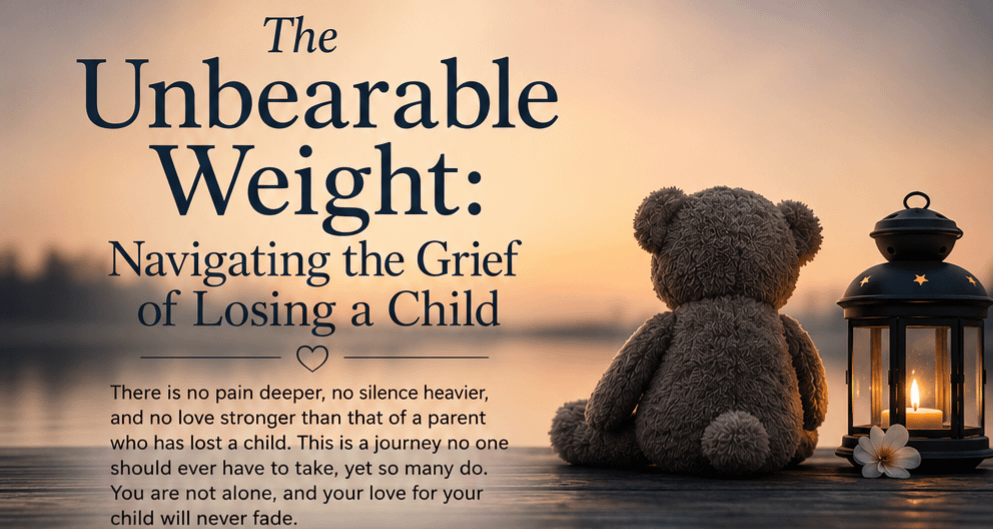
  • The Unbearable Weight: Navigating the Grief of Losing a Child

    The Unbearable Weight: Navigating the Grief of Losing a Child

    The loss of a child is a devastation unlike any other, a wound that cuts to the core of a parent’s being. It defies the natural order of life, where parents expect to outlive their children, and leaves behind a void that feels impossible to fill. Grief in this context is not a linear process but a chaotic, unpredictable storm that reshapes every facet of existence. This article explores the profound hardships of grappling with such a loss, drawing on the emotional, psychological, and social challenges parents face, while offering insight into the ways they might navigate this unimaginable pain.

    The Depth of the Loss

    When a child dies, whether through illness, accident, or unforeseen tragedy, parents lose not only their present but also their future. The dreams, milestones, and moments they envisioned—first days of school, graduations, weddings—dissolve into an aching absence. This grief is visceral, often described as a physical pain, a tightness in the chest, or an inability to breathe. For many, the child was a core part of their identity, and their death can feel like losing a piece of themselves.

    The intensity of this grief is compounded by its permanence. Unlike other losses, where time might soften the edges, the death of a child leaves a scar that never fully heals. Parents may find themselves caught in a cycle of “what-ifs” and guilt, questioning whether they could have done something to prevent the loss. Even in cases where no blame exists, the mind searches for answers, desperate to make sense of the senseless.

    The Emotional Rollercoaster

    Grief for a child is not a straight path but a turbulent ride through emotions that can feel contradictory. One moment, a parent might be consumed by sorrow, unable to get out of bed; the next, they might feel anger—at the world, at fate, or even at the child for leaving them. Numbness can set in, creating a surreal detachment, only to be shattered by waves of raw, uncontrollable pain triggered by a photo, a toy, or a passing child who resembles their own.

    These emotions are not neat or predictable. Parents may feel pressure to “move on” or “be strong,” but grief doesn’t adhere to societal timelines. Anniversaries, birthdays, or even mundane moments like seeing a school bus can reignite the pain with startling intensity. The unpredictability of these triggers makes it hard to prepare, leaving parents feeling vulnerable and exposed.

    The Strain on Relationships

    The loss of a child reverberates through every relationship in a parent’s life. Marriages can buckle under the weight of grief, as partners often mourn differently. One may want to talk, while the other retreats into silence. Misunderstandings can arise when one partner appears to be “coping better,” leading to feelings of isolation or resentment. Studies suggest that while some couples grow closer through shared sorrow, others face significant strain, with divorce rates higher among bereaved parents.

    Relationships with surviving children, if any, can also become complex. Parents may struggle to balance their grief with the needs of their other children, who are grieving in their own way. They might feel guilt for not being fully present or fear that their surviving children will sense their preoccupation with the child who is gone. Friends and extended family, meanwhile, may offer well-meaning but inadequate support, saying things like “They’re in a better place” or “You can have another child,” which can feel dismissive or even cruel.

    Socially, bereaved parents often feel alienated. The world moves on, but their pain remains. Invitations to social gatherings may dwindle, either because others don’t know how to approach the topic or because the parents themselves withdraw, unable to face the normalcy of others’ lives. This isolation can deepen the sense of being misunderstood, as few can truly grasp the magnitude of their loss.

    The Psychological Toll

    The psychological impact of losing a child can be profound, often leading to conditions like depression, anxiety, or post-traumatic stress disorder (PTSD). Parents may experience intrusive thoughts, reliving the moment of their child’s death or imagining alternative outcomes. Sleep disturbances, loss of appetite, and difficulty concentrating are common, making even basic tasks feel insurmountable.

    For some, the grief manifests as a crisis of meaning. Parents may question their faith, their purpose, or the fairness of the universe. The search for meaning can be both a burden and a lifeline, as some find solace in creating a legacy for their child, while others struggle with the absence of answers.

    Navigating the Grief

    There is no “fix” for the grief of losing a child, but there are ways to carry it. Professional support, such as therapy or counseling, can provide a safe space to process emotions. Grief counselors trained in child loss can help parents navigate guilt, anger, and despair, while cognitive-behavioral therapy (CBT) may assist in managing intrusive thoughts or depression.

    Support groups, whether in-person or online, offer a sense of community. Connecting with others who have experienced similar losses can reduce feelings of isolation and provide validation that their grief is normal, no matter how intense or prolonged. Organizations like The Compassionate Friends or GriefShare specialize in supporting bereaved parents, offering resources and peer-led groups.

    Creative outlets, such as writing, art, or music, can serve as a way to express what words cannot. Some parents find comfort in memorializing their child through acts of service, like starting a charity, planting a garden, or advocating for causes related to their child’s life or death. These acts don’t erase the pain but can give it a purpose.

    Self-compassion is critical. Parents often judge themselves harshly for not “getting over” their grief, but allowing themselves to feel without timelines or expectations can be liberating. Small rituals, like lighting a candle on their child’s birthday or keeping a cherished toy in a special place, can maintain a connection to their child while acknowledging their absence.

    The Lifelong Journey

    Grief for a child evolves but never ends. Over time, many parents describe finding a “new normal,” where the pain coexists with moments of joy or purpose. This doesn’t mean they’ve moved on; rather, they’ve learned to carry their child’s memory in a way that allows them to live alongside their grief. Laughter returns, but it’s tinged with an awareness of what’s missing. Love for the child remains, transformed into a quiet, enduring presence.

    Society often struggles to make space for this kind of grief, but bereaved parents deserve compassion and patience. Their loss is not something to be fixed or forgotten but a part of who they are. By honoring their child’s memory and allowing themselves grace, parents can find ways to endure the unendurable, carrying their love and their loss through every step of their journey.

    A Father’s Guide to Surviving the Loss of a Child