Category: Grief & Child Loss

  • Why Christmas Is Never the Same After Your Child Passes

    Why Christmas Is Never the Same After Your Child Passes

    Christmas is often painted as a season of joy—twinkling lights, laughter-filled rooms, and traditions passed lovingly from one generation to the next. For parents who have lost a child, however, Christmas can become one of the most painful times of the year. When a child passes, the holiday is forever changed. The season still arrives on the calendar, but the heart no longer experiences it the same way.

    The Absence Is Louder Than the Celebration

    A child’s presence fills a home in a way nothing else can. Their excitement, their unique laugh, their anticipation of Christmas morning—these are the sounds and moments that once defined the holiday. After a child’s passing, the silence they leave behind can feel overwhelming. Every ornament, every empty chair, every unopened stocking becomes a reminder of what is missing. The joy that once came naturally now feels heavy, often replaced by an ache that words cannot fully express.

    Traditions Become Triggers

    Traditions that once brought comfort and happiness can suddenly become painful reminders of loss. Decorating the tree, baking favorite cookies, or wrapping gifts may feel unbearable because they are deeply tied to memories of your child. Parents may struggle with whether to keep traditions alive, change them, or avoid them altogether. There is no right or wrong choice—only what feels survivable in the moment.

    Grief Collides With Expectations

    Society expects Christmas to be joyful, festive, and full of cheer. For grieving parents, this expectation can feel isolating. Smiles may be forced, invitations declined, and well-meaning phrases like “They’d want you to be happy” can deepen the pain. Grief does not pause for the holidays, and the pressure to appear “okay” can make the season even harder to endure.

    The Loss of Who You Were

    The death of a child doesn’t just take the child—it changes the parent forever. Christmas may bring a painful awareness of who you used to be before loss reshaped your life. The parent who once planned celebrations with excitement now moves through the season carrying sorrow alongside love. This shift in identity is part of why Christmas never feels the same again.

    Love That Has Nowhere to Go

    Perhaps the hardest part is the love that still exists but has no physical place to land. The gifts you long to buy, the hugs you wish to give, the moments you want to share—all of it remains inside you. Christmas magnifies this reality, because it is a season built around giving love, especially to children.

    Finding a Different Kind of Meaning

    While Christmas may never return to what it once was, some parents eventually find new ways to honor their child during the season. Lighting a candle, donating in their name, hanging a special ornament, or simply speaking their name aloud can bring a quiet sense of connection. These acts don’t erase the pain, but they can create space for remembrance alongside grief.

    It Will Never Be the Same—And That’s Okay

    Christmas after the loss of a child is not about “moving on” or “finding joy again” in the way others might expect. It is about surviving, remembering, and allowing yourself grace. The holiday is forever altered because your love is forever altered. And that love—deep, enduring, and unbreakable—is a testament to the child who will always be part of your heart.

    If Christmas feels heavier than joyful, know that you are not alone. Your grief is valid, your love is real, and it is okay if Christmas is never the same again.

    A Father’s Guide to Surviving the Loss of a Child

  • Honoring Paul Murphy – A Life That Continues to Inspire

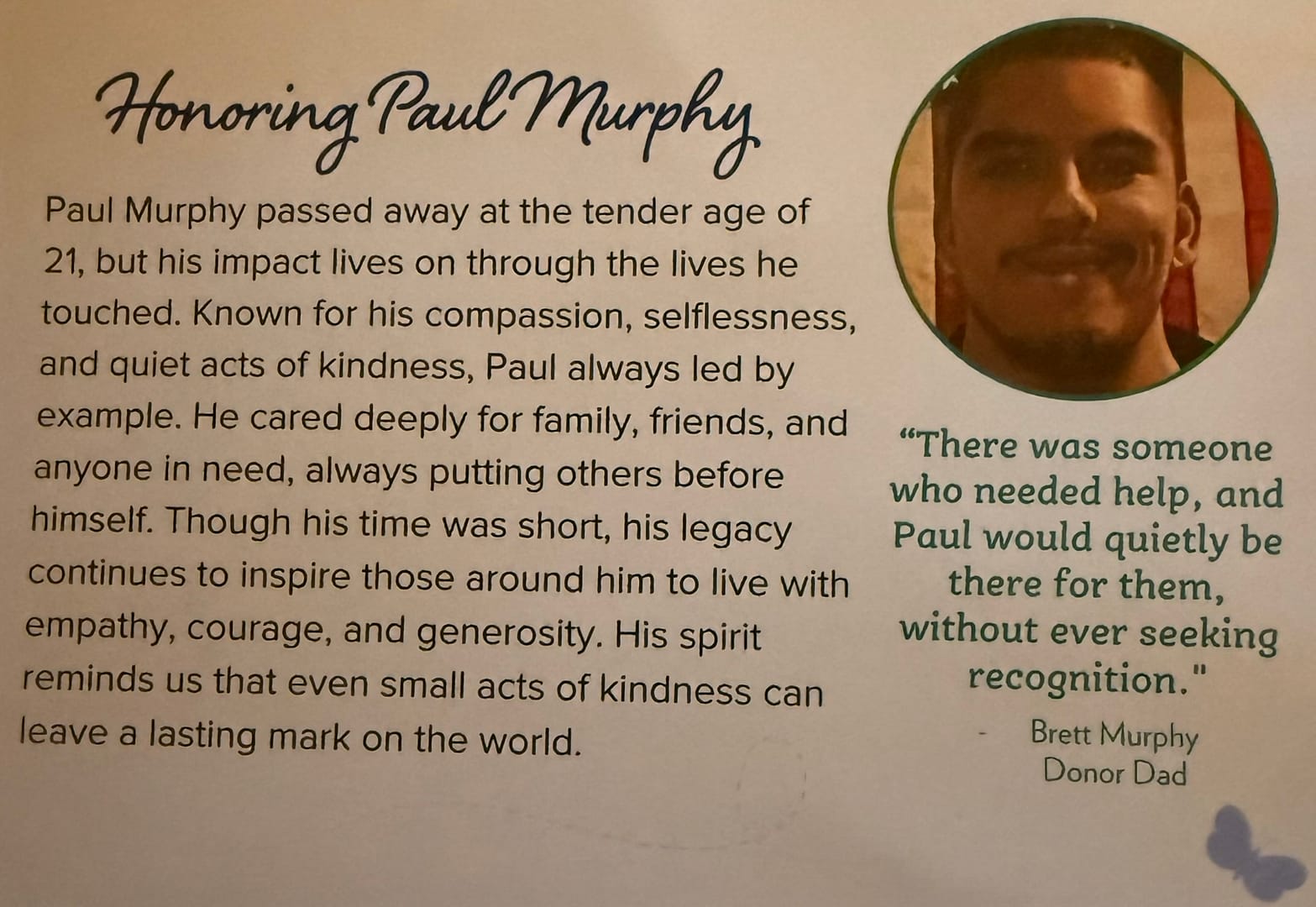
    Honoring Paul Murphy – A Life That Continues to Inspire

    “Honoring Paul Murphy” is more than a tribute—it is a testament to how a life, though heartbreakingly brief, can leave a lasting and meaningful imprint on the world.

    Paul Murphy passed away at the tender age of 21, yet his influence far exceeds the years he was given. This tribute speaks of a young man known not for loud accomplishments or public praise, but for something far more powerful: quiet compassion. Paul was the kind of person who noticed when someone needed help and stepped in without hesitation, without expectation, and without seeking recognition.

    He led a life of example. Paul’s selflessness, generosity, and deep care for family, friends, and even strangers defined who he was. He consistently put others before himself, embodying empathy in its purest form. In a world that often celebrates visibility and applause, Paul’s story reminds us that the most meaningful acts are often the ones done quietly, seen only by those whose lives are changed by them.

    October 25, 2021 is when Paul was called to be an angel.

    It has been four years since you passed away Paul. Never in a million years did I ever think you would pass away at such a young age. You had your whole life ahead of you. My heart will always be broken from your passing.

    Paul was a loving, caring, mature 21-year-old with an old soul. He cared about others and would help someone in any way he could. He would lead by example. Not once did he ever say look what I did, he would say Dad there was someone who needed help, and I helped them without letting others know so they wouldn’t be embarrassed. He would donate time, items, and other resources to help those in need.

    Paul was the one who took care of me when I was having medical issues years ago. He would get up, make sure I took my medicine, cook breakfast, go to school, come home and make sure I had dinner and was taking care of myself. All that the tender age of 15.

    Paul had many dreams and aspirations. He was a computer whiz, gamer, an amazing cook, and caretaker of people. He was planning on going back to school to get a degree in business and computers.

    My son had every great quality that you could think of. He would own up to his mistakes and learn from them. He was compassionate, caring, loving, giving, empathic, honest, and the most courageous man I have ever known. He was the best son, grandson, cousin, nephew, and friend that you could ask for.

    Paul, I love you and I will miss you every second. You always have been and will be forever my guardian angel.

    Forever my rock, forever my hero, forever my guardian angel, Forever my son. Paul, I miss you and I Love you. Till we meet again.

    RIP Paul Murphy

    Though Paul’s time on earth was short, his spirit continues to inspire empathy, courage, and generosity in those who read his story. His life serves as a gentle but powerful reminder: even small acts of kindness can leave a permanent mark. Paul Murphy’s legacy lives on—not only in memory, but in the hearts and actions of those encouraged to live a little more like him.

    Please support Donor Network West in Paul’s memory by making a donation at https://www.donornetworkwest.org/virtuous-page/

    A Father’s Guide to Surviving the Loss of a Child

  • National Candle Lighting for All the Children

    National Candle Lighting for All the Children

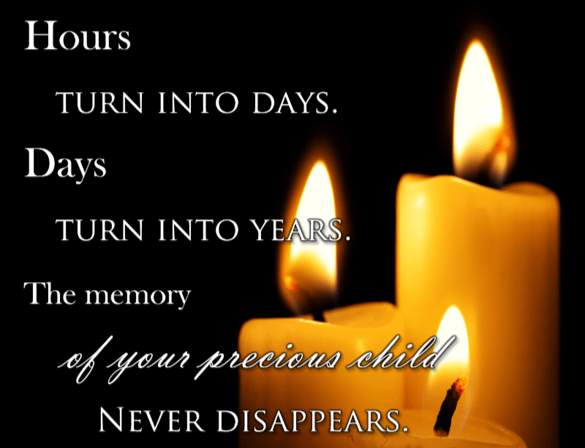
    National Candle Lighting for All the Children is a deeply meaningful and sacred time of remembrance, love, and unity. Observed each year on on the second Sunday of December at 7:00 PM, this global event invites families, friends, and communities to pause together and honor the lives of children who are no longer with us. At that exact hour, candles are lit in homes, churches, memorial sites, and quiet spaces around the world—each flame symbolizing a child whose light continues to shine in the hearts of those who love them.

    As evening settles in, the simple act of lighting a candle becomes profoundly powerful. In the stillness, the flicker of a flame represents love that never ends, memories that remain alive, and a bond that cannot be broken by time or loss. For parents, siblings, grandparents, and loved ones living with the unimaginable grief of losing a child, this moment offers space to remember, to grieve openly, and to honor their child’s life in a way that feels both personal and shared.

    One of the most comforting aspects of National Candle Lighting is the sense of worldwide connection it creates. As the clock strikes 7:00 PM in each time zone, a continuous wave of light travels across the globe, uniting families in a shared moment of remembrance. Though each loss is unique and deeply personal, the collective glow of candles serves as a reminder that no one grieves alone. There is strength in knowing that countless others are standing in that same quiet moment, holding love and loss together.

    This observance is not only about sorrow—it is also about love, hope, and legacy. The candle’s glow reflects the joy, laughter, and meaning these children brought into the world. It honors their stories, celebrates their lives, and acknowledges the lasting impact they continue to have. For many, this night opens the door to gentle conversations, the sharing of memories, and the comfort found in being understood.

    National Candle Lighting for All the Children reminds us that remembrance matters. Saying a child’s name matters. Love endures beyond loss. And even in the deepest darkness, a single candle lit on this year today at 7:00 PM can illuminate hearts around the world—offering comfort, connection, and the quiet reassurance that these children are never forgotten.

    Please join in as I light a candle to remember my son Paul Murphy.

    A Father’s Guide to Surviving the Loss of a Child

  • The Grief of Missing a Loved One During the Holidays

    The Grief of Missing a Loved One During the Holidays

    The holiday season is often painted as a time of joy—twinkling lights, warm gatherings, shared traditions, and memories wrapped in laughter. But for those who carry the weight of loss, this time of year can feel overwhelmingly heavy. When someone you love is no longer here, the holidays don’t just change—they take on an entirely new meaning. The empty chair, the missing voice, the silence where laughter once lived… these moments can make grief feel sharper than ever.

    A Season of Joy That Doesn’t Fit

    Grief during the holidays is unique. It shows up in the middle of celebrations and traditions, usually uninvited and always unexpected. While others count down days with excitement, you may find yourself counting the moments you need to get through. The songs, scents, decorations, and traditions meant to bring comfort instead become reminders of what’s missing—and who’s missing.

    You don’t have to pretend the season feels the same. Because it doesn’t. And that’s okay.

    Traditions That Now Feel Different

    Every family has traditions—some big, some small. And when a loved one is gone, these traditions can feel like wounds reopening. Maybe they used to hang the lights, bake the cookies, or bring the laughter to every gathering. Maybe they were simply the heartbeat of the season.

    When they’re not here, you’re left trying to navigate holidays that no longer feel complete.

    Some people choose to keep traditions alive in their memory. Others create new ones. There is no right or wrong—only what feels gentle to your heart.

    The Quiet Moments Can Hurt the Most

    Grief isn’t always loud. Sometimes it’s found in the quiet moments—the late-night reflection, the drive home, the memories that surface when your guard is down. You may find yourself missing the sound of their voice or wanting to tell them something you know they’d smile at. You might reach for your phone or look for them in a crowded room, only to feel that familiar ache.

    These moments don’t mean you’re going backward. They mean your love for them is still alive.

    You’re Not Alone in This Pain

    Even though grief can feel isolating, many people carry the same heavy heart during the holidays. If you’re struggling, it doesn’t make you weak—it makes you human. Missing someone you love deeply is one of the purest forms of love that exists.

    You don’t have to face the holidays pretending everything is fine. It’s okay to cry. It’s okay to step away. It’s okay to say no. And it’s okay to let others support you.

    Let Their Memory Be Part of the Season

    Your loved one may not be here physically, but their presence still lives in your heart. Their love, their stories, their impact—those things don’t fade. Sometimes, including them in small ways can bring comfort:

    • Light a candle in their honor

    • Hang an ornament that reminds you of them

    • Share a favorite memory at a gathering

    • Play their favorite song

    • Do something they used to love

    These gestures don’t erase the pain, but they keep their spirit woven into the season.

    Grief Means Love—And Love Never Leaves

    Grief during the holidays is a reminder of the love that was shared. The reason the pain cuts so deeply is because the bond was so strong. And while the holidays may never feel the same, your loved one’s impact remains part of your life in every season.

    If you’re grieving this year, be gentle with yourself. Honor your heart. Allow your emotions their space. And remember: your grief is not a burden—it is the echo of a love that will always belong to you.

    A Father’s Guide to Surviving the Loss of a Child

  • Don’t Criticize — Support Someone With Holiday Grief

    Don’t Criticize — Support Someone With Holiday Grief

    The holidays are often portrayed as a season of joy, celebration, and togetherness — a time when families gather, traditions are honored, and memories are made. But for someone grieving, especially after losing a loved one, the holidays can feel like a spotlight on everything that’s missing. What should be a time of warmth can instead become a time of emotional heaviness, loneliness, and quiet survival.

    And during this painful season, the last thing a grieving heart needs is criticism.

    Grief already weighs enough. What people need is understanding, patience, and support.


    Grief Looks Different During the Holidays

    When someone is grieving, especially during the holiday season, everything becomes more sensitive. Simple things — hearing a favorite song, seeing a decorated tree, watching families gather — can trigger memories that feel both beautiful and unbearable.

    Some people may withdraw.
    Some may cancel plans at the last minute.
    Some may try to stay busy.
    Some may cry more, stay quiet, or feel irritated by things they normally wouldn’t.

    None of these reactions are wrong.

    Grief has no schedule, no rulebook, and certainly no “holiday mode.” It shows up however it needs to.


    Criticism Can Deepen the Pain

    Comments like:

    • “You should try to be happier.”

    • “Come on, it’s the holidays — don’t be sad.”

    • “It’s been long enough; time to move on.”

    …may be spoken casually, but they can cut deeply.

    Criticism doesn’t motivate a grieving person — it isolates them. It makes them feel misunderstood, judged, or pressured to pretend they’re okay when they’re not.

    During the holidays, the effort to “act normal” can already drain everything they have. Adding guilt or shame only makes the season harder.


    What They Need Is Support — Not Solutions

    You don’t need to fix someone’s pain. You can’t.
    What you can do is walk beside them in it.

    Here are gentle ways to support someone navigating holiday grief:

    1. Let them feel what they feel.

    Whether they’re sad, quiet, angry, or emotional, give them permission to feel without judgment.

    2. Offer comfort, not advice.

    A simple “I’m here for you” means far more than any attempt to “cheer them up.”

    3. Be patient with cancellations.

    Grief can shift by the hour. If they need to stay home, let that be okay.

    4. Ask what they need — and respect their answer.

    Maybe they want company. Maybe they need space. Maybe they want to talk about their loved one. Let them choose.

    5. Honor their loved one with them.

    Say their name. Share a memory. Light a candle. Acknowledge their loss instead of avoiding it.


    Your Kindness Matters More Than You Know

    Someone grieving during the holidays may feel like they’re watching the world celebrate from behind a window they can’t step through. They may feel broken, out of place, or unable to connect with the cheer around them.

    Your compassion — your gentleness, your patience, your willingness to just be there — can be a light in a season that feels dark.

    Don’t criticize someone carrying holiday grief.
    Just support them.
    Stand beside them.
    Let them know they are not alone.

    Because sometimes, the most meaningful gift you can give is understanding.

    A Father’s Guide to Surviving the Loss of a Child

  • Holidays With My Son — And After He Passed  An Expanded Reflection on Love, Loss, and the Seasons That Changed Everything

    Holidays With My Son — And After He Passed An Expanded Reflection on Love, Loss, and the Seasons That Changed Everything

    Holidays used to be the brightest time of the year. They were wrapped in excitement, familiar traditions, and the kind of joy that only a child can bring into a home. When my son was here, the holiday season felt like a living heartbeat — steady, warm, and full of meaning. It didn’t matter if we had a big celebration or a quiet day together; what mattered was that he was there. His presence made the world feel complete.

    When He Was Here, Everything Sparkled

    The simplest moments with him became memories I now hold like fragile treasures. The way his eyes lit up when he saw holiday lights for the first time each season. The sound of his laughter echoing through the house as we decorated the tree. The little traditions we made without even realizing they were traditions — hanging his handmade ornaments, baking cookies he always snuck bites out of raw, watching his favorite holiday movie while he curled up next to me.

    Children have a way of turning ordinary moments into magic. With him, the holidays weren’t just holidays — they were alive with possibility. It was in the way he’d tug my hand excitedly through store aisles, the way he’d help wrap presents with tape everywhere except the actual wrapping paper, and the way he’d fall asleep against me after a long day of excitement, peaceful and safe.

    Those memories are the warm glow that still lives inside me, even now.

    And Then the Holidays Changed Forever

    After he passed, the holiday season became a complicated place — a landscape full of memories that could both comfort and devastate me within the same heartbeat. The world around me kept shining, singing, celebrating… but grief has its own timetable, its own language, its own weight.

    The first holiday without him felt unbearable. Every tradition felt like a reminder of what was missing. Every song held echoes of moments I could never recreate. The empty space where he should have been was louder than all the music and laughter around me. Even taking out the decorations felt like reopening a wound — his little ornaments, his stocking, the things he touched with his own hands.

    People talk about holiday cheer, but grief changes the way you move through the season. You don’t step into the holidays — you navigate them. You walk carefully around memories that might break you open. You brace yourself for moments you know will hurt. You try to breathe through the ache of seeing families together and remembering that yours now looks different.

    The Quiet Moments Hurt the Most

    The world sees the obvious parts of grief, but it’s the small, quiet things that cut the deepest.
    The empty seat at the table.
    The silence where laughter should be.
    The traditions you both loved that now feel heavy with absence.

    A song that once made him dance now makes tears fall without warning. An ornament he made becomes something you hold in your hands just to feel close to him for a moment. Even the smell of holiday food in the oven can trigger a memory so vivid it steals your breath.

    Grief doesn’t pause for holidays — in fact, it intensifies.

    But Grief Is Also Proof of Love

    As the years pass, the holidays slowly shift again — not back to what they were, because that version of life no longer exists, but into something new. Something softer. Something built on surviving, remembering, and honoring.

    I’ve learned that I don’t have to choose between celebrating and grieving. I don’t have to pretend everything is fine. I don’t have to hide the tears when a memory washes over me. Love doesn’t disappear when a child passes — it transforms. It becomes quieter, deeper, and more sacred.

    Now, during the holidays, I let myself remember him openly. I talk about him. I hang his ornament. I bake the cookies he loved. I allow myself to feel everything — the sadness, the gratitude, the longing, the love. And in those moments of remembrance, I feel him near. Not physically, not in the way I long for, but in a way that still warms my heart.

    He Is Part of Every Season

    The holidays after losing a child will never be the same. They can’t be. A piece of your heart is missing, and the world looks different because of it. But even in the quiet heartbreak, there is love — fierce, unbreakable love that continues to shine.

    My son made the holidays beautiful. And though the seasons after he passed are heavier, quieter, and more complicated, they are still filled with him. His memory is woven into every light, every song, every tradition.

    He may not be here physically, but he remains part of every celebration, every season, every breath.

    That love — his love — is what keeps me going. And it’s what keeps his light alive.

    A Father’s Guide to Surviving the Loss of a Child

  • I Miss My Child Every Day: Living With a Grief the World Can’t See

    I Miss My Child Every Day: Living With a Grief the World Can’t See

    There are losses that rewrite your entire existence, and losing a child is one of them. It’s the kind of grief that lives beneath the surface—quiet, invisible to most, yet powerful enough to shift the ground under your feet. The world moves on, people keep going, and life continues to demand your participation. So you wake up, get dressed, smile when you’re expected to, and play the part the world needs you to play.

    But inside… inside, you are forever changed.

    The Weight No One Sees

    When you lose a child, you don’t just lose a person—you lose a future, a lifetime of moments, and a piece of yourself you can never reclaim. You learn to carry the weight because you have no choice, but that doesn’t mean the weight gets lighter. You become an expert at hiding the storm behind your eyes. You laugh, you function, you show up—but inside, a piece of you aches with every sunrise and every quiet moment that reminds you of what’s missing.

    People may assume you’re “better” because time has passed. They may think healing means the hurt is gone. But grief doesn’t follow timelines, and it certainly doesn’t obey expectations. The truth is simple and often misunderstood: you don’t get over losing a child—you learn to live around the loss.

    Going Through the Motions

    Life has a way of demanding routine, even when your heart feels shattered. So you go through the motions, sometimes numb, sometimes strong, sometimes barely holding on. You smile because you feel you should. You keep going because you must. Yet behind every step forward is the quiet ache of what could have been.

    People see your strength, but they don’t always see the price of it.

    Something Important Is Missing

    There is a hollow space inside you that no one else can fill. Not friends, not family, not time. It’s the space where your child belongs—a space that remains tender, sacred, and untouchable. And even on the days when you appear okay, that emptiness is still there, pulsing like a wound that never fully heals.

    The world wants grief to fade, but a parent’s love never does. And where there is love, there will always be longing.

    No Matter How Much Time Passes

    People say time heals. But the truth is, time only teaches you how to carry what can’t be fixed. Days turn into months, months into years, and you learn to breathe again—but that doesn’t mean you feel whole. You can continue living a meaningful life and still miss your child with a depth words can barely hold.

    You don’t feel okay without them because their presence shaped you, and their absence reshaped you.

    And that’s not a sign of weakness. It’s a sign of love.

    Your Grief Is Real. Your Love Is Forever.

    If you are a parent living with this pain, please know this:
    You are not alone. You are not “broken beyond repair.” You are a human being carrying the greatest love and the deepest heartbreak a person can hold.

    Your child matters. Your grief matters. Your story matters.

    And even on the days when you don’t feel okay, you are surviving something unimaginable—and that alone is an act of courage.

    A Father’s Guide to Surviving the Loss of a Child

  • Grief Has Three Stages: The Beginning, The Middle, and the Rest of Your Life

    Grief Has Three Stages: The Beginning, The Middle, and the Rest of Your Life

    Grief is not something you “get through.” It’s not a chapter you close or a wound that simply fades. Grief is a lifelong companion—unwanted, uninvited, yet forever tied to the love you carry for the one you lost. When someone you love is taken from your world, everything changes. The way you breathe changes. The way you move changes. Even the way you see yourself changes.

    You don’t return to who you were before.
    You become someone new—someone shaped by love, by loss, by memory, by a kind of strength you never asked to learn.

    For many hearts, grief unfolds in three powerful stages that have little to do with timelines and everything to do with transformation:
    the beginning, the middle, and the rest of your life.

    1. The Beginning: When Life Splits in Two

    The beginning is the moment the world tilts off its axis.
    There is before—warm, familiar, untouched by the unthinkable.
    And then there is after—a landscape you never asked to enter.

    In the beginning:

    Time feels unreal.

    You move through your days like a shadow.

    Food has no taste.

    Sleep brings no rest.

    Memories hit with a force that knocks the air from your body.

    You might find yourself replaying moments again and again, searching for answers that don’t exist, trying to grasp how life could be so ruthless. You cling to reminders—smells, photos, their handwriting, their voice in your head—because letting go of anything feels like another kind of death.

    People may tell you to be strong, but in the beginning, strength has no meaning.
    You are surviving heartbreak that feels too big for your chest.

    This stage is raw. It is chaotic. It is filled with moments where you wonder how the world continues turning when yours has stopped.
    The beginning of grief is where you meet a pain so profound it changes your understanding of love itself.

    2. The Middle: Where You Learn to Carry the Weight

    The middle of grief is long. It winds and twists and circles back on itself. It is not a straight path—it is a journey no one can map out for you.

    In the middle:

    You start to function again, but everything feels heavier.

    You laugh, and then feel guilty for laughing.

    You cry at the smallest reminders, sometimes without knowing why.

    You learn the cruel truth that the world expects you to be “better” long before you’re ready.

    The middle is where grief becomes quieter but no less powerful.
    You learn to navigate daily life while carrying a heart that’s been permanently torn. Some days you feel almost normal. Other days, a memory, a song, a scent, or even a stranger’s face pulls you back into the beginning.

    This stage hurts because it’s where reality settles in—they are not coming back.
    You realize you have to live in a world without their physical presence.

    But slowly, gently, something else happens too:
    You start to see that grief is not only pain—it is proof of how deeply you loved.

    You begin to find small ways to honor them, to keep their memory alive, to let your grief become something more than sorrow. The middle is messy, painful, beautiful, and sacred. It is where you discover your resilience, even if it is quiet and trembling.

    3. The Rest of Your Life: When Grief Becomes Part of Who You Are

    Grief never disappears.
    It simply changes its shape.

    At some point—weeks, months, years later—you wake up and realize that grief now lives within you like a second heartbeat. It no longer shatters you every day, but it remains an ever-present part of your identity.

    In this lifelong stage:

    You remember your loved one with more warmth than pain.

    Their absence becomes woven into your story instead of dominating it.

    You find ways to carry them forward—through traditions, words, choices, and the love you offer others.

    You learn that honoring them doesn’t mean living in sorrow; it means living fully because they cannot.

    There will still be days when the ache is sharp—anniversaries, holidays, their birthday, or even an ordinary morning when the sunlight hits in a familiar way. Grief has a way of tapping you on the shoulder just to remind you that love this strong never fades.

    But you will also find moments of peace, of meaning, of unexpected joy.
    You learn to smile again, not because the pain is gone, but because your heart is learning to hold both the grief and the gratitude.

    This stage—the rest of your life—is not about “moving on.”
    It is about moving forward, carrying the love, the memories, and the lessons with you.
    Grief becomes a quiet compass that reshapes your priorities and deepens your compassion.

    Grief Is the Shadow of Love

    If grief feels endless, it’s because love is endless.
    You grieve because you loved.
    You hurt because their life mattered.
    And you continue because their story lives on through you.

    Grief’s three stages are not steps to conquer—they are chapters that transform you.
    You survive the beginning.
    You navigate the middle.
    And you learn to live the rest of your life with a heart that has been forever marked by love.

    Your grief may change, but your love never will.

    A Father’s Guide to Surviving the Loss of a Child

  • When Your Child Is Gone, the Holidays Are Never the Same

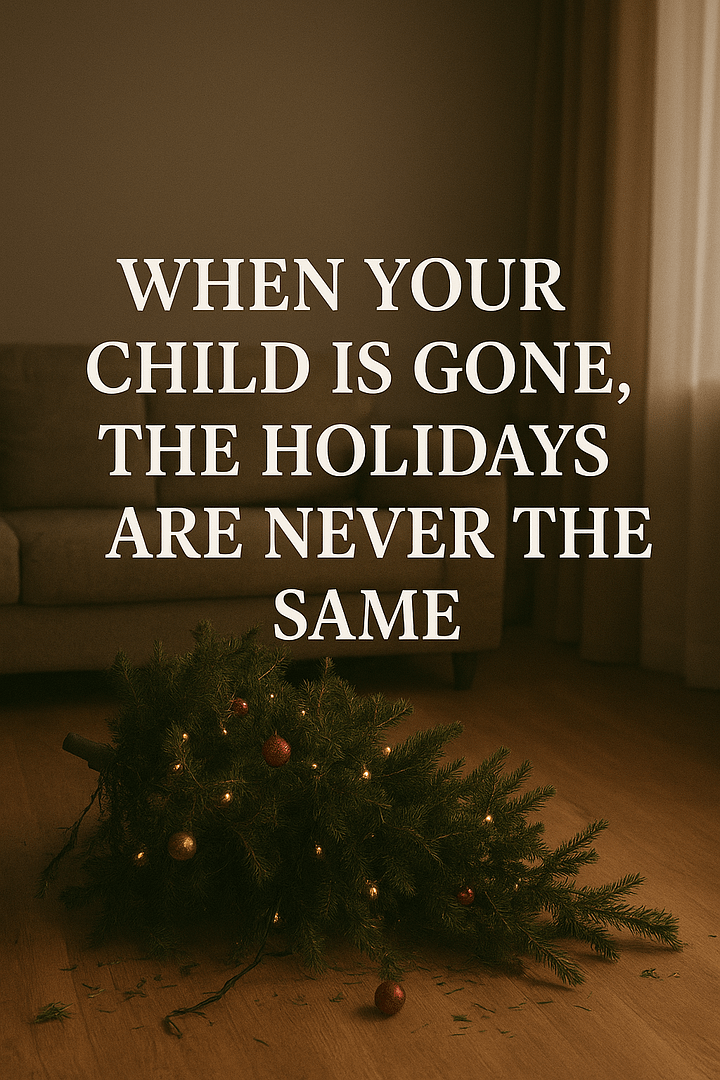
    When Your Child Is Gone, the Holidays Are Never the Same

    The holidays were once a season of light—full of laughter, busy kitchens, wrapping paper, and the unmistakable magic that only a child can bring. But when your child is gone, the world shifts. The lights feel dimmer. The music feels heavier. The days that were once filled with joy now carry a bittersweet ache that settles deep in the heart.

    Grief doesn’t pause for the holidays. If anything, it sharpens. The empty chair at the table, the missing stocking, the traditions that once felt warm and alive now echo with longing. People around you continue to celebrate, unaware of how heavy the season feels for those carrying a loss that cannot be wrapped, fixed, or forgotten.

    When a child is gone, the holidays are never the same—because you are never the same.

    The Weight of What’s Missing

    There is a unique pain in grieving a child—a pain without a name, without a cure. Holidays tend to magnify it. Every decorated tree, every joyful commercial, every memory of how things used to be reminds you of a life interrupted.

    You find yourself moving through the season differently. Slower. Softer. Sometimes with a smile, sometimes with tears that arrive without warning. And that’s okay. Grief is not a sign of weakness—it is a sign of love that runs deeper than time.

    What Healing Looks Like Now

    Healing after the loss of a child doesn’t mean “moving on.” It means learning to carry love and sorrow together. It means allowing yourself to honor your child in your own way—whether that’s lighting a candle, hanging an ornament, sharing a memory, or simply taking a quiet moment to feel their presence.

    There is no right way to grieve through the holidays. Some parents want to keep every tradition alive. Others can’t bear to do anything the same. Both paths are valid. Both are brave.

    What matters most is giving yourself permission to feel everything you feel—without guilt, without explanation.

    Finding Light in the Darkness

    Even in sorrow, small moments of light can still break through. A story someone shares. A song that reminds you of them. A sign or memory that appears when you least expect it.

    These moments don’t erase the pain, but they remind you that your child’s love still lives within you—steady, tender, eternal.

    Your child may no longer be here in the physical world, but their presence is woven into every fiber of who you are. They remain part of every holiday, every season, every breath forward.

    A New Kind of Holiday

    Holidays may never be the same—how could they be? But they can still hold meaning. Not the same joy you once knew, but a quieter, deeper kind of love. A love that remembers. A love that honors.
    A love that whispers, “You are still mine, and I will carry you always.”

    If you are navigating the holidays with an empty place in your heart, know this: you are not alone. Your grief is real. Your love is real. And your story—your child’s story—still matters.

    A Father’s Guide to Surviving the Loss of a Child

  • When You Can Feel Yourself Slipping Again: Signs, Truths, and a Reminder You’re Not Alone

    When You Can Feel Yourself Slipping Again: Signs, Truths, and a Reminder You’re Not Alone

    There are moments in life when you can sense it—before anyone else notices, before anything dramatic happens on the outside. It’s that quiet shift inside you. The heaviness. The fog. The feeling that you’re slipping back into a space you worked so hard to climb out of.

    You don’t need a crisis to know something is getting bad again. Often, it shows up in the small, subtle ways first.

    Your body feels it.

    You start sleeping far too much or hardly at all. Your appetite swings from nothing to everything. Your energy fluctuates in ways that make no sense. Even simple tasks feel exhausting. You catch yourself rubbing your eyes, your forehead, your temples—as if you could physically push the overwhelm away.

    You might notice your hands shaking, your heart racing, or an ache in your chest that has nothing to do with physical pain. These are signs—not of weakness—but of a body signaling that it’s overwhelmed.

    Your mind starts disconnecting.

    You space out more than usual. Time slips away from you. You feel uninterested, numb, or detached, even from things you once enjoyed. You ramble too much because you’re trying to force clarity… or you don’t speak at all because you can’t find the words.

    You catch your thoughts turning darker or more cynical, especially about yourself. It’s not that you want to be negative—you’re just tired, worn, and trying to make sense of your own emotions.

    Your heart retreats for protection.

    You avoid conversations that feel too heavy. You avoid eye contact. You don’t want to burden anyone, so you push people away before they can ask what’s wrong. Not because you don’t care—because you care too much. Because you’re afraid of letting them see you unravel.

    You choose isolation over explanation. And even though part of you wants connection, another part is convinced it’s safer to withdraw.

    These signs aren’t failure—they’re signals.

    They’re your mind and body whispering, “Hey… something’s off. Something hurts. Please listen.”

    These behaviors don’t mean you’re broken.
    They mean you’re overwhelmed.
    They mean you’re carrying too much.
    They mean you’ve pushed through for so long that your system is begging for rest, support, and compassion.

    What You Can Do When It’s Getting Bad Again

    Talk to someone, even if it’s just one safe person. You don’t need perfect words—just honesty.

    Slow down, even if only for a moment. Small pauses can interrupt spirals.

    Take care of your basics—eat, drink water, rest. Your foundation matters.

    Do one gentle thing for yourself, not to fix everything, but to show yourself you’re worth care.

    Reach out for professional support if you’re able; having guidance matters, especially during heavy seasons.

    Most importantly: give yourself grace.

    You’ve survived every hard day up to this one.
    You’re more resilient than you feel right now.
    And what you’re experiencing doesn’t make you weak—
    it makes you human.

    You’re not going backward. You’re noticing the signs early. That awareness is strength. That awareness is hope.

    And you don’t have to navigate this season alone.

    A Father’s Guide to Surviving the Loss of a Child