When people decide they want to eat healthier, they often begin by thinking about what they should remove from their diet. They may try to eat less sugar, reduce processed foods, cut back on fried foods, or watch their portions.
But healthy eating isn’t only about what you take away.
Sometimes one of the best things you can do is add more nutritious foods to what you’re already eating.
One simple place to start is fiber.
Dietary fiber is naturally found in fruits, vegetables, beans, lentils, whole grains, nuts, and seeds. Although your body doesn’t digest fiber the same way it digests proteins, fats, and many other carbohydrates, fiber plays an important role in supporting digestive health and overall wellness.
Getting more fiber doesn’t have to mean eating bland meals or completely changing your favorite recipes. You can gradually increase your intake by adding berries to breakfast, vegetables to dinner, beans to soups and tacos, or whole grains to meals you already enjoy.
Small changes can make healthy eating much easier to maintain.
What Exactly Is Fiber?
Fiber is a type of carbohydrate found primarily in plant foods.
Unlike sugars and starches, much of dietary fiber isn’t broken down and absorbed by the body in the usual way. Instead, it moves through the digestive system and contributes to several important processes.
Fiber is generally described as either soluble or insoluble.
Soluble Fiber
Soluble fiber dissolves in water and forms a gel-like material in the digestive tract.
Sources include foods such as:
- Oats
- Barley
- Beans
- Lentils
- Apples
- Citrus fruits
- Carrots
- Peas
- Chia seeds
- Flaxseed
Soluble fiber can contribute to healthy cholesterol levels and may help slow digestion.
Insoluble Fiber
Insoluble fiber doesn’t dissolve in water. Instead, it adds bulk and helps material move through the digestive system.
Common sources include:
- Whole grains
- Wheat bran
- Nuts
- Seeds
- Green beans
- Cauliflower
- Potatoes with the skin
- Many other vegetables
You don’t need to carefully calculate how much soluble and insoluble fiber you’re getting at every meal.
Eating a variety of whole plant foods throughout the week will generally provide both.
Why Fiber Deserves More Attention
Fiber isn’t the most glamorous nutrient.
Protein gets a lot of attention. Vitamins and minerals are frequently discussed. Carbohydrates and fats are constantly debated.
Fiber sometimes gets reduced to a conversation about staying regular.
But fiber does much more than that.
A fiber-rich eating pattern can support digestive health, contribute to feelings of fullness, support healthy cholesterol levels, and help moderate how quickly carbohydrates are absorbed.
Fiber-rich foods also tend to contain many other nutrients.
When you eat berries, you’re not only getting fiber. You’re also getting vitamins and naturally occurring plant compounds.
When you eat beans, you’re getting fiber along with plant protein and minerals.
When you eat vegetables, you’re getting fiber plus vitamins, minerals, water, and other nutrients.
That’s why getting fiber from a variety of whole foods can be such a useful approach.
Fiber Supports a Healthy Digestive System
Digestive health is probably the benefit most people associate with fiber.
Insoluble fiber helps add bulk to stool, while other forms of fiber can help support normal bowel function.
When fiber intake is paired with adequate fluid intake, it can help support regular bowel movements.
But there’s another fascinating part of digestive health that deserves attention: your gut microbiome.
Your digestive tract contains a massive community of microorganisms. Certain types of dietary fiber can be fermented by beneficial bacteria in your colon.
In simple terms, some fibers help feed the microorganisms that live in your digestive system.
This is another reason eating a variety of plant foods can be beneficial.
Different foods provide different types of fibers and plant compounds.
Instead of eating the exact same vegetable every day, try rotating what you eat throughout the week.
Fiber Can Help You Feel Satisfied
One of the biggest challenges with improving your diet is hunger.
A diet that constantly leaves you hungry is difficult to maintain.
Fiber-rich foods can help meals feel more satisfying because fiber often slows digestion and adds volume to food.
Imagine two snacks:
A glass of apple juice.
Or a whole apple with a small handful of nuts.
Both come from the same fruit family, but the whole apple provides substantially more fiber than the juice. The apple also requires chewing and takes longer to eat.
Adding the nuts provides additional fiber, protein, and fat.
That combination can make the snack more satisfying.
This illustrates an important principle:
Whole foods often provide benefits that highly processed versions don’t provide to the same degree.
Fiber Can Support Healthy Weight Management
Fiber isn’t a magical weight-loss ingredient.
However, fiber-rich foods can be useful as part of an overall healthy eating pattern because they can increase the volume and satisfaction of meals.
Vegetables, fruits, beans, and whole grains can help you build meals that feel substantial without relying entirely on highly processed foods.
For example, instead of drastically shrinking your dinner portion, consider changing what’s on the plate.
You might include:
A serving of lean protein.
A serving of whole grains or potatoes.
A generous portion of vegetables.
Perhaps beans, lentils, or a side salad.
You still have a full plate, but you’re incorporating more fiber-rich foods.
Healthy eating often becomes easier when you focus on improving the composition of your meals rather than simply eating less food.
Fiber and Heart Health
Soluble fiber has received particular attention for its relationship with cholesterol.
Certain soluble fibers can bind with substances in the digestive tract and help reduce cholesterol absorption.
Oats, barley, beans, lentils, apples, and citrus fruits are examples of foods that provide soluble fiber.
But heart health isn’t determined by a single nutrient.
Your overall eating pattern matters.
A diet containing plenty of vegetables, fruits, whole grains, beans, nuts, and seeds can provide fiber along with numerous nutrients that contribute to overall health.
Fiber and Blood Sugar
Fiber can also influence the digestion and absorption of carbohydrates.
Highly refined carbohydrates that contain little fiber can be digested relatively quickly.
Foods containing more fiber generally take longer to digest.
This is one reason choosing less-refined carbohydrate sources can be helpful.
Instead of thinking:
“Carbohydrates are bad.”
A better question may be:
“What type of carbohydrate am I eating?”
There’s a significant nutritional difference between a highly processed sugary pastry and a bowl of oatmeal topped with berries and nuts.
Both contain carbohydrates.
But their fiber content, nutrient composition, and effect on fullness can be very different.
Start Your Morning With Fiber
Breakfast provides an easy opportunity to increase your fiber intake.
If you normally eat oatmeal, try adding:
- Blueberries
- Raspberries
- Strawberries
- Banana
- Chia seeds
- Ground flaxseed
- Walnuts
- Almonds
If you prefer eggs, add vegetables such as spinach, mushrooms, peppers, onions, or tomatoes.
Serve your eggs with whole-grain toast and fruit.
If you eat yogurt, top it with berries, nuts, seeds, or a higher-fiber cereal.
If you enjoy smoothies, use whole fruits and vegetables rather than relying only on juice.
You don’t have to transform breakfast overnight.
Start by adding one fiber-rich ingredient.
Give Your Sandwich an Upgrade
Sandwiches can be another easy place to add fiber.
Choose whole-grain bread when possible.
Then add vegetables such as:
- Lettuce
- Spinach
- Tomatoes
- Cucumbers
- Bell peppers
- Avocado
- Shredded carrots
You can also serve your sandwich with fruit, vegetables, or a bean-based side instead of automatically choosing chips.
The sandwich doesn’t have to disappear from your diet.
You simply make the meal more balanced.
Make Taco Night More Fiber-Friendly
Tacos are a perfect example of how fiber can be added without sacrificing enjoyment.
Start with your preferred protein and add ingredients such as:
- Black beans
- Pinto beans
- Lettuce
- Tomatoes
- Corn
- Cabbage
- Avocado
- Peppers
- Onions
- Salsa
You can even mix beans into ground meat to increase fiber while stretching the filling.
Serve the tacos with a side of beans or a vegetable-based salad.
You’re still eating tacos.
You’ve simply added more plant foods.
Add Vegetables to Pasta
Pasta can also become a vehicle for vegetables.
Try adding:
- Spinach
- Broccoli
- Mushrooms
- Zucchini
- Tomatoes
- Bell peppers
- Peas
- Onions
- Eggplant
You can add several vegetables directly to your sauce.
Whole-grain pasta is another option for increasing fiber.
Again, you don’t necessarily need to eliminate pasta. Think about how you can build more nutrition into the meal.
Beans Are One of the Easiest Fiber Boosters
Beans are incredibly versatile.
Black beans can go into tacos and burritos.
Kidney beans work well in chili.
Chickpeas can be added to salads.
White beans can be incorporated into soups.
Pinto beans work well with rice.
Lentils can be added to soups, stews, curries, and casseroles.
You can also replace part of the meat in certain dishes with beans or lentils.
For example, if you’re preparing chili, you might use lean ground meat alongside several varieties of beans.
The result can still be hearty and satisfying while containing considerably more fiber.
Eat the Whole Fruit More Often
Fruit juice can contain vitamins, but much of the fiber naturally found in whole fruit may be lost or greatly reduced during processing.
When possible, choose the whole fruit.
Instead of orange juice, eat an orange.
Instead of apple juice, eat an apple.
Instead of grape juice, eat grapes.
Instead of a fruit-flavored snack, eat berries or another piece of fruit.
Whole fruit provides fiber along with naturally occurring vitamins, minerals, and plant compounds.
Keep the Skin When Appropriate
Some fruits and vegetables provide additional fiber in their edible skins.
Examples include:
- Apples
- Pears
- Potatoes
- Sweet potatoes
- Cucumbers
When the skin is edible and appropriate for the recipe, leaving it on can help retain fiber and other nutrients.
Just wash produce thoroughly before eating or cooking it.
Fiber-Friendly Snacks
Snacks are another opportunity to improve your daily fiber intake.
Instead of thinking about snacks as something you need to eliminate, improve what you’re snacking on.
Consider options such as:
- Apple slices with peanut butter
- Pears
- Berries
- Oranges
- Carrots with hummus
- Celery with peanut butter
- Nuts
- Seeds
- Air-popped popcorn
- Whole-grain crackers
- Roasted chickpeas
- Vegetables with bean dip
You can still enjoy less nutritious snacks occasionally.
The goal is balance, not perfection.
Build a Fiber-Rich Salad
Salads can provide plenty of fiber, but they don’t have to consist of nothing but lettuce.
Create a more satisfying salad by combining vegetables with protein and fiber-rich ingredients.
Start with greens and add ingredients such as:
- Tomatoes
- Cucumbers
- Carrots
- Bell peppers
- Broccoli
- Chickpeas
- Black beans
- Corn
- Avocado
- Nuts
- Seeds
- Berries
- Apples
Add your preferred protein and dressing.
A well-built salad can become a full meal rather than something that leaves you hungry an hour later.
Soup Can Be a Fiber Powerhouse
Homemade soups and stews provide another easy way to combine multiple fiber-rich ingredients in one dish.
Consider adding:
Carrots, celery, onions, tomatoes, potatoes, beans, lentils, peas, barley, leafy greens, or other vegetables.
A vegetable and bean soup can contain several different plant foods in a single bowl.
It’s also an excellent way to use vegetables that might otherwise go unused in your refrigerator.
Don’t Be Afraid of Frozen Vegetables
Fresh vegetables are great, but frozen vegetables can be equally convenient and nutritious.
Keeping bags of frozen broccoli, peas, mixed vegetables, spinach, or cauliflower available can make it much easier to add vegetables to meals.
You don’t have to wash and chop everything.
Heat the vegetables and add them to rice bowls, pasta, soups, casseroles, eggs, or side dishes.
Convenience matters.
The easier healthy food is to prepare, the more likely you are to eat it consistently.
Canned Foods Can Help Too
Canned beans and vegetables can also make adding fiber easier.
Look for options that fit your nutritional needs, and consider rinsing canned beans before using them.
Keeping beans in your pantry means you can quickly add them to:
Tacos, salads, soups, chili, rice bowls, casseroles, or pasta dishes.
Healthy eating doesn’t always require complicated meal preparation.
Sometimes convenience is exactly what helps a healthier habit stick.
How Much Fiber Should You Get?
Recommended fiber intake varies by age, sex, and individual circumstances.
For many adults, commonly cited daily targets fall somewhere around 25 to 38 grams per day, although individual recommendations can differ.
Rather than becoming overly focused on hitting an exact number every day, begin by examining your overall eating pattern.
How often do you eat vegetables?
How often do you eat whole fruit?
Do you regularly eat beans or lentils?
Are most of your grains refined or whole?
Do nuts and seeds occasionally appear in your meals?
Answering those questions can give you a useful picture of whether you’re regularly eating fiber-rich foods.
A Simple Fiber Check for Every Meal
Here’s an easy habit that doesn’t require counting calories or tracking nutrients.
Before eating, look at your plate and ask:
“Where is my fiber?”
Maybe it’s the broccoli.
Maybe it’s the beans.
Maybe it’s the brown rice.
Maybe it’s the whole-grain bread.
Maybe it’s the berries.
Maybe it’s the salad.
If you can’t identify a meaningful fiber source, consider adding one.
That simple question can gradually improve the nutritional quality of many meals.
Increase Fiber Slowly
More isn’t always better when it comes to making sudden dietary changes.
If you currently eat very little fiber and suddenly begin eating large quantities of beans, vegetables, bran, and seeds, your digestive system may not appreciate the change.
You could experience:
- Gas
- Bloating
- Cramping
- Abdominal discomfort
- Changes in bowel habits
Increase your fiber intake gradually.
For example, add fruit to breakfast for several days.
Then begin adding more vegetables to lunch.
Later, incorporate beans into dinner a few times each week.
Give your digestive system time to adjust.
Remember to Drink Fluids
Fiber and hydration work together.
Some types of fiber absorb water, which helps contribute to softer, bulkier stool.
When increasing fiber intake, make sure you’re also drinking adequate fluids throughout the day.
Your individual hydration needs can vary based on your body size, activity level, environment, diet, medications, and health conditions.
Water is usually an excellent primary beverage choice.
Food First Is a Good Starting Point
Fiber supplements can be helpful in certain circumstances, but whole foods provide much more than isolated fiber.
An apple gives you fiber plus vitamins and plant compounds.
Beans provide fiber plus protein and minerals.
Oats provide fiber along with several nutrients.
Vegetables provide fiber, vitamins, minerals, and other beneficial compounds.
That’s why getting fiber from a variety of foods is generally an excellent starting point.
If you’re considering a fiber supplement because of digestive concerns or a medical condition, discussing it with a healthcare professional can help determine what’s appropriate for you.
Read Food Labels
Packaged foods can vary dramatically in fiber content.
Two breads may look similar but contain very different amounts of dietary fiber.
The same is true for:
- Cereals
- Tortillas
- Crackers
- Pasta
- Granola
- Snack bars
Look at the Nutrition Facts label and find the line labeled Dietary Fiber.
Compare similar products.
Choosing the higher-fiber option can sometimes increase your daily fiber intake without changing the type of food you’re eating.
Don’t Assume “Whole Grain” Means Unlimited
Whole-grain foods can provide more fiber and nutrients than their refined counterparts, but portions still matter.
A food isn’t automatically healthy in unlimited quantities just because it contains whole grains.
Think about your overall meal.
Combine whole grains with vegetables, protein, and healthy fats.
Balance matters more than relying on any single food.
Make Fiber Convenient
One of the biggest secrets to eating healthier is making healthier choices easy.
Keep fruit where you can see it.
Store washed vegetables where they’re easy to grab.
Keep frozen vegetables in the freezer.
Stock canned beans in the pantry.
Keep oatmeal available for breakfast.
Have nuts or seeds ready for snacks.
Buy whole-grain bread when you shop.
When fiber-rich foods are readily available, you’re much more likely to eat them.
A Simple One-Day Fiber-Friendly Meal Idea
You don’t need an elaborate meal plan to incorporate more fiber.
Breakfast
Oatmeal topped with berries, sliced banana, and a sprinkle of nuts or seeds.
Morning Snack
An apple with peanut butter.
Lunch
A turkey or chicken sandwich on whole-grain bread with lettuce, tomato, and avocado, served with carrots or fruit.
Afternoon Snack
Air-popped popcorn or vegetables with hummus.
Dinner
Grilled chicken, fish, lean meat, tofu, or another protein served with brown rice, beans, and roasted vegetables.
Dessert
Fresh berries with yogurt.
You don’t have to eat exactly this way. It’s simply an example of how fiber-rich foods can naturally appear throughout the day.
Try the “Add One” Challenge
Instead of trying to completely transform your diet tomorrow, try something simpler.
For the next week, add one fiber-rich food to every main meal.
At breakfast, add fruit.
At lunch, add vegetables.
At dinner, add beans, vegetables, or a whole grain.
That’s it.
Once that habit becomes comfortable, add another.
Small improvements are easier to maintain than dramatic restrictions.
Healthy Eating Doesn’t Have to Mean Giving Up Everything You Enjoy
This is one of the most important lessons about nutrition.
You don’t need to survive on salads.
You don’t have to swear off pasta forever.
You don’t need to stop eating tacos.
You don’t need to give up sandwiches.
Instead, look for opportunities to improve the meals you already enjoy.
Add vegetables to your pasta.
Add beans to your tacos.
Choose whole-grain bread for your sandwich.
Serve vegetables alongside your favorite dinner.
Top breakfast with fruit.
Healthy eating becomes much more sustainable when it works with your life instead of constantly fighting against it.
Who Should Be More Careful About Increasing Fiber?
Although fiber is an important part of a healthy diet for most people, some medical conditions require individualized dietary recommendations.
People experiencing certain digestive disorders, bowel conditions, recent gastrointestinal surgery, or other medical issues may sometimes be advised to temporarily limit particular types of fiber.
Medications and individual health circumstances can also influence dietary recommendations.
If you have a medical condition affecting digestion or have been instructed to follow a specific diet, talk with your healthcare provider or registered dietitian before making major changes.
Nutrition isn’t always one-size-fits-all.
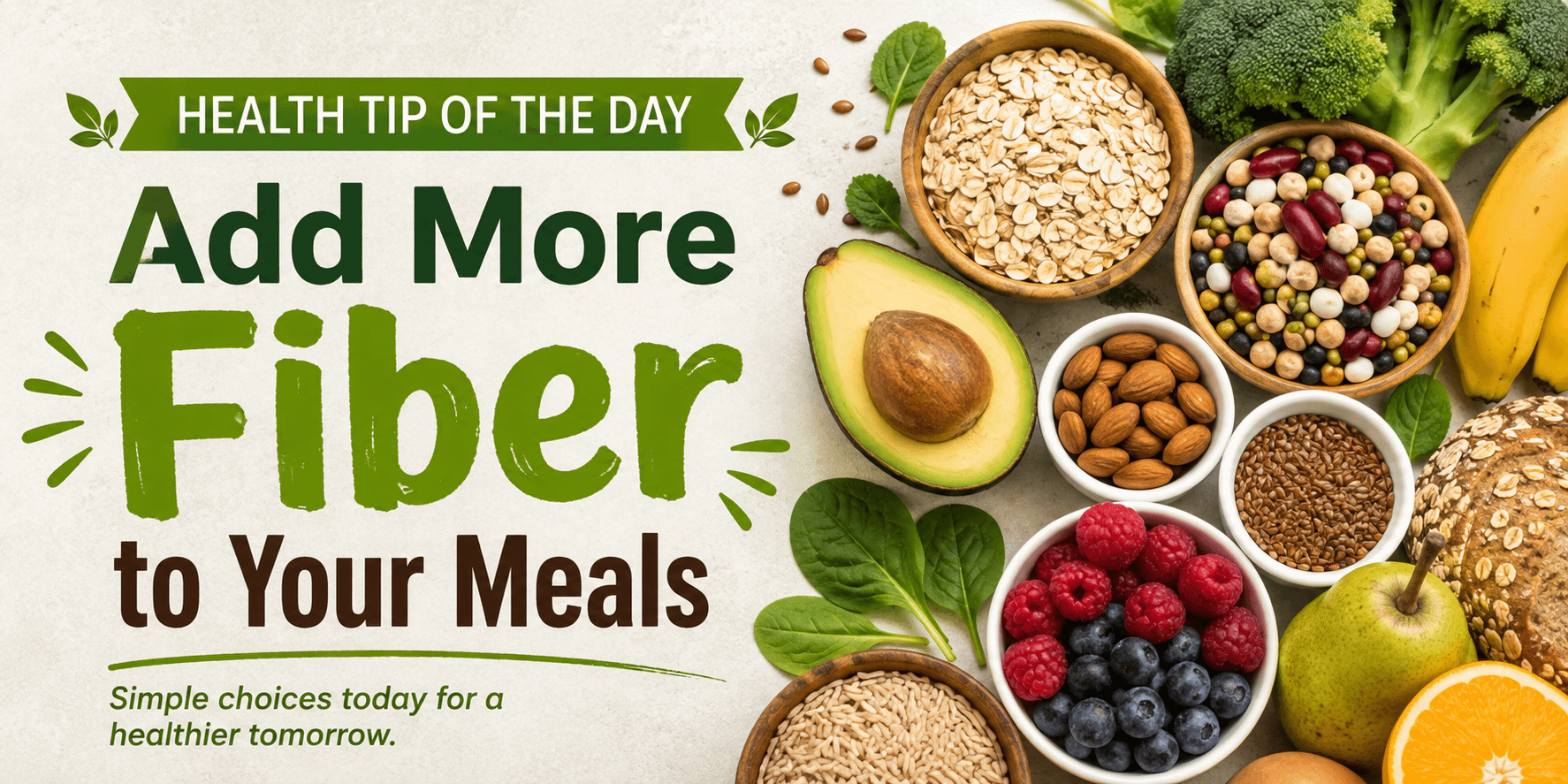
Health Tip of the Day: Add More Fiber to Your Meals
Today’s challenge is simple:
Add one more fiber-rich food to your next meal.
Put berries in your oatmeal.
Add an apple to lunch.
Put spinach in your eggs.
Add black beans to your tacos.
Mix broccoli into your pasta.
Choose whole-grain bread.
Snack on nuts.
Add vegetables to your dinner.
You don’t have to do everything at once.
Choose one.
Then tomorrow, do it again.
Over time, those small decisions become habits.
Final Thoughts
Taking better care of your health doesn’t always require dramatic changes.
Sometimes it’s about looking at the meal already sitting in front of you and asking one simple question:
“What healthy food can I add?”
Fiber-rich foods are an excellent answer.
Fruits, vegetables, beans, lentils, whole grains, nuts, and seeds can bring more fiber, nutrients, texture, flavor, and variety to your meals.
Start gradually. Drink enough fluids. Experiment with different foods. Find fiber-rich options you genuinely enjoy.
Most importantly, don’t let the pursuit of a perfect diet prevent you from making small improvements.
One apple won’t transform your health overnight.
One serving of broccoli won’t either.
But an apple today, vegetables tomorrow, beans later in the week, and whole grains more often can become something much bigger.
They become a pattern.
And your everyday patterns are what ultimately shape your lifestyle.
Today’s Health Tip of the Day: Don’t only think about what you need to remove from your diet. Look for something healthy you can add. Start with fiber, start small, and keep building healthier meals one choice at a time.
Leave a Reply