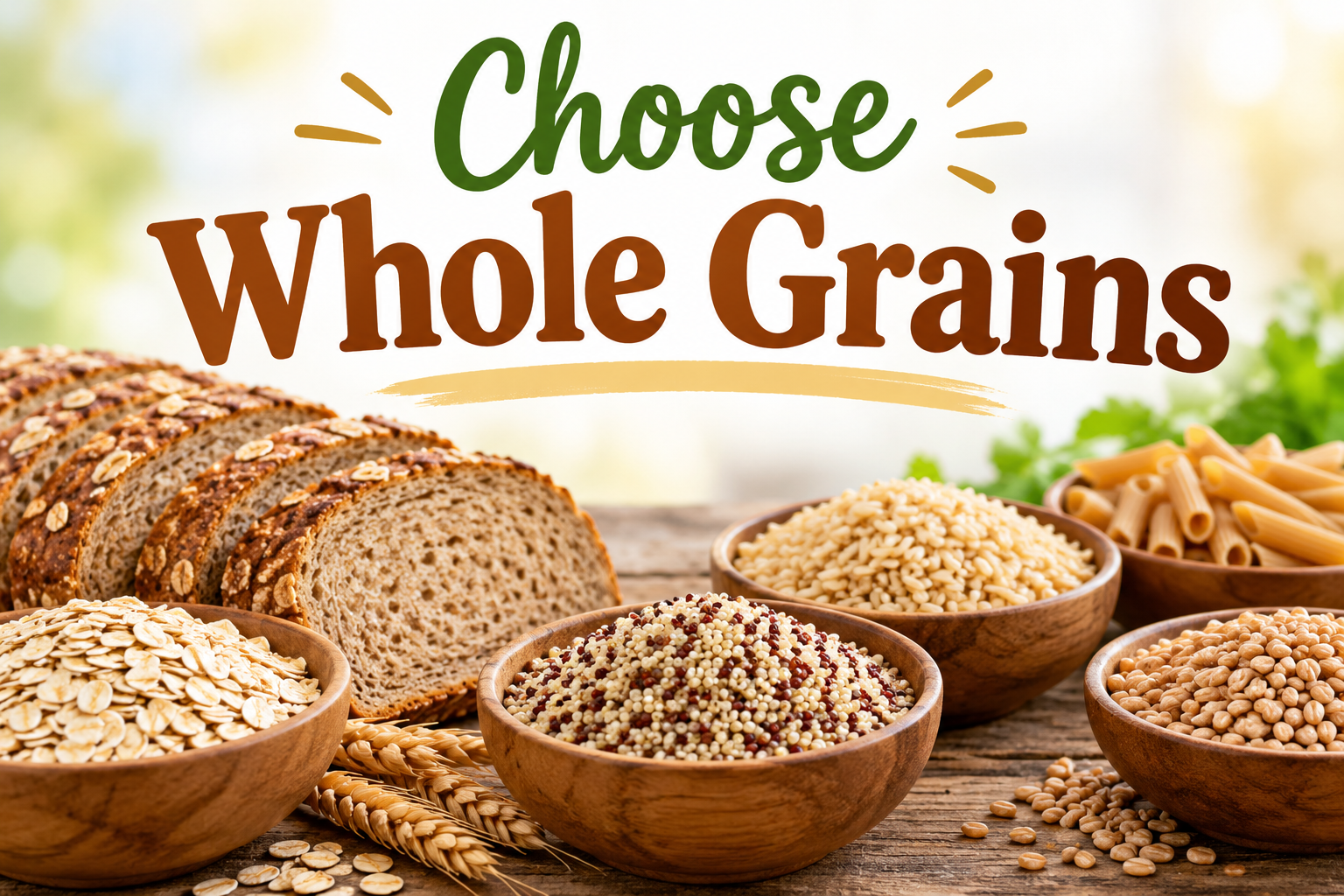
Eating healthier does not always require giving up your favorite foods or completely changing your diet. Sometimes, improving your health begins with making small, practical changes to the foods you already enjoy. One of the easiest and most beneficial changes you can make is choosing whole grains instead of refined grains.
Whole grains provide important nutrients, including fiber, vitamins, minerals, and beneficial plant compounds. They can support heart health, digestive health, blood sugar management, and overall wellness.
Whether you enjoy bread, rice, pasta, cereal, or oatmeal, choosing whole-grain varieties can help you build a more nutritious eating routine without sacrificing flavor or satisfaction.
The best part is that eating more whole grains does not have to be complicated or expensive. With a little knowledge and a few simple substitutions, you can make whole grains a regular part of your daily meals.
What Are Whole Grains?
Whole grains are grains that contain all three naturally occurring parts of the grain kernel: the bran, germ, and endosperm.
Each part provides different nutritional benefits.
The Bran
The bran is the outer protective layer of the grain. It contains dietary fiber, B vitamins, antioxidants, and minerals.
Fiber is especially important because it supports healthy digestion, helps promote fullness, and can contribute to healthier cholesterol levels.
The Germ
The germ is the nutrient-rich portion of the grain that can develop into a new plant. It contains healthy fats, vitamins, minerals, and beneficial plant compounds.
The Endosperm
The endosperm is the largest part of the grain. It primarily contains starch, along with some protein and smaller amounts of vitamins and minerals.
When these three components remain together in their original proportions, the food qualifies as a whole grain.
Refined grains, on the other hand, have been processed to remove the bran and germ. This processing produces a softer texture and can extend shelf life, but it also removes much of the grain’s natural fiber and some nutrients.
Although many refined grains are enriched with certain vitamins and minerals, enrichment generally does not restore all the fiber and beneficial compounds removed during processing.
Why Choosing Whole Grains Matters
Whole grains offer several nutritional advantages that make them an important part of a balanced diet.
Regularly including whole grains can support different aspects of your health while helping you maintain a satisfying and nutritious eating pattern.
1. Whole Grains Support Heart Health
Heart health is one of the most important reasons to include whole grains in your diet.
Whole grains contain dietary fiber and other beneficial nutrients that support cardiovascular wellness.
Soluble fiber, found in foods such as oats and barley, can help lower LDL cholesterol, commonly called bad cholesterol.
Higher consumption of whole grains is also associated with a lower risk of cardiovascular disease.
Replacing refined grains with whole grains can be one practical step toward building a heart-healthy eating pattern.
2. Whole Grains Improve Digestive Health
Fiber plays an essential role in maintaining a healthy digestive system.
Whole grains provide dietary fiber that helps support regular bowel movements and prevent constipation.
Certain fibers also serve as food for beneficial bacteria living in your digestive tract.
These bacteria contribute to gut health and help maintain a balanced digestive environment.
Including whole grains alongside fruits, vegetables, legumes, and adequate fluids can help support healthy digestion.
3. Whole Grains Help You Feel Fuller Longer
One challenge of maintaining healthy eating habits is managing hunger between meals.
Whole grains can help because their fiber content often makes meals more filling.
For example, a bowl of oatmeal may provide greater satisfaction than a breakfast made primarily from refined grains and added sugar.
Choosing whole-grain bread, brown rice, or whole-wheat pasta can also help create more satisfying meals.
Feeling fuller after eating may make it easier to manage portions and reduce unnecessary snacking.
However, portion sizes and overall calorie intake still matter, especially when weight management is a goal.
4. Whole Grains Support Blood Sugar Management
Whole grains can be a helpful part of a balanced eating plan for managing blood sugar.
Because many whole-grain foods contain more fiber than refined alternatives, they may be digested more slowly.
This can help moderate the rise in blood sugar after meals.
However, not all whole grains affect blood sugar in the same way. Processing methods, portion sizes, and the other foods eaten during a meal can influence the response.
For example, steel-cut oats may affect blood sugar differently from highly processed instant oatmeal.
Pairing whole grains with lean protein, healthy fats, and vegetables can help create a balanced meal.
5. Whole Grains Provide Important Nutrients
Whole grains naturally contain a variety of nutrients that contribute to overall health.
These include:
- B vitamins: Help the body convert food into energy.
- Magnesium: Supports normal muscle and nerve function.
- Iron: Helps transport oxygen throughout the body.
- Zinc: Supports immune function and normal cellular processes.
- Fiber: Supports digestion and healthy cholesterol levels.
- Antioxidants: Help protect cells against oxidative damage.
Eating a variety of whole grains can help you obtain a broader range of these nutrients.
The Best Whole Grains to Include in Your Diet
There are many delicious whole grains available, making it easy to find options that fit your preferences and cooking habits.
Oats
Oats are among the most convenient and affordable whole grains.
They contain beta-glucan, a type of soluble fiber associated with improved cholesterol levels.
Enjoy oatmeal for breakfast, add oats to homemade muffins, or use them in overnight oats.
Choose plain varieties when possible to limit added sugar.
Brown Rice
Brown rice retains the bran and germ that are removed when producing white rice.
It provides more fiber and certain nutrients than regular white rice.
Brown rice works well in stir-fries, grain bowls, soups, and side dishes.
Quinoa
Quinoa is technically a seed but is commonly used as a whole grain.
It contains fiber, minerals, and all nine essential amino acids, making it a complete protein source.
Quinoa is naturally gluten-free and works well in salads, bowls, and warm side dishes.
Whole Wheat
Whole wheat is commonly found in bread, pasta, tortillas, and breakfast cereals.
Choosing products made primarily from whole wheat is an easy way to increase whole-grain intake.
Look for the words “100% whole wheat” when purchasing bread.
Barley
Barley has a pleasantly chewy texture and provides soluble fiber.
It is excellent in soups, stews, and grain salads.
Choose hulled barley when you want a whole-grain variety. Pearl barley has been polished and is not considered a whole grain, although it still contains useful fiber.
Bulgur
Bulgur is made from whole wheat that has been cooked, dried, and cracked.
It cooks relatively quickly and is commonly used in salads and Mediterranean-inspired dishes.
Farro
Farro is an ancient wheat grain with a nutty flavor and chewy texture.
Whole-grain farro provides fiber, protein, and minerals.
Be aware that some farro products are pearled or semi-pearled, which removes some or all of the bran.
Buckwheat
Despite its name, buckwheat is not related to wheat.
It is naturally gluten-free when uncontaminated and can be used in porridge, pancakes, and grain bowls.
Whole Grains vs. Refined Grains
Understanding the differences between whole and refined grains can help you make better choices at the grocery store.
| Whole-Grain Choice | Refined-Grain Alternative |
|---|---|
| Brown rice | White rice |
| 100% whole-wheat bread | White bread |
| Whole-wheat pasta | Regular pasta |
| Plain oatmeal | Many refined breakfast cereals |
| Whole-wheat tortillas | White flour tortillas |
| Whole-grain crackers | Refined flour crackers |
Refined grains are not automatically unhealthy, and they can still fit into a balanced diet.
The goal is to choose whole grains more often rather than eliminate every refined grain.
How Much Whole Grain Should You Eat?
The Dietary Guidelines for Americans for 2020–2025 recommended making at least half of your grain choices whole grains.
For someone following a 2,000-calorie eating pattern, the illustrative recommendation was approximately six ounce-equivalents of grains daily, with at least three coming from whole grains.
Individual needs vary depending on age, activity level, calorie requirements, and health circumstances.
Examples of approximately one ounce-equivalent of whole grains include:
- One slice of 100% whole-wheat bread.
- One-half cup of cooked brown rice.
- One-half cup of cooked whole-wheat pasta.
- One-half cup of cooked oatmeal.
A practical goal is to include whole grains in at least one or two meals daily and gradually increase your intake.
10 Easy Ways to Eat More Whole Grains
Making whole grains part of your routine does not require complicated recipes.
1. Start your morning with oatmeal.
Prepare plain oatmeal and add berries, cinnamon, nuts, or sliced bananas.
2. Switch to whole-wheat bread.
Use 100% whole-wheat bread for sandwiches and toast.
3. Replace white rice with brown rice.
Try brown rice in your favorite chicken, vegetable, or seafood dishes.
4. Choose whole-wheat pasta.
Whole-wheat pasta works well with tomato sauce, vegetables, and lean proteins.
5. Try quinoa in your salads.
Add cooked quinoa to salads for extra texture and nutrients.
6. Choose whole-grain breakfast cereals.
Look for cereals containing whole grains and relatively little added sugar.
7. Use whole-wheat tortillas.
Make wraps, tacos, and quesadillas with whole-wheat tortillas.
8. Add barley to soups.
Barley adds texture and makes soups more satisfying.
9. Snack on plain popcorn.
Air-popped popcorn is a whole-grain snack. Season it with herbs or spices instead of relying on excessive butter and salt.
10. Experiment with unfamiliar grains.
Try bulgur, buckwheat, or whole farro to introduce new flavors into your meals.
How to Identify Whole Grains on Food Labels
Food packaging can sometimes make identifying whole grains confusing.
Words such as “multigrain,” “wheat,” “stone-ground,” or “made with whole grains” do not necessarily mean a product is primarily made from whole grains.
A product labeled multigrain simply contains more than one type of grain, and those grains may be refined.
When shopping, examine the ingredient list.
Look for ingredients such as:
- Whole wheat flour
- Whole oats
- Whole grain rye
- Brown rice
- Whole grain corn
- Whole barley
Ideally, a whole grain should appear as the first grain ingredient.
Also check the fiber content, added sugars, and sodium.
A product can contain whole grains while still having substantial amounts of added sugar or sodium.
Choosing nutritious foods requires looking at the complete nutritional picture rather than relying only on marketing claims.
Are Whole Grains Good for Weight Management?
Whole grains can support a healthy weight-management plan, particularly when they replace less filling refined-grain foods.
Their fiber content can promote fullness, making it easier for some people to manage hunger.
However, whole grains still contain calories and carbohydrates.
Eating unlimited amounts of brown rice, whole-wheat pasta, or whole-grain bread will not automatically lead to weight loss.
Balanced portions remain important.
For example, a satisfying dinner might include grilled chicken, roasted vegetables, and a moderate serving of brown rice.
This combination provides protein, fiber, carbohydrates, and other nutrients.
Sustainable weight management depends on your overall eating habits, physical activity, sleep, and other individual factors.
Are Whole Grains Suitable for Everyone?
Whole grains are nutritious for most people, but individual dietary needs can differ.
People with celiac disease must avoid gluten-containing grains such as wheat, barley, and rye.
Naturally gluten-free alternatives include brown rice, quinoa, buckwheat, and certified gluten-free oats when appropriate.
Individuals with certain digestive conditions may also need to adjust the amount or type of fiber they consume.
Increasing fiber too quickly can cause bloating, gas, or abdominal discomfort.
A gradual increase, accompanied by adequate fluid intake, can help your digestive system adjust.
Anyone with specific medical or dietary restrictions should seek individualized guidance from a qualified healthcare professional.
Common Mistakes When Choosing Whole Grains
Even when people want to eat healthier, a few common misunderstandings can make whole-grain choices less effective.
Assuming brown bread is whole grain
Bread can appear brown because of ingredients such as molasses or caramel coloring. Always check the ingredient list.
Believing all whole-grain products are equally nutritious
Some packaged whole-grain foods contain large amounts of added sugar, sodium, or saturated fat.
Eating portions that are too large
Whole grains are nutritious, but portion control remains important.
Increasing fiber too quickly
Suddenly adding large amounts of fiber can cause digestive discomfort.
Eating only one type of grain
Different grains offer different nutrients. Variety helps support a balanced diet.
Building a Day of Meals Around Whole Grains
Adding whole grains to your daily eating routine can be surprisingly simple.
Breakfast
Enjoy a bowl of oatmeal topped with blueberries, walnuts, and cinnamon.
This provides whole grains, fiber, and healthy fats to begin your morning.
Lunch
Prepare a turkey sandwich on 100% whole-wheat bread with lettuce, tomato, and avocado.
Serve it with fresh fruit or vegetables.
Afternoon Snack
Enjoy a small bowl of air-popped popcorn or whole-grain crackers with hummus.
Dinner
Prepare grilled salmon or chicken with brown rice and roasted broccoli.
This balanced meal combines protein, vegetables, and whole grains.
Evening Option
If you are hungry later, consider a small serving of plain oatmeal with fruit.
These examples demonstrate how easily whole grains can fit into familiar meals without requiring a complete dietary overhaul.
Small Changes Lead to Better Long-Term Habits
Healthy eating is not about perfection.
It is about developing habits that support your well-being consistently over time.
You do not need to replace every refined grain immediately.
Begin by choosing one whole-grain food you enjoy and incorporating it into your routine.
Perhaps you start with oatmeal three mornings a week.
Maybe you replace white bread with whole-wheat bread or serve brown rice with dinner twice a week.
As these choices become familiar, you can gradually introduce additional whole grains.
Small improvements are often easier to maintain than dramatic dietary changes.
Consistency matters more than perfection.
Final Thoughts: Choose Whole Grains for a Healthier Future
Choosing whole grains is one of the simplest ways to improve the nutritional quality of your meals.
These foods provide fiber, vitamins, minerals, and other beneficial nutrients that support digestion, heart health, and overall wellness.
From oatmeal and brown rice to quinoa and whole-wheat bread, there are countless ways to enjoy whole grains without giving up the foods you love.
You do not need an expensive diet plan or complicated recipes to make healthier choices.
Sometimes, better health begins with something as simple as changing the bread on your sandwich or the rice on your dinner plate.
Remember, healthy living is built through the small decisions you make every day. Choosing whole grains today is one more positive step toward taking care of your body and investing in your future.
What is one refined-grain food you could replace with a whole-grain alternative this week?


Leave a Reply