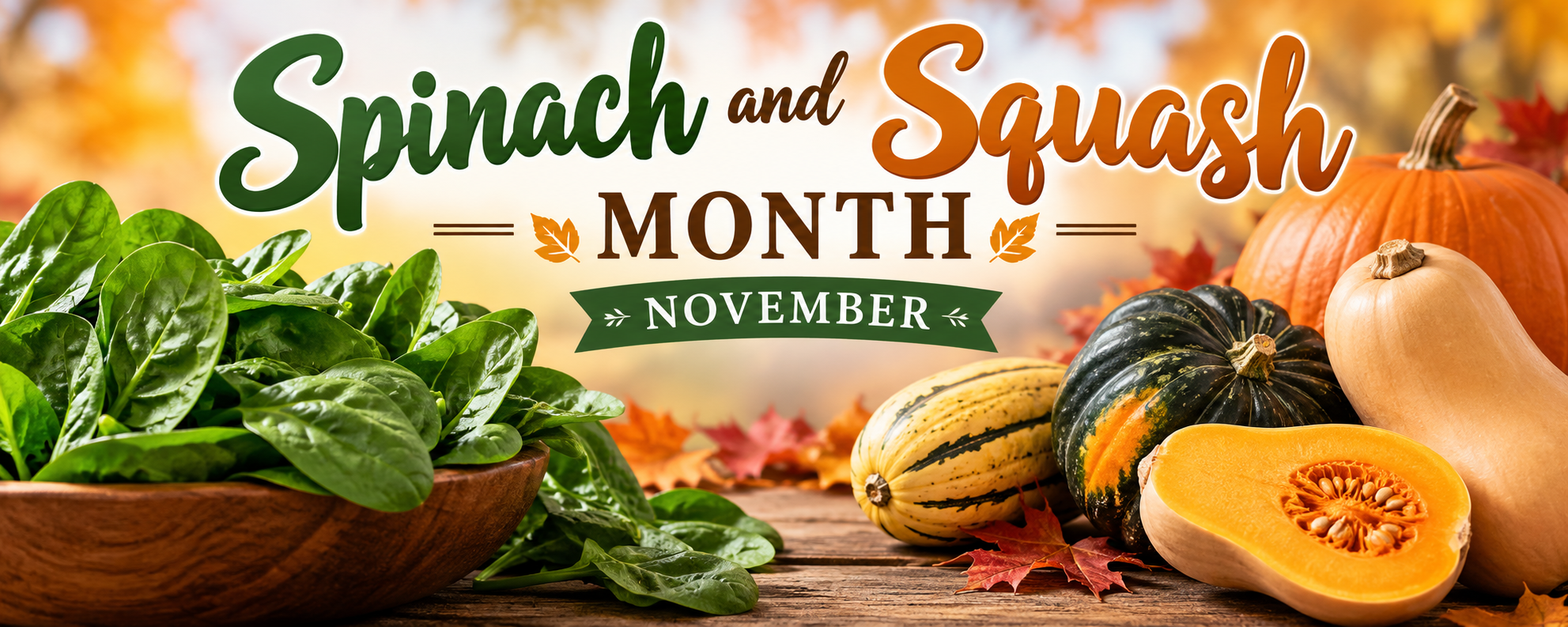
November is a wonderful time to celebrate fresh produce, comforting meals, and the nutritional benefits of eating more vegetables. One seasonal observance that encourages healthier eating is Spinach and Squash Month, a celebration of two versatile foods that deserve a regular place on our plates.
From leafy green spinach packed with essential vitamins to colorful squash varieties that bring warmth and flavor to autumn meals, these vegetables offer countless possibilities in the kitchen.
Whether you enjoy spinach in a fresh salad, roasted butternut squash with dinner, or a hearty vegetable soup on a chilly evening, Spinach and Squash Month is an opportunity to explore new recipes, improve your eating habits, and appreciate the foods that nourish our bodies.
What Is Spinach and Squash Month?
Spinach and Squash Month is observed throughout November and encourages people to recognize the nutritional value, versatility, and delicious flavors of spinach and squash.
Both vegetables can be incorporated into everyday meals, making them excellent choices for families looking to prepare healthier dishes without sacrificing taste.
November is especially appropriate for celebrating squash because many winter squash varieties are readily available during the fall. Pumpkins, butternut squash, acorn squash, and spaghetti squash become popular ingredients in seasonal cooking.
Spinach, meanwhile, is a cool-season leafy green that grows particularly well during spring and fall in many regions.
Together, these foods provide an excellent combination of nutrients, colors, textures, and flavors.
Spinach and Squash Month also serves as a reminder that healthy eating does not have to be complicated or expensive. Sometimes, improving your diet begins with adding a few more vegetables to your favorite meals.
The History of Spinach and Squash
The History of Spinach
Spinach has a fascinating history that stretches back centuries.
The leafy green vegetable is believed to have originated in ancient Persia, in the region of modern-day Iran.
Over time, spinach spread into other parts of Asia, the Middle East, and Europe.
By the Middle Ages, spinach had become an important ingredient in European cooking, particularly in Mediterranean regions.
Eventually, European settlers introduced spinach to North America, where it became a popular vegetable.
One of spinach’s most recognizable cultural connections is the cartoon character Popeye the Sailor Man.
Popeye became famous for eating spinach to gain extraordinary strength. Although eating spinach will not provide instant superhuman abilities, the cartoon helped popularize the vegetable and encouraged generations of children to eat their greens.
Today, spinach is enjoyed worldwide in salads, soups, smoothies, pasta dishes, omelets, and countless other recipes.
The History of Squash
Squash has an even longer history in the Americas.
Archaeological evidence suggests that squash was domesticated thousands of years ago in regions of the Americas, making it one of the oldest cultivated food crops in the Western Hemisphere.
Indigenous peoples grew squash as an important source of food.
Squash was also one of the traditional Three Sisters crops, grown alongside corn and beans in agricultural systems practiced by many Indigenous communities.
These crops complemented one another in the garden. Corn provided support for climbing beans, beans contributed nitrogen to the soil, and sprawling squash leaves helped shade the ground and reduce weed growth.
Over time, squash became a staple ingredient in North American cooking.
Today, it remains especially popular during autumn and winter, when hearty vegetable dishes and seasonal recipes take center stage.
The Different Types of Spinach
Spinach may appear simple, but several varieties offer different textures and culinary possibilities.
1. Savoy Spinach
Savoy spinach features dark green, curly leaves with a slightly crinkled appearance.
Its hearty texture makes it a good choice for cooked dishes, soups, and sautés.
2. Flat-Leaf Spinach
Flat-leaf spinach has smooth, broad leaves that are relatively easy to clean.
It is commonly used in packaged spinach products, salads, and prepared foods.
3. Semi-Savoy Spinach
Semi-savoy spinach combines characteristics of both savoy and flat-leaf varieties.
Its leaves are slightly crinkled, making it versatile for fresh and cooked preparations.
4. Baby Spinach
Baby spinach is harvested when the leaves are young and tender.
It has a mild flavor and delicate texture, making it especially popular in salads, sandwiches, wraps, and smoothies.
Popular Types of Squash
Squash comes in many shapes, sizes, colors, and flavors.
Most culinary varieties fall into two broad categories: summer squash and winter squash.
Summer Squash
Summer squash is generally harvested while its skin is tender and edible.
Popular varieties include:
-
Zucchini: Mild-flavored and excellent for grilling, sautéing, baking, and spiralizing.
-
Yellow squash: A tender vegetable that works well in casseroles, stir-fries, and roasted dishes.
-
Pattypan squash: A small, scalloped variety that can be roasted, grilled, or stuffed.
Winter Squash
Winter squash is typically harvested when mature, with a firm rind that allows many varieties to be stored for extended periods.
Popular varieties include:
-
Butternut squash: Sweet, creamy, and ideal for soups, roasting, and casseroles.
-
Acorn squash: Known for its distinctive shape and delicious flavor when roasted.
-
Spaghetti squash: Produces spaghetti-like strands when cooked, making it a popular pasta alternative.
-
Delicata squash: Features a sweet flavor and tender, edible skin when cooked.
-
Pumpkin: Used in soups, pies, breads, and savory dishes.
-
Kabocha squash: A dense, sweet variety often used in Asian-inspired recipes.
Each variety brings unique flavors and textures to the kitchen.
The Health Benefits of Spinach
Spinach is widely recognized as a nutrient-dense vegetable.
It provides numerous vitamins, minerals, antioxidants, and beneficial plant compounds while remaining naturally low in calories.
1. Supports Heart Health
Spinach contains potassium, dietary nitrates, and antioxidants that contribute to cardiovascular health.
Dietary nitrates can support healthy blood vessel function, while potassium helps the body regulate blood pressure.
Eating spinach as part of a balanced diet may contribute to long-term heart health.
2. Promotes Healthy Vision
Spinach contains lutein and zeaxanthin, two carotenoids that accumulate in the retina.
These compounds help protect the eyes from oxidative damage and are associated with eye health.
3. Provides Important Vitamins
Spinach is a source of several essential nutrients, including:
-
Vitamin A precursors, which support vision and immune function.
-
Vitamin C, which supports immune health and collagen production.
-
Vitamin K, which is important for normal blood clotting and bone health.
-
Folate, which supports cell growth and DNA synthesis.
-
Magnesium, which contributes to normal muscle and nerve function.
4. Supports Bone Health
Spinach contains vitamin K, an important nutrient involved in bone metabolism.
However, spinach also contains oxalates, which can reduce the absorption of some minerals, including calcium.
For this reason, spinach should complement rather than replace other calcium-rich foods.
5. Provides Dietary Fiber
Spinach contains fiber, which supports healthy digestion.
Although its fiber content per serving is modest, incorporating spinach alongside other vegetables, fruits, beans, and whole grains helps increase overall fiber intake.
6. Helps Support Healthy Weight Management
Spinach is naturally low in calories and provides nutrients that help make meals more balanced.
Adding spinach to soups, omelets, sandwiches, and salads can increase vegetable intake without significantly increasing calorie content.
The Health Benefits of Squash
Squash is another nutritious addition to a balanced diet.
Its nutritional composition varies by variety, but many types provide fiber, vitamins, minerals, and beneficial plant compounds.
1. Supports Immune Function
Orange-fleshed winter squash, such as butternut squash and pumpkin, contains beta-carotene.
The body converts beta-carotene into vitamin A as needed, supporting immune function, vision, and healthy skin.
2. Promotes Digestive Health
Many squash varieties contain dietary fiber.
Fiber supports regular bowel movements, contributes to digestive health, and can help promote feelings of fullness.
3. Supports Healthy Blood Pressure
Squash provides potassium, a mineral involved in fluid balance, muscle function, and blood pressure regulation.
Including potassium-rich vegetables in a balanced eating pattern can help support cardiovascular health.
4. Provides Antioxidants
Squash contains plant compounds, including carotenoids, that help protect cells from oxidative stress.
Orange and yellow squash varieties are particularly well known for their carotenoid content.
5. Supports Eye Health
Many winter squash varieties contain beta-carotene, which the body can convert into vitamin A.
Vitamin A is essential for normal vision, particularly in low-light conditions.
6. Adds Nutrients to Everyday Meals
Squash can be used in soups, side dishes, casseroles, pasta sauces, and baked goods.
Its versatility makes it easier to incorporate vegetables into meals throughout the week.
Spinach vs. Squash: How Do They Compare?
Although spinach and squash are both nutritious, they offer different nutritional advantages.
| Nutritional benefit | Spinach | Squash |
|---|---|---|
| Vitamin A | Excellent source of precursors | Many orange varieties are rich in precursors |
| Vitamin C | Good source | Present in many varieties |
| Vitamin K | Particularly rich | Generally lower |
| Fiber | Provides some fiber | Many varieties provide fiber |
| Potassium | Good source | Good source in many varieties |
| Folate | Particularly rich | Varies by variety |
| Antioxidants | Lutein and zeaxanthin | Carotenoids, especially in orange varieties |
Rather than choosing one over the other, combining spinach and squash creates opportunities to enjoy a wider variety of nutrients.
10 Delicious Ways to Enjoy Spinach and Squash
One of the best ways to celebrate Spinach and Squash Month is by experimenting with new recipes.
Here are ten delicious ideas that can make these vegetables part of your regular meals.
1. Creamy Spinach and Butternut Squash Soup
Combine roasted butternut squash, vegetable broth, garlic, onions, and fresh spinach.
Blend until smooth and season with your favorite herbs.
The result is a comforting soup perfect for chilly November evenings.
2. Spinach and Squash Lasagna
Replace some traditional lasagna fillings with roasted squash and sautéed spinach.
Layer with pasta, ricotta cheese, mozzarella, and tomato or creamy white sauce.
Bake until bubbly and golden.
3. Roasted Acorn Squash With Spinach
Cut acorn squash in half, remove the seeds, and roast until tender.
Fill with sautéed spinach, garlic, onions, and cooked quinoa or rice.
This makes a colorful vegetarian main course.
4. Spinach and Zucchini Omelet
Sauté chopped zucchini and spinach in a skillet.
Add beaten eggs and cook until set.
Finish with a sprinkle of cheese for a nutritious breakfast.
5. Butternut Squash and Spinach Pasta
Toss roasted butternut squash cubes with fresh spinach, cooked pasta, olive oil, garlic, and Parmesan cheese.
The sweetness of the squash balances the earthy flavor of spinach.
6. Spinach and Squash Casserole
Combine cooked spinach, roasted squash, onions, herbs, and a light cheese sauce.
Top with breadcrumbs and bake until golden brown.
7. Spaghetti Squash With Spinach and Garlic
Roast spaghetti squash until tender and scrape the flesh into strands.
Toss with sautéed spinach, garlic, olive oil, and Parmesan cheese.
This creates a satisfying vegetable-based dish.
8. Spinach and Squash Stuffed Peppers
Mix cooked brown rice, spinach, diced squash, beans, and seasonings.
Stuff the mixture into bell peppers and bake until tender.
9. Roasted Squash and Spinach Salad
Combine fresh baby spinach with roasted butternut squash, dried cranberries, toasted walnuts, and a light vinaigrette.
This makes a delicious fall-inspired salad.
10. Spinach and Squash Breakfast Hash
Cook diced squash with onions, peppers, and seasonings until tender.
Add spinach and allow it to wilt.
Serve with a fried or poached egg for a hearty breakfast.
Featured Recipe: Roasted Butternut Squash and Spinach Skillet
This simple recipe brings together the natural sweetness of butternut squash and the mild flavor of fresh spinach.
Preparation Time: 10 minutes
Cooking Time: 30 minutes
Total Time: 40 minutes
Servings: 4
Ingredients
-
1 medium butternut squash, peeled and cubed
-
4 cups fresh baby spinach
-
2 tablespoons olive oil
-
3 cloves garlic, minced
-
1 small onion, diced
-
1/2 teaspoon paprika
-
1/2 teaspoon dried thyme
-
1/4 teaspoon black pepper
-
Salt to taste
-
2 tablespoons grated Parmesan cheese (optional)
Instructions
-
Preheat the oven to 400°F.
-
Place the cubed butternut squash on a baking sheet.
-
Drizzle with 1 tablespoon of olive oil and sprinkle with paprika, thyme, salt, and pepper.
-
Roast for approximately 25–30 minutes, stirring halfway through, until tender and lightly browned.
-
Heat the remaining olive oil in a large skillet over medium heat.
-
Add the diced onion and cook for approximately 3–4 minutes.
-
Stir in the garlic and cook for another 30 seconds.
-
Add the fresh spinach and stir until wilted.
-
Gently fold in the roasted butternut squash.
-
Sprinkle with Parmesan cheese, if desired, and serve warm.
This dish works beautifully as a side dish or can be paired with grilled chicken, fish, beans, or whole grains for a complete meal.
How to Choose Fresh Spinach and Squash
Selecting fresh vegetables helps ensure better flavor, texture, and quality.
Choosing Fresh Spinach
Look for spinach with:
-
Bright green leaves.
-
A fresh appearance.
-
Firm, tender stems.
-
No slimy or mushy areas.
-
Minimal yellowing or wilting.
Avoid packages containing excessive moisture or visibly spoiled leaves.
Choosing Fresh Squash
When selecting winter squash, look for:
-
Firm, unbroken skin.
-
A heavy feel for its size.
-
No soft spots or mold.
-
A mature, relatively dull rind.
-
An intact stem when possible.
For summer squash, choose vegetables with smooth skin, a firm texture, and no significant bruising.
How to Store Spinach and Squash Properly
Proper storage helps maintain freshness and reduce food waste.
Storing Spinach
Fresh spinach should be refrigerated promptly.
Keep it in a clean container or produce bag designed to manage moisture.
Avoid washing spinach until you are ready to use it unless it is packaged as prewashed.
Use spinach while the leaves remain fresh, and discard any that become slimy or spoiled.
Storing Winter Squash
Whole winter squash can often be stored for several weeks or longer, depending on the variety and storage conditions.
Keep it in a cool, dry, well-ventilated location.
Once cut, refrigerate squash in a covered container and use it within a few days.
Freezing Spinach and Squash
Both vegetables can be frozen for later use.
Spinach is commonly blanched before freezing to help preserve its quality.
Squash can be cooked, cooled, and frozen in portions for soups, casseroles, and other recipes.
Freezing is an excellent way to enjoy seasonal produce while minimizing waste.
How to Get Children to Eat More Spinach and Squash
Encouraging children to eat vegetables can sometimes be challenging.
Fortunately, spinach and squash are versatile enough to be incorporated into familiar dishes.
Try adding finely chopped spinach to scrambled eggs, pasta sauce, or homemade meatballs.
Blend cooked butternut squash into macaroni and cheese sauce for added color and nutrients.
Make baked zucchini fries with a light breadcrumb coating.
Add baby spinach to fruit smoothies.
Prepare roasted squash cubes with cinnamon for a naturally sweet side dish.
Allowing children to help wash vegetables, mix ingredients, and choose recipes can also make them more interested in trying new foods.
The goal is to make vegetables a familiar and enjoyable part of everyday eating rather than something children feel pressured to consume.
Growing Spinach and Squash at Home
Spinach and squash can both be grown in home gardens, although they have different growing requirements.
Growing Spinach
Spinach generally prefers cooler temperatures.
It grows well during spring and fall in many climates.
For successful spinach gardening:
-
Plant in fertile, well-draining soil.
-
Provide consistent moisture.
-
Give plants adequate sunlight.
-
Harvest young leaves for a tender flavor.
-
Avoid prolonged exposure to excessive heat, which can cause bolting.
Spinach can also be grown in containers, making it suitable for patios and small gardens.
Growing Squash
Most squash varieties prefer warm weather and plenty of sunlight.
For successful squash gardening:
-
Plant after the danger of frost has passed.
-
Choose a location receiving plenty of direct sunlight.
-
Provide adequate room for spreading vines or bush varieties.
-
Water consistently, especially during flowering and fruit development.
-
Monitor for common pests and plant diseases.
Growing vegetables at home can be a rewarding way to connect with nature and enjoy fresh ingredients.
Fun Facts About Spinach and Squash
Here are some interesting facts to celebrate Spinach and Squash Month.
-
Spinach belongs to the amaranth family, which also includes beets and Swiss chard.
-
Squash belongs to the gourd family, Cucurbitaceae, along with cucumbers and melons.
-
Botanically, squash is a fruit because it develops from a flower and contains seeds, although it is commonly treated as a vegetable in cooking.
-
Popeye the Sailor Man helped make spinach famous as a symbol of strength.
-
Some winter squash varieties can remain in storage for months under suitable conditions.
-
Spinach can be eaten raw or cooked, and cooking changes the availability of certain nutrients.
-
Spaghetti squash naturally separates into noodle-like strands after cooking.
-
Pumpkin is a type of squash.
-
Squash blossoms are edible and are used in many traditional cuisines.
-
Spinach grows best in cool weather, while most squash varieties thrive during warmer growing seasons.
Creative Ways to Celebrate Spinach and Squash Month
November offers plenty of opportunities to make these vegetables part of your meals and activities.
Try a New Recipe Every Week
Choose one spinach or squash recipe each week throughout November.
Experiment with soups, casseroles, salads, pasta dishes, and roasted vegetables.
Visit a Local Farmers Market
November farmers markets often feature a wide variety of winter squash.
Explore different shapes, colors, and varieties that you may not normally purchase.
Prepare a Family Cooking Night
Invite family members to help prepare a meal featuring spinach, squash, or both.
Cooking together can encourage healthier eating habits and create meaningful memories.
Add Spinach and Squash to Thanksgiving Dinner
November is also the month of Thanksgiving, making it an excellent opportunity to incorporate spinach and squash into holiday meals.
Consider serving roasted butternut squash, creamy spinach, stuffed acorn squash, or a spinach and squash casserole alongside traditional Thanksgiving favorites.
These dishes add color, flavor, and valuable nutrients to the holiday table.
Reduce Food Waste
Use leftover roasted squash in soups, pasta, or breakfast dishes.
Add extra spinach to omelets, wraps, or sandwiches before it spoils.
Share a Healthy Recipe
Encourage friends and family to experiment with vegetables by sharing a favorite recipe.
You may inspire someone to discover a new favorite dish.
Support Local Farmers
Purchasing seasonal produce from local growers can support agricultural businesses and strengthen community connections.
Why Eating Seasonal Vegetables Matters
Eating seasonal produce offers several potential advantages.
Vegetables harvested near their peak may offer excellent flavor and quality.
Seasonal foods may also be more affordable when local supplies are plentiful.
Choosing a variety of seasonal vegetables encourages dietary diversity, helping people consume different vitamins, minerals, and beneficial plant compounds.
Seasonal eating can also encourage more home cooking.
Preparing meals from fresh ingredients allows you to make choices about portions, seasonings, and cooking methods.
However, fresh produce is not the only healthy option. Frozen and canned vegetables can also provide important nutrients and are useful when fresh vegetables are unavailable or expensive.
The most important goal is to eat a variety of vegetables consistently.
Can You Eat Spinach and Squash Every Day?
For most people, spinach and squash can be included regularly in a healthy, balanced diet.
However, variety remains important.
Eating different vegetables helps provide a broader range of nutrients.
People taking warfarin should keep vitamin K intake consistent and discuss significant dietary changes with their healthcare professional, since spinach is particularly high in vitamin K.
Individuals prone to calcium oxalate kidney stones may also need guidance about consuming high-oxalate foods such as spinach.
Squash is generally well tolerated, but people managing specific medical conditions or dietary restrictions should consider their individual nutritional needs.
There is no need to rely on one particular vegetable for good health.
A balanced eating pattern that includes vegetables, fruits, whole grains, proteins, and healthy fats provides the foundation for long-term wellness.
The Bigger Message Behind Spinach and Squash Month
Spinach and Squash Month is about more than celebrating two vegetables.
It reminds us that small, consistent decisions can contribute to healthier lives.
Choosing vegetables more often, preparing meals at home, learning new recipes, and sharing nutritious foods with loved ones are practical habits that can make a difference over time.
Healthy eating does not require perfection.
You do not need to completely change your diet overnight.
Sometimes, progress begins with something as simple as adding a handful of spinach to breakfast or roasting squash instead of preparing a less nutritious side dish.
Over time, these small decisions can become lasting habits.
Food also has a special way of bringing people together.
A warm bowl of butternut squash soup, a family casserole, or a homemade dinner can provide more than nourishment. It can create moments of connection, comfort, and togetherness.
That is another wonderful reason to celebrate the foods we grow, prepare, and share.
Final Thoughts: Celebrate Spinach and Squash Month This November
Spinach and Squash Month provides an opportunity to appreciate two nutritious, affordable, and versatile foods.
Spinach offers valuable vitamins, minerals, and beneficial plant compounds, while squash provides fiber, antioxidants, and a variety of nutrients that support overall health.
Together, they can transform ordinary meals into colorful, satisfying dishes.
Whether you are preparing a fresh spinach salad, roasting butternut squash, experimenting with a new casserole, or teaching your children how to cook, November is a wonderful time to explore everything these vegetables have to offer.
With Thanksgiving and the holiday season approaching, this month is also an excellent opportunity to introduce healthier vegetable dishes to family gatherings.
Remember, healthier living often begins with small choices made consistently. Adding more vegetables to your meals is one simple way to invest in your well-being.
How do you enjoy spinach and squash? Do you prefer fresh spinach salads, roasted butternut squash, homemade soup, or a favorite family recipe?

Leave a Reply