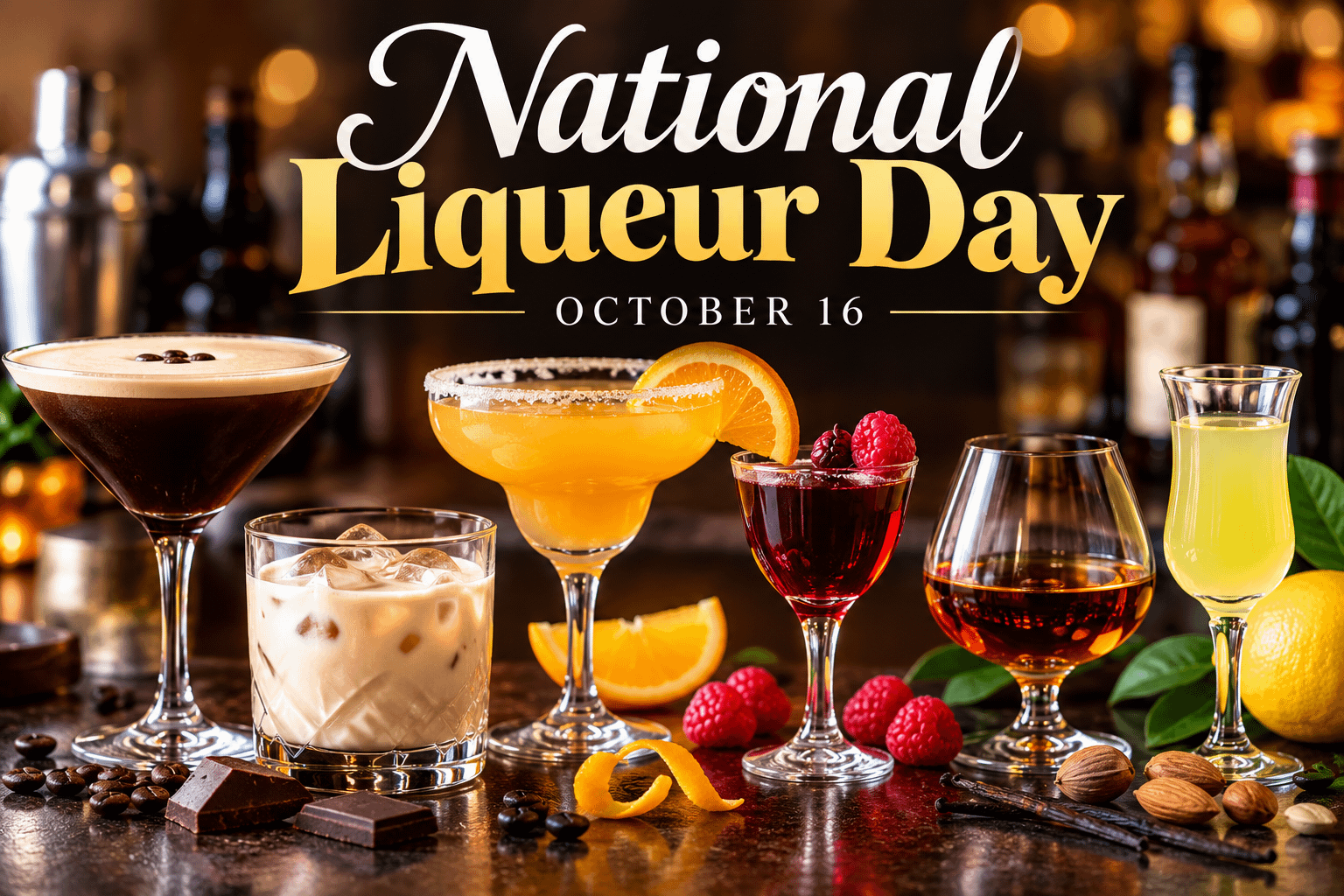
Every year on October 16, National Liqueur Day gives us an opportunity to celebrate one of the most diverse and flavorful categories behind the bar: liqueurs.
From rich coffee and chocolate flavors to bright citrus, sweet berries, herbs, nuts, spices, and cream, liqueurs can transform an ordinary drink into something memorable. Some are enjoyed slowly on their own, while others are essential ingredients in cocktails, desserts, coffee drinks, and after-dinner treats.
National Liqueur Day is a great excuse to learn a little more about these flavorful spirits, discover something you have never tried before, or make a favorite cocktail at home.
What Is a Liqueur?
One of the first things worth clearing up is the difference between liquor and liqueur.
Although the words look similar, they don’t mean exactly the same thing.
Liquor generally refers to distilled spirits such as whiskey, vodka, rum, gin, tequila, and brandy.
A liqueur, on the other hand, generally begins with a distilled spirit that is then flavored and sweetened. Fruits, herbs, spices, flowers, nuts, coffee, chocolate, cream, and other ingredients may be used to create its distinctive character.
That added flavor and sweetness is what gives liqueurs their incredible variety.
Walk into a well-stocked bar and you might encounter bottles tasting like oranges, raspberries, cherries, almonds, hazelnuts, coffee, chocolate, mint, elderflower, herbs, or cream.
That diversity makes liqueurs some of the most versatile ingredients available to bartenders and home cocktail enthusiasts.
Liqueurs Have a Long History
Flavored alcoholic preparations have been made for centuries.
Historically, herbs, roots, flowers, spices, and other botanicals were combined with alcohol for medicinal or restorative preparations. Monasteries, apothecaries, and households developed their own mixtures using ingredients available in their regions.
Over time, many of these preparations evolved from medicinal mixtures into drinks enjoyed primarily for their flavors.
Improved distillation techniques, increased trade in spices and sugar, and greater access to fruits and botanicals helped expand the possibilities.
Eventually, producers throughout Europe and elsewhere began developing distinctive liqueurs based on local ingredients and traditions.
Some recipes became famous internationally, while others remained regional specialties.
Today, liqueur production combines those centuries-old traditions with modern creativity.
A World of Different Flavors
Perhaps the most interesting thing about liqueurs is the enormous number of flavors available.
Citrus Liqueurs
Orange and other citrus liqueurs are among the most important ingredients in cocktail making.
Triple sec, curaçao, limoncello, and other citrus-based varieties can add sweetness, acidity, aroma, and complexity.
Orange liqueur appears in numerous classic and modern cocktails, including Margaritas, Cosmopolitans, and Sidecars.
Limoncello takes a different approach, delivering an intense lemon flavor that is particularly associated with Italy.
Coffee Liqueurs
Coffee and alcohol are natural companions.
Coffee liqueurs typically combine roasted coffee flavors with sweetness and a spirit base, producing something that can be served on its own or mixed into cocktails.
They are especially popular in drinks such as the White Russian and Espresso Martini.
Coffee liqueur can also be added to hot coffee or incorporated into desserts.
Cream Liqueurs
Cream liqueurs offer a completely different experience.
They’re typically rich, smooth, sweet, and dessert-like.
They can be enjoyed over ice, mixed into coffee, incorporated into cocktails, or used as an ingredient in desserts.
Their creamy texture makes them particularly appealing during the colder months.
Herbal Liqueurs
Herbal liqueurs can be some of the most complex bottles behind the bar.
Depending on the recipe, they may contain combinations of herbs, roots, spices, flowers, citrus peels, seeds, and other botanicals.
Some are sweet and approachable, while others are bitter, intensely herbal, or surprisingly complex.
Recipes are sometimes closely guarded secrets involving dozens of ingredients.
Fruit Liqueurs
Almost any fruit imaginable can become the inspiration for a liqueur.
Raspberry, blackberry, cherry, peach, melon, banana, apple, pear, strawberry, and other flavors are common.
Fruit liqueurs can bring sweetness, color, aroma, and concentrated fruit flavor to cocktails.
Nut Liqueurs
Nut-flavored liqueurs are another popular category.
Amaretto is perhaps the best-known example, famous for its distinctive almond-like flavor.
Hazelnut liqueurs are also popular, especially when paired with coffee, chocolate, or cream.
These liqueurs work particularly well in dessert cocktails.
Famous Liqueurs You May Recognize
Even people who don’t regularly drink liqueurs have probably encountered some famous examples.
Baileys Irish Cream is known for its creamy character and is frequently served over ice or added to coffee.
Kahlúa is a famous coffee liqueur used in drinks including the White Russian.
Grand Marnier combines orange flavors with Cognac and is commonly used in cocktails and culinary recipes.
Cointreau is another well-known orange liqueur and an important ingredient in numerous classic cocktails.
Amaretto is famous for its sweet almond-like flavor and can be served alone or mixed into cocktails.
Frangelico is known for its hazelnut character.
Chambord brings rich raspberry flavor to cocktails.
St-Germain is an elderflower liqueur known for its floral and fruity character.
Each bottle provides bartenders with a different tool for building flavor.
Why Liqueurs Are So Important in Cocktails
A cocktail is about balance.
Strong, sweet, sour, bitter, aromatic, and sometimes savory elements have to work together.
Liqueurs can help bridge those flavors.
A small amount of orange liqueur, for example, can add sweetness and citrus complexity without overwhelming the drink.
Coffee liqueur can add both sweetness and roasted depth.
Herbal liqueurs can introduce flavors that would otherwise require numerous individual ingredients.
That is why many cocktail recipes call for relatively small quantities of liqueur.
You don’t always need much.
Sometimes half an ounce completely changes the character of a drink.
Classic Cocktails Featuring Liqueurs
National Liqueur Day is the perfect occasion to revisit a few famous cocktails.
Margarita
A traditional Margarita combines tequila, lime juice, and orange liqueur.
The orange liqueur contributes sweetness while complementing the fresh lime and tequila.
White Russian
Vodka, coffee liqueur, and cream create this famously rich cocktail.
It is simple but showcases exactly how much flavor a liqueur can contribute.
Sidecar
Traditionally made with Cognac, orange liqueur, and lemon juice, the Sidecar demonstrates the balance between strong, sweet, and sour components.
Amaretto Sour
Amaretto takes center stage in this sweet-and-sour cocktail.
Modern versions often balance the liqueur’s sweetness with fresh lemon juice and sometimes additional spirit.
Espresso Martini
Coffee lovers have helped bring the Espresso Martini back into the spotlight.
Vodka, espresso, and coffee liqueur combine to create a cocktail that is simultaneously rich, bitter, sweet, and energizing in flavor.
Liqueurs Aren’t Just for Cocktails
The versatility of liqueurs extends well beyond the cocktail shaker.
They can be used in cooking and baking as well.
Coffee, chocolate, orange, raspberry, almond, and cream liqueurs can complement cakes, brownies, cheesecakes, frostings, sauces, ice cream, and other desserts.
A small amount of orange liqueur can brighten chocolate desserts.
Coffee liqueur can intensify chocolate or coffee flavors.
Amaretto works beautifully with chocolate, cherries, peaches, coffee, and cream.
Cream liqueurs can be incorporated into sauces, cakes, and dessert beverages.
Just remember that alcohol doesn’t necessarily disappear completely during cooking, particularly in recipes with short cooking times.
Create Your Own Liqueur Tasting
One fun way to celebrate National Liqueur Day is by organizing a small tasting for adults of legal drinking age.
Instead of purchasing several similar bottles, choose completely different flavor categories.
You might compare:
- an orange liqueur
- a coffee liqueur
- an herbal liqueur
- a cream liqueur
- a berry liqueur
- an almond or hazelnut liqueur
Pour small tasting portions and compare aroma, sweetness, texture, intensity, and finish.
You may discover that you enjoy a particular liqueur on its own but prefer another only when mixed into a cocktail.
Try Something You’ve Never Had Before
National Liqueur Day doesn’t have to be about drinking more.
It can simply be about trying something different.
If you always reach for coffee liqueur, explore an herbal variety.
If you love citrus flavors, compare different orange liqueurs.
If dessert cocktails are your thing, experiment with hazelnut, chocolate, almond, or cream liqueurs.
There is an enormous world of flavors to explore.
Make a Simple National Liqueur Day Cocktail
Here’s an easy drink that allows you to choose your favorite liqueur.
National Liqueur Day Celebration Cocktail
Ingredients
- 1½ ounces vodka
- ¾ ounce liqueur of your choice
- ¾ ounce fresh lemon juice
- ½ ounce simple syrup, adjusted according to the sweetness of your liqueur
- Ice
- Lemon or orange twist for garnish
Directions
Add the vodka, liqueur, lemon juice, and simple syrup to a cocktail shaker filled with ice.
Shake until thoroughly chilled.
Strain into a chilled cocktail glass.
Garnish with a lemon or orange twist.
Experiment with different liqueurs and adjust the simple syrup accordingly. A particularly sweet liqueur may require very little or no additional syrup.
Make It a Dessert
Another fun approach is to use National Liqueur Day as an excuse for dessert.
Pour a small amount of coffee, chocolate, raspberry, orange, or hazelnut liqueur over vanilla ice cream.
Add whipped cream and your favorite toppings.
You can also add a splash of cream liqueur to hot chocolate or coffee for an adults-only evening drink.
Sometimes the simplest combinations are the best.
Enjoy Liqueurs Responsibly
Because many liqueurs taste sweet, creamy, fruity, or dessert-like, their alcoholic strength can be easy to underestimate.
Alcohol content varies considerably among different products.
Check the bottle, pay attention to serving sizes, and pace yourself.
If you’re drinking alcohol, don’t drive. Arrange transportation beforehand, use a designated driver, or enjoy National Liqueur Day at home.
There are also plenty of alcohol-free syrups, extracts, coffees, juices, and botanical products that can create similar flavor combinations for anyone who doesn’t drink alcohol.
A Celebration of Creativity and Flavor
National Liqueur Day celebrates much more than sweet spirits.
It celebrates centuries of experimentation with fruits, herbs, spices, nuts, coffee, cream, flowers, and countless other ingredients.
Liqueurs demonstrate how dramatically one ingredient can transform a drink.
A little orange liqueur can complete a Margarita.
Coffee liqueur can turn vodka and cream into a White Russian.
An herbal liqueur can introduce dozens of botanical flavors with a single pour.
And a splash of your favorite liqueur can transform coffee or dessert into something completely different.
So on October 16, take a look beyond the familiar bottles on your shelf.
Learn about a liqueur you’ve never tried. Make a classic cocktail. Experiment with a new recipe. Pair a favorite liqueur with dessert. Or simply enjoy a small pour and appreciate the craftsmanship and flavors inside the bottle.
National Liqueur Day is ultimately about discovering just how diverse the world of spirits can be.
What is your favorite liqueur, and do you prefer drinking it on its own, mixing it into a cocktail, adding it to coffee, or using it in dessert?