Blog

  • Drink of the Day: The Crow

    Drink of the Day: The Crow

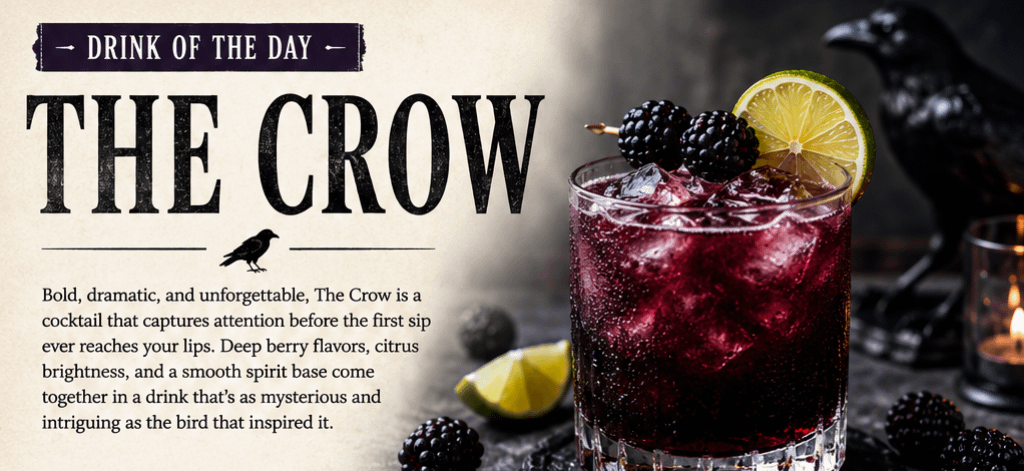
    Some drinks are bright, cheerful, and designed for celebration. Others carry a darker, more mysterious personality that makes them unforgettable. Today’s Drink of the Day, The Crow, belongs firmly in the second category. Bold, dramatic, and visually striking, The Crow is a cocktail that captures attention before the first sip ever reaches your lips.

    Inspired by the intelligence, mystery, and symbolism of the crow itself, this cocktail combines rich flavors with a dark appearance that makes it perfect for evening gatherings, themed parties, or anyone who appreciates a drink with character.

    The Symbolism Behind The Crow

    Throughout history, crows have been viewed as creatures of wisdom, transformation, and mystery. In many cultures, they represent intelligence, adaptability, and insight. While some associate them with darkness, others see them as symbols of resilience and survival.

    The Crow cocktail reflects those qualities. Its deep color and layered flavors create an experience that is both intriguing and memorable. Like the bird that inspired it, this drink stands apart from the crowd.

    What Does The Crow Taste Like?

    The Crow offers a smooth balance of sweetness, tartness, and subtle bitterness. The flavor profile often includes:

    • Dark berry notes
    • Citrus brightness
    • Smooth vodka or rum base
    • Slight herbal undertones
    • A rich finish that lingers pleasantly

    The result is a cocktail that feels sophisticated without being overly complicated.

    The Crow Cocktail Recipe

    Ingredients

    • 2 ounces vodka or dark rum
    • 1 ounce blackberry liqueur
    • 1 ounce cranberry juice
    • ½ ounce fresh lime juice
    • Splash of club soda
    • Ice
    • Fresh blackberries for garnish
    • Lime wheel for garnish

    Instructions

    1. Fill a cocktail shaker with ice.
    2. Add vodka or dark rum.
    3. Pour in blackberry liqueur, cranberry juice, and lime juice.
    4. Shake vigorously for 15 seconds.
    5. Strain into a rocks glass filled with fresh ice.
    6. Top with a splash of club soda.
    7. Garnish with fresh blackberries and a lime wheel.

    Serve immediately and enjoy.

    Why People Love The Crow

    It’s Visually Stunning

    The dark purple-black color gives The Crow a dramatic appearance unlike most cocktails. It instantly becomes a conversation starter.

    It Balances Sweet and Tart

    Many cocktails lean heavily toward one flavor profile. The Crow delivers balance, making it appealing to a wide range of drinkers.

    Perfect for Evening Gatherings

    Whether you’re hosting friends on a patio, relaxing by a firepit, or enjoying a quiet evening at home, The Crow feels right at home after sunset.

    Easy to Customize

    Want it sweeter? Add more blackberry liqueur.

    Prefer a stronger citrus kick? Increase the lime juice.

    Looking for extra sparkle? Add additional club soda.

    The recipe can be adjusted to fit your personal taste.

    Food Pairings

    The Crow pairs exceptionally well with:

    • Charcuterie boards
    • Smoked meats
    • Grilled steak
    • Dark chocolate desserts
    • Blackberry cheesecake
    • Sharp cheeses
    • Gourmet burgers

    The drink’s berry-forward profile complements rich and savory foods beautifully.

    A Cocktail with Personality

    In a world filled with ordinary drinks, The Crow offers something different. It is bold without being overpowering, elegant without being pretentious, and memorable long after the glass is empty.

    Much like the bird from which it takes its name, The Crow reminds us that beauty can be found in mystery and that sometimes the most unforgettable experiences come wrapped in shades of darkness.

    So if you’re looking for a cocktail that stands out from the flock, give The Crow a try. One sip may be all it takes to discover your new favorite drink.

    Drink Responsibly

    Always enjoy alcoholic beverages responsibly and never drink and drive. The best cocktails are those shared safely with friends, family, and good company.

    Read More Of Drinks And Cocktails

  • The Hardships of Grappling With the Loss of a Child

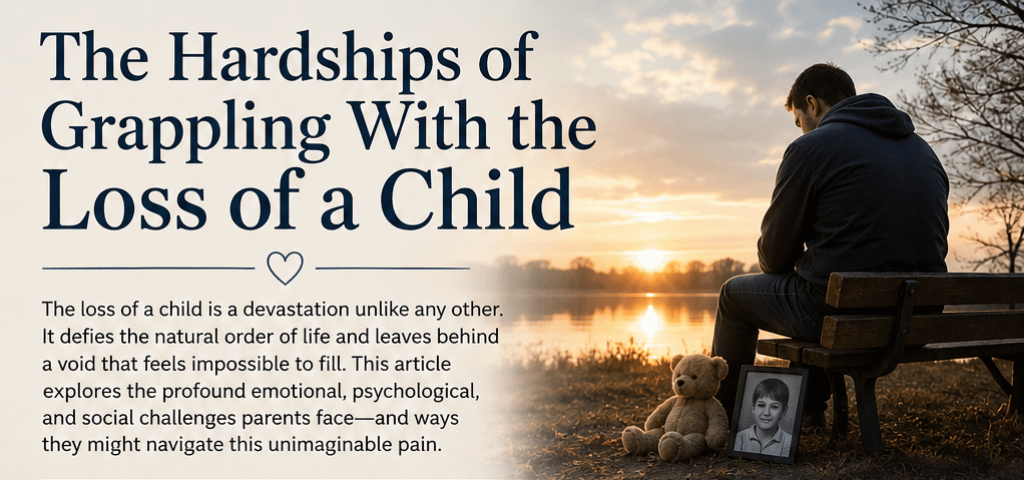
    The Hardships of Grappling With the Loss of a Child

    The loss of a child is a devastation unlike any other. It is a heartbreak so profound that it changes the very fabric of a parent’s life. It defies the natural order of existence. Parents expect to guide, protect, and eventually leave this world before their children do. When that order is shattered, the result is not simply grief—it is a life-altering wound that touches every corner of the heart, mind, and soul.

    For many parents, the death of a child feels like the end of the world as they knew it. The future they imagined disappears in an instant. Dreams are replaced with memories, and hope often becomes entangled with sorrow. While life continues around them, bereaved parents frequently feel as though time has stopped. They are left standing in the wreckage of a life that no longer exists, trying to understand how to take another step forward.

    This journey is one of the most difficult experiences a human being can endure. There is no roadmap, no timetable, and no way to fully prepare for the pain. Each parent’s grief is unique, yet there are common hardships that many face as they learn to live with the unimaginable loss of their child.

    Losing More Than a Child

    When a child dies, parents lose far more than a son or daughter. They lose a future that was filled with hopes, expectations, and possibilities.

    They lose the birthday celebrations that will never happen.

    They lose the graduations they dreamed of attending.

    They lose the weddings they imagined witnessing.

    They lose the grandchildren they may never hold.

    They lose ordinary moments that once seemed guaranteed—phone calls, family dinners, holiday traditions, and simple conversations.

    The loss extends beyond the physical absence of their child. It reaches into every dream they carried for them.

    Many bereaved parents describe feeling as though a part of themselves died alongside their child. This is especially true when the child was deeply involved in their daily lives. Parents often define themselves through their role as caregivers, protectors, and supporters. When that role is suddenly interrupted, they may struggle with questions about their identity and purpose.

    Who am I now?

    What does my future look like?

    How do I continue living when my child cannot?

    These questions can linger for years.

    The Physical Pain of Grief

    Many people who have never experienced child loss assume grief is purely emotional. Parents who have buried a child know otherwise.

    Grief often manifests physically.

    The chest aches.

    The stomach knots.

    The body feels exhausted even after hours of sleep.

    Some parents experience headaches, muscle pain, digestive issues, panic attacks, or a constant feeling of heaviness.

    Many describe it as carrying a weight that never leaves their shoulders.

    Sleep becomes difficult. Some fear dreaming because waking up means reliving the reality of the loss. Others cannot sleep at all because their minds replay memories, final conversations, or unanswered questions.

    The body remembers trauma, and losing a child is among the most traumatic experiences imaginable.

    Living With the Endless “What Ifs”

    One of the cruelest aspects of child loss is the endless stream of questions that often follow.

    What if I had called them one more time?

    What if I had made a different decision?

    What if I had noticed something sooner?

    What if I could somehow go back and change that day?

    Even when parents know intellectually that the loss was beyond their control, their hearts continue searching for answers.

    The human mind seeks meaning in tragedy. When no explanation feels sufficient, guilt often rushes in to fill the void.

    Parents may blame themselves for circumstances they could never have prevented. They replay events repeatedly, hoping to find something they missed.

    This guilt can become one of grief’s heaviest burdens.

    Learning to release that guilt is not easy. For many parents, it becomes a lifelong process of reminding themselves that love does not equal control and that some tragedies occur despite their deepest efforts to protect their children.

    The Emotional Storm

    The grief following child loss is rarely predictable.

    One moment, a parent may feel overwhelming sadness.

    The next, they may feel anger.

    Then numbness.

    Then fear.

    Then loneliness.

    Then guilt for experiencing a moment of happiness.

    Grief often arrives in waves. Some waves are small and manageable. Others crash unexpectedly, leaving parents struggling to breathe.

    A song on the radio.

    A familiar scent.

    A social media memory.

    A child who resembles their own.

    A birthday.

    A holiday.

    An empty chair at the dinner table.

    Any of these can trigger emotions that feel as intense as they did in the earliest days of loss.

    Parents frequently describe feeling trapped between two worlds—the world that continues moving forward and the world that stopped the moment their child died.

    The Loneliness No One Talks About

    One of the most painful hardships of losing a child is the profound loneliness that often follows.

    Initially, support may be abundant. Friends send messages. Family members visit. Meals arrive.

    But as weeks become months and months become years, much of that support fades.

    Meanwhile, the grief remains.

    Parents may feel abandoned as others return to their normal lives.

    People stop mentioning the child’s name.

    Friends become uncomfortable discussing the loss.

    Conversations shift away from grief.

    The bereaved parent is often left carrying memories that few others speak about anymore.

    Many parents begin to feel isolated because they realize that most people cannot truly understand what they are experiencing.

    This loneliness can be especially intense for fathers.

    Society often expects men to remain strong, stoic, and composed. Fathers may feel pressure to support everyone else while quietly carrying their own grief.

    As a result, many suffer in silence.

    The Impact on Marriage and Relationships

    The loss of a child places tremendous strain on relationships.

    Even couples who deeply love one another may discover they grieve very differently.

    One partner may need to talk constantly.

    The other may withdraw.

    One may cry openly.

    The other may grieve privately.

    Neither approach is wrong, but differences in grieving styles can create misunderstandings.

    Partners may mistakenly believe the other is grieving less.

    Resentment can develop.

    Communication may break down.

    At a time when support is needed most, couples sometimes find themselves drifting apart.

    The same challenges can occur within friendships and extended family relationships.

    People often want to help but do not know how.

    Some avoid the subject entirely.

    Others offer clichés that unintentionally deepen the pain.

    Statements such as “Everything happens for a reason” or “At least you have other children” can feel incredibly hurtful because they minimize a loss that cannot be replaced.

    Watching the World Move Forward

    Perhaps one of the hardest realities of child loss is watching life continue.

    Schools open.

    Families celebrate birthdays.

    Graduation photos fill social media feeds.

    Friends talk about milestones their children are reaching.

    Meanwhile, your child remains forever the age they were when they died.

    This can create feelings of jealousy, resentment, and sadness.

    Parents often feel guilty for experiencing these emotions, but they are a natural part of grief.

    They are not signs of bitterness.

    They are reminders of love.

    Every milestone another child reaches highlights a milestone their own child never had the opportunity to experience.

    The Search for Meaning

    Many bereaved parents eventually find themselves asking profound questions.

    Why did this happen?

    What purpose does my life have now?

    How do I honor my child’s memory?

    How do I continue when part of my heart is gone?

    For some, faith becomes a source of comfort.

    For others, loss creates a spiritual crisis.

    Questions about God, purpose, fairness, and eternity often emerge.

    There are rarely simple answers.

    Yet many parents eventually discover that meaning does not come from understanding why their child died.

    Meaning often comes from how they choose to live afterward.

    Some honor their child through advocacy.

    Some start charities.

    Some support other grieving parents.

    Some write, create art, volunteer, or share their stories.

    These acts cannot erase the pain, but they can transform love into something that continues impacting the world.

    Learning to Carry the Grief

    One of the greatest misconceptions about grief is the belief that parents eventually “get over” losing a child.

    They do not.

    Instead, they learn how to carry it.

    The grief changes shape over time.

    It becomes woven into the fabric of daily life.

    The pain may become less overwhelming, but the love remains.

    Parents learn to laugh again without forgetting.

    They learn to smile while still missing their child.

    They discover that joy and sorrow can exist together.

    This is not moving on.

    It is moving forward.

    There is a significant difference.

    Moving on implies leaving the child behind.

    Moving forward means carrying their memory into every new chapter of life.

    A Love That Never Ends

    The death of a child changes everything, but it does not end the relationship between parent and child.

    Love does not die.

    Parents continue loving their children long after they are gone.

    They speak their names.

    They celebrate their birthdays.

    They remember favorite stories.

    They carry photographs.

    They feel their presence in quiet moments.

    The bond remains.

    Though invisible, it is real.

    Though painful, it is precious.

    The hardships of losing a child are immense and lifelong. There are days when the grief feels unbearable and days when hope quietly returns. There is no finish line, no perfect healing, and no way to replace what has been lost.

    But there is love.

    And that love becomes the thread that helps bereaved parents endure the unendurable.

    Their child’s life mattered.

    Their child’s memory matters.

    And the love they carry for their child will remain with them for the rest of their days—a testament to a bond that even death cannot break.

    A Father’s Guide to Surviving the Loss of a Child

  • Coping When Others Celebrate Their Children After You Have Lost Yours

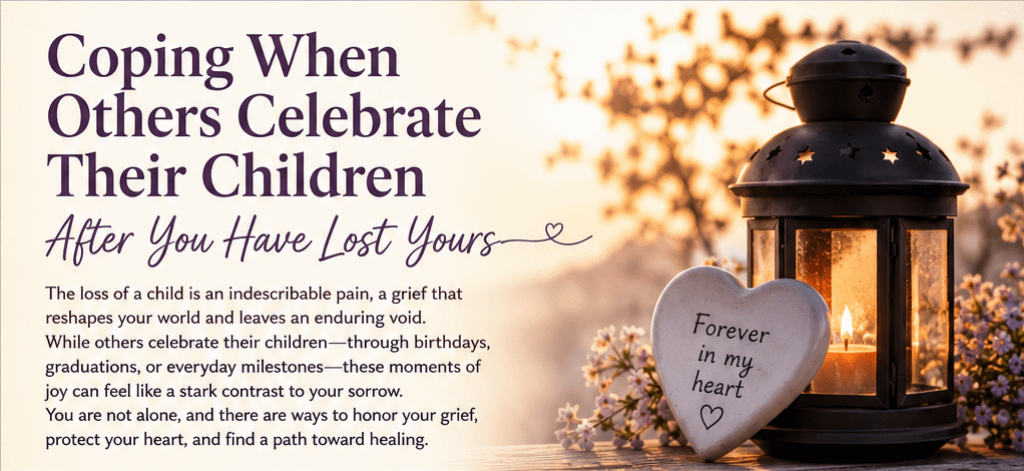
    Coping When Others Celebrate Their Children After You Have Lost Yours

    The loss of a child changes everything.

    It changes the way you see the world, the way you experience time, and the way you interact with other people. It creates a division in your life between who you were before your child died and who you became afterward. Nothing prepares a parent for that kind of pain because there is no greater heartbreak than outliving your child.

    One of the most difficult realities grieving parents face is learning how to live in a world that continues celebrating children when their own child is gone.

    Birthdays still happen.

    Graduation announcements still arrive in the mail.

    Social media continues to fill with photographs of smiling families, first days of school, weddings, grandchildren, vacations, and milestones.

    Meanwhile, you may find yourself wondering what your child would look like today, what they would be doing, or what milestone they should have been reaching.

    For many bereaved parents, these celebrations can feel like emotional landmines. While everyone else is rejoicing, you are quietly carrying a grief that never leaves. It can make you feel isolated, misunderstood, and emotionally exhausted.

    If you have ever struggled while watching others celebrate their children after losing your own, please know this:

    You are not selfish.

    You are not bitter.

    You are not a bad person.

    You are a parent whose heart has been broken by love and loss.

    The Hidden Pain Behind Other People’s Joy

    Many grieving parents are surprised by the emotions that surface when they see others celebrating their children.

    At first, they expect sadness.

    What they do not expect is the mixture of emotions that often accompanies it.

    You may feel happiness for someone while simultaneously feeling devastated for yourself.

    You may genuinely want good things for others while privately wondering why your child was taken.

    You may smile at a friend’s family photo and then cry in your car afterward.

    This emotional conflict is one of grief’s cruelest realities.

    Your heart can hold multiple truths at the same time.

    You can be happy for them.

    You can miss your child desperately.

    You can celebrate someone else’s blessing while mourning your own loss.

    All of those emotions can exist together.

    The Milestones That Hurt the Most

    Certain celebrations tend to trigger grieving parents more than others.

    Birthdays

    Perhaps the most painful reminders are birthdays.

    Every birthday another child celebrates is a reminder of the birthdays your child never reached.

    You may find yourself calculating ages.

    “He would have been 25 today.”

    “She should be turning 30 this year.”

    Every birthday becomes a reminder that your child remains forever the age they were when they died.

    Graduations

    Graduations often carry an especially painful sting.

    You see proud parents taking photographs while imagining your child walking across that same stage.

    You wonder what career they would have chosen.

    What dreams they would have pursued.

    What their future might have become.

    Weddings

    Weddings bring another layer of grief.

    Many bereaved parents mourn the daughter they never got to walk down the aisle or the son whose wedding day they will never witness.

    These are secondary losses—losses connected to the future that disappeared alongside your child.

    Becoming Grandparents

    For many grieving parents, becoming grandparents was a dream they carried for years.

    Watching others enjoy grandchildren may remind you of experiences you may never have.

    This grief is often overlooked by others but deeply felt by those who live it.

    Why Jealousy Is a Normal Part of Grief

    Few emotions create more guilt for grieving parents than jealousy.

    The truth is that jealousy is often a natural response to profound loss.

    You are not jealous because you want another parent’s child to die.

    You are jealous because you desperately wish your own child was still here.

    There is a significant difference.

    Grief constantly compares what is with what should have been.

    Your mind naturally revisits the life your child was supposed to have.

    The future you imagined.

    The dreams you shared.

    The moments that were stolen.

    Feeling jealous of someone else’s blessing does not mean you are a bad person.

    It means you are a grieving parent.

    Social Media Can Make Grief Worse

    Today’s grieving parents face a challenge previous generations never experienced.

    Social media places celebrations directly in front of us every day.

    Years ago, you might hear about a birthday party through a conversation.

    Today, you see dozens of photographs, videos, and posts.

    The reminders are constant.

    Sometimes a simple scroll through Facebook can become emotionally exhausting.

    You may suddenly encounter:

    • Graduation photos
    • Family vacations
    • Wedding announcements
    • Baby showers
    • Birthday celebrations
    • Mother’s Day tributes
    • Father’s Day tributes

    Each image can reopen wounds you worked hard to manage.

    If social media becomes overwhelming, give yourself permission to step away.

    Protecting your heart is not weakness.

    It is wisdom.

    Mute accounts if necessary.

    Take breaks.

    Limit your exposure.

    Your emotional health matters.

    Learning to Set Boundaries Without Guilt

    One of the healthiest things grieving parents can learn is how to set boundaries.

    Many people feel obligated to attend every celebration they are invited to.

    The truth is that grief changes what you can emotionally handle.

    Some days you may be able to attend.

    Other days you may not.

    Both are okay.

    You are not required to force yourself into situations that cause unnecessary suffering.

    A simple response is enough:

    “Thank you for inviting me. I’m so happy for your family. Unfortunately, I’m not able to attend, but I hope you have a wonderful celebration.”

    You do not owe anyone a lengthy explanation.

    You do not need permission to protect your heart.

    The Loneliness No One Talks About

    One of the hardest parts of losing a child is realizing that life moves forward for everyone else.

    Friends continue raising their children.

    Families continue making memories.

    The world continues turning.

    Meanwhile, you may feel frozen in time.

    You remember the exact day your child died.

    The exact phone call.

    The exact moment your world changed.

    Sometimes it can feel as though everyone else has forgotten.

    That loneliness can become overwhelming.

    This is why connecting with other bereaved parents is so important.

    Only another parent who has lost a child truly understands the depth of this pain.

    Support groups, online communities, grief retreats, and counseling can provide a place where you no longer have to explain your grief.

    You can simply be understood.

    Finding Ways to Honor Your Child During Difficult Moments

    When celebrations trigger your grief, consider turning your attention toward honoring your child.

    Many parents find comfort in creating rituals that keep their child’s memory present.

    You might:

    • Light a candle in their memory.
    • Visit their resting place.
    • Write them a letter.
    • Look through photographs.
    • Listen to music they loved.
    • Donate to a charity in their honor.
    • Share a favorite memory with someone.

    These acts remind you that your child’s life still matters.

    Their story did not end because their physical presence ended.

    Love continues.

    Memory continues.

    Connection continues.

    Giving Yourself Permission to Feel Joy Again

    Many bereaved parents struggle with guilt when moments of happiness return.

    They worry that smiling means forgetting.

    They worry that healing means leaving their child behind.

    Nothing could be further from the truth.

    Your child would not want your entire life defined only by sorrow.

    Loving your child and living your life are not opposites.

    You can do both.

    You can carry grief and still laugh.

    You can miss your child and still enjoy a beautiful sunset.

    You can cry for them and still celebrate someone else’s success.

    Healing is not betrayal.

    Healing is learning how to carry love and loss together.

    What Your Child Would Want for You

    Every parent-child relationship is unique, but many grieving parents find comfort in asking a simple question:

    “What would my child want for me?”

    Would they want you isolated forever?

    Would they want you trapped in sadness?

    Would they want you to stop living?

    Most parents know the answer.

    Your child loved you.

    Your child would want peace for you.

    They would want you to continue finding purpose.

    They would want you to keep loving.

    They would want you to keep living.

    Not because they are forgotten.

    But because they are loved.

    The Truth About Moving Forward

    Many people talk about “moving on” after loss.

    Bereaved parents know better.

    You do not move on from losing a child.

    You move forward with it.

    Your child becomes part of every step you take.

    You carry them into every season of life.

    You carry them into every holiday.

    Every birthday.

    Every family gathering.

    Every celebration.

    Their absence remains.

    But so does their love.

    Over time, many grieving parents discover that their child’s memory becomes less about the moment they died and more about the life they lived.

    The love remains.

    The bond remains.

    And somehow, despite the pain, life continues.

    Final Thoughts

    Watching others celebrate their children after losing your own may always hurt.

    Some wounds never completely heal.

    Some milestones will always bring tears.

    Some days will always feel unfair.

    But your grief is not something to be ashamed of.

    It is evidence of a love that continues.

    When celebrations trigger sadness, give yourself grace.

    When you need boundaries, set them.

    When you need support, seek it.

    When you need to cry, cry.

    And when moments of joy return, allow yourself to experience them without guilt.

    Your child’s life mattered.

    Your child’s memory matters.

    And your life still matters too.

    You will never stop being their parent.

    Not for a single day.

    Not for a single celebration.

    Not for a single heartbeat.

    Love like this does not end.

    It simply changes form.

    A Father’s Guide to Surviving the Loss of a Child

    Grief & Child Loss
  • Inspiration of the Day: Facing Everything and Rising

    Inspiration of the Day: Facing Everything and Rising

    There comes a moment in every person’s life when running is no longer an option. The challenges, heartbreaks, disappointments, and fears that we hoped would somehow disappear remain standing in front of us. Life has a way of bringing us to crossroads where we must decide whether we will be defined by our struggles or strengthened by them.

    That is what Facing Everything And Rising is all about.

    It is not about pretending life is easy. It is not about ignoring pain or acting as though difficulties don’t exist. It is about looking directly at the obstacles before you, accepting the reality of the situation, and choosing to rise anyway.

    Life Will Test You

    No one escapes hardship.

    Some face financial struggles. Others battle illness, grief, loneliness, rejection, failure, or uncertainty. Sometimes the weight of life feels overwhelming. There are mornings when getting out of bed feels like a victory. There are days when the future seems unclear and hope feels distant.

    The truth is that life will test your strength, your patience, and your faith.

    But those tests are not necessarily there to destroy you.

    Often, they are there to reveal what you are capable of becoming.

    Every challenge contains a lesson. Every setback carries an opportunity for growth. Every difficult season has the potential to shape a stronger, wiser, and more resilient version of yourself.

    Courage Is Not the Absence of Fear

    Many people believe courage means having no fear.

    In reality, courage means moving forward despite fear.

    The strongest people are not those who never struggle. They are the ones who continue taking steps forward even when fear whispers reasons to quit.

    They show up when they would rather hide.

    They keep believing when doubt surrounds them.

    They continue trying when failure has left scars.

    Facing everything and rising means refusing to allow fear to make your decisions.

    It means understanding that fear is a feeling—not a destination.

    Your Greatest Growth Happens in Difficult Seasons

    Think about the strongest trees. They grow through storms.

    Think about diamonds. They are formed under pressure.

    Think about great leaders, athletes, entrepreneurs, and survivors. Their strength wasn’t built during easy times. It was forged through adversity.

    The same is true for you.

    The difficult moments in your life are often preparing you for something greater.

    Pain can teach compassion.

    Failure can teach wisdom.

    Loss can teach appreciation.

    Disappointment can teach perseverance.

    The very thing you wish you could avoid may be developing the strength you’ll one day depend upon.

    Stop Waiting for Perfect Conditions

    Many dreams remain unfinished because people are waiting for the perfect moment.

    They tell themselves:

    • “I’ll start when I feel ready.”
    • “I’ll try when things calm down.”
    • “I’ll move forward when my fear goes away.”

    But perfect conditions rarely exist.

    Success belongs to those who take action despite imperfect circumstances.

    You do not need every answer before taking the first step.

    You do not need complete confidence before beginning.

    You do not need certainty to move forward.

    Progress happens one step at a time.

    Facing everything and rising means choosing action over excuses and growth over comfort.

    Your Past Does Not Define Your Future

    One of the biggest obstacles people face is believing that their past determines what comes next.

    Past mistakes.

    Past failures.

    Past heartbreaks.

    Past regrets.

    While your past may have shaped you, it does not have to limit you.

    Every sunrise offers a new opportunity to choose a different direction.

    You can learn from yesterday without living there.

    You can honor your experiences without allowing them to control your future.

    The chapters behind you may explain your story, but they do not have to write the ending.

    Rising After Loss

    Some wounds run deeper than others.

    There are losses that change us forever.

    The loss of a loved one.

    The loss of a relationship.

    The loss of a dream.

    The loss of a future we imagined.

    These experiences leave marks on the heart that never completely disappear.

    Yet even in grief, there is a form of rising.

    It doesn’t mean forgetting.

    It doesn’t mean “moving on.”

    It means learning how to carry love and loss together.

    It means finding reasons to smile again while still honoring what mattered.

    It means continuing to live in a way that reflects the strength of those we loved.

    Rising after loss is one of the bravest things a person can do.

    Resilience Is a Daily Choice

    Resilience is not built in one dramatic moment.

    It is built through daily choices.

    Choosing to keep going.

    Choosing to believe.

    Choosing to try again.

    Choosing to forgive.

    Choosing to learn.

    Choosing to hope.

    Day after day, these small decisions create extraordinary strength.

    The people who inspire us most are rarely those who had easy lives.

    They are the ones who refused to stay down when life knocked them down.

    The Power of Faith

    When circumstances feel impossible, faith becomes a powerful source of strength.

    Faith reminds us that our current situation is not the final chapter.

    Faith helps us see possibility when circumstances only show problems.

    Faith allows us to trust that purpose can emerge from pain and that growth can come from struggle.

    Whether through prayer, belief, or hope, faith provides the courage to keep moving when the path ahead seems uncertain.

    It gives us the strength to face everything and rise.

    Final Thoughts

    You may be facing challenges today that nobody else sees.

    You may be carrying burdens that feel heavy.

    You may be wondering if you have the strength to keep going.

    The answer is yes.

    You are stronger than you realize.

    You have survived difficult days before.

    You have overcome obstacles that once seemed impossible.

    And you have the ability to rise again.

    Whatever stands in front of you today, face it with courage.

    Face it with determination.

    Face it with faith.

    Because strength is not found in avoiding life’s battles.

    Strength is found in facing everything—and rising.

    Today’s Inspiration:
    “The storms of life may bend you, challenge you, and test you, but they do not have to break you. Face everything with courage, trust the process, and rise stronger than before.”

    Read More Of Inspiration & Motivation

  • Motivation of the Day: V.A.L.U.E.S.

    Motivation of the Day: V.A.L.U.E.S.

    Every successful person, strong leader, loving parent, and respected friend has one thing in common: they live by their values.

    Values are the invisible foundation beneath everything we do. They shape our decisions, guide our actions, and determine the legacy we leave behind. When life becomes difficult, it is our values that keep us standing. When success arrives, it is our values that keep us humble.

    Today, let the word V.A.L.U.E.S. remind you of the principles that create a meaningful and fulfilling life.

    V — Vision

    A person without vision drifts wherever life takes them. A person with vision knows where they are going and why they are going there.

    Vision gives purpose to your days and direction to your efforts. It helps you push through setbacks because you understand that today’s struggle is connected to tomorrow’s success.

    Never stop dreaming. Never stop believing that your future can be better than your present. Your vision becomes the roadmap for your journey.

    Ask yourself:

    “What kind of person do I want to become?”

    The answer to that question can change your life.

    A — Accountability

    Growth begins when excuses end.

    Accountability means taking ownership of your choices, your actions, and your results. It means looking in the mirror and accepting responsibility for where you are while committing to where you want to go.

    Blaming circumstances may feel easier, but it never creates change. Accountability empowers you because it reminds you that you have the ability to improve, adapt, and overcome.

    Successful people are not perfect people. They are people who accept responsibility and keep moving forward.

    L — Loyalty

    Loyalty is becoming rare in today’s world, which makes it even more valuable.

    Be loyal to your family, your friends, your principles, and your commitments. Be the kind of person whose word can be trusted even when nobody is watching.

    Loyalty is not about convenience. It is about character.

    People may forget what you said or what you did, but they will never forget how dependable you were when they needed you most.

    Stand by those who stand by you.

    U — Understanding

    The world needs more understanding and less judgment.

    Every person you meet is carrying a story you know nothing about. Behind every smile may be a struggle. Behind every silence may be a battle.

    Understanding allows us to listen before speaking, learn before criticizing, and help before condemning.

    True strength is not found in always being right. It is found in having compassion and wisdom.

    The more understanding you become, the more positively you impact the lives around you.

    E — Excellence

    Excellence is not perfection.

    Excellence means giving your best effort regardless of the task. It means showing up with integrity, dedication, and pride in your work.

    You don’t have to be the smartest person in the room.

    You don’t have to be the most talented.

    But if you consistently give your best, you will separate yourself from the crowd.

    Small acts of excellence performed every day create extraordinary results over time.

    Never settle for less than your best effort.

    S — Strength

    Life will test you.

    There will be moments when you feel exhausted, discouraged, and uncertain. There will be losses that break your heart and challenges that stretch you beyond your comfort zone.

    But strength is not the absence of struggle.

    Strength is continuing despite the struggle.

    It is standing back up after life knocks you down.

    It is choosing faith over fear, courage over doubt, and hope over despair.

    You are stronger than you realize.

    Every challenge you survive adds another layer of resilience to your character.

    Final Thoughts

    The quality of your life is often determined by the quality of your values.

    When you build your life on Vision, Accountability, Loyalty, Understanding, Excellence, and Strength, you create a foundation that can withstand life’s storms and support your greatest dreams.

    Today, choose to live your values.

    Let them guide your decisions.

    Let them shape your character.

    Let them define your legacy.

    Because success may earn admiration, but values earn respect.

    And respect lasts far longer than success.

    V.A.L.U.E.S.
    Vision. Accountability. Loyalty. Understanding. Excellence. Strength.

    Live them every day, and watch your life transform.

    Read More Of Inspiration & Motivation

  • This Day in American History – June 14

    This Day in American History – June 14

    June 14: The Stars and Stripes Become America’s Flag

    Every day in American history carries stories that helped shape the nation, but few dates are as symbolic and patriotic as June 14. Known today as Flag Day, June 14 commemorates the adoption of the American flag and celebrates one of the most recognizable symbols of freedom in the world.

    From the birth of the Stars and Stripes in 1777 to the creation of Flag Day traditions that continue today, June 14 represents the ideals, sacrifices, and unity that define the American spirit.

    1777: Congress Adopts the American Flag

    The most significant event associated with June 14 occurred during the American Revolution.

    On June 14, 1777, the Second Continental Congress passed a resolution establishing an official flag for the newly independent United States.

    The resolution stated:

    “Resolved, That the flag of the United States be thirteen stripes, alternate red and white; that the union be thirteen stars, white in a blue field, representing a new constellation.”

    Though simple in wording, this declaration created one of the most enduring national symbols in history.

    At the time, the thirteen stars and thirteen stripes represented the original thirteen colonies that had declared independence from Great Britain. The design symbolized unity among the colonies as they fought for freedom and self-government.

    While many associate the creation of the first flag with Betsy Ross, historians continue to debate the exact origins of the design. Regardless of who sewed the first flag, June 14 marks the day the Stars and Stripes officially became America’s national banner.

    The Meaning Behind the Flag

    Over the centuries, the American flag evolved as new states joined the Union.

    Today, the flag contains:

    • 50 stars representing the 50 states.
    • 13 stripes honoring the original colonies.
    • Red symbolizing valor and courage.
    • White symbolizing purity and innocence.
    • Blue symbolizing vigilance, perseverance, and justice.

    The flag has flown over battlefields, schools, government buildings, homes, and historic moments throughout American history. It serves as a reminder of the nation’s ideals and the sacrifices made to preserve them.

    The Birth of Flag Day

    Although the flag was adopted in 1777, the observance of Flag Day did not become widespread until much later.

    In the late 1800s, educators and patriotic organizations began encouraging celebrations honoring the American flag.

    One of the earliest recognized observances occurred in 1885 when Wisconsin schoolteacher Bernard J. Cigrand organized a celebration commemorating the anniversary of the flag’s adoption.

    Cigrand spent decades promoting a national holiday dedicated to the American flag and is often referred to as the “Father of Flag Day.”

    His efforts inspired communities across the nation to hold annual observances on June 14.

    President Wilson Makes It Official

    In 1916, President Woodrow Wilson issued a proclamation officially recognizing June 14 as Flag Day.

    While it was not yet a federal holiday, the proclamation encouraged Americans to celebrate the flag and reflect on its significance.

    The observance gained popularity throughout the twentieth century as schools, veterans groups, and civic organizations embraced annual Flag Day ceremonies.

    National Flag Day Becomes Law

    A major milestone occurred in 1949.

    President Harry S. Truman signed an Act of Congress designating June 14 as National Flag Day.

    Although Flag Day is not a federal holiday that closes government offices, it remains an important national observance.

    Communities across America celebrate with parades, patriotic ceremonies, educational events, and displays of the American flag.

    The United States Army Birthday

    June 14 carries another historic significance.

    The United States Army was established on June 14, 1775, more than a year before the Declaration of Independence.

    The Continental Congress created the Continental Army to defend the colonies against British forces.

    Under the leadership of George Washington, the Army became a vital force in securing American independence.

    As a result, June 14 is also celebrated as the Army’s birthday, honoring generations of soldiers who have served the nation.

    Flag Day Traditions Across America

    Today, Americans celebrate June 14 in many ways:

    • Flying the American flag at homes and businesses.
    • Participating in community parades.
    • Attending veterans’ ceremonies.
    • Learning about flag etiquette and history.
    • Honoring military service members and veterans.
    • Reflecting on the freedoms represented by the Stars and Stripes.

    The largest Flag Day parade in the United States is traditionally held in Troy, New York, drawing thousands of participants and spectators each year.

    Why June 14 Still Matters

    The American flag has witnessed the nation’s greatest triumphs and most difficult challenges.

    It flew during the Revolutionary War, survived the Civil War, inspired Francis Scott Key during the War of 1812, accompanied explorers to the Moon, and continues to represent the United States around the world.

    For many Americans, the flag is more than cloth and color. It represents freedom, sacrifice, opportunity, resilience, and unity.

    June 14 serves as an opportunity to remember the nation’s founding principles and honor those who have defended them throughout history.

    Final Thoughts

    June 14 stands as one of the most patriotic days on the American calendar. It marks both the birth of the American flag and the founding of the United States Army, two institutions deeply woven into the story of the nation.

    As Americans raise the Stars and Stripes each Flag Day, they celebrate not only a symbol but the enduring ideals of liberty, courage, and unity that continue to guide the United States more than two centuries after the flag first appeared as a “new constellation” in the sky of freedom.

    Read More History & Culture

  • Recipe of the Day: American Flag Cake

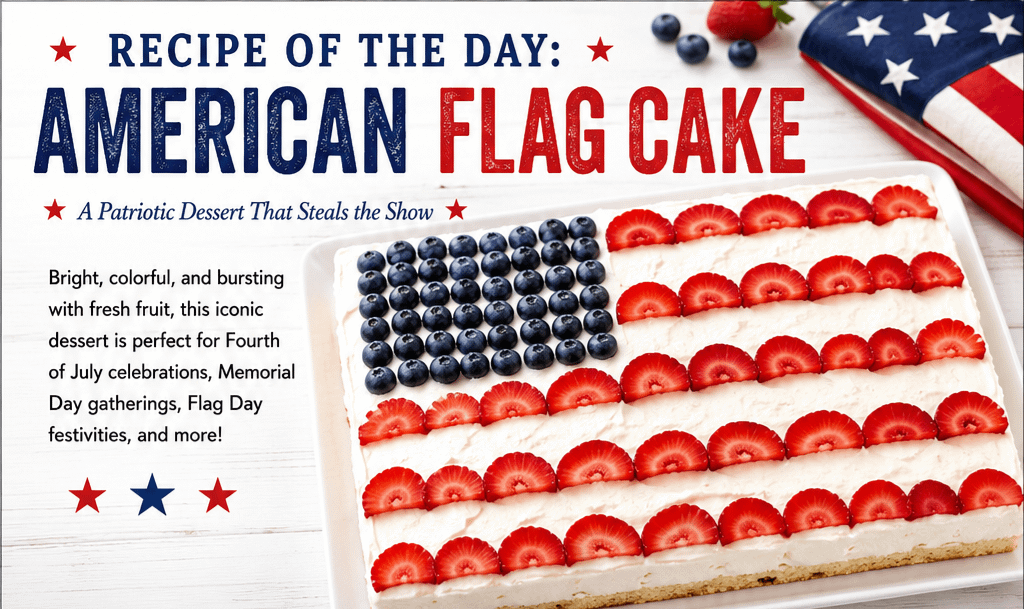
    Recipe of the Day: American Flag Cake

    A Patriotic Dessert That Steals the Show

    Few desserts capture the spirit of America quite like the American Flag Cake. Bright, colorful, and bursting with fresh fruit, this iconic dessert has become a staple at Fourth of July celebrations, Memorial Day gatherings, Flag Day festivities, Labor Day cookouts, and family reunions across the country.

    More than just a cake, the American Flag Cake is a symbol of celebration, unity, and tradition. With its vibrant red strawberries, deep blue blueberries, and fluffy white frosting, it transforms a simple dessert into a delicious work of edible art.

    Whether you’re hosting a backyard barbecue, attending a potluck, or simply looking for a festive dessert that will impress your guests, this recipe delivers both stunning presentation and incredible flavor.


    Why People Love American Flag Cake

    The American Flag Cake has remained popular for generations because it combines simplicity with visual impact. It doesn’t require advanced decorating skills, yet the finished product looks impressive enough to be the centerpiece of any holiday table.

    Some reasons people love this dessert include:

    • Easy to make
    • Perfect for large gatherings
    • Light and refreshing
    • Beautiful presentation
    • Family-friendly recipe
    • Customizable ingredients
    • Great make-ahead dessert

    The fresh fruit balances the sweetness of the cake and frosting, creating a dessert that feels lighter than many traditional holiday treats.


    Ingredients

    For the Cake

    • 1 box white cake mix (or homemade white cake)
    • Ingredients required by the cake mix (typically eggs, oil, and water)

    For the Frosting

    • 2 containers whipped topping, thawed
      OR
    • 16 ounces cream cheese, softened
    • 1 cup butter, softened
    • 4 cups powdered sugar
    • 1 teaspoon vanilla extract

    For the Flag Design

    • 2 cups fresh blueberries
    • 3 cups fresh strawberries, sliced

    Instructions

    Step 1: Bake the Cake

    Prepare the white cake according to package directions.

    Pour the batter into a greased 9×13-inch baking pan.

    Bake until a toothpick inserted in the center comes out clean.

    Allow the cake to cool completely before decorating.


    Step 2: Frost the Cake

    Spread an even layer of whipped topping or homemade frosting across the entire surface of the cake.

    The white frosting serves as the background for the American flag design, so take a little extra time to smooth it evenly.


    Step 3: Create the Blue Field

    In the upper left corner of the cake, arrange blueberries in a rectangular shape.

    This section represents the star field of the American flag.

    The blueberries provide a rich color contrast against the bright white frosting.


    Step 4: Add the Red Stripes

    Using sliced strawberries, create horizontal rows extending across the cake.

    Leave white frosting between each row to represent the white stripes.

    Typically, five strawberry rows create a balanced and recognizable flag design.


    Step 5: Chill Before Serving

    Place the finished cake in the refrigerator for at least one hour.

    This helps the frosting set and keeps the fruit fresh and firm.

    Serve chilled for the best flavor and texture.


    Tips for the Perfect American Flag Cake

    Use Fresh Fruit

    Fresh berries create the brightest colors and best flavor. Avoid frozen fruit, as it tends to release excess moisture and can affect the appearance of the cake.

    Decorate Close to Serving Time

    While the cake can be made ahead, adding the fruit a few hours before serving helps maintain the freshest look.

    Keep It Cold

    Because of the frosting and fresh fruit, refrigeration is important.

    Store leftovers covered in the refrigerator for up to three days.

    Create Clean Lines

    For a professional-looking flag, gently mark the stripe placement before arranging the strawberries.


    Fun Variations

    Berry Shortcake Flag

    Replace traditional cake with layers of shortcake and whipped cream.

    Cheesecake Flag Cake

    Use a sheet cheesecake base instead of cake for a richer dessert.

    Angel Food Flag Cake

    Angel food cake provides a lighter texture and pairs wonderfully with fresh berries.

    Patriotic Poke Cake

    Prepare a poke cake and add red and blue gelatin for colorful slices inside.

    Cupcake Flag Display

    Arrange individual cupcakes into the shape of a flag and decorate with berries and frosting.


    A Dessert Full of American Tradition

    Food has always played a central role in American celebrations. From backyard barbecues to fireworks displays, holiday gatherings bring people together around the table.

    The American Flag Cake has become one of the most recognizable patriotic desserts because it combines the colors of the nation’s flag with fresh seasonal ingredients. It reflects the joy of summer, family traditions, and community celebrations.

    Many families have made this dessert part of their annual holiday menu, passing the tradition from one generation to the next.


    Serving Suggestions

    Pair your American Flag Cake with:

    • Grilled hamburgers
    • Hot dogs
    • BBQ chicken
    • Corn on the cob
    • Potato salad
    • Fresh lemonade
    • Sweet tea
    • Strawberry punch

    Its refreshing fruit topping makes it the perfect ending to a classic summer cookout.


    Final Thoughts

    The American Flag Cake is more than a dessert—it’s a celebration of patriotism, family, and summer traditions. Easy to make and beautiful to serve, it offers the perfect combination of sweet cake, creamy frosting, and fresh berries.

    Whether you’re celebrating Flag Day, Independence Day, Memorial Day, or simply enjoying a summer gathering with loved ones, this festive dessert is guaranteed to become a crowd favorite.

    One slice is delicious. A whole flag cake creates memories that last long after the celebration ends.

    Read More Recipes

  • Cocktail of the Day: The Stars & Stripes

    Cocktail of the Day: The Stars & Stripes

    Few cocktails capture the spirit of America quite like the Stars & Stripes. Bold, colorful, and patriotic, this eye-catching drink is often associated with summer celebrations, backyard barbecues, Fourth of July parties, Memorial Day gatherings, and any occasion where friends and family come together to celebrate freedom and unity.

    With its vibrant red, white, and blue layers, the Stars & Stripes cocktail is more than just a drink—it’s a tribute to the American flag and the values it represents. Whether you’re hosting a holiday gathering or simply looking for a festive cocktail to enjoy on a warm evening, this patriotic favorite is sure to impress.

    The History Behind the Stars & Stripes Cocktail

    Unlike classic cocktails such as the Old Fashioned or Manhattan, the Stars & Stripes cocktail is a modern creation designed primarily for celebration and visual appeal. Inspired by the colors of the American flag, bartenders began experimenting with layered drinks that showcased red, white, and blue ingredients.

    Over the years, numerous variations of the Stars & Stripes have emerged. Some versions use vodka as the base spirit, while others feature rum, tequila, or flavored liqueurs. What remains consistent is the patriotic presentation and refreshing flavor profile.

    The drink gained popularity during Independence Day celebrations, where its striking appearance quickly made it a favorite among partygoers seeking a festive beverage worthy of social media photos and holiday toasts.

    What Makes It Special?

    The Stars & Stripes cocktail stands out because it combines three elements that make a memorable drink:

    1. Visual Appeal

    The layered colors resemble the American flag, creating an instant conversation starter. The bright red, crisp white, and deep blue layers look stunning in a clear glass.

    2. Refreshing Flavor

    Many versions blend fruity flavors such as berry, citrus, and tropical notes, creating a refreshing cocktail that’s easy to enjoy during warm-weather celebrations.

    3. Versatility

    The recipe can be customized to suit different tastes. Whether you prefer sweeter cocktails, stronger spirits, or lighter flavors, there is a Stars & Stripes variation that fits your style.

    Stars & Stripes Cocktail Recipe

    Ingredients

    • 1 ounce grenadine
    • 1 ounce vodka
    • 2 ounces lemonade
    • 1 ounce blue curaçao
    • Ice cubes
    • Whipped cream or cream liqueur for the white layer (optional)
    • Fresh berries for garnish

    Instructions

    1. Fill a tall glass with ice.
    2. Pour the grenadine into the bottom of the glass.
    3. Slowly add the vodka and lemonade mixture over the back of a spoon to create a separate layer.
    4. Carefully pour the blue curaçao over another spoon to form the top blue layer.
    5. Add a small layer of whipped cream if desired to enhance the white section.
    6. Garnish with strawberries, blueberries, or a patriotic cocktail pick.
    7. Serve immediately and enjoy.

    Flavor Profile

    The Stars & Stripes cocktail delivers a balance of sweetness and citrus brightness.

    Sweet Notes

    Grenadine provides a rich cherry-like sweetness that forms the foundation of the drink.

    Citrus Brightness

    Lemonade adds a refreshing tang that balances the sweeter ingredients.

    Orange Complexity

    Blue curaçao contributes subtle orange flavors while delivering the vibrant blue color that makes the cocktail famous.

    The result is a smooth, refreshing beverage that’s easy to sip and perfect for summer celebrations.

    Perfect Occasions for the Stars & Stripes

    Independence Day

    The Fourth of July is undoubtedly the cocktail’s biggest stage. Its patriotic appearance makes it a natural centerpiece for holiday parties.

    Memorial Day

    Many Americans gather with family and friends to honor those who served. The Stars & Stripes provides a festive yet respectful addition to the celebration.

    Veterans Day

    Patriotic-themed events often feature this colorful cocktail as a tribute to the nation and its service members.

    Summer Cookouts

    Even outside national holidays, the drink fits perfectly alongside burgers, hot dogs, grilled chicken, and barbecue favorites.

    Food Pairings

    The Stars & Stripes pairs exceptionally well with classic American cuisine.

    Grilled Burgers

    The cocktail’s sweetness balances the savory flavors of a juicy burger.

    Barbecue Ribs

    The citrus notes help cut through rich barbecue sauces.

    Hot Dogs

    A patriotic drink deserves a patriotic meal, making hot dogs an obvious pairing.

    Fresh Fruit Platters

    Strawberries, blueberries, watermelon, and pineapple complement the fruity flavors found in the cocktail.

    Tips for Creating Perfect Layers

    The beauty of the Stars & Stripes lies in its distinct color separation.

    Use Plenty of Ice

    Ice helps slow the movement of liquids and keeps layers intact.

    Pour Slowly

    Always pour ingredients over the back of a spoon to reduce mixing.

    Understand Density

    Heavier liquids should go first, while lighter ingredients should be added later.

    Chill Ingredients

    Cold ingredients create cleaner, more defined layers.

    Variations to Try

    Frozen Stars & Stripes

    Blend each colored layer separately and stack them in a glass for a frozen patriotic treat.

    Rum Version

    Replace vodka with white rum for a slightly sweeter tropical flavor.

    Sparkling Stars & Stripes

    Add lemon-lime soda for extra fizz and refreshment.

    Mocktail Version

    Use fruit juices and sports drinks to create the same patriotic look without alcohol.

    Why People Love the Stars & Stripes

    The Stars & Stripes cocktail embodies celebration, community, and summertime fun. It combines visual excitement with refreshing flavors and serves as a reminder of gatherings filled with laughter, fireworks, music, and shared memories.

    Its patriotic presentation instantly creates a festive atmosphere, while its approachable flavor makes it enjoyable for casual drinkers and cocktail enthusiasts alike.

    Final Thoughts

    The Stars & Stripes cocktail is more than just a colorful drink—it’s a symbol of celebration and American spirit. Whether you’re watching fireworks, hosting a backyard barbecue, or gathering with loved ones on a summer evening, this vibrant cocktail adds a memorable touch to the occasion.

    Raise a glass, celebrate the moment, and enjoy the refreshing taste of one of America’s most festive cocktails. Cheers to good friends, great memories, and the red, white, and blue!

    Read More Of Drinks And Cocktails

  • Drink of the Day: The American Flag Shot

    Drink of the Day: The American Flag Shot

    When it comes to patriotic party drinks, few beverages capture the spirit of the United States quite like the American Flag Shot. With its striking red, white, and blue layers, this colorful shooter is a favorite at Fourth of July celebrations, Memorial Day gatherings, Veterans Day parties, and any event where American pride is on full display.

    More than just a drink, the American Flag Shot is a visual tribute to the stars and stripes. Its layered appearance creates a miniature version of the American flag’s iconic colors, making it one of the most photographed and talked-about shots at parties across the country.

    What Is the American Flag Shot?

    The American Flag Shot is a layered shooter made from three different liqueurs, each carefully poured to create distinct red, white, and blue bands. The key to its success lies in understanding the different densities of the ingredients, allowing them to stack neatly on top of one another without mixing.

    The result is a stunning patriotic presentation that looks almost too good to drink.

    While there are several variations, the most common version uses:

    • Grenadine (red layer)
    • Peach Schnapps or vodka mixture (white layer)
    • Blue Curaçao (blue layer)

    The drink is typically served in a shot glass and consumed in one quick sip.

    The History Behind the Drink

    Unlike many classic cocktails that trace their roots back decades or even centuries, the American Flag Shot is a relatively modern creation. It emerged as part of the growing popularity of layered shooters in the late 20th century.

    Bartenders began experimenting with colorful liqueurs and discovered that different liquids could be layered according to their sugar content and density. This led to the creation of numerous visually stunning drinks, including the B-52, the Irish Flag Shot, and eventually the American Flag Shot.

    Its popularity surged during Independence Day celebrations as people sought festive ways to honor the nation’s birthday.

    Why People Love the American Flag Shot

    The American Flag Shot has become a party favorite for several reasons:

    It’s Visually Impressive

    The bright red, white, and blue colors immediately grab attention. Guests often gather around to watch bartenders carefully build the layers.

    Perfect for Patriotic Holidays

    Few drinks fit the theme of American celebrations better. Whether it’s a backyard barbecue or a fireworks viewing party, this shot fits right in.

    Easy to Make

    Despite its dramatic appearance, the American Flag Shot requires only a few ingredients and a little patience.

    Great Conversation Starter

    The layered design often becomes a focal point at parties and social gatherings.

    American Flag Shot Recipe

    Ingredients

    • 1/3 ounce Grenadine
    • 1/3 ounce Peach Schnapps
    • 1/3 ounce Blue Curaçao

    Equipment

    • Shot glass
    • Bar spoon

    Instructions

    Step 1: Add the Red Layer

    Pour the grenadine into the bottom of the shot glass.

    Step 2: Create the White Layer

    Slowly pour the peach schnapps over the back of a bar spoon so it gently rests on top of the grenadine without mixing.

    Step 3: Add the Blue Layer

    Using the same spoon technique, slowly pour the Blue Curaçao on top of the peach schnapps.

    Step 4: Serve

    Serve immediately and enjoy responsibly.

    Tips for Perfect Layers

    Creating beautiful layers takes practice. Here are some bartender-approved tips:

    Pour Slowly

    Rushing is the biggest mistake. Slow pours help prevent the layers from blending together.

    Use a Spoon

    A bar spoon or the back of a regular spoon helps distribute the liquid gently.

    Chill Ingredients

    Cold ingredients tend to layer more cleanly.

    Choose the Right Glass

    Clear shot glasses showcase the colors best.

    Flavor Profile

    The American Flag Shot isn’t just about looks. It offers a surprisingly enjoyable flavor combination.

    Grenadine

    Provides a sweet cherry and pomegranate taste.

    Peach Schnapps

    Adds fruity sweetness and smoothness.

    Blue Curaçao

    Brings citrus notes with hints of orange.

    Together, these flavors create a sweet, fruity, candy-like taste that appeals to many casual drinkers.

    Variations of the American Flag Shot

    Stronger Version

    Replace peach schnapps with vodka for a stronger kick.

    Creamy Version

    Use Irish cream for the white layer to create a richer texture.

    Frozen Version

    Blend the ingredients separately and layer them in a small glass for a patriotic frozen treat.

    American Flag Cocktail

    Scale up the recipe and serve it in a larger glass for a full-sized cocktail presentation.

    Best Occasions to Serve

    The American Flag Shot shines during:

    • Independence Day
    • Memorial Day
    • Veterans Day
    • Labor Day
    • Election Night Parties
    • Military Homecomings
    • Sporting Events
    • Backyard BBQs

    Its festive appearance instantly adds excitement to any celebration.

    Pairing Suggestions

    Because the shot is sweet and fruity, it pairs well with:

    • Burgers
    • Hot dogs
    • BBQ ribs
    • Grilled chicken
    • Nachos
    • Buffalo wings
    • Potato salad
    • Fresh fruit trays

    These classic American foods complement the patriotic theme perfectly.

    Responsible Enjoyment

    While the American Flag Shot is fun and festive, it’s important to remember that it still contains alcohol. Enjoy responsibly, stay hydrated, and never drink and drive.

    The beauty of this drink is that it’s often enjoyed as part of a celebration with family and friends, making the experience just as memorable as the drink itself.

    Final Thoughts

    The American Flag Shot is more than a colorful shooter—it’s a celebration of American spirit, tradition, and togetherness. Its vibrant layers, sweet flavor, and eye-catching presentation make it a standout choice for patriotic holidays and special occasions.

    Whether you’re hosting a Fourth of July cookout, gathering with friends for fireworks, or simply looking for a fun themed drink, the American Flag Shot delivers both visual appeal and delicious flavor. Raise a glass, celebrate responsibly, and enjoy one of the most patriotic drinks ever created.

    Cheers to freedom, friendship, and the red, white, and blue!

    Read More Of Drinks And Cocktails

  • National Flag Day: Honoring the Symbol of American Freedom

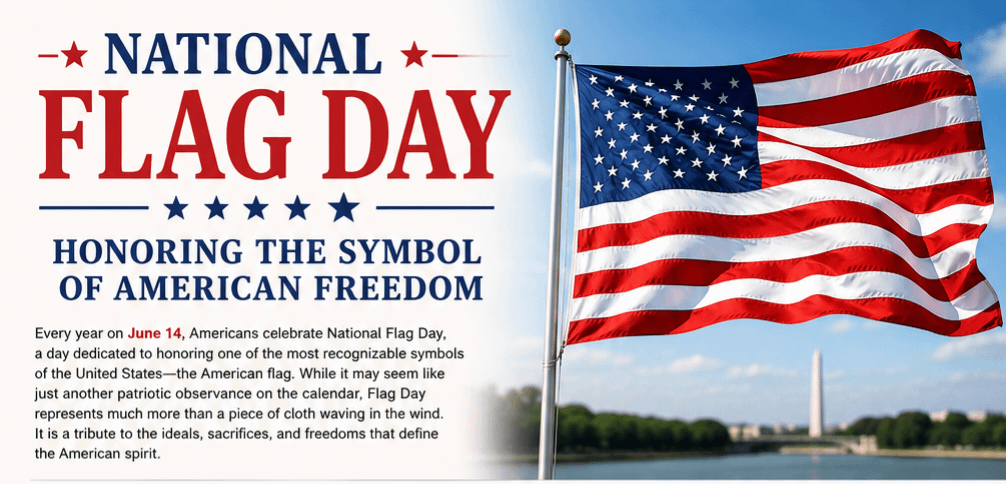
    National Flag Day: Honoring the Symbol of American Freedom

    Every year on June 14, Americans celebrate National Flag Day, a day dedicated to honoring one of the most recognizable symbols of the United States—the American flag. While it may seem like just another patriotic observance on the calendar, Flag Day represents much more than a piece of cloth waving in the wind. It is a tribute to the ideals, sacrifices, and freedoms that define the American spirit.

    For generations, the Stars and Stripes have flown over battlefields, schools, government buildings, homes, and places of remembrance. It has welcomed immigrants seeking a better life, comforted families during times of loss, and inspired citizens during moments of triumph and adversity. National Flag Day offers Americans an opportunity to reflect on the meaning of the flag and the values it represents.

    The Origins of Flag Day

    National Flag Day commemorates the adoption of the first official United States flag by the Continental Congress on June 14, 1777.

    The resolution stated:

    “Resolved, That the flag of the thirteen United States be thirteen stripes, alternate red and white; that the union be thirteen stars, white in a blue field, representing a new constellation.”

    This historic decision came during the American Revolution, as the newly formed nation sought symbols that would distinguish it from Great Britain and unite the colonies under a common identity.

    Although the design has evolved over the centuries as new states joined the Union, the spirit behind the flag remains unchanged. The stars represent the states, while the stripes honor the original thirteen colonies that fought for independence.

    The Journey to Becoming a National Observance

    While the flag was adopted in 1777, Flag Day was not immediately recognized as an official observance.

    Several individuals and communities promoted celebrations honoring the American flag throughout the 1800s. One of the most notable advocates was Bernard J. Cigrand, a schoolteacher from Wisconsin often referred to as the “Father of Flag Day.” In 1885, he encouraged his students to celebrate June 14 as the flag’s birthday.

    His efforts, along with those of many patriotic organizations, gradually gained national attention.

    In 1916, President Woodrow Wilson issued a proclamation establishing June 14 as Flag Day.

    Later, in 1949, President Harry S. Truman signed an Act of Congress officially designating June 14 as National Flag Day.

    Although it is not a federal holiday, Americans across the country continue to observe it through ceremonies, parades, educational events, and displays of patriotism.

    What the American Flag Represents

    The American flag symbolizes far more than the nation itself. It represents ideals that generations of Americans have worked to preserve:

    Freedom

    The flag stands as a reminder of the freedoms guaranteed by the Constitution, including freedom of speech, religion, and the pursuit of opportunity.

    Unity

    Despite differences in background, beliefs, and experiences, the flag serves as a symbol of a united nation.

    Sacrifice

    Countless military members have served under the American flag, defending the country during times of war and peace. For many families, the flag represents loved ones who made the ultimate sacrifice.

    Hope

    Around the world, the American flag has often symbolized hope, democracy, and the possibility of a better future.

    Understanding the Flag’s Colors

    The colors of the American flag carry symbolic meaning that reflects the nation’s founding principles:

    • Red symbolizes valor, courage, and sacrifice.
    • White represents purity and innocence.
    • Blue signifies vigilance, perseverance, and justice.

    Together, these colors tell the story of a nation built on courage, guided by ideals, and strengthened through perseverance.

    Proper Flag Etiquette

    National Flag Day is also an excellent time to remember the proper ways to display and respect the flag.

    According to the United States Flag Code:

    • The flag should be displayed from sunrise to sunset whenever possible.
    • When displayed at night, it should be properly illuminated.
    • The flag should never touch the ground.
    • A worn or damaged flag should be retired respectfully, often through a ceremonial burning conducted by veterans’ organizations or scouting groups.
    • When the flag passes in a parade, citizens should stand, face the flag, and place their hand over their heart.

    These traditions help preserve the dignity and significance of the nation’s most important symbol.

    The Flag During Times of Crisis

    Throughout American history, the flag has often become a source of strength during difficult moments.

    Whether flying above battlefields during the American Revolution, being raised atop the island of Iwo Jima during World War II, or standing proudly after national tragedies, the flag has reminded Americans of their resilience.

    In moments of uncertainty, many people look to the flag as a reminder that challenges can be overcome when citizens stand together.

    Teaching Future Generations

    One of the most important purposes of National Flag Day is education.

    Children who learn about the history of the flag gain a deeper understanding of the nation’s story. They learn about the struggles, sacrifices, and achievements that shaped America.

    Flag Day encourages conversations about citizenship, responsibility, and appreciation for the freedoms often taken for granted.

    By passing these lessons to future generations, Americans help ensure that the values represented by the flag continue to endure.

    Ways to Celebrate National Flag Day

    There are many meaningful ways to observe National Flag Day:

    • Display the American flag at your home.
    • Attend a local Flag Day ceremony or parade.
    • Visit a veterans memorial.
    • Learn about the history of the flag.
    • Teach children about the meaning of the stars and stripes.
    • Thank a veteran or active-duty service member for their service.
    • Reflect on the freedoms and opportunities available in America.

    Even small acts of appreciation can help keep the spirit of Flag Day alive.

    Why Flag Day Still Matters Today

    In a rapidly changing world, National Flag Day remains a reminder of the principles that unite Americans.

    The flag is not simply a symbol of government or politics. It represents the shared hopes, struggles, victories, and dreams of millions of people who have called America home throughout history.

    When Americans gather beneath the Stars and Stripes, they celebrate more than a nation’s past. They celebrate the enduring ideals of liberty, opportunity, courage, and unity.

    National Flag Day reminds us that while history may be written by previous generations, the responsibility to uphold those values belongs to each of us today.

    As the American flag waves proudly against the sky, it continues to tell the story of a nation striving toward its highest ideals—one star, one stripe, and one generation at a time.

    Read More Holidays & National Days