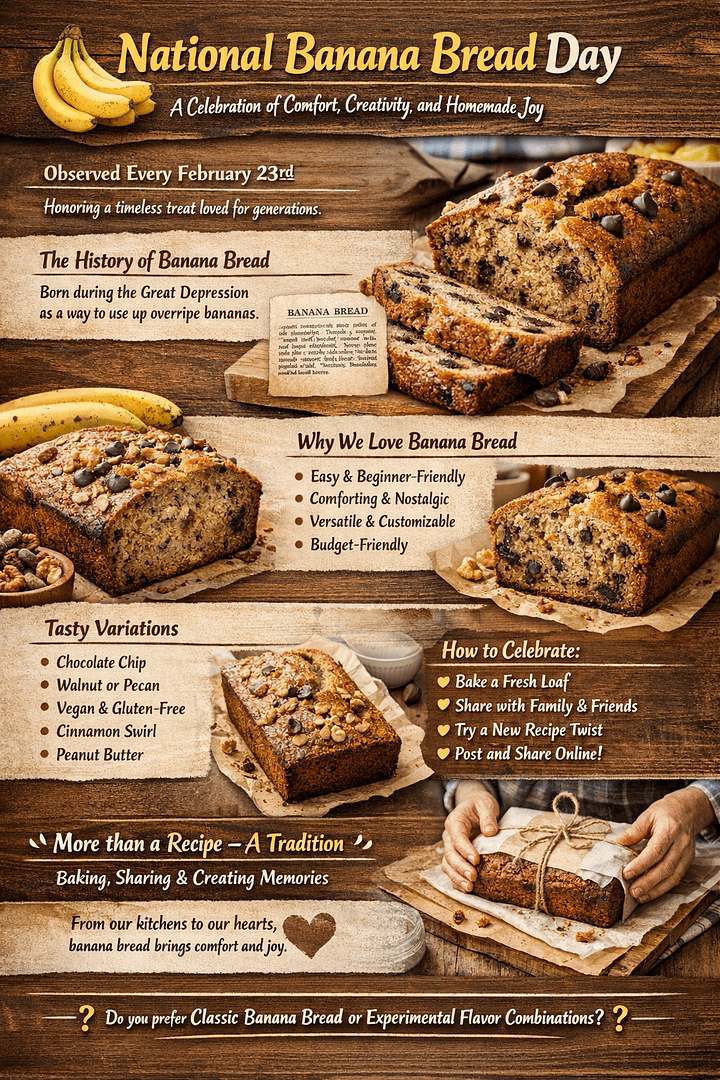
Every year on February 23, the comforting scent of warm spices and sweet bananas fills kitchens across the country as people celebrate National Banana Bread Day. More than just a food holiday, this day honors tradition, resourcefulness, and the timeless joy of homemade baking — a reminder that some of life’s greatest pleasures come from the simplest ingredients.
Banana bread is not merely a recipe; it’s a shared cultural experience passed down through generations, evolving with every family kitchen and personal touch.
The Sweet History Behind Banana Bread
Banana bread rose to popularity in the United States during the Great Depression of the 1930s, a time when families learned to stretch resources and minimize waste. Overripe bananas, once considered unusable, became the star ingredient in a new kind of baking innovation.
At the same time, baking powder and baking soda became widely available, revolutionizing home baking. These ingredients allowed people to make “quick breads,” eliminating the need for yeast and long rising times. Banana bread quickly became a staple because it was:
Affordable
Easy to prepare
Filling and satisfying
Adaptable to available ingredients
Cookbooks of the era began featuring banana bread recipes, and soon the humble loaf became a permanent fixture in American homes.
Why Banana Bread Continues to Endure
Few foods carry the emotional warmth that banana bread does. It bridges generations — grandparents, parents, and children often sharing the same recipe with small personal changes along the way.
Its enduring popularity comes from several qualities:
1. Accessibility
Anyone can make banana bread. No advanced skills are required, making it one of the most beginner-friendly baked goods.
2. Forgiveness
Unlike delicate pastries, banana bread is flexible. Slight measurement changes or ingredient swaps rarely ruin the final product.
3. Nostalgia
For many people, banana bread recalls childhood kitchens, family gatherings, or quiet mornings at home.
4. Versatility
It works as breakfast, snack, dessert, or even a thoughtful homemade gift.
The Science Behind Perfect Banana Bread
Part of banana bread’s magic lies in food science.
Overripe bananas contain more natural sugars, which enhance sweetness and moisture.
Banana starches break down as the fruit ripens, creating a softer texture.
Baking soda reacts with acidic ingredients like bananas or yogurt, helping the loaf rise.
Fat and sugar lock in moisture, giving banana bread its signature tender crumb.
The darker the banana peel, the better the flavor — a rare case where “too ripe” is actually perfect.
Endless Variations: Creativity in Every Slice
Banana bread thrives because it invites experimentation. Every baker adds a personal twist, transforming a classic recipe into something uniquely theirs.
Popular variations include:
Chocolate Chip Banana Bread – Rich and dessert-like
Nutty Banana Bread – Walnuts or pecans for crunch
Cinnamon Swirl – Warm spice layers throughout
Peanut Butter Banana Bread – A protein-packed favorite
Vegan Banana Bread – Using plant-based substitutes
Gluten-Free Versions – Made with almond or oat flour
Some bakers even turn banana bread into muffins, mini loaves, or layered cakes.
Banana Bread and Modern Culture
In recent years, banana bread experienced a global resurgence as people rediscovered home baking. During periods when daily life slowed down, baking became both therapy and creative expression.
Social media played a major role, with home bakers sharing:
Family recipes
Baking tips
Artistic presentations
Flavor experiments
Banana bread became symbolic of comfort, resilience, and connection — proof that simple rituals can bring stability during uncertain times.
Health Benefits (Yes, Really!)
While still a treat, banana bread offers surprising nutritional perks when made thoughtfully:
Bananas provide potassium, vitamin B_toggle, and fiber
Whole-grain flours add nutrients and satiety
Reduced sugar versions support balanced eating
Nuts contribute healthy fats and protein
Many modern recipes aim to balance indulgence with nourishment, making banana bread both comforting and wholesome.
How to Celebrate National Banana Bread Day
Celebrating doesn’t require professional baking skills — just enthusiasm and maybe a few ripe bananas.
Here are meaningful ways to join the celebration:
🍌 Bake a traditional loaf using a family recipe
🍌 Try a new flavor combination
🍌 Teach someone how to bake banana bread
🍌 Share slices with neighbors or coworkers
🍌 Support a local bakery and try their version
🍌 Freeze extra loaves for future comfort food moments
The spirit of the day is sharing — both food and connection.
Tips for the Perfect Loaf
Want bakery-quality banana bread at home? Keep these tips in mind:
Use very ripe bananas (brown spots are ideal)
Avoid overmixing the batter to keep it tender
Let the bread cool before slicing to maintain structure
Add toppings like oats or nuts for texture
Store wrapped tightly to preserve moisture
A little patience often makes the difference between good and unforgettable banana bread.
More Than a Recipe — A Tradition
National Banana Bread Day celebrates more than a baked good; it celebrates creativity, resilience, and the warmth of home. From Depression-era kitchens to modern social media feeds, banana bread has remained a symbol of making something beautiful from what might otherwise be overlooked.
In a world that often moves too fast, baking banana bread encourages us to slow down — to measure carefully, wait patiently, and enjoy something made with care.
Because sometimes happiness is simple: a warm slice, a cup of coffee, and the feeling of home in every bite.
Read More Holidays & National Days
Leave a Reply