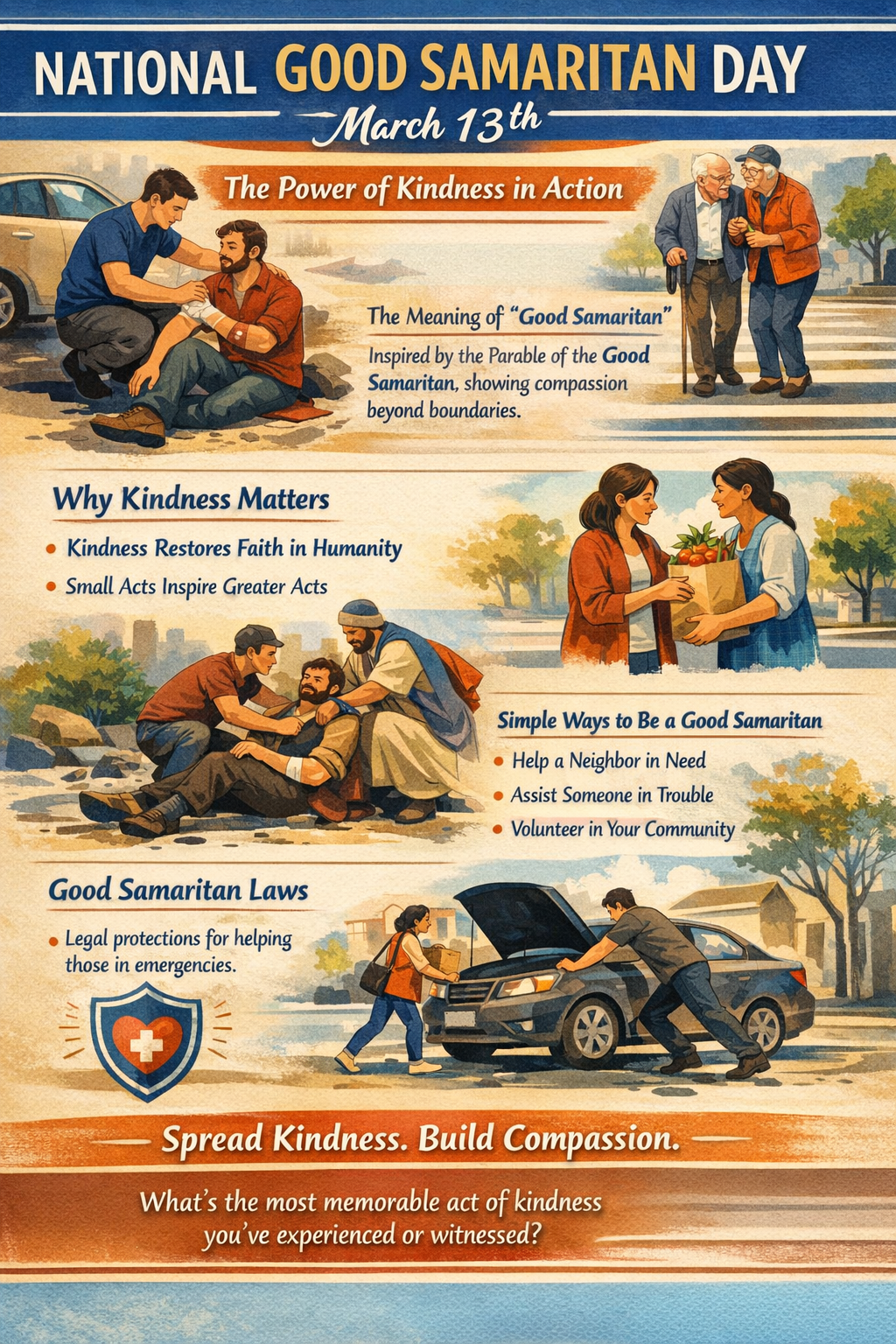
Every year on March 13, people across the United States observe National Good Samaritan Day, a day dedicated to celebrating kindness, compassion, and the simple yet powerful act of helping someone in need. While it may not be as widely recognized as some other holidays, its message is one of the most meaningful: humanity is at its best when people care for one another.
National Good Samaritan Day reminds us that the world is not only shaped by major events or famous individuals, but also by the quiet, everyday acts of kindness performed by ordinary people. A small gesture—a helping hand, a comforting word, or a moment of empathy—can change someone’s day and sometimes even change the course of their life.
The Story Behind the Good Samaritan
The phrase “Good Samaritan” comes from the well-known Parable of the Good Samaritan, a story found in the Christian Bible. In the parable, a traveler is attacked by thieves, robbed, and left injured on the side of the road. As he lies helpless, several people pass by without offering assistance. Finally, a Samaritan—a person from a group often viewed with prejudice during that time—stops to help.
The Samaritan tends to the wounded man, bandages his injuries, transports him to safety, and even pays for his care. The message of the story is profound: compassion should not be limited by differences, judgments, or social boundaries.
Helping others is not about who they are, where they come from, or what they believe. It is about recognizing someone’s humanity and choosing kindness.
Over time, the phrase “Good Samaritan” became a universal term used to describe anyone who helps a stranger in need.
The Importance of Kindness in a Busy World
Modern life often moves at a relentless pace. People rush between work, responsibilities, and personal challenges, sometimes becoming so focused on their own lives that they overlook those around them. National Good Samaritan Day encourages everyone to slow down and recognize the opportunities to help others that exist in everyday moments.
Acts of kindness can restore faith in humanity. When someone receives help during a difficult moment—whether it is a stranger offering assistance after a car breakdown or a neighbor bringing food during a hard time—it reminds them that they are not alone.
Kindness also has a ripple effect. Research and human experience both show that when people witness generosity, they are more likely to perform acts of kindness themselves. One compassionate action can inspire many others.
Everyday Ways to Be a Good Samaritan
Being a Good Samaritan does not require dramatic heroism or grand gestures. In fact, the spirit of the day is rooted in the belief that small acts of kindness matter deeply.
Examples of simple ways to embody this spirit include:
Helping someone carry heavy bags or groceries
Checking on an elderly neighbor who may feel isolated
Offering encouragement to someone who seems discouraged
Volunteering time at a local shelter or community organization
Helping someone who has a flat tire or car trouble
Donating food, clothing, or supplies to those in need
Paying for a stranger’s coffee or meal
Taking the time to truly listen to someone who needs support
Sometimes, even a smile or a kind word can make a difference in someone’s day. Kindness is not measured by the size of the action but by the intention behind it.
The Role of Courage in Compassion
While many acts of kindness are simple, some moments require courage. Helping someone in need may mean stepping forward when others hesitate or speaking up when someone is being treated unfairly.
True compassion often involves putting aside fear, inconvenience, or indifference. It means choosing to care even when it would be easier to walk away.
History is filled with stories of Good Samaritans who stepped forward during difficult situations—people who helped strangers during accidents, disasters, or personal crises. Many of these individuals never seek recognition. They simply act because they believe helping others is the right thing to do.
Good Samaritan Laws
In many places, there are even laws designed to encourage people to help others in emergencies. Known as Good Samaritan law, these laws provide legal protection to individuals who voluntarily assist someone who is injured or in danger.
The purpose of these laws is simple: to remove the fear of liability so that people feel empowered to help during emergencies without hesitation.
These protections reflect a broader societal belief that compassion and assistance should be encouraged rather than discouraged.
Building a Culture of Compassion
National Good Samaritan Day is not just about celebrating kindness for a single day. It is also about building a culture where compassion becomes a daily practice.
Communities grow stronger when people support one another. When neighbors look out for each other, when strangers offer help during difficult moments, and when empathy becomes a shared value, society becomes more resilient and more connected.
Kindness also bridges divides. In a world where differences in beliefs, cultures, and experiences sometimes create barriers, acts of compassion remind us that our shared humanity is far more powerful than our differences.
The Lasting Impact of Kindness
One of the most beautiful aspects of being a Good Samaritan is that we rarely see the full impact of our actions. A moment of kindness might give someone hope during a difficult time, inspire them to help someone else, or simply remind them that goodness still exists in the world.
Those moments may seem small, but they are powerful. They create connections between people and help shape a world where empathy and generosity continue to thrive.
National Good Samaritan Day reminds us that every person has the ability to make a difference. We do not need special titles, resources, or recognition to help someone in need.
Sometimes all it takes is the willingness to pause, notice another person’s struggle, and offer a helping hand.
In that simple act, the spirit of the Good Samaritan lives on.
Leave a Reply