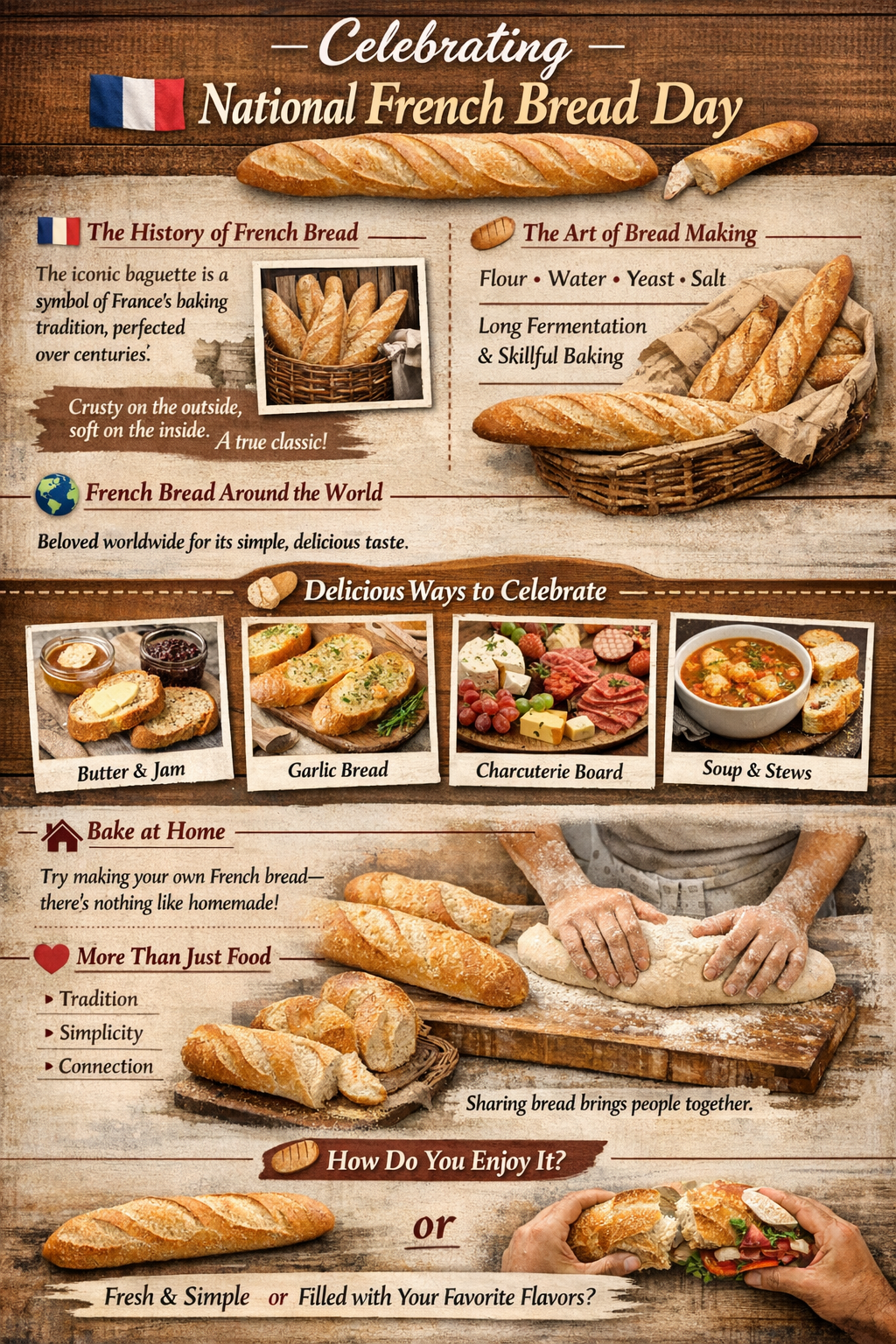
There’s something almost magical about the aroma of freshly baked French bread drifting through the air. It’s warm, inviting, and instantly comforting. On National French Bread Day, we celebrate more than just a loaf—we celebrate a tradition that has nourished generations, connected cultures, and turned simple ingredients into something unforgettable.
The Rich History Behind French Bread
French bread, particularly the world-famous baguette, is deeply rooted in the culinary heritage of France. While bread itself dates back thousands of years, French bakers elevated it into an art form.
The baguette as we know it today became popular in the 19th and early 20th centuries. Some stories suggest its long, slender shape was designed for convenience—easy to carry, quick to bake, and perfect for daily consumption. Others link it to changes in labor laws that limited early morning work hours, encouraging bakers to create bread that could be prepared more efficiently.
Regardless of its exact origin, one thing is certain: French bread quickly became a cultural symbol. In fact, the traditional French baguette has been recognized globally as a representation of craftsmanship and heritage, even earning cultural recognition in recent years.
🥖 The Craft of French Bread Making
At first glance, French bread seems simple. Just four ingredients:
Flour
Water
Yeast
Salt
But behind that simplicity lies a deep level of skill and patience.
French bakers rely on time-honored techniques such as:
Long fermentation to develop flavor
Precise kneading to build structure
Careful scoring to control how the bread expands
High-temperature baking to create that signature crisp crust
The result? A loaf that crackles when you press it, with a golden exterior and a soft, airy crumb inside.
In France, many bakers still follow strict guidelines to preserve authenticity. A traditional baguette, often called baguette de tradition, cannot contain additives or preservatives—only the essential ingredients and expert technique.
🌍 French Bread Around the World
While French bread originated in France, its influence has spread across the globe. Today, you can find variations of French-style bread in bakeries from small towns to major cities worldwide.
In the United States, French bread has become a staple in many households—served alongside pasta dishes, used for sandwiches, or transformed into garlic bread. Each region adds its own twist, but the essence remains the same: simple, satisfying, and versatile.
🍽️ Delicious Ways to Celebrate
National French Bread Day is the perfect opportunity to enjoy this classic in creative and comforting ways.
🧈 Keep It Classic
Slice a fresh baguette and spread it with butter. The warmth of the bread melts the butter instantly—simple, rich, and timeless.
🧄 Make Garlic Bread
Add butter, garlic, and herbs, then toast until golden. It’s the perfect side for pasta or soup.
🧀 Build a Charcuterie Board
Pair French bread with cheeses, cured meats, fruits, and spreads for a beautiful and flavorful experience.
🥪 Create Gourmet Sandwiches
French bread makes an excellent base for sandwiches—crispy outside, soft enough inside to hold all your favorite fillings.
🍲 Pair with Comfort Foods
Dip it into soups, stews, or sauces. French bread has a way of making every meal feel heartier and more complete.
🏡 Baking French Bread at Home
There’s something deeply rewarding about baking your own French bread. While it may seem intimidating at first, the process is both therapeutic and fulfilling.
You don’t need fancy ingredients—just time, patience, and a willingness to learn. As the dough rises and the crust turns golden in the oven, your kitchen transforms into something special.
Even if your first loaf isn’t perfect, it will still carry something meaningful: the effort and care you put into it.
❤️ More Than Food—A Symbol of Connection
French bread isn’t just about taste—it’s about experience. It’s the bread shared at dinner tables, passed between friends, and enjoyed during quiet moments of reflection.
In many ways, it represents:
Tradition passed down through generations
Simplicity in a complicated world
Connection between people and cultures
Breaking bread together has long been a symbol of unity, and French bread embodies that idea beautifully.
🥖 A Moment to Savor
On National French Bread Day, take a moment to slow down. Tear off a piece, enjoy the texture, and appreciate the craftsmanship behind it.
Because sometimes, the simplest things—like a loaf of bread—hold the deepest meaning.
Leave a Reply