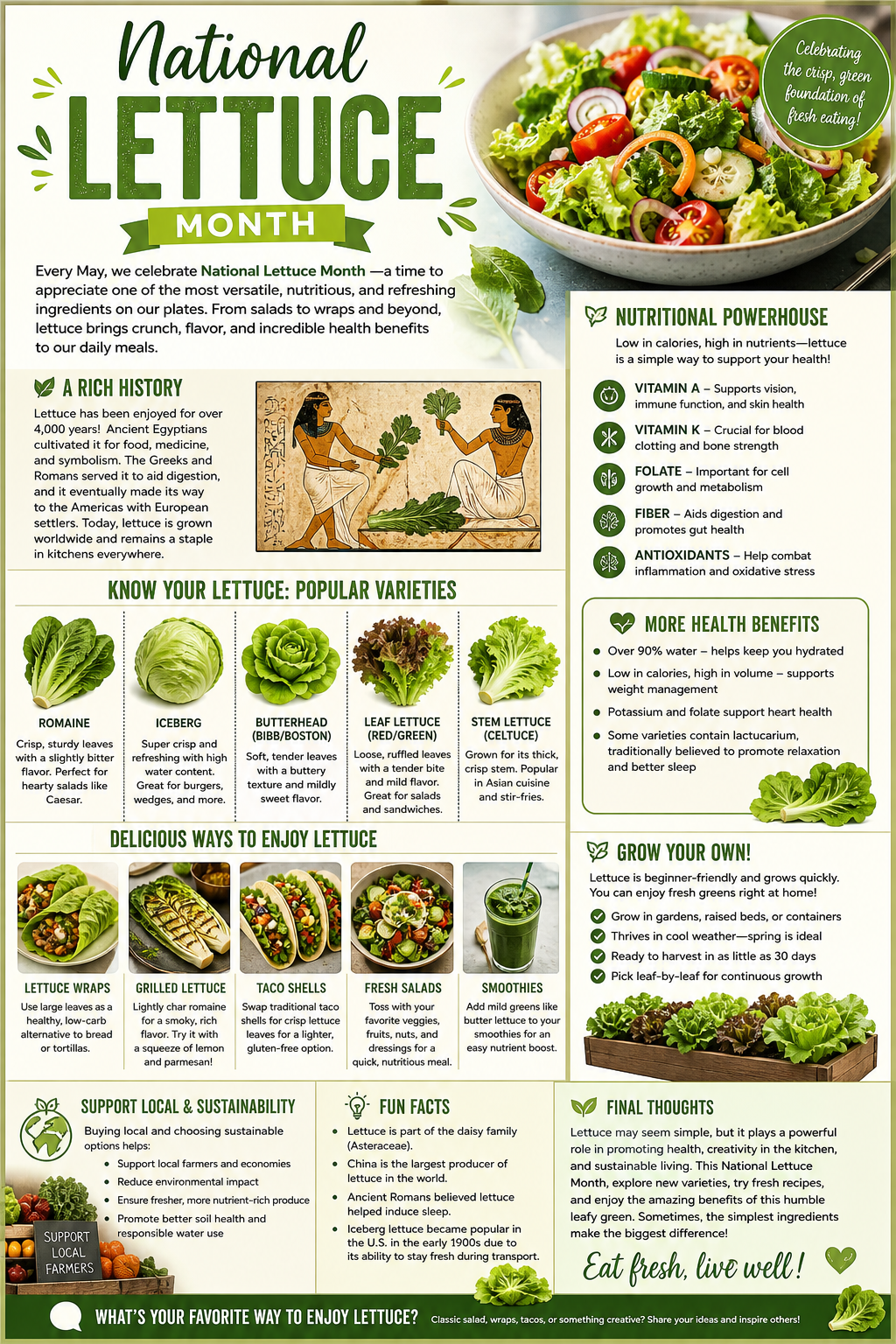
Every May, food lovers and health enthusiasts come together to celebrate National Lettuce Month—a tribute to one of the most versatile, refreshing, and nourishing ingredients found in kitchens around the world. While it’s often seen as a simple salad base, lettuce is far more than a sidekick—it’s a powerhouse of nutrition, a culinary staple, and a symbol of fresh, clean eating.
🌱 A Deeper Look at Lettuce’s Origins
Lettuce has been cultivated for over 4,000 years, with its roots tracing back to ancient Egypt. The Egyptians prized lettuce not only for its edible leaves but also for the oil extracted from its seeds. It was considered a sacred plant associated with fertility and was often depicted in ancient art.
As civilizations evolved, lettuce spread to ancient Greece and Rome, where it became a popular dish served at the end of meals to aid digestion. Eventually, European settlers brought lettuce to the Americas, where it thrived and became a staple in households and agriculture alike.
Today, lettuce is grown globally, with the United States—especially California and Arizona—leading production.
🥗 Exploring the Many Varieties of Lettuce
Lettuce comes in a wide range of varieties, each offering distinct flavors, textures, and uses:
Romaine (Cos) – Crisp, sturdy leaves with a slightly bitter flavor; perfect for hearty salads like Caesar.
Iceberg – Known for its crunch and high water content; commonly used in burgers and wedges.
Butterhead (Bibb/Boston) – Soft, delicate leaves with a buttery texture and mild sweetness.
Leaf Lettuce (Red/Green) – Loose, ruffled leaves with a tender bite; great for fresh salads.
Stem Lettuce (Celtuce) – Grown for its thick, edible stem; popular in Asian cuisine.
Each type offers its own unique experience, proving that lettuce is anything but boring.
💪 Nutritional Powerhouse in Every Leaf
Despite being low in calories, lettuce is packed with essential nutrients that support overall health:
Vitamin A – Supports vision, immune function, and skin health
Vitamin K – Crucial for blood clotting and bone strength
Folate – Important for cell growth and metabolism
Fiber – Aids digestion and promotes gut health
Antioxidants – Help combat inflammation and oxidative stress
Darker lettuces like romaine and red leaf tend to have higher nutrient content than lighter varieties like iceberg.
🧠 Health Benefits You Might Not Know
Lettuce does more than just fill your plate—it supports your well-being in subtle but powerful ways:
Hydration Boost – Lettuce is made up of over 90% water, helping keep you hydrated
Weight Management – Low in calories, high in volume—perfect for feeling full without overeating
Heart Health – Nutrients like potassium and folate contribute to cardiovascular wellness
Better Sleep – Some varieties contain compounds like lactucarium, traditionally believed to promote relaxation
🍴 Creative and Delicious Ways to Enjoy Lettuce
Lettuce can be used in far more ways than just salads:
Lettuce Wraps – Use large leaves as a healthy, low-carb alternative to bread or tortillas
Grilled Lettuce – Lightly char romaine for a smoky, gourmet twist
Smoothies – Add mild greens like butter lettuce to boost nutrients
Soup Garnish – Add shredded lettuce to soups for texture and freshness
Taco Shells – Swap traditional shells for a lighter, gluten-free option
🌿 Growing Your Own Lettuce
One of the best ways to celebrate National Lettuce Month is by growing your own. Lettuce is beginner-friendly and grows quickly:
Can be grown in gardens, raised beds, or containers
Thrives in cool weather, making spring ideal
Ready to harvest in as little as 30 days
Can be picked leaf-by-leaf for continuous growth
Even a small windowsill can produce fresh lettuce for your meals.
🌍 Supporting Local Farmers and Sustainability
National Lettuce Month is also a reminder to support local agriculture. Buying from farmers markets or local growers helps:
Reduce environmental impact from transportation
Support small businesses and local economies
Ensure fresher, more nutrient-rich produce
Sustainable farming practices also help preserve soil health and reduce water waste—making lettuce a smart choice for both your body and the planet.
🥬 Fun Facts About Lettuce
Lettuce is part of the daisy family (Asteraceae)
China is the largest producer of lettuce in the world
Ancient Romans believed lettuce helped induce sleep
Iceberg lettuce became popular in the U.S. in the early 1900s due to its ability to stay fresh during transport
🌟 Final Thoughts
Lettuce may seem simple, but it plays a powerful role in promoting health, creativity in the kitchen, and sustainable living. National Lettuce Month is the perfect time to explore new varieties, try fresh recipes, and reconnect with wholesome eating.
Whether you’re enjoying a crisp salad, wrapping up your favorite fillings, or growing your own greens, lettuce reminds us that sometimes the simplest ingredients are the most essential.
Leave a Reply