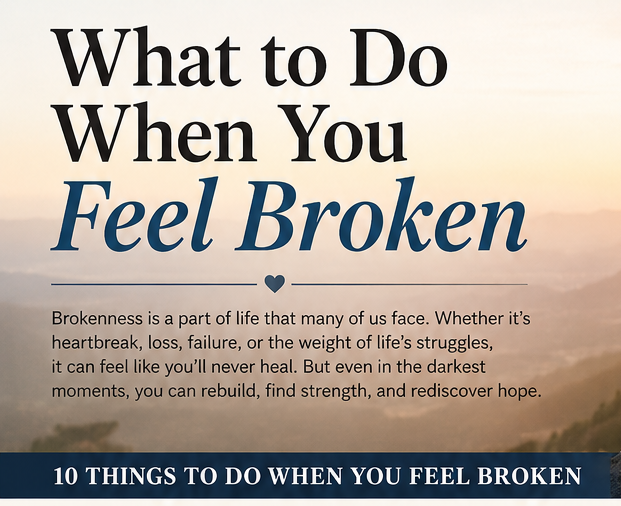
There are moments in life that leave scars no one else can fully see. Moments when your heart feels exhausted, your mind feels overwhelmed, and your spirit feels worn down from carrying too much for too long. Feeling broken is not always dramatic or obvious. Sometimes it looks like silence. Sometimes it looks like losing motivation, struggling to trust people, isolating yourself, or simply feeling emotionally numb while pretending everything is okay.
Brokenness can come from many places:
The loss of someone you love
Heartbreak or betrayal
Childhood wounds
Financial struggles
Anxiety or depression
Disappointment in yourself
Feeling rejected, abandoned, or forgotten
Carrying years of emotional pain without healing
When you feel broken, even everyday life can become difficult. Simple things like getting out of bed, answering messages, or finding joy in things you once loved may suddenly feel exhausting.
But even in those moments, one truth remains important:
Feeling broken does not mean you are beyond healing.
Brokenness Does Not Mean You Are Weak
Many people believe strength means never falling apart. But real strength is continuing to move forward while carrying pain no one else understands.
Strong people cry.
Strong people struggle.
Strong people feel overwhelmed sometimes.
Being broken is not proof that you failed. Often, it is proof that you have survived more than most people realize.
The problem is that many hurting people become experts at hiding their pain. They smile while silently suffering. They encourage everyone else while neglecting themselves. They become emotionally drained because they spend so much energy pretending they are okay.
You do not have to hide your pain to deserve love, support, or healing.
1. Be Honest About What Hurts
Healing cannot begin if you constantly avoid the truth about what is hurting you.
Sometimes people distract themselves to avoid emotional pain:
Staying constantly busy
Overworking
Scrolling endlessly online
Numbing emotions
Pretending everything is fine
Avoiding difficult conversations
But buried pain does not disappear. It waits.
Take a moment to ask yourself:
What is truly hurting me?
What have I been avoiding emotionally?
What am I carrying that I never properly processed?
Honesty may feel uncomfortable at first, but it is often the first step toward emotional freedom.
You cannot heal wounds you refuse to acknowledge.
2. Stop Punishing Yourself for Being Human
One of the most painful parts of brokenness is self-blame. Many people replay every mistake they ever made and convince themselves they ruined everything.
You may think:
“I should have known better.”
“I’m not good enough.”
“I always mess things up.”
“Maybe I deserved this pain.”
But healing requires learning the difference between accountability and self-destruction.
Yes, everyone makes mistakes. Everyone has regrets. Everyone has moments they wish they could redo. But constantly attacking yourself emotionally will not change the past — it will only deepen the wound.
You deserve grace too.
Sometimes people hold themselves hostage to old versions of themselves instead of allowing growth to happen.
You are not required to remain trapped in your worst moments forever.
3. Allow Yourself to Grieve
Many people only associate grief with death, but grief also comes from:
Lost relationships
Lost dreams
Lost trust
Lost time
Lost versions of yourself
Sometimes what breaks you is mourning the life you thought you would have.
Grief is complicated because healing is not linear. Some days you may feel okay. Other days the pain may return unexpectedly.
That does not mean you are failing.
Healing often comes in waves.
Allow yourself to cry if needed. Allow yourself to miss people. Allow yourself to feel sadness without judging yourself for it.
Ignoring grief does not make you stronger. Processing it does.
4. Take Care of Your Mind and Body
When emotional pain becomes overwhelming, people often neglect themselves physically. But your mental and emotional health are deeply connected to how you care for your body.
Start small if necessary:
Drink more water
Get enough sleep
Eat consistently
Go outside for sunlight
Move your body gently
Spend less time around negativity
Reduce things that worsen your anxiety
You do not need to fix your entire life overnight. Focus on stabilizing yourself one step at a time.
Small routines can create emotional grounding during chaotic seasons.
5. Stop Isolating Yourself Completely
Pain often convinces people to withdraw from everyone. While temporary solitude can help, complete isolation can make emotional wounds feel heavier.
You do not have to carry everything alone.
Talk to someone safe:
A trusted friend
Family member
Pastor
Support group
Therapist or counselor
Sometimes healing begins simply by being heard.
You are allowed to ask for support without feeling like a burden.
Many people suffer silently because they fear vulnerability. But emotional walls built for protection can eventually become prisons.
Connection matters.
6. Give Yourself Permission to Heal Slowly
One of the hardest parts of healing is patience.
People often expect themselves to “move on” quickly, especially after heartbreak, trauma, or loss. But emotional recovery does not follow a schedule.
Some wounds take longer because they affected you deeply.
Do not compare your healing journey to someone else’s.
Do not shame yourself for still hurting.
Do not believe that slow healing means failed healing.
Some of the deepest emotional injuries require time, reflection, and grace.
You are rebuilding yourself emotionally, mentally, and spiritually. That process deserves patience.
7. Protect Your Peace
When you feel broken, your emotional energy becomes limited. This means protecting your peace becomes even more important.
You may need to:
Set boundaries
Spend less time with toxic people
Distance yourself from constant drama
Stop revisiting things that reopen wounds
Limit negative influences online
Say no without guilt
Not everyone deserves unlimited access to your heart.
Healing sometimes requires creating space between yourself and what continually harms you.
Protecting your peace is not selfish. It is necessary.
8. Focus on Small Victories
When life feels overwhelming, large goals can feel impossible. Instead of focusing on everything that is wrong, focus on small progress.
Celebrate things like:
Getting through the day
Going outside
Eating a healthy meal
Reaching out for help
Choosing not to give up
Getting out of bed when it felt difficult
Small victories matter more than you realize.
Healing is often built through consistent small steps, not sudden dramatic changes.
9. Remember That Brokenness Can Produce Strength
Some of the strongest people carry invisible scars.
Pain changes people, but it does not have to destroy them.
Many people discover:
Greater empathy
Emotional maturity
Wisdom
Compassion
Faith
Resilience
through their hardest seasons.
The very experiences that broke you may eventually become the experiences that help someone else survive.
Your pain may shape you, but it does not have to define you forever.
10. Hold Onto Hope Even When It Feels Difficult
There may be days when hope feels far away. Days when you question whether things will ever improve. But emotions are temporary, even when they feel permanent.
The version of you that feels broken today will not necessarily be the version of you forever.
Healing can happen slowly.
Peace can return.
Joy can return.
Love can return.
Purpose can return.
Do not let temporary pain convince you that your future is hopeless.
Sometimes the hardest seasons produce the strongest people.
Final Thoughts
Feeling broken can make life feel heavy in ways words cannot fully describe. It can affect your confidence, your relationships, your faith, and your sense of self. But brokenness is not the end of your story.
You are still worthy of love.
Still worthy of healing.
Still worthy of peace.
Still worthy of a future.
Take things one day at a time. Be gentle with yourself during difficult seasons. Rest when needed. Ask for help when necessary. Keep moving forward, even if your steps feel small.
One day, you may realize that the season that nearly destroyed you also taught you how strong you truly are.
Leave a Reply