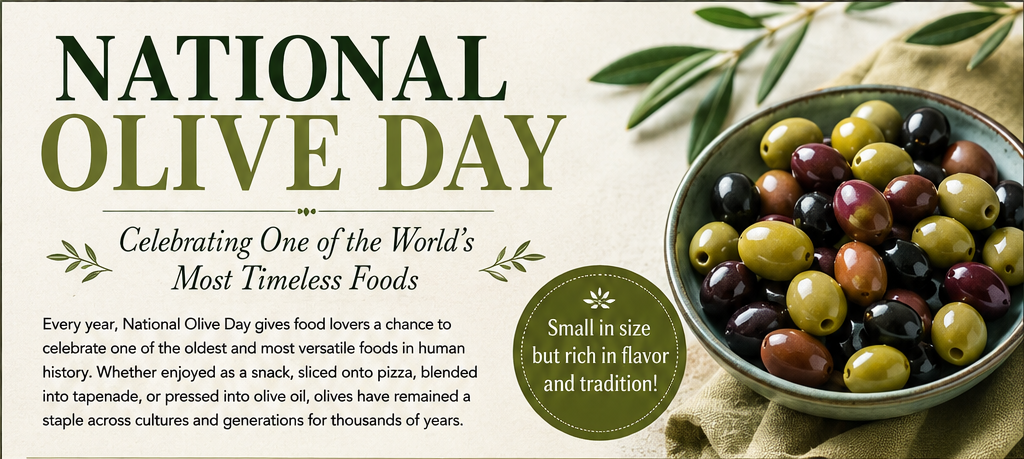
Every year, National Olive Day gives food lovers a chance to celebrate one of the oldest and most versatile foods in human history. Whether enjoyed as a snack, sliced onto pizza, blended into tapenade, or pressed into olive oil, olives have remained a staple across cultures and generations for thousands of years.
Small in size but rich in flavor and tradition, olives represent more than just a popular appetizer. They symbolize peace, health, resilience, and the deep connection between food and community. National Olive Day is the perfect opportunity to appreciate the impact this tiny fruit has had on cuisines and lifestyles around the world.
The Ancient History of Olives
Olives have been cultivated for over 6,000 years, primarily throughout the Mediterranean region. Ancient civilizations such as the Greeks, Romans, and Egyptians considered olive trees sacred and valuable. Olive branches became universal symbols of peace and victory, while olive oil was used for cooking, medicine, skincare, and religious ceremonies.
The olive tree itself is remarkable for its longevity and strength. Some olive trees are believed to be hundreds, even thousands, of years old, continuing to produce fruit despite harsh climates and changing seasons. Their endurance mirrors the lasting role olives have played throughout human history.
Why Olives Are So Popular
Part of the olive’s appeal comes from its incredible variety. From black olives and green olives to Kalamata, Castelvetrano, and Manzanilla varieties, each offers its own distinct texture and flavor profile.
Some olives are buttery and mild, while others are salty, tangy, or slightly bitter. This diversity makes them perfect for countless dishes, including:
Salads
Charcuterie boards
Sandwiches
Pasta dishes
Pizza toppings
Mediterranean recipes
Tapenade spreads
Cocktails like martinis
Olives also pair beautifully with cheeses, cured meats, roasted vegetables, and fresh breads, making them a favorite ingredient for gatherings and celebrations.
The Health Benefits of Olives
Beyond their flavor, olives are also widely recognized for their nutritional benefits. They contain healthy monounsaturated fats, antioxidants, vitamin E, and anti-inflammatory compounds that support heart health and overall wellness.
Olive oil, particularly extra virgin olive oil, is a major part of the Mediterranean diet, which is often praised for promoting longevity and reducing the risk of chronic disease.
Some potential benefits of olives and olive oil include:
Supporting heart health
Helping reduce inflammation
Providing antioxidants
Supporting healthy cholesterol levels
Promoting skin health
Contributing to balanced nutrition
While moderation is important due to sodium content in some cured olives, they remain a flavorful and beneficial addition to many diets.
Fun Ways to Celebrate National Olive Day
National Olive Day can be celebrated in many delicious ways. Some people visit Mediterranean restaurants or wine bars, while others experiment with olive-inspired recipes at home.
Here are a few fun ideas:
Create a homemade charcuterie board featuring multiple olive varieties
Try a new olive-based recipe
Sample premium olive oils
Make fresh tapenade
Add olives to homemade pizza or pasta
Host a Mediterranean-themed dinner night
Learn about olive farming and production
Food often brings people together, and olives have a unique way of connecting tradition, flavor, and culture in one simple ingredient.
More Than Just a Topping
Olives are one of those rare foods that have survived the test of time without losing their importance. Across generations and continents, they continue to represent nourishment, hospitality, peace, and celebration.
National Olive Day reminds us that sometimes the simplest ingredients carry the richest stories. Whether you love them on pizza, in salads, beside a martini, or straight from the jar, today is the perfect day to appreciate everything olives bring to the table.
So grab your favorite variety, pour a little olive oil, and celebrate a food tradition that has truly stood the test of time.
Leave a Reply