Author: Brett Murphy

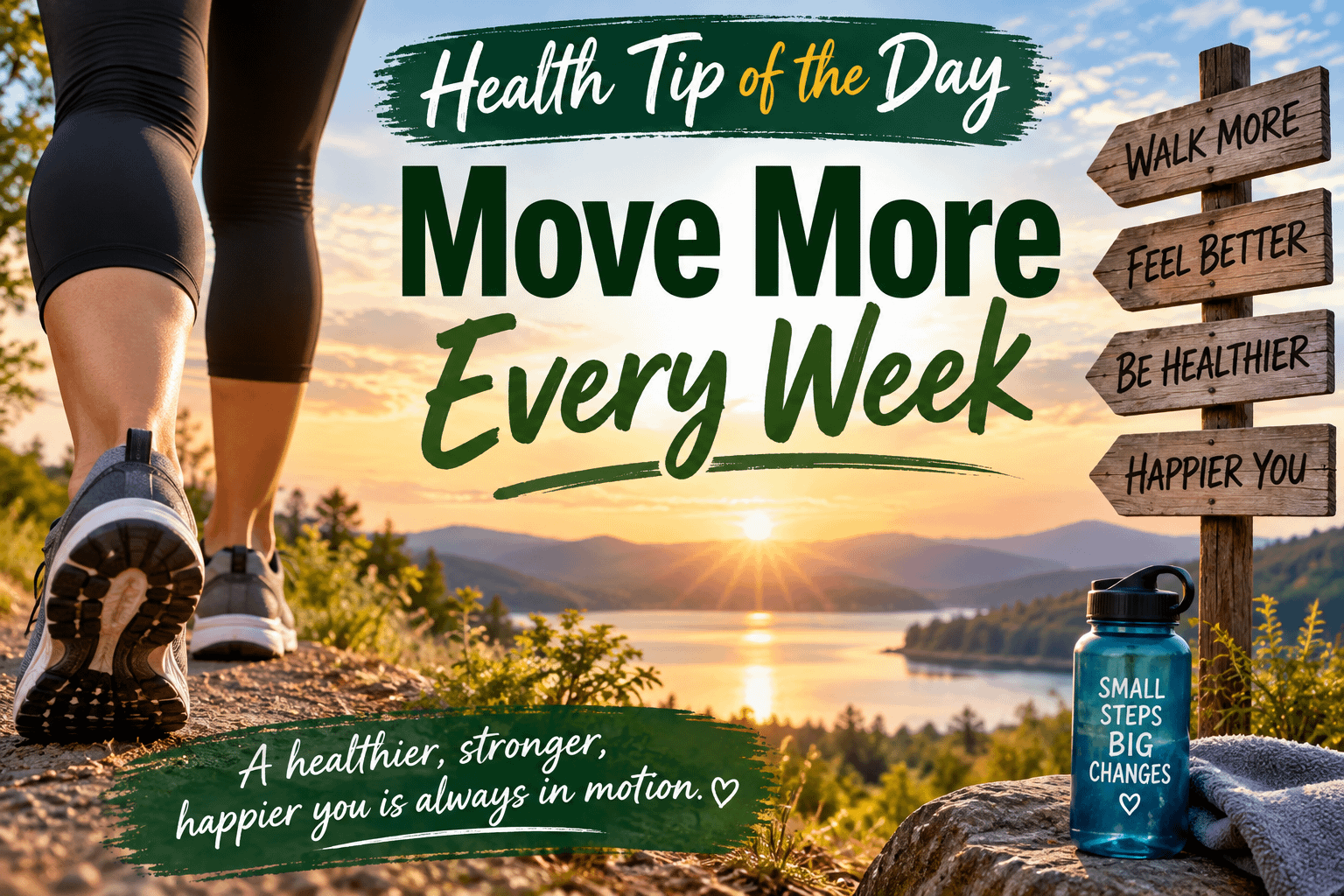
  • Health Tip of the Day: Move More Every Week

    Health Tip of the Day: Move More Every Week

    Improving your health does not always require a dramatic transformation, an expensive gym membership, or an intense workout program. Sometimes one of the most powerful things you can do is also one of the simplest:

    Move more every week.

    Our bodies are designed for movement. Walking, stretching, climbing stairs, cleaning the house, working in the yard, dancing, exercising, and even taking a few minutes to stand up and move around all count.

    The goal does not have to be becoming an athlete. The goal is to spend a little less time sitting and a little more time moving.

    And when you consistently increase your activity—even gradually—you can begin building habits that support your physical and mental well-being.

    Movement Is About More Than Exercise

    When people hear that they need to become more active, they often immediately think about going to the gym.

    That can make getting healthier seem overwhelming.

    You might imagine running several miles, lifting heavy weights, attending fitness classes, or spending an hour exercising every day.

    But movement is much broader than traditional exercise.

    You can increase your physical activity simply by making small changes throughout your day.

    Take a walk after dinner.

    Park a little farther from the entrance.

    Walk around while talking on the phone.

    Stretch while watching television.

    Take the stairs when you’re able.

    Do some yard work.

    Play outside with your children or grandchildren.

    Put on your favorite music and dance around the house.

    These activities may seem small, but they add movement to a day that might otherwise have been mostly sedentary.

    Over an entire week, those minutes can add up.

    Start With Where You Are

    One of the biggest mistakes people make when trying to become more active is comparing themselves with someone else.

    Someone else might walk five miles every morning.

    Someone else might work out six days a week.

    Someone else might be training for a marathon.

    That doesn’t mean you need to do the same thing.

    Your starting point belongs to you.

    If you currently aren’t very active, walking for ten minutes can be progress.

    If you already walk regularly, perhaps your next goal is adding another walk each week.

    If you’re already exercising several days a week, maybe you can increase your strength training, flexibility work, or everyday movement.

    Progress should be measured against where you started, not against someone else’s routine.

    Why Weekly Movement Matters

    Regular physical activity can support many areas of health.

    Movement helps strengthen muscles and bones, supports cardiovascular fitness, improves mobility and can help maintain physical independence as we age.

    It can also affect how you feel mentally.

    A walk can give you time to clear your thoughts.

    Exercise can provide a healthy break from stress.

    Movement can give you something positive to focus on when you’ve spent too much time worrying, working, scrolling through your phone, or sitting indoors.

    You don’t necessarily need a complicated workout to experience those benefits.

    Sometimes getting outside and walking around the neighborhood is enough to change the direction of your afternoon.

    Stop Thinking in Terms of All or Nothing

    One of the most damaging attitudes toward exercise is:

    If I can’t do a full workout, there’s no point doing anything.

    That mindset can turn a busy day into a completely inactive one.

    Suppose you planned to exercise for 45 minutes but suddenly became busy.

    You might think the workout is ruined.

    But what if you walked for 15 minutes instead?

    That’s still movement.

    Maybe tomorrow you have only ten minutes.

    Move for ten minutes.

    Another day, you might have time for 30.

    The important thing is developing the habit of looking for opportunities to move instead of waiting for perfect conditions.

    Something is usually better than nothing.

    Make Walking Your Secret Weapon

    Walking is one of the simplest ways many people can add movement to their lives.

    You don’t need complicated equipment.

    You don’t have to learn an elaborate routine.

    And you can adjust the distance and pace according to your abilities.

    Try walking:

    • Before work
    • During your lunch break
    • After dinner
    • Around a shopping center
    • At a local park
    • While waiting for an appointment
    • With a friend or family member
    • While listening to music, an audiobook, or a podcast

    If a long walk feels difficult, break it into shorter sessions.

    Three ten-minute walks throughout the day may feel much more manageable than trying to complete one long session.

    Make Movement Part of Your Normal Routine

    The easiest habits to maintain are often the ones that fit naturally into your existing life.

    Instead of constantly trying to “find time” to exercise, attach movement to something you already do.

    For example:

    After drinking your morning coffee, take a short walk.

    After lunch, walk for ten minutes.

    After work, stretch before sitting down for the evening.

    After dinner, walk around the neighborhood.

    While watching television, stand and move during commercial breaks or between episodes.

    When movement becomes connected to your normal routine, you don’t have to rely entirely on motivation.

    Eventually, it simply becomes part of your day.

    Add Strength, Too

    Moving more isn’t limited to walking.

    Strength exercises can also be an important part of an active lifestyle.

    Depending on your abilities, this might include exercises such as squats, wall push-ups, resistance-band exercises, light weights, or body-weight movements.

    Strength matters because everyday life requires it.

    Standing up from a chair requires strength.

    Carrying groceries requires strength.

    Climbing stairs requires strength.

    Maintaining muscle becomes increasingly important as we get older.

    You don’t have to become a bodybuilder. The goal is simply to challenge your muscles safely and consistently.

    Don’t Forget Flexibility and Mobility

    Movement should also include activities that help your body maintain its range of motion.

    Gentle stretching can be especially helpful after you’ve spent long periods sitting.

    Try periodically stretching your:

    Shoulders.

    Neck.

    Back.

    Hips.

    Legs.

    Calves.

    Even a few minutes can help break up extended periods of inactivity.

    Activities such as yoga, gentle mobility routines, and stretching exercises can also provide another way to stay active without requiring high-intensity workouts.

    Find Movement You Actually Enjoy

    You are much more likely to continue doing something if you enjoy it.

    Not everyone likes running.

    Not everyone enjoys lifting weights.

    Not everyone wants to spend time in a gym.

    That’s okay.

    There are countless ways to move.

    Maybe you enjoy swimming.

    Maybe you like hiking.

    Maybe you enjoy dancing.

    Perhaps you love gardening.

    You might prefer cycling, walking your dog, playing basketball, doing home workouts, or exploring local parks.

    Exercise doesn’t have to feel like punishment.

    Finding something you genuinely enjoy can turn physical activity from something you “have to do” into something you actually look forward to.

    Increase Your Activity Gradually

    You don’t need to double your activity overnight.

    In fact, making dramatic changes can make a new routine harder to maintain.

    Instead, build gradually.

    Imagine you currently walk twice per week.

    Your next goal might be walking three times.

    Once that becomes comfortable, perhaps you increase the length of one of those walks.

    Then you might add some strength exercises.

    Small improvements are easier to repeat.

    And repeated improvements become habits.

    Pay Attention to Your Body

    Increasing activity doesn’t mean ignoring pain or forcing yourself through something that doesn’t feel right.

    There is a difference between challenging yourself and hurting yourself.

    If something causes unusual or significant pain, stop and reassess what you’re doing. People with medical conditions, injuries, significant mobility limitations, or concerns about beginning an exercise program should consider discussing an appropriate activity level with a qualified healthcare professional.

    Your goal is to build your health, not prove something by pushing beyond what your body can safely handle.

    Break Up Long Periods of Sitting

    Even if you exercise regularly, it’s worth paying attention to how much time you spend sitting.

    Many of us sit for hours without realizing it.

    We sit while working.

    We sit while driving.

    We sit while eating.

    We sit while watching television.

    We sit while scrolling through our phones.

    Try creating small reasons to stand throughout your day.

    Refill your water.

    Walk around the room.

    Stretch.

    Take a quick trip outside.

    Do a small household task.

    Walk to speak with someone instead of sending a message when practical.

    These little interruptions can help make movement part of everyday life rather than something confined to a single workout.

    Keep Track of Your Progress

    Tracking activity can be motivating because it allows you to see improvement that you might otherwise overlook.

    You could track:

    Minutes spent walking.

    Number of active days each week.

    Workout sessions completed.

    Distance walked.

    Strength workouts.

    Daily steps.

    You don’t have to obsess over numbers.

    Tracking is simply a way to remind yourself that you’re making progress.

    There may be weeks when you do more and weeks when you do less.

    What matters is returning to the habit.

    Don’t Let One Bad Week Become a Bad Month

    Life happens.

    You get busy.

    You become tired.

    The weather changes.

    Work becomes stressful.

    Your routine gets disrupted.

    Missing a few workouts doesn’t mean you’ve failed.

    The danger comes when you think:

    “I already messed up, so there’s no point continuing.”

    Instead, start again.

    If last week wasn’t active, make this week different.

    You don’t need to punish yourself for what you didn’t do.

    You simply need to decide what you’re going to do next.

    Set a Simple Weekly Goal

    Instead of making an enormous fitness resolution, give yourself one achievable goal for the coming week.

    Maybe your goal is:

    Walk three times.

    Take a ten-minute walk every evening.

    Stretch every morning.

    Try one new physical activity.

    Add two short strength sessions.

    Get outside and move on Saturday.

    Choose something realistic enough that you believe you can actually accomplish it.

    Once you reach that goal, build on it.

    Movement Is an Investment in Your Future

    One of the best reasons to become more active isn’t necessarily changing how you look.

    It’s protecting your ability to live your life.

    You want the strength to keep doing the things you enjoy.

    You want the mobility to remain independent.

    You want the endurance to travel, explore, work, play, and participate in life.

    Every walk, stretch, workout, and active choice is a small investment in that future.

    You may not notice the difference after one day.

    But healthy habits aren’t built in one day.

    They’re built through weeks, months, and years of small decisions.

    Health Tip of the Day

    Move more every week.

    Don’t worry about creating the perfect fitness routine.

    Start with what you can do today.

    Walk for ten minutes.

    Stand up and stretch.

    Take the stairs if you’re able.

    Spend some time outside.

    Do a few simple exercises at home.

    Then do something again tomorrow.

    The goal isn’t perfection.

    The goal is movement.

    A little more today.

    A little more this week.

    And eventually, what once required effort can become part of your lifestyle.

    Your body was made to move—and every bit of movement you safely add to your life is another step toward taking better care of yourself.

    What is one simple way you can move a little more this week?

  • Love Tip of the Day: Be Together for the Right Reasons

    Love Tip of the Day: Be Together for the Right Reasons

    Love can be one of the most beautiful parts of life. Finding someone who makes you smile, supports you, listens to you, and wants to walk beside you can bring a kind of happiness that is difficult to describe.

    But being in a relationship is not automatically the same thing as being in a healthy relationship.

    Sometimes people stay together because they genuinely love one another and want to build a life together. Other times, they stay because they are afraid of being alone, because they have already invested years into the relationship, because starting over feels overwhelming, or simply because being together has become comfortable.

    That is why one of the most important love tips is also one of the simplest:

    Be together for the right reasons.

    A relationship should exist because two people continue choosing each other—not because either person feels trapped, obligated, afraid, or unable to imagine another option.

    Love Should Be a Choice

    There is something powerful about knowing someone doesn’t have to be with you.

    They choose to be.

    They could walk away, build another life, or follow another path, but instead they continue choosing a life that includes you.

    And you choose them too.

    That choice is at the heart of lasting love.

    Healthy relationships aren’t built entirely on obligation. They are built on two people repeatedly deciding:

    I want you in my life.

    Not because they cannot survive without each other.

    Not because they are terrified of being alone.

    Not because everyone expects them to stay together.

    But because their lives are genuinely better when they share them.

    Love becomes much stronger when it is freely given instead of emotionally required.

    Don’t Be With Someone Just Because You’re Lonely

    Loneliness can convince us that almost any connection is better than having no connection at all.

    When you’ve spent nights wishing someone were beside you, it can become tempting to accept relationships that aren’t truly right for you.

    You may overlook incompatibility.

    You may tolerate disrespect.

    You may ignore warning signs.

    You may convince yourself that something is love simply because it temporarily makes you feel less alone.

    But loneliness is not a strong enough foundation for a relationship.

    Being with the wrong person can sometimes make you feel even lonelier than actually being alone.

    You can sit beside someone every evening and still feel invisible.

    You can sleep beside someone and still feel emotionally miles apart.

    You can technically be “in a relationship” while desperately wishing someone truly understood you.

    The goal shouldn’t simply be finding someone.

    The goal should be finding someone with whom you can build something meaningful.

    Don’t Stay Because You’re Afraid to Start Over

    One of the most common reasons people remain in unhappy relationships is the fear of starting again.

    You may think about all the years you’ve invested.

    All the memories you’ve created.

    All the plans you’ve made.

    All the people who know you as a couple.

    And suddenly leaving feels like admitting all those years were wasted.

    But time spent loving someone isn’t necessarily wasted simply because the relationship eventually changes or ends.

    Relationships teach us.

    People change us.

    Experiences shape us.

    Sometimes a relationship can have been meaningful during one chapter of your life without being right for every chapter that follows.

    Staying solely because you’ve already stayed for years doesn’t guarantee happiness.

    The number of years behind you shouldn’t be the only reason you remain together for the years ahead.

    The better question is:

    If I met this person today, knowing everything I know now, would I still choose them?

    The answer can tell you a great deal.

    Don’t Confuse Comfort With Love

    Comfort is an important part of relationships.

    Eventually, love becomes familiar.

    You develop routines.

    You know each other’s habits.

    You have favorite restaurants, television shows, jokes, traditions, and weekend rituals.

    There is something wonderful about that familiarity.

    But sometimes familiarity becomes the only thing keeping two people together.

    Change is scary.

    Starting over is uncomfortable.

    Meeting someone new requires vulnerability.

    So people remain where they are simply because it is familiar.

    But comfortable isn’t always the same as happy.

    A healthy relationship should provide security while still containing affection, respect, communication, friendship, and genuine desire to share life together.

    You shouldn’t stay simply because leaving would be inconvenient.

    Stay because there is something worth staying for.

    Don’t Build Love Around Fear

    Fear is another powerful reason people remain in relationships that no longer feel healthy.

    Fear of being alone.

    Fear of never finding someone else.

    Fear of getting older alone.

    Fear of disappointing family.

    Fear of hurting someone’s feelings.

    Fear of financial changes.

    Fear of losing mutual friends.

    Fear of admitting the relationship isn’t what you hoped it would become.

    Those fears can be very real.

    But fear should never be the glue holding a relationship together.

    Love built primarily around fear eventually becomes emotional imprisonment.

    You should feel free to choose your partner—not terrified of what will happen if you don’t.

    Be Together Because You Respect Each Other

    Love gets much of the attention in relationships, but respect is just as important.

    You should be with someone whose feelings matter to you.

    Someone whose dreams you respect.

    Someone whose boundaries you honor.

    Someone whose opinions you can disagree with without trying to tear them down.

    And they should offer you the same respect.

    Healthy couples don’t have to agree about everything.

    They will argue.

    They will misunderstand one another.

    They will occasionally disappoint each other.

    But even during difficult moments, respect should remain.

    Arguments shouldn’t become opportunities for humiliation.

    Private insecurities shouldn’t become weapons.

    Mistakes shouldn’t be stored away so they can be used during future fights.

    Love without respect eventually becomes painful.

    Be with someone you can disagree with while still remembering that you love them.

    Be Together Because You Can Be Yourselves

    One of the greatest feelings in a relationship is knowing you don’t constantly have to perform.

    You don’t have to pretend everything is okay.

    You don’t have to hide every insecurity.

    You don’t have to become someone completely different just to keep your partner interested.

    You can laugh loudly.

    You can admit when you’re scared.

    You can talk about your dreams.

    You can share the parts of yourself that aren’t perfectly polished.

    And you know the other person isn’t going to disappear simply because they discovered you’re human.

    The right relationship gives both people room to be themselves while encouraging each other to grow.

    You shouldn’t have to lose yourself to keep someone else.

    Love should add to who you are, not erase you.

    Be Together Because You Make Each Other Better

    The right relationship doesn’t require perfection.

    It encourages growth.

    Your partner should inspire you to become a better version of yourself—not because they constantly criticize you, but because their love makes you want to grow.

    You encourage each other’s dreams.

    You celebrate victories.

    You provide encouragement during failures.

    You remind each other of your strength when life becomes difficult.

    You challenge unhealthy habits without trying to control each other.

    You want to see each other succeed.

    Love shouldn’t become a competition where one person’s success threatens the other.

    When you truly love someone, their happiness matters to you.

    Their dreams matter.

    Their future matters.

    You want them to become everything they are capable of becoming.

    Be Together Because You Enjoy Each Other

    This sounds obvious, but it is surprisingly important.

    You should actually like the person you love.

    Love isn’t only romance.

    It is friendship.

    It is conversation.

    It is laughter.

    It is sharing ridiculous jokes nobody else understands.

    It is sitting together doing absolutely nothing and somehow enjoying it.

    It is wanting to tell them what happened during your day.

    It is seeing something funny and immediately thinking about sending it to them.

    It is wanting their company, not simply needing their presence.

    Romantic excitement naturally changes over time, but friendship can become one of the strongest foundations of lasting love.

    Years from now, appearances will change.

    Bodies will change.

    Circumstances will change.

    Life will bring challenges neither person can predict.

    Having someone beside you whom you genuinely enjoy being around makes those years much more meaningful.

    Be Together Because You Can Communicate

    Communication doesn’t mean never misunderstanding each other.

    It means being willing to work through those misunderstandings.

    You should be able to say:

    “I’m hurting.”

    “I need you.”

    “I disagree.”

    “I made a mistake.”

    “I’m sorry.”

    “I don’t understand.”

    “Can we talk about this?”

    “I love you.”

    Those conversations aren’t always easy.

    Vulnerability rarely is.

    But relationships become stronger when people can communicate without constantly fearing punishment, ridicule, or rejection.

    Silence may prevent an argument temporarily, but unresolved feelings rarely disappear.

    Healthy love creates space for difficult conversations.

    Be Together Because Trust Exists

    Trust is one of the foundations of lasting love.

    Without it, relationships become exhausting.

    Constant suspicion.

    Checking phones.

    Questioning every friendship.

    Wondering where someone really was.

    Analyzing every text.

    Trying to catch someone in a lie.

    That isn’t peace.

    A healthy relationship should allow both people to breathe.

    Trust doesn’t mean blindly ignoring obvious problems. It means creating a relationship where honesty is expected and demonstrated.

    Your words should match your actions.

    Promises should mean something.

    And when trust is damaged, rebuilding it requires accountability, patience, honesty, and consistent behavior.

    Love becomes much easier to enjoy when you aren’t constantly wondering whether you can believe the person beside you.

    Be Together Because You Choose Each Other During the Hard Days

    Relationships aren’t tested only during romantic dinners, vacations, anniversaries, and beautiful moments.

    They are tested during ordinary and difficult days.

    When money gets tight.

    When someone loses a job.

    When someone gets sick.

    When family problems appear.

    When stress becomes overwhelming.

    When life doesn’t follow the plan.

    When one person is struggling and doesn’t know how to explain what they’re feeling.

    Those are the moments when love becomes more than words.

    Sometimes love looks like holding someone’s hand.

    Sometimes it looks like making dinner because they’re exhausted.

    Sometimes it looks like listening without trying to fix everything.

    Sometimes it looks like saying, “We’ll figure this out together.”

    You don’t truly know what a relationship is made of until life stops being easy.

    Don’t Expect Another Person to Complete You

    There is a romantic idea that somewhere in the world exists another person who will “complete” you.

    But healthy love isn’t two incomplete people desperately trying to become one whole person.

    It is two individuals choosing to share their lives.

    Your partner can support you.

    Encourage you.

    Love you.

    Comfort you.

    Believe in you.

    But they cannot become your entire identity.

    You still need your own values, interests, friendships, goals, and sense of self.

    The strongest relationships aren’t necessarily built by people who cannot live without each other.

    They are often built by people who could stand on their own but choose to stand together.

    There is a big difference.

    Love Should Feel Like Partnership

    Relationships work best when neither person feels like they’re carrying everything alone.

    Both people contribute.

    Not necessarily in identical ways.

    Life isn’t always exactly 50/50.

    Sometimes one person may be struggling and the other carries more for a while.

    Later, those roles may reverse.

    What matters is knowing you’re teammates.

    When a problem appears, it shouldn’t always become:

    Me versus you.

    Instead, try to make it:

    Us versus the problem.

    That change in perspective can completely transform how couples handle conflict.

    You aren’t enemies trying to win an argument.

    You’re partners trying to protect something you both value.

    Keep Asking Yourself Why You Choose Them

    Relationships evolve.

    People evolve.

    Life changes.

    That’s why occasionally asking yourself why you are still together can actually be healthy.

    Hopefully, your answers sound something like:

    Because I love them.

    Because I respect them.

    Because I trust them.

    Because we laugh together.

    Because we support each other.

    Because I can be myself around them.

    Because they make ordinary days better.

    Because we’ve built something worth protecting.

    Because I still look at them and know that, despite everything life has brought us, I would choose them again.

    Those are powerful reasons to stay.

    The Right Reasons Won’t Always Be Perfect Reasons

    Being together for the right reasons doesn’t mean every day will feel romantic.

    Some days you’ll annoy each other.

    Some days you’ll need space.

    Some days you’ll argue about something ridiculously small.

    Some days stress will make both of you less patient than you should be.

    Love isn’t proven by having a perfect relationship.

    It’s proven through commitment, honesty, forgiveness, communication, effort, respect, and the willingness to keep learning how to love each other better.

    The right person won’t magically remove every problem from your life.

    Instead, they’ll become someone you want beside you while you face those problems.

    Love Tip of the Day

    Be together because you genuinely want to share your lives—not because you’re afraid of what life would look like apart.

    Choose someone because you love who they are.

    Choose someone because you respect them.

    Choose someone because you trust them.

    Choose someone because you can laugh together, cry together, dream together, struggle together, and continue growing together.

    And make sure they’re choosing you for those same reasons.

    You deserve to know that the person beside you isn’t there simply because they’re lonely, comfortable, afraid, or obligated.

    They’re there because when they look at all the paths their life could take, they still want one of those paths to include you.

    At the end of the day, some of the strongest love isn’t built on the words “I need you.”

    It’s built on something even more meaningful:

    “I choose you.”

    If you looked at your relationship today—not your history, not your fears, and not other people’s expectations—would you still choose each other?

  • Grief of the Day: When Child Loss Shakes What You Believe

    Grief of the Day: When Child Loss Shakes What You Believe

    Losing a child doesn’t simply break your heart.

    It can shake everything you thought you knew about life.

    It can challenge what you believe about fairness, purpose, prayer, love, the future, and even God.

    Before child loss, you may have had answers. You may have believed things happened for a reason. You may have trusted that if you prayed hard enough, loved deeply enough, and tried to live a good life, somehow things would work out.

    Then your child dies.

    Suddenly, the answers that once seemed comforting don’t feel so simple anymore.

    You find yourself asking questions you never imagined you would have to ask.

    Why my child?

    Why wasn’t my child protected?

    Why didn’t my prayers change what happened?

    How can something this painful possibly have a purpose?

    And perhaps the hardest question of all:

    How am I supposed to keep believing when the person I would have given my own life to save is gone?

    These questions do not make you weak.

    They are the questions of someone trying to understand an experience that feels impossible to understand.

    Child Loss Changes the Way You See the World

    Before losing a child, death can feel distant.

    You know it exists. You know tragedies happen. You hear stories about other families losing children, and your heart hurts for them.

    But somewhere inside, you may still believe that kind of tragedy belongs to someone else’s life.

    Until it doesn’t.

    Once you’ve buried a child, the illusion that life is predictable disappears.

    You realize how quickly everything can change.

    One phone call.

    One knock on the door.

    One accident.

    One diagnosis.

    One terrible moment.

    There can be a life before that moment and an entirely different life afterward.

    That realization can shake your sense of safety.

    You may become more afraid for the people you love. You may worry when someone doesn’t answer their phone. You may think about possibilities you rarely considered before.

    Because you’ve already experienced something you once thought could never happen to you.

    Your understanding of the world has changed.

    Faith Can Become Complicated After Losing a Child

    For people of faith, child loss can create an especially painful struggle.

    You may still believe in God while simultaneously being angry with Him.

    You may want to pray but have no idea what to say.

    You may sit in church and feel completely disconnected from the words everyone else is singing.

    You may hear someone say, “God has a plan,” and instead of feeling comforted, you feel angry.

    Because all you can think is:

    What kind of plan requires me to live without my child?

    Grief can make faith messy.

    There may be days when you trust.

    There may be days when you question.

    There may be days when you are angry.

    And there may be days when you feel absolutely nothing.

    Sometimes faith after child loss isn’t confidently saying, “Everything happens for a reason.”

    Sometimes faith is simply whispering:

    “God, I don’t understand any of this, but I’m still here.”

    That may be all you can give.

    And sometimes, that is enough.

    You May Become Angry With God

    Anger is something grieving parents don’t always feel comfortable admitting.

    Especially when that anger is directed toward God.

    You may have prayed for your child.

    You may have begged for protection.

    You may have asked for healing.

    You may have promised anything if your child could simply stay.

    And then the outcome you feared most happened anyway.

    How could you not have questions?

    You might wonder whether God heard you.

    You might wonder why He didn’t intervene.

    You might even feel abandoned.

    There can be guilt attached to these feelings because you’ve been taught that faith means trusting God.

    But grief doesn’t always speak politely.

    Grief screams.

    Grief demands answers.

    Grief asks questions at 3 a.m. when the rest of the world is asleep.

    If you are angry with God, that anger doesn’t necessarily mean you’ve stopped believing.

    Sometimes you are angry precisely because you do believe.

    You believe He is there, and you desperately want to understand why He allowed something you would have done anything to prevent.

    “Everything Happens for a Reason” Can Become Difficult to Hear

    After tragedy, people often search for words that will make the situation feel less unbearable.

    They may say:

    “Everything happens for a reason.”

    “God needed another angel.”

    “It was part of God’s plan.”

    “Your child is in a better place.”

    Often, these words come from kindness.

    But to a grieving parent, they can hurt.

    Because there is no explanation that suddenly makes losing your child acceptable.

    You don’t need someone to explain why your child died.

    You need your child.

    And when that is impossible, sometimes the most compassionate thing another person can do is simply acknowledge the pain.

    No explanation.

    No attempt to solve grief.

    Just:

    “I am so sorry. I am here.”

    Your Beliefs About Fairness May Change

    Child loss can destroy the idea that life is fair.

    Good people experience terrible things.

    Loving parents lose children.

    Families who have already endured enormous hardships sometimes endure even more.

    There isn’t always an explanation that satisfies the heart.

    That can be incredibly difficult to accept.

    You may look around and see families laughing together and wonder why you didn’t get more time.

    You may see parents complaining about their children and think:

    Don’t you understand how fortunate you are?

    You may watch someone’s child reach a milestone your child never got the opportunity to reach.

    Graduation.

    Marriage.

    A career.

    Children of their own.

    Another birthday.

    And you may find yourself grieving not only the life your child lived but also the life they should have had.

    Child loss doesn’t only take away a person.

    It takes away an entire future you imagined.

    You Begin Questioning Your Own Purpose

    When being a parent was one of the most important parts of your identity, losing a child can leave you asking:

    Who am I now?

    You are still their parent.

    Death doesn’t erase that.

    Love doesn’t disappear because someone dies.

    But your role changes in a way you never wanted.

    Instead of making new memories with your child, you become the keeper of the memories you already have.

    Instead of protecting their future, you protect their legacy.

    Instead of telling them how much you love them, you find other ways to express a love that still needs somewhere to go.

    You say their name.

    You tell their stories.

    You keep photographs.

    You celebrate their birthday.

    You help others in their honor.

    You carry them into the future with you.

    Your relationship with your child hasn’t stopped.

    It has changed.

    You May Question Whether You Will Ever Be Happy Again

    After losing a child, happiness can feel almost offensive.

    How can you laugh when your child is gone?

    How can you enjoy yourself?

    How can you make new memories when the person you desperately want in those memories isn’t there?

    For a while, happiness may even bring guilt.

    Then something changes.

    Maybe you laugh unexpectedly.

    Maybe you enjoy a meal.

    Maybe you watch a sunset and feel peaceful for a few minutes.

    And then you remember.

    The guilt arrives.

    But experiencing happiness doesn’t mean you’re forgetting your child.

    Living doesn’t betray them.

    Smiling doesn’t erase your grief.

    Finding moments of peace doesn’t mean you’ve “moved on.”

    It means grief and love are learning how to exist alongside the rest of your life.

    Your Understanding of Strength Changes

    Before child loss, you may have thought strength meant being fearless.

    Afterward, strength means something different.

    Strength is getting out of bed when you don’t want to face another day.

    Strength is walking into a room where everyone knows what happened.

    Strength is surviving birthdays, anniversaries, holidays, and ordinary Tuesdays.

    Strength is saying your child’s name even when your voice shakes.

    Strength is allowing yourself to cry.

    Strength is asking for help.

    Strength is admitting:

    “Today is hard.”

    And sometimes strength is doing absolutely nothing except making it through the day.

    Survival itself can be courageous.

    Faith After Loss May Look Different Than Faith Before Loss

    Perhaps you once had a faith built around certainty.

    After losing your child, it may become a faith built around questions.

    That doesn’t necessarily make it weaker.

    It makes it different.

    You may stop pretending you understand everything.

    You may stop accepting easy answers to impossible questions.

    You may begin speaking to God more honestly.

    Instead of polished prayers, you may say:

    “I’m angry.”

    “I miss my child.”

    “I don’t understand.”

    “Please help me survive today.”

    There is something deeply human about that kind of prayer.

    Faith doesn’t always have to sound confident.

    Sometimes faith cries.

    Sometimes faith questions.

    Sometimes faith sits silently because there are no words left.

    Grief Can Also Change What You Value

    When you’ve experienced devastating loss, things that once seemed important can become meaningless.

    Arguments feel smaller.

    Material possessions matter less.

    You may care less about impressing people.

    You may stop wasting energy on relationships that constantly hurt you.

    And you may begin valuing things that cannot be purchased.

    Time.

    Love.

    Presence.

    Kindness.

    Memories.

    Family.

    A phone call.

    A hug.

    An ordinary afternoon with someone you love.

    Child loss teaches one of life’s cruelest lessons:

    Tomorrow is never guaranteed.

    You wish you could have learned that lesson some other way.

    But once you know it, you cannot unknow it.

    Your Child Can Still Influence the Person You Become

    One of the questions grief eventually asks is:

    What do I do with all this love now?

    Because the love doesn’t disappear.

    Your child may no longer be physically here, but everything they meant to you remains.

    Their personality.

    Their kindness.

    Their laughter.

    The lessons they taught you.

    The ways they changed you.

    The memories only the two of you shared.

    You can carry those things forward.

    Maybe you become more compassionate because you understand suffering.

    Maybe you reach out to another grieving parent.

    Maybe you help someone who feels forgotten.

    Maybe you create something in your child’s memory.

    Maybe you simply become more intentional about telling people you love them.

    None of those things make your child’s death “worth it.”

    Nothing needs to make this loss acceptable.

    But something meaningful can still grow from the love that remains.

    You Don’t Have to Solve Every Question

    One of the hardest parts of grief is wanting an answer that may never come.

    Why?

    Why my child?

    Why then?

    Why couldn’t things have happened differently?

    You can spend years searching for answers.

    Some questions may remain unanswered.

    Eventually, peace may come not from solving every mystery but from accepting that you may never fully understand it.

    You can believe while questioning.

    You can hope while hurting.

    You can love God while being angry with Him.

    You can be grateful for the years you had while wishing desperately that you’d been given more.

    Two things can be true at the same time.

    Grief is full of contradictions.

    Love Remains When Everything Else Is Shaken

    Child loss can shake almost everything you believe.

    It can shake your faith.

    Your confidence.

    Your understanding of fairness.

    Your sense of safety.

    Your plans for the future.

    Your identity.

    Your purpose.

    But there is one thing grief cannot take from you.

    The love you have for your child.

    Death changes many things.

    It changes how you see them.

    It changes how you speak to them.

    It changes how you celebrate them.

    It changes how you carry them with you.

    But it doesn’t change the fact that they are your child.

    You loved them yesterday.

    You love them today.

    And you will love them for every day you are given.

    Perhaps that love becomes part of what you believe now.

    You believe their life mattered.

    You believe their story deserves to be remembered.

    You believe the love between a parent and child doesn’t suddenly disappear because death entered the story.

    And even when everything else feels uncertain, you know this:

    Your child was here.

    Your child was loved.

    Your child changed your life.

    And they still matter.

    When Child Loss Shakes What You Believe

    You don’t have to rebuild your beliefs overnight.

    You don’t have to pretend you understand.

    You don’t have to force yourself to find meaning in something that still feels meaningless.

    You are allowed to question.

    You are allowed to be angry.

    You are allowed to struggle with faith.

    You are allowed to admit that some days you don’t know what you believe anymore.

    Give yourself time.

    Grief isn’t a test of your faith or your strength.

    It is the consequence of loving someone whose absence has changed your world.

    Maybe someday your beliefs will become stronger.

    Maybe they will simply become different.

    Maybe you’ll never have all the answers.

    But you can continue carrying your child with you while you search.

    One day at a time.

    One memory at a time.

    One prayer at a time.

    And on the days when you cannot find the words to pray, perhaps the simplest prayer is enough:

    “God, I don’t understand why I have to live without my child. I don’t know how to make sense of what happened. I am hurting, angry, confused, and tired. Please stay with me while I learn how to carry this grief. Help me hold onto the love my child gave me, and give me enough strength for today. Amen.”

    Child loss may shake what you believe, but it cannot erase the love that made your child such an important part of your life.

    And when so much else feels uncertain, sometimes love is the one truth you can still hold onto.

    Has losing your child changed what you believe about faith, life, purpose, or what truly matters?

  • Inspiration of the Day: Patience – Making Personal Growth Last

    Inspiration of the Day: Patience – Making Personal Growth Last

    Personal growth is rarely a straight line.

    There are days when you feel like you are making incredible progress. You wake up motivated, your mind feels clearer, your confidence is growing, and you can finally see yourself becoming the person you have been working toward.

    Then there are other days.

    Days when you question whether anything has changed at all.

    You fall back into an old habit. You lose your motivation. Something triggers an old emotion. You make a mistake you thought you had moved beyond. Suddenly, you begin wondering whether all the work you have done has actually mattered.

    It has.

    Growth takes time.

    And one of the most important qualities you can develop along the way is patience with yourself.

    Real personal growth is not about changing everything overnight. It is about creating changes strong enough to survive difficult days, unexpected setbacks, disappointment, stress, and the realities of everyday life.

    Anyone can feel motivated for a few days.

    Lasting growth requires patience.

    You Don’t Have to Become a New Person Overnight

    We live in a world that encourages immediate results.

    We want quick transformations.

    We want to lose the weight quickly, build the business quickly, repair the relationship quickly, overcome the fear quickly, find happiness quickly, and completely change our lives as soon as possible.

    But meaningful change usually doesn’t happen that way.

    Think about how a tree grows.

    You don’t plant a seed today and become frustrated tomorrow because there isn’t a massive tree standing in front of you.

    You understand that growth is happening beneath the surface.

    Roots are developing.

    The foundation is becoming stronger.

    Eventually, something begins breaking through the soil.

    Personal growth works much the same way.

    Sometimes the most important changes happening inside you aren’t immediately visible.

    You may be learning patience.

    You may be becoming more emotionally aware.

    You may be learning when to speak and when to walk away.

    You may be developing discipline.

    You may be discovering healthier boundaries.

    You may be learning that you don’t have to react to everything that bothers you.

    These changes may seem small at first.

    But small changes repeated over time can completely transform your life.

    Stop Measuring Your Progress Every Day

    Imagine planting a flower and digging it up every morning to see whether the roots have grown.

    The flower would never have a chance.

    Yet we sometimes do something similar with ourselves.

    We constantly evaluate our progress.

    “Am I better yet?”

    “Why am I still struggling?”

    “Shouldn’t I be further ahead?”

    “Why haven’t I accomplished more?”

    “Why am I still dealing with this?”

    There is nothing wrong with reflecting on your progress. Reflection can help you recognize what is working and where you need to improve.

    But constantly judging yourself can make growth exhausting.

    Sometimes you simply need to keep going.

    Do the work today.

    Then do it again tomorrow.

    You don’t have to constantly prove that you are improving.

    Give yourself enough time to become different.

    Patience Doesn’t Mean Doing Nothing

    Patience is sometimes misunderstood.

    Being patient doesn’t mean sitting around waiting for your life to magically improve.

    Patience means continuing to work even when the results aren’t immediately visible.

    It means understanding that effort and results don’t always happen at the same time.

    You can exercise today without immediately becoming stronger.

    You can save money today without immediately becoming financially secure.

    You can practice a skill today without immediately becoming an expert.

    You can work on your confidence today without immediately eliminating every insecurity.

    You can begin healing emotionally without immediately feeling completely healed.

    The work happens first.

    The results often come later.

    Patience allows you to continue during the space between the two.

    Small Steps Are More Powerful Than You Think

    Some people attempt to change their entire lives at once.

    They create huge lists of goals.

    Wake up earlier.

    Exercise every day.

    Eat perfectly.

    Read every night.

    Save more money.

    Work harder.

    Stop procrastinating.

    Improve relationships.

    Learn new skills.

    Be more positive.

    And when they can’t maintain everything, they feel like they failed.

    But growth doesn’t require changing twenty things at once.

    Sometimes changing one small thing consistently can eventually change everything around it.

    Start walking ten minutes a day.

    Read five pages.

    Drink another glass of water.

    Save a few dollars.

    Spend ten minutes working toward your goal.

    Put your phone down earlier.

    Say no when something isn’t healthy for you.

    Take one step.

    Then repeat it.

    Consistency turns small decisions into powerful habits.

    Don’t Let a Bad Day Convince You That You Haven’t Grown

    You will have bad days.

    You will occasionally fall into old habits.

    You may say something you regret.

    You may procrastinate.

    You may lose motivation.

    You may doubt yourself.

    You may feel overwhelmed.

    None of those moments erase your progress.

    Growth doesn’t mean never struggling again.

    Sometimes growth means handling the struggle differently.

    Maybe something that once destroyed your entire week now affects you for only a day.

    Maybe you recover faster.

    Maybe you recognize unhealthy patterns sooner.

    Maybe you apologize when you’re wrong.

    Maybe you walk away from situations you once would have fought desperately to keep.

    Maybe you finally recognize when you need rest.

    That is growth.

    Don’t overlook progress simply because you aren’t perfect.

    Compare Yourself to Who You Used to Be

    Comparison can make personal growth miserable.

    Someone will always appear further ahead.

    Someone may have more money.

    Someone may have a bigger home.

    Someone may have accomplished something younger.

    Someone may appear happier.

    Someone may seem more confident.

    Someone may have reached a goal you are still chasing.

    But you rarely know their entire story.

    Instead of constantly looking sideways, occasionally look backward.

    Think about yourself one year ago.

    What have you survived?

    What have you learned?

    What do you understand now that you didn’t understand then?

    What situations would you handle differently today?

    What boundaries have you developed?

    What habits have you changed?

    What fears have you faced?

    Sometimes you don’t realize how far you have traveled until you look behind you.

    Some Growth Happens Through Difficult Seasons

    We often imagine personal growth happening during inspiring moments.

    But some of our greatest growth happens when life is uncomfortable.

    Disappointment teaches us.

    Failure teaches us.

    Heartbreak teaches us.

    Loneliness teaches us.

    Mistakes teach us.

    Starting over teaches us.

    Difficult seasons force us to discover parts of ourselves we might never have encountered otherwise.

    They teach us what matters.

    They reveal who supports us.

    They expose unhealthy patterns.

    They force us to reconsider our priorities.

    They remind us how strong we can become when we have no choice except to keep moving forward.

    You may not appreciate the lesson while you are living through it.

    Sometimes understanding comes much later.

    Give Yourself Permission to Grow Slowly

    There is nothing wrong with slow progress.

    Slow progress is still progress.

    You don’t have to transform your entire life this month.

    You don’t have to accomplish everything this year.

    You don’t have to have everything figured out.

    You are allowed to learn gradually.

    You are allowed to change your mind.

    You are allowed to make mistakes.

    You are allowed to rest.

    You are allowed to start again.

    You are allowed to take your time becoming the person you want to become.

    Your life is not a race against everyone else.

    Build Habits That Can Survive Hard Days

    One of the biggest differences between temporary motivation and lasting growth is sustainability.

    Ask yourself:

    Can I continue doing this when life becomes difficult?

    A routine that only works when you are highly motivated probably won’t last.

    Create habits that still feel possible when you’re tired, stressed, busy, or discouraged.

    Instead of saying:

    “I’ll exercise for an hour every day.”

    Maybe start with:

    “I’ll move my body for at least ten minutes.”

    Instead of:

    “I’ll read fifty pages every night.”

    Try:

    “I’ll read at least five pages.”

    Instead of:

    “I’m completely changing my life tomorrow.”

    Say:

    “I’m going to make one better decision today.”

    Small commitments are easier to maintain.

    And maintained commitments eventually become part of who you are.

    Celebrate Progress Before Reaching the Finish Line

    Don’t wait until you’ve reached your biggest goal before allowing yourself to feel proud.

    Celebrate the small victories.

    Celebrate showing up.

    Celebrate trying again.

    Celebrate saying no to something that used to control you.

    Celebrate walking away from something unhealthy.

    Celebrate choosing discipline when nobody was watching.

    Celebrate taking care of yourself.

    Celebrate doing something today that your past self would have avoided.

    The journey matters too.

    If you only allow yourself to feel successful when you reach the destination, you may spend years believing you aren’t accomplishing anything.

    Recognize the victories happening along the way.

    Growth Sometimes Means Letting Go

    Personal growth isn’t always about adding something to your life.

    Sometimes it is about removing something.

    Letting go of resentment.

    Letting go of unhealthy relationships.

    Letting go of unrealistic expectations.

    Letting go of the need to please everyone.

    Letting go of habits that keep hurting you.

    Letting go of the person you thought you were supposed to become.

    Growth sometimes requires making room for something better.

    And letting go can take time.

    Be patient with that process too.

    You May Outgrow People and Places

    As you change, certain things may no longer fit your life.

    Conversations that once interested you may feel different.

    Certain friendships may change.

    Old environments may become uncomfortable.

    Things you once tolerated may become unacceptable.

    That doesn’t necessarily mean you think you’re better than anyone.

    It may simply mean you’re becoming more aware of what you need.

    Growth changes your perspective.

    And sometimes your surroundings have to change with you.

    Rest Is Part of Growth

    You don’t have to be improving every second.

    You don’t have to constantly accomplish something.

    Rest is not automatically laziness.

    Sometimes rest is exactly what allows you to continue.

    There will be seasons when you need to slow down.

    Take the break.

    Sleep.

    Spend time outside.

    Sit quietly.

    Enjoy something without turning it into a productivity goal.

    You are a human being, not a machine.

    Sustainable growth includes recovery.

    Trust the Person You’re Becoming

    You may not be where you want to be yet.

    That’s okay.

    Keep learning.

    Keep adjusting.

    Keep trying.

    Keep becoming more aware of yourself.

    Keep making decisions that move you in the direction you want your life to go.

    Some days the progress will feel enormous.

    Other days the victory may simply be that you didn’t give up.

    Both matter.

    You don’t need to rush your transformation.

    You need to build something that lasts.

    Inspiration of the Day

    Be patient with yourself.

    You are learning.

    You are growing.

    You are discovering what works and what doesn’t.

    You are making mistakes and learning from them.

    You are leaving certain versions of yourself behind while slowly becoming someone stronger, wiser, and more intentional.

    Don’t destroy today’s progress because you’re frustrated that you haven’t reached tomorrow’s destination.

    Keep planting.

    Keep watering.

    Keep showing up.

    Keep believing that the small things you’re doing today matter.

    Because personal growth isn’t about becoming perfect overnight.

    It’s about becoming a little stronger, wiser, healthier, and more intentional over time.

    You don’t have to change everything today. You only have to keep moving in the right direction.

    What is one small change you can patiently continue today that could make your life better a year from now?

  • Motivation of the Day: How to Discover What You’re Passionate About

    Motivation of the Day: How to Discover What You’re Passionate About

    There comes a point in life when many of us begin asking ourselves a deeper question:

    What am I truly passionate about?

    Maybe you feel stuck in a routine. Maybe your days have started to feel repetitive. Maybe you have accomplished things you once wanted, but something still feels missing. Or perhaps you have gone through a major change in your life and the things that once motivated you no longer feel the same.

    Discovering your passion does not always happen through one dramatic moment of realization.

    More often, passion is discovered slowly.

    It grows through curiosity, experience, experimentation, failure, reflection, and paying attention to the things that make you feel alive.

    The good news is that you do not need to have your entire future figured out today.

    You simply need to start paying attention to what pulls at your heart.

    Passion Is Not Always Obvious

    People often talk about passion as if everyone is supposed to wake up one morning knowing exactly what they were meant to do.

    Real life usually does not work that way.

    Some people discover what they love early in life. Others find it in their thirties, forties, fifties, or later. Some people have one major passion, while others have several interests that change throughout different seasons of life.

    There is nothing wrong with not knowing yet.

    Sometimes your passion is hidden underneath responsibilities, fear, disappointment, or years spent doing what you believed you were supposed to do.

    You may have spent so much time taking care of everyone else that you stopped asking yourself what excites you.

    Rediscovering that part of yourself begins with curiosity.

    Start With What Makes You Curious

    Passion often begins long before something becomes a serious goal.

    It usually starts with interest.

    Ask yourself:

    What topics do you naturally research?

    What videos do you enjoy watching?

    What conversations could you have for hours?

    What books, articles, podcasts, or stories repeatedly grab your attention?

    What subjects make you want to learn more?

    You do not need to immediately turn these interests into a career or business.

    Simply notice them.

    Curiosity is often the first clue pointing toward something meaningful.

    Think About What You Loved Before Life Became So Busy

    Sometimes the best clues to your passion can be found in your past.

    Think back to when you were younger.

    What did you enjoy before responsibilities became overwhelming?

    Maybe you loved writing.

    Maybe you enjoyed drawing, cooking, building things, helping people, playing music, working with animals, organizing events, playing sports, fixing things, gardening, teaching, or exploring nature.

    You may have stopped doing those things because life became busy.

    That does not necessarily mean the passion disappeared.

    It may simply have been buried.

    Sometimes reconnecting with something you once loved can awaken a part of yourself you forgot existed.

    Pay Attention to What Gives You Energy

    One of the strongest signs of passion is energy.

    Think about the activities that leave you feeling excited instead of drained.

    There may be times when you spend hours doing something and barely notice the time passing.

    Psychologists sometimes describe this experience as being in a state of flow. You become so engaged in an activity that the outside world temporarily fades away.

    Maybe you feel this way while writing.

    Maybe it happens when cooking.

    Maybe it happens while helping someone solve a problem.

    Maybe you experience it while creating videos, exercising, working on cars, volunteering, gardening, designing something, or learning about a particular subject.

    Pay attention to those moments.

    They are telling you something.

    Notice What You Talk About Most

    Sometimes other people can recognize our passions before we do.

    Think about the topics you constantly bring into conversations.

    What subjects cause you to become more animated?

    What do your friends or family say you are always talking about?

    What kinds of advice do people regularly ask you for?

    Perhaps people come to you for relationship advice.

    Maybe they ask for help with technology.

    Maybe you are the person everyone asks about recipes, fitness, business, finances, parenting, travel, sports, or personal growth.

    When people repeatedly recognize a strength or interest in you, it may be worth exploring further.

    Ask Yourself What Problems You Want to Help Solve

    Passion is not always about entertainment or hobbies.

    Sometimes passion comes from wanting to make a difference.

    Think about problems that deeply matter to you.

    Maybe you care about helping people who are struggling.

    Maybe you want to support families.

    Maybe you want to encourage people going through difficult times.

    Maybe you care about animals, education, poverty, mental wellness, entrepreneurship, community development, the environment, veterans, children, or countless other causes.

    Ask yourself:

    What problem in the world makes me wish I could do something about it?

    Your answer may reveal something important about your purpose.

    Try Things Instead of Just Thinking About Them

    You cannot always think your way into finding your passion.

    Sometimes you have to experience different things.

    Try a class.

    Volunteer somewhere.

    Start a small project.

    Attend an event.

    Learn a new skill.

    Join a group.

    Start writing.

    Create something.

    Cook a new recipe.

    Take photographs.

    Try woodworking.

    Start a garden.

    Learn an instrument.

    Help with a community project.

    The goal is not to immediately become great at something.

    The goal is discovery.

    Every new experience gives you information.

    You may discover something you love.

    You may discover something you hate.

    Both outcomes are useful because they help you understand yourself better.

    Do Not Let Fear Make the Decision

    Sometimes people already know what they are passionate about.

    They are simply afraid to pursue it.

    Fear says:

    What if I fail?

    What if people laugh at me?

    What if I am not talented enough?

    What if I am too old?

    What if I waste my time?

    What if nobody cares?

    Those fears are understandable, but they should not control your life.

    You do not have to immediately quit your job, invest your savings, or completely change your life.

    Start small.

    Give yourself permission to explore your interests without demanding immediate success.

    Passion does not require a giant leap.

    Sometimes it begins with one small step.

    Stop Comparing Your Journey to Everyone Else

    Social media can make it seem like everyone else has already figured out their purpose.

    Someone launches a successful company.

    Someone becomes a popular creator.

    Someone travels the world.

    Someone publishes a book.

    Someone finds their dream career.

    Meanwhile, you may feel like you are still trying to determine what direction you want your life to go.

    Do not compare your beginning to someone else’s chapter twenty.

    Every person’s timeline is different.

    Your path is allowed to take longer.

    Your story is still being written.

    Look at the Hardest Things You Have Survived

    Sometimes our greatest passions grow out of our greatest struggles.

    A difficult experience can create empathy.

    Loss can create purpose.

    Failure can create wisdom.

    Hardship can create a desire to help others avoid the pain we experienced.

    Think about what life has taught you.

    What lessons have you learned that could help another person?

    Your experiences may have given you knowledge that cannot be learned from a textbook.

    Sometimes the very thing that nearly broke you eventually becomes part of what gives your life greater meaning.

    Ask What You Would Do If Money Were Not the Main Concern

    This question can reveal a lot:

    If money were completely taken care of, how would you spend your time?

    Would you travel?

    Write?

    Teach?

    Volunteer?

    Work with animals?

    Build something?

    Cook?

    Create art?

    Help people?

    Spend more time outdoors?

    Start a business?

    Learn new things?

    Your answer does not automatically mean you should quit everything and pursue it tomorrow.

    However, it may show you where your heart naturally wants to go.

    Think About What You Want to Be Known For

    Imagine yourself many years from now looking back at your life.

    What would make you feel proud?

    What would you want people to remember about you?

    Perhaps you want to be remembered for kindness.

    Maybe for creativity.

    Maybe for helping people.

    Maybe for building something meaningful.

    Maybe for being an incredible parent, friend, mentor, leader, artist, writer, teacher, or entrepreneur.

    Passion is often connected to identity.

    It reflects the type of person you want to become.

    Your Passion Does Not Have to Become Your Career

    One important misconception about passion is that it must generate income.

    It does not.

    You can love photography without becoming a professional photographer.

    You can love cooking without opening a restaurant.

    You can love writing without becoming a full-time author.

    You can love helping people without turning it into a business.

    Some passions are meant to bring joy rather than income.

    Do not destroy something you love by believing it only has value if it makes money.

    Joy has value too.

    Give Yourself Permission to Change

    The things you love today may not be the things you love ten years from now.

    That is normal.

    You are constantly evolving.

    Life experiences change you.

    Your priorities change.

    Your perspective changes.

    Your passions can change too.

    Do not feel trapped by something simply because you once believed it was your purpose.

    You are allowed to grow.

    You are allowed to change direction.

    You are allowed to discover something new.

    Keep a Passion Journal

    One simple way to discover patterns is to write things down.

    For several weeks, keep track of:

    • Activities that made you happy
    • Moments when you felt energized
    • Topics that captured your attention
    • Things you wanted to learn more about
    • Problems you enjoyed solving
    • Compliments people gave you
    • Ideas you kept thinking about
    • Moments when you lost track of time

    After a while, review your notes.

    You may begin noticing patterns you did not recognize before.

    Those patterns can become clues.

    Ask People Who Know You Well

    Sometimes we struggle to recognize our own strengths.

    Ask people you trust:

    What do you think I am naturally good at?

    Or:

    When do you think I seem happiest?

    Their answers may surprise you.

    Someone might say:

    “You always light up when you talk about helping people.”

    “You are an incredible storyteller.”

    “You are great at explaining complicated things.”

    “You are always happiest when you’re cooking.”

    “You should do something with your creativity.”

    Other people cannot determine your passion for you, but their observations can help you see qualities you may overlook.

    Passion Often Requires Practice

    Do not assume something is not your passion simply because you are not immediately good at it.

    Interest comes first.

    Skill comes through practice.

    A person may love playing guitar while still being a beginner.

    Someone may love writing while still learning how to become a better writer.

    You do not have to be talented at something before you are allowed to enjoy it.

    Give yourself time to improve.

    Passion combined with patience can create extraordinary growth.

    Follow the Things You Keep Returning To

    There may be interests that disappear for a while but keep returning.

    Maybe you have always wanted to write a book.

    Maybe you repeatedly think about starting a business.

    Maybe you keep imagining yourself traveling.

    Maybe you constantly return to photography, music, fitness, cooking, teaching, volunteering, or another interest.

    Pay attention to those recurring thoughts.

    Sometimes your heart keeps bringing something back because you have not finished exploring it.

    Stop Waiting for the Perfect Moment

    There will probably never be a perfect time.

    Life will always be busy.

    Responsibilities will always exist.

    Fear may always be somewhere in the background.

    If something interests you, begin with what you have.

    You do not need expensive equipment.

    You do not need years of training.

    You do not need everyone else’s approval.

    You simply need somewhere to begin.

    Take the class.

    Start the project.

    Write the first page.

    Make the first video.

    Try the recipe.

    Join the group.

    Apply for the opportunity.

    Volunteer.

    Ask questions.

    Explore.

    You may not know exactly where the path leads.

    That is okay.

    Passion Often Appears While You Are Moving

    Many people wait for inspiration before taking action.

    But sometimes action creates inspiration.

    You start walking and discover the direction.

    You try something and discover a talent.

    You help someone and discover purpose.

    You create something and discover joy.

    You learn something and discover curiosity you never knew existed.

    You do not always discover your passion and then start.

    Sometimes you start, and that is how you discover your passion.

    You Are Not Behind

    If you still do not know exactly what you are passionate about, do not become discouraged.

    There is no deadline.

    Life is not a race to discover one perfect calling.

    Sometimes the most meaningful parts of life reveal themselves slowly.

    Keep exploring.

    Keep learning.

    Keep trying new things.

    Pay attention to what makes your heart feel lighter.

    Pay attention to what makes you curious.

    Pay attention to what makes you want to keep going even when something is difficult.

    Those moments may be guiding you toward something important.

    Motivation of the Day

    You do not have to know your entire purpose today.

    You simply need enough courage to explore what interests you.

    Follow your curiosity.

    Try something new.

    Revisit something you once loved.

    Listen to the things that keep calling you back.

    Your passion may already be somewhere inside your life, waiting for you to give it more attention.

    And even if you have not discovered it yet, keep moving.

    Sometimes the things that eventually give our lives the greatest meaning begin with nothing more than one small thought:

    I wonder what would happen if I tried.

    What is one thing you have always wanted to explore but have never given yourself the chance to try?

  • Dessert of the Day: Orange Pound Cake

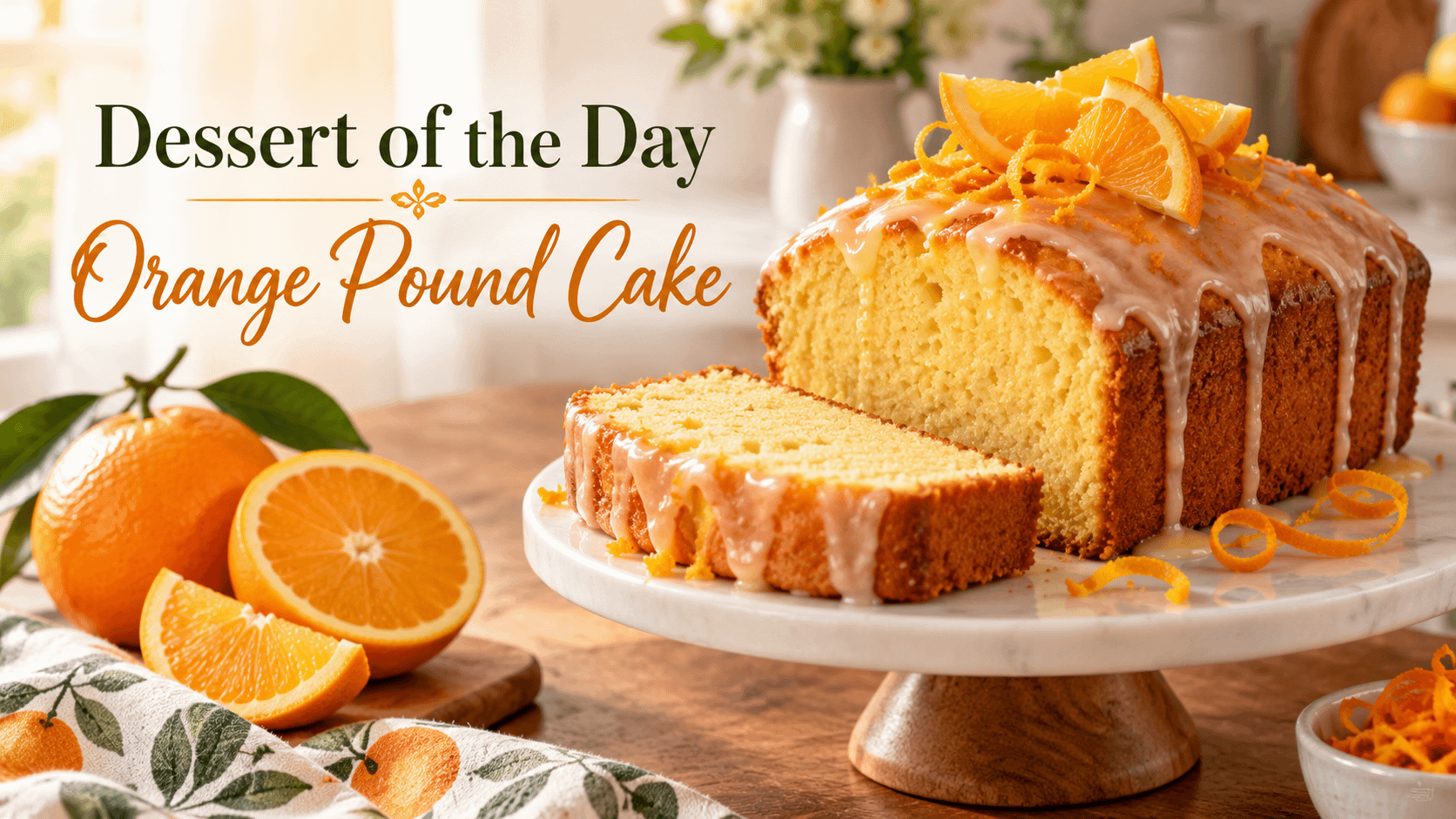
    Dessert of the Day: Orange Pound Cake

    There is something special about a homemade pound cake. It is simple, comforting, rich, and satisfying without needing layers of frosting or complicated decorations. Add the fresh, bright flavor of orange, and that traditional dessert becomes something even more memorable.

    Today’s Dessert of the Day is Orange Pound Cake, a buttery, moist cake filled with fresh citrus flavor and finished with a sweet orange glaze.

    Orange pound cake is the kind of dessert that works for almost any occasion. Serve it after dinner, bring it to a family gathering, enjoy a slice with your morning coffee, or make it as an afternoon treat when you want something sweet without going overboard.

    The combination of butter, sugar, vanilla, and orange creates a dessert that tastes both rich and refreshing. Every bite delivers the familiar comfort of pound cake along with a burst of citrus that keeps the cake from feeling too heavy.

    Why Orange Pound Cake Is So Good

    Traditional pound cake is known for its dense, buttery texture. Unlike light sponge cakes, pound cake has a substantial crumb that makes every slice feel satisfying.

    Orange brings another dimension to that richness.

    Fresh orange zest adds intense citrus aroma without adding too much liquid to the batter, while orange juice provides sweetness and acidity. When the two are combined, the cake develops a natural orange flavor that tastes much better than relying on artificial flavoring.

    Then comes the glaze.

    A simple orange glaze made with powdered sugar and fresh orange juice soaks slightly into the top of the cake while creating a sweet finish on the surface.

    The result is a dessert that is:

    • Buttery
    • Moist
    • Sweet
    • Citrusy
    • Fragrant
    • Rich without being overwhelming
    • Easy enough for home bakers to make

    It is one of those desserts where simple ingredients come together to create something impressive.

    Orange Pound Cake Recipe

    Ingredients

    For the cake:

    • 1 cup unsalted butter, softened
    • 2 cups granulated sugar
    • 4 large eggs
    • 3 cups all-purpose flour
    • 1 teaspoon baking powder
    • ½ teaspoon salt
    • 1 cup sour cream
    • ¼ cup fresh orange juice
    • 2 tablespoons orange zest
    • 1 teaspoon vanilla extract
    • ½ teaspoon orange extract, optional

    For the orange glaze:

    • 1½ cups powdered sugar
    • 2 to 3 tablespoons fresh orange juice
    • 1 teaspoon orange zest
    • ½ teaspoon vanilla extract

    Instructions

    Step 1: Prepare Your Pan

    Preheat your oven to 325°F.

    Grease and flour a 10-inch Bundt pan thoroughly. Pound cakes can stick easily because of their dense texture, so make sure you coat every section of the pan.

    You can also use baking spray containing flour.

    Step 2: Cream the Butter and Sugar

    Place the softened butter and granulated sugar in a large mixing bowl.

    Beat them together with an electric mixer for approximately four to five minutes.

    Do not rush this step.

    Creaming the butter and sugar introduces air into the mixture, helping the pound cake develop a softer texture.

    The mixture should become noticeably lighter and fluffier.

    Step 3: Add the Eggs

    Add the eggs one at a time.

    Beat well after each addition before adding the next egg.

    This helps create a smooth batter and prevents the ingredients from separating.

    Step 4: Mix the Dry Ingredients

    In another bowl, whisk together:

    • All-purpose flour
    • Baking powder
    • Salt

    Set the mixture aside.

    Step 5: Prepare the Orange Mixture

    In a small bowl or measuring cup, combine:

    • Sour cream
    • Fresh orange juice
    • Orange zest
    • Vanilla extract
    • Orange extract, if using

    The sour cream helps keep the cake exceptionally moist while giving the batter a subtle richness.

    Step 6: Combine Everything

    Gradually add the flour mixture to the butter mixture, alternating with the sour cream mixture.

    Begin and end with the flour.

    Mix only until everything is combined.

    Avoid overmixing once the flour has been added. Too much mixing can make pound cake tougher instead of tender.

    Step 7: Fill the Pan

    Spoon the batter evenly into your prepared Bundt pan.

    Smooth the top gently with a spatula.

    Tap the pan lightly against the countertop a few times to remove large air pockets.

    Step 8: Bake

    Bake for approximately 65 to 75 minutes.

    The cake is ready when a toothpick inserted near the center comes out clean or with only a few moist crumbs attached.

    Because ovens vary, begin checking around the 60-minute mark.

    If the top begins browning too quickly, loosely cover the cake with aluminum foil while it finishes baking.

    Step 9: Cool the Cake

    Remove the cake from the oven and allow it to cool in the pan for approximately 15 minutes.

    Carefully turn the cake onto a wire rack.

    Allow it to cool completely before adding the glaze.

    Making the Orange Glaze

    Place the powdered sugar in a medium bowl.

    Add two tablespoons of fresh orange juice, the orange zest, and vanilla.

    Whisk until smooth.

    If the glaze is too thick, add additional orange juice a teaspoon at a time.

    If it becomes too thin, add a little more powdered sugar.

    Drizzle the glaze over the cooled cake, allowing some of it to run naturally down the sides.

    Give the glaze a few minutes to set before slicing.

    The Secret Is Fresh Orange Zest

    If you want your Orange Pound Cake to have bold citrus flavor, orange zest is one ingredient you should not skip.

    Much of an orange’s aroma comes from the oils contained in its outer peel.

    When you zest an orange, those fragrant oils are released directly into the cake batter.

    That is why orange zest often creates a stronger orange aroma than orange juice alone.

    Only zest the brightly colored outer layer of the peel. Avoid the white portion underneath, known as the pith, because it can taste bitter.

    For the best flavor, zest your orange immediately before adding it to the batter.

    Choosing the Best Oranges

    Almost any sweet orange can work in this recipe.

    Navel oranges are especially convenient because they are widely available and usually seedless.

    Valencia oranges are another excellent choice and tend to be especially juicy.

    Cara Cara oranges can add a slightly different citrus flavor with subtle berry-like notes.

    Blood oranges can also create an interesting variation, although their color and flavor will differ from classic orange pound cake.

    Regardless of the variety you choose, look for oranges that feel heavy for their size. That usually indicates plenty of juice inside.

    Why Sour Cream Makes Pound Cake Better

    Sour cream is one of the ingredients that helps keep this cake moist.

    Pound cake contains a relatively high amount of flour, butter, sugar, and eggs, which can occasionally create a dry texture if the cake is overbaked.

    Sour cream adds both moisture and fat.

    It also gives the crumb a softer texture while contributing a subtle tang that balances the sweetness.

    You could substitute full-fat Greek yogurt if necessary, but sour cream usually provides the classic rich texture associated with pound cake.

    Orange Pound Cake Serving Ideas

    Orange Pound Cake is delicious on its own, but you can easily turn it into a more elaborate dessert.

    Try serving a slice with:

    • Fresh strawberries
    • Fresh raspberries
    • Blueberries
    • Whipped cream
    • Vanilla ice cream
    • Orange slices
    • Chocolate sauce
    • Lemon curd
    • Powdered sugar
    • Toasted almonds

    Fresh berries are especially good because their slight tartness balances the sweetness and richness of the cake.

    Vanilla ice cream is another excellent choice if you are serving the cake warm.

    Orange and Chocolate

    Orange and chocolate are a classic flavor combination.

    If you want to make this dessert even more indulgent, drizzle melted dark or semi-sweet chocolate over the finished cake after the orange glaze has set.

    You could also add miniature chocolate chips to the batter.

    Another option is serving slices with chocolate sauce on the side.

    The slight bitterness of dark chocolate works particularly well with sweet citrus.

    Orange Cranberry Pound Cake Variation

    For a holiday-inspired version, fold approximately one cup of fresh or dried cranberries into the batter.

    Orange and cranberry naturally complement each other.

    The tart cranberries provide little bursts of flavor throughout the buttery cake.

    If using dried cranberries, you can soak them briefly in orange juice before adding them to the batter.

    Orange Blueberry Pound Cake

    Blueberries also pair beautifully with orange.

    Fold one cup of blueberries into the batter just before transferring it to the Bundt pan.

    Lightly coating the blueberries with flour before folding them into the batter can help prevent them from sinking toward the bottom while baking.

    This version makes a wonderful spring or summer dessert.

    Orange Cream Pound Cake

    If you enjoy orange creamsicle flavors, add a little additional vanilla extract to the batter.

    The combination of strong vanilla and bright orange creates a flavor reminiscent of classic orange-and-cream frozen treats.

    You could even serve the cake with vanilla whipped cream for additional creamy sweetness.

    Can You Make Orange Pound Cake Ahead of Time?

    Absolutely.

    In fact, pound cake often tastes even better the following day.

    Allow the cake to cool completely before wrapping it.

    Store it tightly covered at room temperature for approximately three days.

    If you plan to keep it longer, refrigerate it.

    Allow refrigerated slices to return to room temperature before serving for the best flavor and texture.

    Can Orange Pound Cake Be Frozen?

    Yes.

    Pound cake freezes extremely well.

    For best results, freeze the cake before adding the glaze.

    Wrap the cooled cake tightly in plastic wrap followed by aluminum foil.

    Place it inside a freezer-safe container or freezer bag.

    It can generally be frozen for up to three months.

    Allow the cake to thaw overnight before glazing and serving.

    You can also freeze individual slices, which makes it easy to enjoy a single piece whenever you want dessert.

    Tips for Perfect Pound Cake

    A few small details can make a major difference when baking pound cake.

    First, use room-temperature ingredients whenever possible.

    Softened butter, room-temperature eggs, and room-temperature sour cream combine more evenly.

    Second, spend enough time creaming the butter and sugar.

    This step contributes significantly to the finished texture.

    Third, measure your flour carefully.

    Scooping flour directly with a measuring cup can pack too much flour into the cup. Instead, lightly spoon the flour into the measuring cup and level it with a knife.

    Finally, do not overbake.

    A few extra minutes can turn a moist pound cake into a dry one.

    Begin checking the cake before the maximum recommended baking time.

    A Dessert for Every Season

    Orange Pound Cake works surprisingly well throughout the year.

    During spring, serve it with berries and whipped cream.

    During summer, pair it with fresh fruit and iced tea.

    During fall, add warm spices such as cinnamon or nutmeg.

    During winter, serve it alongside coffee, hot chocolate, or tea.

    Its bright citrus flavor can even provide a refreshing contrast to heavier holiday desserts.

    Perfect With Coffee

    One of the best things about pound cake is that it does not have to wait until after dinner.

    A slice of Orange Pound Cake with coffee makes an excellent morning or afternoon treat.

    The sweetness of the cake balances the slight bitterness of coffee, while the orange aroma makes the combination feel especially refreshing.

    It also pairs wonderfully with black tea, Earl Grey, chai, or herbal citrus tea.

    Why Homemade Pound Cake Is Worth It

    You can certainly purchase pound cake from a grocery store, but homemade pound cake has something packaged versions rarely match.

    The kitchen fills with the smell of butter, sugar, vanilla, and fresh orange while the cake bakes.

    Then you get to drizzle the glaze across the top and watch it slowly run down the sides.

    The process itself becomes part of the enjoyment.

    More importantly, you control the ingredients and flavor.

    Want stronger citrus? Add more zest.

    Want a thicker glaze? Add more powdered sugar.

    Want chocolate? Add chocolate chips.

    Want berries? Fold them into the batter.

    It is a forgiving dessert that leaves plenty of room for creativity.

    Final Thoughts

    Orange Pound Cake proves that a dessert does not have to be complicated to be memorable.

    The rich buttery texture of traditional pound cake combines beautifully with fresh orange juice and fragrant orange zest. Add a simple citrus glaze, and you have a dessert that looks elegant enough for a celebration while remaining easy enough for an ordinary day.

    Serve it after dinner, bring it to a gathering, enjoy it alongside coffee, or simply cut yourself a slice when you need something sweet.

    Sometimes the best desserts are the ones built around familiar ingredients and comforting flavors.

    And with its golden crumb, sweet orange glaze, and fresh citrus aroma, Orange Pound Cake deserves its place as today’s Dessert of the Day.

    Would you enjoy your Orange Pound Cake plain, covered in orange glaze, or served with a scoop of vanilla ice cream?

  • Healthy Recipe of the Day: Stuffed Pork Chops

    Healthy Recipe of the Day: Stuffed Pork Chops

    When you hear stuffed pork chops, you might picture a heavy meal loaded with bread stuffing, butter, cheese, and rich sauces. But stuffed pork chops can also be transformed into a wholesome, satisfying dinner packed with lean protein, vegetables, herbs, and plenty of flavor.

    Today’s Healthy Recipe of the Day: Stuffed Pork Chops replaces traditional bread-heavy stuffing with a colorful mixture of spinach, mushrooms, garlic, onion, and a small amount of cheese. The result is a juicy pork chop with a savory center that tastes indulgent without requiring a long list of heavy ingredients.

    Best of all, this recipe looks impressive enough for a special dinner while remaining simple enough for an ordinary weeknight.

    Why Stuffed Pork Chops Make a Great Dinner

    Pork chops sometimes get an unfair reputation for being dry or boring. Usually, the problem isn’t the pork itself—it’s how it’s prepared.

    A thick pork chop provides the perfect opportunity to create a pocket for flavorful ingredients. Instead of relying on sauces to make the finished meal interesting, you can build flavor directly into the pork.

    For this healthier version, the stuffing combines fresh vegetables with herbs and just enough cheese to provide creaminess.

    Every bite gives you a combination of juicy pork and savory vegetable filling.

    Another advantage is portion control. Because each pork chop is individually stuffed, you already have a satisfying main course portion ready to serve.

    Pair it with roasted vegetables, a salad, or another simple side and dinner is complete.

    Ingredients

    For the Pork Chops

    • 4 thick-cut boneless pork chops
    • 1 tablespoon olive oil
    • 1 teaspoon garlic powder
    • 1 teaspoon smoked paprika
    • 1/2 teaspoon onion powder
    • 1/2 teaspoon dried Italian seasoning
    • 1/2 teaspoon black pepper
    • 1/4 teaspoon salt

    For the Healthy Stuffing

    • 2 cups fresh baby spinach, roughly chopped
    • 1 cup mushrooms, finely chopped
    • 1/2 small onion, finely diced
    • 2 cloves garlic, minced
    • 1 teaspoon olive oil
    • 1/3 cup part-skim mozzarella cheese
    • 2 tablespoons grated Parmesan cheese
    • 1/2 teaspoon Italian seasoning
    • Black pepper to taste

    Optional Additions

    One of the best things about stuffed pork chops is how easily you can customize the filling.

    Try adding:

    • Chopped roasted red peppers
    • Sun-dried tomatoes
    • Fresh basil
    • Chopped broccoli
    • Kale
    • Fresh parsley
    • A little feta cheese
    • Finely chopped zucchini
    • Caramelized onions

    Keep the vegetable pieces relatively small so they fit comfortably inside the pork chops.

    Step 1: Prepare the Vegetable Filling

    Heat 1 teaspoon of olive oil in a skillet over medium heat.

    Add the chopped onion and mushrooms. Cook for approximately 4–5 minutes, stirring occasionally, until the mushrooms release their moisture and the onion begins to soften.

    Add the minced garlic and cook for another 30 seconds.

    Next, add the chopped spinach.

    The spinach will look like quite a lot when it first enters the pan, but it will quickly wilt down.

    Cook for another 1–2 minutes.

    Remove the skillet from the heat and allow the vegetable mixture to cool slightly.

    Once it has cooled, stir in the mozzarella, Parmesan, Italian seasoning, and black pepper.

    Your stuffing is now ready.

    Step 2: Prepare the Pork Chops

    Preheat your oven to 375°F.

    Pat the pork chops dry with paper towels.

    Using a sharp knife, carefully cut a pocket into the side of each pork chop. Don’t cut completely through the meat. You want to create a pocket large enough to hold the filling while leaving the other sides intact.

    In a small bowl, combine:

    • Garlic powder
    • Smoked paprika
    • Onion powder
    • Italian seasoning
    • Black pepper
    • Salt

    Lightly season both sides of each pork chop.

    Step 3: Stuff the Pork Chops

    Divide the spinach and mushroom mixture among the four pork chops.

    Carefully spoon the filling into each pocket.

    Don’t overstuff them. If you have a little filling left over, you can cook it alongside the pork chops or serve it as an additional topping.

    If necessary, secure the opening of each pork chop with toothpicks.

    Just remember to remove the toothpicks before serving.

    Step 4: Sear the Pork

    Heat 1 tablespoon of olive oil in a large oven-safe skillet over medium-high heat.

    Once the skillet is hot, add the stuffed pork chops.

    Sear them for approximately 2–3 minutes per side.

    You’re not trying to completely cook the pork during this step. The goal is simply to develop a flavorful golden-brown exterior.

    That quick sear makes a tremendous difference in the finished dish.

    Step 5: Finish in the Oven

    Transfer the oven-safe skillet directly into the preheated oven.

    Bake for approximately 12–18 minutes, depending on the thickness of your pork chops.

    For food safety and the best texture, use an instant-read thermometer rather than relying solely on cooking time. Pork chops should reach an internal temperature of 145°F, measured in the meat rather than the stuffing.

    Once they reach temperature, remove them from the oven.

    Allow the pork chops to rest for at least 3 minutes before serving.

    Resting allows the juices inside the pork to redistribute rather than immediately running onto your plate when you cut into it.

    Why This Version Is Healthier

    Traditional stuffed pork chop recipes often use bread stuffing, large quantities of butter, cream sauces, or generous portions of cheese.

    There’s nothing inherently wrong with enjoying those ingredients occasionally, but you don’t need them to create a satisfying stuffed pork chop.

    This recipe puts vegetables at the center of the filling.

    Lean Protein

    Pork is an excellent source of protein, which can help make a meal more satisfying.

    Choosing relatively lean pork chops and trimming excess visible fat can further reduce the amount of fat in the finished meal.

    More Vegetables

    Spinach and mushrooms add volume and nutrients without making the meal unnecessarily heavy.

    You’re essentially putting some of your side dish directly inside your entrée.

    Less Cheese

    Cheese provides plenty of flavor, so you don’t need a huge amount.

    Using a modest amount of part-skim mozzarella and Parmesan gives the stuffing creaminess and richness while allowing the vegetables to remain the star.

    Controlled Added Fat

    This recipe uses only a small amount of olive oil for cooking.

    Instead of covering the pork chops in butter or frying them, you’re quickly searing them before finishing them in the oven.

    What to Serve With Healthy Stuffed Pork Chops

    Because these pork chops already contain vegetables, you can keep the rest of the meal relatively simple.

    Try serving them with roasted broccoli, asparagus, Brussels sprouts, green beans, cauliflower, or carrots.

    For something lighter, make a large mixed-green salad with tomatoes, cucumber, red onion, and a simple vinaigrette.

    If you want a healthy carbohydrate alongside your pork, consider:

    • Brown rice
    • Quinoa
    • Wild rice
    • Roasted sweet potatoes
    • Baked potato
    • Mashed cauliflower
    • Whole-grain couscous

    One of my favorite combinations would be a stuffed pork chop with roasted green beans and a small baked sweet potato.

    It’s simple, colorful, and filling.

    Make It Mediterranean Style

    This recipe is also easy to turn into a Mediterranean-inspired dinner.

    Replace the mozzarella with a small amount of feta cheese and add chopped roasted red peppers or sun-dried tomatoes to the spinach filling.

    Season the pork with oregano, garlic, black pepper, and a squeeze of fresh lemon.

    Serve it with cucumber and tomato salad for a fresh, flavorful dinner.

    Make It Even More Vegetable-Packed

    If you’re trying to increase the vegetables in your meals, don’t stop with spinach and mushrooms.

    Finely chopped zucchini, bell peppers, broccoli, kale, or asparagus can all work.

    The trick is cooking the vegetables before stuffing the pork.

    Vegetables contain water. If you stuff the pork with large amounts of raw vegetables, that moisture can release during cooking and make the filling watery.

    Cooking them first concentrates their flavor and removes some excess moisture.

    How to Keep Pork Chops Juicy

    The biggest complaint about pork chops is usually that they’re dry.

    Fortunately, that’s avoidable.

    First, start with thick-cut pork chops. Thin pork chops aren’t ideal for stuffing and can overcook quickly.

    Second, sear the outside but don’t leave the pork sitting in the skillet for too long.

    Third—and most importantly—use a meat thermometer.

    Trying to determine doneness based solely on appearance can lead to overcooking.

    Once the pork reaches the proper temperature, take it out.

    Finally, give it a few minutes to rest before cutting.

    Those simple steps can make the difference between a tough pork chop and one that’s tender and juicy.

    Meal Prep Tip

    You can prepare the filling ahead of time.

    Cook the spinach, mushrooms, onions, and garlic and store the mixture in an airtight container in the refrigerator.

    When you’re ready to cook dinner, mix in the cheese, prepare the pork chops, stuff them, and cook.

    You can also prepare extra vegetables while making the filling. Having cooked vegetables ready in the refrigerator makes it much easier to build healthier meals throughout the week.

    Leftover Stuffed Pork Chops

    Store leftover cooked pork chops in an airtight container in the refrigerator and use them within 3–4 days.

    When reheating, avoid extremely high heat because it can dry out the pork.

    A covered skillet over lower heat works well. You can add a tablespoon or two of water or low-sodium broth to create a little steam while reheating.

    You can also slice leftover stuffed pork chops and serve them over a salad for lunch the next day.

    A Healthy Dinner Doesn’t Have to Be Boring

    One of the biggest misconceptions about healthier eating is that every meal has to consist of plain chicken, steamed vegetables, and salad.

    Healthy cooking can still involve seasoning, texture, cheese, searing, roasting, and creative combinations.

    The goal isn’t necessarily to eliminate everything you enjoy.

    It’s often about changing the proportions.

    Instead of making bread and cheese the majority of the stuffing, we’re making vegetables the foundation and using cheese as an accent.

    Instead of frying the pork in a large amount of oil, we’re giving it a quick sear and allowing the oven to finish the job.

    Small adjustments like these can transform familiar comfort foods into meals that better fit your everyday eating goals.

    Healthy Recipe of the Day

    These Spinach and Mushroom Stuffed Pork Chops prove that a healthier dinner can still feel like comfort food.

    You get juicy, seasoned pork on the outside and a warm combination of spinach, mushrooms, garlic, onion, and melted cheese on the inside.

    It’s hearty enough to satisfy a big appetite but easy to pair with vegetables and whole grains for a balanced dinner.

    Even better, the recipe is versatile.

    Change the vegetables. Experiment with different herbs. Add feta instead of mozzarella. Give it a Mediterranean twist. Serve it with whatever fresh vegetables happen to be in your refrigerator.

    Healthy eating becomes much easier when the food is something you genuinely look forward to eating.

    And this is one dinner that deserves a place in the regular rotation.

    What would you stuff inside your perfect pork chop—spinach and mushrooms, peppers and feta, or something completely different?

  • Recipe of the Day: Weeknight Skillet Fajitas

    Recipe of the Day: Weeknight Skillet Fajitas

    Some nights, you want a homemade dinner that tastes like you spent hours in the kitchen—but you definitely don’t want to spend hours making it. That is exactly where Weeknight Skillet Fajitas come in.

    Tender strips of seasoned chicken, colorful bell peppers, and onions are cooked together in a hot skillet until everything is juicy, slightly charred, and packed with smoky Tex-Mex flavor. Wrap it all inside a warm flour or corn tortilla, pile on your favorite toppings, and dinner is ready.

    The best part? You can make these fajitas in about 30 minutes, making them an excellent choice for busy weeknights.

    Whether you’re feeding the family, cooking for friends, or simply trying to make something satisfying without creating a sink full of dishes, this easy skillet meal deserves a place in your regular dinner rotation.

    Why You’ll Love These Weeknight Skillet Fajitas

    Fajitas have everything you could want from an easy dinner: protein, vegetables, bold seasonings, and endless possibilities for toppings.

    Cooking everything in one skillet also means cleanup stays relatively simple.

    These fajitas are:

    • Quick enough for a busy weeknight
    • Made with simple ingredients
    • Easy to customize
    • Loaded with peppers and onions
    • Great for feeding a family
    • Perfect for leftovers
    • Delicious with chicken, steak, shrimp, or vegetables
    • Ready in around 30 minutes

    Better yet, fajitas make dinner interactive. Put the skillet in the middle of the table alongside tortillas and bowls of toppings and let everyone build their own.

    Weeknight Skillet Fajitas Recipe

    Prep Time: 15 minutes
    Cook Time: 15 minutes
    Total Time: About 30 minutes
    Servings: 4–6

    Ingredients

    For the Fajitas

    • 1 ½ pounds boneless, skinless chicken breasts or chicken thighs
    • 1 red bell pepper
    • 1 green bell pepper
    • 1 yellow or orange bell pepper
    • 1 large yellow onion
    • 2 tablespoons olive oil, divided
    • 2 cloves garlic, minced
    • Juice of 1 lime
    • 8–12 small flour or corn tortillas

    Homemade Fajita Seasoning

    • 2 teaspoons chili powder
    • 1 teaspoon ground cumin
    • 1 teaspoon smoked paprika
    • 1 teaspoon garlic powder
    • ½ teaspoon onion powder
    • ½ teaspoon dried oregano
    • ½ teaspoon salt
    • ¼ teaspoon black pepper
    • ¼ teaspoon cayenne pepper, optional

    Optional Toppings

    • Shredded cheddar or Mexican-blend cheese
    • Sour cream
    • Guacamole
    • Sliced avocado
    • Pico de gallo
    • Salsa
    • Chopped cilantro
    • Sliced jalapeños
    • Lime wedges
    • Hot sauce
    • Shredded lettuce

    Step 1: Prepare the Ingredients

    Slice the chicken into thin strips. Try to keep the pieces roughly the same thickness so they cook evenly.

    Remove the stems and seeds from the bell peppers and slice them into strips.

    Slice the onion into thin wedges.

    Having everything prepared before you start cooking is particularly helpful with fajitas because the cooking process moves quickly once the skillet gets hot.

    Step 2: Make the Fajita Seasoning

    In a small bowl, combine the chili powder, cumin, smoked paprika, garlic powder, onion powder, oregano, salt, black pepper, and optional cayenne pepper.

    Mix thoroughly.

    Homemade fajita seasoning takes only a minute to prepare and allows you to adjust the flavor exactly how you like it.

    If you prefer milder fajitas, leave out the cayenne.

    Want more heat? Add additional cayenne or crushed red pepper flakes.

    Step 3: Season the Chicken

    Place the sliced chicken in a bowl.

    Drizzle with about 1 tablespoon of olive oil and sprinkle approximately two-thirds of the fajita seasoning over the chicken.

    Toss until every piece is evenly coated.

    For even more flavor, you can season the chicken earlier in the day and refrigerate it until dinner.

    Step 4: Cook the Chicken

    Heat a large cast-iron or heavy-bottomed skillet over medium-high heat.

    Once the skillet is hot, add the seasoned chicken.

    Spread the pieces into a relatively even layer and allow them to cook without constantly stirring them. Giving the chicken time against the hot surface helps create those delicious browned edges associated with restaurant-style fajitas.

    Cook for approximately 5–7 minutes, stirring occasionally, until the chicken is cooked through.

    The USDA recommends cooking poultry to an internal temperature of 165°F.

    Transfer the cooked chicken to a clean plate and set aside.

    Step 5: Cook the Peppers and Onions

    Add the remaining tablespoon of olive oil to the same skillet.

    Add the sliced bell peppers and onions.

    Sprinkle the remaining fajita seasoning over the vegetables.

    Cook for approximately 5–7 minutes, stirring occasionally.

    You want the vegetables tender but still slightly crisp. A little browning around the edges adds even more flavor.

    During the final minute, add the minced garlic.

    Avoid adding the garlic too early because it can burn in the hot skillet.

    Step 6: Bring Everything Together

    Return the cooked chicken to the skillet with the peppers and onions.

    Pour the fresh lime juice over everything.

    Toss until the chicken and vegetables are thoroughly combined.

    Cook for another minute or two until everything is hot.

    Taste and adjust the seasoning if necessary.

    Then bring that sizzling skillet straight to the table.

    Don’t Forget to Warm the Tortillas

    Warm tortillas make a surprisingly big difference.

    You can heat tortillas individually in a dry skillet for about 20–30 seconds per side.

    For an easier method, stack several tortillas together, wrap them in a slightly damp paper towel, and microwave them briefly until warm and flexible.

    Keep them covered until you’re ready to eat so they don’t dry out.

    Build Your Perfect Fajita

    Now comes the fun part.

    Place some chicken, peppers, and onions down the center of a warm tortilla.

    Then start adding toppings.

    One delicious combination is:

    Chicken fajita mixture, shredded cheese, pico de gallo, guacamole, sour cream, cilantro, and a squeeze of fresh lime.

    If you love spicy food, finish everything with sliced jalapeños or your favorite hot sauce.

    Fold the tortilla and enjoy.

    The Secret to Better Skillet Fajitas

    The biggest mistake when making skillet fajitas is overcrowding the pan.

    When too much food is packed into the skillet at once, moisture gets trapped. Instead of developing browned edges, the ingredients begin steaming.

    If your skillet isn’t large enough, cook the chicken in two batches.

    A cast-iron skillet works particularly well because it retains heat and helps produce a flavorful sear.

    Another important trick is getting the skillet properly hot before adding the meat.

    That initial blast of heat helps create the sizzling, slightly charred exterior that makes fajitas so good.

    Make Steak Fajitas

    Prefer beef?

    This recipe works wonderfully with steak.

    Try using:

    • Flank steak
    • Skirt steak
    • Sirloin
    • Flat iron steak

    Slice the steak thinly against the grain and season it using the same fajita mixture.

    Cook quickly over high heat and avoid overcooking it.

    Once cooked, remove the steak while preparing the vegetables and return it to the skillet at the end.

    Make Shrimp Fajitas

    Shrimp turns this already-fast recipe into an even quicker dinner.

    Use peeled and deveined shrimp and coat them with the fajita seasoning.

    Shrimp generally needs only a few minutes in a hot skillet. Cook until pink, opaque, and cooked through, remove from the skillet, and prepare the vegetables.

    Return the shrimp at the very end so it doesn’t become overcooked and rubbery.

    Make Vegetarian Skillet Fajitas

    You don’t need meat to make delicious fajitas.

    Increase the amount of peppers and onions and add vegetables such as:

    • Mushrooms
    • Zucchini
    • Corn
    • Yellow squash
    • Poblano peppers

    You could also add black beans for extra protein and texture.

    Portobello mushrooms are particularly good because their hearty texture stands up well to high-heat skillet cooking.

    Turn Them Into Fajita Bowls

    Skip the tortillas entirely and transform this recipe into fajita bowls.

    Start with rice or another grain and pile the chicken and vegetables over the top.

    Add black beans, corn, salsa, avocado, cilantro, cheese, and lime.

    You can also serve the fajita mixture over chopped lettuce for a lighter fajita salad.

    What to Serve With Skillet Fajitas

    Fajitas can easily be a complete meal by themselves, but side dishes can turn them into an even bigger dinner.

    Try serving them with:

    Mexican-style rice: A classic side that pairs perfectly with the smoky seasonings.

    Black beans: Simple, filling, and delicious alongside fajitas.

    Refried beans: Another traditional choice that’s especially good topped with cheese.

    Corn: Grilled or skillet-cooked corn complements the peppers beautifully.

    Chips and salsa: Keep things easy with a bowl of tortilla chips and your favorite salsa.

    Guacamole: Fresh avocado, lime, cilantro, onion, and seasonings create the perfect fajita companion.

    Meal Prep Idea

    Weeknight Skillet Fajitas are also excellent for meal prep.

    Cook the chicken, peppers, and onions as directed and divide the mixture into meal-prep containers.

    Add rice and beans if desired.

    Store the tortillas separately so they don’t become soggy.

    You’ll have an easy lunch or dinner ready to reheat during the week.

    Storing Leftovers

    Allow leftover fajita filling to cool before transferring it to an airtight container.

    Refrigerate promptly and use within 3–4 days.

    Keep tortillas and toppings such as sour cream, guacamole, lettuce, and salsa separate from the hot filling.

    This prevents everything from becoming soggy.

    Reheating Fajitas

    The skillet is one of the best ways to reheat leftover fajitas.

    Heat a skillet over medium heat, add the chicken and vegetables, and cook until heated thoroughly.

    You can also microwave individual portions when you’re short on time.

    Add a fresh squeeze of lime after reheating to brighten everything back up.

    Easy Ways to Change the Flavor

    One reason fajitas make such a great weeknight dinner is how easy they are to customize.

    Try adding sliced poblano peppers for a slightly smoky flavor.

    Add chipotle powder for extra heat.

    Use freshly squeezed orange and lime juice for a citrus marinade.

    Add fresh jalapeños while cooking the vegetables.

    Experiment with different proteins.

    You can even combine chicken and steak for a restaurant-style mixed fajita platter.

    A Great Dinner for Feeding a Crowd

    Fajitas are also an easy meal when friends or family come over.

    Instead of trying to figure out everyone’s favorite toppings, create a fajita bar.

    Set out warm tortillas, the sizzling fajita mixture, cheese, salsa, guacamole, sour cream, jalapeños, cilantro, lettuce, and lime wedges.

    Everyone gets to create exactly what they want.

    Double or triple the recipe depending on how many people you’re serving and cook the meat in batches so the skillet stays hot.

    Why This Recipe Works for Busy Nights

    Weeknight meals don’t have to mean frozen dinners, drive-thru food, or complicated recipes requiring an hour of preparation.

    Sometimes the simplest meals are the ones you look forward to the most.

    These Weeknight Skillet Fajitas use everyday ingredients, require minimal cleanup, and deliver plenty of flavor without requiring an elaborate cooking process.

    You’ve got juicy seasoned chicken.

    Sweet peppers.

    Tender onions.

    Smoky spices.

    Fresh lime.

    Warm tortillas.

    And whatever toppings happen to be calling your name.

    It’s colorful, satisfying, customizable, and easy enough to make even after a long day.

    Recipe of the Day Final Thought

    There is something special about bringing a hot skillet of fajitas to the table and letting everyone create their own dinner.

    The sizzling chicken and vegetables fill the kitchen with an incredible aroma, while bowls of colorful toppings turn an ordinary weeknight meal into something that feels a little more exciting.

    Best of all, you don’t have to spend your entire evening cooking.

    In about 30 minutes, Weeknight Skillet Fajitas can go from cutting board to dinner table.

    Make them with chicken tonight, steak next time, shrimp after that, or load the skillet with vegetables. Once you have the basic method down, there are countless ways to make this recipe your own.

    What are you putting on your fajitas—guacamole, sour cream, salsa, cheese, jalapeños, or all of the above?

  • Breakfast of the Day: Fried BBQ Egg Sandwich

    Breakfast of the Day: Fried BBQ Egg Sandwich

    Some mornings call for something simple. Other mornings call for something messy, smoky, cheesy, and absolutely packed with flavor. That is where today’s Fried BBQ Egg Sandwich comes in.

    This breakfast takes the familiar fried egg sandwich and gives it a barbecue-inspired upgrade. A perfectly fried egg is layered with melted cheese and tangy barbecue sauce between toasted bread or a warm bun. Add crispy bacon, caramelized onions, avocado, or even a little hot sauce, and you have a breakfast sandwich that can compete with just about anything you would order at a restaurant.

    Best of all, you do not need to spend an hour in the kitchen. The basic sandwich can be ready in about 15 minutes, making it an excellent choice for a weekend breakfast, quick weekday meal, brunch, or even breakfast-for-dinner.

    If you love savory breakfasts with big flavors, the Fried BBQ Egg Sandwich deserves a spot on your menu.

    Why BBQ Sauce Works for Breakfast

    Barbecue sauce might not be the first condiment you reach for in the morning, but it works surprisingly well with eggs.

    A good barbecue sauce brings together sweetness, acidity, smokiness, and a little spice. Eggs, meanwhile, have a rich but relatively mild flavor. Put the two together, and the barbecue sauce adds exactly the punch the egg needs.

    Then comes the cheese.

    As the warm egg melts the cheese, it creates a creamy layer that balances the stronger barbecue flavor. Toasted bread adds crunch, while optional toppings such as bacon or onions bring even more texture.

    It is familiar enough to feel like comfort food but different enough to keep breakfast interesting.

    Fried BBQ Egg Sandwich Recipe

    Prep Time: 5 minutes
    Cook Time: 10 minutes
    Total Time: 15 minutes
    Servings: 1

    Ingredients

    • 2 slices of bread, Texas toast, sourdough, or 1 hamburger-style bun
    • 2 large eggs
    • 1 tablespoon butter, divided
    • 1 to 2 tablespoons barbecue sauce
    • 1 slice cheddar, pepper jack, Monterey Jack, or American cheese
    • Salt, to taste
    • Black pepper, to taste

    Optional Toppings

    • 2 strips crispy bacon
    • Sliced avocado
    • Caramelized onions
    • Sautéed onions
    • Jalapeño slices
    • Hot sauce
    • Sliced tomato
    • Hash brown patty
    • Sausage patty
    • Crispy fried onions
    • Fresh chives
    • Extra cheese

    Directions

    1. Toast the Bread

    Heat a skillet over medium heat.

    Lightly butter the bread or bun and place it butter-side down in the skillet. Toast until the surface becomes golden brown and slightly crispy.

    Remove the bread from the skillet and set it aside.

    Toasting the bread is worth the extra couple of minutes because it prevents the barbecue sauce and egg yolk from immediately soaking into the bread.

    2. Fry the Eggs

    Add a little more butter to the skillet.

    Crack the eggs into the pan and season them lightly with salt and black pepper.

    Cook them according to your preference.

    For a runny-yolk sandwich, cook the eggs sunny-side up or over easy. For something less messy, cook them over medium. If you prefer completely cooked yolks, fry them over hard.

    You can also break the yolks while cooking if you want the eggs to fit more evenly across the sandwich.

    3. Add the Cheese

    When the eggs are nearly finished, place the cheese directly over them.

    Reduce the heat and allow the cheese to melt. Covering the skillet for 20 to 30 seconds can help speed up the melting process.

    4. Add the BBQ Sauce

    Spread barbecue sauce across the toasted side of one or both pieces of bread.

    Start with about one tablespoon. You can always add more.

    If you are using bacon, onions, avocado, jalapeños, or another topping, add them now.

    5. Build the Sandwich

    Place the cheesy fried eggs onto the bottom piece of bread.

    Add any remaining toppings.

    Drizzle a small amount of extra barbecue sauce over the eggs if desired, then place the second piece of bread on top.

    Gently press the sandwich together.

    Serve immediately while the eggs are hot, the cheese is melted, and the bread is still crispy.

    The Bacon BBQ Version

    If you want to take this breakfast to another level, add bacon.

    Cook two or three strips until crispy and place them directly over the cheesy eggs.

    The combination of smoky bacon, sweet barbecue sauce, fried egg, and melted cheddar creates a sandwich with serious barbecue flavor.

    You can even cook the egg in a small amount of the rendered bacon fat instead of butter for an extra savory bite.

    Try It With a Hash Brown

    One of the best additions to this sandwich is a crispy hash brown patty.

    Prepare a frozen hash brown patty according to the package directions until it is golden and crispy. Then layer it between the egg and bread.

    Your sandwich becomes:

    Toast + BBQ sauce + crispy hash brown + fried egg + melted cheese + BBQ sauce + toast.

    Add bacon, and you have an incredibly filling breakfast.

    The hash brown provides the crunch that a soft egg sandwich sometimes needs.

    Choosing the Right BBQ Sauce

    The barbecue sauce can completely change the personality of this sandwich.

    Sweet BBQ Sauce: A sweeter sauce pairs particularly well with salty bacon and sharp cheddar.

    Smoky BBQ Sauce: Choose a smoky sauce if you want the sandwich to taste more like something straight from a backyard barbecue.

    Spicy BBQ Sauce: A spicy sauce works beautifully with pepper jack cheese and jalapeños.

    Honey BBQ Sauce: Honey barbecue creates a sweeter breakfast sandwich that works especially well with sausage.

    Tangy BBQ Sauce: A vinegar-forward barbecue sauce cuts through the richness of the egg and cheese.

    There is no single correct choice. Use your favorite and experiment from there.

    Don’t Forget the Cheese

    Cheese might technically be optional, but it brings everything together.

    Cheddar is probably the easiest choice. Its slightly sharp flavor stands up nicely against barbecue sauce.

    Pepper jack is excellent when you want some heat.

    American cheese provides the classic creamy, ultra-melty breakfast sandwich experience.

    Monterey Jack is mild and melts beautifully.

    You could even use smoked Gouda to emphasize the barbecue theme.

    For an extra-cheesy sandwich, use two different cheeses.

    The Runny Yolk Question

    A runny fried egg makes this sandwich especially delicious—and especially messy.

    Cutting into the sandwich releases the warm yolk, which mixes with the barbecue sauce and melted cheese to create an almost sauce-like coating.

    If that sounds amazing, go with an over-easy egg.

    If you are eating the sandwich on the way to work, however, an over-medium or over-hard egg might be the smarter move.

    Either way, it will still taste great.

    Fried BBQ Egg Sandwich Variations

    Once you have mastered the basic version, there are dozens of ways to customize it.

    BBQ Bacon Egg Sandwich

    Add two or three crispy bacon strips.

    Spicy BBQ Breakfast Sandwich

    Use spicy barbecue sauce, pepper jack cheese, and sliced jalapeños.

    BBQ Sausage Egg Sandwich

    Add a cooked breakfast sausage patty beneath the fried egg.

    BBQ Avocado Egg Sandwich

    Add sliced avocado for a creamy contrast to the smoky barbecue sauce.

    Double Egg BBQ Sandwich

    Use two fried eggs and two slices of cheese for a bigger breakfast.

    BBQ Breakfast Burger

    Place a beef burger patty underneath the fried egg and serve everything on a toasted brioche bun. It is heavy for breakfast, but perfect for brunch or breakfast-for-dinner.

    BBQ Chicken & Egg Sandwich

    Have leftover grilled or shredded chicken? Toss a small portion with barbecue sauce and add it beneath the egg.

    Crispy Onion BBQ Egg Sandwich

    Top the egg with crispy fried onions for extra crunch.

    What to Serve With It

    The Fried BBQ Egg Sandwich is filling enough to stand alone, but a few sides can turn it into a complete breakfast or brunch.

    Try serving it with crispy breakfast potatoes, hash browns, fresh fruit, sliced melon, berries, home fries, or a simple fruit salad.

    For a larger weekend breakfast, add bacon or sausage on the side.

    Coffee is an obvious beverage choice, but orange juice, iced coffee, cold brew, or a fruit smoothie all work well.

    Tips for Making the Best Sandwich

    The recipe is easy, but a few small details can make a noticeable difference.

    Toast the bread. Soft bread can become soggy quickly once it meets barbecue sauce and a runny egg.

    Don’t use too much sauce. BBQ sauce has a strong flavor. You want to taste the egg, cheese, and other ingredients too.

    Melt the cheese on the egg. Putting the cheese onto the hot egg while it is still in the skillet gives you a much better melt.

    Eat it immediately. This is not a sandwich that improves by sitting around.

    Use a sturdy bread. Sourdough, Texas toast, brioche buns, English muffins, and hearty sandwich rolls are all great choices.

    Keep napkins nearby. If you choose a runny yolk and extra barbecue sauce, things might get messy—and that is part of the fun.

    Make It Your Own

    Perhaps the best thing about a breakfast sandwich is that recipes are really starting points.

    Open your refrigerator and see what you have.

    A little leftover bacon? Add it.

    Half an avocado? Slice it.

    One hash brown patty left in the freezer? Fry it.

    Some grilled onions from last night’s dinner? Throw them on.

    The basic combination of egg, barbecue sauce, cheese, and toasted bread can handle all kinds of additions.

    You could make this sandwich five different mornings and never prepare it exactly the same way twice.

    Breakfast Doesn’t Have to Be Boring

    It is easy to fall into a breakfast routine.

    Eggs.

    Toast.

    Cereal.

    Coffee.

    Repeat.

    There is nothing wrong with simple breakfasts, but occasionally it is fun to turn familiar ingredients into something completely different.

    The Fried BBQ Egg Sandwich does exactly that.

    You are still working with everyday breakfast staples—eggs, cheese, butter, and bread—but a little barbecue sauce completely changes the experience.

    Add bacon, hash browns, onions, or jalapeños, and suddenly you have a breakfast worthy of a lazy Sunday morning.

    Breakfast of the Day: Fried BBQ Egg Sandwich

    Smoky, cheesy, savory, slightly sweet, and wonderfully messy, the Fried BBQ Egg Sandwich is proof that barbecue sauce does not have to wait until lunch or dinner.

    It takes only about 15 minutes to prepare, requires simple ingredients, and can easily be customized to fit whatever you happen to have in the kitchen.

    Keep it simple with fried eggs, cheddar, and barbecue sauce, or build the ultimate version with bacon, crispy hash browns, caramelized onions, and a little extra sauce.

    Either way, serve it hot and enjoy every bite.

    Would you keep your Fried BBQ Egg Sandwich simple with egg, cheese, and BBQ sauce, or load it up with bacon, hash browns, onions, and jalapeños?

  • National Apple Dumpling Day – September 17

    National Apple Dumpling Day – September 17

    September 17 is National Apple Dumpling Day, a celebration of one of America’s most comforting old-fashioned desserts. With tender apples wrapped in flaky pastry, baked until golden, and surrounded by a warm cinnamon-sugar sauce, apple dumplings bring together everything we love about fall baking.

    As September moves toward autumn, apples begin appearing everywhere—from farmers markets and roadside stands to pies, crisps, cider, and homemade desserts. National Apple Dumpling Day arrives at the perfect time to enjoy a warm apple treat that has been served around American tables for generations.

    Whether you grew up eating homemade apple dumplings or have never tried one, September 17 is a wonderful excuse to turn on the oven and discover this classic dessert.

    What Is an Apple Dumpling?

    An apple dumpling is traditionally made by taking a whole apple, or sometimes a large apple portion, and wrapping it in pastry dough. The apple is usually peeled and cored first, with the center filled or seasoned with ingredients such as:

    • Brown sugar
    • Cinnamon
    • Butter
    • Nutmeg
    • Pecans or walnuts
    • Raisins
    • Caramel

    The pastry is folded around the apple to create a small bundle and then baked in a sweet sauce or syrup.

    During baking, something wonderful happens. The apple becomes tender, the sugar and spices create a rich filling, and the outside pastry turns beautifully golden. Meanwhile, the juices from the apples combine with the butter and sugar to create a warm sauce underneath.

    Serve it straight from the oven with vanilla ice cream, whipped cream, caramel sauce, or even a little heavy cream, and you have an unforgettable fall dessert.

    The History of Apple Dumplings

    Apple dumplings have deep roots in European and American cooking traditions.

    Dumplings themselves have existed in countless forms for centuries. European cooks frequently wrapped fruits, meats, and other ingredients inside dough before boiling, steaming, or baking them.

    When European settlers arrived in North America, they brought many of these cooking traditions with them.

    Apples became especially important in American food culture. Apple orchards spread throughout the colonies and eventually across much of the country. Apples could be eaten fresh, dried for winter, turned into cider, cooked into sauces, or baked into desserts.

    Apple dumplings became particularly associated with Pennsylvania Dutch cooking.

    The Pennsylvania Dutch developed a reputation for hearty, practical dishes that transformed simple ingredients into satisfying meals and desserts. Apples, flour, butter, sugar, and spices could be combined to create a dessert that was relatively simple but incredibly comforting.

    Over generations, apple dumplings became part of the larger American dessert tradition.

    Apple Dumplings Were Once Breakfast

    Today, most people would consider an apple dumpling a dessert.

    Historically, however, sweet fruit dishes weren’t always restricted to the end of dinner. In some American households, apple dumplings were enjoyed for breakfast or as a substantial part of a meal.

    It makes sense when you think about it.

    A large baked apple surrounded by pastry is filling. Add some cream or milk, and it becomes a hearty dish—especially for people beginning a long day of physical work.

    Imagine waking up on a chilly autumn morning to the smell of apples, cinnamon, butter, and pastry coming from the kitchen.

    That sounds like a pretty good way to start September 17.

    Why Apples and Cinnamon Work So Well Together

    Few flavor combinations represent fall better than apple and cinnamon.

    Apples provide sweetness, acidity, and freshness, while cinnamon adds warmth and spice.

    But cinnamon isn’t the only spice that works beautifully with apples.

    Apple dumplings can also include:

    Nutmeg for a warm, slightly nutty flavor.

    Cloves for a stronger aromatic spice.

    Allspice for additional depth.

    Ginger for a little brightness and warmth.

    Cardamom for a more fragrant twist.

    The secret is balance. You want the apple to remain the star while the spices make its natural flavor even better.

    Choosing the Best Apples for Apple Dumplings

    Not every apple behaves the same way when baked.

    Some apples soften quickly and can become almost applesauce-like. Others remain relatively firm even after spending time in the oven.

    For apple dumplings, you generally want an apple that can hold its shape while becoming tender.

    Good choices include:

    • Granny Smith
    • Honeycrisp
    • Braeburn
    • Pink Lady
    • Jonathan
    • Golden Delicious

    Granny Smith apples are especially popular because their tart flavor balances the sweetness of the sugar and sauce.

    Honeycrisp apples provide a sweeter option with plenty of apple flavor.

    You can even experiment with different varieties to discover your favorite.

    Classic Homemade Apple Dumplings

    National Apple Dumpling Day wouldn’t be complete without making a batch yourself.

    Ingredients

    For the dumplings:

    • 6 medium baking apples
    • Pastry dough for two 9-inch pie crusts
    • 6 tablespoons butter
    • 1/2 cup brown sugar
    • 1 teaspoon ground cinnamon
    • 1/4 teaspoon ground nutmeg

    For the sauce:

    • 1 cup granulated sugar
    • 1 1/2 cups water
    • 1/2 cup butter
    • 1 teaspoon vanilla extract
    • 1/2 teaspoon cinnamon

    Directions

    Preheat your oven to 375°F.

    Peel and core the apples, leaving each apple whole.

    Roll out the pastry dough and divide it into six pieces large enough to completely surround each apple.

    Place an apple in the center of each piece of dough.

    Combine the brown sugar, cinnamon, and nutmeg. Spoon some of the mixture into the center of each apple.

    Place about one tablespoon of butter inside each apple.

    Bring the corners of the pastry dough up around the apple. Pinch the edges together until the apple is completely enclosed.

    Place the dumplings in a greased baking dish.

    To prepare the sauce, combine the sugar, water, butter, vanilla, and cinnamon in a saucepan. Heat until the butter melts and the sugar begins dissolving.

    Pour the warm sauce around the dumplings.

    Bake for approximately 40 to 50 minutes, or until the pastry is golden brown and the apples are tender.

    Allow the dumplings to cool slightly before serving.

    Spoon some of the warm sauce from the baking dish over each dumpling.

    Don’t Forget the Vanilla Ice Cream

    Apple dumplings are delicious by themselves, but adding vanilla ice cream takes them to another level.

    The contrast is part of what makes the combination so good.

    You have a hot apple dumpling straight from the oven meeting a cold scoop of creamy vanilla ice cream.

    The ice cream slowly melts over the pastry and mixes with the cinnamon sauce underneath.

    If vanilla ice cream isn’t your thing, try serving apple dumplings with:

    • Fresh whipped cream
    • Caramel sauce
    • Maple syrup
    • Chopped toasted pecans
    • Powdered sugar
    • Heavy cream
    • Cinnamon ice cream

    You could even add a combination of toppings and turn your apple dumpling into a serious dessert.

    Easy Apple Dumpling Variations

    One of the best things about apple dumplings is how easily the basic recipe can be changed.

    Caramel Apple Dumplings

    Drizzle caramel sauce over the dumplings shortly before serving.

    Add vanilla ice cream and another small drizzle of caramel for an indulgent fall dessert.

    Maple Pecan Apple Dumplings

    Add chopped pecans inside the apples and replace some of the sugar in the sauce with pure maple syrup.

    The combination of apples, maple, cinnamon, and toasted pecans is perfect for autumn.

    Raisin Walnut Apple Dumplings

    Fill the center of each apple with brown sugar, cinnamon, raisins, chopped walnuts, and butter.

    This version adds extra texture and an old-fashioned flavor.

    Cranberry Apple Dumplings

    Add dried cranberries to the apple filling.

    The tart cranberry flavor pairs beautifully with sweet apples and cinnamon.

    Mini Apple Dumplings

    Instead of wrapping an entire apple, cut apples into smaller pieces and create miniature pastry bundles.

    These are great for parties because everyone can grab an individual serving.

    A Dessert That Feels Like Fall

    There’s something special about desserts that follow the seasons.

    Summer brings berries, peaches, ice cream, and refreshing fruit desserts.

    Then September arrives.

    The evenings begin getting cooler. Apple orchards start filling with visitors. Pumpkin spice appears everywhere. People begin thinking about sweaters, falling leaves, football games, Halloween, Thanksgiving, and the holidays ahead.

    And kitchens begin smelling like apples and cinnamon.

    Apple dumplings fit naturally into that transition.

    They’re warm.

    They’re comforting.

    They’re homemade.

    And they make the house smell incredible while they’re baking.

    Visit an Apple Orchard

    National Apple Dumpling Day can also be an excuse to visit a local apple orchard.

    September is prime apple season in many parts of the United States.

    Depending on where you live, orchards may offer:

    • Apple picking
    • Fresh apple cider
    • Apple cider donuts
    • Hayrides
    • Corn mazes
    • Farm stands
    • Pumpkin patches
    • Homemade pies
    • Local honey
    • Fall festivals

    Bring home a bag of freshly picked apples and use some of them to make apple dumplings that evening.

    It can turn a simple food holiday into an entire fall tradition.

    Apple Dumplings vs. Apple Pie

    Apple pie may be America’s most famous apple dessert, but apple dumplings deserve some attention of their own.

    Both combine pastry, apples, sugar, and spices.

    The biggest difference is presentation.

    Apple pie usually contains sliced apples baked together underneath a crust. Apple dumplings give each person an individual apple wrapped in its own pastry.

    Cut into a warm dumpling and you’ll find a tender apple surrounded by buttery pastry and cinnamon filling.

    It’s almost like receiving your own personal apple pie.

    Fun Ways to Celebrate National Apple Dumpling Day

    There are plenty of ways to celebrate September 17.

    Bake homemade apple dumplings with your family.

    Visit a bakery and see whether they offer traditional apple dumplings.

    Go apple picking and make dessert with freshly picked apples.

    Experiment with caramel, maple, pecans, cranberries, or different spices.

    Invite friends over for an autumn dessert night.

    Serve warm apple dumplings with coffee, hot chocolate, tea, or apple cider.

    You could even hold an apple dessert competition and compare apple dumplings with apple pie, apple crisp, apple cobbler, and baked apples.

    The important part is enjoying the day.

    The Comfort of an Old-Fashioned Dessert

    Food is about more than ingredients.

    Certain smells and flavors can instantly bring back memories.

    The smell of apples and cinnamon baking in the oven might remind someone of their grandmother’s kitchen, childhood holidays, Sunday dinners, autumn afternoons, or family gatherings.

    Recipes are often passed from one generation to another, sometimes written on faded recipe cards covered with handwritten notes and ingredient substitutions.

    Apple dumplings belong to that kind of cooking.

    They’re not complicated or flashy.

    They’re simply comforting.

    And sometimes the simplest foods become the ones we remember most.

    National Apple Dumpling Day – September 17

    National Apple Dumpling Day gives us another delicious reason to welcome the approaching fall season.

    Take a fresh apple, surround it with buttery pastry, add brown sugar and cinnamon, bake it until golden, and spoon warm sauce over the top.

    Then add vanilla ice cream while the dumpling is still warm.

    That’s the kind of dessert September was made for.

    Whether you prepare an old family recipe, experiment with a new version, visit your favorite bakery, or spend the afternoon picking apples at an orchard, take some time on September 17 to celebrate one of America’s classic apple desserts.

    Because when apples, cinnamon, butter, sugar, and flaky pastry come together, it’s difficult to go wrong.

    How would you top your perfect apple dumpling—vanilla ice cream, caramel sauce, whipped cream, or something else?