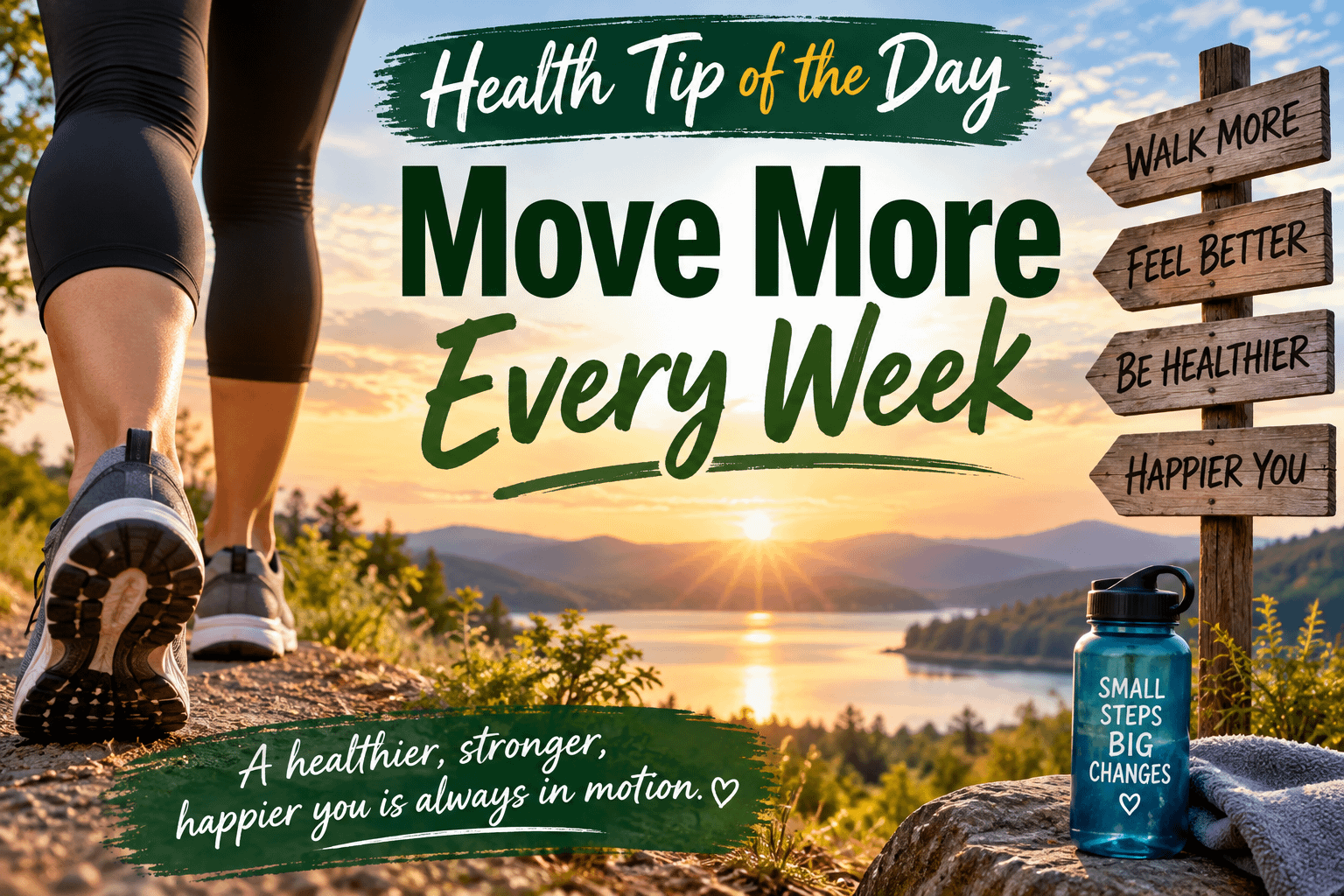
Improving your health does not always require a dramatic transformation, an expensive gym membership, or an intense workout program. Sometimes one of the most powerful things you can do is also one of the simplest:
Move more every week.
Our bodies are designed for movement. Walking, stretching, climbing stairs, cleaning the house, working in the yard, dancing, exercising, and even taking a few minutes to stand up and move around all count.
The goal does not have to be becoming an athlete. The goal is to spend a little less time sitting and a little more time moving.
And when you consistently increase your activity—even gradually—you can begin building habits that support your physical and mental well-being.
Movement Is About More Than Exercise
When people hear that they need to become more active, they often immediately think about going to the gym.
That can make getting healthier seem overwhelming.
You might imagine running several miles, lifting heavy weights, attending fitness classes, or spending an hour exercising every day.
But movement is much broader than traditional exercise.
You can increase your physical activity simply by making small changes throughout your day.
Take a walk after dinner.
Park a little farther from the entrance.
Walk around while talking on the phone.
Stretch while watching television.
Take the stairs when you’re able.
Do some yard work.
Play outside with your children or grandchildren.
Put on your favorite music and dance around the house.
These activities may seem small, but they add movement to a day that might otherwise have been mostly sedentary.
Over an entire week, those minutes can add up.
Start With Where You Are
One of the biggest mistakes people make when trying to become more active is comparing themselves with someone else.
Someone else might walk five miles every morning.
Someone else might work out six days a week.
Someone else might be training for a marathon.
That doesn’t mean you need to do the same thing.
Your starting point belongs to you.
If you currently aren’t very active, walking for ten minutes can be progress.
If you already walk regularly, perhaps your next goal is adding another walk each week.
If you’re already exercising several days a week, maybe you can increase your strength training, flexibility work, or everyday movement.
Progress should be measured against where you started, not against someone else’s routine.
Why Weekly Movement Matters
Regular physical activity can support many areas of health.
Movement helps strengthen muscles and bones, supports cardiovascular fitness, improves mobility and can help maintain physical independence as we age.
It can also affect how you feel mentally.
A walk can give you time to clear your thoughts.
Exercise can provide a healthy break from stress.
Movement can give you something positive to focus on when you’ve spent too much time worrying, working, scrolling through your phone, or sitting indoors.
You don’t necessarily need a complicated workout to experience those benefits.
Sometimes getting outside and walking around the neighborhood is enough to change the direction of your afternoon.
Stop Thinking in Terms of All or Nothing
One of the most damaging attitudes toward exercise is:
If I can’t do a full workout, there’s no point doing anything.
That mindset can turn a busy day into a completely inactive one.
Suppose you planned to exercise for 45 minutes but suddenly became busy.
You might think the workout is ruined.
But what if you walked for 15 minutes instead?
That’s still movement.
Maybe tomorrow you have only ten minutes.
Move for ten minutes.
Another day, you might have time for 30.
The important thing is developing the habit of looking for opportunities to move instead of waiting for perfect conditions.
Something is usually better than nothing.
Make Walking Your Secret Weapon
Walking is one of the simplest ways many people can add movement to their lives.
You don’t need complicated equipment.
You don’t have to learn an elaborate routine.
And you can adjust the distance and pace according to your abilities.
Try walking:
- Before work
- During your lunch break
- After dinner
- Around a shopping center
- At a local park
- While waiting for an appointment
- With a friend or family member
- While listening to music, an audiobook, or a podcast
If a long walk feels difficult, break it into shorter sessions.
Three ten-minute walks throughout the day may feel much more manageable than trying to complete one long session.
Make Movement Part of Your Normal Routine
The easiest habits to maintain are often the ones that fit naturally into your existing life.
Instead of constantly trying to “find time” to exercise, attach movement to something you already do.
For example:
After drinking your morning coffee, take a short walk.
After lunch, walk for ten minutes.
After work, stretch before sitting down for the evening.
After dinner, walk around the neighborhood.
While watching television, stand and move during commercial breaks or between episodes.
When movement becomes connected to your normal routine, you don’t have to rely entirely on motivation.
Eventually, it simply becomes part of your day.
Add Strength, Too
Moving more isn’t limited to walking.
Strength exercises can also be an important part of an active lifestyle.
Depending on your abilities, this might include exercises such as squats, wall push-ups, resistance-band exercises, light weights, or body-weight movements.
Strength matters because everyday life requires it.
Standing up from a chair requires strength.
Carrying groceries requires strength.
Climbing stairs requires strength.
Maintaining muscle becomes increasingly important as we get older.
You don’t have to become a bodybuilder. The goal is simply to challenge your muscles safely and consistently.
Don’t Forget Flexibility and Mobility
Movement should also include activities that help your body maintain its range of motion.
Gentle stretching can be especially helpful after you’ve spent long periods sitting.
Try periodically stretching your:
Shoulders.
Neck.
Back.
Hips.
Legs.
Calves.
Even a few minutes can help break up extended periods of inactivity.
Activities such as yoga, gentle mobility routines, and stretching exercises can also provide another way to stay active without requiring high-intensity workouts.
Find Movement You Actually Enjoy
You are much more likely to continue doing something if you enjoy it.
Not everyone likes running.
Not everyone enjoys lifting weights.
Not everyone wants to spend time in a gym.
That’s okay.
There are countless ways to move.
Maybe you enjoy swimming.
Maybe you like hiking.
Maybe you enjoy dancing.
Perhaps you love gardening.
You might prefer cycling, walking your dog, playing basketball, doing home workouts, or exploring local parks.
Exercise doesn’t have to feel like punishment.
Finding something you genuinely enjoy can turn physical activity from something you “have to do” into something you actually look forward to.
Increase Your Activity Gradually
You don’t need to double your activity overnight.
In fact, making dramatic changes can make a new routine harder to maintain.
Instead, build gradually.
Imagine you currently walk twice per week.
Your next goal might be walking three times.
Once that becomes comfortable, perhaps you increase the length of one of those walks.
Then you might add some strength exercises.
Small improvements are easier to repeat.
And repeated improvements become habits.
Pay Attention to Your Body
Increasing activity doesn’t mean ignoring pain or forcing yourself through something that doesn’t feel right.
There is a difference between challenging yourself and hurting yourself.
If something causes unusual or significant pain, stop and reassess what you’re doing. People with medical conditions, injuries, significant mobility limitations, or concerns about beginning an exercise program should consider discussing an appropriate activity level with a qualified healthcare professional.
Your goal is to build your health, not prove something by pushing beyond what your body can safely handle.
Break Up Long Periods of Sitting
Even if you exercise regularly, it’s worth paying attention to how much time you spend sitting.
Many of us sit for hours without realizing it.
We sit while working.
We sit while driving.
We sit while eating.
We sit while watching television.
We sit while scrolling through our phones.
Try creating small reasons to stand throughout your day.
Refill your water.
Walk around the room.
Stretch.
Take a quick trip outside.
Do a small household task.
Walk to speak with someone instead of sending a message when practical.
These little interruptions can help make movement part of everyday life rather than something confined to a single workout.
Keep Track of Your Progress
Tracking activity can be motivating because it allows you to see improvement that you might otherwise overlook.
You could track:
Minutes spent walking.
Number of active days each week.
Workout sessions completed.
Distance walked.
Strength workouts.
Daily steps.
You don’t have to obsess over numbers.
Tracking is simply a way to remind yourself that you’re making progress.
There may be weeks when you do more and weeks when you do less.
What matters is returning to the habit.
Don’t Let One Bad Week Become a Bad Month
Life happens.
You get busy.
You become tired.
The weather changes.
Work becomes stressful.
Your routine gets disrupted.
Missing a few workouts doesn’t mean you’ve failed.
The danger comes when you think:
“I already messed up, so there’s no point continuing.”
Instead, start again.
If last week wasn’t active, make this week different.
You don’t need to punish yourself for what you didn’t do.
You simply need to decide what you’re going to do next.
Set a Simple Weekly Goal
Instead of making an enormous fitness resolution, give yourself one achievable goal for the coming week.
Maybe your goal is:
Walk three times.
Take a ten-minute walk every evening.
Stretch every morning.
Try one new physical activity.
Add two short strength sessions.
Get outside and move on Saturday.
Choose something realistic enough that you believe you can actually accomplish it.
Once you reach that goal, build on it.
Movement Is an Investment in Your Future
One of the best reasons to become more active isn’t necessarily changing how you look.
It’s protecting your ability to live your life.
You want the strength to keep doing the things you enjoy.
You want the mobility to remain independent.
You want the endurance to travel, explore, work, play, and participate in life.
Every walk, stretch, workout, and active choice is a small investment in that future.
You may not notice the difference after one day.
But healthy habits aren’t built in one day.
They’re built through weeks, months, and years of small decisions.
Health Tip of the Day
Move more every week.
Don’t worry about creating the perfect fitness routine.
Start with what you can do today.
Walk for ten minutes.
Stand up and stretch.
Take the stairs if you’re able.
Spend some time outside.
Do a few simple exercises at home.
Then do something again tomorrow.
The goal isn’t perfection.
The goal is movement.
A little more today.
A little more this week.
And eventually, what once required effort can become part of your lifestyle.
Your body was made to move—and every bit of movement you safely add to your life is another step toward taking better care of yourself.
What is one simple way you can move a little more this week?
Leave a Reply