
Author: Brett Murphy

  • Why It Is Lonely After Your Child Passes

    Why It Is Lonely After Your Child Passes

    The loss of a child is an indescribable tragedy, a grief that reshapes every corner of a parent’s life. Beyond the overwhelming sorrow, one of the most profound and often unspoken challenges is the pervasive loneliness that follows. This loneliness is not just the absence of the child but a complex, isolating experience woven into the fabric of daily life, relationships, and identity. Here, we explore why this loneliness emerges and how it manifests after such a devastating loss.

    The Void of Their Presence

    A child’s presence fills a home with energy, routines, and purpose. From their laughter to their needs, they are a constant thread in a parent’s life. When they pass, the silence is deafening. The spaces they occupied— their room, their seat at the table, their toys or books— become stark reminders of their absence. Parents often describe feeling unmoored, as if the rhythm of their life has stopped. This void creates a loneliness that is physical, emotional, and existential, as the daily acts of caregiving and connection are no longer there to anchor them.

    The Shift in Identity

    For many parents, their identity is deeply tied to their role as a caregiver. When a child dies, this role is abruptly taken, leaving parents grappling with who they are without their child to nurture. This loss of identity can feel like losing a part of themselves, fostering a sense of disconnection from the world. The question “Who am I now?” echoes in quiet moments, deepening the isolation as parents navigate a new, unwanted reality without the person who defined so much of their purpose.

    The Isolation of Unique Grief

    Grief for a child is uniquely isolating because it defies societal norms and expectations. The natural order assumes parents outlive their children, so when this order is shattered, others often struggle to relate. Friends, family, or colleagues may offer sympathy but find it hard to understand the depth of the loss. Over time, their support may fade as they move on with their lives, while the parent’s grief remains raw. This discrepancy can leave parents feeling abandoned, as if their pain is too heavy for others to share or comprehend.

    Strained Relationships

    The loneliness is compounded by changes in relationships. Partners may grieve differently, leading to tension or distance as each navigates their pain. Friends may avoid contact, unsure of what to say or fearing they’ll cause more hurt. Social gatherings, once joyful, can become painful reminders of what’s missing, especially when others’ children are present. Parents may withdraw, feeling alienated by conversations that no longer resonate or by the unspoken pressure to “move on.” This withdrawal, while protective, deepens the sense of being alone in their sorrow.

    The Weight of Unseen Milestones

    Every missed milestone— birthdays, graduations, or holidays— is a fresh wound. These moments, which would have been shared with a child, are now solitary burdens. Parents may imagine what their child would have been like at each stage, a private act of love that no one else can fully join. This private grief, carried in silence, reinforces the loneliness, as the world continues while parents remain tethered to memories and unfulfilled dreams.

    The Stigma of Prolonged Grief

    Society often expects grief to follow a timeline, but the loss of a child defies such constraints. Parents may feel judged for grieving “too long” or “too intensely,” which can lead to self-isolation to avoid scrutiny. This stigma can make it harder to seek support, as parents fear being misunderstood or dismissed. The loneliness grows when they feel their grief is unwelcome or burdensome to others.

    Finding Connection Amid Loneliness

    While the loneliness after losing a child may never fully dissipate, there are ways to find solace. Support groups with other bereaved parents offer a space to share without judgment, where the unique pain is understood. Counseling can provide tools to navigate grief and identity shifts. Creative outlets, like writing or memorial projects, can honor the child’s memory while fostering a sense of purpose. Small, intentional connections— even a single understanding friend— can ease the isolation, reminding parents they are not entirely alone.

    A Loneliness That Carries Love

    The loneliness after a child’s passing is a testament to the depth of love. It is heavy, relentless, and deeply personal, but it also reflects the enduring bond between parent and child. While the world may feel distant, this loneliness is not a sign of weakness but a marker of a love that persists beyond loss. Acknowledging this loneliness, and seeking those who can sit with it, can be a step toward carrying the grief with a little less weight.

    A Father’s Guide to Surviving the Loss of a Child

  • Embracing Happiness Despite Fear

    Embracing Happiness Despite Fear

    Happiness is often portrayed as the ultimate goal, the state we all strive for. Yet, for some of us, the prospect of being truly happy can feel daunting, even terrifying. It’s not that I don’t want to be happy—deep down, I crave it like anyone else. But there’s a quiet fear that creeps in, whispering that happiness is fragile, fleeting, or even dangerous. This fear isn’t always easy to explain, but it’s real, and it shapes how I navigate life. Here’s why I’m scared to be happy.

    I have not cared about anything or anyone in a long time. Mostly because I have been broken and in pain for so long.

    10 years ago to this day, I had a family and was happy. Married for 15 years, my son was alive and I was the man who my son looked up too and wants me to be again. I loved with all my heart. I could trust very easily. There was no darkness in my life, heart or my soul.

    Then, a week and half later, everything came crashing down.

    July 3rd-4th 2015, my heart and soul got broken. I caught my wife, the love of my life, cheating on me. What really hurt, was she only met him because of her acting classes that I supported her in doing. I had put trust and faith into her and she broke it with ease.

    My heart and soul shattered. What was once full of love and trust, burned up in flames and a dark shadow casted in my heart and soul.

    We officially separated July 5th, 2015. Then 6 days later, I paid the ultimate price of sacrificing for love and family.

    On July 11, 2015, around 830 pm, I had a massive stroke. I woke up in the emergency room and was told by the doctor what had happened to me and that the next few hours was critical. What happened that night, I never thought would ever happen. My wife showed up and instead of showing compassion, she started a fight with me. The last thing I did what tell her to get out and as I watched her walk out, I had another massive stroke and flatlined for 2 minutes.

    Sometime on July 12th, 2015 I woke up in a private room in the hospital. I was not expected to wake up for days, weeks or months. The man that woke up was not the man who died. From the ashes of a once great man, a broken man had risen. A man with memories erased, empty of feelings, and a heart full of pain and darkness.

    I am here today because of my son. Paul was the one who took care of me. He would get up, make sure I took my medicine, cook breakfast, go to school, come home and make sure I had dinner and was taking care of myself. He did this for months until I could do it for myself. All that at the tender age of 15.

    Paul was the reason for me to rebuild my life. He needed his father to be here and to guide him. He needed me not just to lead by example, but to show him that when you fall, you get up and keep fighting. For him to see by actions that I loved him and he could come to me anytime when he needed anything.

    As long as Paul was alive and moving forward in life, was all the happiness I needed.

    The second time I died was Oct 25, 2021. That was the day my son Paul died from a car accident. Never in a million years did I ever think he would pass away at such a young age. He had his whole life ahead of you. My heart completely broke from his passing.

    Paul was a loving, caring, mature 21-year-old with an old soul. He cared about others and would help someone in any way he could. He would lead by example. Not once did he ever say look what I did, he would say Dad there was someone who needed help, and I helped them without letting others know so they wouldn’t be embarrassed. He would donate time, items, and other resources to help those in need.

    Paul had many dreams and aspirations. He was a computer whiz, gamer, an amazing cook, and caretaker of people. He was planning on going back to school to get a degree in business and computers.

    My son had every great quality that you could think of. He would own up to his mistakes and learn from them. He was compassionate, caring, loving, giving, empathic, honest, and the most courageous man I have ever known. He was the best son, grandson, cousin, nephew, and friend that you could ask for.

    He was the one who brought me back to life, back to having a heart and able to move forward in life. His passing shattered me into oblivion. I died with him.

    It has been 3 years and 8 months since my son passed. He has been my guardian angel and guiding me. Last year on the 3rd anniversary of his death, he told me that he wants the man that I once was, back. I am working on that not just for him, but for me.

    One of the biggest reasons happiness scares me is the dread of losing it. When things are going well—when life feels light and full of possibility—there’s a nagging voice in the back of my mind that says, “This won’t last.” I have been happy twice in life. And each time, I have died. Past experiences of joy being ripped away, whether through loss, betrayal, or unexpected hardship, have left me wary. It’s as if allowing myself to fully embrace happiness is tempting fate, inviting the universe to balance the scales with pain. So, I hold back, keeping one foot in the grave, one foot in life, afraid to let myself soar.

    For some, happiness is a familiar friend, a state they slip into with ease. For me, it’s more like a stranger. I’ve spent so much time navigating challenges, managing stress, or simply surviving that happiness feels foreign, almost unnatural. When it arrives, I don’t always know what to do with it. I question whether I deserve it or if I’m even doing it “right.” This unfamiliarity breeds discomfort, and instead of basking in the moment, I find myself waiting for the other shoe to drop, retreating to the safety of the known—my pain and struggles.

    Happiness for me comes with a hidden burden: the pain of the past that haunts and scares me. It has been so long that I have been happy. I feel the pressure to be happy, to prove to myself that I can and to not be afraid of trying. Admitting that happiness scares me feels like I am a failure. Society tells us to “choose happiness,” as if it’s a switch I can flip and keep on. But life isn’t that simple. The fear of disappointing myself and my son by slipping back into sadness or doubt makes me hesitant to embrace joy in the first place.

    There’s a raw vulnerability in being happy that can feel exposing. When I’m happy, my guard is down. I’m open, hopeful, and invested in the moment. But that openness leaves me defenseless against potential hurt. If I let myself love deeply, dream big, or believe in a brighter future, I’m risking heartbreak, disappointment, or rejection. It’s safer to stay guarded, to keep my expectations low and my heart shielded. Happiness, in its purest form, demands trust—trust in myself, in others, in life—and that’s a leap I’m often too scared to take.

    For me, happiness feels like a betrayal. If I’m happy while others are suffering—whether it’s a loved one, a community, or even strangers halfway across the world—it can feel selfish. How can I allow myself to smile when there’s so much pain out there? This guilt is especially heavy when I’ve experienced trauma or hardship. Happiness can feel like I’m dismissing my past, as if moving forward means erasing the struggles that shaped me. So, I cling to my pain, not because I want to, but because it feels like loyalty to my story.

    Despite these fears, I’m learning that happiness doesn’t have to be perfect or permanent to be worthwhile. It’s okay to feel joy in small doses, to let it wash over me without clinging to it or fearing its departure. I’m trying to reframe happiness as a moment, not a destination, and to see it as something I can visit without needing to own. It’s a slow process, unlearning the instincts that keep me guarded, but I’m starting to believe that I can be happy and still be me—flawed, cautious, and beautifully human.

    Being scared to be happy isn’t about rejecting joy; it’s about wrestling with the complexities of what it means to feel it. My fear is a reflection of my experiences, my doubts, and my hopes. And maybe, just maybe, acknowledging that fear is the first step toward letting happiness in—not as a constant state, but as a fleeting, precious guest I’m learning to welcome.

    A Father’s Guide to Surviving the Loss of a Child
  • The Effect On You When Your Child Passes

    The Effect On You When Your Child Passes

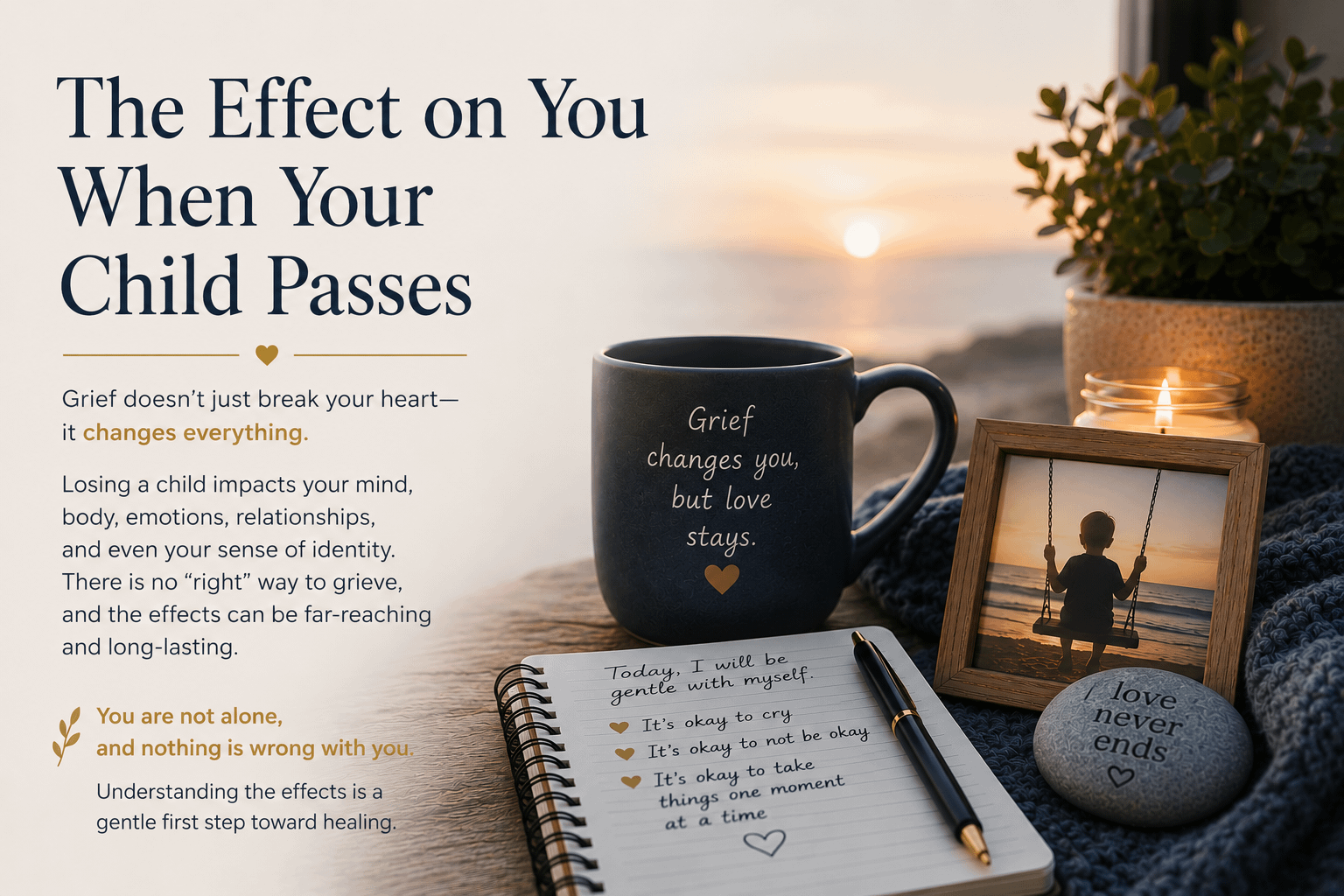
    Losing a child is an unimaginable tragedy, a profound and life-altering experience that reshapes a parent’s world in ways that are difficult to articulate. The grief that follows is unique, complex, and enduring, touching every aspect of a parent’s emotional, physical, and spiritual life. This article explores the multifaceted effects of such a loss, offering insight into the grieving process and the ways it transforms those left behind.

    The Emotional Impact

    The death of a child often brings an overwhelming sense of sorrow, described by many parents as a pain that feels physical in its intensity. This grief is not linear; it ebbs and flows, triggered by memories, milestones, or even everyday moments. Parents may experience:

    Profound Sadness and Despair: The bond between parent and child is primal, and its severance can leave a parent feeling unmoored, as if a part of their identity has been lost.

    Guilt and Self-Blame: Many parents grapple with questions of “what if” or “if only,” wondering if they could have prevented the loss, even when it was beyond their control.

    Anger and Resentment: This can be directed at themselves, others, or even the universe, as parents struggle to make sense of an event that feels inherently unjust.

    Isolation: The uniqueness of this loss can make parents feel disconnected from others, including friends or family who may not fully understand their pain.

    Over time, these emotions may soften but rarely disappear entirely. Parents often describe carrying their grief as a lifelong companion, one that evolves but never fully departs.

    The Physical Toll

    Grief is not just an emotional experience; it manifests physically as well. The stress of losing a child can lead to:

    Sleep Disturbances: Insomnia or nightmares are common, as the mind struggles to process the trauma.

    Fatigue and Low Energy: The weight of grief can sap physical strength, making even simple tasks feel monumental.

    Appetite Changes: Some parents lose interest in food, while others may overeat as a coping mechanism.

    Weakened Immune System: Chronic stress can increase susceptibility to illness, as the body struggles under the strain of prolonged grief.

    These physical symptoms often mirror the emotional turmoil, creating a feedback loop that can be difficult to break without support.

    The Impact on Relationships

    The loss of a child can profoundly affect a parent’s relationships, both with others and themselves:

    Marital Strain: Couples may grieve differently, leading to misunderstandings or feelings of disconnection. While some relationships grow stronger through shared sorrow, others face significant challenges.

    Shifts in Friendships: Friends may struggle to know how to support a grieving parent, sometimes leading to unintentional distance. Parents may also find it hard to engage in social settings that feel trivial in the face of their loss.

    Family Dynamics: Siblings, grandparents, or other family members may also be grieving, and navigating these shared yet distinct experiences can be complex.

    Parents may also find their relationship with themselves altered, as they question their identity, purpose, or beliefs in the wake of such a loss.

    The Spiritual and Existential Questions

    For many, the death of a child prompts deep questions about meaning, faith, and the nature of existence. Parents may:

    Question Their Beliefs: Those with religious or spiritual convictions may struggle to reconcile their faith with the loss, while others may find solace in their beliefs.

    Search for Meaning: Some parents seek ways to honor their child’s memory, through acts of service, creative expression, or advocacy, as a way to find purpose.

    Face Existential Loneliness: The randomness or unfairness of the loss can lead to a sense of disconnection from the world, as parents grapple with life’s fragility.

    Coping and Moving Forward

    While the pain of losing a child never fully fades, many parents find ways to cope and integrate their grief into their lives:

    Seeking Support: Therapy, support groups, or connecting with others who have experienced similar losses can provide validation and comfort.

    Honoring Their Child: Creating rituals, such as memorial events, or engaging in causes their child cared about, can keep their memory alive.

    Self-Compassion: Allowing themselves to feel joy or pursue new experiences without guilt can be a powerful step toward healing.

    Redefining Identity: Over time, parents may find new aspects of themselves, blending their love for their child with a renewed sense of purpose.

    Conclusion

    The loss of a child is a wound that reshapes a parent’s heart, body, and soul. It is a journey marked by profound pain, but also by the enduring love that continues to connect parent and child, even in absence. While the effects are lifelong, so too is the potential for resilience, as parents find ways to carry their child’s memory forward, weaving it into the fabric of their lives. For those navigating this grief, know that you are not alone, and your love for your child remains a powerful, unbreakable force.

    A Father’s Guide to Surviving the Loss of a Child

  • When It’s The Anniversary Of Your Divorce After Your Child’s Passing

    When It’s The Anniversary Of Your Divorce After Your Child’s Passing

    The anniversary of a divorce is often a day of mixed emotions—relief, regret, or even quiet reflection. But when that anniversary arrives after the unimaginable loss of a child, it becomes a uniquely heavy moment, layered with grief, guilt, and the echoes of a life that once was. This day can feel like a collision of two profound losses, each amplifying the other, leaving you to navigate a complex emotional landscape. Here’s how to approach this day with compassion for yourself and, if possible, find a path toward healing.

    The Weight of Dual Grief

    Losing a child is a grief that defies description, one that reshapes every facet of your existence. Divorce, even if it was the right choice, carries its own pain—a severing of shared dreams and a partnership that once held your world together. When these two losses intersect on the anniversary of your divorce, the day can feel like a reopening of wounds that never fully healed.

    You might find yourself revisiting memories of your child—moments of joy, their laughter, or the unbearable silence of their absence. At the same time, thoughts of your marriage may surface: the hopes you had, the struggles that led to its end, or the shared grief that may have driven you and your partner apart. It’s common to feel overwhelmed, as these dual griefs can entangle, making it hard to separate one pain from the other.

    Acknowledging Your Emotions

    There’s no “right” way to feel on this day. You might feel anger—at yourself, your ex-spouse, or the unfairness of life. You might feel guilt, wondering if the marriage could have survived if circumstances were different. Sadness, loneliness, or even a strange sense of relief might emerge, each emotion valid in its own right.

    Give yourself permission to feel whatever comes. Journaling can be a helpful way to process these emotions. Write without judgment, letting your thoughts flow. If writing feels too heavy, consider speaking your feelings aloud, perhaps in a quiet space where you feel safe. Acknowledging your emotions doesn’t erase the pain, but it can help you hold it with less resistance.

    Honoring Your Child’s Memory

    One way to navigate this day is to focus on honoring your child’s memory in a way that feels meaningful to you. This doesn’t have to be grand or public. It could be as simple as lighting a candle, looking through old photos, or visiting a place that reminds you of them. If your child loved a particular activity, like drawing or listening to music, you might engage in that activity as a way to feel connected to them.

    If you and your ex-spouse are on amicable terms, you might consider sharing a small ritual together, like visiting your child’s memorial site or exchanging a message about a cherished memory. However, if communication is strained, focus on what feels right for you. Your connection to your child exists independently of your past marriage.

    Reflecting on the Divorce

    The anniversary of your divorce may also prompt reflection on your marriage and its end. Grief over a child’s loss can strain even the strongest relationships, and many couples find that their paths diverge as they cope in different ways. If guilt or regret arises, try to approach these feelings with self-compassion. Remind yourself that decisions made in the fog of grief were made with the clarity you had at the time.

    If you find yourself dwelling on “what ifs,” consider redirecting your thoughts to the present. What have you learned about yourself since the divorce? How have you grown, even in small ways? These questions can help shift your focus from the past to the person you’re becoming.

    Finding Support

    You don’t have to face this day alone. Reach out to a trusted friend, family member, or therapist who understands your journey. Support groups for parents who have lost children can also provide a sense of community, as others in the group may relate to the compounded pain of loss and divorce. Online forums, if in-person groups aren’t accessible, can offer similar solace.

    If professional support feels right, a grief counselor can help you navigate the unique challenges of this anniversary. They can provide tools to manage overwhelming emotions and guide you toward rituals or practices that honor both your child and your healing process.

    Creating New Meaning

    Over time, you may find ways to transform this painful anniversary into a day of quiet resilience. This doesn’t mean erasing the grief or pretending the losses didn’t happen. Instead, it’s about finding small ways to reclaim the day. You might dedicate it to self-care—taking a walk in nature, reading a book your child loved, or cooking a meal that brings you comfort. Some choose to engage in acts of kindness, like donating to a cause their child cared about or helping others in their community.

    Creating new traditions can also help. For example, you might start the day with a moment of gratitude for the time you had with your child, or end it by writing a letter to them, expressing your love and memories. These acts don’t erase the pain, but they can weave moments of light into a heavy day.

    Moving Forward with Grace

    The anniversary of your divorce after your child’s passing will likely always carry weight, but its intensity may soften with time. Be gentle with yourself as you navigate this day, recognizing that healing is not linear. Some years may feel unbearable, while others may bring unexpected moments of peace.

    Your love for your child endures, as does your capacity to find meaning amid loss. By honoring your emotions, your child’s memory, and your own resilience, you can face this anniversary with a quiet strength—one step at a time.

    A Father’s Guide to Surviving the Loss of a Child

  • Why It Feels Like I Am a Vampire With My Humanity Turned Off Since My Son’s Passing

    Why It Feels Like I Am a Vampire With My Humanity Turned Off Since My Son’s Passing

    Losing a child is a grief so profound, so shattering, that it can feel like the very essence of your humanity has been stripped away. The metaphor of a vampire with their humanity turned off—a creature existing in a state of emotional detachment, driven by instinct rather than feeling—captures the raw, hollow experience of navigating life after such a loss. When my son passed away, it was as if a switch flipped inside me, leaving me in a world where emotions, once vibrant, now feel muted or inaccessible. I am writing this to help myself and others why this feeling emerges and how it reflects the complex nature of grief.

    The Emotional Numbness of Grief

    Grief is not a linear process; it is a storm that reshapes the landscape of your soul. After my son’s death, I expected to be consumed by sadness, but instead, I often felt nothing at all. This numbness, akin to a vampire’s emotional void, is a common response to overwhelming loss. Psychologists describe it as a defense mechanism—a way for the mind to protect itself when the pain is too intense to process. The American Psychological Association notes that dissociation, including emotional detachment, can occur in response to trauma, allowing individuals to function despite unbearable sorrow.

    This numbness manifests in everyday moments. I might sit through a gathering, watching others laugh or cry, yet feel like an observer, disconnected from the warmth or sorrow. It’s as if I’m moving through life on autopilot, my heart sealed off like a vampire who can no longer feel the pulse of human connection. This detachment isn’t a choice; it’s a survival tactic, a way to keep going when every memory of my son threatens to unravel me.

    The Loss of Identity and Purpose

    A child is not just a person you love—they are a part of your identity, your purpose. As a parent, my son was my reason to wake up, to strive, to hope. His laughter was my light; his struggles, my battles. When he was taken, it felt like the core of who I was had been ripped away. Vampires, in lore, are often depicted as beings without a soul, existing without the spark that makes them human. Similarly, losing my son left me questioning who I am without him. Am I still a parent? What is my purpose now?

    This identity crisis deepens the vampire-like detachment. Without the role that defined me, I sometimes feel like a shadow of myself, going through the motions of life without truly living it. Tasks like eating, working, or socializing lose their meaning when the person who gave them context is gone. The world feels drained of color, much like a vampire’s existence in a sunless realm.

    The Guilt of Moving Forward

    One of the most painful aspects of this experience is the guilt that creeps in when moments of joy or normalcy break through the numbness. If I laugh at a joke or enjoy a quiet evening, a voice inside whispers, “How dare you feel anything when your son is gone?” This guilt mirrors the vampire’s struggle in stories where they grapple with their lost humanity—wanting to feel, but fearing it betrays their nature.

    Grief counselors explain that this guilt is a common part of mourning. The idea of “moving on” feels like a betrayal, as if feeling anything other than pain dishonors the memory of the one lost. Yet, this internal conflict only deepens the sense of being emotionally switched off. To avoid the guilt, I sometimes retreat further into detachment, choosing the safety of numbness over the risk of feeling.

    The Isolation of Grief

    Vampires are often solitary creatures, cut off from the world by their nature. Grief, too, can be profoundly isolating. After my son’s passing, I found it hard to connect with others, even those who meant well. Friends and family offered condolences, but their words often felt hollow, unable to reach the depth of my pain. Some avoided me, unsure of what to say, while others expected me to “heal” on their timeline. This left me feeling like an outsider, watching the world move on while I remained frozen in my loss.

    This isolation reinforces the vampire-like state. When you feel disconnected from others, it’s easier to withdraw into a shell where emotions are suppressed. Social interactions become performances—smiling when expected, nodding at the right moments—but inside, the emotional switch remains off. The loneliness of grief becomes a self-perpetuating cycle, where detachment feels like the only way to cope.

    Finding a Path Toward Feeling Again

    The metaphor of a vampire with humanity turned off is powerful, but it’s not the whole story. In vampire lore, there are moments when humanity flickers back—a memory, a connection, a spark that reminds them of who they were. Similarly, healing from the loss of a child doesn’t mean erasing the pain, but finding ways to let light back into the darkness.

    For me, this has meant small steps. I started by allowing myself to feel my son’s presence in memories, even when it hurt. I found solace in writing letters to him, pouring out the love and pain I couldn’t express aloud. Support groups, where others understood the depth of this loss, helped me feel less alone. Therapy provided tools to navigate the guilt and numbness, reminding me that feeling joy doesn’t diminish my love for my son.

    Experts, like those from the National Institute of Mental Health, suggest that processing grief involves integrating the loss into your life, not “getting over” it. This might mean creating rituals to honor your child, like lighting a candle on their birthday, or finding ways to carry their memory forward, such as supporting causes they cared about. These acts don’t flip the humanity switch back on overnight, but they crack open the door to feeling again.

    Conclusion

    Feeling like a vampire with my humanity turned off since my son’s passing reflects the profound numbness, identity loss, guilt, and isolation that grief brings. It’s a state where the world feels distant, and emotions are locked away to survive the pain. But even in this darkness, there is hope. By acknowledging the depth of this loss and taking small steps toward connection—whether through memories, support, or honoring my son’s life—I am beginning to rediscover moments of humanity. The pain will always be part of me, but so will the love, and that love is the spark that keeps me reaching for the light when I am drowning in the darkness.

    A Father’s Guide to Surviving the Loss of a Child

  • In remembrance of my son Paul Murphy and to honor his legacy of helping people, please help in raising funds for Honoring Paul Murphy for the 15th Annual Donor Network West Foundation Run/Walk.

    In remembrance of my son Paul Murphy and to honor his legacy of helping people, please help in raising funds for Honoring Paul Murphy for the 15th Annual Donor Network West Foundation Run/Walk.

    In remembrance of my son Paul Murphy and to honor his legacy of helping people, please help in raising funds for Honoring Paul Murphy for the 15th Annual Donor Network West Foundation Run/Walk.

    Support by making a donation to our team. The process is simple… and you can be sure that it will benefit a great cause!

    Paul passed away at the tender age of 21. We honor his memory in helping others as he did.

    October 25, 2021 is when Paul was called to be an angel.

    It has been three years since you passed away Paul. Never in a million years did I ever think you would pass away at such a young age. You had your whole life ahead of you. My heart will always be broken from your passing.

    Paul was a loving, caring, mature 21-year-old with an old soul. He cared about others and would help someone in any way he could. He would lead by example. Not once did he ever say look what I did, he would say Dad there was someone who needed help, and I helped them without letting others know so they wouldn’t be embarrassed. He would donate time, items, and other resources to help those in need.

    Paul was the one who took care of me when I was having medical issues years ago. He would get up, make sure I took my medicine, cook breakfast, go to school, come home and make sure I had dinner and was taking care of myself. All that the tender age of 15.

    Paul had many dreams and aspirations. He was a computer whiz, gamer, an amazing cook, and caretaker of people. He was planning on going back to school to get a degree in business and computers.

    My son had every great quality that you could think of. He would own up to his mistakes and learn from them. He was compassionate, caring, loving, giving, empathic, honest, and the most courageous man I have ever known. He was the best son, grandson, cousin, nephew, and friend that you could ask for.

    Paul, I love you and I will miss you every second. You always have been and will be forever my guardian angel.

    Forever my rock, forever my hero, forever my guardian angel, Forever my son. Paul, I miss you and I Love you. Till we meet again.

    RIP Paul Murphy

    https://raceroster.com/events/2025/101601/15th-annual-donor-network-west-foundation-runwalk/pledge/team/828562

    A Father’s Guide to Surviving the Loss of a Child
  • Father’s Missing Their Children on Father’s Day

    Father’s Missing Their Children on Father’s Day

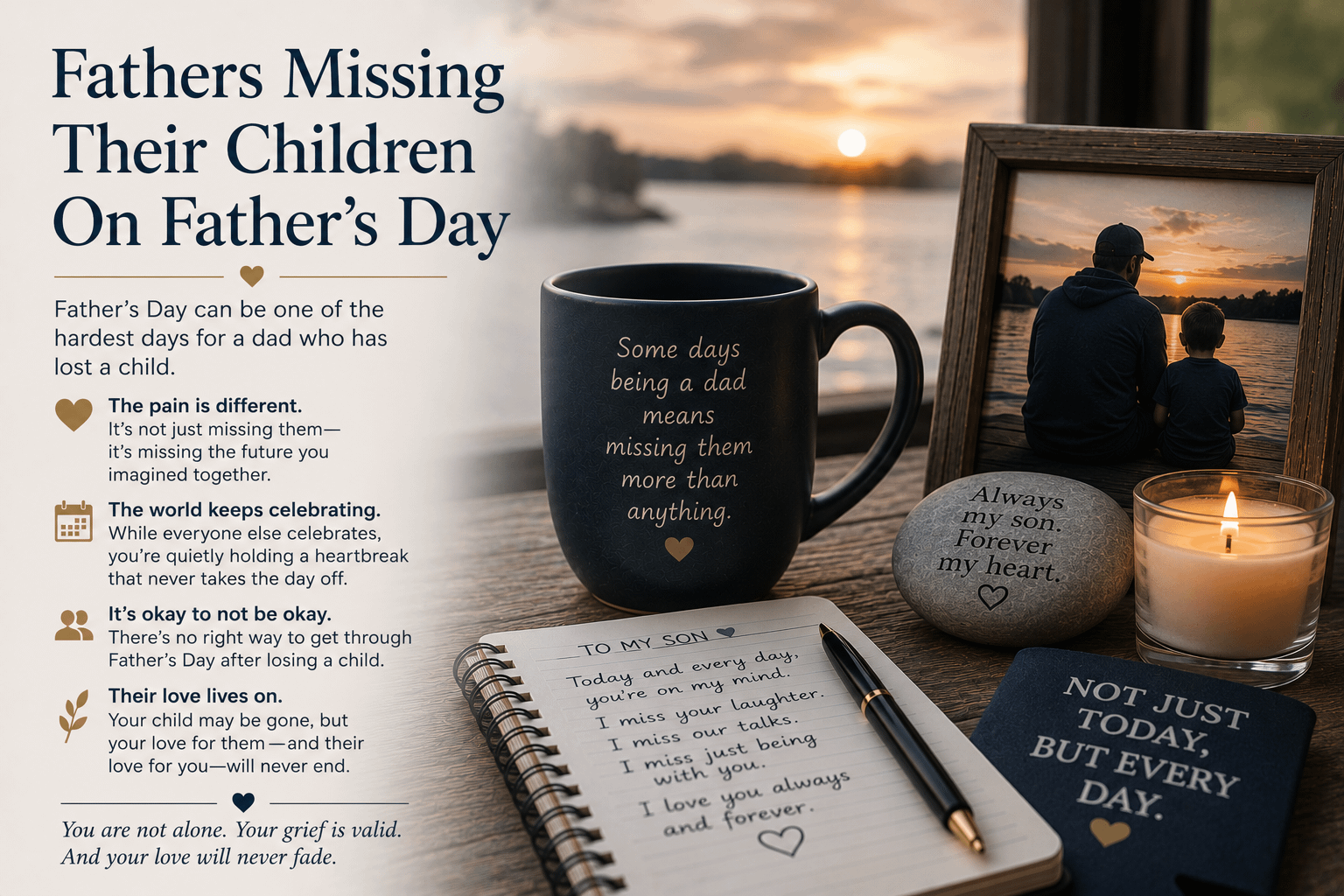
    Father’s Day is a time to celebrate the bond between fathers and their children, filled with laughter, love, and shared memories. But for some fathers, this day carries a heavy weight—a quiet, aching sorrow for children who have passed away. The absence of a child leaves a void that no celebration can fill, and Father’s Day can become a poignant reminder of love intertwined with loss.

    A Silent Grief

    For fathers who have lost a child, Father’s Day often feels like a paradox. The world around them buzzes with joy—families gathering, children presenting handmade cards, and social media brimming with tributes. Yet, for these fathers, the day may unfold in solitude or with a grief that others might not fully see. The rituals of fatherhood—teaching a child to ride a bike, sharing a favorite story, or simply hearing their voice—are now memories, frozen in time.

    Grief is deeply personal, and for fathers, it can be especially complex. Society often expects men to be stoic, to “stay strong” in the face of loss. But the pain of losing a child defies such expectations. Fathers may grapple with their sorrow in private, carrying the weight of their love for a child who is no longer here. Some may find comfort in talking about their child, while others hold their memories close, sacred and unspoken.

    Honoring Their Memory

    Many fathers find ways to honor their children on Father’s Day, turning their grief into acts of remembrance. These acts are as varied as the fathers themselves:

    Visiting a special place: Some fathers visit a park, beach, or other place that held meaning for their child, feeling a connection through shared moments.

    Creating traditions: Lighting a candle, writing a letter, or planting a tree can become annual rituals, keeping the child’s memory alive.

    Giving back: Some fathers channel their love into helping others, such as supporting charities, volunteering, or advocating for causes related to their child’s life or passing.

    Sharing stories: Talking about their child—their quirks, dreams, and favorite moments—helps fathers keep their spirit present.

    These acts don’t erase the pain, but they offer a way to weave a child’s memory into the fabric of Father’s Day, transforming it into a day of both mourning and celebration.

    The Importance of Support

    Father’s Day can feel isolating for fathers grieving a child, but support from others can make a difference. Friends and family can help by acknowledging the loss rather than avoiding it. A simple gesture—saying the child’s name, sharing a memory, or checking in—can show a father that his grief is seen and his child is remembered.

    Communities, both in-person and online, also play a vital role. Support groups for bereaved parents offer a space where fathers can share their experiences without judgment. Organizations like The Compassionate Friends or local grief counseling services provide resources tailored to parents navigating loss. Knowing they are not alone can help fathers feel less adrift on Father’s Day.

    A Father’s Love Endures

    The love a father has for his child does not end with their passing. It lives on in the quiet moments of reflection, in the stories told, and in the ways fathers choose to carry their child’s legacy forward. Father’s Day, though painful, can also be a testament to that enduring love—a day to remember, to honor, and to hold close the child who will always be a part of them.

    For fathers missing their children this Father’s Day, the day may bring tears, but it also brings an opportunity to celebrate the profound bond they shared. In their grief, they carry a love that time cannot diminish, a love that remains as eternal as fatherhood itself.

    A Father’s Guide to Surviving the Loss of a Child

  • How Grief Is Different For Each Of Us

    How Grief Is Different For Each Of Us

    Grief is one of the few experiences every human being will face, yet no two people will ever experience it in exactly the same way. While loss is universal, grief is deeply personal. It is shaped by our relationships, personalities, beliefs, life experiences, and the unique circumstances surrounding the loss.

    When people speak about grief, they often search for a roadmap. They want to know what stage comes next, how long the pain will last, and when life will feel normal again. The truth is that grief does not follow a predictable path. It is not a straight line from sadness to healing. Instead, it is a journey that twists, turns, pauses, and sometimes circles back on itself.

    Whether you are grieving the loss of a child, spouse, parent, sibling, friend, or another loved one, your grief belongs to you. No one else can fully understand the exact weight you carry because no one else shared your relationship in the same way.

    The Myth of “Normal” Grief

    One of the most damaging misconceptions about grief is the idea that there is a “correct” way to grieve.

    Many people expect grief to look a certain way. They imagine tears, sadness, and visible signs of mourning. While those reactions are common, they are not the only expressions of grief.

    Some people cry every day.

    Some cry very little.

    Some talk endlessly about their loved one.

    Others become quiet and withdrawn.

    Some seek comfort in family and friends.

    Others prefer solitude.

    Neither approach is wrong.

    Grief is not measured by how emotional someone appears. It is measured by the depth of the loss and the personal process of learning to live with it.

    The danger comes when grieving people compare themselves to others and wonder if they are doing it wrong. They may feel guilty for laughing, smiling, or enjoying a good day. Others may feel ashamed because they are struggling longer than expected.

    The truth is that there is no timetable for grief. There is only your journey.

    Why People Grieve Differently

    Several factors influence how grief affects us.

    Personality

    Our personalities shape how we cope with pain.

    An outgoing person may need conversation, support groups, and social connection to process their emotions. They often heal by sharing stories and speaking openly about their loss.

    A more private person may process grief internally. They might spend time writing, reflecting, praying, or simply sitting with their thoughts.

    Neither approach is healthier than the other. They are simply different.

    Life Experiences

    Previous experiences with loss can also influence how we grieve.

    Someone who has endured significant hardships may have developed coping skills that help them navigate grief. Others may find a new loss reopens wounds from previous tragedies.

    Sometimes grief is cumulative. The loss of one loved one can trigger memories and emotions connected to earlier losses.

    Support Systems

    The presence or absence of support can dramatically affect the grieving process.

    People surrounded by caring friends and family often feel less isolated. They still experience pain, but they know they are not carrying it alone.

    Others may feel abandoned after their loss. Friends stop calling. Family members become uncomfortable. Invitations disappear.

    This isolation can make grief feel even heavier.

    Spiritual and Religious Beliefs

    Faith often plays a major role in how people experience grief.

    For some, belief in God provides comfort, hope, and reassurance that their loved one is at peace.

    For others, loss may create spiritual struggles and difficult questions.

    Why did this happen?

    Why now?

    Why them?

    Grief can strengthen faith, challenge faith, or sometimes do both at the same time.

    The Unique Pain of Losing a Child

    Among all forms of loss, the death of a child is often considered one of the most devastating.

    Parents expect to leave this world before their children. When that natural order is reversed, it can shatter assumptions about life, fairness, and the future.

    The loss of a child affects every aspect of a parent’s identity.

    You are not simply grieving the person your child was.

    You are grieving the future you imagined.

    The birthdays that will never come.

    The milestones that will never happen.

    The dreams you shared.

    The memories you expected to create.

    Many bereaved parents describe feeling as though time stopped on the day their child died.

    The world continues moving forward while part of them remains frozen in that moment.

    This is why child loss grief often lasts a lifetime. The intensity may change, but the love remains.

    Why Mothers and Fathers Often Grieve Differently

    Even parents grieving the same child can experience grief very differently.

    Mothers are often more encouraged by society to openly express their emotions.

    Fathers frequently feel pressure to remain strong for the family.

    As a result, fathers may bury their pain beneath work, responsibilities, or silence.

    This does not mean fathers hurt less.

    In many cases, they simply grieve differently.

    One parent may need to talk about their child every day.

    The other may avoid conversations because they trigger overwhelming emotions.

    Neither parent is grieving incorrectly.

    They are navigating an unimaginable loss in the way that feels most survivable.

    Understanding these differences can prevent unnecessary conflict and help families support one another through grief.

    The Physical Effects of Grief

    Many people are surprised to discover that grief affects the body as much as the heart.

    Grief can cause:

    • Fatigue
    • Insomnia
    • Headaches
    • Chest tightness
    • Digestive issues
    • Muscle pain
    • Appetite changes
    • Difficulty concentrating
    • Memory problems

    Some grieving individuals describe feeling physically exhausted despite doing very little.

    Others feel restless and unable to relax.

    The body carries grief in ways that are often invisible to others.

    This is why self-care is so important during bereavement. Rest, hydration, nutrition, movement, and medical care matter, even when motivation is low.

    Grief Has No Expiration Date

    One of the most frustrating realities of grief is society’s expectation that people should eventually “move on.”

    After a funeral, support often fades.

    Friends assume life has returned to normal.

    Coworkers expect productivity.

    Family members may stop mentioning the deceased.

    Yet grief does not disappear after a few weeks or months.

    For many people, significant losses remain part of their lives forever.

    Certain dates can trigger fresh waves of grief:

    • Birthdays
    • Holidays
    • Anniversaries
    • Graduations
    • Weddings
    • Father’s Day
    • Mother’s Day

    A single song, photograph, scent, or memory can instantly bring emotions rushing back.

    This does not mean healing has failed.

    It means love still exists.

    Grief often resurfaces because our connection to the person remains.

    What Healing Really Looks Like

    Healing does not mean forgetting.

    Healing does not mean replacing.

    Healing does not mean no longer missing them.

    Healing means learning how to carry the loss while continuing to live.

    Over time, many grieving people discover they can experience both sorrow and joy.

    They can laugh while still missing their loved one.

    They can build a future while honoring the past.

    They can carry grief without allowing it to define every moment.

    The pain does not disappear.

    But they become stronger at carrying it.

    Supporting Someone Through Grief

    If someone you love is grieving, remember that your presence matters more than your words.

    You do not need perfect advice.

    You do not need magical answers.

    Often the most meaningful support comes from simply showing up.

    Consider these simple approaches:

    Listen More Than You Speak

    Allow grieving people to share their thoughts without trying to fix them.

    Avoid Comparisons

    Every loss is different. Avoid saying things like, “I know exactly how you feel.”

    Continue Checking In

    Support is often abundant immediately after a loss but fades over time.

    Keep reaching out months and years later.

    Say Their Loved One’s Name

    Many grieving people fear their loved one will be forgotten.

    Speaking their name acknowledges their life and significance.

    Accept Their Grief

    Do not place expectations on how someone should grieve.

    Allow them the freedom to experience their loss in their own way.

    Your Grief Is Your Own

    If you are grieving today, remember this:

    You do not need permission to grieve the way you grieve.

    You do not need to meet anyone else’s expectations.

    You do not need to heal on someone else’s schedule.

    Your grief reflects the depth of your love.

    The relationship you shared was unique.

    Therefore, your grief will be unique as well.

    Some days will feel impossible.

    Some days will feel peaceful.

    Some days will contain both.

    All of those experiences are normal.

    In the end, grief is not something we overcome. It is something we learn to carry. It becomes part of our story, woven into who we are.

    And while grief may change us forever, love remains.

    The love you shared does not end when a life ends.

    It continues in memories, in lessons learned, in stories told, and in the lives we choose to live moving forward.

    That is why grief is different for each of us.

    Because every love story is different.

    A Father’s Guide to Surviving the Loss of a Child
  • Understanding Grief Burnout: Navigating Emotional Exhaustion

    Understanding Grief Burnout: Navigating Emotional Exhaustion

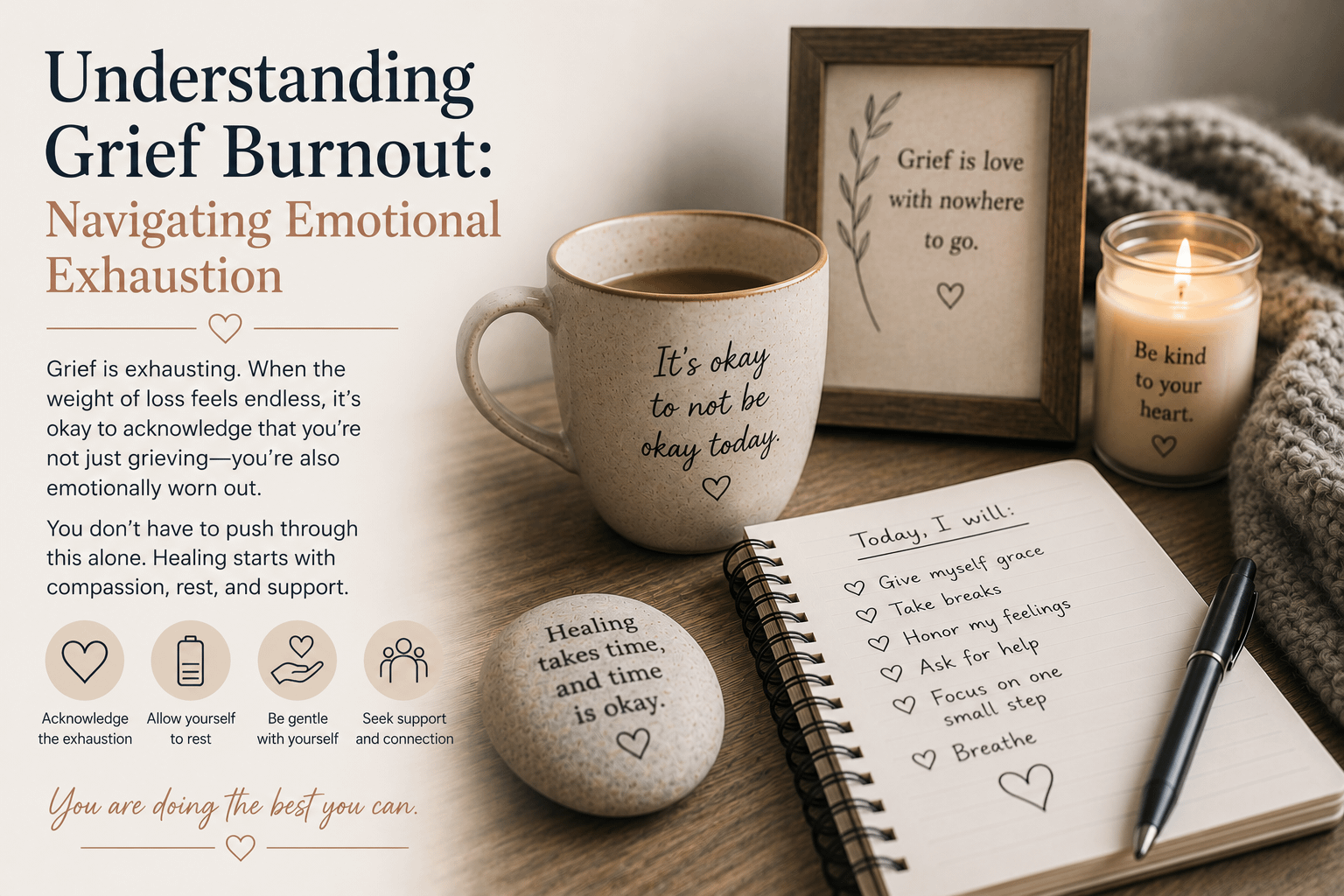
    Grief is a deeply personal journey, often filled with waves of emotions that ebb and flow over time. While it’s natural to experience sadness, anger, or longing after a loss, there’s a lesser-known phenomenon that can emerge when grief becomes overwhelming: grief burnout. This state of emotional, mental, and physical exhaustion can leave individuals feeling disconnected, drained, and unable to cope with the weight of their loss. In this article, we’ll explore what grief burnout is, its signs and symptoms, contributing factors, and practical strategies to manage and heal from it.

    What Is Grief Burnout?

    Grief burnout occurs when the prolonged emotional toll of grieving depletes a person’s mental and physical reserves. Unlike typical grief, which may gradually lessen over time, grief burnout feels like hitting a wall—an inability to process emotions or engage with life as you once did. It often arises during significant moments, such as anniversaries, holidays, or other milestones, when memories and emotions resurface with intensity.

    Grief burnout is not a clinical diagnosis but rather a term used to describe the overwhelming exhaustion that accompanies prolonged or complicated grief. It can affect anyone, whether they’re mourning the loss of a loved one, a relationship, a job, or even a sense of normalcy. The emotional labor of navigating grief, combined with life’s ongoing demands, can push individuals into a state of burnout where they feel stuck, detached, or unable to move forward.

    Signs and Symptoms of Grief Burnout

    Grief burnout manifests in a variety of ways, impacting physical health, emotional well-being, and cognitive functioning. Here are some common signs to watch for:

    Emotional Symptoms

    Emotional Numbness or Detachment: Feeling disconnected from loved ones or losing interest in activities that once brought joy.

    Mood Swings: Experiencing sudden shifts in emotions, such as irritability, sadness, or anger, often without a clear trigger.

    Anxiety or Overwhelm: Feeling constantly on edge, anxious, or unable to handle even small tasks.

    Guilt or Shame: Struggling with feelings of guilt for not “moving on” or for experiencing moments of happiness.

    Physical Symptoms

    Chronic Fatigue: Feeling exhausted despite adequate rest, as if your energy reserves are depleted.

    Headaches or Muscle Tension: Persistent physical discomfort, such as tension headaches or body aches, often linked to stress.

    Sleep Disturbances: Trouble falling asleep, staying asleep, or experiencing restless nights filled with vivid dreams or nightmares.

    Changes in Appetite: Eating too much or too little, often as a response to emotional distress.

    Cognitive Symptoms

    Difficulty Concentrating: Feeling scattered or unable to focus on tasks, conversations, or decisions.

    Memory Issues: Struggling to recall details or feeling mentally foggy.

    Intrusive Thoughts: Being overwhelmed by recurring memories or thoughts about the loss, especially during triggering moments like anniversaries.

    Behavioral Symptoms

    Social Withdrawal: Pulling away from friends, family, or social activities due to emotional overload.

    Neglecting Responsibilities: Letting go of daily tasks, such as work, household chores, or self-care, because they feel too overwhelming.

    Increased Irritability: Snapping at others or feeling easily frustrated, even in situations that wouldn’t normally bother you.

    If these symptoms resonate with you, it’s important to recognize that you’re not alone. Grief burnout is a common experience, especially when life’s demands amplify the weight of loss.

    What Contributes to Grief Burnout?

    Grief burnout doesn’t happen overnight; it’s the result of multiple factors piling up over time. Understanding these contributors can help you identify why you might be feeling this way and take steps toward healing. Here are some key factors:

    1. Prolonged or Complicated Grief

    Grief that lingers without resolution—sometimes called complicated grief—can drain emotional resources. This might happen if the loss was sudden, traumatic, or if there were unresolved issues with the person or situation lost. The constant effort to process these complex emotions can lead to burnout.

    2. Triggering Events

    Special days, such as birthdays, anniversaries, or holidays, often intensify feelings of grief. These moments can bring back vivid memories, making it feel as though the loss is happening all over again. The emotional energy required to navigate these triggers can push someone into burnout.

    3. Lack of Support

    Grieving in isolation or without adequate support can exacerbate feelings of overwhelm. If you feel like you can’t share your emotions or if others expect you to “move on” before you’re ready, the pressure can contribute to burnout.

    4. Life’s Ongoing Demands

    Grief doesn’t happen in a vacuum. Balancing work, family, finances, or other responsibilities while grieving can feel like an impossible task. The effort to “keep it together” for others or meet external expectations can deplete your energy reserves.

    5. Unaddressed Mental Health Issues

    Pre-existing conditions like anxiety, depression, or chronic stress can make it harder to cope with grief. These conditions can amplify the emotional and physical toll, making burnout more likely.

    6. Cultural or Societal Expectations

    In some cultures or communities, there’s an unspoken timeline for grief, where people are expected to “get over” their loss within a certain period. This pressure can lead to suppressed emotions, which build up over time and contribute to burnout.

    Strategies for Managing Grief Burnout

    While grief burnout can feel overwhelming, there are practical steps you can take to ease the burden and begin to heal. These strategies focus on self-compassion, support, and small, manageable changes.

    1. Acknowledge Your Feelings

    The first step is to recognize and validate your emotions. Grief burnout often stems from trying to push through or suppress feelings. Allow yourself to feel sadness, anger, or even moments of joy without judgment. Journaling or talking to a trusted friend can help you process these emotions.

    2. Prioritize Self-Care

    Grief can take a toll on your body and mind, so small acts of self-care can make a big difference. Focus on:

    Sleep: Create a calming bedtime routine to improve rest.

    Nutrition: Eat balanced meals, even if they’re simple, to support your energy levels.

    Movement: Gentle activities like walking or yoga can reduce stress and release tension.

    Rest: Give yourself permission to take breaks and say no to non-essential tasks.

    3. Set Boundaries

    Protect your emotional energy by setting boundaries with others. This might mean declining invitations to events that feel overwhelming or letting loved ones know you need space. Communicate your needs clearly and without guilt.

    4. Seek Support

    You don’t have to navigate grief burnout alone. Consider:

    Therapy or Counseling: A licensed therapist, especially one trained in grief counseling, can help you process your emotions and develop coping strategies.

    Support Groups: Connecting with others who have experienced similar losses can provide validation and a sense of community.

    Trusted Loved Ones: Share your feelings with a friend or family member who listens without judgment.

    5. Create Rituals for Special Days

    Anniversaries and holidays can be particularly triggering, but creating meaningful rituals can help you honor your loss while managing emotions. Examples include lighting a candle, writing a letter to the person you’ve lost, or visiting a special place. These acts can provide closure and a sense of connection.

    6. Practice Mindfulness

    Mindfulness techniques, such as deep breathing, meditation, or grounding exercises, can help you stay present and reduce anxiety. Even a few minutes a day can help calm your mind and body.

    7. Break Tasks Into Smaller Steps

    If you’re feeling scattered or overwhelmed, break daily tasks into smaller, manageable steps. For example, instead of tackling an entire to-do list, focus on one task at a time, like making a meal or responding to an email. Celebrate small wins to build momentum.

    8. Consider Professional Help

    If grief burnout is severely impacting your daily life, it may be worth consulting a mental health professional. They can assess whether you’re experiencing complicated grief, depression, or another condition that requires targeted treatment, such as therapy or medication.

    When to Seek Help

    While grief burnout is a normal response to prolonged emotional stress, it’s important to recognize when it’s time to seek professional support. Consider reaching out to a therapist or doctor if:

    Symptoms persist for several weeks or worsen over time.

    You’re experiencing suicidal thoughts or feelings of hopelessness.

    You’re unable to function in daily life, such as going to work or caring for yourself.

    Physical symptoms, like chronic pain or severe fatigue, don’t improve with self-care.

    Moving Forward with Compassion

    Grief burnout is a reminder that healing from loss is not a linear process. It’s okay to feel overwhelmed, and it’s okay to take time to care for yourself. By acknowledging your emotions, seeking support, and practicing self-compassion, you can begin to rebuild your emotional reserves and find moments of peace amidst the pain.

    If you’re struggling with grief burnout, know that you’re not alone. The journey through grief is unique for everyone, but with time, support, and care, it’s possible to find a path toward healing. Reach out to loved ones, lean on professional resources, and give yourself permission to grieve in your own way and at your own pace.

    A Father’s Guide to Surviving the Loss of a Child
  • How To Support Someone On Father’s Day When Their Child Has Passed

    How To Support Someone On Father’s Day When Their Child Has Passed

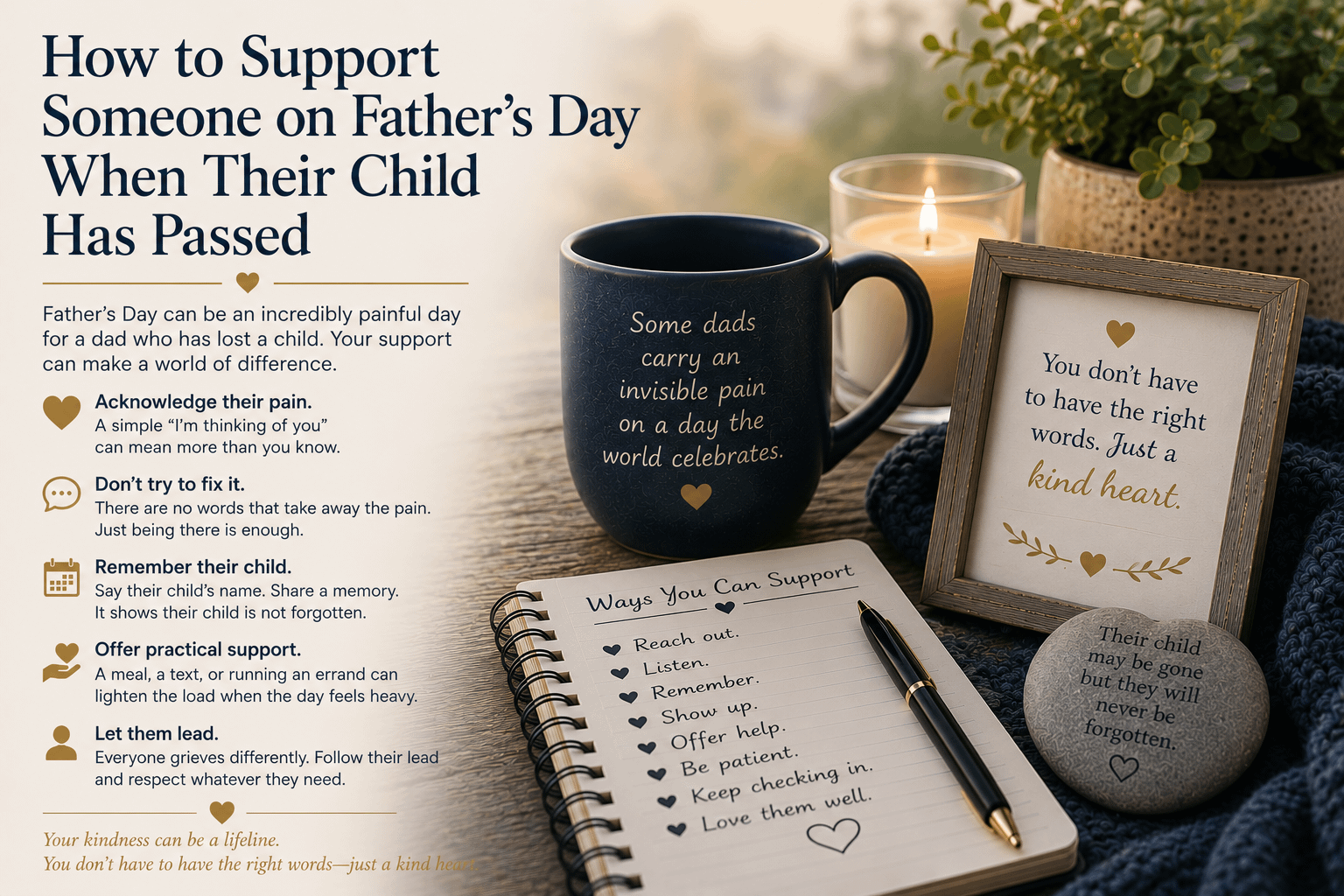
    Father’s Day can be a profoundly painful time for fathers who have lost a child. The holiday, often filled with celebrations of parenthood, may amplify their grief and sense of loss. Supporting someone in this situation requires sensitivity, thoughtfulness, and an understanding of their unique emotional needs. Here are practical and compassionate ways to offer support.

    1. Acknowledge Their Grief

    Grief doesn’t follow a timeline, and Father’s Day can reopen wounds regardless of how much time has passed. A simple acknowledgment of their loss can mean a great deal. Avoid generic holiday greetings like “Happy Father’s Day,” which may feel jarring. Instead, consider saying something like:

    “I’m thinking of you this Father’s Day and holding you and [child’s name] in my heart.”

    “I know this day might be really tough. I’m here for you.”

    This shows you recognize the significance of the day and their pain without forcing them to respond cheerfully.

    2. Listen Without Judgment

    If they want to talk, be a compassionate listener. They may share memories of their child, express anger, or simply sit in silence. Resist the urge to offer platitudes like “They’re in a better place” or “You can always have another child.” These can feel dismissive. Instead, respond with empathy:

    “It sounds like you’re carrying so much. I’m here to listen.”

    “I can’t imagine how hard this is. Thank you for sharing [child’s name] with me.”

    Let them guide the conversation and follow their lead.

    3. Honor Their Child’s Memory

    One of the greatest fears for grieving parents is that their child will be forgotten. You can help keep their child’s memory alive by mentioning their name or sharing a specific memory. For example:

    Send a note: “I was thinking of [child’s name] today and how they always made everyone smile.”

    Suggest a small gesture: “Would you like to light a candle for [child’s name] together this weekend?”

    If you didn’t know their child, ask gentle questions like, “What was [child’s name] like?” This invites them to share without assuming you understand their experience.

    4. Offer Specific Support

    Rather than saying, “Let me know if you need anything,” which can feel vague, offer concrete ways to help. Grief can make it hard for someone to articulate their needs. Consider their personality and circumstances, and suggest:

    “Can I bring over dinner this weekend so you don’t have to cook?”

    “Would you like company for a walk or coffee on Sunday?”

    “I’d love to help with yard work or errands if you need a hand.”

    If they decline, let them know you’ll check in again later, reinforcing that your support is ongoing.

    5. Respect Their Boundaries

    Everyone grieves differently. Some may want to avoid Father’s Day entirely, while others may find comfort in celebrating their role as a father. Ask how they’re feeling about the day or what they’d prefer:

    “Are you planning anything for Father’s Day, or would you rather keep it low-key?”

    “Would you like to do something together, or do you need some space?”

    If they’re unsure, check in gently closer to the date. Respect their need for solitude or distraction without taking it personally.

    6. Suggest Meaningful Activities

    If they’re open to it, propose activities that honor their child or provide a sense of peace. These could include:

    Visiting a place their child loved, like a park or beach.

    Creating a small memorial, such as planting a tree or making a donation in their child’s name.

    Writing a letter to their child or sharing stories about them.

    Keep it flexible and low-pressure: “I was thinking we could do something to remember [child’s name], like visiting their favorite spot. What do you think?”

    7. Be Mindful of Social Media

    Father’s Day posts on social media—filled with happy family photos—can be painful triggers. If you’re active online, consider how your posts might affect them. You could also send a private message instead of a public post to avoid drawing unwanted attention to their grief.

    Additionally, if you know they’re struggling with social media, gently suggest they take a break or mute certain accounts for the day.

    8. Follow Up After the Day

    The days after Father’s Day can feel just as heavy, especially if they’ve been bracing for the holiday. Check in a few days later to show your support extends beyond the date itself:

    “I was thinking of you and [child’s name] this week. How are you doing?”

    “Just wanted to check in and see if you’d like to grab a coffee soon.”

    This reinforces that you’re there for the long haul, not just during high-profile moments.

    9. Educate Yourself About Grief

    If you’re unsure how to support them, take time to learn about grief and child loss. Resources like The Compassionate Friends (www.compassionatefriends.org) or books like Bearing the Unbearable by Joanne Cacciatore can provide insight. Understanding that grief is nonlinear and highly individual will help you approach them with patience and empathy.

    10. Be Patient and Persistent

    Grief can make someone feel isolated, and they may not always respond to your efforts right away. Don’t be discouraged. Continue to show up in small, consistent ways—whether it’s a monthly text, a card on their child’s birthday, or an invitation to connect. Your presence over time can make a significant difference.

    Final Thoughts

    Supporting a father who has lost a child on Father’s Day is about showing up with empathy, flexibility, and genuine care. By acknowledging their grief, honoring their child’s memory, and offering tailored support, you can help them feel seen and loved during an incredibly difficult time. Your efforts, no matter how small they seem, can provide comfort and remind them they’re not alone in their journey.

    A Father’s Guide to Surviving the Loss of a Child