Few experiences in life compare to the pain of losing a child. It is a heartbreak that changes every part of a parent’s life, leaving emotional wounds that often last forever. While the world may expect grief to fade with time, the reality is far different. The loss of a son or daughter can affect every aspect of a parent’s mental health, relationships, physical well-being, and outlook on life.
There is no timeline for recovering from the death of a child because it is not something a parent simply “gets over.” Instead, parents learn to carry the weight of their loss while trying to rebuild a life forever changed.
Understanding how child loss affects mental health can help grieving parents realize they are not alone, while also helping family members and friends better support someone facing one of life’s greatest tragedies.
A Grief Unlike Any Other
Every loss is painful, but the death of a child is often described as one of the most devastating experiences a person can endure. Parents naturally expect to protect their children and watch them grow into adulthood. When that future is suddenly taken away, it can feel as though life itself has lost its meaning.
The grief that follows is often overwhelming. Many parents experience:
- Deep emotional pain that comes in relentless waves.
- Difficulty sleeping or sleeping too much.
- Loss of appetite or emotional eating.
- Trouble concentrating or remembering simple tasks.
- Constant exhaustion despite getting rest.
- A feeling that life has stopped while everyone else continues moving forward.
Many bereaved parents describe feeling like they are simply surviving rather than truly living. Ordinary activities such as grocery shopping, attending family gatherings, or celebrating holidays can suddenly become emotionally exhausting.
Unlike many other losses, child loss affects every future milestone. Birthdays, graduations, weddings, grandchildren, holidays, and family traditions become painful reminders of what should have been.
The Heavy Burden of Guilt
One of the most common emotional struggles after losing a child is guilt.
Even when parents know intellectually that the death was beyond their control, their hearts often ask endless questions.
“What if I had done something differently?”
“Could I have prevented this?”
“Did I miss something important?”
“Was there one more thing I could have done?”
These thoughts may continue for months or even years. Parents often replay conversations, decisions, medical appointments, or the final moments repeatedly in their minds, searching for answers that may never exist.
This self-blame can become emotionally exhausting and may contribute to depression, anxiety, and prolonged grief.
Learning to replace guilt with grace is one of the hardest parts of healing.
Losing Part of Your Identity
Parenthood becomes part of who we are. Our routines, dreams, priorities, and purpose often revolve around our children.
When a child dies, many parents feel as though they have lost part of themselves.
Questions such as these become common:
- Who am I now?
- What is my purpose?
- How do I continue without my child?
- Will I ever truly be happy again?
This identity crisis can leave parents feeling disconnected from the world around them. Even joyful moments may feel incomplete because someone important is missing.
Depression After Child Loss
It is natural to feel sadness after losing a child, but grief can sometimes develop into clinical depression.
Depression following child loss may include:
- Persistent hopelessness.
- Loss of motivation.
- Difficulty getting out of bed.
- Lack of interest in previously enjoyed activities.
- Feelings of worthlessness.
- Emotional numbness.
- Thoughts that life has no purpose.
For some parents, depression develops gradually after the initial shock begins to fade. Others experience it immediately following the loss.
Seeking professional support does not mean your grief is weak. It means you are caring for your emotional health while carrying an incredibly heavy burden.
Anxiety and Constant Fear
Many grieving parents discover they no longer feel safe in the world.
If tragedy could happen once, they begin wondering when it might happen again.
Anxiety may appear as:
- Constant worrying about loved ones.
- Panic attacks.
- Difficulty relaxing.
- Fear whenever family members travel.
- Obsessive checking on children or grandchildren.
- Increased health anxiety.
Simple phone calls or unexpected knocks at the door can suddenly trigger overwhelming fear.
The mind becomes conditioned to expect more tragedy, making everyday life emotionally exhausting.
Post-Traumatic Stress
When a child’s death is sudden or traumatic, many parents develop symptoms similar to post-traumatic stress disorder (PTSD).
Common symptoms include:
- Flashbacks.
- Nightmares.
- Intrusive memories.
- Avoidance of reminders.
- Hypervigilance.
- Emotional numbness.
- Difficulty trusting that life is safe again.
Parents who witnessed an accident, medical emergency, or other traumatic event often relive those moments repeatedly.
Professional trauma therapy can help reduce these symptoms while allowing parents to process painful memories in healthier ways.
The Physical Effects of Grief
Mental health and physical health are deeply connected.
After losing a child, parents commonly experience:
- Chronic fatigue.
- Headaches.
- Digestive problems.
- Muscle pain.
- High blood pressure.
- Lower immune function.
- Weight gain or weight loss.
Grief places tremendous stress on the body.
This is why self-care is not selfish—it becomes necessary for survival.
Even small habits such as walking, drinking water, eating regular meals, and maintaining medical appointments can make a significant difference over time.
Relationships Can Change
The death of a child affects every relationship.
Marriage
Couples often grieve differently.
One parent may openly cry while the other becomes quiet.
One may want to talk constantly while the other withdraws.
Neither approach is wrong, but different grieving styles can create misunderstandings.
Communication becomes more important than ever.
Couples who allow each other to grieve differently often build stronger relationships despite unimaginable pain.
Family and Friends
Many grieving parents discover that their social circle changes after child loss.
Some friends disappear because they feel uncomfortable.
Others unintentionally say hurtful things such as:
- “Everything happens for a reason.”
- “At least you have other children.”
- “They’re in a better place.”
- “You need to move on.”
Although usually well-intended, these statements often increase emotional pain.
Sometimes the greatest gift someone can offer is simply being present and listening without trying to fix the grief.
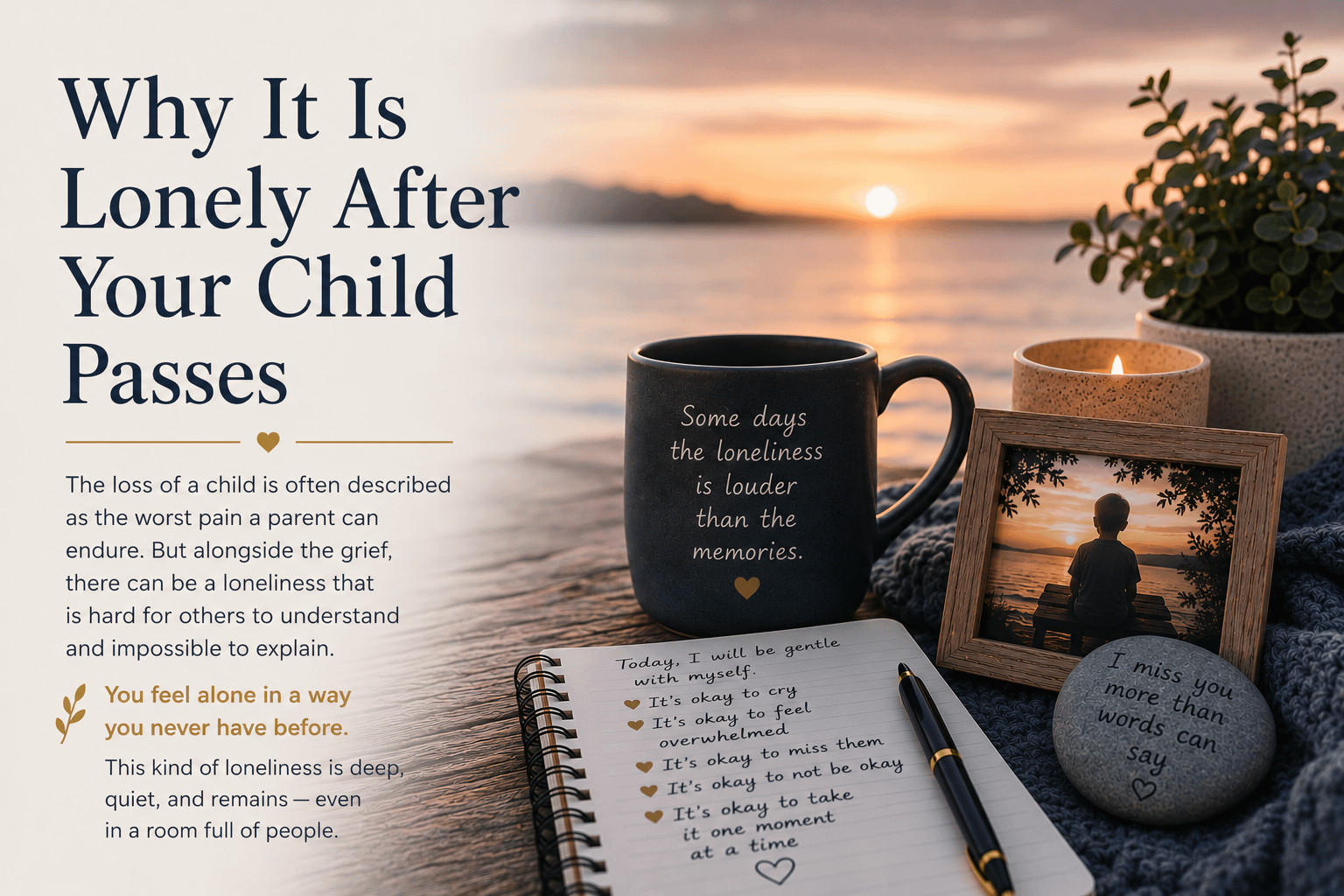
The Loneliness of Child Loss
One of the least discussed aspects of bereavement is loneliness.
Parents often feel isolated because very few people truly understand their pain.
They may avoid social events because conversations feel meaningless.
Holidays become difficult.
Family celebrations become bittersweet.
Even crowded rooms can feel incredibly lonely when the one person you want beside you is missing.
Connecting with other bereaved parents through grief groups or online communities can provide comfort because they understand emotions that others often cannot.
Different Factors Affect Recovery
Every parent’s grief journey is unique.
Mental health outcomes can be influenced by several factors, including:
- The child’s age.
- Whether the death was sudden or expected.
- Previous mental health history.
- Family support.
- Financial stress.
- Spiritual beliefs.
- Access to counseling.
There is no “correct” way to grieve.
Comparison often creates unnecessary guilt.
Healing looks different for every family.
Healthy Ways to Cope
Although grief never completely disappears, healthy coping strategies can reduce emotional suffering.
Professional Counseling
Grief counseling provides a safe place to process overwhelming emotions.
Therapists experienced in traumatic grief can help parents work through depression, anxiety, PTSD, and complicated grief.
Support Groups
Meeting others who have experienced child loss often provides comfort that even loving friends cannot offer.
Being understood reduces feelings of isolation.
Honoring Your Child
Many parents discover healing through remembrance.
Examples include:
- Creating scholarships.
- Donating to charities.
- Planting memorial gardens.
- Celebrating birthdays.
- Writing letters.
- Sharing stories.
- Creating photo albums.
- Volunteering in their child’s memory.
Keeping your child’s memory alive allows love to continue even after death.
Taking Care of Yourself
Grief drains emotional and physical energy.
Simple habits such as walking, eating nutritious meals, sleeping consistently, praying, journaling, or spending time outdoors can gradually improve emotional resilience.
Healing happens one small step at a time.
Finding Purpose Again
One of the greatest fears grieving parents face is believing they will never experience joy again.
While life is never the same, purpose can slowly return.
Some parents become advocates.
Others mentor grieving families.
Some write books, create foundations, volunteer, or simply become more compassionate toward others who are hurting.
Purpose does not erase grief.
Instead, it gives grief somewhere meaningful to go.
Many parents find that helping others becomes one of the greatest ways to honor their child’s memory.
How Friends and Family Can Help
Supporting grieving parents is less about finding perfect words and more about offering consistent compassion.
Helpful ways to support include:
- Listen more than you speak.
- Allow tears without trying to stop them.
- Remember important anniversaries.
- Speak the child’s name.
- Offer practical help such as meals, errands, or childcare.
- Continue checking in months and years later.
Grief does not disappear after the funeral.
In many ways, it becomes harder once everyone else returns to normal life.
There Is Hope Without Forgetting
Healing after losing a child does not mean forgetting your son or daughter.
It does not mean the pain disappears.
It does not mean replacing your child.
Healing means learning how to carry unimaginable love alongside unimaginable loss.
The sadness may always remain, but so will the love.
Over time, many parents discover that they can smile again without feeling guilty, laugh without betraying their child, and build a meaningful future while continuing to honor the one they lost.
That future will never look the way they imagined, but it can still be filled with purpose, compassion, faith, and love.
Final Thoughts
The effects of losing a child on mental health are profound and lifelong. Depression, anxiety, trauma, guilt, loneliness, and emotional exhaustion are all common responses to an unimaginable loss. Yet even in the darkest moments, hope remains possible.
Healing is not about leaving your child behind—it is about carrying their memory with you in a way that allows love to continue shaping your life.
If you are a grieving parent, know this: your feelings are valid, your grief is real, and you are not alone. There are others who understand this journey, and there is no shame in reaching out for support. One day, while the pain may still visit, it will no longer define every moment. Your child’s love will always remain part of who you are, and that love can become the strength that helps you continue moving forward, one day at a time.
A Father’s Guide to Surviving the Loss of a Child