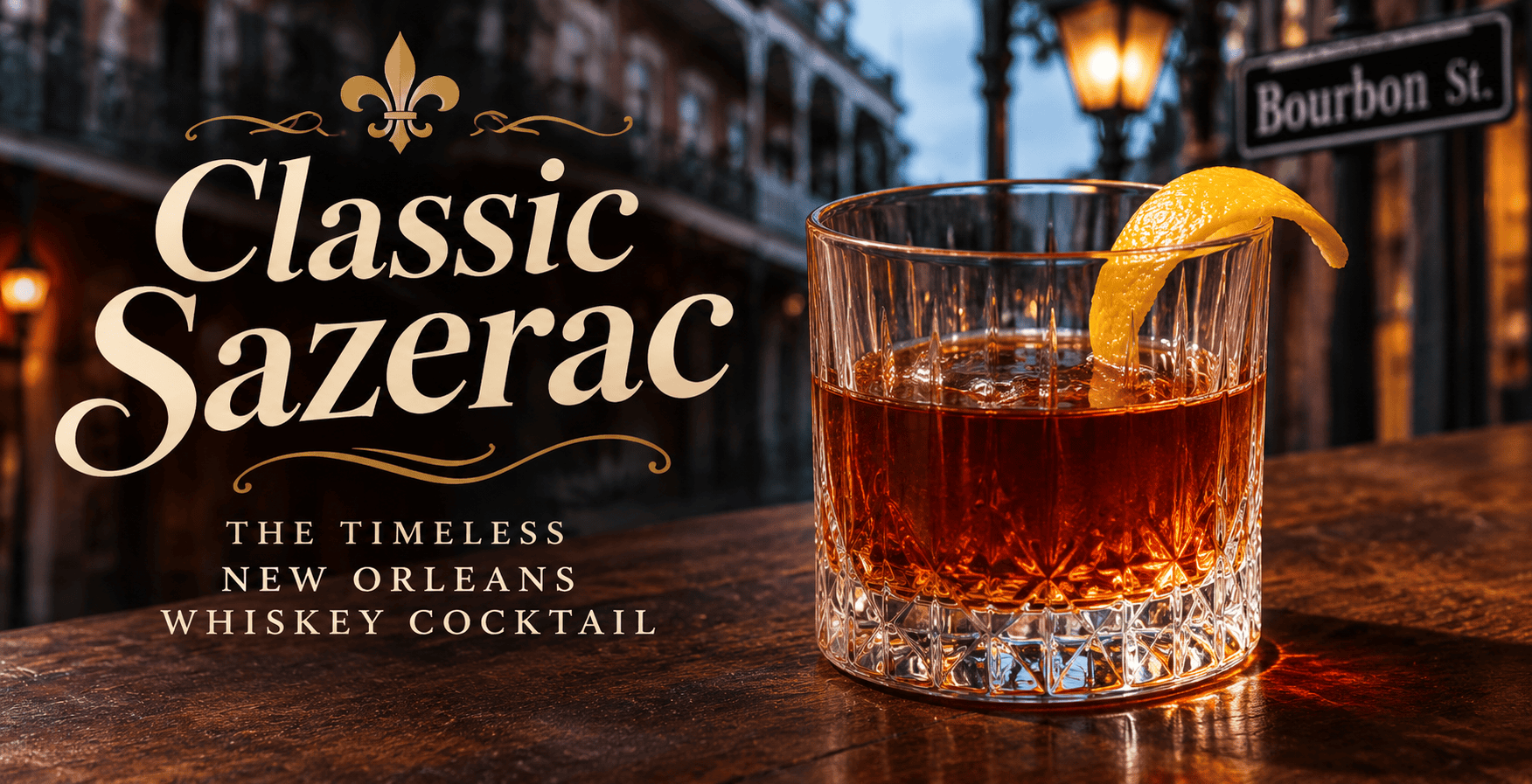
Few cocktails capture the history, character, and sophistication of New Orleans quite like the Classic Sazerac. Known for its bold rye whiskey flavor, aromatic bitters, subtle sweetness, and distinctive absinthe rinse, the Sazerac is one of America’s most celebrated traditional cocktails.
This legendary drink is more than a combination of spirits and bitters. It represents generations of New Orleans cocktail culture, from historic bars and elegant hotel lounges to modern home bartenders who appreciate a well-crafted whiskey drink.
Whether you are a longtime whiskey enthusiast, a fan of Southern cocktails, or someone looking to explore classic American mixology, the Sazerac deserves a place in your cocktail collection.
In this guide, you will learn how to make an authentic Classic Sazerac, understand its fascinating history, discover the importance of each ingredient, and master the techniques that give this cocktail its unmistakable character.
What Is a Classic Sazerac?
The Classic Sazerac is a spirit-forward cocktail traditionally made with rye whiskey, sugar, Peychaud’s bitters, an absinthe rinse, and a lemon peel garnish.
Unlike many whiskey cocktails, the Sazerac is generally served without ice in the finished glass. Instead, the ingredients are stirred with ice to chill and dilute the drink before being strained into a chilled, absinthe-rinsed rocks glass.
The result is a smooth yet powerful cocktail with a complex combination of spicy whiskey, herbal aromas, delicate sweetness, and bright citrus oils.
The Sazerac is often compared to the Old Fashioned because both cocktails combine whiskey, sugar, and bitters. However, the Sazerac has a distinctly different personality thanks to its signature Peychaud’s bitters and aromatic absinthe rinse.
What Does a Sazerac Taste Like?
A properly prepared Sazerac delivers several complementary flavors.
The rye whiskey provides a bold foundation with notes of spice, oak, and sometimes vanilla or caramel.
Peychaud’s bitters contribute floral, herbal, and lightly anise-like characteristics that distinguish the Sazerac from other whiskey cocktails.
The sugar balances the whiskey’s intensity without making the drink overly sweet.
The absinthe rinse adds a fragrant layer of licorice-like herbal complexity, while the lemon peel provides a refreshing citrus aroma.
Together, these ingredients create a cocktail that is rich, aromatic, slightly sweet, and pleasantly spicy.
The History of the Sazerac Cocktail
The Sazerac has deep roots in New Orleans, Louisiana, a city internationally recognized for its food, music, hospitality, and cocktail traditions.
Its history stretches back to the nineteenth century, although some details surrounding its creation remain debated.
Early versions of the drink were associated with Sazerac de Forge et Fils cognac, a French brandy that helped give the cocktail its name.
Over time, rye whiskey became the dominant spirit in the version most commonly served today.
The cocktail also became closely associated with Peychaud’s bitters, created by New Orleans pharmacist Antoine Amédée Peychaud.
One popular story credits Peychaud with serving early versions of the drink in small cups at his pharmacy. While this account is part of the cocktail’s enduring folklore, the precise origins of the modern Sazerac are less certain.
The use of absinthe eventually became another defining characteristic.
When absinthe faced restrictions in the United States during the twentieth century, bartenders often turned to substitutes such as Herbsaint, an anise-flavored spirit associated with New Orleans.
Today, both absinthe and Herbsaint appear in Sazerac recipes.
In 2008, Louisiana officially designated the Sazerac as the cocktail of New Orleans, further cementing its place in the city’s cultural identity.
Classic Sazerac Recipe
Recipe details
Prep time
5 minutes
Servings
1 cocktail
Difficulty
Easy to moderate
Glassware
Rocks glass
Ingredients
-
2 ounces rye whiskey
-
1 sugar cube or ¼ ounce simple syrup
-
3 dashes Peychaud’s bitters
-
¼ ounce absinthe, for rinsing the glass (most will be discarded)
-
1 lemon peel, for garnish
-
Ice, for stirring
Instructions
Step 1: Chill Your Glass
Place a rocks glass in the freezer for several minutes, or fill it with ice and cold water while preparing the cocktail.
A chilled glass helps maintain the cocktail’s temperature because the finished drink is traditionally served without ice.
Step 2: Prepare the Absinthe Rinse
Remove the glass from the freezer or empty the ice water.
Add the absinthe and rotate the glass until its interior is lightly coated.
Discard the excess absinthe.
The goal is to leave a thin aromatic coating rather than a substantial amount of absinthe in the finished drink.
Step 3: Combine the Sugar and Bitters
Place the sugar cube in a mixing glass.
Add three dashes of Peychaud’s bitters and a few drops of water.
Muddle gently until the sugar dissolves as much as possible.
If using simple syrup, simply combine it with the bitters.
Step 4: Add the Rye Whiskey
Pour two ounces of rye whiskey into the mixing glass.
Stir briefly to combine the whiskey, sugar, and bitters.
Step 5: Stir With Ice
Fill the mixing glass with ice.
Stir for approximately 20–30 seconds, adjusting for the size and temperature of the ice.
Stirring chills the cocktail and provides controlled dilution without introducing excessive air.
Step 6: Strain Into the Prepared Glass
Using a cocktail strainer, pour the chilled mixture into the absinthe-rinsed rocks glass.
Do not add ice to the serving glass if following the traditional presentation.
Step 7: Finish With Lemon Peel
Cut a fresh strip of lemon peel, avoiding excessive white pith.
Hold the peel over the cocktail with its colored side facing the drink.
Gently twist or squeeze it to release its aromatic oils.
You may rub the peel around the rim before discarding it or placing it in the glass, depending on your preference.
Serve immediately.
Why Rye Whiskey Is Essential to a Classic Sazerac
Rye whiskey plays a major role in the flavor and identity of the modern Sazerac.
Compared with many bourbon whiskeys, rye often has a spicier, drier profile that works particularly well with Peychaud’s bitters and absinthe.
The peppery characteristics of rye help balance the sweetness of the sugar while complementing the herbal flavors of the other ingredients.
Choosing the Best Rye Whiskey
When selecting rye whiskey for a Sazerac, consider its proof, flavor profile, and overall balance.
A rye whiskey bottled at 90 to 100 proof can work especially well because its flavors remain pronounced after stirring with ice.
Look for whiskey with characteristics such as black pepper, baking spices, oak, vanilla, and subtle fruit.
You do not need the most expensive bottle available.
A dependable, well-balanced rye whiskey is often preferable to a premium bottle whose delicate characteristics might be overwhelmed by bitters and absinthe.
Popular options include Sazerac Rye, Rittenhouse Rye, Wild Turkey 101 Rye, and Old Forester Rye.
Each offers a somewhat different interpretation of the cocktail.
The Importance of Peychaud’s Bitters
Peychaud’s bitters are among the defining ingredients of the Sazerac.
They provide a distinctive aromatic profile that differs noticeably from Angostura bitters.
Peychaud’s bitters are often described as floral, herbal, lightly sweet, and gently anise-like.
Their bright reddish color can also contribute to the cocktail’s appearance.
While some bartenders add a small dash of Angostura bitters for additional complexity, Peychaud’s remains the traditional foundation.
Substituting Angostura entirely will produce a different flavor profile.
For the most recognizable Sazerac experience, use Peychaud’s bitters.
Absinthe vs. Herbsaint: Which Is Better?
One of the most distinctive characteristics of the Sazerac is the aromatic rinse applied to the serving glass.
Historically, absinthe became associated with the cocktail because of its complex herbal flavors and pronounced anise aroma.
Absinthe typically contains botanicals such as wormwood, anise, and fennel, although individual recipes vary.
Herbsaint is another traditional option, particularly associated with New Orleans cocktail culture.
Both can create an excellent Sazerac.
Absinthe often contributes a more layered botanical character, while Herbsaint offers a recognizable anise-forward profile.
The most important factor is restraint.
Too much of either spirit can dominate the cocktail and conceal the rye whiskey.
A light rinse should enhance the drink rather than overwhelm it.
Expert Tips for Making the Perfect Sazerac
1. Always Chill the Glass
Because a traditional Sazerac is served without ice, starting with a cold glass makes a noticeable difference.
A warm glass can quickly raise the temperature of the finished cocktail.
2. Use Fresh Lemon Peel
Fresh citrus oils contribute an important aromatic element.
Bottled lemon juice is not a substitute because the Sazerac relies on the oils from the peel rather than the acidity of lemon juice.
3. Stir Instead of Shake
The Sazerac contains spirits, bitters, and sugar rather than citrus juice or other ingredients that typically benefit from shaking.
Stirring creates a smooth texture and clear appearance.
Shaking would introduce more air and could make the cocktail cloudy.
4. Measure the Ingredients Carefully
The Sazerac is a relatively simple cocktail, which means small changes in ingredient quantities can significantly affect the final result.
Measure the whiskey and sweetener rather than estimating.
5. Avoid Excessive Sweetness
A Sazerac should not taste like a sugary whiskey drink.
Its sweetness should soften the spirit’s intensity while allowing the rye and bitters to remain prominent.
6. Use a Light Absinthe Rinse
A properly rinsed glass should smell pleasantly herbal without tasting overwhelmingly of licorice.
Discarding the excess absinthe is an essential part of achieving that balance.
7. Serve Immediately
The cocktail is at its best when freshly stirred, properly chilled, and aromatic.
Prepare it shortly before serving.
Classic Sazerac Variations Worth Trying
Although the traditional recipe remains a favorite, several variations offer interesting alternatives.
Cognac Sazerac
Replace the rye whiskey with two ounces of cognac.
This version pays tribute to the drink’s early association with French brandy.
Cognac typically produces a softer, fruitier cocktail with notes of dried fruit, oak, and warm spice.
Bourbon Sazerac
Substitute bourbon for rye whiskey.
Bourbon often creates a sweeter, rounder cocktail with vanilla and caramel characteristics.
This variation can appeal to drinkers who prefer less pronounced rye spice.
Split-Base Sazerac
Use one ounce of rye whiskey and one ounce of cognac.
The combination brings together rye’s spicy structure and cognac’s fruit-forward richness.
It is an excellent choice for exploring different interpretations of the classic recipe.
Extra-Bitter Sazerac
Add one small dash of Angostura bitters alongside the Peychaud’s bitters.
This introduces additional warm spice and complexity while retaining the drink’s traditional foundation.
Herbsaint Sazerac
Replace the absinthe rinse with Herbsaint.
This version reflects a long-standing New Orleans approach and offers a slightly different herbal character.
What Is the Difference Between a Sazerac and an Old Fashioned?
The Sazerac and Old Fashioned share several characteristics, but they are not identical.
| Feature | Sazerac | Old Fashioned |
|---|---|---|
| Base spirit | Traditionally rye whiskey in the modern version | Bourbon or rye whiskey |
| Bitters | Peychaud’s | Usually Angostura |
| Sweetener | Sugar or simple syrup | Sugar or simple syrup |
| Additional ingredient | Absinthe or Herbsaint rinse | Usually none |
| Citrus | Lemon peel | Often orange peel |
| Serving style | Typically without ice | Commonly over ice |
| Flavor | Spicy, herbal, aromatic | Rich, whiskey-forward, bittersweet |
Both cocktails are excellent choices for whiskey enthusiasts.
The Sazerac generally offers a more pronounced herbal aroma, while the Old Fashioned emphasizes the whiskey itself.
Best Foods to Pair With a Classic Sazerac
The bold flavors of a Sazerac make it a natural companion to rich, savory dishes and traditional Southern cuisine.
New Orleans-Style Gumbo
The complex spices and savory richness of gumbo complement the rye whiskey’s peppery character.
Blackened Steak
A well-seasoned steak pairs beautifully with the cocktail’s strong whiskey foundation.
Cajun Shrimp
The herbal and spicy characteristics of the Sazerac work well with Cajun-seasoned shrimp.
Smoked Brisket
Smoky barbecue flavors complement the whiskey’s oak and spice notes.
Aged Cheddar
Sharp cheddar provides a rich, savory contrast to the cocktail’s herbal qualities.
Dark Chocolate
A small piece of dark chocolate can highlight the whiskey’s deeper flavor characteristics and provide a satisfying finish.
Common Sazerac Mistakes to Avoid
Even experienced home bartenders can make mistakes when preparing a spirit-forward cocktail.
One common problem is adding too much absinthe. Because absinthe has an assertive flavor, excessive amounts can overpower the whiskey and bitters.
Another mistake is failing to dissolve the sugar properly. Undissolved sugar can collect at the bottom of the glass, creating inconsistent sweetness.
Using too much simple syrup can also disrupt the balance.
A Sazerac should taste like a carefully balanced whiskey cocktail, not a sweet mixed drink.
Serving the cocktail in a warm glass is another avoidable problem.
Finally, skipping the lemon peel removes an important aromatic element.
Although the lemon contributes very little liquid, its fragrant oils play a meaningful role in the drinking experience.
Frequently Asked Questions About the Classic Sazerac
Is a Sazerac Stronger Than an Old Fashioned?
Both are spirit-forward cocktails and can have similar alcohol content depending on the whiskey proof, ingredient quantities, and dilution.
The Sazerac may taste particularly intense because it is traditionally served without ice in the finished glass.
Can You Make a Sazerac Without Absinthe?
Yes.
You can use Herbsaint or another suitable anise-flavored spirit for the rinse.
Omitting the rinse entirely is possible, but the finished drink will lack one of the Sazerac’s defining aromatic characteristics.
Is Bourbon or Rye Better for a Sazerac?
Rye whiskey is the traditional choice for the modern Classic Sazerac.
Bourbon can make a delicious variation, but its sweeter flavor profile produces a different result.
Should a Sazerac Have Ice?
The cocktail is stirred with ice during preparation but is traditionally strained into a chilled glass without ice.
Some modern variations are served over a large ice cube, although this is not the classic presentation.
Why Is There No Lemon Juice in a Sazerac?
The Sazerac uses lemon peel for its aromatic oils rather than lemon juice for acidity.
Adding lemon juice would significantly change the cocktail’s flavor and balance.
Can You Make Sazeracs for a Party?
Yes.
You can combine the rye whiskey, sweetener, and bitters ahead of time.
Keep the mixture chilled and stir individual portions with ice before serving, or carefully batch the cocktail with measured water for dilution.
Rinse each serving glass with absinthe and finish with fresh lemon peel.
What Type of Glass Is Best?
A chilled rocks glass, also called an Old Fashioned glass, is the traditional choice.
A heavy-bottomed glass provides an attractive presentation and works well for serving the cocktail without ice.
How to Make a Classic Sazerac for a Small Gathering
If you are entertaining guests, preparing multiple Sazeracs individually can become time-consuming.
For a gathering of six people, you can prepare the base mixture in advance.
Ingredients for Six Cocktails
-
12 ounces rye whiskey
-
1½ ounces simple syrup
-
18 dashes Peychaud’s bitters
-
Absinthe for rinsing six glasses
-
6 fresh lemon peels
-
Ice for stirring
Preparation
Combine the rye whiskey, simple syrup, and bitters in a clean bottle or pitcher.
Refrigerate until ready to serve.
When guests arrive, rinse each chilled rocks glass with absinthe.
Stir portions of the prepared mixture with ice until properly chilled and diluted.
Strain into the prepared glasses.
Express fresh lemon peel over each cocktail and serve immediately.
This approach helps maintain consistency while reducing preparation time.
Why the Sazerac Remains a Southern Cocktail Legend
The Classic Sazerac has survived changing drinking trends, evolving bar cultures, and generations of cocktail experimentation.
Its continued popularity comes from a combination of history, simplicity, and distinctive flavor.
Unlike elaborate modern cocktails that require numerous specialty ingredients, the Sazerac relies on a small number of carefully chosen components.
Every ingredient has a purpose.
The whiskey provides strength and structure.
The sugar offers balance.
The bitters add complexity.
The absinthe creates its unmistakable herbal aroma.
The lemon peel brings everything together with a bright finishing touch.
The result is a cocktail that feels both elegant and deeply connected to the traditions of New Orleans.
For anyone interested in Southern whiskey cocktails, classic American drinks, or the history of bartending, the Sazerac offers an unforgettable introduction.
Final Thoughts: A New Orleans Classic Worth Mastering
The Classic Sazerac is more than an old-fashioned whiskey cocktail. It is a lasting symbol of New Orleans hospitality, cocktail craftsmanship, and Southern drinking traditions.
Its combination of spicy rye whiskey, aromatic Peychaud’s bitters, subtle sweetness, and a carefully measured absinthe rinse creates a drinking experience that is both bold and refined.
Although the recipe is straightforward, mastering the details makes all the difference.
From chilling the glass and dissolving the sugar to controlling dilution and expressing fresh lemon oils, each step contributes to the finished cocktail.
Whether you are preparing one for a quiet evening, serving guests at a Southern-themed gathering, or exploring the great classic cocktails of American history, the Sazerac is a drink worth learning to make properly.
A great Sazerac does not need elaborate ingredients or complicated techniques. It simply requires quality whiskey, thoughtful preparation, and an appreciation for one of New Orleans’ most enduring traditions.

Leave a Reply