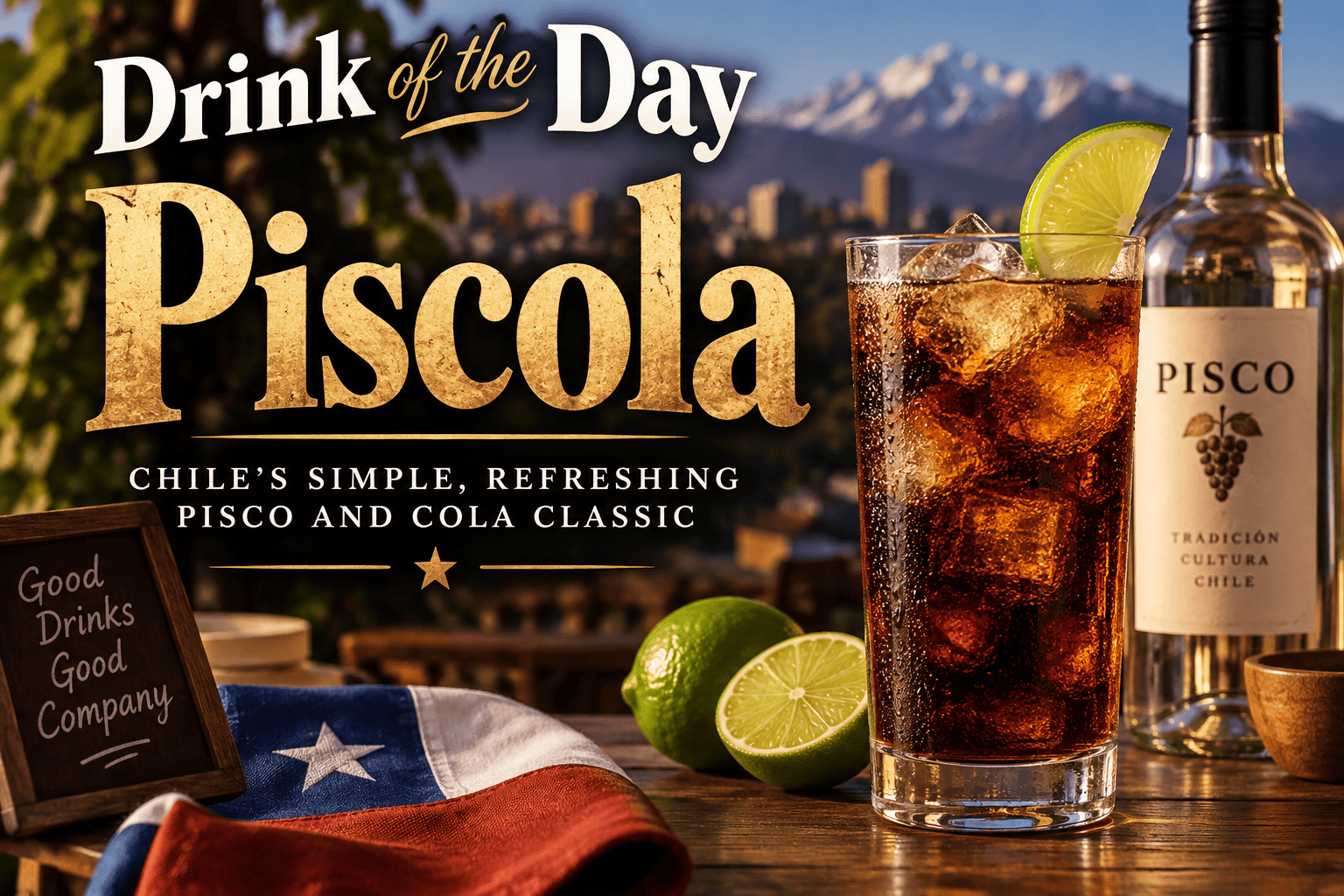
Some drinks earn their reputation through elaborate recipes, rare ingredients, or carefully measured layers of flavor. Others become classics because they prove that simplicity can be just as satisfying.
Today’s Drink of the Day is the Piscola, one of Chile’s most recognizable mixed drinks.
Made primarily with pisco and cola, the Piscola is uncomplicated, refreshing, and easy to prepare. At first glance, it may look like another spirit-and-cola combination, but the character of pisco gives this drink an identity all its own.
Pisco brings fruity, floral, and sometimes slightly earthy notes that interact beautifully with the sweetness, caramel flavors, and carbonation of cola. Served over plenty of ice, the result is a smooth and approachable drink that requires almost no preparation.
Whether you already enjoy pisco or are looking for an easy way to experience it for the first time, the Piscola deserves a place on your drink list.
What Is a Piscola?
A Piscola is a mixed alcoholic drink traditionally made by combining pisco with cola and serving it over ice.
The name itself tells you almost everything you need to know:
Pisco + Cola = Piscola
It is especially associated with Chile, where pisco has long been an important spirit and the Piscola has become deeply connected with social gatherings and nightlife.
Unlike cocktails that require shaking, muddling, straining, syrups, bitters, or garnishes, the Piscola is designed to be straightforward.
Pour.
Mix.
Enjoy.
That simplicity is part of its charm.
What Is Pisco?
The ingredient that makes a Piscola different from an ordinary rum and Coke or whiskey and Coke is pisco.
Pisco is a grape-based spirit produced in South America, particularly in Chile and Peru, both of which have distinct traditions and regulations surrounding its production.
Because it begins with grapes rather than grain or sugarcane, pisco can have a noticeably different flavor profile from spirits such as whiskey, vodka, or rum.
Depending on the pisco, you might notice flavors and aromas resembling:
- Fresh grapes
- Citrus
- Flowers
- Herbs
- Tropical fruit
- Stone fruit
- Honey
- Spice
Once cola enters the picture, many of those characteristics become softer while still providing enough complexity to keep the drink interesting.
The Classic Piscola Recipe
One reason the Piscola has remained popular is that you don’t need professional bartending equipment to make one.
Ingredients
- 2 oz pisco
- 4–6 oz cola
- Ice
- Lime wedge, optional
Instructions
Fill a highball glass or similar tall glass generously with ice.
Pour 2 ounces of pisco over the ice.
Top with 4 to 6 ounces of chilled cola, depending on how strong you prefer the drink.
Give everything a gentle stir.
Garnish with a lime wedge if desired.
Serve immediately while the drink is cold and carbonated.
Finding Your Preferred Ratio
There isn’t one universal ratio that everyone has to follow.
That is actually one of the best things about the Piscola.
You can adjust it according to your personal preference.
For a lighter and sweeter drink, use approximately:
1 part pisco to 3 parts cola
For a more balanced version, try:
1 part pisco to 2 parts cola
If you want the pisco to have a stronger presence, you can decrease the amount of cola.
When making the drink for the first time, the 1-to-2 ratio is an excellent starting point. Taste it and adjust from there.
What Does a Piscola Taste Like?
The Piscola combines two very different flavor profiles.
Cola provides familiar notes of caramel, vanilla, citrus, spice, sweetness, and carbonation.
Pisco contributes the grape-derived character.
Together, they produce a drink that can be fruity, sweet, lightly floral, refreshing, and surprisingly complex despite containing only two primary ingredients.
The cola softens some of the spirit’s intensity while the pisco gives ordinary cola a deeper character.
Ice is important as well.
As it slowly melts, the dilution can mellow the drink and help bring everything together.
Why Cola Works So Well With Pisco
Cola is an extremely versatile mixer because it contains several flavor components rather than simply being sweet.
Caramel notes complement aged or robust spirits, while its citrus and spice characteristics can interact with more aromatic ones.
That makes pisco an interesting match.
Instead of completely covering the pisco, cola can provide a familiar background against which the grape spirit’s character can emerge.
The carbonation also helps keep the combination refreshing.
Chile and the Piscola
While pisco itself is associated with both Chile and Peru and the two countries have their own pisco traditions, the Piscola is particularly associated with Chilean drinking culture.
It became an accessible way to enjoy pisco without needing a complicated cocktail recipe.
That accessibility helped make it suitable for parties, bars, celebrations, casual gatherings, and evenings with friends.
There is something inherently social about a drink that anyone can make in seconds.
You don’t need a cocktail shaker.
You don’t need a blender.
You don’t need half a dozen ingredients.
You need a glass, ice, pisco, and cola.
Sometimes simplicity wins.
Piscola vs. Pisco Sour
People discovering pisco often encounter another famous drink first: the Pisco Sour.
Although both use pisco, the drinking experiences are quite different.
A Pisco Sour traditionally focuses on tart citrus flavors balanced by sweetness and the spirit itself. Depending on the tradition and recipe, additional ingredients may also be involved.
The Piscola is considerably easier.
Instead of creating a sweet-and-sour cocktail, you’re pairing the spirit with the caramel sweetness and carbonation of cola.
Think of the Piscola as the relaxed, everyday cousin of more elaborate pisco cocktails.
Try It With Fresh Lime
Although lime isn’t necessary, it is one of the easiest ways to put a small twist on the classic.
Squeeze a fresh lime wedge into your finished Piscola and drop the wedge into the glass.
That small amount of acidity can brighten the drink and balance some of the cola’s sweetness.
If you prefer drinks that aren’t overly sweet, lime is particularly useful.
Piscola Variations
Once you’ve tried the traditional version, you can experiment.
Lime Piscola
Add a generous squeeze of fresh lime juice.
The additional acidity makes the drink brighter and more refreshing.
Cherry Piscola
Use cherry-flavored cola instead of regular cola.
The fruit flavors can complement some of pisco’s natural grape characteristics.
Vanilla Piscola
Try vanilla cola for a richer, dessert-like version.
Spiced Piscola
Add a very small dash of aromatic bitters for extra spice and complexity.
It moves the drink away from the traditional two-ingredient formula, but it can create an interesting cocktail.
Extra-Citrus Piscola
Add fresh lime and a small orange peel garnish.
The citrus aroma can emphasize some of the brighter qualities in both the cola and pisco.
Lighter Piscola
Use additional cola and plenty of ice for a less spirit-forward drink.
You could also choose a zero-sugar cola if that’s your preference.
The Importance of Ice
For such a simple drink, little details matter.
One of those details is ice.
Use plenty of fresh ice rather than dropping two small cubes into the bottom of the glass.
A properly filled glass keeps the drink colder for longer.
Cold temperature is especially important because cola becomes less refreshing as it warms and loses carbonation.
If possible, chill your cola before preparing the drink rather than relying entirely on the ice to cool it.
Choosing Your Cola
Traditional cola is the obvious choice, but different brands can subtly change the drink.
Some colas are sweeter.
Others emphasize vanilla.
Some have stronger spice or citrus characteristics.
Try the same pisco with two different colas and you may be surprised by how different the finished drinks taste.
There’s no requirement that you use the most expensive mixer available. The goal is simply to find a combination you enjoy.
Choosing Your Pisco
Since the recipe contains only two primary ingredients, your choice of pisco can make a noticeable difference.
Different piscos can vary considerably in aroma, strength, grape character, and overall flavor.
If you’re unfamiliar with pisco, start by tasting a small amount on its own before mixing your drink.
You don’t need to drink an entire serving neat. A small taste gives you an idea of what the spirit contributes.
Then make your Piscola.
You may suddenly recognize flavors in the finished drink that you wouldn’t have noticed otherwise.
Best Foods to Serve With a Piscola
The sweet, refreshing profile of a Piscola makes it versatile with food.
Try serving it alongside:
- Grilled meats
- Empanadas
- Burgers
- Pizza
- Spicy chicken
- Tacos
- Barbecue
- Salty snacks
- French fries
- Charcuterie
Rich, salty, and spicy foods can work especially well because the cold sweetness of the cola provides contrast.
Make a Piscola Bar for a Party
The simplicity of this drink makes it an easy option for entertaining adults.
Instead of preparing every drink individually, create a small self-serve Piscola station with pisco, several types of cola, ice, glasses, lime wedges, and a measuring jigger.
Guests can choose their preferred cola and adjust the strength of their drink.
You might offer traditional cola alongside cherry, vanilla, and zero-sugar versions.
It turns a two-ingredient drink into an interactive tasting experience without requiring an enormous selection of cocktail ingredients.
Why Simple Drinks Become Classics
Cocktail culture often celebrates complexity.
There’s nothing wrong with that. Creating an intricate cocktail can be both an art and a science.
But complicated doesn’t automatically mean better.
Some of the world’s most enduring mixed drinks are remarkably simple because they’re easy to remember, easy to prepare, and easy to customize.
The Piscola belongs in that category.
You don’t need bartending experience to make it.
You don’t need specialized equipment.
And you don’t need to memorize a long recipe.
That accessibility is a major part of its appeal.
Drink of the Day: Piscola
The Piscola shows how two ingredients can create something memorable.
Pisco brings its distinctive grape-based character.
Cola brings sweetness, caramel, spice, and carbonation.
Ice brings everything together into a cold and refreshing drink.
Add a squeeze of lime if you want some additional brightness, or keep it traditional and enjoy the straightforward combination of pisco and cola.
If you’ve never tried pisco before, a Piscola can be an approachable introduction. If you’re already a pisco fan, it’s an easy drink to return to whenever you don’t feel like preparing something complicated.
Sometimes a great drink doesn’t need ten ingredients.
Sometimes all you need is pisco, cola, ice, and good company.
Would you drink your Piscola traditional with just pisco and cola, or add a squeeze of fresh lime?
Please enjoy responsibly. This article is intended for adults of legal drinking age.


Leave a Reply