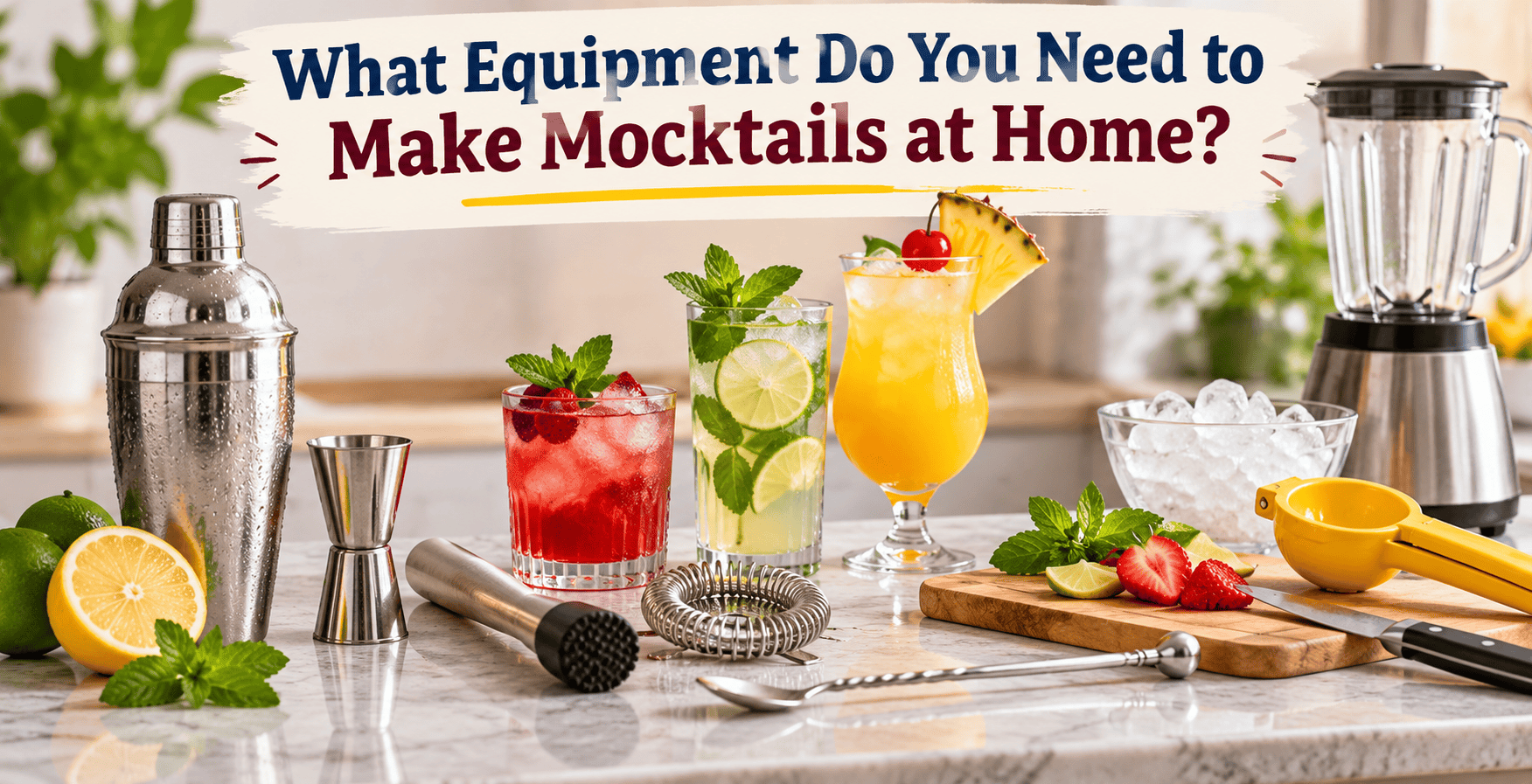
Making delicious mocktails at home does not require an expensive bar setup, professional bartending experience, or a cabinet filled with specialty equipment. With a few basic tools and everyday kitchen supplies, you can create refreshing, flavorful, and beautifully presented alcohol-free drinks that rival those served at restaurants and cocktail bars.
Whether you enjoy fruity summer refreshments, sparkling citrus drinks, creamy dessert mocktails, or sophisticated alcohol-free versions of classic cocktails, having the right equipment makes preparation easier and more enjoyable.
The good news is that most beginners only need five basic tools to start making mocktails at home: a cocktail shaker, measuring tool, muddler, strainer, and suitable drinking glasses. You may already own several of these items.
This complete guide explains the essential equipment for making mocktails, which tools are optional, affordable alternatives to professional bartending supplies, and how to build a practical home mocktail station without spending a fortune.
Why Does Mocktail Equipment Matter?
Mocktails are more than simply mixing juice and soda together. A well-made mocktail combines flavors, textures, temperatures, and presentation to create an enjoyable drinking experience.
The equipment you use helps control these important elements.
For example, a cocktail shaker chills ingredients quickly while combining flavors. A muddler releases natural oils and aromas from fresh herbs and fruits. A measuring tool helps maintain the proper balance between sweetness, acidity, and other ingredients.
Even the type of glass you choose can influence how a mocktail looks and feels when served.
However, owning professional equipment does not automatically produce better drinks. Understanding how to use a few basic tools correctly is far more important than purchasing every accessory available.
1. Cocktail Shaker: The Most Useful Mocktail Tool
A cocktail shaker is one of the most versatile pieces of equipment for preparing mocktails at home.
It allows you to combine ingredients quickly while chilling them with ice.
Shaking is particularly useful for drinks containing citrus juice, fruit syrups, noncarbonated mixers, and other ingredients that benefit from vigorous mixing.
Types of Cocktail Shakers
There are three common styles.
Cobbler Shaker
A cobbler shaker consists of three pieces:
-
A metal mixing container
-
A fitted lid with a built-in strainer
-
A small cap that covers the pouring opening
This design is especially convenient for beginners because you do not need to purchase a separate strainer immediately.
Boston Shaker
A Boston shaker typically consists of two containers that fit together to create a seal.
Professional bartenders frequently use this style because it is versatile and efficient.
However, beginners may need practice opening the shaker after mixing drinks.
Parisian Shaker
A Parisian shaker has two metal pieces and combines the appearance of a cobbler shaker with the general operation of a Boston shaker.
It is attractive and functional but usually requires a separate strainer.
Do You Really Need a Cocktail Shaker?
Not necessarily.
A clean mason jar with a secure, leakproof lid can work as an inexpensive alternative for many shaken mocktails.
Always ensure the container is suitable for cold liquids and avoid shaking carbonated ingredients.
Beginner recommendation: A stainless-steel cobbler shaker is an excellent first purchase.
2. Jigger: Measuring Ingredients Accurately
A jigger is a small measuring tool commonly used by bartenders.
It helps you pour consistent amounts of juice, syrup, citrus, and other mocktail ingredients.
Accurate measurements matter because even a small change in the amount of lemon juice or sweetener can significantly affect a drink’s flavor.
Common Jigger Measurements
Many double-sided jiggers include:
-
1 ounce on one side
-
2 ounces on the other side
Other models include measurements such as ½ ounce, ¾ ounce, and 1½ ounces.
Some jiggers also display milliliters.
Why Is Measuring Important?
Imagine making a strawberry lemonade mocktail.
Too much lemon juice can make the drink unpleasantly sour. Too much simple syrup can overwhelm the natural strawberry flavor.
Using a jigger helps maintain a balanced recipe every time.
What Can You Use Instead?
If you do not own a jigger, ordinary kitchen measuring spoons work well.
For reference:
-
1 tablespoon = ½ fluid ounce
-
2 tablespoons = 1 fluid ounce
-
¼ cup = 2 fluid ounces
A small liquid measuring cup is another practical alternative.
For beginners, consistency matters more than owning a professional measuring tool.
3. Muddler: Releasing Fresh Fruit and Herb Flavors
A muddler is a handheld tool used to gently press fruits, herbs, and other ingredients inside a glass or mixing container.
It is particularly useful when preparing fresh, aromatic mocktails.
What Ingredients Can You Muddle?
Common ingredients include:
-
Fresh mint leaves
-
Strawberries
-
Raspberries
-
Blackberries
-
Lime wedges
-
Lemon wedges
-
Cucumber slices
-
Fresh basil
-
Watermelon pieces
Muddling helps release juices, aromatic oils, and natural flavors.
How Do You Use a Muddler?
Place the ingredients inside a sturdy glass or mixing container.
Press gently and twist the muddler to release their flavors.
Avoid crushing delicate herbs aggressively.
For example, when making a virgin mojito, lightly pressing mint leaves helps release their aroma without unnecessarily shredding the leaves or producing harsh flavors.
Can You Make Mocktails Without a Muddler?
Absolutely.
The handle of a sturdy wooden spoon can work as a substitute.
A small wooden pestle is another option.
Just make sure the tool is clean, food-safe, and suitable for the container you are using.
4. Cocktail Strainer: Creating Smooth Mocktails
A cocktail strainer separates ice, fruit pulp, seeds, and herb fragments from the finished drink.
This tool is particularly useful when making mocktails with muddled ingredients or shaken fruit juices.
Types of Strainers
Hawthorne Strainer
A Hawthorne strainer has a metal spring around its edge.
It fits over a shaker or mixing vessel and helps keep ice and larger ingredients out of the serving glass.
Fine-Mesh Strainer
A fine-mesh strainer removes smaller particles such as fruit seeds, fine pulp, and tiny herb fragments.
It is useful when you want a smooth, polished mocktail.
Julep Strainer
A julep strainer is a perforated metal tool traditionally used with mixing glasses.
It is less essential for beginners but can be useful for stirred drinks.
Do You Need Multiple Strainers?
No.
A basic cocktail strainer is sufficient for most home mocktails.
If you regularly make drinks with fresh berries, a fine-mesh kitchen strainer is a worthwhile addition.
A regular kitchen sieve can also perform the same basic function.
5. Mixing Glass and Bar Spoon
Not every mocktail needs to be shaken.
Some drinks are better prepared by gently stirring their ingredients together.
A mixing glass and bar spoon are helpful for these recipes.
When Should You Stir a Mocktail?
Stirring works well for drinks containing:
-
Alcohol-free botanical spirits
-
Chilled tea
-
Flavored syrups
-
Noncarbonated juices
-
Coffee concentrates
-
Other ingredients that combine easily
Stirring can provide a smooth texture without introducing as much air as vigorous shaking.
What Is a Bar Spoon?
A bar spoon is a long-handled spoon designed for mixing beverages in tall glasses and mixing vessels.
Some models feature twisted handles.
However, a regular kitchen spoon works perfectly well for most beginner recipes.
For sparkling mocktails, gently stir carbonated ingredients after adding them to preserve their bubbles.
6. Citrus Juicer: Essential for Fresh Flavor
Fresh citrus juice is one of the most useful ingredients in homemade mocktails.
Lemons, limes, oranges, and grapefruits provide acidity, sweetness, and aroma.
A citrus juicer makes extracting fresh juice easier and more efficient.
Types of Citrus Juicers
Handheld Citrus Press
A handheld citrus press squeezes juice from lemon or lime halves.
It is compact, affordable, and easy to clean.
Manual Citrus Reamer
A citrus reamer has a ridged cone that extracts juice when twisted into a cut citrus fruit.
It works well for small batches.
Electric Citrus Juicer
An electric juicer is useful when preparing larger quantities of juice for parties or family gatherings.
However, it is unnecessary for occasional mocktail preparation.
Is Fresh Citrus Better Than Bottled Juice?
Fresh citrus juice often provides a brighter flavor and more appealing aroma.
Bottled juice can still be convenient, especially when fresh fruit is unavailable.
For mocktails where citrus is a dominant ingredient, fresh juice is usually worth the extra effort.
7. Blender: Perfect for Frozen Mocktails
A blender is not essential for every mocktail, but it becomes extremely useful when preparing frozen or creamy beverages.
Frozen mocktails are especially popular during warm weather and outdoor gatherings.
What Mocktails Can You Make With a Blender?
Examples include:
-
Frozen strawberry daiquiri mocktails
-
Virgin piña coladas
-
Frozen mango margarita mocktails
-
Watermelon slushies
-
Peach frozen lemonade
-
Frozen raspberry limeades
-
Creamy coconut mocktails
A blender combines frozen fruit, ice, juice, and other ingredients into a smooth beverage.
Do You Need an Expensive Blender?
No.
A basic countertop blender is sufficient for many recipes.
However, if you frequently crush ice, choose a blender specifically rated for ice crushing.
An immersion blender can work for soft fruits and liquid mixtures but may not be suitable for crushing hard ice.
8. Ice Cube Trays and Ice Tools
Ice is one of the most overlooked elements of mocktail preparation.
It does more than keep drinks cold.
Ice affects dilution, texture, appearance, and how quickly a beverage reaches its ideal serving temperature.
Common Types of Ice
Standard Ice Cubes
These are suitable for everyday mocktails, lemonade, iced tea, and sparkling drinks.
Large Ice Cubes
Large cubes are especially attractive in short glasses and generally melt more slowly than smaller cubes under similar conditions.
They are useful for spirit-style alcohol-free mocktails.
Crushed Ice
Crushed ice works well in mojito-style mocktails, tropical drinks, and refreshing fruit beverages.
Decorative Ice
You can freeze berries, citrus slices, or edible herbs inside ice cubes to create an attractive presentation.
Useful Ice Equipment
Consider keeping the following items available:
-
Reusable ice cube trays
-
Ice scoop or tongs
-
Ice bucket for gatherings
-
Crushed-ice maker, if desired
A freezer and ordinary ice trays are enough to begin.
9. Mocktail Glassware: Choosing the Right Glass
Presentation plays an important role in the mocktail experience.
Serving a drink in attractive glassware can make a simple recipe feel more special.
You do not need a complete collection of professional bar glasses, but having a few versatile options is helpful.
Highball Glasses
Highball glasses are tall and narrow.
They are excellent for sparkling mocktails, fruit sodas, virgin mojitos, and lemonade-based beverages.
Rocks Glasses
Rocks glasses are shorter and wider.
They work well for alcohol-free Old Fashioned-style drinks, botanical mocktails, and beverages served over large ice cubes.
Coupe Glasses
Coupe glasses have shallow, rounded bowls and stems.
They are attractive choices for elegant mocktails served without ice.
Martini Glasses
Martini glasses are suitable for alcohol-free martini-style beverages and other sophisticated mocktail presentations.
Hurricane Glasses
Hurricane glasses have a curved shape and are often associated with tropical beverages.
They are ideal for virgin piña coladas and colorful fruit mocktails.
Do You Need Every Type of Glass?
Definitely not.
For a beginner, a set of highball glasses and a few rocks glasses can handle most recipes.
Additional glassware can be purchased later as your interests expand.
10. Cutting Board and Sharp Kitchen Knife
Fresh fruit and garnishes are important components of many mocktail recipes.
A cutting board and sharp knife make preparing ingredients easier.
You can use these tools to cut:
-
Lemon wheels
-
Lime wedges
-
Orange slices
-
Strawberry halves
-
Cucumber ribbons
-
Pineapple wedges
-
Watermelon cubes
-
Fresh herb garnishes
A small paring knife is particularly useful for detailed garnish preparation.
Always use a stable cutting board and handle sharp tools carefully.
11. Vegetable Peeler and Zester
A vegetable peeler and citrus zester are optional tools that can improve the appearance and aroma of homemade mocktails.
Vegetable Peeler
A vegetable peeler creates thin strips of citrus peel.
These strips can be twisted over a drink to release fragrant citrus oils.
Orange, lemon, and grapefruit twists are especially popular garnishes.
Avoid removing too much of the bitter white pith beneath the colored peel.
Citrus Zester
A zester removes fine pieces of citrus peel.
You can use zest to enhance syrups, garnish creamy mocktails, or add citrus aroma to drink rims.
These tools are inexpensive and useful for everyday cooking as well.
12. Fine-Mesh Sieve and Funnel
A fine-mesh sieve and small funnel are helpful when preparing homemade mocktail ingredients.
A sieve removes solids from fruit purées, flavored syrups, and infused liquids.
A funnel makes transferring homemade syrups into bottles easier and less messy.
These tools become particularly useful if you enjoy preparing ingredients in advance.
For example, homemade raspberry syrup can be strained to remove seeds before being poured into a clean storage bottle.
13. Syrup Bottles and Storage Containers
Homemade syrups are an easy way to introduce different flavors into mocktails.
Popular options include:
-
Simple syrup
-
Strawberry syrup
-
Raspberry syrup
-
Lavender syrup
-
Mint syrup
-
Ginger syrup
-
Honey syrup
-
Vanilla syrup
Clean, food-safe bottles or jars make storing these ingredients convenient.
Choose containers with secure lids and label them with their contents and preparation dates.
Homemade syrups generally require refrigeration, and their safe storage life depends on the recipe, ingredients, and preparation method.
Fresh-fruit syrups can spoil relatively quickly, so prepare manageable quantities rather than storing large batches indefinitely.
14. Optional Equipment for More Advanced Mocktails
Once you become comfortable preparing basic recipes, you may want to explore additional equipment.
These tools are not necessary for beginners, but they can expand your options.
Soda Maker
A home carbonation machine allows you to prepare sparkling water for mocktails.
This can be convenient if you frequently enjoy fizzy drinks.
Follow the manufacturer’s instructions, since many machines are designed to carbonate water only.
Handheld Milk Frother
A milk frother can create a light foam in certain creamy or coffee-based mocktails.
It is especially useful for alcohol-free espresso martini variations and dessert beverages.
Digital Kitchen Scale
A digital scale allows precise measurement of ingredients by weight.
It is particularly helpful when making large batches of syrups or repeating recipes consistently.
Garnish Picks
Reusable garnish picks can hold cherries, berries, olives, or citrus pieces.
They add a decorative finishing touch.
Pitcher or Beverage Dispenser
A large pitcher or beverage dispenser is useful when serving mocktails to several guests.
It allows you to prepare the noncarbonated base ahead of time and add sparkling ingredients immediately before serving.
What Equipment Do Beginners Actually Need?
Although many bartending accessories are available, you can begin with a very small collection.
Here is a practical comparison of essential and optional mocktail tools.
| Equipment | Importance | Budget alternative |
|---|---|---|
| Cocktail shaker | Highly useful | Leakproof mason jar |
| Jigger | Highly useful | Measuring spoons |
| Muddler | Useful | Wooden spoon handle |
| Strainer | Useful | Kitchen sieve |
| Citrus juicer | Useful | Squeeze by hand |
| Bar spoon | Optional | Regular spoon |
| Blender | Optional | Only needed for blended drinks |
| Highball glasses | Useful | Regular drinking glasses |
| Ice cube trays | Essential for iced drinks | Existing freezer trays |
| Cutting board and knife | Highly useful | Existing kitchen tools |
| Zester | Optional | Fine grater |
| Syrup bottles | Optional | Clean food-safe jars |
Most people can make excellent mocktails using equipment they already have in their kitchens.
How Much Does It Cost to Build a Home Mocktail Bar?
Creating a home mocktail station can be surprisingly affordable.
The total cost depends on whether you purchase professional tools or use existing kitchen equipment.
Basic beginner setup
$0–$25
Existing kitchen equipment, basic measuring tools, and an inexpensive shaker if needed.
Intermediate home setup
$40–$100
Shaker, jigger, muddler, strainer, citrus press, and some glassware.
Expanded home bar
$100–$250+
Additional glassware, specialty ice molds, storage bottles, and optional appliances.
Illustrative equipment budgets, not verified retail price quotes. Ingredients are not included.
There is no need to purchase everything at once. Start with the tools you will use most frequently.
How Do You Set Up a Mocktail Station at Home?
You do not need a dedicated bar counter or large kitchen to organize your mocktail equipment.
A small section of your kitchen countertop or a cabinet can serve as a convenient preparation area.
Step 1: Choose a Preparation Area
Select a clean workspace near your sink and refrigerator.
Make sure you have enough room for cutting fruit, measuring ingredients, and mixing drinks.
Step 2: Organize Your Tools
Keep frequently used items together.
A small drawer organizer or storage container can hold your jigger, muddler, strainer, and other accessories.
Step 3: Store Ingredients Properly
Keep shelf-stable ingredients in a cool, dry location.
Refrigerate perishable juices, homemade syrups, and opened products that require cold storage.
Step 4: Prepare Fresh Garnishes
Wash fruit and herbs before preparing them.
Cut garnishes shortly before serving whenever possible to maintain freshness.
Step 5: Keep Ice Available
Having ice ready makes it easier to prepare a mocktail whenever you want one.
For gatherings, prepare extra ice in advance.
Can You Make Mocktails Without Any Special Equipment?
Yes. Some of the easiest and most refreshing mocktails require nothing more than a glass and a spoon.
Consider this simple recipe.
Easy Sparkling Strawberry Lemonade Mocktail
Ingredients
-
3 fresh strawberries
-
1 ounce fresh lemon juice
-
½ ounce simple syrup
-
4 ounces chilled sparkling water
-
Ice cubes
-
Lemon slice for garnish
Instructions
-
Place the strawberries in a sturdy glass.
-
Gently crush them using a spoon.
-
Add the lemon juice and simple syrup.
-
Stir until combined.
-
Fill the glass with ice.
-
Slowly pour in the sparkling water.
-
Stir gently to combine.
-
Garnish with a lemon slice.
This refreshing mocktail demonstrates that professional bartending equipment is not required to create an enjoyable homemade drink.
You can also substitute raspberries, blackberries, or peaches for the strawberries.
What Are the Most Common Mistakes When Buying Mocktail Equipment?
Beginners sometimes purchase more equipment than they actually need.
Avoiding a few common mistakes can save money and storage space.
Buying Too Many Tools Immediately
It is tempting to purchase a complete bartending set.
However, some accessories may never be used.
Start with the essentials and expand your collection based on the recipes you enjoy.
Choosing Appearance Over Function
An attractive shaker may look impressive, but it should also seal securely, pour properly, and be easy to clean.
Functionality matters more than decoration.
Purchasing Too Much Glassware
Specialized glasses are enjoyable but unnecessary for most recipes.
A few versatile glasses can serve many different types of mocktails.
Ignoring Cleaning Requirements
Choose equipment that is easy to disassemble, wash, and dry.
Tools with difficult-to-clean crevices can become inconvenient over time.
Forgetting About Storage
Consider where your equipment will be stored before purchasing large sets or appliances.
A compact collection is often more practical for everyday use.
How Do You Clean and Maintain Mocktail Equipment?
Proper cleaning helps maintain the appearance, functionality, and safety of your tools.
Wash equipment after each use, especially when it comes into contact with fresh fruit, dairy, syrups, or other perishable ingredients.
Use warm water and dish soap when appropriate, following the manufacturer’s cleaning instructions.
Some stainless-steel accessories are dishwasher-safe, while others require handwashing.
Dry metal equipment thoroughly before storing it.
For blenders, disassemble and clean removable components according to the manufacturer’s directions.
Replace damaged tools, cracked glasses, and worn containers when necessary.
Clean equipment not only lasts longer but also prevents unwanted flavors from carrying over into your next mocktail.
Frequently Asked Questions About Mocktail Equipment
Do You Need a Cocktail Shaker to Make Mocktails?
No. Many mocktails can be prepared directly in a glass or mixed in a pitcher. A shaker is helpful for quickly chilling and combining noncarbonated ingredients but is not mandatory.
What Is the Most Important Tool for Making Mocktails?
A measuring tool is one of the most useful because it helps maintain consistent ingredient ratios. A cocktail shaker is also valuable for recipes requiring vigorous mixing.
Can You Use Regular Kitchen Equipment for Mocktails?
Yes. Measuring spoons, wooden spoons, kitchen strainers, cutting boards, and ordinary drinking glasses can replace many professional bartending tools.
Do You Need a Blender for Mocktails?
Only if you plan to make frozen, blended, or certain creamy mocktails. Most sparkling, citrus, and fruit-based mocktails do not require a blender.
What Glasses Are Best for Serving Mocktails?
Highball and rocks glasses are among the most versatile options. They accommodate many different recipes and are practical for everyday use.
Are Mocktail Kits Worth Buying?
A basic mocktail kit can be convenient if it includes tools you actually need, such as a shaker, jigger, muddler, and strainer. However, purchasing individual items may be more economical if you already own some of the equipment.
Can You Make Professional-Looking Mocktails at Home?
Absolutely. Fresh ingredients, balanced flavors, proper chilling, clean glassware, and simple garnishes can make homemade mocktails look and taste impressive without expensive equipment.
What Equipment Is Best for Making Mocktails for a Party?
A large pitcher, measuring cup, citrus juicer, ice bucket, and serving glasses are especially useful. A beverage dispenser can also make serving larger groups easier.
Final Thoughts: Start Simple and Build Your Mocktail Collection Over Time
Making mocktails at home should be enjoyable, creative, and accessible.
You do not need professional bartending experience or an expensive collection of specialized equipment to prepare refreshing alcohol-free drinks.
A cocktail shaker, measuring tool, muddler, strainer, and a few versatile glasses provide an excellent foundation. Even these tools can often be replaced with ordinary kitchen supplies.
As you explore different recipes, you may discover that a blender, citrus press, specialty ice molds, or additional glassware would make preparation more convenient.
The most important thing is learning how ingredients work together.
Fresh citrus adds brightness, fruit contributes natural sweetness, herbs provide aroma, and sparkling mixers create a refreshing finish. Proper measurements and preparation techniques help bring these elements into balance.
The best home mocktail setup is not the one with the most equipment. It is the one that makes preparing your favorite drinks simple, convenient, and enjoyable.
Start with what you already own, experiment with different flavors, and gradually add equipment as your confidence grows.
With a little creativity and a handful of practical tools, your kitchen can become the perfect place to prepare delicious mocktails for yourself, your family, and your guests.



Leave a Reply