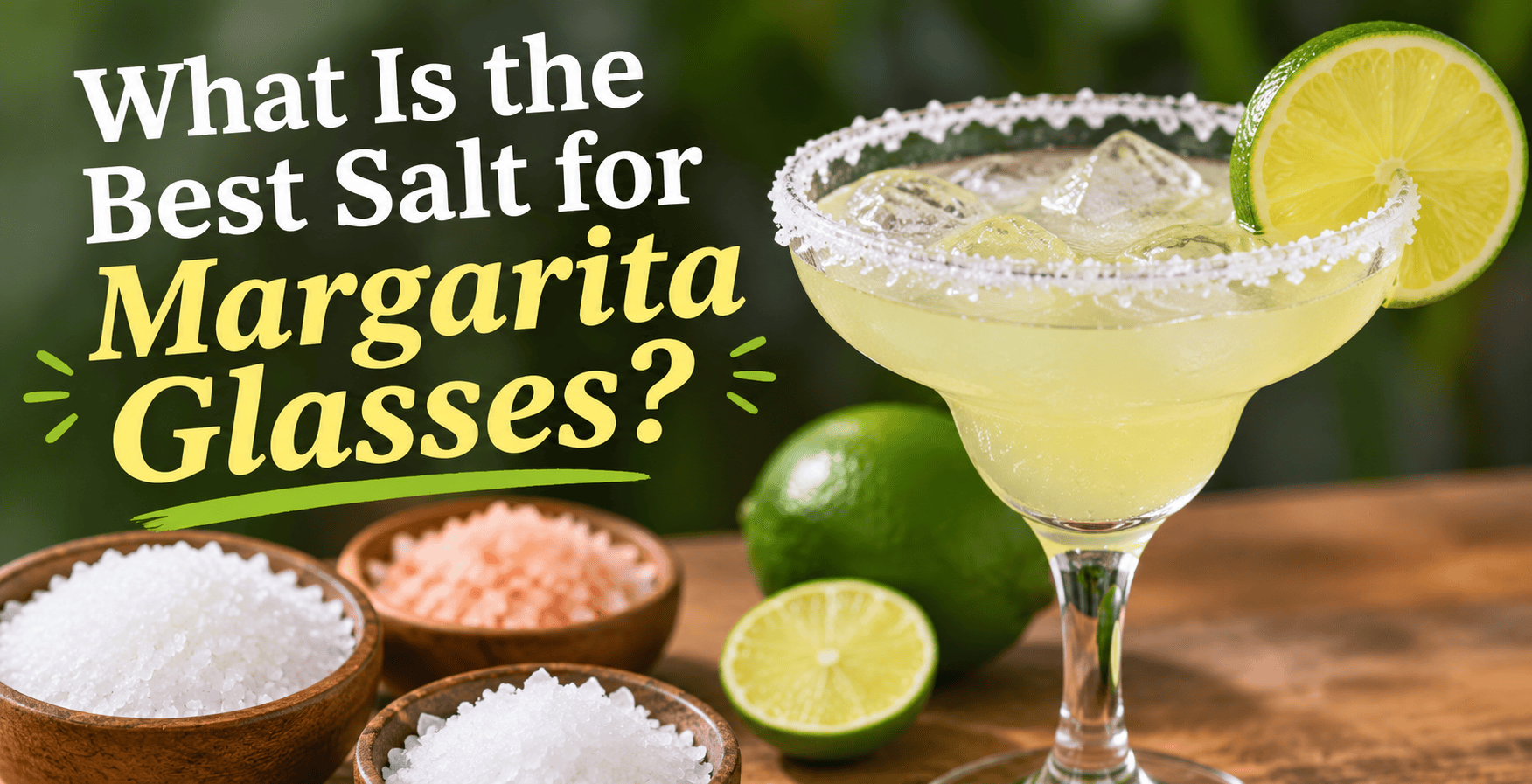
A perfectly made margarita is about more than tequila, lime juice, and orange liqueur. One of the simplest details that can completely transform the drinking experience is the salt around the rim of the glass. That little touch of salt balances the tartness of lime, complements the sweetness of the cocktail, and enhances the flavor of tequila.
But not all salt is created equal. Some varieties provide a delicate crunch, others deliver an intense salty flavor, and certain specialty salts can add an entirely new dimension to your favorite margarita.
So, what is the best salt for margarita glasses?
Coarse kosher salt is generally the best all-around choice for margarita glasses because its larger crystals provide a pleasant texture, balanced saltiness, and an attractive appearance without overpowering the cocktail. However, flaky sea salt, traditional margarita salt, and flavored salts can also be excellent choices depending on the type of margarita you are making.
Understanding the differences between these salts can help you create restaurant-quality margaritas at home.
Why Do Margarita Glasses Have Salt on the Rim?
Before choosing the best salt, it helps to understand why margaritas traditionally feature a salted rim.
Salt does much more than decorate the glass. It influences how your taste buds experience the entire cocktail.
1. Salt Balances the Sourness of Lime
Fresh lime juice is one of the defining ingredients in a classic margarita. While its bright acidity makes the drink refreshing, too much sourness can sometimes overwhelm the other flavors.
A small amount of salt can soften the perception of bitterness and influence the balance of sour and sweet flavors.
This creates a smoother, more enjoyable drinking experience.
2. Salt Enhances the Flavor of Tequila
Tequila contains complex flavors that vary depending on its production method and aging process.
Blanco tequila often has bright agave, citrus, and peppery characteristics, while reposado tequila can introduce notes of vanilla, oak, and caramel.
A properly salted rim can make these flavors more noticeable and help them blend with the cocktail’s other ingredients.
3. Salt Creates a Pleasant Texture
The texture of salt matters almost as much as its flavor.
Coarse salt crystals create a satisfying crunch when they touch your lips, adding another sensory element to every sip.
Fine salt, on the other hand, can dissolve quickly and deliver an overly concentrated salty taste.
4. Salt Makes Margaritas Look More Appealing
A carefully prepared salt rim gives margaritas their recognizable appearance.
The white crystals contrast beautifully against colorful cocktails, particularly strawberry, mango, watermelon, and classic lime margaritas.
Specialty salts can also create colorful rims that make homemade cocktails look professionally prepared.
What Is the Best Type of Salt for Margarita Glasses?
Several types of salt work well for margaritas, but each produces a slightly different result.
1. Coarse Kosher Salt: Best Overall
Coarse kosher salt is one of the most reliable choices for margarita glasses.
Its larger crystals stick well to a properly moistened glass rim and provide a satisfying texture without dissolving immediately.
Unlike very fine table salt, kosher salt is less likely to create a thick, overpowering layer of salt.
Why kosher salt works well:
-
Provides a balanced salty flavor.
-
Creates a pleasant texture.
-
Adheres easily to a moistened glass.
-
Is affordable and widely available.
-
Works with nearly every margarita recipe.
One important detail is that kosher salt crystal sizes vary by brand. Some varieties are much finer or denser than others.
Choose a medium-to-coarse crystal size that feels comfortable against your lips.
Best for: Classic lime margaritas, frozen margaritas, and everyday homemade cocktails.
2. Coarse Sea Salt: Best for a Natural, Crisp Flavor
Coarse sea salt is another excellent choice for margarita rims.
It comes in different crystal sizes and textures, making it easy to find a variety that suits your preferences.
Sea salt can provide a clean, crisp salty flavor that complements the freshness of lime juice.
Some varieties contain trace minerals that can contribute subtle flavor differences, although these differences may be difficult to detect in a strongly flavored cocktail.
Why sea salt works well:
-
Offers an attractive crystalline appearance.
-
Complements citrus-based cocktails.
-
Is available in several textures.
-
Works especially well with premium tequila.
Avoid excessively large or hard crystals that might feel uncomfortable against your lips.
Best for: Premium margaritas, fresh citrus margaritas, and tequila-forward cocktails.
3. Flaky Sea Salt: Best for a Delicate Texture
Flaky sea salt is known for its thin, irregular crystals.
Unlike dense coarse salt, flaky salt has a lighter texture that can dissolve relatively quickly on the tongue.
This makes it appealing for people who enjoy a salted margarita but dislike biting into hard salt crystals.
Flaky sea salt can also create a beautiful decorative rim.
However, its delicate structure may make it more difficult to apply evenly, and some flakes can fall off when the glass is handled.
Best for: Upscale margaritas, fresh fruit margaritas, and cocktails where a lighter salt texture is preferred.
4. Traditional Margarita Salt: Best for Convenience
Commercial margarita salt is specifically designed for coating cocktail glass rims.
It usually consists of salt crystals selected for their size and ability to adhere to a damp glass.
Some products are plain, while others include citrus flavors, colors, or additional seasonings.
Margarita salt is convenient because it requires very little preparation.
Simply pour it onto a small plate or margarita rimming dish and coat the edge of the glass.
Best for: Parties, entertaining guests, and making several margaritas quickly.
5. Himalayan Pink Salt: Best for Visual Appeal
Himalayan pink salt is popular because of its distinctive pink color.
Its appearance makes it particularly attractive when paired with colorful margaritas.
The pink crystals can complement strawberry, watermelon, raspberry, and grapefruit cocktails.
However, Himalayan salt is not necessarily better for margaritas than kosher salt or sea salt.
Its main advantage is its appearance, and any mineral-related flavor differences are usually subtle.
For the best results, use a medium-coarse grind rather than large, hard crystals.
Best for: Strawberry margaritas, watermelon margaritas, and visually appealing party cocktails.
Margarita Salt Comparison: Which One Should You Choose?
| Salt type | Texture | Best use |
|---|---|---|
| Coarse kosher salt | Crunchy, balanced | Classic margaritas |
| Coarse sea salt | Crisp, crystalline | Premium margaritas |
| Flaky sea salt | Light, delicate | Fresh fruit margaritas |
| Margarita salt | Consistent crystals | Parties and entertaining |
| Himalayan pink salt | Firm, decorative | Colorful margaritas |
| Fine table salt | Very fine | Generally not recommended |
For most home bartenders, coarse kosher salt provides the best combination of flavor, texture, affordability, and convenience.
Can You Use Regular Table Salt for Margaritas?
Yes, regular table salt can technically be used on a margarita glass, but it is usually not the best option.
Table salt has very fine crystals that can create several problems.
First, the small particles can stick too densely to the glass, delivering an intense salty flavor with every sip.
Second, fine salt dissolves quickly when exposed to moisture.
Finally, table salt does not create the attractive crystalline appearance associated with traditional margaritas.
Some table salts also contain iodine or anti-caking agents, which may affect their flavor slightly.
If table salt is your only option, apply a very thin layer rather than coating the entire rim heavily.
For better results, choose kosher salt or coarse sea salt whenever possible.
How Do You Get Salt to Stick to a Margarita Glass?
Choosing the right salt is only half the process. Applying it correctly is equally important.
A well-prepared margarita rim should have an even coating of salt that stays in place without falling into the drink.
Step 1: Choose the Right Glass
Traditional margarita glasses, rocks glasses, and coupe glasses can all be salted.
Make sure the glass is clean and dry before beginning.
Step 2: Prepare Your Salt
Pour approximately two tablespoons of coarse kosher salt onto a small, flat plate.
Spread the salt into a thin, even layer.
You can also use a dedicated cocktail rimming dish.
Step 3: Moisten the Rim With Lime
Cut a fresh lime wedge and gently run the juicy side around the outside edge of the glass.
You only need enough moisture to help the salt adhere.
Avoid soaking the rim, as excessive lime juice can cause the salt to dissolve or clump.
Step 4: Apply the Salt
Tilt the glass slightly and gently roll the moistened outside edge through the salt.
This method helps keep most of the salt on the outside of the glass instead of coating the inside.
Keeping salt away from the inside rim prevents excessive amounts from falling directly into the margarita.
Step 5: Let the Salt Set
Allow the salted rim to sit briefly before adding ice or pouring the cocktail.
This helps the coating settle and reduces the chance of disturbing it during preparation.
Step 6: Pour Your Margarita Carefully
Add your margarita without splashing liquid onto the salted rim.
The result should be an attractive, evenly coated glass that enhances the cocktail without overwhelming it.
Should You Salt the Entire Margarita Glass or Just Half?
One of the most useful margarita-making techniques is salting only half the glass.
Although a fully salted rim creates the traditional appearance, it does not give the drinker much flexibility.
A half-salted rim allows you to choose between salted and unsalted sips.
This is especially helpful when serving margaritas to guests with different preferences.
A half rim also makes it easier to appreciate the tequila and citrus flavors without salt influencing every sip.
For homemade margaritas, a half-salted rim is often the most practical choice.
What Is the Best Salt for Frozen Margaritas?
Frozen margaritas benefit from a salt that provides a noticeable contrast to their smooth, icy texture.
Coarse kosher salt is an excellent choice because its crystals remain distinct against the frozen cocktail.
Traditional margarita salt also works well, particularly when preparing several frozen drinks for a party.
Because frozen margaritas are often sweeter than classic shaken margaritas, a little salt can help balance their flavor.
However, avoid excessively heavy salt rims.
As the frozen cocktail begins to melt, salt can dissolve into the drink and change its overall taste.
A light, even coating is usually enough.
What Is the Best Salt for Strawberry Margaritas?
Strawberry margaritas have a sweeter, fruitier flavor than traditional lime margaritas.
The best salt should complement that sweetness without overpowering the strawberry.
Flaky sea salt and medium-coarse kosher salt are both excellent options.
For a more decorative presentation, Himalayan pink salt can create an attractive pink rim.
You can also combine salt with a small amount of sugar to produce a sweet-and-salty coating.
Strawberry Margarita Rim Recipe
Ingredients:
-
1 tablespoon coarse kosher salt
-
1 tablespoon granulated sugar
-
1 teaspoon finely crushed freeze-dried strawberries
Instructions:
-
Combine the salt, sugar, and crushed strawberries in a shallow dish.
-
Moisten the outside rim of a margarita glass with fresh lime juice.
-
Gently roll the glass through the mixture.
-
Allow the coating to settle briefly.
-
Add your strawberry margarita and serve.
This combination provides sweetness, saltiness, and a subtle strawberry flavor.
What Is the Best Salt for Spicy Margaritas?
Spicy margaritas often include jalapeños, serrano peppers, chili powder, or other ingredients that create heat.
A seasoned salt rim can complement these flavors beautifully.
Instead of using plain salt, consider combining coarse kosher salt with chili powder or a chili-lime seasoning.
Homemade Spicy Margarita Salt
Ingredients:
-
2 tablespoons coarse kosher salt
-
1 teaspoon mild chili powder
-
1/4 teaspoon smoked paprika
-
1/4 teaspoon finely grated lime zest
Instructions:
-
Combine all ingredients in a small bowl.
-
Mix until the seasonings are evenly distributed.
-
Spread the mixture onto a shallow plate.
-
Moisten the outside rim of the glass with lime juice.
-
Gently coat the glass with the seasoned salt.
This mixture creates a smoky, citrusy, slightly spicy rim.
For additional heat, add a small pinch of cayenne pepper.
Remember that spicy seasonings can become intense when concentrated around the glass, so begin with a light coating.
Can You Make Flavored Margarita Salt at Home?
Absolutely. Homemade flavored salts are an easy way to customize margaritas for different occasions.
You can create several variations using coarse kosher salt as the base.
Lime Salt
Combine two tablespoons of kosher salt with one teaspoon of finely grated lime zest.
This is an excellent option for classic margaritas.
Orange Salt
Mix two tablespoons of kosher salt with one teaspoon of finely grated orange zest.
Orange salt pairs particularly well with margaritas made with orange liqueur.
Chili-Lime Salt
Combine two tablespoons of kosher salt with half a teaspoon of mild chili powder and half a teaspoon of finely grated lime zest.
This works well with mango and pineapple margaritas.
Sweet-and-Salty Rim
Mix equal parts coarse salt and granulated sugar.
This combination is ideal for strawberry, peach, and other sweet fruit margaritas.
Smoky Salt
Combine two tablespoons of kosher salt with a small pinch of smoked paprika.
This variation can complement margaritas made with smoky mezcal.
When making flavored salts with fresh citrus zest, prepare only what you need for immediate use. Moisture from fresh zest can cause clumping, and mixtures containing fresh ingredients should not be stored at room temperature for extended periods.
Is Margarita Salt Different From Kosher Salt?
Margarita salt and kosher salt are similar, but they are not always identical.
Kosher salt is a general-purpose cooking salt known for its relatively large crystals.
Margarita salt is marketed specifically for cocktail glass rims and may have a more uniform crystal size.
Some margarita salts also include additional flavorings or colors.
For most homemade cocktails, there is no need to purchase specialty margarita salt if you already have suitable coarse kosher salt.
Both can produce excellent results.
How Much Salt Should You Put on a Margarita Glass?
The ideal amount of salt depends on personal preference, but a thin, even coating is generally best.
You want enough salt to complement the cocktail without overwhelming its flavors.
For one glass, approximately one to two teaspoons of salt spread on a plate is usually sufficient for rimming, although much of that salt will remain on the plate.
You do not need to make the rim thick or heavily encrusted.
A properly salted margarita should still taste primarily like tequila, lime, and the cocktail’s other ingredients.
If the first sip tastes overwhelmingly salty, the rim probably contains too much salt.
Common Mistakes When Salting Margarita Glasses
Even experienced home bartenders occasionally make mistakes when preparing salted rims.
Using Salt That Is Too Fine
Fine salt can create an excessively salty coating.
Choose medium-to-coarse crystals for a better balance of flavor and texture.
Using Crystals That Are Too Large
Extremely large salt crystals may feel uncomfortable against your lips.
Select salt that provides a pleasant crunch without sharp or oversized pieces.
Applying Too Much Lime Juice
Excessive moisture causes salt to dissolve, clump, or slide down the glass.
A light coating of lime juice is enough.
Salting the Inside of the Glass
Salt on the inside rim can fall into the margarita and make the entire cocktail too salty.
Focus on coating the outside edge.
Applying Too Much Salt
A thick salt rim can overpower the drink.
Use a thin, even layer instead.
Preparing Salted Glasses Too Far in Advance
Humidity and condensation can gradually dissolve the salt.
For the best appearance and texture, prepare the glasses shortly before serving.
Frequently Asked Questions About Margarita Salt
What kind of salt do bartenders use for margaritas?
Many bartenders use coarse kosher salt, sea salt, or commercial margarita salt. The choice depends on the cocktail, the desired texture, and the establishment’s presentation style.
Is coarse or fine salt better for margaritas?
Coarse salt is generally better because it creates a more pleasant texture and is easier to apply without forming an overly dense coating.
Medium-coarse crystals are usually ideal.
Can you use pink Himalayan salt on margarita glasses?
Yes. Pink Himalayan salt works well when ground to a comfortable crystal size. Its pink color is particularly attractive on strawberry and watermelon margaritas.
Can you use sea salt instead of margarita salt?
Yes. Coarse sea salt is an excellent substitute for commercial margarita salt and can produce a very similar result.
Do margaritas need salt on the rim?
No. Salt is traditional, but completely optional.
Some people prefer unsalted margaritas because they want to experience the tequila, lime, and other ingredients without additional saltiness.
What can you use instead of salt on a margarita glass?
Sugar, chili-lime seasoning, citrus zest mixtures, or combinations of sugar and spices can be used instead of traditional salt.
The best choice depends on the margarita’s flavor profile.
Should you use lime juice or water to make margarita salt stick?
Fresh lime juice is usually preferable because it complements the cocktail’s citrus flavor.
Water can also work, but lime juice adds a little extra flavor to the rim.
Does the type of salt really change the taste of a margarita?
Yes, although crystal size, texture, and the amount of salt usually make a greater difference than subtle mineral variations.
A lightly salted rim can enhance a margarita, while excessive salt can overwhelm it.
Final Thoughts: What Is the Best Salt for Margarita Glasses?
The best salt for margarita glasses is coarse kosher salt, particularly when you want a reliable balance of flavor, texture, appearance, and convenience.
Its crystals provide a satisfying crunch, adhere well to a lightly moistened glass, and complement the classic combination of tequila and lime.
However, the perfect choice ultimately depends on the margarita you are making.
Coarse sea salt is excellent for classic and premium margaritas, flaky sea salt provides a delicate texture, Himalayan pink salt creates an attractive presentation, and flavored salts add creativity to fruit-based and spicy cocktails.
The most important technique is to avoid using too much salt. A thin, even coating around the outside rim is usually all you need.
Whether you are making a traditional lime margarita, a frozen strawberry margarita, or a spicy jalapeño margarita, choosing the right salt can turn an ordinary homemade cocktail into something that looks and tastes like it came from a professional bar.
A great margarita starts with quality ingredients, but the right salt around the glass can make every sip even better.

Leave a Reply