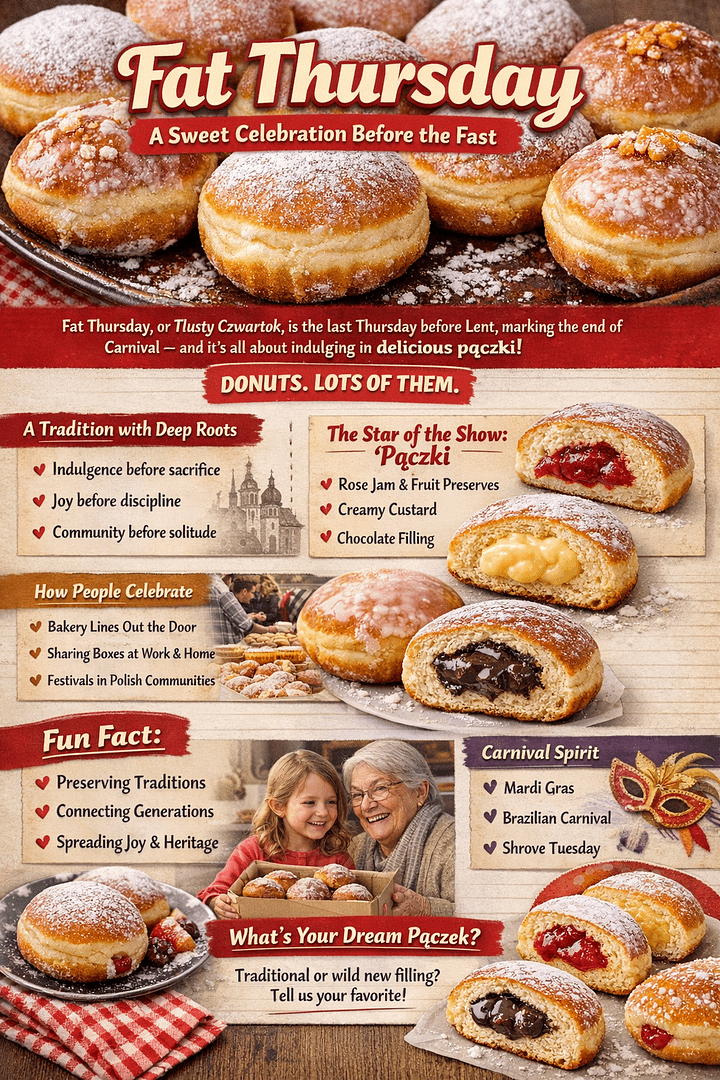
Fat Thursday, or Tłusty Czwartek in Polish, is one of the most beloved food traditions in Poland — a day when calories don’t count and saying “no” to dessert is practically against the rules. Falling on the last Thursday before Lent, it marks the joyful closing stretch of Carnival, the festive season that comes before the more solemn 40 days leading up to Easter.
It’s not just about sweets — it’s about history, heritage, and that universal human instinct to celebrate together before a period of reflection and restraint.
🍩 A Tradition with Deep Roots
Fat Thursday dates back centuries. In early Poland, the day wasn’t always about sugary treats. People once celebrated by eating rich, fatty foods like meats and lard, preparing themselves for Lenten fasting. Over time, culinary tastes evolved, and sweet pastries became the highlight.
By the Middle Ages, fried dough treats gained popularity. Eventually, the pączek became the star of the holiday — and it hasn’t lost its crown since.
The day symbolizes:
Indulgence before sacrifice
Joy before discipline
Community before solitude
It’s a cultural rhythm — feast, then fast — that mirrors life’s balance of pleasure and purpose.
🥯 The Star of the Show: Pączki
A pączek (plural: pączki) might look like a donut, but it’s richer, denser, and far more decadent.
What makes them special?
Made with extra eggs, butter, and sugar
Deep-fried to golden perfection
Filled generously — not just a tiny center spot
Soft, pillowy texture similar to brioche
Traditional fillings include:
🌹 Rose petal jam (the classic!)
🍓 Fruit preserves like raspberry or plum
🍫 Chocolate
🍮 Vanilla custard
They’re usually topped with powdered sugar, glaze, or candied orange peel. One bite and you’ll understand why people line up before sunrise.
🌍 How People Celebrate
In Poland, Fat Thursday is practically a national pastry holiday.
Bakeries produce millions of pączki
Families buy boxes to share
Coworkers bring treats to the office
Schools celebrate with sweet snacks
There’s even a superstition: If you don’t eat at least one pączek on Fat Thursday, you’ll have bad luck for the year. Nobody wants to risk that.
Outside Poland, cities with strong Polish communities — like Chicago and Detroit — hold bakery events and festivals, keeping the tradition alive across generations.
🎭 Carnival Spirit
Fat Thursday is part of the broader Carnival season, which is full of dancing, costumes, and festivities across Europe. It’s similar in spirit to:
Mardi Gras in France and the U.S.
Carnival in Brazil
Shrove Tuesday in the UK
Each culture has its own version of one last joyful celebration before Lent begins.
❤️ The Meaning Behind the Sweets
Yes, the pastries are incredible. But Fat Thursday also carries emotional and cultural significance:
Preserving family recipes
Sharing with neighbors
Connecting generations
Celebrating heritage
For many, it’s tied to childhood memories — walking into warm bakeries, powdered sugar on coats, and that unmistakable smell of fried dough in winter air.
😄 Fun Traditions & Quirks
Some bakeries hide a pączek filled with almonds instead of jam — whoever finds it is said to have extra luck.
People joke about how many they can eat, but no one is truly counting.
Fitness goals are officially “paused” for the day.
✨ A Simple Joy
In a busy world, Fat Thursday is a reminder that traditions — especially delicious ones — bring people together. It celebrates laughter, sweetness, and community before life shifts into a quieter, more reflective season.
And honestly? Any holiday built around pastries is hard not to love.
Read More Holidays & National Days
Leave a Reply