Introduction
There is no pain quite like the death of a child.
It goes against everything we believe life should be. Parents expect to grow old and watch their children build lives of their own. They imagine graduations, careers, weddings, grandchildren, and countless milestones. When a child dies, those dreams die too.
For fathers, this loss often carries an additional burden. Society has traditionally viewed men as protectors, providers, and problem-solvers. Men are taught to be strong during crises and to hold themselves together when others fall apart. Yet losing a child creates a wound that no amount of strength can prevent and no amount of determination can fix.
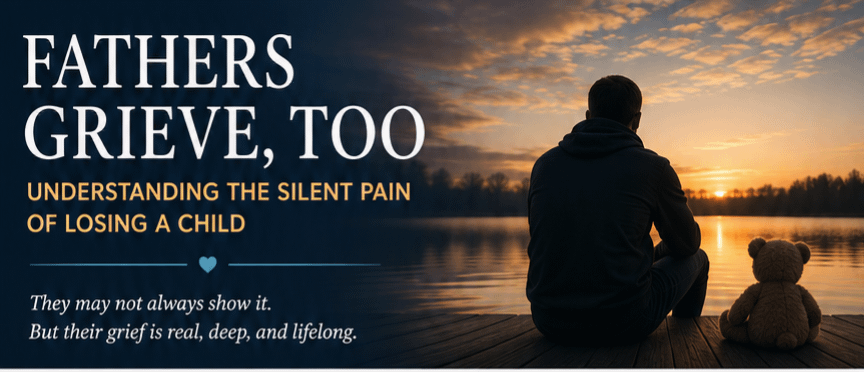
Despite this reality, grieving fathers are frequently overlooked. Their pain is often hidden behind stoic expressions, busy schedules, and a determination to keep functioning. Many people assume that because a father is not openly crying, he is coping better than everyone else.
Nothing could be further from the truth.
Fathers grieve deeply. They hurt profoundly. They cry, even if the tears never leave their eyes. They carry heartbreak, guilt, fear, and loneliness while trying to continue living in a world that suddenly feels unfamiliar.
This is the story of grieving fathers—the struggles they face, the emotions they carry, and the hope that can still be found after unimaginable loss.
When a Child Dies, Part of a Father Dies Too
The death of a child is not simply the loss of a loved one.
For many fathers, it feels as though a part of themselves has died as well.
A father invests years of his life protecting, teaching, guiding, and loving his child. His identity becomes intertwined with his role as a dad. When that child dies, the father often feels as though he has lost a piece of who he is.
Simple questions become difficult.
Who am I now?
What is my purpose?
How do I continue living when the person I loved so deeply is gone?
Many fathers describe the experience as feeling disconnected from the world around them. Things that once seemed important suddenly feel meaningless. Conversations become harder. Joy feels distant.
The man who existed before his child’s death is gone.
The challenge becomes learning how to live as the person grief has forced him to become.
The Expectations Placed on Men
From childhood, boys receive messages about how men should behave.
“Be tough.”
“Don’t cry.”
“Shake it off.”
“Be a man.”
These messages often become deeply rooted beliefs.
As a result, many fathers feel pressure to suppress their emotions after losing a child. They believe they must remain strong for their spouse, their surviving children, and everyone else around them.
They become caretakers while desperately needing care themselves.
Many grieving fathers hear comments such as:
- “You need to stay strong.”
- “Your wife needs you.”
- “Your family is counting on you.”
- “You have to keep moving forward.”
While these comments are often well-intentioned, they can unintentionally send the message that a father’s grief matters less than everyone else’s.
The reality is that strength is not the absence of emotion.
True strength is allowing yourself to feel the pain and continuing to move forward anyway.
The Many Faces of Grief
Grief affects every father differently.
Some cry openly.
Others never shed a tear.
Some talk about their child constantly.
Others become quiet and withdrawn.
Neither response is right or wrong.
A grieving father may experience:
- Anger
- Depression
- Loneliness
- Anxiety
- Fear
- Confusion
- Hopelessness
- Numbness
- Panic
- Guilt
- Emotional exhaustion
Many fathers find themselves overwhelmed by emotions they have never experienced before.
One moment they may feel relatively stable.
The next, a photograph, song, memory, or familiar place can bring them to tears.
Grief does not follow a schedule.
It arrives unexpectedly and often stays longer than anyone expects.
The Guilt That Haunts Fathers
Perhaps no emotion is more common among grieving fathers than guilt.
Even when a child’s death was completely beyond their control, fathers often question themselves endlessly.
What if I had done something differently?
What if I had called?
What if I had stayed?
What if I had noticed something sooner?
What if I had protected them better?
These questions become relentless.
A father’s natural instinct is to protect his child. When that child dies, many fathers feel they have failed at the most important job they were ever given.
The truth is that tragedy is not always preventable.
Accidents happen.
Illnesses happen.
Life can be unfair.
Yet knowing this intellectually does not always ease the guilt carried in a father’s heart.
Learning to forgive yourself may be one of the hardest parts of healing.
The Loneliness No One Talks About
One of the most painful aspects of child loss is isolation.
In the beginning, support often arrives quickly.
People call.
They visit.
They send messages.
They attend the funeral.
Then, slowly, life moves on for everyone else.
But not for the father.
Weeks become months.
Months become years.
The grief remains.
Many fathers discover that fewer and fewer people ask about their child. Friends become uncomfortable discussing the loss. Some avoid the topic altogether.
This can leave fathers feeling invisible.
They desperately want someone to remember their child.
To say their name.
To acknowledge their existence.
Instead, they often find themselves grieving alone.
How Child Loss Affects Marriage
The death of a child places enormous strain on a marriage.
A husband and wife may grieve very differently.
One may need to talk frequently.
The other may process grief privately.
One may seek support groups.
The other may avoid discussing the loss altogether.
These differences can create misunderstandings.
A spouse may mistakenly believe the other person does not care as deeply.
The reality is that both are hurting.
They are simply grieving in different ways.
Successful couples learn to respect each other’s grieving styles while finding ways to support one another through the pain.
The Physical Effects of Grief
Grief is not only emotional.
It affects the body as well.
Many fathers experience:
- Difficulty sleeping
- Fatigue
- Headaches
- Muscle tension
- Digestive issues
- Loss of appetite
- Weight changes
- Panic attacks
- Increased blood pressure
- Memory problems
Some fathers are surprised by how physically painful grief can be.
The body carries sorrow just as much as the heart does.
This is why self-care becomes so important.
Eating properly, exercising, resting, and seeking medical support when necessary are not luxuries.
They are essential parts of surviving grief.
The Fear of Living Again
Many fathers struggle with an unexpected fear.
The fear of healing.
Part of them worries that feeling better somehow means loving their child less.
They fear that laughter is a betrayal.
That happiness means forgetting.
That moving forward means leaving their child behind.
But healing does not mean forgetting.
It means learning how to carry love and grief together.
A father’s relationship with his child does not end when death occurs.
The relationship changes.
The love remains.
The memories remain.
The bond remains.
Healing allows fathers to honor that bond while continuing to live.
Finding Purpose After Loss
One of the most powerful steps in healing is discovering purpose.
Many fathers honor their children by:
- Helping others
- Volunteering
- Supporting charities
- Advocating for causes
- Creating memorial projects
- Sharing their stories
- Supporting other grieving parents
Purpose does not remove pain.
But it can transform suffering into something meaningful.
Many fathers find that helping others becomes a way to keep their child’s memory alive.
Their child’s life continues making a difference through the lives they touch.
What Grieving Fathers Need Most
Grieving fathers do not need people to fix their pain.
They need people willing to walk beside them through it.
They need:
- Understanding
- Compassion
- Patience
- Honest conversations
- Permission to feel
- Safe places to talk
- Continued support long after the funeral
Most importantly, they need to know they are not alone.
A Letter to Every Grieving Father
If you are reading this as a father who has lost a child, know this:
Your grief is real.
Your tears are real.
Your heartbreak is real.
You do not have to prove how much you loved your child.
You do not have to hide your pain.
You do not have to carry this burden alone.
The world may not always understand what you are going through, but there are others walking this road beside you.
You may never be the person you were before your child died.
But that does not mean your life is over.
There is still purpose ahead.
There is still love ahead.
There is still hope ahead.
And while the pain may never completely disappear, neither will the love you have for your child.
That love remains forever.
Death may separate you physically, but it can never erase the bond between a father and his child.
That bond is eternal.
And so is love.
Conclusion
Fathers grieve too.
They grieve deeply, often quietly, and frequently alone.
Behind the strong exterior many fathers present to the world is a heart carrying unimaginable pain. Recognizing their grief, supporting their healing, and giving them permission to express their emotions can make a tremendous difference.
For every father mourning the loss of a child, may you find comfort in knowing that your grief matters, your child matters, and your story matters.
You are not alone.
A Father’s Guide to Surviving the Loss of a Child
Leave a Reply