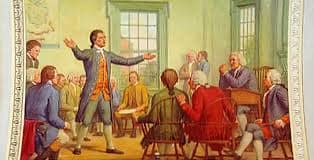
On September 5, 1774, delegates from twelve of the thirteen American colonies gathered in Philadelphia, Pennsylvania, to form the First Continental Congress. This historic meeting marked one of the earliest unified actions by the colonies against British rule and laid the foundation for American independence.
Background
Tensions between Great Britain and its American colonies had been building for years. The Stamp Act (1765), Townshend Acts (1767), and other taxes imposed without colonial representation in Parliament had already stirred resentment. The breaking point came with the passage of the Coercive Acts (1774)—known in the colonies as the Intolerable Acts—which punished Massachusetts for the Boston Tea Party by closing Boston Harbor and stripping the colony of self-government.
The colonies realized that isolated resistance was no longer enough. Leaders called for a meeting to coordinate a collective response to British policies.
Delegates and Representation
The Congress met at Carpenters’ Hall in Philadelphia. Fifty-six delegates attended, representing every colony except Georgia, which was still seeking British support against Native American attacks. Notable figures included:
George Washington of Virginia
John Adams and Samuel Adams of Massachusetts
Patrick Henry of Virginia
John Jay of New York
Joseph Galloway of Pennsylvania
Richard Henry Lee of Virginia
These men brought diverse views—some sought reconciliation with Britain, while others pushed for stronger resistance.
Key Actions
During weeks of debate, the First Continental Congress took several important steps:
Declaration and Resolves (October 14, 1774): This document condemned the Intolerable Acts, asserted colonial rights, and outlined grievances against British rule.
Continental Association: The Congress called for a boycott of British goods, and pledged to halt exports to Britain if grievances were not addressed. Committees of inspection were formed in towns to enforce these measures.
Petition to the King: A direct appeal to King George III expressed loyalty but demanded the repeal of oppressive laws.
Legacy
Although the First Continental Congress did not call for independence, it was a pivotal moment in colonial unity. It showed that the colonies could come together, debate their differences, and take coordinated action.
When Britain ignored the petitions and enforced its authority with more troops, the stage was set for the Second Continental Congress (1775), where the colonies would ultimately declare independence.
The First Continental Congress was not just a meeting—it was the first step toward creating a nation.
Read More Holidays & National Days
Leave a Reply