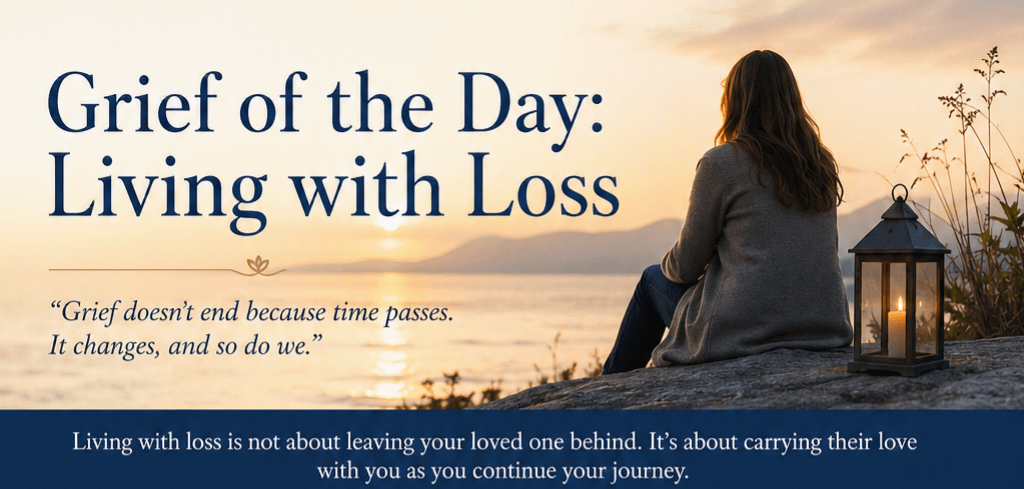
“Learning to live with loss is not about leaving your loved one behind. It’s about carrying their love with you as you continue your journey.”
Loss changes a person in ways that are difficult to explain until you’ve experienced it yourself. Whether you have lost a child, spouse, parent, sibling, close friend, or another loved one, the world you once knew no longer exists in quite the same way. The future you imagined changes instantly, and life becomes divided into two parts: before the loss and after the loss.
People who have never experienced profound grief often believe healing means getting back to normal. Those who live with loss know there is no returning to the person you once were. Grief reshapes your heart, your priorities, your relationships, and your understanding of life itself.
Living with loss is not about pretending the pain has disappeared. It is about learning how to carry that pain while continuing to move forward. It means finding ways to honor the person you love without allowing grief to completely consume the life you still have.
That journey is neither quick nor easy. It requires tremendous courage, patience, and compassion toward yourself.
If today feels especially difficult, know this:
You are not alone.
Millions of people around the world wake up every morning carrying an invisible weight that few others can see. They smile when necessary, go to work, care for their families, and fulfill their responsibilities—all while silently carrying hearts that have been forever changed.
Grief Never Truly Ends
One of the greatest misconceptions about grief is that it eventually disappears.
People often ask,
“Are you over it yet?”
“Has enough time passed?”
“Are you finally feeling better?”
While these questions are usually well intentioned, they reveal a misunderstanding of what grief really is.
Grief doesn’t end because enough time has passed.
Love doesn’t end.
If someone profoundly impacted your life, their absence will always matter.
The pain may soften.
The tears may become less frequent.
The overwhelming shock eventually fades.
But love remains.
And because love remains, grief continues in different forms.
Rather than disappearing, grief evolves.
Instead of constant waves crashing over you every hour, the waves become more spread out. They may still be enormous, but eventually you learn they won’t destroy you.
You begin trusting yourself to survive them.
Learning a New Way to Live
One of the hardest parts of grief is realizing you must learn how to live in a world you never wanted.
Nothing prepared you for this life.
No one teaches us how to survive the death of someone we deeply love.
Suddenly everyday tasks become difficult.
Shopping feels strange.
Family dinners feel incomplete.
Vacations aren’t the same.
Even holidays that once brought excitement may now bring dread.
You discover that grief doesn’t simply affect your emotions.
It affects your concentration.
Your memory.
Your motivation.
Your energy.
Your physical health.
Even your faith.
Living with loss often means rebuilding your entire life one small piece at a time.
Not because you wanted to.
Because you have to.
The Loneliness That Few Understand
One of grief’s greatest burdens is loneliness.
You may be surrounded by family and friends yet still feel completely alone.
Why?
Because no one else had the exact relationship you had with your loved one.
They knew your spouse.
You knew your husband or wife.
They knew your child.
You knew your son or daughter.
They knew your parent.
You knew the person who raised you.
Every relationship is unique.
Every love story is unique.
Every loss is unique.
That is why comparisons rarely help.
Someone else’s grief does not diminish yours.
Nor does your grief diminish theirs.
Both experiences deserve compassion.
The World Keeps Moving
Perhaps one of the cruelest realities after loss is realizing the world keeps going.
People return to work.
Children continue playing.
Stores remain open.
Birthdays arrive.
New Year’s Day comes again.
Life doesn’t pause simply because yours has changed forever.
In the beginning, this can even feel offensive.
How can everyone continue as though nothing happened?
Eventually, however, you realize something important.
Life continuing doesn’t mean your loved one mattered less.
It simply means that every person is carrying battles you cannot see.
Some carry grief.
Others carry illness.
Others carry fear.
Others carry regret.
We are all carrying something.
Grief simply happens to be one of the heaviest burdens.
Memories Become Treasures
As time passes, memories begin changing.
At first they often bring overwhelming sadness.
Every memory reminds you of what you’ve lost.
Eventually something beautiful begins happening.
Some memories start making you smile.
You remember funny conversations.
Favorite vacations.
Family traditions.
Inside jokes.
The sound of their laughter.
Their smile.
The way they hugged you.
Their encouragement.
Their kindness.
Their wisdom.
These memories become priceless gifts.
No one can ever take them away.
Death may separate us physically.
It cannot erase the love we shared.
Living with Both Joy and Sorrow
Many grieving people struggle the first time they genuinely laugh again.
A voice inside asks,
“Am I forgetting them?”
“Am I betraying them?”
“Should I be happy?”
The answer is no.
Joy is not betrayal.
Your loved one is not honored by a lifetime of misery.
Love and grief can exist alongside happiness.
You can laugh with friends while still missing your loved one.
You can celebrate birthdays while wishing they were present.
You can enjoy life while carrying a broken heart.
These emotions are not opposites.
They are companions.
Living with loss means making room for both.
Healing Is Not Linear
Some weeks you may feel strong.
Then suddenly one photograph…
One anniversary…
One familiar song…
One scent…
One random memory…
Can bring you to tears.
This doesn’t mean you’ve gone backward.
It means grief is unpredictable.
Healing rarely follows a straight line.
Think of it like the ocean.
Some days the water is calm.
Other days enormous waves appear without warning.
Eventually you stop fearing the waves because you’ve survived so many before.
You know they’ll eventually settle again.
Carrying Their Legacy
Although your loved one is gone physically, their influence remains.
Perhaps they taught you kindness.
Patience.
Generosity.
Faith.
Integrity.
Hard work.
Compassion.
Their life continues every time you choose those same values.
One beautiful way to live with loss is by asking,
“How can I honor them today?”
Perhaps it’s helping someone.
Volunteering.
Supporting another grieving person.
Cooking their favorite meal.
Listening to their favorite music.
Continuing family traditions.
Sharing stories about them.
Keeping their memory alive isn’t living in the past.
It’s carrying their influence into the future.
Faith During Grief
For many people, grief challenges faith.
Questions naturally arise.
Why did this happen?
Why didn’t God stop it?
Why would someone so loved be taken?
These are honest questions.
Throughout Scripture, people cried out to God in confusion and heartbreak.
God never condemned honest grief.
He welcomed it.
Faith doesn’t remove pain.
Faith gives us someone to lean on when the pain becomes too heavy to carry alone.
Some days your prayers may be long.
Other days they may simply be,
“Lord…help me.”
Even that is enough.
God understands tears that words cannot explain.
Practical Ways to Live with Loss
Although there is no formula for healing, there are healthy habits that can help you continue forward.
Allow yourself to grieve. Never apologize for loving deeply.
Take care of your body. Sleep, nutrition, hydration, and exercise affect emotional healing.
Talk about your loved one. Saying their name keeps their memory alive.
Accept help. Strength includes allowing others to support you.
Create new traditions. Life changes, but meaningful traditions can continue.
Spend time outside. Nature often brings peace that busy environments cannot.
Journal your thoughts. Writing helps organize emotions that feel overwhelming.
Join a grief support group. Sometimes the people who understand best are those walking the same road.
Practice patience. Healing takes far longer than most people expect.
Living Again Is Not Forgetting
Many grieving people feel guilty for eventually dating again, traveling again, laughing again, or dreaming again.
Yet choosing to live is not choosing to forget.
Your loved one shaped your life.
Nothing can erase that.
Living fully honors the gift they gave you.
Every sunrise becomes another opportunity to carry their love forward.
Every act of kindness reflects the person they helped you become.
Every moment of courage becomes another chapter in the story they influenced.
Becoming Someone Others Need
One unexpected result of grief is increased compassion.
You begin noticing hurting people.
You recognize silent pain.
You become slower to judge.
Quicker to listen.
More willing to help.
The wounds you’ve experienced often become the reason someone else survives theirs.
Never underestimate the impact of simply saying,
“I understand.”
Sometimes hope isn’t found in advice.
It’s found in being understood.
The Courage to Keep Going
Living with loss requires courage that few people recognize.
Courage isn’t pretending you’re okay.
Courage is getting out of bed when you don’t want to.
Going to work with a heavy heart.
Showing up for your family.
Taking one more step.
Making one more phone call.
Preparing one more meal.
Facing one more anniversary.
Continuing to breathe when your heart still aches.
That quiet perseverance is extraordinary.
Hope Is Still Possible
Hope doesn’t mean expecting life to become what it once was.
Hope means believing that meaningful moments still exist.
You may never stop wishing for one more conversation.
One more hug.
One more “I love you.”
That longing is part of love.
But alongside that longing can grow gratitude.
Gratitude for the years you shared.
The memories you created.
The lessons you learned.
The love that continues shaping your life every day.
Hope doesn’t replace grief.
Hope walks beside it.
Final Thoughts
Living with loss is one of the greatest acts of courage a person will ever undertake. It asks you to keep walking when every part of you wants to stop. It asks you to keep loving when your heart has been broken. It asks you to keep believing that life can still hold meaning, even after unimaginable pain.
There will always be days when grief feels especially heavy. Birthdays, anniversaries, holidays, and unexpected reminders may reopen wounds you thought had healed. On those days, remember that healing is not measured by the absence of tears but by your willingness to continue despite them.
The people we love never stop being part of who we are. Their laughter echoes in our memories. Their wisdom guides our decisions. Their kindness inspires our compassion. Their love continues to shape our lives long after they are gone.
As you move through today, give yourself grace. Celebrate the small victories. Rest when you need to. Ask for help when the burden feels too heavy. Hold tightly to the memories that bring comfort, and never believe that choosing to live means you have stopped loving.
Your grief is a reflection of your love.
Your healing is a reflection of your courage.
And your life—though forever changed—can still become a beautiful testimony of hope, resilience, faith, and enduring love.
One breath at a time.
One day at a time.
One step at a time.
Read More Of Grief & Child Loss
Leave a Reply