
Grief is often described as an emotional response to losing someone we love. We think of sadness, heartbreak, loneliness, and the overwhelming emptiness that follows a devastating loss. But grief is much more than an emotional experience. Grief affects your entire body and mind, sometimes in ways you may never expect.
When someone you love dies, the pain does not remain confined to your heart. It can affect your brain, your sleep, your energy levels, your appetite, your immune system, and even how your body responds to everyday stress.
You may wake up exhausted despite sleeping for hours. You might struggle to remember simple things, experience headaches, feel tension throughout your body, or suddenly become overwhelmed by emotions you cannot explain.
For parents who have lost a child, spouses who have lost their partners, or anyone grieving someone who was an important part of their life, these physical and mental changes can make an already devastating experience even harder.
Understanding how grief affects your body and mind can help you recognize what you are experiencing, take better care of yourself, and realize that grief is not simply something you think about.
Grief is something you live with physically, mentally, and emotionally.
What Happens to Your Body When You Are Grieving?
When you experience a significant loss, your brain recognizes that something important in your life has changed. This can activate the body’s stress-response systems, including the release of hormones such as cortisol and adrenaline.
These hormones are designed to help your body respond to stressful situations. However, when grief becomes an ongoing source of stress, the effects can extend beyond temporary emotional discomfort.
Your body may remain more alert, tense, or exhausted than usual.
Common physical symptoms associated with grief include:
-
Persistent fatigue and low energy
-
Headaches and migraines
-
Muscle tension and body aches
-
Changes in appetite
-
Difficulty sleeping
-
Digestive problems
-
Chest tightness or a racing heartbeat
-
Changes in immune functioning
-
Increased sensitivity to pain
-
Physical restlessness or weakness
Not everyone experiences these symptoms, and their severity varies.
Some people notice physical changes immediately after losing someone. Others begin experiencing symptoms weeks or months later.
It is important to understand that grief can contribute to physical symptoms, but new, severe, persistent, or unexplained symptoms should never automatically be attributed to grief. Medical conditions can occur alongside bereavement and deserve appropriate evaluation.
1. Grief Can Cause Extreme Physical Exhaustion
One of the most common physical effects of grief is overwhelming fatigue.
You may feel tired before your day even begins. Activities that once seemed effortless can suddenly require tremendous energy.
Getting dressed, preparing meals, cleaning your home, or answering a simple phone call may feel exhausting.
This happens partly because grieving requires substantial emotional and mental effort.
Your mind may constantly process memories, unanswered questions, regrets, fears, and the reality of living without someone you love.
At the same time, disrupted sleep, changes in eating habits, and prolonged stress can contribute to physical exhaustion.
Why grief-related fatigue feels different
Ordinary tiredness often improves with rest. Grief-related exhaustion may persist even after a full night’s sleep.
You might experience:
-
Feeling physically drained throughout the day
-
Difficulty getting out of bed
-
Reduced motivation
-
A heavy sensation throughout your body
-
Trouble completing ordinary responsibilities
-
Feeling mentally and emotionally depleted
For someone grieving the death of a child, the exhaustion may be especially difficult because the loss affects not only daily life but also a deeply meaningful relationship and sense of identity.
There may be days when simply making it through the afternoon feels like an accomplishment.
Sometimes surviving another day while grieving takes more strength than anyone around you realizes.
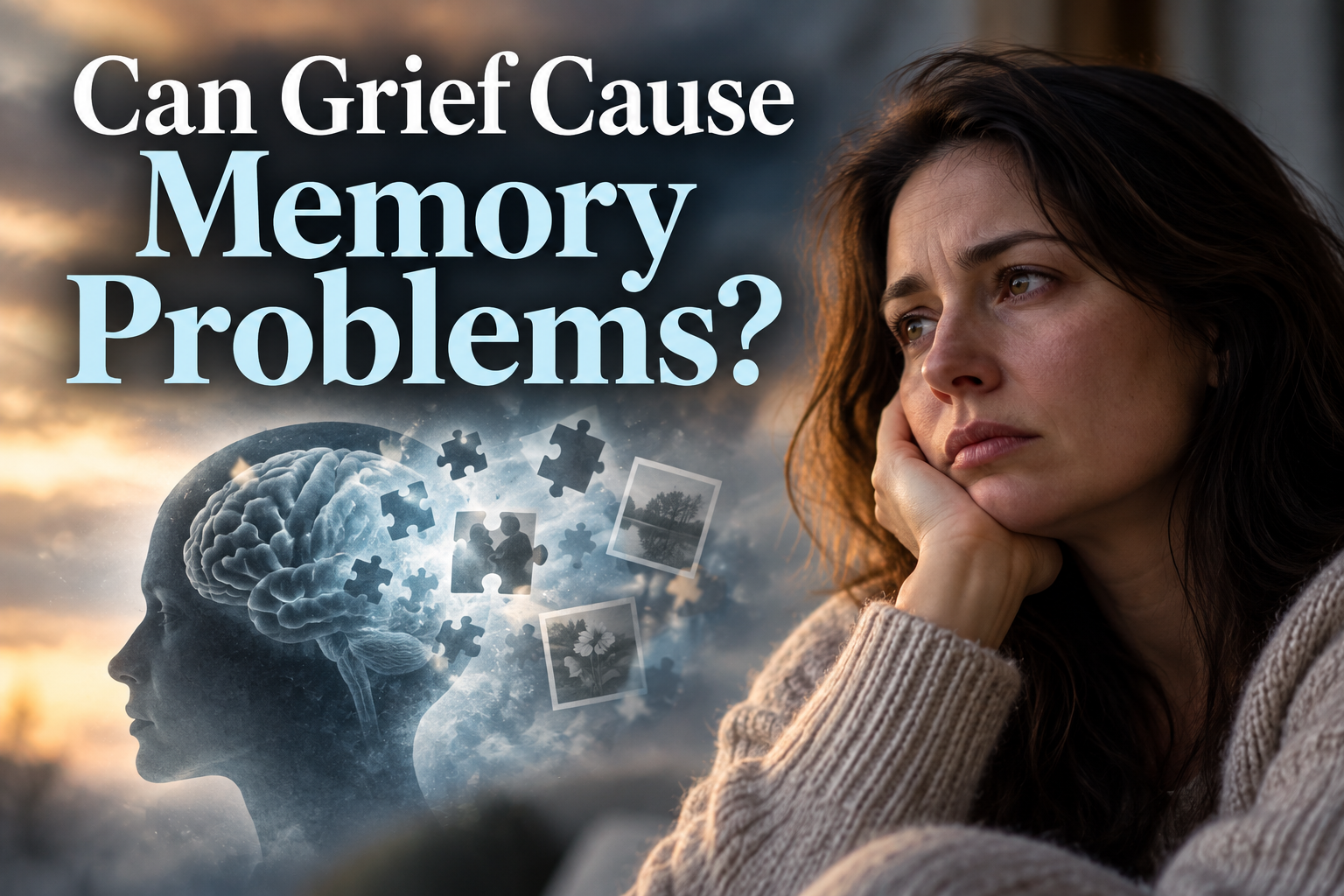
2. Grief Changes How Your Brain Functions
Grief can affect memory, attention, concentration, and decision-making.
Many grieving people describe experiencing something commonly called grief brain or grief fog.
You might walk into a room and forget why you entered. You may lose track of conversations, forget appointments, or struggle to concentrate on something you once enjoyed.
These experiences can be frustrating, particularly when you are accustomed to being organized and mentally sharp.
Why does grief affect memory and concentration?
Your brain has limited resources for attention and working memory.
When much of your attention is occupied by thoughts of your loved one, emotional distress, disrupted sleep, and adjusting to a changed life, fewer resources may be available for everyday tasks.
Stress can also influence brain systems involved in memory and attention.
Common experiences include:
-
Forgetting names, dates, or appointments
-
Difficulty following conversations
-
Losing your train of thought
-
Trouble making decisions
-
Feeling mentally overwhelmed
-
Struggling to read or retain information
-
Difficulty completing tasks that require concentration
These symptoms do not necessarily mean your brain has suffered permanent damage.
For many people, cognitive difficulties improve as sleep, stress, and daily functioning become more manageable.
However, persistent or worsening memory problems should be discussed with a healthcare professional.
3. Grief Can Disrupt Your Sleep
Sleep problems are extremely common after losing someone you love.
Some people cannot fall asleep because their minds become overwhelmed with memories and emotions.
Others fall asleep easily but wake repeatedly throughout the night.
You may experience vivid dreams about your loved one or wake up momentarily forgetting that they are gone.
Then reality returns.
For someone grieving a child, those first few moments after waking can be especially painful.
There may be a brief instant when everything feels normal before the devastating truth comes rushing back.
Common grief-related sleep problems
-
Difficulty falling asleep
-
Waking frequently during the night
-
Waking earlier than usual
-
Nightmares or emotionally intense dreams
-
Sleeping longer than normal
-
Feeling exhausted despite adequate sleep
-
Increased anxiety around bedtime
Poor sleep can make other grief symptoms worse.
It can increase irritability, reduce concentration, heighten pain sensitivity, and make emotional regulation more difficult.
Ways to improve sleep while grieving
Try maintaining a consistent bedtime, reducing caffeine later in the day, and creating a relaxing evening routine.
Gentle music, reading, prayer, meditation, or writing in a journal may help calm your mind.
If sleep problems continue or interfere significantly with daily life, a healthcare professional can help identify appropriate treatment.
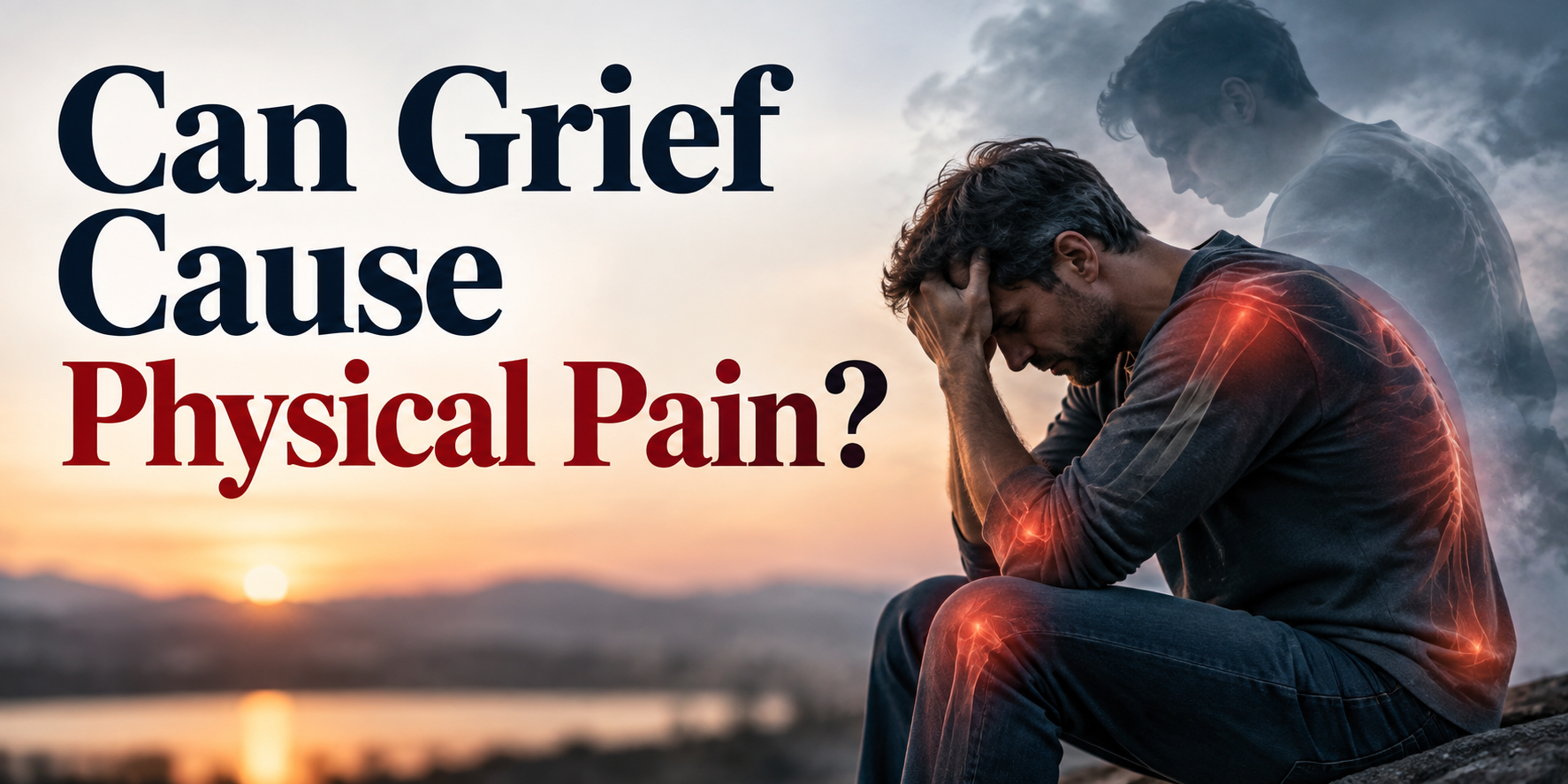
4. Grief Can Cause Headaches and Muscle Pain
Emotional stress and physical tension are closely connected.
When grieving, you may unconsciously tighten your shoulders, jaw, neck, or back.
Over time, this tension can contribute to discomfort and headaches.
Stress may also trigger migraines in people who are susceptible to them.
Physical pain associated with grief may include
-
Tension headaches
-
Neck stiffness
-
Shoulder pain
-
Back discomfort
-
Jaw tension
-
General muscle soreness
-
Increased sensitivity to existing chronic pain
You may not even realize how much tension you are carrying until your muscles begin to ache.
Gentle stretching, walking, relaxation exercises, and adequate rest may help.
However, severe or unusual pain needs medical attention rather than being assumed to result from emotional stress.
5. Grief Can Affect Your Heart
We often describe losing someone as having a broken heart.
While this expression is usually emotional, intense stress can also affect cardiovascular health.
Grief can temporarily increase heart rate and blood pressure. Research has also identified an increased risk of certain cardiovascular events during periods of acute bereavement, particularly among vulnerable individuals.
There is also a medical condition called takotsubo cardiomyopathy, sometimes referred to as broken heart syndrome.
This condition involves temporary weakening of the heart muscle and can sometimes be triggered by intense emotional or physical stress.
It is uncommon, and most grieving people will never experience it.
Nevertheless, it demonstrates that emotional stress can have measurable physical effects.
Important: Chest pain, significant shortness of breath, fainting, or symptoms suggesting a heart attack require emergency medical evaluation. Never assume they are simply caused by grief.
6. Grief Can Weaken Your Ability to Handle Stress
After a devastating loss, everyday problems may suddenly feel much larger.
Something that would not have bothered you before may leave you feeling angry, anxious, overwhelmed, or completely defeated.
This can happen because your emotional resources are already being used to cope with your loss.
Grief can also affect stress-hormone patterns, inflammation, and aspects of immune functioning, although these changes vary considerably between individuals.
Some grieving people notice that they become sick more frequently or take longer to recover from ordinary illnesses.
However, not every illness during bereavement is caused by grief.
Maintaining basic health habits becomes especially important during this time.
Eating regularly, drinking water, resting, moving gently, and attending medical appointments can support your body while you are grieving.
7. Grief Can Change Your Appetite and Digestion
Food may become one of the last things on your mind after losing someone.
Some people lose their appetite entirely.
Others begin eating more frequently because food provides temporary comfort or distraction.
Stress can also affect digestion through communication between the brain and gastrointestinal system.
You may notice:
-
Nausea
-
Stomach discomfort
-
Constipation or diarrhea
-
Changes in hunger
-
Bloating
-
Changes in eating habits
-
Unintentional weight changes
For some people, preparing meals becomes emotionally difficult because it reminds them of the person who is missing.
A parent may struggle to cook a meal their child once loved.
A surviving spouse may find it painful to sit alone at a dinner table that once held two people.
These moments illustrate how grief can affect even the simplest daily routines.
If eating becomes difficult, try smaller meals throughout the day and keep convenient, nourishing foods available.
Persistent digestive symptoms or significant weight changes deserve medical evaluation.
8. Grief Can Increase Anxiety and Fear
After losing someone important, your sense of safety can change.
You may become more aware of how unpredictable life can be.
If someone you love died suddenly, you might begin worrying excessively about losing other people.
You may feel anxious when a family member does not answer the phone or when someone is running late.
For parents who have lost a child, this fear can become particularly intense.
The world may no longer feel as safe as it once did.
Anxiety during grief can appear as
-
Constant worrying
-
Racing thoughts
-
Restlessness
-
Increased irritability
-
Difficulty relaxing
-
Fear of additional losses
-
Feeling emotionally overwhelmed
-
Episodes of panic
These reactions can occur during bereavement, but persistent or disabling anxiety may benefit from professional support.
Grief and anxiety can exist together, and both deserve attention.
9. Grief Can Lead to Depression and Emotional Numbness
Grief and depression share certain symptoms, but they are not the same experience.
Grief is a response to loss. It can involve waves of sadness, longing, anger, guilt, loneliness, and moments of emotional relief.
Depression is a mental health condition that may involve persistent low mood, loss of interest, hopelessness, changes in sleep or appetite, and difficulties functioning.
A grieving person can experience depression, but not everyone who grieves develops it.
Sometimes grief also produces emotional numbness.
You may feel disconnected from the world, unable to cry, or uncertain about what you are supposed to feel.
This does not mean you loved the person any less.
Emotional numbness can be one way people respond to overwhelming distress.
When grief becomes more than sadness
Consider seeking professional support when you experience persistent hopelessness, an inability to function, prolonged social withdrawal, or a significant decline in your mental health.
If you begin thinking about harming yourself or feel unable to stay safe, seek immediate help from emergency services or a crisis support service.
You do not have to reach a breaking point before asking for support.
10. Grief Can Make You Feel Disconnected From Yourself
One of the less-discussed effects of grief is the way it changes your sense of identity.
When someone plays a major role in your life, losing them can change how you understand yourself and your future.
A husband may struggle to understand who he is without his wife.
A daughter may feel lost without the mother who guided her.
A father who loses his son may wonder how to continue being the person he once was.
Your routines change. Your priorities change. Your relationships may change.
Things that once seemed important may no longer matter in the same way.
You may feel like you are living in a world that continued moving forward while your own life stopped.
This identity disruption can contribute to emotional exhaustion, confusion, loneliness, and a loss of direction.
Rebuilding a sense of self does not mean abandoning your loved one’s memory.
It means learning how to carry that love into a life that has changed.
11. Grief Can Affect Your Relationships
When you are grieving, social interactions may become difficult.
You might withdraw from friends, avoid gatherings, or feel frustrated when people expect you to return to normal.
Sometimes conversations become exhausting because you do not have the energy to explain how you are feeling.
Other times, you may desperately want someone to listen but struggle to find the right words.
Grief can also affect relationships because people respond to loss differently.
Some want to talk about their loved one constantly.
Others prefer quiet reflection.
Some find comfort in company, while others need more time alone.
None of these responses automatically means someone is grieving incorrectly.
However, prolonged isolation can increase loneliness and make it harder to receive needed support.
Try maintaining contact with at least one person who respects your grief and allows you to express yourself without judgment.
12. Grief Can Trigger Unexpected Emotional Reactions
Grief does not follow a predictable schedule.
You may feel relatively peaceful one morning and become overwhelmed with sadness that afternoon.
A familiar song, photograph, smell, or location can suddenly bring back powerful memories.
These experiences are often called grief triggers.
For someone who has lost a child, a birthday, holiday, anniversary, or ordinary family moment can bring intense emotional pain.
Even happy occasions can be difficult because they highlight the absence of someone who should have been there.
Why grief triggers affect your body
Emotional memories can activate physiological stress responses.
When a powerful reminder appears, you may experience a racing heartbeat, muscle tension, nausea, tears, or sudden exhaustion.
These reactions can feel surprising, particularly when years have passed since the loss.
But grief does not necessarily disappear simply because time has passed.
The intensity of a grief reaction is not measured by how recently someone died.
A memory can remain meaningful for a lifetime.
13. How Losing a Child Can Affect a Parent’s Body and Mind
Losing a child is a devastating experience that can affect nearly every part of a parent’s life.
Parents may experience intense yearning, disrupted sleep, persistent worry, difficulty concentrating, changes in identity, and profound emotional exhaustion.
The future they once imagined may suddenly feel impossible.
Milestones that should have been celebrated together become reminders of what has been lost.
For fathers, grief may sometimes be complicated by expectations to remain strong, support everyone else, or keep emotions private.
Some fathers continue working, helping others, and handling responsibilities while silently struggling with physical and emotional pain.
From the outside, they may appear to be managing.
Inside, they may be exhausted.
A father can smile, laugh, and participate in everyday life while still missing his child with every part of his being.
He may carry that grief into ordinary moments: waking in the morning, driving to work, eating dinner, or lying awake at night.
And sometimes, the hardest part is that the world cannot see how much effort it takes simply to keep going.
Grief after losing a child is not something a parent should be expected to finish or leave behind.
Over time, many parents learn ways to live alongside their grief while continuing to honor their child’s memory.
Moving forward does not require forgetting.
It means finding a way to keep loving someone who is no longer physically present.
14. Can Grief Cause Long-Term Health Problems?
Grief itself is a natural response to loss, not an illness.
However, prolonged stress, disrupted sleep, reduced physical activity, poor nutrition, and untreated mental health conditions can affect long-term well-being.
Research has found associations between bereavement and certain health risks, although individual outcomes depend on many factors.
Some people experience significant physical symptoms for months. Others notice improvement sooner.
The duration of grief does not automatically determine whether it is healthy or unhealthy.
What matters is how the symptoms affect your life and whether you are receiving the support you need.
What about prolonged grief disorder?
Some bereaved people develop a condition called prolonged grief disorder.
It involves persistent, intense longing or preoccupation with the deceased, accompanied by significant distress or difficulty functioning, beyond what would be expected within the person’s cultural and social context.
In adults, diagnostic criteria in the DSM-5-TR require at least 12 months since the death, along with additional symptoms and clinical assessment.
This diagnosis does not mean there is a deadline for loving or missing someone.
Many people continue grieving deeply for years without having prolonged grief disorder.
The distinction involves the overall pattern, intensity, and impact of symptoms—not simply whether someone still cries or misses their loved one.
15. How to Take Care of Your Body and Mind While Grieving
You cannot eliminate grief through healthy habits, but you can support your physical and emotional well-being while learning to live with loss.
Here are practical ways to begin.
Give yourself permission to rest
Grief can be exhausting.
You do not need to maintain the same pace you had before your loss.
Allow yourself to slow down when possible, take breaks, and recognize that emotional recovery requires energy.
Eat and drink regularly
Even when your appetite is low, your body still needs nourishment.
Try simple, balanced meals and drink enough water throughout the day.
You do not need to prepare elaborate meals to care for yourself.
Move your body gently
Walking, stretching, gardening, or other manageable activities may help reduce tension and support sleep and mood.
Start slowly, particularly if you have existing medical conditions or mobility limitations.
Talk about your grief
Keeping every emotion inside can increase feelings of isolation.
Consider speaking with a trusted friend, family member, grief counselor, spiritual adviser, or bereavement support group.
You do not need to have the perfect words.
Sometimes saying, “I’m having a hard day,” is enough.
Write down your thoughts
Writing can provide a way to express emotions that are difficult to say aloud.
You might write about memories, fears, regrets, gratitude, or the moments you miss most.
Some people find comfort in writing letters to their loved ones.
Others write to help people who are experiencing similar losses.
There is no single correct way to use writing as part of grief.
Create a routine that feels manageable
After a loss, life can feel unpredictable.
Small routines may provide a sense of stability.
Try waking at a consistent time, eating regular meals, spending a few minutes outdoors, or setting one manageable goal each day.
Even simple routines can help you reconnect with daily life.
Honor the person you lost
Remembering your loved one can be an important part of living with grief.
You might look through photographs, celebrate their birthday, share stories, volunteer, create something meaningful, or continue a tradition they loved.
These activities may bring both comfort and sadness.
That is okay.
Honoring someone’s memory does not require being happy every time you remember them.
Seek professional help when needed
If physical symptoms persist, mental health concerns worsen, or daily life becomes increasingly difficult, reach out to a qualified professional.
Medical care, grief counseling, psychotherapy, and support groups can all play valuable roles.
Asking for help does not diminish your strength or your love.
16. Why Grief Can Still Affect You Years Later
One of the greatest misconceptions about grief is that enough time will eventually erase its effects.
People may expect you to feel better after several months or believe that years should be enough to move on.
But meaningful relationships do not disappear when someone dies.
Memories remain.
Love remains.
And sometimes the pain of missing someone remains, too.
Years after a loss, you may still experience moments of sadness, fatigue, or emotional overwhelm.
An anniversary may bring back physical tension.
A familiar place may trigger tears.
A dream may leave you feeling emotionally exhausted the following morning.
These experiences do not automatically mean you are failing to heal.
Grief often changes over time rather than disappearing completely.
Many people gradually develop greater capacity to experience joy, build relationships, and find meaning while continuing to miss the person they lost.
Healing does not mean you stop loving someone. It means learning how to live while carrying that love and the reality of their absence.
17. The Connection Between Love, Grief, and Healing
Grief exists because someone mattered.
The deeper the relationship, the more significant the changes their absence may create in your life.
But grief is not measured only by tears, sadness, or physical symptoms.
Some people grieve quietly.
Others express their emotions openly.
Some return to work quickly, while others need much more time.
The way you experience grief does not determine how much you loved someone.
And healing does not require choosing between remembering your loved one and living your own life.
You can miss someone terribly and still find reasons to smile.
You can feel sadness and gratitude at the same time.
You can build new memories without replacing the old ones.
For a grieving parent, continuing to live can sometimes feel like leaving a child behind.
But your love for your child does not depend on remaining in pain.
You can carry their memory into everything you do, including the moments when you begin experiencing happiness again.
18. When Should You Be Concerned About Grief Symptoms?
Although many physical and emotional reactions are common during bereavement, certain symptoms require medical or mental health attention.
Seek professional evaluation if you experience ongoing inability to sleep, substantial weight changes, persistent pain, worsening memory problems, severe anxiety, or depression that interferes with daily functioning.
Seek emergency help for chest pain, severe breathing difficulties, stroke-like symptoms, or other potentially life-threatening symptoms.
If you experience suicidal thoughts, seek immediate support. In the United States, you can call or text 988 for crisis assistance.
You deserve care for both your emotional pain and your physical health.
Grief may explain some of what you are experiencing, but it should never prevent you from receiving treatment for something else.
Final Thoughts: Your Body and Mind Are Carrying the Weight of Loss
Grief is not simply sadness.
It is an experience that can affect your thoughts, emotions, physical health, relationships, and sense of identity.
It can leave you exhausted after a full night’s sleep.
It can make your mind feel foggy, your muscles tense, and your heart heavy.
It can turn ordinary tasks into overwhelming challenges and make familiar places feel completely different.
And for someone who has lost a child, grief can change the way every part of life feels.
There may be days when you feel strong and days when you struggle just to get through the morning.
There may be moments when you laugh and then suddenly feel guilty for enjoying yourself.
There may be nights when you lie awake remembering the life you once had and wishing you could experience just one more conversation, one more hug, or one more ordinary day with the person you love.
Those feelings reflect the importance of the relationship you lost.
But while grief deserves acknowledgment, your well-being deserves care, too.
You are allowed to rest.
You are allowed to ask for help.
You are allowed to find moments of happiness.
And you are allowed to continue loving and remembering someone for the rest of your life.
Grief may change your body, your mind, and the way you see the world. But it does not take away your ability to find meaning, experience love, and build a life that honors the person you miss.
You do not have to figure out the rest of your life today.
Sometimes the most meaningful thing you can do is take care of yourself and make it through one more day.
And tomorrow, you can begin again.
A Question for Readers
Have you experienced physical exhaustion, memory problems, difficulty sleeping, or other changes in your body and mind since losing someone you love? What has helped you manage those challenges while grieving?
Your experience may help someone else understand what they are going through.
Leave a Reply