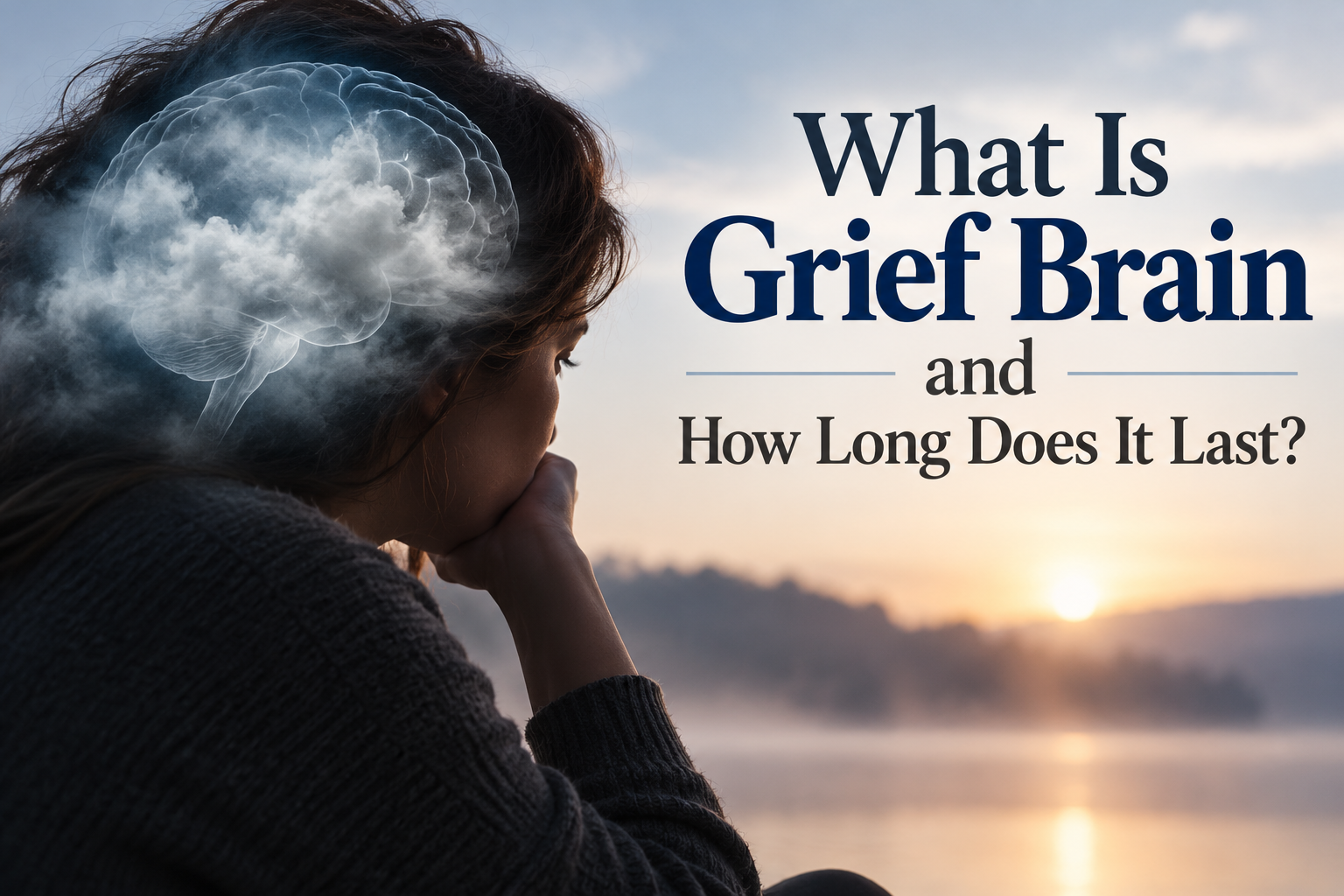
Understanding Why Grief Affects Your Memory, Concentration, and Ability to Think Clearly
Losing someone you love changes more than your emotions. It can affect your ability to think, remember, concentrate, make decisions, and even complete everyday tasks that once seemed effortless.
You might walk into a room and forget why you went there. You might read the same paragraph several times without understanding what it says. You might forget appointments, lose track of conversations, or struggle to remember something someone told you just minutes earlier.
Sometimes, you may feel as though your mind is surrounded by a thick fog that refuses to lift.
If you have experienced these feelings after losing someone you love, you may be experiencing something commonly called grief brain.
Grief brain is a term used to describe the mental fog, forgetfulness, difficulty concentrating, and cognitive exhaustion that can accompany bereavement.
Although grief brain can be frustrating and sometimes frightening, it is a common experience during grief. It does not automatically mean that something is permanently wrong with your brain.
Understanding why grief brain happens, how long it can last, and what you can do to manage it may help you navigate one of the many difficult challenges that come with losing someone you love.
What Is Grief Brain?
Grief brain, sometimes called grief fog or bereavement brain fog, describes the cognitive difficulties that many people experience following the death of someone important in their lives.
When someone you love dies, your mind must process an enormous emotional and psychological change.
You are not simply dealing with sadness. You may also be trying to understand what happened, adjust to a different future, manage overwhelming emotions, and learn how to live without someone who was once part of your everyday life.
All of this requires mental energy.
As a result, everyday thinking can become more difficult.
You may find yourself struggling with things that previously required little effort.
Grief brain is not a formal medical diagnosis. Instead, it is a descriptive term for a collection of cognitive symptoms associated with grief.
These symptoms may include:
-
Forgetfulness and short-term memory difficulties.
-
Trouble concentrating on conversations or tasks.
-
Difficulty making even simple decisions.
-
Feeling mentally exhausted.
-
Losing your train of thought.
-
Struggling to find the right words.
-
Feeling confused or overwhelmed.
-
Difficulty organizing thoughts.
-
Slower thinking and processing information.
-
Feeling mentally disconnected from your surroundings.
For some people, these symptoms are mild and temporary.
For others, especially those experiencing traumatic or prolonged grief, cognitive difficulties can become a significant part of daily life.
The important thing to understand is that grief affects the whole person, including the mind and body.
Why Does Grief Affect Your Brain?
When you lose someone you love, your brain does not simply acknowledge the loss and immediately adjust.
Instead, it must adapt to a world in which someone deeply important is no longer physically present.
Your memories, habits, expectations, and emotional attachments may still revolve around that person.
You may instinctively reach for your phone to call them, expect to hear their voice, or think about sharing something with them before remembering they are gone.
These experiences reflect how deeply relationships become woven into everyday thinking.
Several factors can contribute to grief brain.
Emotional Stress Overloads Your Mental Resources
Grief can create intense emotional stress.
Your thoughts may constantly return to the person who died, the circumstances surrounding their death, or the future you expected to share.
This emotional processing competes with the mental resources needed for everyday activities.
When much of your attention is occupied by grief, it becomes harder to focus on other things.
You may sit down to complete a task only to discover that your thoughts have wandered back to your loved one.
You may begin something and forget what you were doing.
It is not necessarily because you have lost your ability to concentrate.
Your attention may simply be divided between the demands of daily life and the emotional weight of your loss.
Stress Can Affect Memory and Attention
Grief can activate the body’s stress-response systems.
During periods of intense stress, changes in stress hormones, including cortisol, may influence attention, memory, and emotional regulation.
Several areas of the brain are involved in these processes.
The hippocampus plays an important role in learning and memory.
The prefrontal cortex helps with planning, attention, decision-making, and organizing information.
The amygdala participates in emotional processing and responses to potential threats.
These systems interact in complex ways.
Under significant stress, it can become more difficult to concentrate, organize information, and remember details.
However, experiencing grief brain does not necessarily mean these brain structures have been damaged.
Many grief-related cognitive difficulties are temporary or improve as stress decreases and people gradually adapt to their loss.
Sleep Problems Make Thinking More Difficult
Sleep disturbances are common during bereavement.
Some people struggle to fall asleep because their thoughts become overwhelming at night.
Others wake repeatedly, experience distressing dreams, or find themselves unable to return to sleep.
Poor sleep can affect memory, concentration, emotional regulation, and decision-making.
When grief and sleep deprivation occur together, mental fog can become even more noticeable.
You may wake up already exhausted and struggle to make it through the day.
Even simple tasks may feel overwhelming.
This creates a difficult cycle: grief interferes with sleep, poor sleep makes thinking harder, and cognitive exhaustion can make the emotional challenges of grief more difficult to manage.
Your Mind Is Adjusting to a New Reality
One of the most difficult parts of losing someone is learning to live in a world that no longer includes their physical presence.
Your mind has spent years building memories, expectations, and routines around that person.
When they die, those patterns do not disappear overnight.
You may continue expecting them to walk through the door, answer the phone, or sit beside you.
At the same time, you are trying to establish new routines and responsibilities.
This adjustment can demand considerable attention and emotional energy.
Grief brain may be especially noticeable when you are forced to handle responsibilities that your loved one previously shared with you.
What Does Grief Brain Feel Like?
Grief brain can feel different for everyone.
Some people describe it as walking through fog.
Others say it feels as though their thoughts are moving through thick mud.
You may know what you want to say but struggle to find the words.
You may remember something important one moment and completely forget it the next.
You might even begin questioning your own memory or intelligence.
One particularly frustrating aspect of grief brain is that other people may not recognize what you are experiencing.
From the outside, you may appear distracted, forgetful, or uninterested.
But internally, you may be struggling simply to keep up with the demands of ordinary life.
For someone grieving the death of a child, spouse, parent, sibling, or close friend, even a familiar routine can become emotionally exhausting.
A grocery store, family gathering, or ordinary conversation may unexpectedly trigger memories.
Suddenly, your attention shifts away from what you were doing and toward the person you miss.
These moments can make it difficult to stay focused, especially during the early months of grief.
How Long Does Grief Brain Last?
One of the most common questions people ask is:
How long will grief brain last?
Unfortunately, there is no universal timeline.
Grief brain may improve within weeks or months for some people, while others experience cognitive difficulties for a year or longer.
The duration depends on several factors, including the nature of the loss, emotional stress, sleep quality, physical health, available support, and whether other conditions are contributing to the symptoms.
There is no established medical cutoff at which grief brain should disappear.
The First Few Weeks After a Loss
During the first days and weeks after losing someone, grief brain can be particularly intense.
You may still be experiencing shock, disbelief, emotional numbness, or overwhelming sadness.
Your mind may struggle to process what has happened.
Even routine decisions can feel impossible.
You might forget conversations, lose track of time, or have difficulty remembering what happened during the days surrounding the death.
For some people, these early memories feel fragmented because of intense stress and emotional overload.
The First Several Months
As the initial shock begins to change, cognitive symptoms may gradually improve.
However, this does not mean grief itself has disappeared.
You may begin returning to work, handling responsibilities, and establishing routines while still experiencing forgetfulness and difficulty concentrating.
Certain situations may make grief brain more noticeable.
Birthdays, holidays, anniversaries, and unexpected reminders can temporarily increase emotional distress and interfere with concentration.
Improvement is not always steady.
You may have several days when your thinking feels clearer, followed by a day when the fog returns.
Six Months to a Year
Some people notice significant improvement in their concentration and memory during this period.
Others continue struggling, particularly if they are experiencing intense grief, chronic stress, depression, anxiety, or persistent sleep difficulties.
The passage of time alone does not guarantee that symptoms will resolve.
Support, treatment when needed, physical health, and changes in daily stress can all influence recovery.
Can Grief Brain Last for Years?
Yes, some people report cognitive difficulties years after a significant loss.
This may be especially true when grief remains intense or is accompanied by ongoing emotional distress.
However, persistent brain fog should not automatically be attributed to grief.
Conditions such as depression, sleep apnea, thyroid disorders, medication side effects, vitamin deficiencies, and other medical or neurological problems can also affect thinking and memory.
If your symptoms continue, worsen, or interfere significantly with everyday life, speaking with a healthcare professional is important.
Grief has no fixed expiration date, but persistent cognitive symptoms deserve attention rather than being dismissed as something you must simply endure.
Why Grief Brain Can Be Especially Difficult After Losing a Child
The death of a child can profoundly disrupt a parent’s identity, expectations, and sense of the future.
Parents do not simply lose someone they love.
They may lose the future they imagined, the daily routines they shared, and a central part of how they understood their lives.
For a grieving father or mother, the mental burden can be enormous.
You may spend hours thinking about your child, remembering conversations, revisiting memories, or imagining the moments you will never share.
You may struggle to concentrate because part of your mind is constantly occupied by the absence of your child.
As a father who has lost my son, I understand how grief can become part of nearly every moment of daily life.
There are times when you are trying to accomplish something ordinary, but your thoughts return to the person you would give anything to see again.
You might be working, driving, cooking, or sitting quietly when a memory suddenly changes your entire emotional state.
The world expects you to continue functioning, even when your mind is carrying a loss that has changed your life forever.
Grief brain can make that expectation feel especially overwhelming.
Yet experiencing these difficulties does not mean you are weak or incapable.
It means you may be carrying significant emotional demands while trying to navigate everyday responsibilities.
Can Grief Brain Cause Memory Loss?
Yes. Grief can contribute to forgetfulness and difficulty remembering information.
However, it is important to distinguish between temporary memory difficulties and progressive or medically significant memory loss.
Grief-related forgetfulness often involves problems with attention and short-term recall.
For example, you may forget where you placed your keys because your attention was elsewhere when you set them down.
You may struggle to remember a conversation because you were emotionally distracted while it was happening.
You may forget an appointment because you are exhausted and overwhelmed.
In these situations, the problem may involve how information is initially processed and stored rather than a permanent loss of memory.
Many people experience improvement as their concentration, sleep, and emotional well-being improve.
However, sudden confusion, rapidly worsening memory, or difficulty recognizing familiar people or places should never be assumed to be normal grief.
These symptoms require medical assessment.
Is Grief Brain the Same as Depression?
Grief brain and depression can share several symptoms, but they are not the same thing.
Both may involve difficulty concentrating, fatigue, sleep disturbances, and reduced motivation.
Grief often involves waves of sadness and longing connected to the person who died.
Depression may involve persistent low mood, loss of interest or pleasure, hopelessness, and changes in functioning that extend beyond reminders of the loss.
A person can experience grief without having depression.
It is also possible to experience grief and depression at the same time.
Another condition, prolonged grief disorder, involves persistent, intense grief accompanied by significant distress or impairment beyond the expected period of adjustment. In adults, diagnostic criteria require that the death occurred at least 12 months earlier, along with other specific symptoms and considerations.
Not everyone who grieves for years has prolonged grief disorder.
Continuing to love and miss someone is not, by itself, a mental health disorder.
If concentration problems are accompanied by persistent hopelessness, severe emotional distress, or an inability to manage daily life, professional support may help.
10 Ways to Cope With Grief Brain
Although you cannot force grief to disappear, there are practical steps that may help you manage cognitive difficulties.
1. Give Yourself Permission to Slow Down
You may not be able to function at the same pace you maintained before your loss.
That does not mean you have failed.
When your mind is overwhelmed, trying to push harder can sometimes increase frustration.
Allow yourself additional time to complete tasks.
Focus on what truly needs to be accomplished and release unnecessary expectations whenever possible.
2. Write Things Down
When memory feels unreliable, written reminders can become valuable tools.
Keep a notebook, calendar, or digital reminder system for appointments, responsibilities, and important information.
Write down tasks as soon as you think of them.
Creating a simple daily checklist can reduce the pressure of trying to remember everything.
3. Focus on One Task at a Time
Multitasking can become particularly difficult during grief.
Instead of attempting several things simultaneously, choose one task and give it your attention.
Break larger responsibilities into smaller steps.
Completing one manageable task can help rebuild confidence and reduce mental overload.
4. Prioritize Sleep
Rest is important for concentration, memory, and emotional health.
Try to maintain a consistent sleep schedule.
Reduce stimulating activities before bedtime and create a relaxing evening routine.
If sleep difficulties continue, speak with a healthcare professional.
Treating sleep problems may help improve daytime cognitive functioning.
5. Stay Physically Active
Gentle physical activity can support overall health, mood, and sleep.
Walking, stretching, gardening, or other activities suited to your abilities may help reduce stress.
You do not need to begin an intense exercise program.
Even a short period of movement may provide a welcome break from emotional and mental exhaustion.
6. Eat Regularly and Stay Hydrated
Grief can affect appetite.
Some people eat very little, while others rely on convenience foods because cooking feels overwhelming.
Skipping meals or becoming dehydrated may contribute to fatigue and difficulty concentrating.
Try to maintain regular meals and adequate fluid intake.
Simple, nutritious foods can help support your physical well-being during a difficult time.
7. Take Breaks When Your Mind Feels Overwhelmed
Mental exhaustion can build throughout the day.
If you notice yourself rereading the same sentence or repeatedly forgetting what you are doing, consider taking a short break.
Step outside, stretch, sit quietly, or practice slow breathing.
Returning to a task after a break may make it easier to focus.
8. Talk About Your Grief
Keeping every emotion inside can feel exhausting.
Talking with a trusted friend, family member, counselor, or grief support group may help you process your experiences.
You do not need to explain everything perfectly.
Sometimes, simply speaking your loved one’s name and sharing a memory can provide comfort.
For grieving parents, finding others who understand child loss may be particularly meaningful.
9. Be Patient With Yourself
You may become frustrated when you forget something important or struggle with an ordinary task.
Try not to judge yourself harshly.
Grief can place extraordinary demands on your attention and emotional energy.
Progress may happen gradually.
A difficult day does not erase the improvements you have already made.
10. Seek Professional Help When Needed
If grief brain is affecting your work, relationships, safety, or ability to manage everyday responsibilities, consider seeking professional guidance.
A healthcare professional can evaluate possible medical causes of cognitive symptoms.
A grief-informed mental health professional may help you address emotional distress, sleep difficulties, or other challenges associated with bereavement.
Asking for help is not a sign that you are grieving incorrectly.
It is a way of caring for yourself while navigating a significant loss.
Can Grief Brain Come and Go?
Yes.
One of the confusing aspects of grief brain is that symptoms may fluctuate.
You might experience a week when your memory and concentration seem noticeably better.
Then an anniversary, unexpected reminder, stressful event, or period of poor sleep may bring back the mental fog.
This does not necessarily mean your recovery has reversed.
Grief is rarely a predictable process.
Emotional intensity can change from day to day, and cognitive symptoms may change along with it.
For example, you may feel relatively focused throughout an ordinary workweek but struggle to concentrate as your loved one’s birthday approaches.
You may function well during the day and experience intense mental exhaustion in the evening.
Recognizing these patterns can help you plan around difficult periods.
It may also remind you that temporary setbacks do not mean you will always feel the same way.
Does Grief Brain Ever Completely Go Away?
For many people, grief-related cognitive symptoms gradually improve.
As sleep stabilizes, emotional stress becomes more manageable, and daily routines develop, concentration and memory may begin to feel more reliable.
However, recovery does not necessarily mean returning to exactly the person you were before the loss.
Significant grief can change your priorities, relationships, habits, and perspective on life.
You may continue experiencing moments when memories of your loved one interrupt your thoughts.
That does not automatically mean you still have grief brain.
Remembering someone, missing them, and feeling emotional during important moments are natural parts of maintaining a meaningful connection with a person who has died.
The goal is not to erase your memories or stop loving the person you lost.
The goal is to regain enough mental clarity and emotional stability to live your life while continuing to carry that love.
When Should You Be Concerned About Grief Brain?
Although forgetfulness and concentration difficulties can occur during bereavement, certain symptoms deserve medical attention.
Contact a healthcare professional if you experience persistent or worsening memory problems, difficulty managing essential responsibilities, significant changes in thinking, or cognitive symptoms that are not improving.
Seek urgent medical attention for sudden confusion, new difficulty speaking, facial drooping, one-sided weakness, or other abrupt neurological symptoms.
These are not symptoms to assume are caused by grief.
Likewise, if your grief is accompanied by thoughts of suicide or an inability to keep yourself safe, seek immediate support. In the United States, you can call or text 988 for crisis assistance.
Your emotional pain deserves compassion, and your physical and cognitive health deserve proper care.
How to Explain Grief Brain to Family and Friends
One of the hardest parts of grief brain is helping other people understand what you are experiencing.
Someone may become frustrated when you forget plans, lose track of conversations, or struggle to make decisions.
They may assume you are distracted because you are not listening.
But grief brain is not simply a lack of interest or effort.
You might explain it this way:
“My grief has been affecting my concentration and memory. Sometimes I have difficulty processing information or remembering things. I am doing my best, but I may need extra time, reminders, and patience.”
People who have never experienced a devastating loss may not fully understand.
That does not mean your experience is invalid.
Supportive family members and friends can help by communicating clearly, offering practical assistance, and avoiding unnecessary pressure.
Sometimes, the most meaningful support is simply understanding that a grieving person may need more time to manage ordinary responsibilities.
The Connection Between Grief Brain and Emotional Exhaustion
Grief brain often occurs alongside emotional and physical exhaustion.
When you are grieving, your mind may rarely feel completely at rest.
Even during quiet moments, you may be remembering your loved one, thinking about what happened, or struggling with the reality of their absence.
You may also be managing financial responsibilities, family changes, work obligations, and difficult decisions.
This combination can leave you feeling drained before the day has even begun.
Mental fatigue may make it harder to regulate emotions.
Emotional distress may then make it harder to sleep or concentrate.
These difficulties can reinforce one another.
Recognizing the connection between grief, exhaustion, and cognitive functioning can help you respond with greater patience.
Rather than assuming you need to work harder, you may need more rest, support, or a different approach to your responsibilities.
Learning to Live With Grief Without Losing Yourself
One of the most painful realities of losing someone you love is discovering how much of your life was connected to them.
Your routines change.
Your priorities shift.
Your expectations for the future may disappear.
And somewhere in the middle of trying to understand everything that has happened, you may feel as though you have lost part of yourself.
Grief brain can intensify that feeling.
When you struggle to remember things or think clearly, you may wonder whether you will ever feel like yourself again.
But the mental fog you experience today does not necessarily define your future.
You may gradually discover that you can concentrate longer, remember more easily, and manage responsibilities that once felt impossible.
These improvements do not mean you are forgetting your loved one.
They mean you are learning how to carry your grief while continuing to live.
For a parent who has lost a child, that distinction matters deeply.
Moving forward does not mean leaving your child behind.
It means finding ways to continue living while keeping their memory and love part of your life.
You can experience moments of happiness without loving them any less.
You can rebuild routines without erasing the past.
And you can begin to regain mental clarity while still missing them every single day.
Frequently Asked Questions About Grief Brain
Is grief brain a real condition?
Grief brain is a commonly used term for memory, attention, and concentration difficulties associated with bereavement. It is not a separate formal medical diagnosis, but the cognitive difficulties people describe can be very real.
How long does brain fog last after losing someone?
There is no fixed timeline. Some people improve within weeks or months, while others experience symptoms for longer. Persistent or worsening symptoms should be evaluated rather than automatically attributed to grief.
Can grief make you forget things?
Yes. Emotional stress, disrupted sleep, and difficulty concentrating can interfere with remembering information. However, not all memory problems are caused by grief.
Can grief affect your ability to work?
Yes. Grief may interfere with concentration, decision-making, memory, and mental stamina. Some people benefit from temporary adjustments to workloads, schedules, or responsibilities.
Can grief brain happen years after someone dies?
Cognitive difficulties may occur or return during periods of intense grief, even years after a death. However, ongoing brain fog may also have other medical or psychological causes.
Does grief permanently damage your brain?
There is no evidence that ordinary grief brain necessarily represents permanent brain damage. Grief and stress can affect cognitive functioning, but many people improve over time. Persistent changes deserve professional evaluation.
What helps grief brain go away faster?
There is no proven quick cure. Adequate sleep, manageable routines, physical activity, stress reduction, social support, and treatment of contributing medical or mental health conditions may help improve cognitive functioning.
Final Thoughts: Your Mind Is Carrying More Than People Can See
Grief brain is another reminder that losing someone you love affects far more than your heart.
It can change how you think, remember, concentrate, and experience everyday life.
You may become frustrated with yourself because tasks that once seemed simple now require extraordinary effort.
You may wonder why you cannot remember things or why your thoughts seem constantly scattered.
But grief can demand tremendous mental and emotional energy.
The fog you experience may be connected to the stress, exhaustion, and adjustment that follow a devastating loss.
For many people, these difficulties improve with time, support, and appropriate care.
For others, the journey takes longer, and additional help may be necessary.
Neither experience should be a source of shame.
If you are grieving the death of someone you love, remember that you do not have to measure your progress against anyone else’s timeline.
You are allowed to have difficult days.
You are allowed to forget things.
You are allowed to rest.
You are allowed to ask for help.
And you are allowed to continue loving and remembering the person you lost while gradually rebuilding your life.
Grief may cloud your thoughts, but it does not erase your love, your memories, or your ability to find meaning in life again.
The person you lost will always matter.
And so do you.
Have you experienced grief brain after losing someone you love? What has been the most difficult part of dealing with forgetfulness, mental fog, or trouble concentrating during your grief?



Leave a Reply