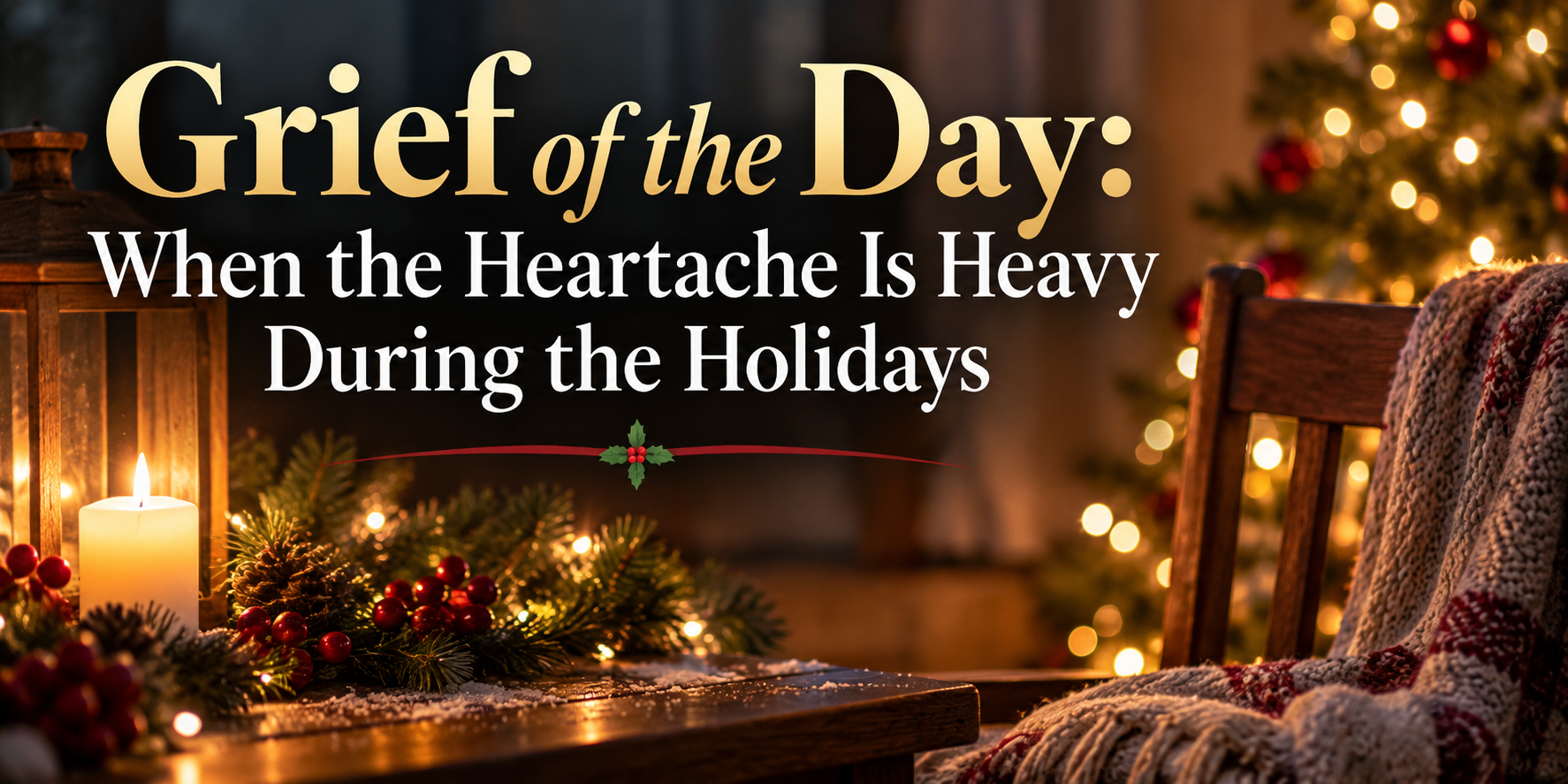
The holidays are supposed to be a time of happiness, love, family, and togetherness. They are filled with traditions, decorations, familiar songs, and memories that remind us of the people we love. Everywhere we look, we see reminders of celebration. Families gather around dinner tables, children open presents, and loved ones embrace beneath the glow of Christmas lights.
But for someone who is grieving, the holidays can feel very different.
Behind the beautiful decorations and cheerful music, there may be a heart quietly breaking. Behind a smile may be someone desperately missing a person who should still be here. Behind the laughter at a family gathering may be someone fighting back tears because one familiar voice is missing.
When you have lost someone you deeply love, the holidays can become a painful reminder of everything that has changed.
The world continues celebrating, but your heart remembers who is missing.
And sometimes, that heartache becomes almost too heavy to carry.
Why the Holidays Make Grief Feel So Much Heavier
Grief does not follow a calendar. It does not disappear because another year has passed, and it certainly does not take a break because the holiday season has arrived.
In fact, the holidays often make grief feel more intense.
Throughout the year, we develop ways to manage our sadness. We stay busy, follow routines, and find small ways to move forward. But when the holidays arrive, familiar traditions can bring memories rushing back.
A particular Christmas song may remind you of someone you loved.
The smell of a favorite holiday meal may take you back to a happier time.
An ornament hanging on the Christmas tree may remind you of the person who once placed it there.
Even something as simple as walking through a store filled with holiday decorations can bring tears to your eyes.
These moments remind us that grief is not simply about losing someone. It is also about losing the everyday experiences, traditions, and future memories we expected to share with them.
Sometimes the hardest part of the holidays is remembering how beautiful they used to be before everything changed.
The Empty Chair That Says Everything
There is something incredibly painful about an empty chair during the holidays.
It may be a chair at the Thanksgiving dinner table, a favorite spot in the living room on Christmas morning, or a place where someone always sat during family celebrations.
To everyone else, it may look like an ordinary empty seat.
But to someone grieving, that chair represents a person whose presence once made the holidays complete.
You remember their laughter.
You remember their smile.
You remember the conversations, the jokes, and the little traditions that made those moments special.
You may even catch yourself looking toward that empty space, almost expecting to see them sitting there again.
And then reality returns.
They are not coming through the door.
You will not hear their familiar voice calling your name.
You cannot reach across the table and hold their hand.
The empty chair becomes a reminder that life has changed in ways you never wanted and never imagined.
For parents who have lost a child, that empty space can be especially heartbreaking.
A parent may remember the excitement of watching their child open presents, helping prepare holiday meals, or sharing special family traditions.
Those memories are precious, but they can also bring tremendous pain.
Because no matter how many holidays pass, a parent never stops wishing their child were there to celebrate one more.
When Everyone Else Seems Happy
One of the loneliest parts of grieving during the holidays is watching the world celebrate while your own heart is hurting.
You see families taking pictures together.
You hear people discussing their holiday plans.
You watch parents shopping for their children and loved ones choosing gifts for each other.
You may genuinely feel happy for them, yet still experience a deep sadness because you wish you could have those moments again.
Sometimes, you may even feel guilty for struggling during a season when everyone expects happiness.
People may encourage you to enjoy yourself, participate in celebrations, or focus on the positive things in your life.
Their intentions may be good, but grief cannot simply be switched off.
You can appreciate the blessings you still have while deeply mourning the person you lost.
You can smile at a holiday gathering and cry when you return home.
You can enjoy a beautiful moment and still wish someone special were there to share it.
These emotions can exist together.
You do not have to choose between being grateful for what remains and grieving what you have lost.
Both feelings deserve space in your heart.
Missing the Holidays That Will Never Happen
Grief is not only about remembering the past.
It is also about mourning the future.
When someone we love dies, we lose more than their physical presence. We also lose the moments we believed we would experience together.
The birthdays they will never celebrate.
The family gatherings they will never attend.
The holiday traditions they will never share again.
For a grieving parent, this can mean imagining Christmas mornings that will never happen, Thanksgiving dinners without their child, and another New Year beginning without the person they would give anything to see again.
It is heartbreaking to realize that the memories you have are now the memories you must carry forward.
There will be no new photographs together.
No new holiday conversations.
No new memories of watching that person grow older.
And that realization can hurt in ways that are difficult to explain.
Sometimes, you are not only grieving the person you lost.
You are grieving the entire future you expected to have with them.
The Pressure to Be Happy During the Holidays
Society often treats the holidays as a season when everyone should be cheerful.
We are surrounded by messages encouraging happiness, gratitude, generosity, and celebration.
But grief does not always fit into those expectations.
Some people may feel pressure to decorate their homes, attend parties, exchange gifts, or continue family traditions even when they are emotionally exhausted.
Others may feel obligated to pretend they are doing better than they actually are.
They smile because they do not want to make anyone uncomfortable.
They attend gatherings because they do not want to disappoint their families.
They hold back their tears because they fear others will think they are ruining the holiday.
But grieving people should never have to hide their pain to make everyone else comfortable.
If decorating the Christmas tree feels overwhelming, it is okay to do less.
If attending a large gathering feels too difficult, it is okay to decline.
If you need to leave a celebration early, that is okay too.
And if you find yourself crying during a holiday dinner, there is nothing shameful about those tears.
You are allowed to experience the holidays differently after losing someone you love.
Your grief does not make you ungrateful.
Your sadness does not make you selfish.
And your inability to celebrate the way you once did does not mean you are failing.
It means your life has been changed by loss.
When the Memories Bring Both Comfort and Pain
Memories are one of the most complicated parts of grief.
They can make us smile and cry within the same moment.
You may remember a Christmas morning filled with laughter and feel grateful that you experienced such happiness.
Then, only seconds later, the realization that those moments are gone may bring overwhelming sadness.
You may find an old holiday photograph and spend several minutes staring at it, wishing you could step back into that moment.
You may hear a familiar song and remember exactly where you were when you last heard it together.
These memories can feel bittersweet.
They remind us of the love we experienced, but they also remind us of the absence we now live with.
Some people find comfort in looking through old photographs, watching family videos, or sharing stories about their loved ones.
Others find those activities too painful, especially during the holidays.
There is no single correct way to remember someone.
Some years, you may want to surround yourself with memories.
Other years, you may need to put the photographs away and simply get through the day.
Both responses are understandable.
The important thing is recognizing that memories do not have to be avoided or forced.
You can approach them when your heart feels ready.
When You Have Lost a Child, the Holidays Are Never Quite the Same
Losing a child changes every part of a parent’s life.
It changes how you experience ordinary days, special occasions, family gatherings, and holidays.
For many parents, the holiday season becomes one of the most painful times of the year.
Christmas may once have meant watching your child’s excitement as they opened presents.
Thanksgiving may have meant sitting together, sharing stories, and enjoying a meal as a family.
New Year’s Eve may have represented another year of watching your child grow, discover new opportunities, and build a future.
After your child’s death, those celebrations may feel incomplete.
You may walk through stores and see gifts you would have purchased for your son or daughter.
You may hear parents discussing their children’s holiday plans and quietly wonder what your own child would be doing if they were still alive.
You may look at family photographs and wish you could take just one more.
The pain can be especially difficult when people around you seem to have moved forward.
They may stop mentioning your child’s name.
They may avoid talking about the loss because they believe it will upset you.
They may assume that because several years have passed, the holidays should become easier.
But a parent’s love does not end when their child dies.
And neither does the longing to have them home.
A grieving parent does not need someone to remind them that their child is gone. They live with that reality every day. What they often need is someone willing to remember their child with them.
Sometimes, hearing someone speak your child’s name can mean more than any holiday gift.
It reminds you that your child mattered.
That their life made a difference.
And that they have not been forgotten.
Give Yourself Permission to Grieve
One of the most important things you can do during the holidays is give yourself permission to feel whatever you are feeling.
You do not need to apologize for being sad.
You do not need to explain why certain traditions are difficult.
You do not need to pretend that everything is fine.
Some days, you may feel strong enough to participate in holiday celebrations.
Other days, getting out of bed and facing the day may require all the strength you have.
Grief can be unpredictable.
You may wake up feeling relatively peaceful, only to be overwhelmed by sadness later in the afternoon.
A familiar smell, a song, or an unexpected memory can bring tears without warning.
When those moments happen, try not to judge yourself.
Allow yourself to cry if you need to.
Take a quiet walk.
Spend time alone if that brings comfort.
Reach out to someone who understands.
And remember that you do not have to carry every difficult emotion by yourself.
Grief is not a test of strength.
You do not have to prove how strong you are by hiding your pain.
Sometimes, strength means acknowledging that your heart is hurting and allowing someone to sit beside you.
Finding Ways to Honor Your Loved One During the Holidays
Although the holidays may never feel exactly the same, some people find comfort in creating meaningful ways to remember the person they lost.
These acts do not erase grief, but they can help keep love and remembrance connected to the season.
Light a Candle in Their Memory
Lighting a candle can become a quiet moment of remembrance.
You might place it beside a photograph, light it during a family dinner, or spend a few peaceful minutes remembering your loved one.
The candle can symbolize the love that continues even after death.
Keep a Special Ornament on the Christmas Tree
A memorial ornament can become a meaningful part of your holiday traditions.
It might include your loved one’s name, photograph, or a symbol that reminds you of them.
Each year, placing that ornament on the tree can provide an opportunity to remember the moments you shared.
Prepare Their Favorite Holiday Food
Food often carries powerful memories.
Preparing a loved one’s favorite dish or dessert may help you feel connected to the traditions you once enjoyed together.
You might share a story about why they loved that particular food or remember a special holiday when you prepared it together.
Share Stories and Say Their Name
Do not underestimate the comfort of hearing your loved one’s name spoken aloud.
Invite family members to share favorite memories.
Talk about funny moments, meaningful conversations, or traditions that made the holidays special.
You may laugh.
You may cry.
You may do both.
Remembering someone does not have to be entirely sad.
Sometimes, sharing stories allows their personality and the joy they brought into your life to remain part of the gathering.
Do Something Kind in Their Honor
Helping someone else can be a meaningful way to honor a loved one’s memory.
You might donate a gift to a child in need, support a family experiencing hardship, volunteer with a charitable organization, or offer encouragement to someone who is grieving.
An act of kindness cannot replace the person you lost.
But it can become one way of carrying their love forward.
It Is Okay to Change Your Holiday Traditions
After a significant loss, familiar traditions may become too painful.
You may have always hosted Christmas dinner, decorated your home a certain way, or spent the holidays with the same people.
Now, those routines may feel overwhelming.
You have permission to change them.
Perhaps you choose to spend Christmas quietly at home.
Maybe you decide to visit a peaceful location instead of attending a large gathering.
You might begin a new tradition that honors your loved one while making room for the life you are living today.
Or perhaps you decide not to celebrate at all this year.
There is no requirement to continue traditions that leave you emotionally exhausted.
And changing a tradition does not mean you are forgetting the person you lost.
It means you are learning how to live in a world that feels different without them.
Some traditions may return in time.
Others may never feel right again.
You can decide what works for you, one holiday at a time.
When Loneliness Becomes Overwhelming
The holidays can be especially difficult for people who spend them alone.
When someone you love has died, the silence of an empty home can feel unbearable.
You may remember years when the house was filled with laughter, conversations, music, and excitement.
Now, the quiet may seem louder than anything else.
You may sit in a room surrounded by holiday decorations and feel disconnected from the celebrations happening outside.
Loneliness during grief is not always about physically being alone.
You can be surrounded by family and friends and still feel deeply lonely because the one person you most want beside you is missing.
That particular loneliness can be difficult for others to understand.
If the loneliness becomes overwhelming, consider reaching out to someone you trust.
You do not have to pretend you are calling for a special reason.
Sometimes, simply saying, “I’m having a hard day, and I could use someone to talk to,” is enough.
A grief support group, counselor, trusted friend, or faith community may also provide companionship and understanding.
You deserve support during the holidays, even if your loss happened many years ago.
Holding On to Faith When Your Heart Is Hurting
For people who find comfort in faith, the holidays can bring both spiritual hope and difficult questions.
You may believe in God’s love and still struggle with the pain of losing someone.
You may pray for peace while feeling overwhelmed by sadness.
You may attend a Christmas service and find yourself crying during a familiar hymn.
Faith does not require pretending that grief is easy.
Even when you believe your loved one is in God’s care, you may still desperately wish they were sitting beside you.
Missing someone does not mean your faith is weak.
It means your love remains strong.
Psalm 34:18 offers a reminder:
“The LORD is nigh unto them that are of a broken heart; and saveth such as be of a contrite spirit.” — Psalm 34:18 (KJV)
Sometimes, faith is not about having every answer.
Sometimes, it is simply about asking God to help you make it through another difficult day.
You may not feel strong.
You may not understand why your life changed so dramatically.
But you can still ask for comfort, courage, and the strength to face tomorrow.
And on days when words are difficult to find, even a quiet prayer can be enough.
Finding Small Moments of Peace Without Feeling Guilty
One of the unexpected challenges of grief is learning how to experience happiness again.
During the holidays, you may find yourself laughing at a family gathering or enjoying a favorite Christmas movie.
Then, suddenly, guilt may appear.
You might wonder whether enjoying yourself means you are forgetting your loved one.
You may feel that being happy somehow diminishes the importance of your loss.
But love does not work that way.
You can miss someone deeply and still experience moments of joy.
You can laugh without forgetting.
You can celebrate without leaving their memory behind.
You can begin creating new experiences while continuing to treasure the old ones.
Finding happiness again does not mean your grief has ended. It means your heart is making room for both love and life.
Your loved one’s importance is not measured by how much sadness you experience.
You do not have to remain miserable to prove how deeply you loved them.
Their memory can remain part of your life even as you discover moments of peace.
Take the Holidays One Day at a Time
Sometimes, thinking about the entire holiday season can feel overwhelming.
Thanksgiving, Christmas, New Year’s Eve, family gatherings, shopping, decorating, and countless reminders may seem like too much to handle.
Instead of focusing on every upcoming event, try taking things one day at a time.
On difficult mornings, focus on getting through the next few hours.
If attending a gathering feels overwhelming, give yourself permission to stay only as long as you feel comfortable.
If you need to rest, rest.
If you need to cry, cry.
If you need companionship, reach out.
You do not have to make every holiday perfect.
You do not have to meet everyone else’s expectations.
And you do not have to measure your progress against how other people handle grief.
Some years may feel harder than others.
A holiday that felt manageable last year may be especially painful this year.
That does not mean you have gone backward.
Grief changes over time, but it does not always move in a straight line.
The goal is not to eliminate every painful feeling.
Sometimes, the goal is simply to make it through the season while treating yourself with compassion.
Remembering Those Who Are Grieving During the Holidays
If you know someone who has lost a loved one, remember that the holidays may be especially difficult for them.
They may not tell you how much they are hurting.
They may smile during family gatherings and cry when they return home.
They may decline invitations because they cannot bear the emotional weight of celebrating without someone they love.
Instead of assuming they are doing fine, reach out.
Send a message.
Invite them to dinner without pressuring them to attend.
Offer to spend time with them.
Ask whether they would like to talk about their loved one.
And most importantly, do not be afraid to say the person’s name.
You are not reminding them of something they have forgotten.
You are acknowledging someone who remains important to them.
A simple message such as “I know the holidays may be difficult without your son, and I want you to know I’m thinking of both of you” can mean more than you realize.
You do not need perfect words.
You simply need compassion.
Sometimes, the greatest gift you can give someone who is grieving is the reassurance that they are not forgotten and do not have to face their sadness alone.
A Message to the Person Whose Heart Is Heavy This Holiday Season
If your heart is aching as the holidays approach, I want you to remember something.
You are not required to be happy just because the calendar says it is time to celebrate.
You are not required to hide your tears.
You are not required to pretend that life feels normal when someone you love is missing.
I know the holidays can bring memories that hurt.
I know there are moments when you would give anything to hear one more laugh, receive one more hug, or share one more conversation.
I know there are empty spaces that no decoration, gift, or celebration can fill.
And I know that sometimes the hardest part is watching another year come to an end without the person you never imagined living without.
But I also hope you remember that the love you shared was real.
The memories you created mattered.
The life of the person you lost mattered.
And the relationship you shared does not become meaningless simply because death changed how you experience it.
You can carry their memory with you into every holiday that follows.
You can honor them through kindness, remembrance, stories, and the way you continue living.
You can allow yourself to feel sadness while remaining open to moments of comfort.
And you can take as much time as you need.
There is no deadline for healing.
There is no holiday by which you must stop grieving.
There is no rule that says you should be over your loss by now.
You are allowed to miss someone for the rest of your life and still find meaningful reasons to keep living.
Final Thoughts: Love Does Not Disappear During the Holidays
The holidays may never feel the same after losing someone you love.
There may always be an empty chair, a missing voice, a photograph that brings tears, or a tradition that reminds you of happier days.
Some memories will make you smile.
Others will break your heart all over again.
But through every difficult moment, one thing remains unchanged.
Love.
The love you shared does not disappear when the holidays become painful.
It does not fade because another year passes.
And it does not become less meaningful because the person you love is no longer physically present.
Grief is often the price we pay for loving someone so deeply that their absence changes our entire world.
So if the heartache feels especially heavy this holiday season, be gentle with yourself.
Remember the beautiful moments.
Speak their name.
Allow yourself to cry.
Accept moments of happiness when they come.
And remember that you do not have to choose between honoring the past and continuing to live.
The holidays may never be the same without them, but the love you carry for them will always remain part of who you are.
And sometimes, when the heartache is heavy, simply making it through another holiday is an act of courage.
A Question From the Heart
What is the hardest part of the holiday season for you since losing someone you love, and is there a special tradition or memory that helps you feel connected to them?
If you feel comfortable, share your experience. Your words may help someone else realize they are not alone in their grief.
Grief of the Day — A reminder that even during a season filled with celebration, it is okay to have a grieving heart. The people we love may no longer be beside us, but the love and memories we carry remain with us through every season of life.


Leave a Reply