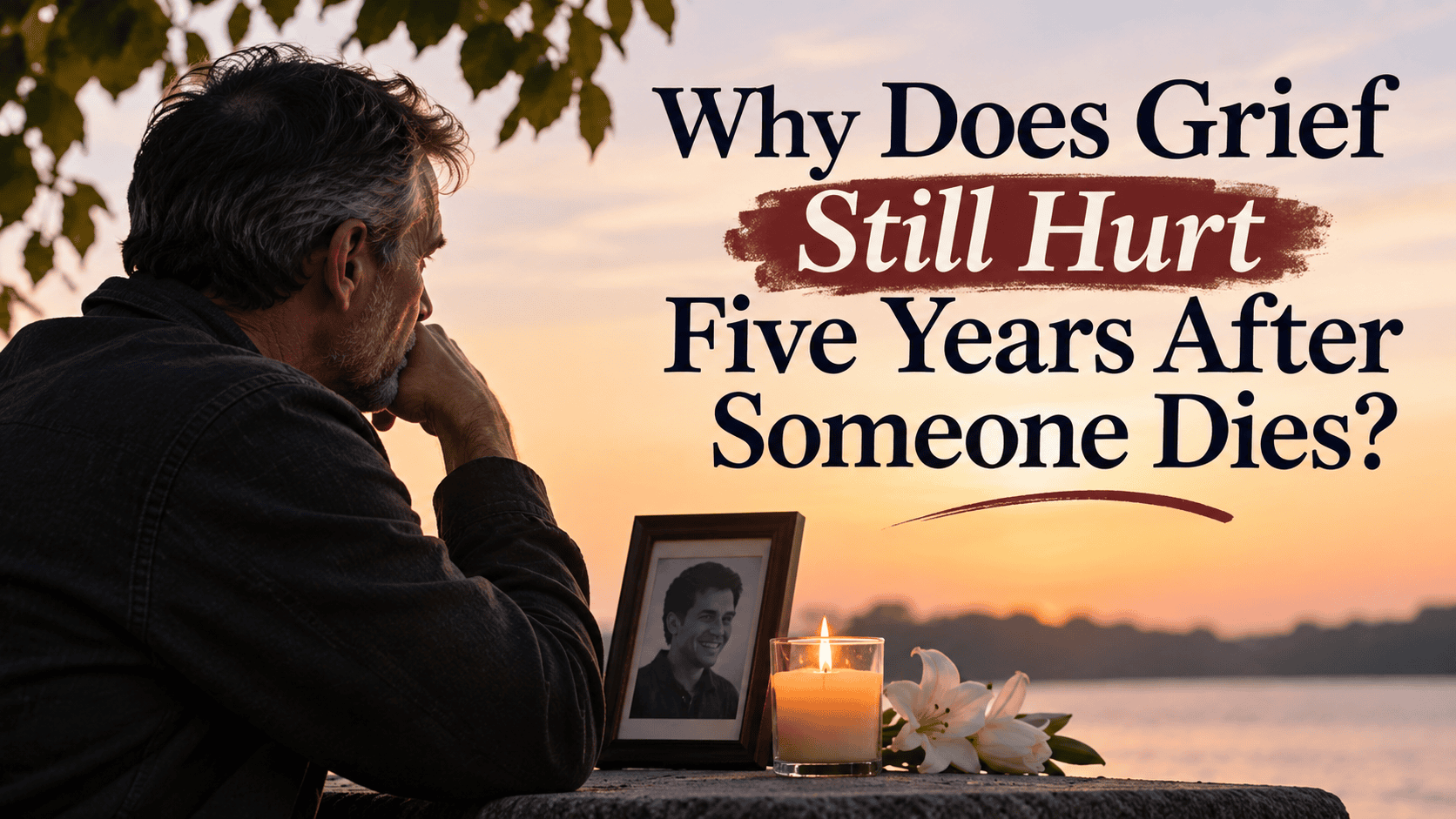
Five years have passed. The world has continued moving forward. Seasons have changed, holidays have come and gone, and life has carried on for everyone around you. Yet somehow, the pain of losing someone you love can still feel as overwhelming as it did when you first heard the news.
You might wake up one morning feeling reasonably okay, only to find yourself crying over a memory that suddenly comes rushing back. A familiar song, an old photograph, a certain smell, or even a passing thought can bring back emotions you thought you had learned to manage.
And sometimes, the hardest part is not the sadness itself. It is the realization that five years have passed since you last heard their voice, saw their smile, or held them close.
You may begin asking yourself questions.
Why does grief still hurt after five years?
Shouldn’t I be feeling better by now?
Why do I still have days when I feel completely lost?
Will there ever come a time when remembering them doesn’t hurt so much?
The truth is that grief does not follow a calendar, and love does not disappear simply because time continues moving forward.
Five years may seem like a long time to someone who has never experienced a devastating loss. But to someone grieving a person who meant everything to them, five years can feel like both an eternity and yesterday.
Understanding why grief continues to hurt can help you recognize that your emotions are not a sign of weakness or failure. They are part of the complicated experience of learning to live without someone who profoundly shaped your life.
1. Grief Does Not Have an Expiration Date
One of the greatest misunderstandings about grief is the belief that enough time will eventually make the pain disappear.
People often talk about grief as though it follows a predictable schedule. The first year is supposed to be the hardest. The second year should become easier. By the fifth year, some people assume you should have moved on.
But grief does not work that way.
There is no universal timetable for mourning someone you love.
Some people experience significant emotional healing within a few years. Others continue struggling with intense sadness long after the loss. Many experience both, moving between periods of peace and unexpected moments of heartbreak.
The passage of time does not automatically erase emotional attachments.
When someone has been an important part of your life, their absence can continue affecting your thoughts, routines, relationships, and sense of identity.
You are not simply grieving the day they died.
You may also be grieving everything that has happened since they have been gone.
Every birthday they missed. Every holiday without them. Every family gathering where their absence was noticeable. Every moment when you instinctively wanted to call them before remembering that you couldn’t.
Five years later, those losses can still matter just as deeply.
2. You Are Still Grieving the Future You Lost
When someone dies, we often think about the memories left behind.
We remember conversations, laughter, family traditions, and experiences we shared.
But grief also involves mourning the future that will never happen.
Perhaps you imagined growing old together. Maybe you expected to watch your child build a life, get married, pursue dreams, or create a family of their own.
You might have pictured more vacations, conversations, celebrations, and ordinary afternoons together.
When that person died, those possibilities changed forever.
Five years later, you may still encounter reminders of the future you once imagined.
A father might watch someone else’s son graduate, get married, or become a parent and quietly wonder what his own son’s life would have looked like.
A widow might see an elderly couple holding hands and remember the years she expected to share with her spouse.
Someone who lost a parent might experience a major life milestone and feel the absence of the person they wanted standing beside them.
These experiences can bring fresh grief because the loss continues to affect new chapters of your life.
You are not only missing the person you lost. You may also be missing the life you thought you would share with them.
That is one reason grief can remain painful many years later.
3. Love Does Not End When Someone Dies
Grief and love are deeply connected.
When someone becomes part of your heart, their death does not automatically remove the emotional bond you shared.
You can still love someone who is no longer physically present.
You can still think about them every day.
You can still want to tell them something exciting, ask for their advice, or hear their laughter one more time.
That continuing love is one reason grief can remain powerful.
The relationship has changed, but its meaning has not necessarily diminished.
For many grieving people, remembering their loved one becomes an important way of maintaining that connection.
They might celebrate birthdays, visit meaningful places, keep photographs nearby, share stories, or continue family traditions.
Others honor their loved ones through writing, charitable work, helping people, or simply living according to values they shared.
These connections can provide comfort while also bringing sadness.
There may always be moments when you wish your loved one could be physically present again.
And there is nothing unusual about that longing.
You do not have to stop loving someone in order to continue living.
4. The World Moves On Even When Part of You Feels Stuck
During the first days and weeks after someone dies, people often surround the grieving family with support.
Friends call. Relatives visit. Neighbors bring meals. People send messages asking how everyone is doing.
But as time passes, that attention often fades.
Other people return to their routines, responsibilities, and personal lives.
Eventually, they may stop mentioning the person who died.
Five years later, you might feel as though everyone else has forgotten something that remains central to your existence.
You may still remember the exact date, time, or circumstances of the death.
You may remember the last conversation, the final goodbye, or the moment your life changed.
Meanwhile, people around you might assume that because several years have passed, the loss is no longer something you struggle with.
This difference can create profound loneliness.
Sometimes grieving people stop talking about their pain because they worry that others are tired of hearing about it.
They begin answering questions with simple responses.
“I’m okay.”
“I’m doing fine.”
“Just taking things one day at a time.”
But behind those words may be a heart carrying feelings that rarely receive acknowledgment.
One of the loneliest parts of long-term grief is realizing that the person you miss every day may rarely be mentioned by anyone else.
Finding people who are willing to listen, remember, and acknowledge your loved one can make an important difference.
5. Anniversaries and Milestones Can Reopen Emotional Wounds
Five years after a death, certain dates may still carry tremendous emotional weight.
Birthdays, holidays, anniversaries, and the date of death can bring intense memories and feelings.
Sometimes you anticipate these difficult days.
Other times, grief catches you completely by surprise.
You might begin feeling unusually sad or restless without immediately understanding why.
Then you look at the calendar and realize that an important anniversary is approaching.
These experiences are sometimes called anniversary reactions.
They can involve sadness, anxiety, irritability, fatigue, changes in sleep, or a stronger desire to withdraw from social activities.
Milestones can be especially painful for parents grieving a child.
A child’s birthday becomes another reminder of the age they would have been.
The anniversary of their death marks another year without their presence.
And each passing year may bring new questions about the person they might have become.
These feelings do not mean that all previous emotional progress has disappeared.
They reflect the lasting significance of the relationship and the memories attached to it.
It can help to acknowledge difficult dates in advance and decide how you would like to spend them.
Some people prefer quiet reflection. Others gather with family, share memories, or participate in meaningful traditions.
There is no single correct way to honor these days.
6. Losing Someone Can Change Your Identity
Grief is not always limited to missing another person.
Sometimes it changes how you see yourself.
When someone important dies, you may lose a role, a routine, or part of the identity you carried for years.
A husband may struggle to understand life without his wife.
A daughter may feel lost without the parent who always guided her.
A parent who loses a child may continue identifying as that child’s mother or father while struggling with the painful absence of daily parenting.
The death can change relationships, priorities, beliefs, and expectations about the future.
You might no longer enjoy activities that once brought happiness.
You may feel disconnected from friends who cannot understand your experience.
You might question what gives your life meaning now.
Five years later, some of these questions may remain unanswered.
For those who have experienced traumatic or unexpected losses, rebuilding a sense of identity can be especially complicated.
But rebuilding does not require abandoning the person who died.
It means gradually discovering how to carry their memory while creating a life that still has room for purpose, connection, and meaningful experiences.
That process can take time, and it may continue evolving throughout your life.
7. Grief Can Become Quieter Without Completely Disappearing
Many people expect healing to mean that grief eventually stops hurting.
But emotional healing often looks different.
In the beginning, grief may dominate nearly every moment.
You might struggle to sleep, concentrate, eat, or complete ordinary responsibilities.
As time passes, some people find that grief becomes less constant.
They begin experiencing longer periods of calm.
They laugh again. They develop new routines. They reconnect with others.
Yet the sadness may still return unexpectedly.
A memory can bring tears even after years of relative peace.
A familiar place might suddenly make the absence feel overwhelming.
This does not necessarily mean you are returning to the beginning of your grief.
It may mean that you are experiencing a painful reminder within a life that has continued changing.
Grief can become more manageable without disappearing entirely.
And healing does not have to mean forgetting.
It can mean learning to remember with a mixture of sadness, gratitude, love, and sometimes even joy.
8. The Death of a Child Can Create a Particularly Enduring Form of Grief
Although every significant loss deserves compassion, losing a child can involve a uniquely painful disruption of a parent’s expectations about life.
Parents generally imagine watching their children grow, pursue opportunities, experience milestones, and build futures of their own.
They do not expect to outlive them.
When a child dies, parents may struggle with a sense that the natural order of life has been shattered.
The loss can affect their identity, their hopes, their family relationships, and their understanding of the world.
Five years later, a grieving father may still wake up thinking about his son.
He may still remember the sound of his voice, the way he laughed, or the conversations they shared.
He may wonder what his son would be doing today.
Would he have found the career he wanted?
Would he have fallen in love?
Would he have become a father himself?
Would they still be spending weekends together, sharing jokes, or talking about everyday life?
Those unanswered questions can be painful because they represent experiences that death made impossible.
For a father whose child was also his closest companion, the loss may leave an enormous silence in daily life.
And when the child was an only child, there may be additional layers of grief surrounding the future of the family and the parental role.
Five years cannot replace those missing experiences.
Nor does a parent have to stop grieving in order to honor their child’s life.
Many parents find meaning in keeping their child’s memory alive through storytelling, writing, remembrance activities, or supporting other bereaved families.
Their grief may evolve, but their identity as a parent and their love for their child can remain.
9. Sometimes Grief Hurts Because You Have Been Carrying It Alone
Not everyone feels comfortable expressing grief openly.
Some people learn to hide their emotions because they believe they must remain strong for their families.
Others fear becoming a burden.
They worry that talking about their pain will make friends uncomfortable or push loved ones away.
This can be particularly common among men who have been taught that emotional vulnerability is a sign of weakness.
A grieving father may continue working, handling responsibilities, and helping everyone around him while privately struggling with sadness, guilt, or loneliness.
From the outside, he may appear to be coping well.
Inside, he may feel completely different.
Five years of carrying grief without meaningful emotional support can be exhausting.
Having someone who listens without judgment can help.
That support might come from a trusted friend, family member, grief support group, counselor, or another person who has experienced a similar loss.
You do not have to explain every emotion perfectly.
Sometimes simply saying, “I still miss them, and today is difficult,” is enough to begin a conversation.
And if speaking feels too difficult, writing your thoughts can provide another way to express feelings.
You deserve opportunities to be heard, even years after the loss.
10. Feeling Happy Again Can Sometimes Bring Guilt
One complicated aspect of long-term grief is the guilt that can accompany happiness.
You might have a wonderful day, laugh with friends, or enjoy an experience you have not had in years.
Then suddenly, you remember the person who died.
A thought enters your mind.
How can I be happy when they are gone?
Some grieving people worry that enjoying life means they are forgetting their loved one.
Others feel guilty about moving forward because the person who died never had the opportunity to experience the future.
These feelings can make emotional recovery more difficult.
But happiness and remembrance do not have to compete.
You can experience joy while still missing someone deeply.
You can build meaningful relationships without replacing the person who died.
You can pursue dreams while continuing to honor their memory.
Allowing yourself to experience happiness does not erase the love you carry for someone who is gone.
It simply means that your life can contain more than one emotion at a time.
11. What If Grief Still Feels Unbearable After Five Years?
Although grief can remain painful for many years, there is an important difference between continuing to miss someone and experiencing persistent distress that significantly interferes with everyday life.
Some people develop prolonged grief disorder, a condition involving intense, persistent grief that disrupts functioning and extends beyond expected cultural or social grieving patterns.
For adults, the diagnosis requires that at least 12 months have passed since the death, along with other specific symptoms and criteria.
Possible signs include intense yearning or preoccupation with the person who died, difficulty accepting the death, feelings of meaninglessness, emotional numbness, or significant difficulty reengaging with life.
However, continuing to cry, remembering someone daily, or feeling sadness five years later does not automatically mean you have a disorder.
Grief is deeply individual.
If the pain remains overwhelming, interferes with your ability to function, or leaves you feeling persistently hopeless, speaking with a qualified mental health professional can be helpful.
Grief-focused therapy can provide tools for managing painful emotions, processing difficult memories, and reconnecting with meaningful parts of life.
Seeking support does not mean you are trying to forget your loved one.
It means you are giving yourself additional resources to live with the loss.
12. How Can You Cope With Grief Five Years Later?
There is no single solution that makes grief disappear, but certain practices can help make difficult days more manageable.
Give yourself permission to grieve.
Stop measuring your emotions against how many years have passed. If you need to cry, reflect, or take a quiet moment, allow yourself that space.
Keep your loved one’s memory alive.
Speak their name. Share stories. Look at photographs when you feel ready. Celebrate the meaningful ways they influenced your life.
Find people who understand long-term grief.
Support groups, especially those focused on your type of loss, can provide connection with people who recognize that grief does not end after the first anniversary.
Create meaningful remembrance traditions.
Light a candle, prepare a favorite meal, visit a special place, write a letter, or participate in an activity that honors your loved one.
Take care of your physical health.
Grief can affect sleep, appetite, energy, and overall well-being. Regular meals, appropriate physical activity, rest, and medical care can help support your health.
Allow your life to continue changing.
You do not need to remain emotionally frozen in the year your loved one died. New experiences and relationships can coexist with enduring love and remembrance.
Ask for help when the weight becomes too heavy.
There is strength in recognizing when additional support could make life more manageable.
You do not have to carry every difficult emotion without assistance.
13. Does Grief Ever Completely Go Away?
This is one of the most common questions grieving people ask.
The answer is different for everyone.
Some people eventually experience very little daily distress, although they continue remembering their loved ones with affection and occasional sadness.
Others carry a more persistent sense of loss throughout their lives.
For many, grief changes rather than completely disappears.
The memories that once brought only tears may eventually bring moments of warmth.
A photograph might make you smile before it makes you cry.
A familiar story might become something you enjoy sharing rather than something you avoid.
But there may still be days when the absence feels particularly painful.
That does not invalidate the meaningful progress you have made.
Grief is not a competition to see who can recover the fastest.
And the goal does not have to be reaching a point where you never feel sadness again.
Instead, the goal may be learning how to carry your love and memories while making room for a life that still matters.
14. Five Years Later, Missing Them Is Still an Expression of Love
There is something particularly heartbreaking about the passage of time after losing someone.
The longer they have been gone, the more memories you have created without them.
You may find yourself struggling to remember small details.
The exact sound of their laugh.
The way they said your name.
The ordinary conversations you never imagined would become so precious.
Sometimes the fear of forgetting those details can be almost as painful as the original loss.
But a person’s significance is not measured solely by how clearly every memory remains.
Their influence may continue through the values they taught you, the experiences you shared, and the ways they changed your life.
You may recognize them in your own habits, decisions, expressions, or acts of kindness.
You may find yourself telling their stories to people who never had the opportunity to meet them.
And through those moments, you continue acknowledging that their life mattered.
Five years later, you are allowed to miss them.
Ten years later, you are allowed to miss them.
For the rest of your life, you are allowed to remember and love them.
There is no deadline requiring you to stop.
Final Thoughts: Five Years Have Passed, but Love Remains
Why does grief still hurt five years after someone dies?
Because five years cannot erase a meaningful relationship.
Because the future you imagined together may still be something you mourn.
Because memories, anniversaries, and milestones continue reminding you of the person who should have been there.
Because the world may have moved forward while part of your heart still longs for one more conversation, one more embrace, or one more ordinary day.
And because love does not necessarily become less meaningful with time.
But there is something important to remember.
You can continue loving and missing someone while also finding reasons to live, hope, and experience happiness again.
You do not have to choose between honoring the past and participating in the present.
You can carry your loved one’s memory into the future.
You can speak their name.
You can share their story.
You can acknowledge the difficult days without allowing them to define every day.
And when grief returns unexpectedly, you can remind yourself that experiencing sadness does not erase the progress you have made.
Five years may have passed since your loved one died.
But the relationship you shared was never defined by a calendar.
Their life mattered then.
Their memory matters now.
And the love you carry can remain part of your story for as long as you live.
Because grief is not always about learning how to stop missing someone. Sometimes it is about learning how to keep living while carrying the love of someone you will always wish was still here.


Leave a Reply