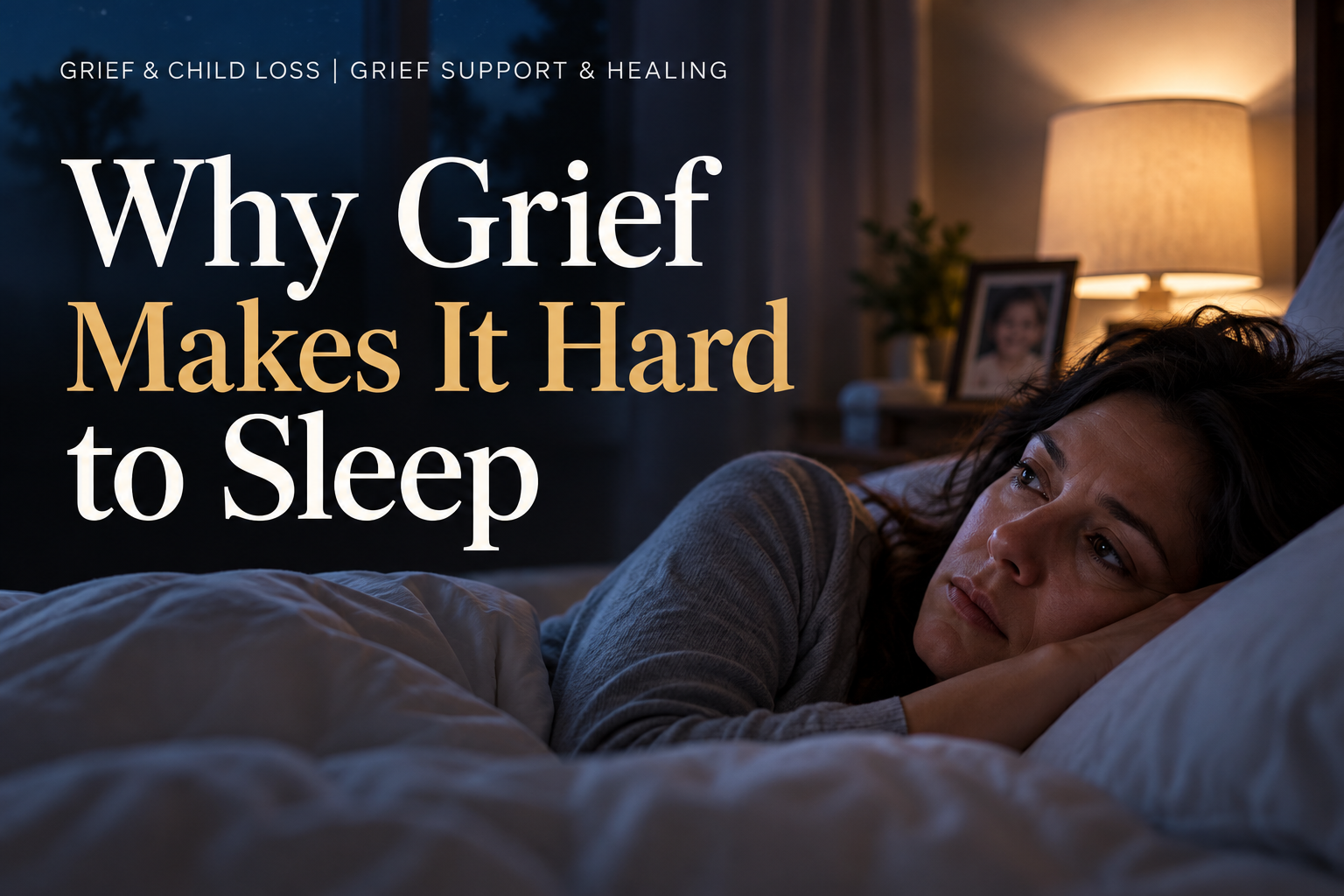
Grief has a way of following us everywhere, even into the quietest hours of the night. During the day, we might find ways to distract ourselves, stay busy, or push through the emotions that come with losing someone we love. But when the world becomes quiet, the distractions disappear, and we are left alone with our thoughts, memories, and heartache.
For many people who are grieving, nighttime becomes one of the most difficult parts of the day.
You might lie awake for hours, replaying memories, thinking about everything that happened, or wishing you could hear your loved one’s voice one more time. You might finally fall asleep, only to wake up a few hours later with your mind racing. Sometimes, you may sleep for what seems like an entire night and still wake up feeling completely exhausted.
Grief doesn’t just affect our emotions. It can affect our minds, bodies, nervous systems, and ability to get the restful sleep we desperately need.
When you lose someone who was an important part of your life, especially a child, spouse, parent, or someone you shared your everyday life with, the absence can become especially noticeable at night.
Understanding why grief makes sleeping difficult can help you recognize what you are experiencing and find ways to make those long, lonely nights a little more manageable.
Why Does Grief Affect Sleep?
Sleep is supposed to be a time when our bodies rest, our minds recover, and we prepare ourselves for another day.
However, grief can interfere with the processes that allow us to relax and fall asleep.
When someone we love dies, our brains and bodies must adjust to a life that suddenly feels unfamiliar. The loss can create emotional distress, stress responses, anxiety, and changes in daily routines.
Our minds may continue processing the loss long after we have gone to bed.
Some of the most common reasons grief affects sleep include:
-
Emotional pain that becomes stronger when everything is quiet.
-
Anxiety about the future and learning to live without someone.
-
Intrusive thoughts about the death or circumstances surrounding it.
-
Memories that bring sadness, longing, or regret.
-
Changes in stress hormones and nervous system activity.
-
Loneliness caused by the absence of someone we love.
-
Disruptions to normal routines and sleeping habits.
-
Depression, anxiety, or trauma-related symptoms that may accompany grief.
These experiences can make it difficult to fall asleep, remain asleep, or feel rested after waking.
Grief-related sleep problems are common, but they are not something you must simply endure without support.
The Silence at Night Makes Grief Feel Louder
During the day, life continues moving.
There are responsibilities to handle, conversations to have, meals to prepare, errands to run, and countless little things demanding our attention.
Even when grief is constantly present, those activities sometimes provide temporary relief from the emotional weight we carry.
But nighttime is different.
The television turns off. The phone stops ringing. The house becomes quiet.
Suddenly, there is nothing standing between us and the reality of our loss.
The silence can make memories feel more vivid and the absence of our loved one more noticeable.
You might remember the sound of their laughter, the conversations you used to have before bedtime, or the simple comfort of knowing they were nearby.
You may find yourself thinking about the things you would have done together tomorrow.
And then reality returns.
They are not coming home.
There will not be another ordinary evening together.
That realization can bring a wave of grief that feels almost impossible to escape.
Sometimes, the hardest part of nighttime isn’t the darkness. It’s the silence left behind by someone who once filled our world with love.
Why Your Mind Won’t Stop Thinking When You’re Grieving
One of the most frustrating experiences of grief-related insomnia is having a mind that refuses to slow down.
You may feel physically exhausted, yet your thoughts continue moving from one memory to another.
You might replay your final conversation with your loved one or remember the last time you saw them.
You may question whether you could have done something differently.
Thoughts such as these can become especially difficult at night:
What if I had done something differently?
Why did this have to happen?
Could I have prevented it?
How am I supposed to live the rest of my life without them?
Will I ever feel happy again?
These questions often do not have simple answers.
When someone dies unexpectedly, the mind may repeatedly revisit the circumstances surrounding the loss while trying to make sense of what happened.
For someone grieving the death of a child, those thoughts can be especially painful.
Parents may find themselves replaying memories from their child’s entire life, questioning decisions, or imagining the future their child should have experienced.
It can feel as though the mind is searching for an answer that might somehow change what happened.
Unfortunately, that search can continue long into the night.
Learning to recognize these thought patterns without becoming completely consumed by them can be an important part of coping with grief.
Grief Can Keep Your Body in a State of Stress
Grief is not simply sadness.
It is also a significant physical and psychological stressor.
When we experience a devastating loss, our body’s stress-response systems can become more active.
For some people, this creates a state of heightened alertness that makes relaxing difficult.
You might experience:
-
A racing heartbeat when trying to fall asleep.
-
Muscle tension or physical restlessness.
-
Increased anxiety as bedtime approaches.
-
Difficulty relaxing even when exhausted.
-
Sudden awakenings during the night.
-
A feeling that your body is constantly on edge.
Stress-related changes in hormones such as cortisol may contribute to disrupted sleep, although these responses vary from person to person.
When your nervous system remains highly alert, falling into a peaceful sleep can become difficult.
This helps explain why someone can feel completely drained by grief yet remain wide awake for hours.
Your body needs rest, but your mind and stress-response systems may be struggling to settle.
Why Grief Can Cause You to Wake Up in the Middle of the Night
Not everyone experiencing grief has trouble falling asleep.
Some people fall asleep quickly because they are emotionally and physically exhausted.
The difficulty comes later.
They may wake up at two or three in the morning and find themselves unable to return to sleep.
Sometimes, there is an obvious reason.
A dream brings back memories of their loved one. A sound reminds them of something. An anxious thought suddenly enters their mind.
Other times, they wake up without understanding why.
Once awake, grief can quickly take over.
The mind begins thinking about the person who died, the emptiness they left behind, or the challenges waiting in the morning.
And the longer someone stays awake, the more frustrated and anxious they may become about not sleeping.
This can create a difficult cycle.
Poor sleep makes emotional regulation harder during the day, and heightened emotional distress can make sleeping more difficult the following night.
Over time, that cycle can contribute to ongoing insomnia.
Missing Someone Can Make Bedtime Feel Unbearably Lonely
There is a particular kind of loneliness that comes with grieving someone who was deeply connected to your everyday life.
Perhaps you shared a bed with your spouse for decades.
Maybe you were accustomed to hearing your child’s voice from another room.
Perhaps you called your parent every evening or exchanged goodnight messages with someone you loved.
When that person dies, those familiar routines disappear.
The absence may feel especially overwhelming at bedtime because that was once a time of connection, comfort, and security.
You might instinctively reach for your phone to send a message before remembering there is no longer anyone to answer.
You may look toward an empty bedroom.
You may remember saying goodnight and wish more than anything that you could say it one more time.
These seemingly small moments can carry enormous emotional weight.
The grief isn’t only about losing the person.
It is also about losing the ordinary experiences that made life feel complete.
Why Losing a Child Can Make Sleep Especially Difficult
There are many forms of grief, and each loss carries its own unique pain.
But losing a child can create a particularly profound disruption in a parent’s sense of safety, identity, and expectations for the future.
Parents spend years protecting, guiding, worrying about, and loving their children.
That connection does not disappear when a child dies.
A grieving parent may continue thinking about their child throughout the day and night.
They may remember childhood milestones, family traditions, birthdays, holidays, and ordinary moments they once took for granted.
They may wonder what their child would be doing today.
Would they be working toward a new goal?
Would they have started a family?
What kind of person would they have become?
These unanswered questions can become especially painful in the stillness of the night.
A Father’s Perspective on Sleepless Nights
As a father who has lost my son, I understand that grief doesn’t follow a schedule.
There are times when the day seems manageable, but the quiet moments bring everything back.
Losing a child changes the meaning of ordinary things, including sleep.
The world continues moving forward, but part of your heart remains connected to the life you shared with your child.
Sometimes, you don’t just miss the person you lost.
You miss the life you had when they were here.
You miss being able to check on them, talk to them, laugh with them, and know they are safe.
For a father, there can also be a lingering feeling that you were supposed to protect your child from everything.
Even when the loss was beyond your control, those feelings may still appear.
And when nighttime comes, those thoughts can become difficult to silence.
I have learned that missing my son is not something that disappears simply because another day has ended.
The love remains.
The memories remain.
And sometimes, the tears come when the rest of the world is sleeping.
But I also believe that learning to rest does not mean loving my son any less.
I can carry his memory with me while still allowing myself the sleep and care I need to continue living.
That is something every grieving parent deserves to remember.
Can Grief Cause Nightmares or Vivid Dreams?
Yes. Some grieving people experience vivid dreams, nightmares, or dreams involving the person who died.
These dreams can take many forms.
You might dream that your loved one is alive and everything has returned to normal.
You might dream about a happy memory from the past.
You may experience distressing dreams related to the circumstances of the death, particularly after a sudden or traumatic loss.
Sometimes, dreams bring comfort.
For a brief moment, you get to see your loved one, hear their voice, or feel close to them again.
Other times, waking from those dreams can be heartbreaking.
You may open your eyes expecting them to be there, only to remember the reality of their absence.
That sudden transition from dreaming to waking can trigger intense sadness.
Dreams are influenced by many factors, including memories, emotions, stress, and sleep patterns. There is no single meaning behind every grief-related dream.
If nightmares are frequent, frightening, or causing you to avoid sleep, a mental health professional can help you address them.
Why You Can Sleep All Night and Still Feel Exhausted
Grief doesn’t always cause sleeplessness.
Sometimes, it causes overwhelming fatigue.
You might sleep eight or nine hours and still wake up feeling as though you barely rested.
There are several possible explanations.
Emotional stress can be physically draining. Interrupted or poor-quality sleep may leave you feeling unrested even when you spend many hours in bed.
Grief can also affect appetite, physical activity, concentration, and motivation, all of which may influence energy levels.
Some grieving individuals experience symptoms of depression, which can include sleeping more than usual or feeling persistently fatigued.
However, it is important not to assume that every sleep problem or episode of exhaustion is caused by grief.
Conditions such as sleep apnea, medication side effects, thyroid disorders, and other medical issues can also interfere with restorative sleep.
If you regularly wake up exhausted, snore loudly, gasp during sleep, or experience significant daytime sleepiness, speak with a healthcare professional.
Grief may be part of what you’re experiencing, but other treatable conditions could also be contributing.
How Lack of Sleep Can Make Grief Feel Worse
Sleep and emotional well-being are closely connected.
When we don’t get enough restorative sleep, it can become harder to manage difficult emotions.
Things that might normally feel manageable can suddenly seem overwhelming.
You may notice that you:
-
Cry more easily than usual.
-
Become irritated over small things.
-
Have difficulty concentrating or remembering information.
-
Feel more anxious or emotionally vulnerable.
-
Struggle to complete everyday responsibilities.
-
Withdraw from friends or family.
-
Feel physically weak or mentally drained.
Sleep deprivation can also make it more difficult to cope with painful memories.
This creates another challenge for grieving individuals.
The very experience that makes sleeping difficult can become harder to manage because of the lack of sleep.
Recognizing this connection is important.
You may not be able to change the reality of your loss, but improving your sleep can help you cope with its effects.
How to Sleep Better When You’re Grieving
There is no magical solution that removes grief and guarantees a peaceful night’s sleep.
However, there are practical steps that may help your body and mind settle enough to rest.
Create a Calming Bedtime Routine
When grief disrupts your life, familiar routines can provide a small sense of stability.
Try developing a simple routine that signals to your body that it is time to prepare for sleep.
You might take a warm shower, read something comforting, listen to quiet music, or spend a few minutes practicing slow breathing.
You don’t need a complicated routine.
The goal is to create a predictable transition between the demands of the day and the quiet of the night.
Give Yourself Time to Remember Your Loved One
Sometimes, people try to avoid thinking about their loved one before bedtime because they are afraid of becoming emotional.
But forcing yourself not to think about someone can sometimes make those thoughts feel even more persistent.
Instead, consider setting aside a little time earlier in the evening to remember them.
You might look at a photograph, write down a memory, or speak their name aloud.
You could write a letter expressing something you wish you could tell them.
If prayer is part of your life, you might spend a few moments talking to God about your grief and asking for strength.
The purpose isn’t to stop missing your loved one.
It is to give those emotions a place in your day without requiring bedtime to carry all of them.
Write Down the Thoughts Keeping You Awake
When thoughts repeatedly circle through your mind, writing them down may help you organize them.
Keep a notebook nearby.
If you are worried about tomorrow, write down what needs to be done.
If a memory is weighing heavily on your heart, describe it.
If you are feeling overwhelmed, write about what you are experiencing without judging yourself.
You don’t need to write perfectly.
You don’t even need to read what you wrote later.
Sometimes, putting thoughts into words can make them feel less overwhelming.
Avoid Watching the Clock
When you cannot sleep, it is tempting to check the time repeatedly.
But watching the minutes pass can increase anxiety.
You begin calculating how many hours remain before morning and worrying about how exhausted you will feel.
That pressure can make falling asleep even more difficult.
Consider turning your clock away or placing your phone somewhere you cannot constantly check it.
If you remain awake for roughly 20 minutes and feel frustrated, get out of bed and do something quiet and relaxing in dim light until you feel sleepy.
This can help prevent your bed from becoming associated with stress and sleeplessness.
Limit Caffeine and Alcohol Before Bedtime
When grieving, some people turn to extra coffee or energy drinks to cope with fatigue.
Others may use alcohol because they believe it will help them relax or fall asleep.
Unfortunately, both can interfere with healthy sleep.
Caffeine can remain active in the body for several hours and make falling asleep difficult.
Alcohol may initially cause drowsiness, but it can disrupt sleep later in the night.
Reducing caffeine later in the day and avoiding alcohol as a sleep aid may help improve sleep quality.
Get Some Natural Light and Gentle Movement
Grief can make leaving the house feel overwhelming.
There may be days when getting out of bed requires nearly all the energy you have.
But even small amounts of movement and exposure to daylight can help support your body’s natural sleep-wake cycle.
Consider taking a short walk, sitting outside for a few minutes, or spending time in a nearby park.
You do not need to force yourself into an intense exercise routine.
Start with what feels manageable.
A little fresh air and movement may help both your mood and your ability to sleep.
Talk to Someone About What You’re Carrying
Grief can feel especially heavy when you believe you have to carry it alone.
Talking with a trusted friend, family member, grief counselor, or support group can provide emotional relief.
You don’t have to explain everything perfectly.
You don’t have to pretend you’re doing better than you are.
Sometimes, simply telling someone that nighttime has become difficult can open the door to meaningful support.
If insomnia continues, cognitive behavioral therapy for insomnia (CBT-I) is a recommended first-line treatment for chronic insomnia and can be helpful even when grief is part of the problem.
When Should You Seek Help for Grief-Related Sleep Problems?
Although sleep difficulties are common during grief, persistent insomnia deserves attention.
Consider speaking with a healthcare professional if your sleep problems are affecting your ability to function, worsening your physical or emotional health, or continuing despite changes to your routine.
You should also seek support if you experience frequent nightmares, severe anxiety, panic symptoms, or signs of depression.
A professional can help determine whether your symptoms are primarily related to grief or whether another condition is contributing.
If you experience persistent hopelessness or thoughts of harming yourself, seek immediate support from a trusted person or crisis service. In the United States, you can call or text 988.
Asking for help does not mean you are grieving incorrectly.
It means your well-being matters, even while you are mourning someone you love.
Is It Normal to Feel Afraid of Going to Sleep After a Loss?
For some people, yes.
Bedtime may become associated with loneliness, disturbing dreams, or painful memories.
Someone who witnessed a traumatic death or experienced a sudden loss may feel particularly anxious when trying to sleep.
Others may resist going to bed because they know that once everything becomes quiet, their grief will become harder to avoid.
Some grieving individuals even experience guilt about resting.
They may feel that sleeping peacefully somehow means they are forgetting their loved one or moving forward without them.
But rest is not betrayal.
You are not abandoning your loved one by allowing yourself to sleep.
You are caring for the body and mind that must continue carrying the love you have for them.
Does Grief-Related Insomnia Ever Get Better?
For many people, sleep gradually improves as they adjust to life after loss.
However, that process is not always predictable.
Some people experience sleep problems primarily during the early months of grief.
Others struggle during anniversaries, birthdays, holidays, or other meaningful dates.
You might sleep well for several weeks and then suddenly experience a difficult night after hearing a familiar song or finding an old photograph.
These changes do not necessarily mean you are going backward.
Grief can become more intense around reminders of the person who died, even years later.
What matters is recognizing when sleep difficulties are becoming persistent or harmful and getting appropriate support.
You can continue missing your loved one while developing healthier ways to rest.
Those two things can exist together.
Why You Shouldn’t Feel Guilty About Resting While Grieving
One of the more difficult emotions that can accompany grief is guilt.
You may feel guilty when you laugh, enjoy a meal, spend time with friends, or experience a moment of peace.
And sometimes, that guilt extends to sleep.
You may wonder how you can rest when someone you love is gone.
You might feel as though being awake and thinking about them is somehow a way of honoring their memory.
But love is not measured by how much sleep you lose.
Your exhaustion does not prove the depth of your grief.
And allowing yourself a peaceful night does not mean the person you lost matters any less.
You do not have to suffer every moment to prove that your love was real.
Your loved one was part of your life, and their memory can remain part of it.
Taking care of yourself allows you to continue honoring that relationship in ways that are meaningful to you.
Finding Peace During the Longest Nights of Grief
There may still be nights when nothing seems to help.
You might follow every sleep recommendation, turn off your phone, make your room comfortable, and try to relax, only to find yourself crying over a memory.
Those nights can feel endless.
When they happen, try not to judge yourself for struggling.
Grief is not something we can simply switch off because the clock says it is time to sleep.
If you find yourself awake in the middle of the night, remember that you do not have to solve your entire future before morning.
You don’t have to figure out how to live the rest of your life without the person you love.
You don’t have to answer every painful question.
You only have to care for yourself in that moment.
Maybe that means taking a few slow breaths.
Maybe it means sitting quietly with a warm blanket.
Maybe it means writing down a memory, saying a prayer, or allowing yourself to cry.
And perhaps, eventually, it means closing your eyes and giving yourself permission to rest.
There is no shame in having difficult nights.
There is also no shame in finding moments of peace.
Both can be part of learning to live with grief.
Frequently Asked Questions About Grief and Sleep
Can grief cause insomnia?
Yes. Grief can contribute to insomnia by increasing emotional distress, anxiety, intrusive thoughts, and physical stress responses. Some people have trouble falling asleep, while others wake frequently or too early.
Why is grief worse at night?
Grief can feel more intense at night because daytime distractions disappear. Quiet surroundings may make memories, loneliness, and thoughts about the loss more noticeable.
Can grief make you sleep too much?
Yes. Some people experience increased sleep or excessive fatigue while grieving. However, persistent oversleeping or exhaustion can also indicate depression, sleep disorders, or other medical conditions.
How long does grief-related insomnia last?
There is no universal timeline. Some people notice improvement within weeks or months, while others experience recurring sleep difficulties for much longer. Persistent insomnia should be evaluated rather than assumed to be an unavoidable part of grief.
Is it normal to dream about someone who died?
Yes. Dreams involving deceased loved ones are common experiences during bereavement. They may be comforting, distressing, or emotionally complicated.
Can grief cause you to wake up at 3 a.m.?
Grief-related stress and sleep disruption can contribute to waking during the night or early morning. There is nothing uniquely significant about 3 a.m., but recurring early awakenings can be associated with insomnia, depression, or other sleep disturbances.
What is the best way to sleep after losing someone?
Consistent sleep and wake times, calming bedtime routines, daylight exposure, gentle activity, and emotional support can help. If sleep difficulties persist, professional treatment such as CBT-I may be beneficial.
Final Thoughts: You Deserve Rest Even While Your Heart Is Grieving
Losing someone you love changes your life in ways that are difficult to explain to someone who has never experienced that kind of loss.
It changes your routines, your priorities, your emotions, and sometimes even the way you experience the passing of time.
And for many grieving people, it changes sleep.
The nights can become long.
The silence can become painful.
The memories can feel overwhelming.
There may be moments when you would give anything to hear your loved one’s voice again, to share one more conversation, or to experience one more ordinary evening together.
I understand how difficult those feelings can be.
As a father who has lost his son, I know that love doesn’t disappear when someone dies. Neither does the longing to have them here.
But I am also learning that continuing to live means learning to care for myself while carrying that loss.
Some nights will be harder than others.
Some memories will bring tears.
Others may eventually bring a smile.
And sometimes, the greatest act of strength is simply allowing yourself to rest so you can face another sunrise.
You don’t have to forget your loved one to sleep peacefully.
You don’t have to stop grieving to experience comfort.
And you don’t have to prove your love through endless exhaustion.
The person you love will always be part of your story. Resting doesn’t erase that story. It gives you the strength to keep writing the chapters that remain.
If grief has been keeping you awake at night, what has been the hardest part for you—the silence, the memories, the loneliness, or the thoughts that just won’t stop?
Remember, you are not alone in experiencing these difficult nights, and you deserve compassion, support, and rest as you continue learning to live with your loss.



Leave a Reply