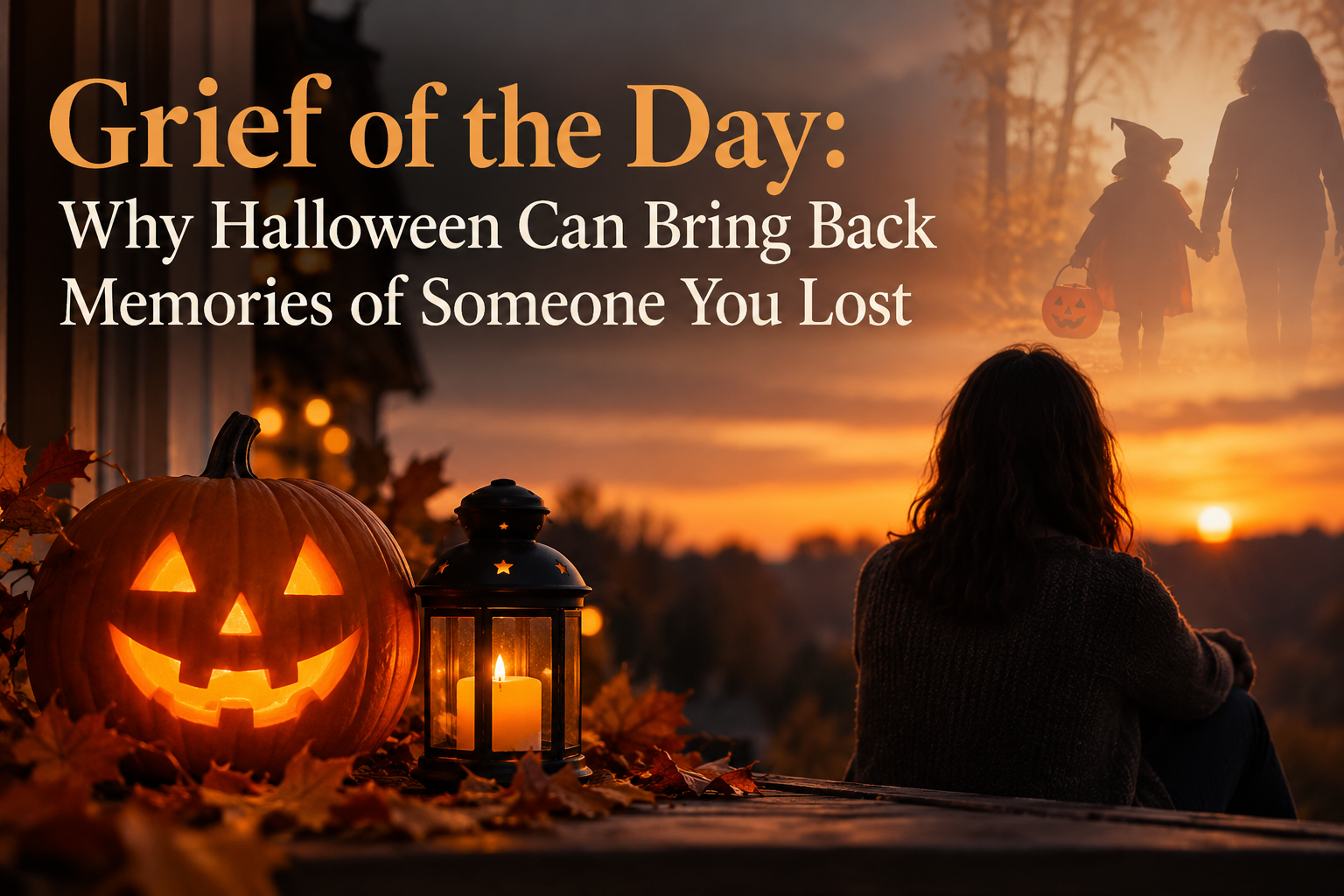
When the costumes, candy, and decorations bring back memories of someone who is no longer here.
Halloween is supposed to be a time of excitement, laughter, costumes, candy, and traditions. Neighborhoods fill with decorations, children dress up as their favorite characters, and families come together to enjoy the holiday. For many people, October 31 is simply another opportunity to create happy memories.
But for someone who is grieving, Halloween can feel completely different.
Instead of excitement, there may be sadness. Instead of looking forward to the celebrations, you may find yourself remembering the years when someone you loved was still alive. The costumes, decorations, familiar songs, and traditions that once brought happiness can suddenly become painful reminders of what you have lost.
Halloween can bring back memories of someone you lost because holidays have a way of reminding us not only of the people who are present, but also of those who are missing.
You may remember carving pumpkins together, picking out costumes, walking through neighborhoods collecting candy, watching scary movies, or simply spending an evening at home with someone you loved.
What once seemed like an ordinary Halloween memory can become something incredibly precious after that person is gone.
And sometimes, those memories hurt more than we expect.
Why Halloween Can Be Especially Difficult When You Are Grieving
Grief does not follow a calendar. It does not disappear because another holiday arrives, and it certainly does not wait until you are emotionally prepared to feel its weight.
Halloween can be particularly emotional because it is filled with sights, sounds, smells, and traditions that connect us to the past.
You might walk through a store and see a costume that reminds you of your child. You might pass a house decorated exactly as it was when your loved one was alive. You might hear children laughing outside and suddenly remember a Halloween night from years ago.
For a brief moment, your mind takes you back to a time when life felt different.
A time when that person was still here.
A time when you never imagined that one day you would be celebrating holidays without them.
The memories may bring a smile, but they can also bring tears.
Sometimes they bring both.
That is one of the complicated realities of grief. The very memories that remind us how much we loved someone can also remind us how deeply we miss them.
1. Halloween Traditions Can Remind You of What Is Missing
Every family has traditions, even if they do not realize how meaningful those traditions are until something changes.
Maybe your family always decorated the house together.
Maybe you took your children trick-or-treating every year.
Maybe you watched the same Halloween movies, baked seasonal treats, visited pumpkin patches, or handed out candy together.
At the time, these activities may have seemed like simple parts of everyday family life.
But after losing someone, those ordinary moments become extraordinary memories.
You may find yourself thinking about the last Halloween you spent together.
Did you know it would be the last one?
Did you take enough pictures?
Did you tell them how much you loved them?
Would you have done anything differently if you had known?
These questions can be painful because we cannot return to those moments and experience them again.
We can only remember them.
Sometimes the hardest part of a holiday is not what happens on that day. It is remembering everything that used to happen when the person you loved was still alive.
2. Seeing Families Together Can Make Your Loss Feel More Real
Halloween is often a family-centered holiday.
Parents walk alongside their children. Families visit pumpkin patches. Grandparents take pictures of their grandchildren. Friends gather for parties, and neighborhoods fill with people enjoying the evening.
For someone grieving the loss of a child, spouse, parent, sibling, or close friend, seeing these moments can bring an unexpected wave of sadness.
It is not necessarily jealousy.
It is longing.
You are watching other people experience moments that you wish you could experience again.
A grieving father might see a parent holding a young child’s hand and remember taking his own son or daughter trick-or-treating.
A grieving mother might see a Halloween costume that reminds her of something her child once wore.
Someone who has lost a spouse might remember decorating the house together or spending quiet Halloween evenings watching movies.
These reminders can make the absence feel especially noticeable.
The world continues celebrating, but a part of your world feels permanently changed.
And sometimes, being surrounded by happiness makes that absence feel even heavier.
3. Halloween Can Bring Back Childhood Memories
Halloween has a special connection to childhood.
For many people, it represents some of their happiest early memories.
There is something unforgettable about choosing a costume, carrying a bag for candy, walking through decorated neighborhoods, and returning home to sort through everything collected.
When you lose a child, those memories can become particularly emotional.
You may remember their excitement as Halloween approached.
You may remember helping them get dressed, fixing a costume that would not stay in place, or watching them run toward the next house.
You might even remember the little things you never thought would matter so much.
The sound of their laughter.
The way they smiled.
Their favorite candy.
The costume they insisted on wearing.
The excitement in their voice.
Years later, a simple Halloween decoration can bring those memories rushing back.
And suddenly, you are not just remembering Halloween.
You are remembering your child.
You are remembering the life you shared.
You are remembering a version of yourself who still had that person beside you.
For parents who have lost a child, holidays can become reminders of both the beautiful years they experienced and the future moments they will never get to share.
That combination of love and heartbreak can be difficult to describe to someone who has never experienced it.
4. Grief Triggers Can Appear Without Warning
One of the hardest parts of grieving is how unexpectedly memories can surface.
You might be having a perfectly ordinary day.
Perhaps you are grocery shopping, driving through your neighborhood, or scrolling through social media.
Then you see something.
A Halloween costume.
A photograph.
A familiar decoration.
A family enjoying an activity you once shared with your loved one.
Suddenly, your emotions change.
Your chest may feel heavy. Your eyes may fill with tears. You may feel an overwhelming desire to hear that person’s voice or spend just one more Halloween together.
These experiences are often called grief triggers.
A grief trigger is something that brings back memories or emotions connected to a loss.
Halloween contains many possible triggers because the holiday is so closely connected with family memories and repeated traditions.
Some common Halloween grief triggers include:
-
Seeing old Halloween photographs.
-
Hearing a song associated with a past celebration.
-
Visiting a pumpkin patch you once enjoyed together.
-
Finding an old costume or decoration.
-
Watching children trick-or-treat.
-
Seeing social media memories from previous years.
-
Remembering the last Halloween before your loved one died.
-
Passing places where you once celebrated together.
You may feel fine one moment and overwhelmed the next.
That does not mean you have lost the progress you have made in learning to live with grief.
It means something reminded you of someone important.
5. The Last Halloween Together Can Become a Powerful Memory
After losing someone, many people begin looking back at their last experiences together.
The last birthday.
The last Christmas.
The last conversation.
The last hug.
And sometimes, the last Halloween.
Before the loss, you may not have realized that the Halloween you shared would become such an important memory.
You may have taken pictures without thinking much about them.
You may have laughed together, watched a movie, or shared a meal.
You may have said goodnight believing there would be many more holidays ahead.
Then life changed.
Now, looking back, those ordinary moments carry an entirely different meaning.
You may replay them in your mind, trying to remember every detail.
What were they wearing?
What did they say?
Were they happy?
Did you spend enough time together?
It is natural to wish you could return to those moments.
But it is also important to remember that you did not know what the future would bring.
You were simply living life together.
And those moments mattered, even if you did not recognize how precious they would eventually become.
6. Halloween Can Remind You of the Future You Lost
Grief is not only about missing the past.
It is also about mourning the future you expected to have.
When someone dies, we lose more than their physical presence.
We may also lose the plans, traditions, conversations, and experiences we imagined sharing with them.
For a parent who has lost a child, Halloween can bring thoughts about what life might have looked like if that child were still alive.
Would they still enjoy Halloween?
Would they be decorating their own home?
Would they have children of their own to take trick-or-treating?
Would the family still gather to celebrate?
These questions can be heartbreaking because there are no definite answers.
You are grieving memories that exist and possibilities that never had the chance to happen.
That is an important part of grief that people sometimes overlook.
We do not only miss the person we lost. We also miss the life we believed we would continue sharing with them.
7. Halloween Decorations Can Carry Emotional Meaning
To someone who is not grieving, Halloween decorations may be nothing more than seasonal entertainment.
Skeletons, ghosts, tombstones, pumpkins, and spooky displays are often meant to be playful or frightening in a lighthearted way.
But for someone who has experienced a devastating loss, certain decorations or themes may feel uncomfortable.
Images associated with death can bring back difficult emotions, particularly when the loss is recent or traumatic.
This does not mean Halloween decorations are wrong or that everyone who is grieving will react the same way.
Some grieving people love Halloween and find comfort in participating.
Others find certain decorations upsetting.
Both responses are understandable.
You are allowed to decide what feels comfortable for you.
You do not have to participate in activities that make your grief harder simply because everyone else is celebrating.
8. Social Media Memories Can Make Halloween More Emotional
Social media has changed the way we remember the past.
Every October, platforms may show photographs and posts from previous Halloweens.
Sometimes these memories are wonderful.
You might see a photograph of your child smiling in a costume or a picture of your family gathered around a carved pumpkin.
For a moment, you may feel grateful that the memory was preserved.
But those same photographs can also be heartbreaking.
They remind you of a time when everyone was together.
A time when life seemed normal.
A time when you did not understand how much could change.
Sometimes you may want to look through every photograph.
Other times, you may need to close the app because the emotions become overwhelming.
Neither response is wrong.
You can appreciate a memory while also finding it painful.
You can love seeing someone’s face while wishing desperately that you could see them in person again.
And you can choose when you are emotionally ready to revisit those photographs.
9. Why Grief Can Feel Stronger During Halloween Even Years Later
One of the most misunderstood parts of grief is the belief that holidays should become easy after enough time has passed.
People may assume that because someone died several years ago, the pain should no longer be significant.
But love does not operate according to a timeline.
Neither does grief.
You may have experienced several Halloweens since your loved one died and still find yourself struggling.
Some years may feel easier.
Other years may bring unexpected sadness.
You might even discover that a Halloween many years after the loss feels harder than the previous one.
That can happen because grief changes as our lives change.
A new experience, an old photograph, or a particular memory may bring emotions to the surface.
For parents who have lost children, watching other children grow older can also be a reminder of the years their own child never got to experience.
The passage of time does not erase the relationship.
It simply changes how we carry the absence.
Missing someone years after they died does not mean you have failed to heal. It means the relationship continues to matter to you.
10. You May Feel Guilty About Enjoying Halloween Again
Grief can create an emotional conflict when holidays come around.
Part of you may want to enjoy Halloween.
You may want to decorate your home, watch movies, attend a gathering, or spend time with friends and family.
But another part of you may feel guilty.
How can you laugh when someone you love is no longer here?
How can you celebrate when your family is incomplete?
Does enjoying Halloween mean you are forgetting them?
These thoughts can be especially difficult for grieving parents.
After losing a child, experiencing happiness again can sometimes feel like a betrayal, even though it is not.
The truth is that happiness and grief can exist together.
You can laugh and still miss your loved one.
You can enjoy a holiday and still wish they were there.
You can create new memories without replacing the old ones.
Allowing yourself moments of happiness does not diminish your love.
Your loved one remains part of your story, whether you spend Halloween celebrating, remembering, crying, or doing a little of everything.
11. How to Honor Someone You Lost During Halloween
If Halloween brings back memories of someone you love, you may find comfort in creating a small tradition to honor them.
There is no single correct way to remember someone.
What matters is choosing something meaningful to you.
Here are a few possibilities.
Light a candle in their memory.
Set aside a quiet moment on Halloween evening to light a candle and remember the person you miss.
Display a favorite photograph.
Choose a Halloween picture or another photograph that brings back a meaningful memory.
Enjoy their favorite candy or treat.
If they had a favorite Halloween candy, dessert, or seasonal food, consider enjoying it in their honor.
Watch a movie you once enjoyed together.
Revisiting a familiar movie can be a comforting way to feel connected to shared experiences.
Share a favorite Halloween memory.
Tell someone about a funny costume, a memorable evening, or a tradition you once enjoyed.
Create a remembrance pumpkin.
Decorate or carve a pumpkin with a symbol, message, or design that reminds you of your loved one.
Do something kind in their memory.
Donate candy, support a community Halloween event, or help a family create a special holiday memory.
Write them a letter.
Tell them what you remember about past Halloweens, what you miss, and what you wish you could share with them today.
You do not have to do anything elaborate.
Sometimes a quiet moment of remembrance is enough.
And if you do not feel like creating a tradition at all, that is okay too.
12. It Is Okay to Skip Halloween When You Are Grieving
Not everyone wants to participate in Halloween after losing someone.
Some people find comfort in familiar traditions.
Others need distance from them.
You may decide not to decorate.
You may choose not to attend a party.
You may turn off your porch light, avoid social media, or spend the evening doing something completely unrelated to Halloween.
You do not owe anyone an explanation for protecting your emotional well-being.
Grief can be exhausting, and holidays sometimes require more emotional energy than you have available.
You are allowed to make choices based on what you need.
If someone invites you to a Halloween gathering, you can politely decline.
If you decide to attend but feel overwhelmed, you can leave early.
If you change your mind about participating, that is okay.
The goal is not to force yourself through the holiday.
The goal is to find a way through it that respects both your grief and your well-being.
13. How to Support Someone Who Is Grieving During Halloween
If you know someone who has lost a loved one, Halloween may be an opportunity to offer meaningful support.
You do not need to have the perfect words.
Often, the most important thing you can do is acknowledge that the person they love is missing.
You might say:
“I was thinking about you and your family today.”
“I remember how much they loved Halloween.”
“I know this holiday might bring back a lot of memories.”
“Would you like to tell me about a Halloween you spent together?”
These simple expressions can help someone feel less alone.
For grieving parents especially, hearing someone remember their child’s name or share a happy memory can be deeply meaningful.
Do not assume they want to avoid talking about their loved one.
Many grieving people appreciate knowing that others still remember.
At the same time, respect their boundaries.
If they do not want to talk, do not pressure them.
If they decline an invitation, do not take it personally.
And avoid telling them that enough time has passed or that they should focus only on happy memories.
Sometimes grief needs acknowledgment rather than advice.
Being present, listening, and showing compassion can mean more than trying to make the sadness disappear.
14. Finding Comfort in Halloween Memories
Although Halloween can bring sadness, it can also provide an opportunity to remember moments of genuine happiness.
A photograph may make you cry, but it may also remind you of a wonderful day.
An old costume may bring heartbreak, but it may also remind you of someone’s personality and sense of humor.
A familiar tradition may feel incomplete, but it may also help you remember the love that made it meaningful in the first place.
Grief often asks us to carry two emotions at once.
We feel grateful for the memories.
And we feel heartbroken that we cannot create more of them with the person we lost.
Over time, some people discover that memories which once brought only tears can also bring warmth, gratitude, or even laughter.
That does not happen on a predictable schedule.
And it does not mean the loss becomes unimportant.
It means our relationship with those memories can change.
You may eventually find yourself smiling while remembering a funny Halloween costume or laughing about a moment you shared.
And then, perhaps, you may cry.
Both feelings can belong in the same memory.
15. When Halloween Grief Feels Overwhelming
Sometimes holiday memories bring more than ordinary sadness.
They may contribute to intense anxiety, isolation, difficulty sleeping, or feelings of hopelessness.
If Halloween is particularly difficult, consider making a gentle plan before the holiday arrives.
Think about where you would feel most comfortable spending the evening.
Identify someone you can contact if you need support.
Give yourself permission to step away from situations that feel emotionally overwhelming.
Try to maintain basic routines such as eating, resting, and getting outside when possible.
If you find yourself struggling with persistent or unmanageable grief, speaking with a grief counselor or joining a bereavement support group may help.
For parents grieving the death of a child, connecting with other bereaved parents can be especially valuable because they may understand experiences that are difficult to explain.
You do not have to carry every painful memory alone.
And seeking support does not mean you are weak.
It means you are recognizing that some losses are too heavy to navigate without compassion and connection.
16. Halloween Will Never Be Exactly the Same, and That Is Okay
One of the hardest truths about losing someone is accepting that certain experiences will never feel exactly as they once did.
Halloween may never look the same.
The family photographs may be different.
The traditions may change.
The laughter may sound different.
There may always be a moment when you look around and wish one more person were there.
That does not mean you can never enjoy Halloween again.
It means the holiday now carries another layer of meaning.
It carries memories.
It carries love.
It carries absence.
And sometimes it carries the quiet strength it takes to keep living while missing someone who should still be here.
You do not have to recreate the past to honor it.
You do not have to pretend everything is fine.
And you do not have to choose between remembering your loved one and continuing to live your life.
You can do both.
17. Remembering the Love Behind the Pain
When Halloween brings back memories of someone you lost, it can be tempting to wish those reminders would disappear.
After all, remembering can hurt.
But those memories also tell a story.
They tell the story of someone who mattered.
Someone who brought happiness into your life.
Someone whose presence made ordinary moments meaningful.
Someone you would give anything to spend another Halloween with.
The pain exists because the relationship was real.
The sadness exists because the memories mattered.
And the longing exists because love does not simply disappear when someone dies.
You may never stop wishing for one more Halloween together.
One more photograph.
One more laugh.
One more conversation.
One more chance to say, “I love you.”
But even though you cannot return to those moments, the love you experienced remains part of who you are.
Your memories are evidence of a life shared.
And that life deserves to be remembered.
Final Thoughts: Halloween Memories Are Reminders of Love That Remains
Halloween can be a difficult holiday when you are grieving because it brings the past into the present.
The decorations, costumes, candy, photographs, and family traditions can remind you of someone whose absence has changed your life forever.
Some memories will make you smile.
Others will bring tears.
And some will do both at the same time.
If Halloween is difficult for you this year, remember that you do not have to celebrate the way you once did.
You can create new traditions, honor old memories, spend time with loved ones, or simply give yourself permission to have a quiet evening.
There is no right or wrong way to experience the holiday after loss.
The people we love leave impressions on our lives that cannot be erased by the passing of time.
Their laughter may be silent now, but we remember it.
Their voices may no longer fill our homes, but we can still recall the things they said.
Their place at our celebrations may be empty, but the love we shared with them remains.
Halloween may bring back memories of someone you lost, but those memories are also reminders that their life mattered, their love mattered, and the time you shared will always be part of your story.
And perhaps that is one of the most meaningful ways we can honor those who are no longer with us.
Not by pretending the pain is gone.
Not by forgetting the holidays we once shared.
But by carrying their memories forward with love.
Because even when the costumes are put away, the pumpkins are gone, and another Halloween comes to an end, the love we have for those we miss continues.
The holiday may come and go, but the love and memories remain.
A Question for Readers
Does Halloween bring back special memories of someone you have lost? Is there a costume, photograph, family tradition, or Halloween moment that you will always remember?
Share your memories in the comments. Sometimes telling someone else’s story is one of the most meaningful ways we can keep their memory alive.
Grief of the Day — Remembering those we love, honoring the memories we shared, and finding the strength to face another day without them.


Leave a Reply