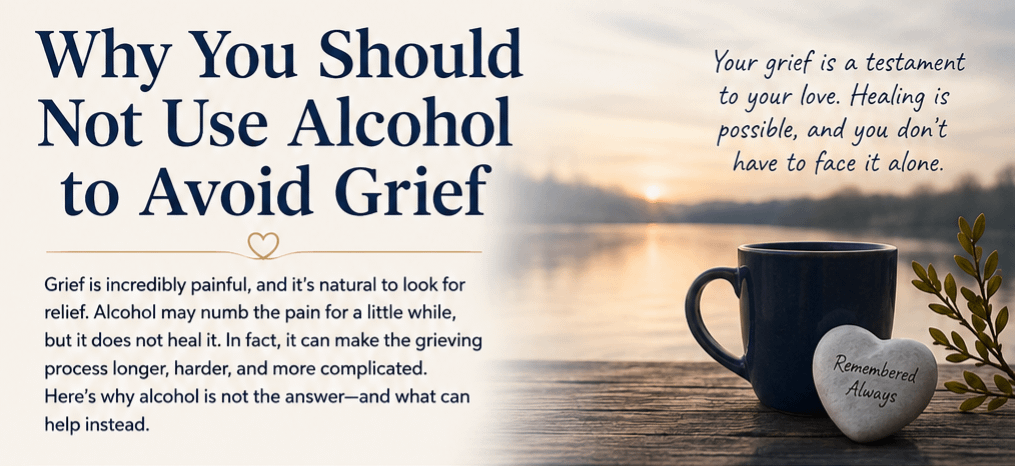
Grief is one of the most painful experiences a person can endure. Whether you have lost a child, spouse, parent, sibling, friend, or someone who played a significant role in your life, the emotional weight can feel overwhelming. In the aftermath of loss, many people search for anything that might provide temporary relief from the sadness, loneliness, anger, or emptiness they feel.
For some, alcohol becomes that temporary escape.
A drink may seem harmless at first. It may appear to take the edge off the pain, quiet the racing thoughts, or provide a few hours of numbness from the reality of loss. But while alcohol may temporarily dull emotional pain, it does not heal grief. In fact, it often makes the grieving process more difficult, more complicated, and much longer. Research and grief experts have consistently found that alcohol can interfere with healthy emotional processing and increase the risk of depression, substance misuse, and prolonged grief.
Grief Cannot Be Escaped
One of the hardest truths about grief is that there is no shortcut through it.
When someone we love dies, our hearts and minds must slowly learn how to live in a world that has been permanently changed. This process takes time. It requires us to experience the emotions that come with loss, even when those emotions are uncomfortable or heartbreaking.
Alcohol may temporarily mask those feelings, but it does not remove them. The sadness, longing, guilt, anger, and heartbreak are still there waiting when the effects wear off. Many grieving people discover that the emotions they tried to avoid return even stronger the next day.
Grief is not something that can be buried indefinitely. It must be acknowledged and processed in order to heal. Experts note that avoiding grief-related emotions can contribute to complications in the grieving process and delay emotional adaptation to loss.
Alcohol Is a Depressant
Many grieving individuals already struggle with depression, hopelessness, anxiety, and emotional exhaustion after a significant loss.
Alcohol is a depressant. While it may initially create feelings of relaxation, it can worsen sadness and emotional distress over time. What feels like relief in the moment often becomes deeper emotional pain afterward. Grief specialists frequently warn that drinking can intensify depressive symptoms and make emotional recovery more difficult.
You may find yourself trapped in a cycle:
- Feel grief.
- Drink to numb the grief.
- Feel worse emotionally afterward.
- Drink again to escape the worsening emotions.
Over time, this cycle can become difficult to break.
Alcohol Delays Healing
Healing from grief does not mean forgetting the person you lost.
Healing means learning how to carry their memory while continuing to live your life.
That process requires emotional work. It requires crying, remembering, talking, reflecting, and sometimes simply sitting with painful emotions. When alcohol becomes the primary coping mechanism, those important steps often get postponed.
Instead of processing grief, you may find yourself avoiding it.
Unfortunately, avoided grief does not disappear. It often resurfaces months or years later through depression, anxiety, anger, relationship problems, or substance dependence. Experts note that emotional avoidance is one factor associated with more complicated grief reactions.
Alcohol Can Increase Risk-Taking Behaviors
Grief already affects judgment, concentration, and decision-making.
Adding alcohol to the equation can make those challenges even greater.
Many people who drink heavily while grieving report:
- Increased impulsive decisions
- Financial problems
- Relationship conflicts
- Poor sleep
- Increased feelings of isolation
- Dangerous driving
- Health complications
Instead of helping you cope, alcohol may create additional problems during a time when you are already struggling emotionally.
The Danger of Dependence
What starts as “just a few drinks to get through the evening” can slowly become something much more serious.
When alcohol becomes the primary way to manage emotional pain, dependence can develop before you realize it. Studies have found links between bereavement-related distress and problematic alcohol use, particularly when drinking is used as a coping strategy.
Many grieving people are not looking to become addicted.
They are simply trying to survive.
But emotional pain can make alcohol seem more effective than it actually is, leading people to rely on it more frequently and in larger amounts over time.
What to Do Instead
If alcohol is not the answer, what can help?
While nothing removes grief entirely, healthier coping strategies can support healing:
Talk About Your Loss
Speak with trusted friends, family members, grief counselors, or support groups. Sharing your story can reduce feelings of isolation and remind you that you do not have to carry your grief alone.
Write Your Feelings Down
Journaling allows you to express thoughts and emotions that may be difficult to say out loud. Many bereaved parents and grieving individuals find comfort in writing letters to their loved one.
Stay Connected
Grief often makes people want to withdraw from others. While solitude can be helpful at times, complete isolation usually worsens emotional suffering.
Take Care of Your Body
Sleep, nutrition, hydration, and physical activity may seem insignificant when your heart is broken, but they play an important role in emotional recovery.
Seek Professional Help
There is no shame in asking for help. Grief counselors, therapists, and support groups are specifically trained to help people navigate loss and develop healthy coping skills.
A Message for Bereaved Parents
For parents who have lost a child, the temptation to numb the pain can be especially strong.
The loss of a child creates a level of heartbreak that is difficult to describe and impossible to fully understand unless you have lived it yourself. There may be days when the pain feels unbearable and nights when sleep refuses to come.
If that is where you are today, know this:
Your grief deserves to be felt.
Your child deserves to be remembered clearly.
Your healing deserves a chance.
Alcohol may promise temporary relief, but it cannot give you the peace you seek. The path through grief is difficult, but facing it honestly allows you to honor both your loss and your love.
Final Thoughts
Grief is not a problem to be solved. It is a journey to be lived.
While alcohol may seem like a way to escape the pain for a few hours, it often makes the burden heavier in the long run. True healing comes from allowing yourself to experience grief, seek support, and gradually learn how to carry your loss forward.
You do not have to numb your pain to survive it.
You can face it one day, one breath, and one step at a time.
And even in your darkest moments, healing remains possible.
A Father’s Guide to Surviving the Loss of a Child
Leave a Reply