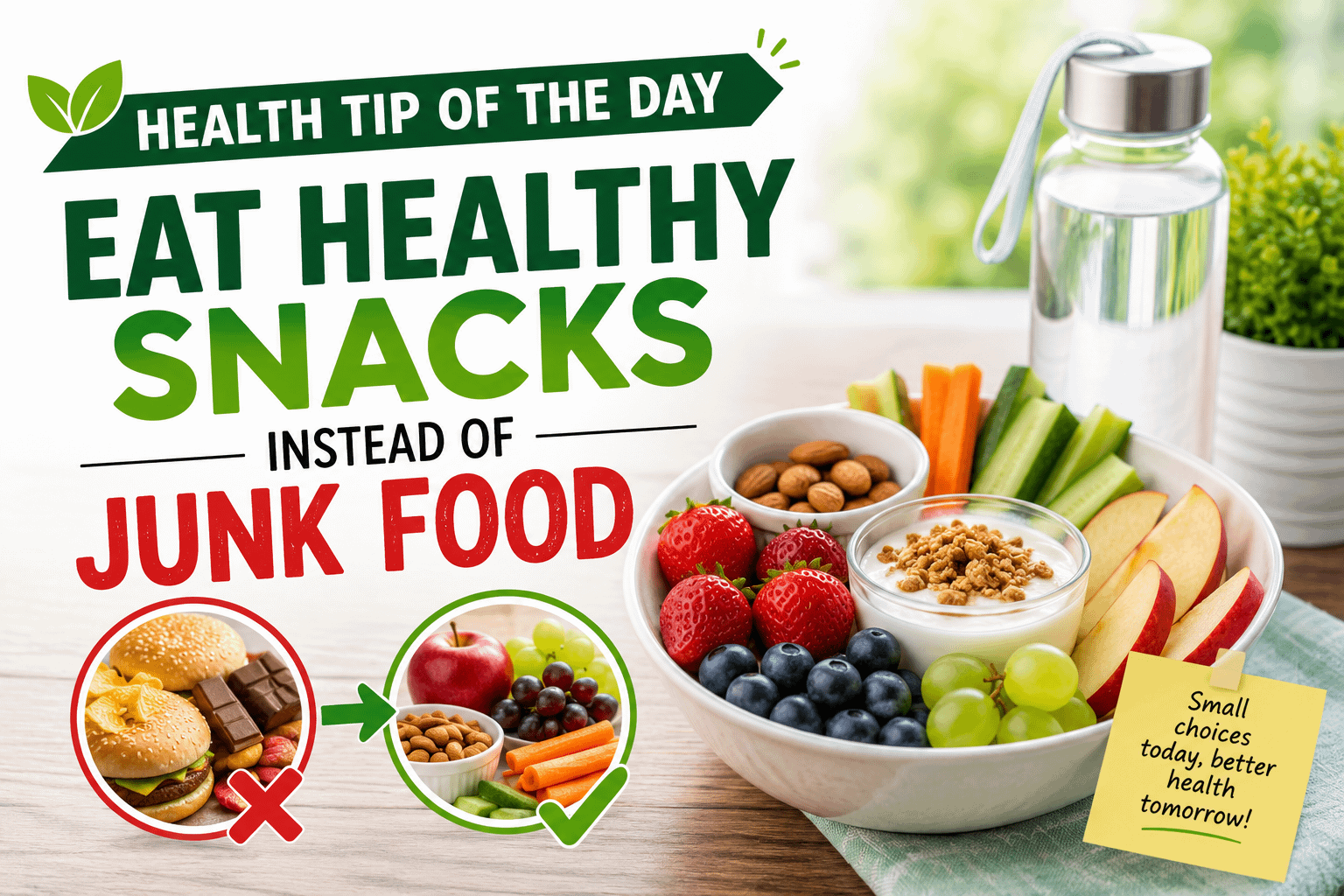
Snacking is a normal part of everyday life. Whether you’re hungry between breakfast and lunch, need something during a busy afternoon, or want a little food in the evening, snacks can help bridge the gap between meals.
The important question isn’t necessarily whether you snack.
It’s what you choose to snack on.
There is a big nutritional difference between reaching for fresh fruit and a handful of nuts versus automatically grabbing candy, cookies, chips, pastries, or other highly processed foods.
You don’t have to completely remove your favorite treats from your life. Healthy eating doesn’t require perfection. A more realistic goal is to make nutritious snacks your regular choice while enjoying less nutritious foods occasionally.
Today’s Health Tip of the Day is:
Eat Healthy Snacks Instead of Junk Food
This sounds simple, but changing your snacking habits can have a meaningful impact on your overall eating pattern.
Every snack is another opportunity to give your body something useful.
Instead of viewing snacks simply as something to stop hunger, think of them as small opportunities to add fruits, vegetables, whole grains, protein, fiber, vitamins, minerals, and healthy fats to your day.
Your Snacks Are Part of Your Overall Diet
People often pay close attention to breakfast, lunch, and dinner while forgetting about everything they eat between those meals.
But those little bites add up.
Imagine eating relatively balanced meals throughout the day but also having a pastry in the morning, chips during the afternoon, candy after dinner, and soda throughout the day.
Those choices become part of your overall eating pattern.
The same thing happens in the opposite direction.
If you regularly choose fruit, vegetables, nuts, yogurt, whole grains, or other nutritious foods between meals, you’re adding more valuable nutrients to your day.
That’s why snacks shouldn’t necessarily be treated as an afterthought.
Your snack choices matter too.
Why Do We Crave Junk Food?
Understanding why you reach for certain foods can make changing your habits easier.
Sometimes you’re genuinely hungry.
Other times, you may be eating because you’re bored, stressed, tired, watching television, driving, working, socializing, or simply because food is nearby.
There is also the convenience factor.
Packaged snack foods are designed to be easy.
Open the package.
Eat.
Done.
There’s nothing wrong with convenience, but healthy foods can be convenient too.
A banana requires almost no preparation.
Neither does an apple.
A yogurt container can be opened in seconds.
A handful of nuts can be portioned ahead of time.
Baby carrots can be eaten straight from the refrigerator.
Healthy eating becomes easier when nutritious choices are available when hunger arrives.
Ask Yourself One Question Before Snacking
Before grabbing something to eat, ask yourself:
“Am I actually hungry?”
You don’t need to overthink the answer.
Simply taking a few seconds to recognize why you’re reaching for food can help you become more intentional.
If you’re genuinely hungry, eat something.
But if you’re eating because you’re bored, stressed, or simply accustomed to snacking at a certain time, you may decide that you don’t actually need food.
You might drink some water, take a short walk, stretch, make tea, or simply wait a little while.
This isn’t about denying yourself food.
It’s about learning to recognize the difference between hunger and habit.
Choose Snacks That Keep You Satisfied
One of the problems with some highly processed snack foods is that they can be easy to overeat without leaving you satisfied for very long.
That’s why it can help to choose snacks containing protein, fiber, or healthy fats.
These nutrients can contribute to fullness and make your snack feel more substantial.
For example:
An apple is a nutritious snack.
But an apple with peanut butter provides fruit and fiber along with protein and fat.
Carrots are nutritious.
But carrots with hummus provide additional protein and fat.
Whole-grain crackers can be a good option.
Adding cheese or hummus makes them more satisfying.
Instead of thinking about individual foods, think about combinations.
Try the Protein + Fiber Snack Formula
One simple approach to healthier snacking is combining something containing protein with something containing fiber.
Here are some easy examples:
- Apple + peanut butter
- Banana + almond butter
- Berries + Greek yogurt
- Carrots + hummus
- Celery + peanut butter
- Whole-grain crackers + cheese
- Pear + cottage cheese
- Nuts + fresh fruit
- Hard-boiled egg + vegetables
- Plain yogurt + fruit
- Roasted chickpeas + vegetables
- Whole-grain toast + avocado
You don’t have to follow this formula every time you snack, but it’s a useful guideline when you want something more satisfying.
Healthy Snack Ideas for Your Refrigerator
Your refrigerator can become one of your greatest tools for healthier eating.
Keep nutritious options prepared and visible.
Some ideas include:
Greek Yogurt
Choose plain or lower-added-sugar varieties when possible and add your own fruit.
Try adding:
- Blueberries
- Strawberries
- Raspberries
- Banana slices
- Cinnamon
- Chopped nuts
Hard-Boiled Eggs
Prepare several ahead of time and keep them refrigerated for a convenient source of protein.
Hummus
Pair hummus with:
- Carrots
- Celery
- Bell peppers
- Cucumber
- Whole-grain crackers
Cottage Cheese
Try cottage cheese with:
- Peaches
- Pineapple
- Berries
- Tomatoes
- Cucumber
Fresh Vegetables
Wash and cut vegetables ahead of time so they’re ready when you’re hungry.
Having vegetables prepared removes one of the biggest excuses:
“I don’t have time.”
Healthy Snacks You Can Keep in the Pantry
Not every healthy snack requires refrigeration.
Consider keeping these options available:
- Unsalted or lightly salted nuts
- Seeds
- Whole-grain crackers
- Plain or lightly seasoned popcorn
- Nut butter
- Roasted chickpeas
- Lower-added-sugar granola
- Whole-grain cereal
- Dried fruit in moderate portions
Having healthier pantry options makes it easier to avoid automatically grabbing cookies, candy, or chips.
Fruit Is Nature’s Convenient Snack
Fruit is one of the easiest foods to incorporate into your snacking routine.
Many fruits require little or no preparation.
Grab an apple.
Peel a banana.
Wash some grapes.
Slice a pear.
Open a container of berries.
Fruit provides carbohydrates along with nutrients such as fiber, vitamins, minerals, and antioxidants.
Try keeping several types of fruit available so you don’t get bored.
Good options include:
- Apples
- Bananas
- Oranges
- Grapes
- Strawberries
- Blueberries
- Raspberries
- Peaches
- Pears
- Watermelon
- Cantaloupe
- Kiwi
- Pineapple
Variety makes healthy eating more enjoyable.
Use Fruit When You Want Something Sweet
You don’t have to ignore your sweet tooth.
Try satisfying it differently.
If you’re craving candy, cookies, or another dessert, fruit can sometimes provide the sweetness you’re looking for.
Try frozen grapes on a hot afternoon.
Freeze banana slices and enjoy them as a cold snack.
Mix strawberries and blueberries into Greek yogurt.
Slice an apple and sprinkle it with cinnamon.
Add a small amount of peanut butter to banana slices.
You can even create a simple yogurt parfait with berries, yogurt, nuts, and a small amount of granola.
Healthy food doesn’t have to be boring.
What About Chips?
For many people, chips are one of the hardest snacks to replace.
They’re crunchy, salty, convenient, and easy to eat.
You don’t necessarily have to swear them off forever.
Instead, experiment with alternatives when you want something crunchy.
Try:
- Air-popped popcorn
- Roasted chickpeas
- Carrots
- Cucumber slices
- Bell pepper strips
- Whole-grain crackers
- Nuts
- Seeds
And if you decide you really want chips?
Put a reasonable portion into a bowl instead of sitting down with the entire bag.
That small change creates a natural stopping point.
Stop Eating Straight From the Package
This is one of the easiest changes you can make.
Large bags and containers make it difficult to recognize how much you’ve eaten.
You might tell yourself:
“I’ll just have a few.”
Then suddenly half the bag is gone.
Instead, portion your snack into a bowl or small plate.
Put the package away.
Then sit down and enjoy what you’ve chosen.
This strategy works for chips, crackers, popcorn, nuts, trail mix, cookies, and many other foods.
Portion Size Still Matters With Healthy Foods
A food can be nutritious and still be calorie-dense.
Nuts are a perfect example.
They’re packed with nutrients and healthy fats, but it’s easy to eat several servings without realizing it.
Nut butter is another example.
The same applies to:
- Cheese
- Granola
- Trail mix
- Dried fruit
- Avocado
- Seeds
The lesson isn’t to avoid these foods.
It’s simply to remember:
Healthy doesn’t automatically mean unlimited.
Be Careful With “Healthy” Packaged Snacks
Marketing can be misleading.
A package might say:
“Natural.”
“Made with whole grains.”
“Protein.”
“Organic.”
“Low fat.”
But those words don’t automatically tell you whether a product fits your nutritional goals.
That’s why the Nutrition Facts label can be helpful.
Check things such as:
- Serving size
- Calories
- Added sugars
- Sodium
- Saturated fat
- Fiber
- Protein
Also look at the ingredient list.
You don’t need to become obsessed with labels. Simply learning to glance at them can help you compare similar products and make more informed decisions.
Watch Liquid Calories Too
Snacks aren’t always solid food.
Sugary beverages can contribute a significant amount of added sugar and calories without making you feel particularly full.
Examples can include:
- Regular soda
- Sweet tea
- Energy drinks
- Some coffee drinks
- Fruit-flavored drinks
- Certain sports drinks
Water is usually an excellent everyday beverage.
Other options can include unsweetened tea, sparkling water without added sugar, or water flavored with lemon, lime, cucumber, berries, or mint.
Drink Water Before Automatically Snacking
Sometimes thirst can feel similar to hunger.
If you recently ate but suddenly feel like snacking, try drinking a glass of water.
Wait a few minutes.
Then ask yourself whether you’re still hungry.
If you are, have a nutritious snack.
This isn’t a trick for avoiding food. It’s simply a way to make sure you’re responding to what your body actually needs.
Plan Your Snacks Before Leaving Home
Some of our least nutritious food choices happen when we’re away from home.
You’re driving.
You’re working.
You’re running errands.
You’re hungry.
Suddenly the vending machine, convenience store, or fast-food restaurant becomes extremely tempting.
Planning ahead can make a big difference.
Before leaving home, grab something portable.
Good options include:
- Banana
- Apple
- Orange
- Small portion of nuts
- Whole-grain crackers
- Homemade trail mix
- Peanut butter sandwich on whole-grain bread
If you have a cooler or insulated lunch bag, your choices expand even further.
You could bring:
- Yogurt
- Cheese
- Vegetables and hummus
- Hard-boiled eggs
- Cottage cheese
- Fresh berries
A few minutes of preparation can save you from making an impulsive choice later.
Keep Emergency Snacks Available
Consider keeping a few nutritious shelf-stable snacks in places where you frequently get hungry.
That might include:
Your car
Your desk
Your work bag
Your backpack
Options such as nuts, whole-grain crackers, or other shelf-stable snacks can help when hunger catches you unexpectedly.
Just remember to consider food-safety and temperature requirements, especially in a hot vehicle.
Create a Healthy Snack Station at Home
You can make healthier choices even easier by creating a designated area for snacks.
Put nutritious pantry snacks together in one cabinet or basket.
In the refrigerator, designate one shelf or container for ready-to-eat foods.
You might keep:
- Washed fruit
- Cut vegetables
- Yogurt
- Cheese
- Hard-boiled eggs
- Hummus
- Cottage cheese
Then when you’re hungry, you don’t have to search for something.
Your healthier choices are waiting for you.
Don’t Grocery Shop Hungry
Going grocery shopping when you’re extremely hungry can make highly tempting snack foods harder to resist.
When possible, eat before shopping.
Also consider making a grocery list.
If you know what you’re buying before entering the store, you’re less likely to fill your cart with impulse purchases.
Your healthy eating habits often begin before you even get home.
They begin at the grocery store.
What You Keep at Home Matters
Willpower is helpful, but your environment can be even more powerful.
If your kitchen is filled with candy, cookies, pastries, chips, and soda, you’ll constantly have to decide whether to eat them.
If your kitchen is filled with fruit, vegetables, yogurt, nuts, hummus, and other nutritious foods, healthy choices become easier.
You don’t necessarily need to ban every treat from your home.
Instead, change the balance.
Make nutritious food the easiest option.
Don’t Label Foods as “Good” and “Bad”
Food doesn’t need to become a moral issue.
Eating broccoli doesn’t make you a good person.
Eating a cookie doesn’t make you a bad person.
A healthier mindset is to think about foods in terms of frequency.
Some foods are excellent everyday choices.
Others are better enjoyed occasionally.
This approach allows you to improve your eating habits without turning food into something associated with guilt.
Enjoy Your Favorite Foods in Moderation
You can eat healthy and still enjoy:
Pizza.
Ice cream.
Cookies.
Cake.
Chips.
Chocolate.
The key is what you do most of the time.
If your everyday eating pattern contains plenty of fruits, vegetables, whole grains, lean proteins, and other nutrient-rich foods, enjoying an occasional treat can fit into a balanced lifestyle.
Trying to eat perfectly can sometimes lead to an all-or-nothing mentality.
You eat one cookie and think:
“Well, I already messed up.”
Then one cookie becomes five.
Instead, enjoy the cookie.
Then continue with your normal healthy choices.
One snack doesn’t determine your health.
Your habits do.
Healthy Snacking at Night
Evening snacking can be difficult because it often happens out of habit rather than hunger.
You sit down to watch television and automatically want something to eat.
Before reaching for food, ask yourself whether you’re genuinely hungry.
If you are, choose something satisfying.
You might try:
- Greek yogurt and berries
- Apple and peanut butter
- A small bowl of popcorn
- Cottage cheese and fruit
- Banana and a few nuts
If you’re not hungry, consider making tea or drinking water instead.
Sometimes breaking the association between television and eating is the biggest challenge.
Healthy Snacks for Busy Days
When life gets hectic, convenience matters.
You aren’t always going to have time to prepare an elaborate snack.
Fortunately, healthy snacks don’t need to be complicated.
An apple and a handful of nuts takes seconds.
A banana and peanut butter requires almost no preparation.
Greek yogurt can be opened immediately.
Carrots and hummus can be prepared ahead of time.
Healthy eating doesn’t have to involve spending hours in the kitchen.
Simple is perfectly fine.
Make Small Changes Instead of Trying to Change Everything
Imagine someone who currently eats several processed snacks every day.
Trying to eliminate everything immediately might feel overwhelming.
Instead, start with one snack.
If you normally eat chips every afternoon, replace that snack with fruit three days this week.
Once that feels normal, increase it.
Then work on another habit.
Small changes are easier to maintain because they allow you to gradually build a healthier lifestyle.
Create Your Own Healthy Snack List
Take five minutes and write down 10 healthy snacks you genuinely enjoy.
Not foods you think you’re supposed to like.
Foods you actually like.
For example:
- Apples and peanut butter
- Greek yogurt and strawberries
- Popcorn
- Carrots and hummus
- Banana and almonds
- Cottage cheese and pineapple
- Whole-grain crackers and cheese
- Hard-boiled eggs
- Grapes and walnuts
- Celery and peanut butter
Keep the list on your refrigerator or phone.
When you’re hungry and don’t know what to eat, look at your list.
Removing the decision-making process can make healthy choices easier.
Prepare Tomorrow’s Snacks Tonight
Before going to bed, think about tomorrow.
Will you be working?
Running errands?
Driving for several hours?
Spending the afternoon away from home?
Take a few minutes to prepare snacks.
Wash an apple.
Portion some nuts.
Pack yogurt.
Cut vegetables.
Fill your water bottle.
Healthy living often comes down to preparation.
The person you are tonight can make tomorrow easier for you.
Your Health Is Built Through Everyday Decisions
People often look for dramatic ways to become healthier.
But health is frequently influenced by ordinary decisions repeated over time.
What you drink.
What you snack on.
How much you move.
How much you sleep.
What you put on your plate.
None of these decisions may feel life-changing in the moment.
But repeated hundreds or thousands of times, they become your lifestyle.
That’s why replacing even one less nutritious snack each day can be worthwhile.
You aren’t simply changing one snack.
You’re practicing a healthier habit.
Don’t Give Up After an Unhealthy Day
Maybe yesterday wasn’t your healthiest day.
Maybe you ate too much.
Maybe you had chips, cookies, fast food, and soda.
That’s okay.
Today is another opportunity to make a different choice.
You don’t need to punish yourself.
You don’t need to skip meals.
You don’t need to promise yourself you’ll never eat junk food again.
Simply make your next choice a little healthier.
That’s one of the most important lessons in improving your health:
You can always make a better choice next time.
Health Tip of the Day: Make the Healthy Choice the Easy Choice
If there’s one idea to remember from today’s health tip, it’s this:
Don’t depend entirely on willpower. Prepare your environment for success.
Buy fruit you enjoy.
Keep vegetables washed and ready.
Portion nuts ahead of time.
Keep yogurt in the refrigerator.
Carry a healthy snack when you’re away from home.
Drink water throughout the day.
And don’t feel guilty when you occasionally enjoy something simply because you like it.
Healthy eating isn’t about creating a perfect diet.
It’s about creating better habits.
Today’s Healthy Snack Challenge
Here’s your challenge for today:
Replace one junk-food snack with a more nutritious option.
That’s it.
You don’t need to completely change your diet today.
If you normally eat chips, try popcorn, vegetables with hummus, or fruit and nuts.
If you normally eat a candy bar, try an apple with peanut butter or Greek yogurt with berries.
If you normally drink soda with your afternoon snack, try water or unsweetened tea.
Then tomorrow, do it again.
One healthier snack becomes two.
Two healthier choices become a routine.
That routine becomes a habit.
And over time, those habits become part of your lifestyle.
Final Thought
Your health isn’t determined by one meal, one snack, or one imperfect day.
It’s shaped by the choices you make consistently.
So the next time hunger hits between meals, don’t automatically reach for whatever is easiest.
Take a moment and ask:
“What can I eat right now that I’ll enjoy and that will also give my body something it needs?”
Maybe it’s an apple and peanut butter.
Maybe it’s yogurt and berries.
Maybe it’s vegetables and hummus.
Maybe it’s a handful of nuts and a piece of fruit.
The choice doesn’t need to be complicated.
Choose something nutritious. Enjoy it. Then keep moving forward.
Small choices matter.
Small habits matter.
And choosing a healthier snack today is one simple way to take better care of yourself—one bite at a time.
Leave a Reply