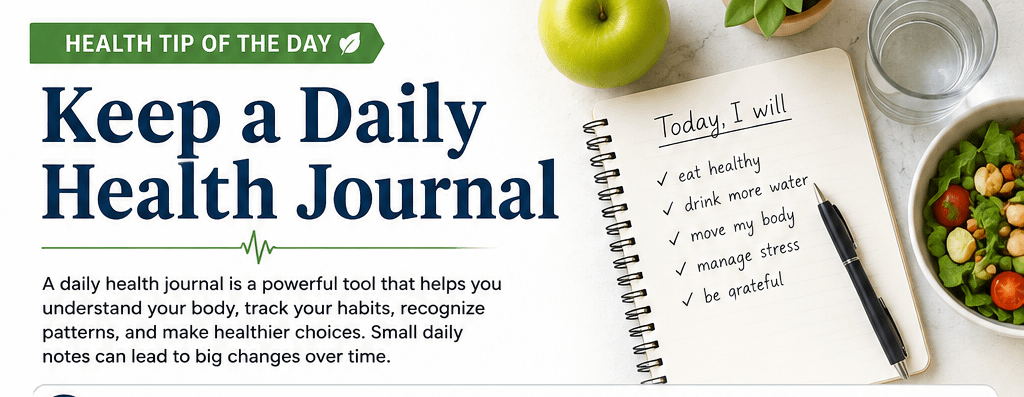
When most people think about improving their health, they often focus on eating better, exercising more, or getting enough sleep. While these habits are all essential, there’s another simple practice that can dramatically improve your overall wellness without costing a dime: keeping a daily health journal.
A health journal is much more than a diary. It’s a personal record of your habits, symptoms, emotions, and progress that helps you better understand your body and mind. By writing down your daily experiences, you begin to notice patterns that would otherwise go unnoticed. Those insights can help you make smarter decisions, stay motivated, and take control of your well-being.
Whether your goal is to lose weight, improve your mental health, manage a chronic condition, reduce stress, or simply live a healthier life, a daily health journal can become one of the most valuable tools in your wellness journey.
Why a Health Journal Works
It’s easy to think you’ll remember how you felt yesterday or what you ate three days ago—but our memories are far from perfect. We often underestimate unhealthy habits and overestimate healthy ones.
Writing things down creates awareness. Awareness leads to understanding, and understanding leads to better choices.
For example, after a few weeks of journaling, you might discover:
- You sleep better on days when you exercise.
- Your headaches usually occur after skipping breakfast.
- Drinking more water reduces your afternoon fatigue.
- Stress causes you to snack on unhealthy foods.
- You feel happier after spending time outdoors.
- Certain foods upset your stomach.
- Your anxiety increases when you don’t get enough sleep.
Without tracking these details, these connections can easily be missed.
The Science Behind Journaling
Research has shown that journaling can have positive effects on both physical and mental health.
People who regularly write about their thoughts and daily experiences often report:
- Lower stress levels
- Better emotional regulation
- Improved sleep quality
- Greater self-awareness
- Increased motivation
- Better adherence to healthy habits
- Improved management of chronic illnesses
Simply spending a few minutes reflecting on your day can help reduce mental clutter and improve your overall outlook.
What Should You Include?
Your journal doesn’t need to be complicated. In fact, the simpler it is, the more likely you’ll stick with it.
Here are some areas worth tracking.
Sleep
Sleep is one of the foundations of good health.
Each day, record:
- Bedtime
- Wake-up time
- Total hours slept
- Sleep quality (1–10)
- Number of times you woke up
- How rested you felt
Over time, you’ll notice what helps—or hurts—your sleep quality.
Nutrition
Food fuels every part of your body.
Write down:
- Meals
- Snacks
- Water intake
- Fruits and vegetables
- Sugary drinks
- Alcohol
- Portion sizes
- Cravings
Don’t focus on perfection.
Instead, focus on awareness.
Many people naturally begin making healthier food choices simply because they’re paying attention.
Exercise
Movement is medicine.
Track:
- Walking
- Running
- Cycling
- Weight training
- Stretching
- Yoga
- Sports
- Housework
- Yard work
Include:
- Duration
- Intensity
- How you felt before
- How you felt afterward
Even a short walk deserves recognition.
Water Intake
Hydration affects nearly every function of your body.
Track:
- Glasses of water
- Sports drinks
- Coffee
- Tea
- Soda
Many people discover they aren’t drinking nearly enough water until they actually measure it.
Mood
Mental health deserves just as much attention as physical health.
Each day, write a few words describing your emotional state.
Examples:
- Happy
- Calm
- Excited
- Hopeful
- Frustrated
- Sad
- Overwhelmed
- Grateful
Also ask yourself:
- What made today better?
- What made today harder?
You’ll begin recognizing emotional triggers and positive influences.
Stress Levels
Rate your daily stress from 1–10.
Then write:
- What caused stress?
- How did you respond?
- What helped?
This simple exercise encourages healthier coping strategies instead of reacting automatically.
Symptoms
Your body constantly communicates with you.
Track symptoms like:
- Headaches
- Back pain
- Joint pain
- Allergies
- Digestive issues
- Fatigue
- Dizziness
- Muscle soreness
- Blood pressure
- Blood sugar
- Heart rate
These records can be incredibly useful during doctor visits.
Medications and Supplements
Keeping track of medications improves consistency.
Record:
- Medication taken
- Time taken
- Vitamins
- Supplements
- Missed doses
- Side effects
This habit becomes especially valuable if you’re managing multiple prescriptions.
Weight and Measurements
If weight loss is one of your goals, avoid weighing yourself multiple times a day.
Instead, record:
- Weekly weight
- Waist measurement
- Clothing fit
- Energy level
- Fitness improvements
Sometimes the scale doesn’t move even though your health is improving.
Record Your Wins
Many people only document problems.
Instead, celebrate victories.
Examples include:
- Walked 30 minutes
- Ate vegetables with every meal
- Drank 64 ounces of water
- Went to bed before 10:00 PM
- Said no to junk food
- Took all medications
- Reduced stress
- Tried a new healthy recipe
- Completed a workout
- Lost one pound
Small victories build momentum.
Your Journal Doesn’t Need to Be Perfect
One mistake people make is believing they have to record everything.
You don’t.
Even writing for five minutes each evening can make a huge difference.
Consistency matters far more than perfection.
Paper or Digital?
There’s no right answer.
Choose whichever method you’ll actually use.
Popular options include:
Traditional Notebook
Simple, inexpensive, and distraction-free.
Planner
Great if you already organize your daily schedule.
Smartphone Notes
Always available and easy to update.
Spreadsheet
Excellent for people who enjoy charts and progress tracking.
Health Apps
Many apps automatically track:
- Steps
- Sleep
- Heart rate
- Calories
- Water intake
- Exercise
Some people even combine apps with handwritten reflections.
Questions to Ask Yourself Every Day
If you’re unsure what to write, answer these simple questions:
- How did I sleep?
- What healthy choices did I make today?
- What unhealthy habits showed up?
- How active was I?
- How much water did I drink?
- How stressed did I feel?
- What made me smile today?
- What challenged me?
- What am I grateful for?
- What’s one thing I can improve tomorrow?
These questions encourage reflection without taking much time.
How a Health Journal Builds Better Habits
Healthy living isn’t about making one perfect decision.
It’s about making thousands of small decisions over time.
A journal helps you see those decisions clearly.
Instead of saying:
“I think I’m eating healthier.”
You’ll know.
Instead of wondering:
“Why am I always tired?”
You’ll often find the answer hidden in your own notes.
That awareness becomes one of your greatest tools for lasting change.
When to Review Your Journal
Writing is only half the process.
Take a few minutes each week or month to review your entries.
Ask yourself:
- What habits improved?
- What habits slipped?
- What patterns do I notice?
- What’s helping my health?
- What’s holding me back?
Regular reviews turn information into action.
Remember That Progress Takes Time
One healthy meal won’t transform your body.
One workout won’t dramatically improve your fitness.
Likewise, one bad day won’t ruin your progress.
Health is built through consistency.
A journal reminds you that success comes from showing up day after day, even when progress feels slow.
Final Thoughts
Keeping a daily health journal is one of the simplest yet most effective ways to take an active role in your well-being. It encourages mindfulness, builds accountability, and helps you uncover valuable insights about your body, emotions, and daily habits. Over time, those small notes become a detailed picture of your health journey, showing not only where you’ve struggled but also how far you’ve come.
Remember, your journal isn’t meant to be perfect—it’s meant to be honest. Some days you’ll have victories worth celebrating, while other days will remind you that growth takes patience. Both are valuable. Every entry is another opportunity to learn, adjust, and move forward with greater confidence.
The healthiest life isn’t created overnight. It’s built one decision, one habit, and one day at a time. By keeping a daily health journal, you’re giving yourself the gift of awareness, and awareness is often the first step toward lasting change. Start today with just a few lines, and you’ll be surprised how much those small daily reflections can shape a healthier, happier future.
Share this:
- Share on X (Opens in new window) X
- Share on Facebook (Opens in new window) Facebook
- Share on LinkedIn (Opens in new window) LinkedIn
- Share on Reddit (Opens in new window) Reddit
- Share on Tumblr (Opens in new window) Tumblr
- Share on Pinterest (Opens in new window) Pinterest
- Share on Telegram (Opens in new window) Telegram
- Share on Threads (Opens in new window) Threads
- Share on Bluesky (Opens in new window) Bluesky
Leave a Reply