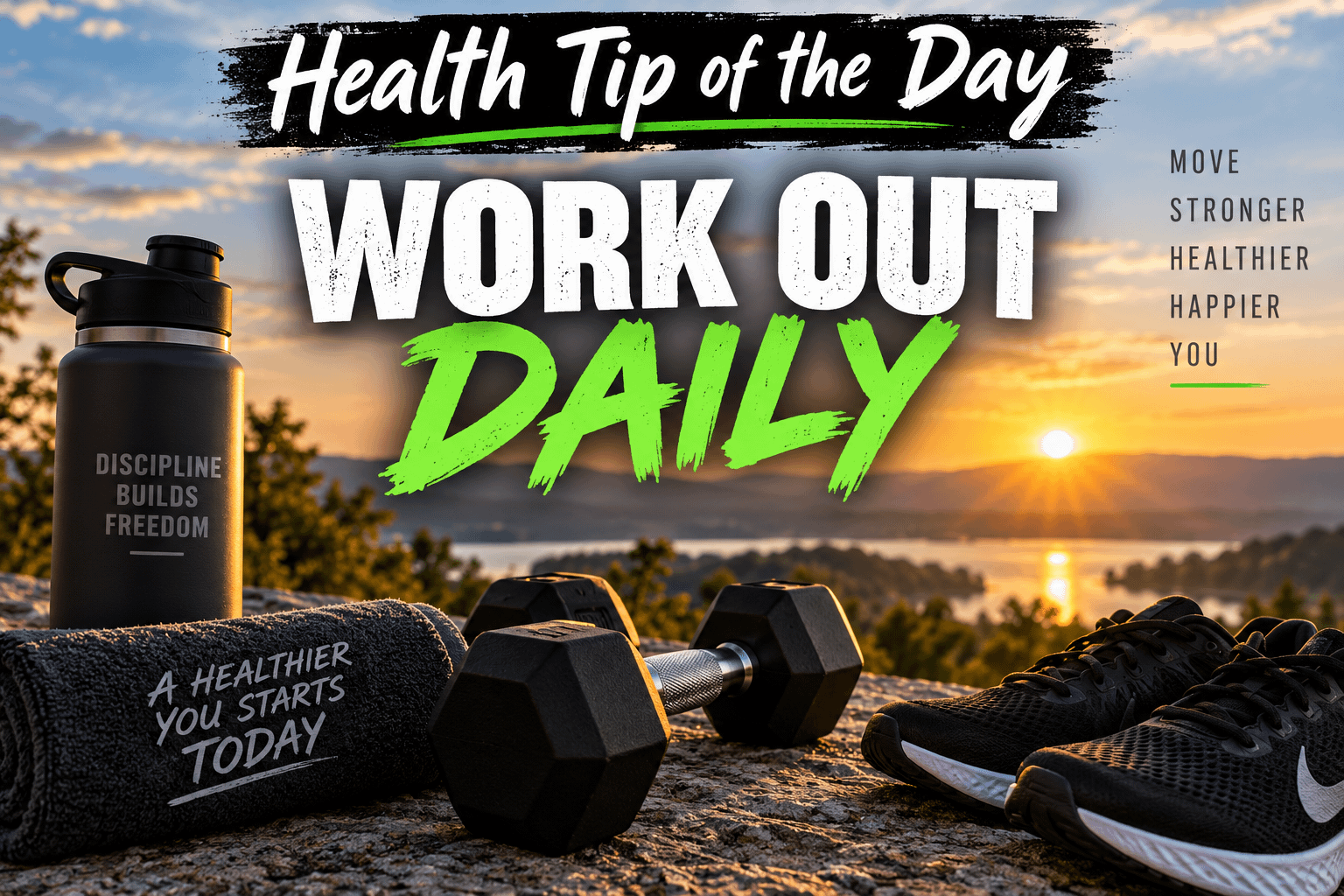
Taking care of your health does not always require complicated routines, expensive equipment, or spending hours at the gym. Sometimes one of the most powerful things you can do for yourself is simply move your body every day.
Today’s health tip is simple:
Work out daily.
That doesn’t mean you need to perform an intense workout seven days a week. Daily exercise can mean walking, stretching, strength training, swimming, cycling, doing yard work, practicing yoga, or simply getting outside and moving.
The goal is to make physical activity a regular part of your life rather than something you occasionally do when motivation strikes.
Your Body Was Made to Move
Modern life makes it surprisingly easy to spend most of the day sitting. We sit while driving, working, watching television, eating, scrolling through our phones, and relaxing.
Over time, too little movement can affect our health.
Regular physical activity can help strengthen your heart, muscles, and bones while improving endurance, mobility, balance, and overall physical fitness. Exercise can also support healthy weight management and metabolic health.
Movement isn’t only about changing how your body looks.
It’s about improving what your body can do.
Being able to walk farther, climb stairs more comfortably, carry groceries, play with your children or grandchildren, work around the house, travel, and remain independent as you age are all meaningful reasons to stay active.
Daily Exercise Doesn’t Mean Daily Intense Exercise
One mistake people make is believing every workout needs to leave them exhausted.
It doesn’t.
Your body needs recovery, especially after demanding strength training or intense cardiovascular exercise. A daily movement habit can include both challenging workouts and easier recovery days.
For example, your week might include strength training on certain days, longer walks or cardio on others, and light walking, stretching, or mobility work on recovery days.
Think of it as daily movement rather than daily punishment.
Some days you might exercise for an hour.
Other days you might only have 15 or 20 minutes.
Both count.
Consistency matters more than trying to make every workout perfect.
Walking Is One of the Simplest Places to Start
If you haven’t exercised regularly in a while, walking can be an excellent starting point.
You don’t necessarily need a gym membership or special equipment. Put on comfortable shoes and start moving at a pace appropriate for your current fitness level.
You might begin with 10 minutes.
As your fitness improves, gradually increase the duration or pace.
Walking can also be broken into smaller periods throughout the day. A short walk in the morning, another after lunch, and another in the evening can add up to a meaningful amount of activity.
The important thing is getting started.
Don’t Forget Strength Training
Cardiovascular exercise gets a lot of attention, but maintaining muscle is also an important part of long-term health.
Strength training can include traditional weights, resistance bands, machines, or bodyweight exercises.
Common exercises include:
- Squats or chair squats
- Wall push-ups or push-ups
- Rows
- Lunges
- Resistance-band exercises
- Light dumbbell exercises
- Core exercises
You don’t need to become a bodybuilder.
The objective is to challenge your muscles appropriately and progressively while using good technique.
Adults should generally aim for muscle-strengthening activity involving the major muscle groups on at least two days each week, alongside regular aerobic activity.
Exercise Can Help Your Mind Too
The benefits of movement aren’t limited to physical health.
Physical activity can improve mood, reduce feelings of stress and anxiety, support better sleep, and provide an opportunity to clear your mind.
Sometimes a workout becomes a break from everything else happening in life.
You put down the phone.
You step away from work.
You stop thinking about everything that needs to be done.
For a little while, the only goal is to move.
A walk outside can sometimes provide exactly the mental reset you need.
Stop Waiting for Motivation
Motivation is useful, but it isn’t reliable.
There will be mornings when you feel ready to exercise.
There will also be days when exercising is the last thing you want to do.
That’s where habits become important.
Instead of asking yourself every day, “Do I feel like working out?” make movement part of your normal routine.
You probably don’t debate whether you should brush your teeth every morning. It’s simply something you do.
Exercise can eventually become the same way.
Choose a regular time whenever possible. Maybe it’s before work, during lunch, immediately after work, or after dinner.
The best time to exercise is often the time you can realistically maintain.
Start Where You Are
You don’t need to compare your beginning to somebody else’s progress.
Someone else might run five miles.
Your victory might be walking around the block.
Someone else might lift heavy weights.
Your victory might be completing your first set of chair squats.
That’s okay.
Fitness is personal.
The goal is to become healthier and stronger than you were yesterday, not to compete with strangers on social media.
Start at an appropriate level and gradually build from there.
Something Is Better Than Nothing
One of the biggest traps in fitness is the all-or-nothing mentality.
You planned a 45-minute workout but only have 15 minutes available, so you decide there’s no point.
There is.
Take the 15-minute walk.
Do a short mobility routine.
Complete a few bodyweight exercises.
Stretch while watching television.
Small amounts of movement still contribute to your overall activity.
A short workout you actually complete is more valuable than the perfect workout you keep postponing.
Give Your Body Time to Recover
Working out daily doesn’t mean ignoring pain or pushing your body beyond its limits.
Recovery matters.
Sleep, hydration, nutrition, and easier training days all play a role in helping your body recover.
Learn the difference between the normal effort associated with exercise and pain that could signal an injury.
If something hurts unexpectedly, don’t assume you should simply “push through it.”
Rest and seek medical advice when appropriate.
People with medical conditions, significant mobility limitations, injuries, or concerning symptoms should talk with a qualified healthcare professional about what types and amounts of exercise are appropriate for them.
Build a Lifestyle, Not a Temporary Challenge
Exercise becomes much more powerful when you stop treating it as something you’re doing for the next 30 days and start treating it as something you intend to do for the rest of your life.
That changes your perspective.
Missing one workout isn’t failure.
Having an easier week isn’t failure.
Progress doesn’t require perfection.
You simply return to the habit.
Over months and years, those ordinary workouts begin adding up.
Ten-minute walks become longer walks.
Exercises that once felt difficult become easier.
You become stronger.
Your endurance improves.
And movement becomes part of who you are.
Today’s Health Challenge
Do something active today.
It doesn’t have to be complicated.
Take a walk.
Stretch.
Ride a bicycle.
Lift weights.
Go swimming.
Work in the yard.
Dance around your house.
Do a short bodyweight workout.
Just move.
Then tomorrow, do something again.
You don’t need to completely transform your life today. You simply need to make one healthy decision and continue building from there.
Your health is shaped by what you repeatedly do.
So move your body today, take care of it, give it appropriate rest, and come back tomorrow ready to move again.
What kind of movement can you commit to doing today?
Leave a Reply