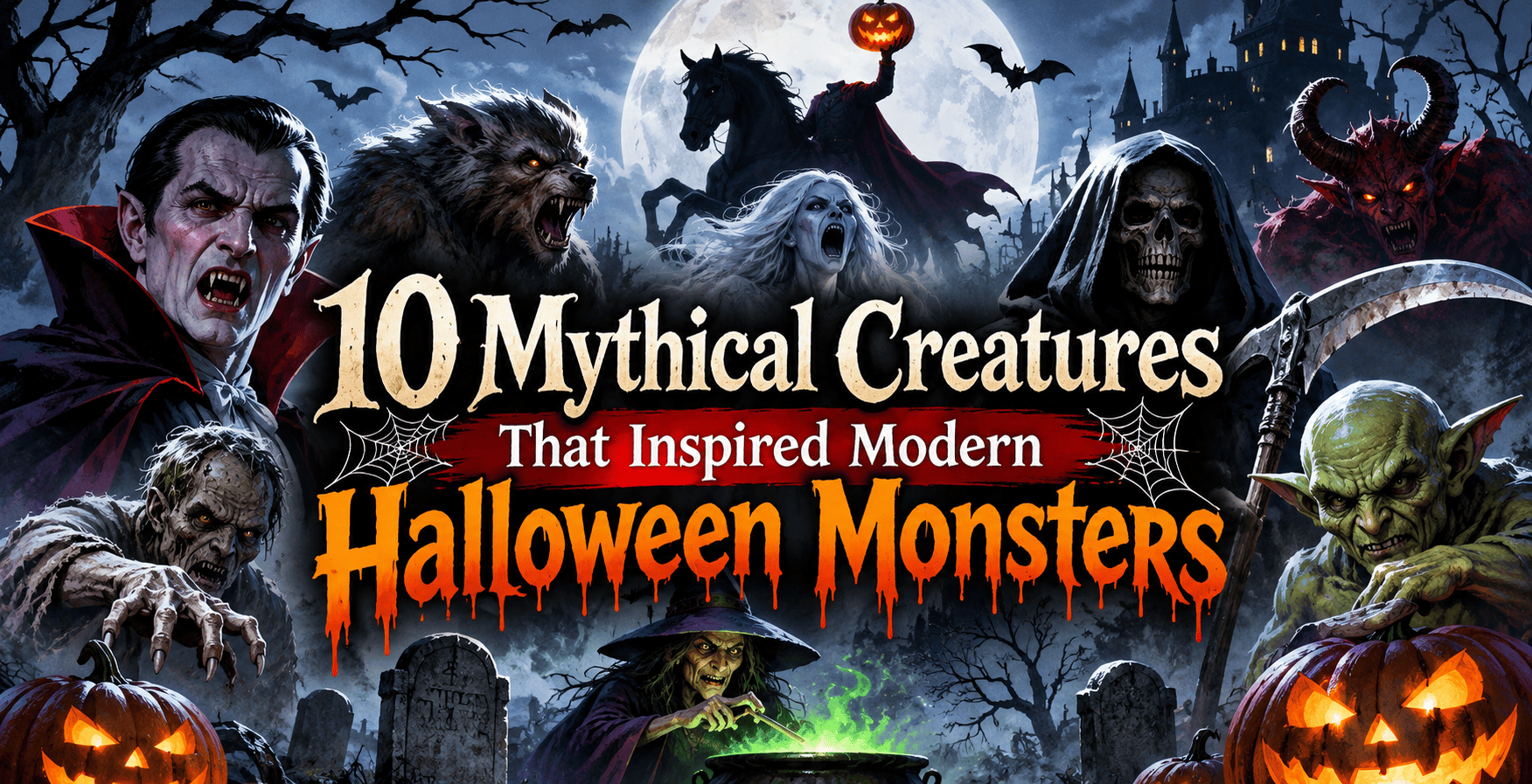
Halloween is a time when monsters, ghosts, vampires, witches, and supernatural creatures take center stage. From terrifying costumes to haunted house attractions, these frightening figures have become essential parts of Halloween celebrations. But many of the monsters we associate with Halloween did not begin in horror movies or modern ghost stories. Their origins can be traced back hundreds or even thousands of years to ancient myths, legends, and folklore.
Throughout history, civilizations created stories about mysterious creatures to explain the unknown, warn people about danger, and explore their fears of death, darkness, and the supernatural. Some creatures were believed to roam forests, others haunted graveyards, and some were said to emerge only after sunset.
As these legends traveled between cultures and generations, they evolved into the familiar Halloween monsters we recognize today.
Here are 10 mythical creatures that helped shape modern Halloween monsters and the fascinating stories behind them.
1. Vampires: The Undead Creatures of European Folklore
Few Halloween monsters are as recognizable as the vampire. With sharp fangs, pale skin, mysterious powers, and an appetite for blood, vampires have become symbols of supernatural horror.
However, vampire legends existed long before Hollywood introduced audiences to Dracula.
In Eastern European folklore, particularly in regions such as Serbia, Romania, and neighboring countries, people told stories about the dead returning from their graves to harm the living.
These creatures were sometimes blamed for unexplained illnesses, sudden deaths, and epidemics.
During the 17th and 18th centuries, vampire fears became especially widespread in parts of Europe. Communities occasionally opened graves because they believed a deceased person had returned as an undead predator.
The modern vampire developed through literature, especially John Polidori’s The Vampyre in 1819 and Bram Stoker’s Dracula in 1897.
These stories helped transform older supernatural beliefs into the elegant, mysterious, and terrifying vampires associated with Halloween.
Today, vampire costumes, decorations, movies, and haunted attractions remain among Halloween’s most popular traditions.
2. Werewolves: The Shape-Shifting Beasts of Ancient Legends
The werewolf is another classic Halloween monster with roots stretching back to ancient mythology.
Stories about humans transforming into wolves appeared in several cultures, including ancient Greece and medieval Europe.
One famous Greek legend tells of Lycaon, a king who was transformed into a wolf as punishment for his actions.
The story helped establish an enduring connection between wolves, human behavior, and supernatural transformation.
During medieval times, European folklore expanded these legends. Some people believed individuals could become wolves through curses, witchcraft, or magical rituals.
The idea that a werewolf transforms during a full moon became especially prominent in modern fiction and films.
Werewolves represent humanity’s fear of losing control and becoming something dangerous.
Their frightening combination of human intelligence and animal instincts makes them ideal Halloween monsters.
Modern werewolf costumes often feature fur, claws, pointed ears, and sharp teeth, reflecting centuries of supernatural storytelling.
3. Banshees: The Ghostly Messengers of Death
The banshee is a mysterious supernatural figure originating in Irish folklore.
Unlike monsters that physically attack their victims, banshees are traditionally associated with warnings of approaching death.
According to Irish legends, a banshee could be heard crying, wailing, or screaming near a household before a family member died.
Descriptions of banshees vary considerably.
Some stories portray them as beautiful women with long flowing hair, while others describe frightening elderly figures with pale faces and ghostly appearances.
Their cries were believed to carry messages from the supernatural world.
The banshee’s influence can be seen in modern Halloween portrayals of screaming ghosts, haunted women, and spirits associated with death.
The idea of a mysterious figure appearing before tragedy remains a common theme in supernatural horror.
Although banshees were traditionally understood as death omens rather than violent monsters, modern entertainment frequently portrays them as frightening supernatural beings.
4. Ghouls: The Graveyard Monsters of Arabian Folklore
Ghouls are among the most disturbing creatures associated with death and graveyards.
Their origins can be traced to Arabian folklore, where the ghoul was often described as a dangerous supernatural being that haunted isolated places.
Some traditional stories portrayed ghouls as shape-shifting creatures that lured travelers into danger.
Over time, the ghoul became increasingly associated with cemeteries, corpses, and the consumption of human flesh.
As Arabian stories spread through translations and European literature, the creature’s reputation evolved.
Modern horror frequently portrays ghouls as corpse-eating monsters, undead creatures, or frightening beings that emerge from graves.
This imagery fits naturally into Halloween’s fascination with cemeteries and the supernatural.
Graveyard decorations, zombie-like costumes, and haunted cemetery attractions often borrow elements from the ghoul’s frightening mythology.
The ghoul demonstrates how a creature from one cultural tradition can become part of an international collection of Halloween monsters.
5. Witches: The Supernatural Figures of Folklore and Legend
Witches are among the most familiar symbols of Halloween.
Pointed hats, broomsticks, black cats, bubbling cauldrons, and mysterious spells have become standard Halloween imagery.
However, the history behind witches is more complicated than the fictional characters found in modern celebrations.
Beliefs about magic and supernatural practitioners existed in many ancient civilizations.
European folklore eventually developed stories about witches who could cast harmful spells, communicate with spirits, transform into animals, or influence natural events.
During the late medieval and early modern periods, accusations of witchcraft led to persecution and executions.
Many people accused of witchcraft were ordinary individuals who became victims of fear, prejudice, and social conflict.
The modern Halloween witch combines elements of folklore, historical stereotypes, fairy tales, literature, and popular entertainment.
Witches in modern Halloween celebrations range from terrifying supernatural villains to friendly magical characters.
Their lasting popularity reflects the powerful influence of centuries of stories about magic, mystery, and the unknown.
6. The Headless Horseman: The Ghostly Rider of European Legends
The Headless Horseman is one of the most recognizable figures in American Halloween storytelling.
Although many people associate the character with Sleepy Hollow, New York, legends about headless riders existed in European folklore before Washington Irving published his famous story.
Irish folklore includes the Dullahan, a supernatural rider often depicted carrying its severed head.
The Dullahan was traditionally associated with death and terrifying nighttime appearances.
European ghost stories also featured headless riders and other supernatural travelers.
In 1820, Washington Irving published The Legend of Sleepy Hollow, introducing American readers to a mysterious horseman believed to haunt the countryside.
Irving’s story helped establish the Headless Horseman as an enduring American supernatural character.
Today, the figure appears in Halloween parades, haunted attractions, decorations, and horror movies.
The image of a rider racing through the darkness without a head remains one of Halloween’s most unforgettable sights.
7. Zombies: The Living Dead of Haitian Folklore
Zombies are now among the most popular monsters in horror entertainment.
Modern zombies are typically portrayed as reanimated corpses that wander the earth, attack humans, and spread terrifying infections.
However, the origins of zombie folklore are very different from the creatures shown in contemporary movies.
The zombie concept developed within Haitian cultural and religious traditions, particularly in connection with beliefs surrounding Vodou.
In some Haitian accounts, a zombie was a person deprived of independent will or placed under supernatural control.
These beliefs developed within a historical context shaped by slavery, colonialism, and struggles over personal freedom.
The modern flesh-eating zombie emerged much later through horror fiction and cinema.
George A. Romero’s 1968 film Night of the Living Dead played a major role in establishing the modern image of threatening, reanimated corpses, although the film itself did not initially call them zombies.
Subsequent movies, television programs, and video games expanded the concept.
Today, zombies appear everywhere during Halloween, from costumes and makeup tutorials to haunted houses and zombie walks.
Their popularity demonstrates how dramatically an older supernatural concept can change through popular culture.
8. Goblins: The Mischievous Creatures of European Folklore
Goblins are small supernatural creatures that appear in many European folk traditions.
Unlike vampires or werewolves, goblins are not always portrayed as deadly monsters.
Instead, they are often described as mischievous, troublesome, or unpredictable beings.
Some legends claim goblins lived in caves, forests, abandoned buildings, or hidden underground places.
Others describe them as creatures that stole objects, frightened travelers, or played tricks on unsuspecting people.
Their appearances vary depending on the story.
Some goblins are small and ugly, while others possess magical abilities or frightening physical features.
Modern Halloween goblins frequently have green skin, pointed ears, sharp teeth, and exaggerated facial expressions.
These visual characteristics were shaped by later fantasy literature, illustration, and entertainment rather than one single ancient description.
Goblins are especially popular in Halloween decorations because they can be frightening, humorous, or playful.
Their connection to tricks and mischief also fits Halloween’s long-standing tradition of playful scares.
9. The Grim Reaper: The Personification of Death
The Grim Reaper is one of Halloween’s most haunting symbols.
Usually depicted as a skeletal figure wearing a dark hooded robe and carrying a large scythe, the Grim Reaper represents death itself.
Unlike many supernatural creatures, the Grim Reaper is not primarily a monster from one specific ancient legend.
Instead, the figure developed from centuries of European artistic and religious symbolism.
During the Middle Ages, particularly after the devastating Black Death pandemic of the 14th century, images of death became increasingly common in European art.
Artists frequently portrayed death as a skeleton or decaying human figure.
The scythe symbolized the harvesting of human lives, much as a farmer harvests crops.
Over time, these images contributed to the familiar Grim Reaper.
Modern Halloween decorations frequently feature hooded skeletons holding scythes, sometimes surrounded by fog, tombstones, or ghostly lighting.
The Grim Reaper remains frightening because it represents something every human being eventually faces.
Its presence at Halloween reflects the holiday’s historical connection to death, remembrance, and the supernatural.
10. Demons: The Supernatural Beings of Ancient Mythology
Demons are among the oldest categories of supernatural beings found in human storytelling.
Ancient civilizations, including Mesopotamian cultures, described spirits and supernatural entities believed to influence illness, misfortune, and human behavior.
Some were feared as harmful beings, while others occupied more complicated roles within religious and mythological traditions.
Ancient Greek culture also used the concept of daimones, supernatural beings or spirits that were not necessarily evil.
Over centuries, different religious and cultural traditions developed increasingly varied ideas about demons.
European Christian art and literature frequently portrayed evil supernatural beings with horns, claws, wings, tails, or animal-like characteristics.
These visual traditions influenced later horror literature and cinema.
Modern Halloween demons often feature glowing eyes, frightening faces, horns, and dark supernatural powers.
Although the term has different meanings across cultures, demons have become a recognizable category of Halloween monster.
Their continuing popularity reflects humanity’s long history of telling stories about supernatural forces beyond ordinary understanding.
Why Ancient Mythical Creatures Became Halloween Monsters
The connection between mythical creatures and Halloween developed gradually through a combination of folklore, religious traditions, literature, and entertainment.
Halloween itself has historical connections to Samhain, a seasonal festival celebrated in parts of the Celtic world, as well as Christian observances associated with All Saints’ Day and All Souls’ Day.
Over time, Halloween became associated with spirits, death, supernatural encounters, and frightening stories.
However, not every modern Halloween monster originated directly from ancient Halloween celebrations.
Many came from entirely different cultures and were incorporated into Halloween traditions much later.
Several factors helped bring these creatures together.
Fear of the Unknown
Ancient societies often used supernatural stories to explain experiences they did not fully understand.
Unexplained illnesses, strange noises, unusual deaths, and mysterious natural events could inspire beliefs about dangerous supernatural beings.
These stories provided explanations for frightening experiences and sometimes warned communities about potential dangers.
The Influence of Literature
Books played a major role in transforming traditional folklore into recognizable horror characters.
Stories such as Dracula, Frankenstein, and The Legend of Sleepy Hollow helped establish supernatural figures that later became Halloween favorites.
Mary Shelley’s Frankenstein, published in 1818, also introduced one of horror’s most influential fictional creations, although Frankenstein’s creature was a literary invention rather than a traditional mythical being.
The Rise of Horror Movies
During the 20th century, horror movies introduced classic monsters to mass audiences.
Vampires, werewolves, zombies, ghosts, and supernatural creatures became major entertainment attractions.
Film studios developed recognizable appearances for these monsters, helping establish the costumes and decorations people still use.
Halloween Costumes and Decorations
As Halloween became increasingly commercialized, traditional monsters became popular costume choices.
Manufacturers produced masks, costumes, decorations, and toys featuring recognizable supernatural characters.
This helped transform centuries-old legends into familiar seasonal imagery.
How Halloween Monsters Have Changed Over Time
One of the most fascinating aspects of Halloween monsters is how much they have evolved.
Ancient vampires were often described as disturbing corpses rather than charming aristocrats.
Traditional werewolves were not always connected to the full moon.
Goblins could be mischievous rather than murderous.
Banshees were generally considered supernatural messengers of death rather than creatures that actively hunted people.
Zombies originally represented concepts very different from the flesh-eating monsters familiar to modern audiences.
These changes reveal how every generation reimagines supernatural creatures according to its own fears and interests.
In earlier centuries, monsters often represented concerns about disease, death, punishment, or supernatural danger.
Today, horror stories also explore fears about technology, isolation, social collapse, and losing control.
Despite these changes, the fundamental appeal of monsters remains remarkably consistent.
People enjoy exploring frightening possibilities through stories, costumes, movies, and celebrations where the danger is imaginary.
Why We Still Love Mythical Creatures at Halloween
Halloween gives people an opportunity to experience fear in an entertaining and controlled environment.
Watching a vampire movie, walking through a haunted house, or dressing as a frightening creature allows people to explore supernatural ideas without believing those monsters are real.
Mythical creatures also connect modern celebrations to the storytelling traditions of earlier generations.
The stories have changed, but many familiar themes remain.
The vampire represents the fear of death and unnatural survival.
The werewolf explores the frightening possibility of losing control.
The banshee symbolizes grief and the mystery surrounding death.
The ghoul reflects anxieties about graves and the human body.
The Grim Reaper reminds people of mortality.
Each creature represents a different aspect of human imagination and fear.
Together, they form a supernatural world that continues to fascinate audiences around the globe.
Final Thoughts
The monsters we celebrate during Halloween are much more than fictional characters designed to frighten people.
Many have fascinating histories connected to ancient civilizations, traditional folklore, religious beliefs, and centuries of storytelling.
From the vampires of Eastern European legends to the banshees of Ireland and the ghouls of Arabian folklore, these creatures demonstrate how supernatural stories can travel across cultures and generations.
Some began as warnings about death or danger. Others reflected beliefs about magic, spirits, and mysterious forces. Over time, literature, movies, and Halloween traditions transformed them into the monsters we recognize today.
The next time you see a vampire costume, a werewolf decoration, or a ghostly figure standing outside a haunted house, remember that its story may have begun hundreds or even thousands of years ago.
Halloween monsters may be imaginary, but the legends that inspired them are a fascinating part of human history.
Which mythical creature do you find the most fascinating, and which one would you least want to encounter on Halloween night?
Leave a Reply