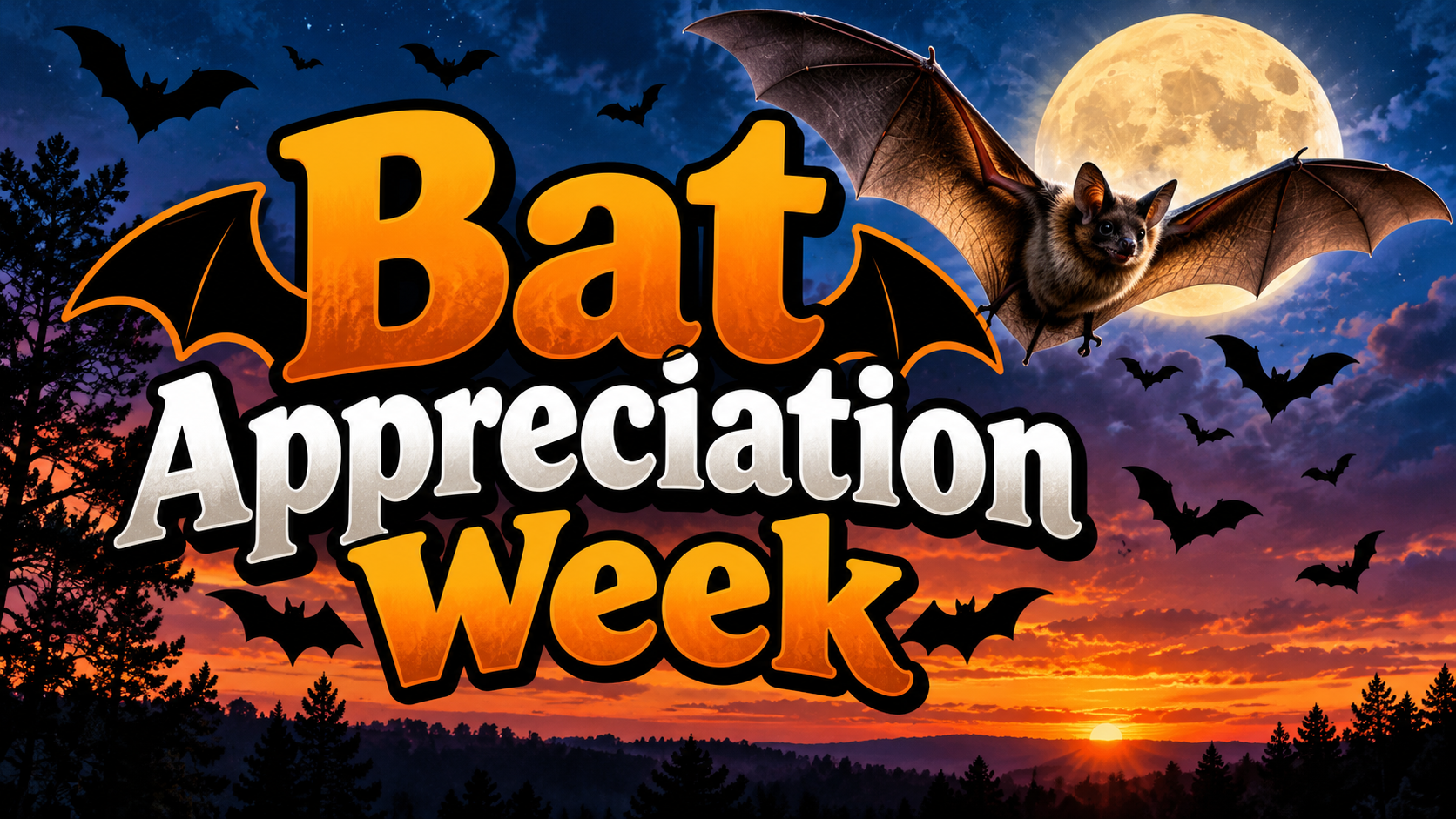
Every year, Bat Appreciation Week gives us an opportunity to recognize one of nature’s most fascinating, misunderstood, and important animals: bats. Often associated with Halloween, haunted houses, and spooky stories, bats are far more than creatures of the night. They are essential members of ecosystems around the world, helping control insect populations, pollinate plants, spread seeds, and maintain the delicate balance of nature.
Bat Appreciation Week is celebrated annually from October 24 through October 31, making it a fitting observance during the Halloween season. While bats frequently appear in frightening decorations and scary movies, this special week encourages people to look beyond the myths and discover the incredible contributions bats make to our planet.
From their remarkable ability to navigate in darkness to their important role in agriculture, bats deserve recognition, appreciation, and protection.
What Is Bat Appreciation Week?
Bat Appreciation Week is an annual celebration dedicated to raising awareness about bats, their ecological importance, and the challenges they face in the wild.
The observance encourages individuals, families, schools, conservation organizations, and communities to learn more about these remarkable mammals.
Although bats are sometimes portrayed as dangerous or frightening, most species pose little threat to humans when left undisturbed. In fact, bats provide enormous environmental benefits that often go unnoticed.
Bat Appreciation Week focuses on several important goals:
-
Educating people about bat behavior and biology.
-
Dispelling common myths and misconceptions.
-
Raising awareness about endangered bat species.
-
Encouraging habitat protection and conservation.
-
Highlighting the role bats play in healthy ecosystems.
-
Inspiring people to appreciate wildlife rather than fear it.
By learning about bats, we can better understand why protecting them is important for the future of our environment.
The History of Bat Appreciation Week
Bat Appreciation Week developed as part of broader efforts to educate the public about bats and encourage their conservation.
Conservation organizations, including Bat Conservation International, have worked for decades to change negative perceptions of bats through education, scientific research, and habitat protection.
The final week of October provides a particularly meaningful opportunity to celebrate bats because of their strong association with Halloween.
Instead of focusing exclusively on frightening stories and spooky decorations, the observance encourages people to appreciate the real animals behind those familiar Halloween images.
Over time, Bat Appreciation Week has become an opportunity for wildlife enthusiasts, educators, conservationists, and families to share information about bats and the important roles they play in nature.
Why Are Bats So Important?
Bats are among the most environmentally valuable mammals on Earth.
Their contributions extend far beyond what most people realize.
1. Bats Help Control Insect Populations
Many bat species feed primarily on insects, including moths, beetles, flies, and mosquitoes.
A single small bat can consume hundreds of insects in an hour under favorable feeding conditions.
By feeding on insects, bats help regulate populations that might otherwise damage crops or become nuisances.
This natural pest control benefits farmers, gardeners, and entire ecosystems.
Without insect-eating bats, some agricultural areas could experience increased pest pressure.
2. Bats Help Pollinate Plants
Not all bats eat insects.
Some species feed on nectar and pollen, making them important pollinators.
As these bats move between flowers, they transfer pollen and help plants reproduce.
Certain species of agave, cactus, and tropical plants depend heavily on bats for pollination.
This relationship demonstrates how closely connected bats are to the survival of many plant species.
3. Bats Spread Seeds
Fruit-eating bats play a critical role in maintaining and restoring forests.
When they consume fruit, they often carry seeds away from the parent plant and disperse them across the landscape.
Some seeds pass through the bat’s digestive system and are deposited in new locations.
This process helps forests regenerate, supports biodiversity, and contributes to healthier ecosystems.
In tropical regions, fruit bats are especially important for forest recovery.
4. Bats Support Agriculture
Bats provide valuable services to agricultural communities.
By eating crop-damaging insects and pollinating certain plants, they help support food production.
Their natural pest-control services can reduce crop losses and decrease the need for some chemical pesticides.
Protecting bat populations can therefore benefit both the environment and the agricultural economy.
5. Bats Help Maintain Biodiversity
Bats occupy many different ecological roles.
Some eat insects, others consume fruit or nectar, and a smaller number feed on fish, small animals, or blood.
Their varied diets help maintain balance within food webs.
When bat populations decline, the consequences can extend to plants, insects, predators, and other wildlife.
20 Fascinating Facts About Bats
Bats are extraordinary animals with abilities that make them unique among mammals.
Here are 20 fascinating facts worth knowing during Bat Appreciation Week.
1. Bats are the only mammals capable of sustained powered flight. Flying squirrels and other gliding mammals cannot fly in the same way.
2. There are more than 1,400 recognized bat species worldwide. They represent a remarkable variety of sizes, diets, and habitats.
3. Bats live on every continent except Antarctica. They occupy forests, deserts, grasslands, mountains, and urban environments.
4. Many bats use echolocation. They produce sounds and interpret returning echoes to navigate and locate prey.
5. Not all bats are blind. Bats have functional eyesight, and many species see quite well.
6. Some bats eat fruit. These species help spread seeds and regenerate forests.
7. Certain bats pollinate flowers. Nectar-feeding bats contribute to the reproduction of important plants.
8. Some bats can live for decades. A few small bat species have recorded lifespans exceeding 30 years.
9. Bats often rest upside down. Their specialized feet allow them to hang securely while using little muscular effort.
10. The smallest bats are incredibly tiny. Kitti’s hog-nosed bat, sometimes called the bumblebee bat, weighs only about two grams.
11. The largest bats have impressive wingspans. Some flying foxes can have wingspans approaching five to six feet.
12. Bats are generally nocturnal. Many species are most active after sunset, although some are active during daylight.
13. Some bats migrate. Certain species travel long distances between seasonal habitats.
14. Other bats hibernate. In colder climates, some species conserve energy through extended periods of torpor.
15. Bats communicate using sounds. Their vocalizations can help with social interactions, navigation, and finding food.
16. Most bats give birth to one baby at a time. Reproductive patterns vary, but many species have relatively low birth rates.
17. Baby bats are called pups. Mothers provide milk and care for their young.
18. Bats can form enormous colonies. Some caves shelter millions of bats.
19. Only three living bat species feed primarily on blood. These vampire bats occur in the Americas and generally feed on other animals.
20. Bats are important indicators of environmental health. Changes in bat populations can reflect broader ecological pressures.
Why Are Bats Associated With Halloween?
Bats have long been connected with darkness, mystery, and supernatural folklore.
Their nighttime activity, unusual appearance, and tendency to roost in caves or old buildings helped create an association with frightening stories.
In European folklore, bats sometimes appeared alongside witches, ghosts, and other supernatural figures.
Later, Gothic literature and vampire stories strengthened the connection between bats and Halloween.
Today, bats are common decorations during October, appearing on everything from costumes and candy wrappers to haunted-house displays.
However, the real animals are far more interesting than their fictional portrayals.
Bat Appreciation Week offers an opportunity to enjoy Halloween traditions while learning the truth about these fascinating mammals.
Common Myths About Bats
Despite their ecological importance, bats are surrounded by misconceptions.
Understanding the facts can help reduce unnecessary fear.
Myth: All Bats Are Blind
Bats are not blind.
Most species have functional eyesight, and some rely heavily on vision to find food and navigate their surroundings.
Many also use echolocation to detect objects in darkness.
Myth: Bats Intentionally Fly Into People’s Hair
Bats do not seek out human hair.
Their flight patterns can sometimes appear unpredictable, especially when they are hunting insects near people.
However, their navigation abilities generally allow them to avoid obstacles.
Myth: All Bats Drink Blood
Only three species of vampire bats feed primarily on blood.
The overwhelming majority of bat species consume insects, fruit, nectar, pollen, or other food sources.
Myth: All Bats Carry Rabies
Not all bats have rabies, and most bats encountered in the wild are not infected.
However, bats can carry rabies, and an infected bat may not show obvious symptoms.
Never handle a bat with bare hands. If direct contact occurs, seek medical or public health advice promptly, especially if a bite or scratch is possible.
Myth: Bats Are Aggressive Toward Humans
Bats generally avoid people.
When a bat appears aggressive, it may actually be frightened, injured, or attempting to escape.
Giving bats space is the safest approach for both humans and wildlife.
Threats Facing Bat Populations
Although bats provide enormous environmental benefits, many species face serious challenges.
Habitat Loss
Deforestation, urban development, and land-use changes can destroy important feeding and roosting habitats.
When suitable shelter and food sources disappear, bat populations may struggle to survive.
White-Nose Syndrome
White-nose syndrome is a devastating fungal disease affecting many hibernating bats in North America.
The fungus can disrupt hibernation, causing bats to use critical energy reserves before spring.
The disease has killed millions of bats and contributed to severe population declines in several species.
Climate Change
Changing temperatures, drought, extreme weather, and shifting seasonal patterns can affect bat habitats and food availability.
Some species may struggle to adapt as environmental conditions change.
Human Disturbance
Disturbing bats during hibernation or maternity seasons can have serious consequences.
Waking hibernating bats can force them to expend energy they need to survive winter.
Disturbing maternity colonies can place young bats at risk.
Negative Public Perceptions
Fear and misinformation sometimes lead people to harm bats or destroy their roosting sites unnecessarily.
Education is one of the most effective ways to encourage coexistence and conservation.
How to Celebrate Bat Appreciation Week
There are many meaningful and enjoyable ways to participate in Bat Appreciation Week.
Whether you are a wildlife enthusiast, parent, teacher, or simply curious about nature, you can make a difference.
1. Learn About Local Bat Species
Research the bat species that live in your region.
Discover what they eat, where they roost, and how they contribute to the local ecosystem.
Learning about nearby wildlife can help build a stronger connection with nature.
2. Watch Bats at Sunset
Many bats become active around dusk.
Find a safe outdoor location near a pond, park, woodland, or other suitable habitat and watch the sky as daylight fades.
You may see bats flying overhead as they search for insects.
Observe from a distance without attempting to touch or disturb them.
3. Create a Bat-Friendly Garden
A garden that supports native plants and nighttime insects can provide valuable feeding opportunities for local bats.
Consider planting native flowers, reducing unnecessary pesticide use, and preserving suitable natural habitat.
These actions can benefit bats and other wildlife.
4. Learn About Bat Houses
Bat houses can provide artificial roosting spaces for certain species when they are properly designed and installed.
However, they are not suitable for every bat species or location.
Before installing one, research local bat needs, appropriate placement, and recommended construction standards.
5. Teach Children About Bats
Bat Appreciation Week provides an excellent opportunity for educational activities.
Children can learn about echolocation, mammal characteristics, food chains, and conservation.
Activities might include reading bat books, creating paper bats, drawing bat habitats, or exploring how sound travels.
6. Support Conservation Efforts
Wildlife conservation organizations work to protect bat habitats, study threatened species, and educate communities.
Supporting reputable conservation programs can help protect bats for future generations.
7. Share Interesting Bat Facts
Use Bat Appreciation Week to correct common misconceptions.
Sharing accurate information with friends, family, and social media communities can help people develop a greater appreciation for these animals.
8. Celebrate With Bat-Themed Crafts
Create educational Halloween decorations featuring bats.
Paper cutouts, paintings, handmade ornaments, and classroom displays can combine seasonal creativity with wildlife education.
9. Reduce Outdoor Light Pollution
Excessive artificial lighting can disrupt the behavior of some bat species and the insects they feed on.
Using outdoor lights only when necessary, directing them downward, and choosing appropriate lighting can help reduce disturbances.
10. Respect Natural Bat Habitats
Avoid entering caves or disturbing known roosting locations without appropriate guidance.
If bats are living in a building, seek advice from a qualified wildlife professional about humane exclusion methods and seasonal restrictions.
Protecting bat habitats is one of the most meaningful ways to celebrate this observance.
The Importance of Protecting Bats for Future Generations
Bats are a reminder that every living creature has a role in the natural world.
An animal that seems frightening or unfamiliar may actually provide benefits essential to environmental health.
When bats disappear from an ecosystem, the effects can extend far beyond the loss of a single species.
Insect populations may change, plants may lose important pollinators, and forests may lose valuable seed dispersers.
Conservation is therefore about more than protecting individual animals.
It is about preserving the relationships that allow ecosystems to function.
Teaching future generations about bats can help replace fear with understanding and encourage responsible environmental stewardship.
Children who learn to appreciate wildlife are more likely to recognize the importance of protecting natural habitats as they grow older.
Why Bat Appreciation Week Matters During October
October is often filled with Halloween celebrations, scary movies, haunted attractions, and decorations featuring bats.
While these traditions can be entertaining, they sometimes reinforce the mistaken belief that bats are creatures to fear.
Bat Appreciation Week provides a different perspective.
It encourages people to see bats as remarkable animals rather than frightening symbols.
The timing also creates opportunities for schools, families, and communities to combine Halloween activities with environmental education.
A simple bat decoration can become the beginning of a conversation about biodiversity, conservation, and the importance of protecting wildlife.
By transforming curiosity into knowledge, Bat Appreciation Week can inspire a greater respect for nature.
Small Actions Can Make a Big Difference
Protecting bats does not require becoming a wildlife scientist or conservation expert.
Everyday decisions can help support healthier habitats.
Planting native vegetation, minimizing unnecessary pesticide use, protecting mature trees where appropriate, reducing light pollution, and avoiding disturbances to wildlife can all make a difference.
Communities can also support responsible conservation policies and educational programs.
Even sharing accurate information about bats can help reduce fear and encourage more compassionate treatment of these animals.
When many people take small positive actions, the combined impact can be meaningful.
The Beauty of Understanding What We Once Feared
One of the most meaningful lessons of Bat Appreciation Week is that fear often comes from misunderstanding.
For generations, bats have been portrayed as mysterious, dangerous, or frightening.
Yet science reveals a very different story.
Bats are intelligent, adaptable, and ecologically important mammals with extraordinary abilities.
Their wings allow them to navigate the night skies, their feeding habits support ecosystems, and their presence contributes to the natural balance of our planet.
Learning about bats reminds us that appearances do not always tell the full story.
Sometimes the creatures we fear most are among those we should appreciate.
Final Thoughts: Celebrating Bat Appreciation Week
Bat Appreciation Week, observed October 24–31, is more than an opportunity to recognize an unusual animal. It is a celebration of biodiversity, environmental education, and the importance of protecting the natural world.
Bats help control insects, pollinate plants, spread seeds, and maintain healthy ecosystems. Despite their contributions, many species face threats from habitat destruction, disease, climate change, and human misunderstanding.
By learning about bats, sharing accurate information, and supporting responsible conservation, we can help protect these remarkable creatures.
This Halloween season, when you see a bat flying across the evening sky or hanging among seasonal decorations, remember that the real animal represents something far more valuable than a spooky symbol.
It represents an important part of nature’s extraordinary design.
Bats are not simply creatures of the night. They are essential contributors to life on Earth, and they deserve our appreciation, understanding, and protection.
As we celebrate Bat Appreciation Week, consider this question:
What is one fascinating fact you have learned about bats, and has it changed the way you see these remarkable animals?


Leave a Reply