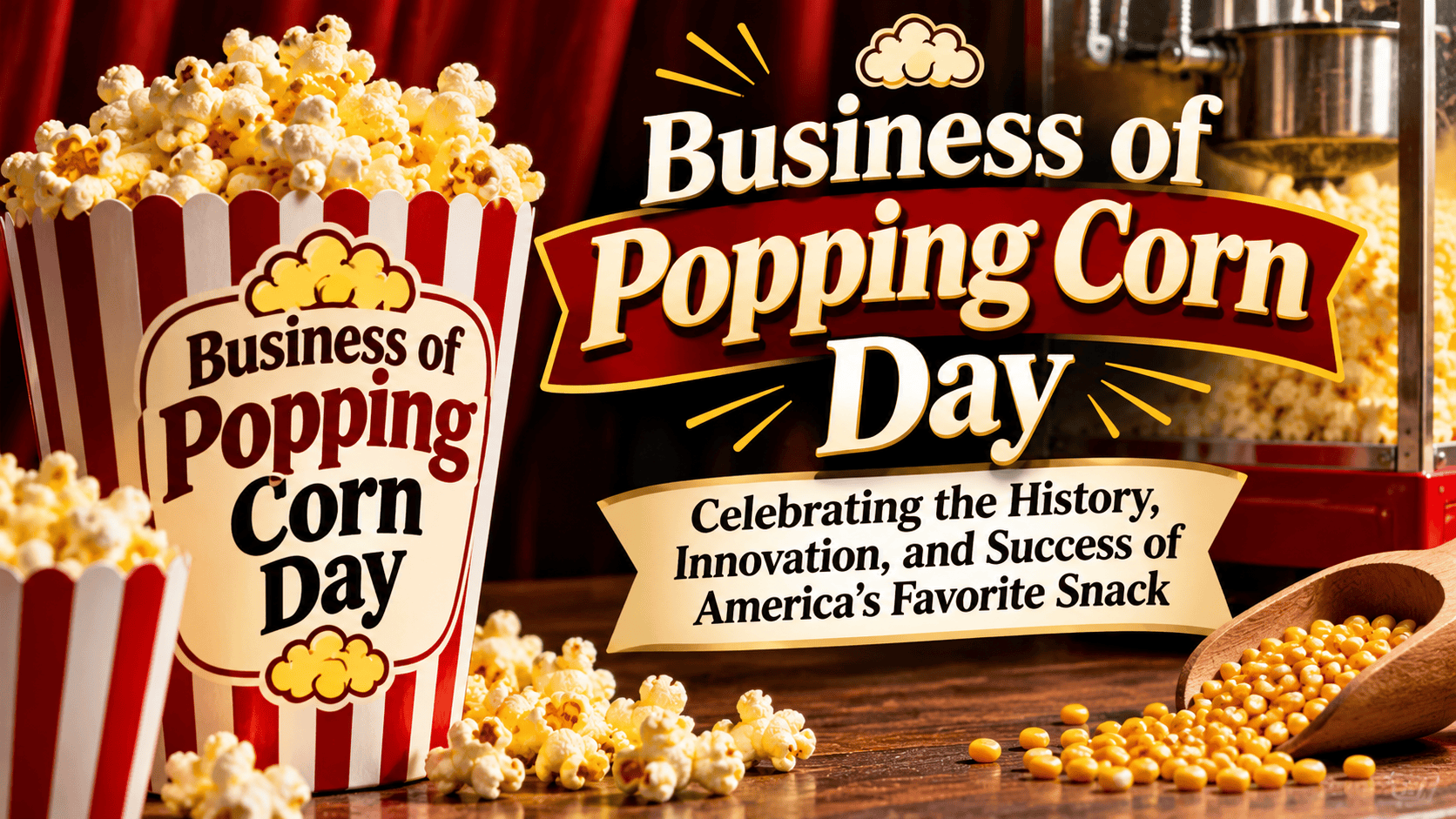
Every year on December 2, Business of Popping Corn Day celebrates one of America’s most beloved snacks and the fascinating industry that transformed a simple corn kernel into a worldwide favorite. From neighborhood popcorn stands to movie theater concessions and modern gourmet popcorn companies, popcorn has become much more than something to eat. It represents entrepreneurship, innovation, tradition, and the power of turning a simple idea into a successful business.
Popcorn has been enjoyed for thousands of years, but its commercial success is a remarkable American business story. What began as an inexpensive snack eventually developed into an industry that includes farmers, manufacturers, equipment makers, retailers, and specialty food entrepreneurs.
Business of Popping Corn Day offers an opportunity to explore popcorn’s history, recognize the people who helped popularize it, and appreciate the creativity behind an enduring snack business.
When Is Business of Popping Corn Day?
Business of Popping Corn Day is observed annually on December 2.
The observance highlights the commercial history of popcorn, particularly the inventions and entrepreneurial developments that helped transform popcorn into a popular American snack.
December 2 is also associated with an important milestone in popcorn history: Charles Cretors received a patent for an improvement to his popcorn-popping apparatus on December 2, 1885.
His inventions helped establish the foundation for modern commercial popcorn production and made it easier for vendors to prepare and sell freshly popped corn.
Although the precise origins of the modern observance are not well documented, its connection to popcorn entrepreneurship provides an interesting reason to celebrate.
The History of Popcorn: From Ancient Food to Modern Business
Popcorn’s Ancient Beginnings
Popcorn existed long before movie theaters, amusement parks, and commercial snack companies.
Archaeological discoveries show that people in the Americas were popping corn thousands of years ago. Indigenous communities cultivated different varieties of maize and developed numerous ways to prepare and enjoy it.
Unlike ordinary sweet corn, popcorn contains a special combination of moisture and a hard outer shell that allows it to burst when heated.
As the kernel becomes hotter, the moisture inside turns into steam. Pressure builds until the outer shell breaks, causing the starch inside to expand into the fluffy snack we recognize today.
This remarkable natural process eventually became the foundation of a successful commercial industry.
Popcorn Becomes Popular in America
During the nineteenth century, popcorn became increasingly popular throughout the United States.
Street vendors discovered that freshly popped corn was inexpensive to produce, easy to transport, and appealing to customers.
Popcorn sellers began appearing at fairs, festivals, sporting events, and public gatherings.
The snack had several advantages for small business owners. Corn kernels could be stored relatively easily, equipment could be operated in public spaces, and the smell of fresh popcorn naturally attracted potential customers.
These qualities made popcorn an appealing business opportunity for entrepreneurs with limited financial resources.
Charles Cretors and the Invention That Changed Popcorn Forever
One of the most important figures in commercial popcorn history was Charles Cretors, an American inventor and entrepreneur.
During the 1880s, Cretors worked on improving machines used to roast peanuts and pop corn.
He developed steam-powered equipment designed to produce popcorn more consistently and efficiently than many earlier methods.
His improvements helped vendors prepare popcorn in larger quantities while maintaining greater control over the cooking process.
On December 2, 1885, Cretors received a United States patent related to his popping apparatus.
This innovation helped make popcorn vending more practical and profitable.
The World’s Columbian Exposition of 1893
Another important moment occurred during the 1893 World’s Columbian Exposition in Chicago.
Cretors demonstrated his popcorn-making equipment to visitors, helping introduce his machinery to a wider audience.
The exposition attracted enormous public attention and provided an excellent opportunity to showcase new technologies.
His popcorn machines demonstrated how mechanical innovation could transform a familiar food into a scalable commercial product.
The success of popcorn vending equipment contributed to the expansion of popcorn businesses throughout the country.
Today, Charles Cretors remains an important name in the history of commercial popcorn equipment.
How Popcorn Became a Movie Theater Tradition
It is difficult to imagine visiting a movie theater without encountering the familiar smell of buttery popcorn.
However, popcorn was not always welcomed inside theaters.
During the early twentieth century, many movie theater owners initially discouraged food because they wanted to maintain clean, elegant surroundings.
That attitude gradually changed.
The Great Depression Changed Everything
During the Great Depression of the 1930s, Americans searched for affordable forms of entertainment and inexpensive treats.
Popcorn was relatively cheap, making it attractive to families watching their spending.
Street vendors often sold popcorn outside theaters, where moviegoers could purchase a snack before entering.
Eventually, theater owners recognized the financial opportunity.
Selling popcorn directly to customers could generate additional revenue, especially when ticket sales alone were not enough to sustain a business.
Popcorn concessions became an important part of theater operations.
Why Popcorn Became So Profitable
Popcorn offered movie theaters several business advantages:
-
Unpopped kernels were relatively inexpensive.
-
Fresh popcorn could be prepared quickly.
-
Customers enjoyed eating it while watching movies.
-
The smell helped encourage additional purchases.
-
Concession sales provided revenue beyond ticket purchases.
Over time, popcorn and movies became closely associated in American culture.
Even today, popcorn remains one of the most recognizable symbols of the moviegoing experience.
The Business of Popcorn Today
The popcorn industry has expanded far beyond traditional movie theater concessions.
Modern popcorn businesses serve customers through grocery stores, online shops, entertainment venues, specialty retailers, and direct-to-consumer brands.
Several different business models contribute to the industry’s success.
1. Movie Theater Popcorn
Movie theaters remain closely associated with popcorn.
Concession stands offer different sizes, seasonings, and combinations designed to complement the moviegoing experience.
For many customers, purchasing popcorn is part of the entertainment tradition rather than simply a food purchase.
2. Microwave Popcorn
Microwave popcorn changed how Americans prepared popcorn at home.
Instead of using a stovetop or specialized machine, consumers could prepare a convenient snack in minutes.
Commercial microwave popcorn products became widely popular during the 1980s.
The convenience of microwave popcorn helped manufacturers reach households that wanted a quick and affordable snack.
3. Ready-to-Eat Popcorn
Prepackaged popcorn is another major segment of the snack market.
Companies sell varieties such as:
-
Butter-flavored popcorn
-
White cheddar popcorn
-
Caramel popcorn
-
Kettle corn
-
Spicy popcorn
-
Lightly salted popcorn
-
Sweet-and-salty popcorn
Ready-to-eat products appeal to customers who want convenience without preparation.
4. Gourmet Popcorn Shops
Specialty popcorn businesses have introduced creative flavors and attractive packaging.
Gourmet popcorn is frequently marketed as a gift, party favor, holiday treat, or premium snack.
Popular gourmet combinations include caramel and cheddar, chocolate-drizzled popcorn, cinnamon sugar, and specialty cheese blends.
Some companies create seasonal collections and customized gift tins.
These businesses demonstrate how branding and product creativity can add value to a familiar snack.
5. Small Popcorn Businesses
Popcorn remains an accessible concept for entrepreneurs interested in food vending.
Small businesses may operate at farmers markets, festivals, sporting events, fairs, and community celebrations.
Others focus on online sales, corporate gifts, fundraising, or specialty snack subscriptions.
Although starting a food business requires planning, equipment, permits, and careful attention to safety regulations, popcorn offers opportunities for creative entrepreneurs.
Why Popcorn Is Such a Successful Business Product
Popcorn’s commercial success is not accidental.
Several characteristics make it particularly attractive to food businesses.
Affordable Ingredients
Unpopped popcorn kernels are generally inexpensive compared with many prepared snack ingredients.
However, businesses must also account for labor, packaging, equipment, rent, utilities, seasonings, and transportation.
Long Shelf Life of Unpopped Kernels
Properly stored popcorn kernels can remain usable for an extended period.
Their storage advantages help businesses manage inventory, although quality and popping performance can decline if kernels lose too much moisture.
Customizable Flavors
Popcorn works with a wide variety of sweet, salty, spicy, and savory seasonings.
This versatility allows businesses to develop products for different customer preferences.
Strong Cultural Connections
Popcorn is associated with movies, family gatherings, holidays, fairs, and celebrations.
These emotional and cultural connections help maintain consumer interest.
Attractive Product Presentation
Popcorn can be sold in paper bags, buckets, decorative tins, resealable pouches, and gift boxes.
Creative packaging helps businesses distinguish their products and appeal to specific markets.
Interesting Facts About Popcorn
Popcorn has several fascinating characteristics that contribute to its popularity.
Popcorn is a whole grain. Plain air-popped popcorn provides fiber and can be part of a balanced diet.
Not every corn variety will pop. Popcorn comes from varieties of maize with the necessary hull structure and moisture characteristics.
Popcorn kernels expand dramatically. A kernel can expand many times its original volume when popped.
Americans enjoy popcorn throughout the year. Although movie theaters are strongly associated with popcorn, it is also popular at home, sporting events, and holiday celebrations.
Popcorn can be prepared in several ways. Air poppers, stovetop pans, microwave bags, and commercial machines all provide different methods of preparation.
Popcorn has an important agricultural connection. Farmers grow popcorn as a specialized crop, and the United States is a significant producer.
How to Celebrate Business of Popping Corn Day
There are many ways to recognize the history and commercial success of popcorn on December 2.
Support a Local Popcorn Business
Visit a local popcorn shop or purchase from a small vendor.
Supporting independent businesses helps recognize the entrepreneurial spirit behind the popcorn industry.
Try a New Popcorn Flavor
Experiment with flavors beyond traditional butter and salt.
Consider cinnamon sugar, parmesan cheese, garlic seasoning, caramel, or chili lime.
Host a Popcorn Movie Night
Celebrate popcorn’s connection to entertainment by organizing a movie night with family or friends.
Prepare several varieties and let everyone choose their favorite.
Learn About Charles Cretors
Explore the history of commercial popcorn machines and the inventions that helped popcorn become a successful business.
His story offers an example of how improving an existing product can create new commercial opportunities.
Make Homemade Popcorn
Prepare popcorn using a stovetop, air popper, or another suitable method.
Homemade popcorn allows you to control the ingredients and experiment with different flavors.
Share Popcorn With Others
Prepare individual popcorn bags for coworkers, neighbors, friends, or family members.
A simple snack can become a thoughtful gesture.
How to Start a Small Popcorn Business
Business of Popping Corn Day can also inspire people who are interested in entrepreneurship.
A popcorn business may seem straightforward, but long-term success requires more than producing a tasty snack.
Step 1: Choose Your Business Model
Decide whether to operate a mobile stand, retail shop, online store, event concession, or wholesale business.
Each model involves different startup expenses and operating requirements.
Step 2: Identify Your Customers
Consider whether your ideal customers are moviegoers, festival visitors, families, corporate gift buyers, or specialty food enthusiasts.
Understanding your audience helps guide pricing, flavors, and packaging.
Step 3: Develop Your Products
Create a small menu of reliable flavors before expanding.
Test recipes for consistency, taste, texture, and shelf life.
Step 4: Research Equipment and Regulations
Commercial popcorn machines, food-safe preparation spaces, packaging materials, and sanitation supplies may be necessary.
Local food safety rules, permits, licensing requirements, and labeling laws can vary depending on where and how products are sold.
Step 5: Calculate Your Costs
Include ingredients, packaging, equipment, labor, utilities, insurance, marketing, and other operating expenses.
A profitable selling price must cover the full cost of operating the business, not merely the cost of the kernels.
Step 6: Build a Recognizable Brand
A memorable business name, attractive packaging, and consistent product quality can help distinguish a popcorn company from competitors.
Step 7: Start Small and Grow Carefully
Test products at local events or through permitted sales channels before investing heavily in expansion.
Customer feedback can reveal which flavors, package sizes, and price points work best.
The history of commercial popcorn demonstrates that successful businesses often begin by solving simple problems and improving everyday experiences.
The Economic and Cultural Importance of Popcorn
Popcorn supports a network of industries beyond the companies that sell the finished snack.
Farmers cultivate popcorn crops, equipment manufacturers develop popping machinery, packaging companies create containers, and transportation providers move products to retailers.
Movie theaters, entertainment venues, grocery stores, and independent vendors all participate in the commercial popcorn market.
The industry also illustrates the importance of innovation in American business history.
Charles Cretors did not invent popcorn itself. Instead, he improved the equipment used to prepare and sell it.
That distinction is important.
Many successful businesses do not depend on inventing an entirely new product. They succeed by finding better ways to manufacture, distribute, market, or present something people already enjoy.
Popcorn is an enduring example of that principle.
Frequently Asked Questions About Business of Popping Corn Day
When is Business of Popping Corn Day celebrated?
Business of Popping Corn Day is observed every year on December 2.
What is the purpose of Business of Popping Corn Day?
The observance recognizes the history, inventions, entrepreneurs, and commercial developments that helped transform popcorn into a widely enjoyed snack.
Who helped create the modern popcorn business?
Charles Cretors was an important pioneer in commercial popcorn equipment. His steam-powered machines and related inventions helped improve the preparation and sale of popcorn.
Why is December 2 important in popcorn history?
On December 2, 1885, Charles Cretors received a patent related to his popcorn-popping apparatus, marking an important milestone in commercial popcorn machinery.
Why is popcorn associated with movie theaters?
Popcorn became especially popular at movie theaters during the Great Depression because it was an affordable snack and provided theater operators with additional revenue.
Can popcorn be a profitable small business?
Popcorn can support a profitable business when pricing, demand, operating costs, product quality, and marketing are managed effectively. Profitability depends on the individual business model and market conditions.
Is popcorn a healthy snack?
Plain air-popped popcorn is a whole grain that provides dietary fiber. Its nutritional profile changes when large amounts of butter, sugar, salt, or other toppings are added.
Final Thoughts: Celebrating the Business Behind Every Kernel
Business of Popping Corn Day is more than a celebration of a delicious snack. It recognizes the creativity, determination, and innovation that helped transform popcorn into an important part of American food culture.
From ancient agricultural traditions to Charles Cretors’ commercial machinery, popcorn’s history demonstrates how a simple product can evolve through generations of invention and entrepreneurship.
Its journey from street carts to movie theaters, grocery stores, and gourmet shops reflects the ability of businesses to adapt to changing consumer preferences while preserving familiar traditions.
On December 2, take a moment to enjoy your favorite popcorn, support a small business, or learn something new about the people who helped make this snack so successful.
Sometimes, the greatest business ideas begin with something surprisingly simple.
And in the case of popcorn, one little kernel helped inspire an entire industry.

Leave a Reply