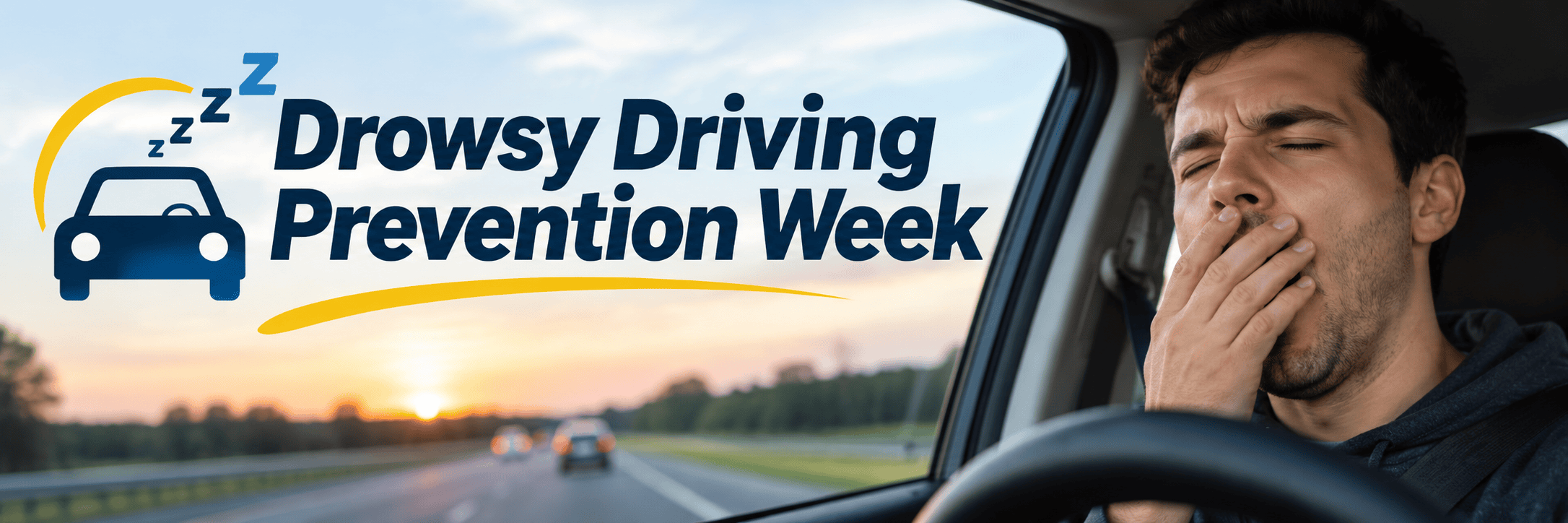
Every time we get behind the wheel, we take responsibility not only for our own safety but also for the lives of our passengers, other drivers, pedestrians, and everyone sharing the road. While most people understand the dangers of speeding, distracted driving, and driving under the influence, another serious threat often goes overlooked: drowsy driving.
Drowsy Driving Prevention Week, observed November 1–7, 2026, raises awareness about the dangers of driving while tired and encourages motorists to recognize the warning signs of fatigue before a preventable tragedy occurs.
Falling asleep behind the wheel can happen in seconds, but the consequences can last a lifetime. Understanding the risks, developing healthy sleep habits, and making responsible driving decisions can help protect families and communities.
What Is Drowsy Driving Prevention Week?
Drowsy Driving Prevention Week is an annual awareness campaign promoted by the National Sleep Foundation to educate the public about the relationship between sleep, alertness, and roadway safety.
The observance highlights a simple but important message: Driving while dangerously tired can be just as serious a safety concern as other forms of impaired driving.
Many people underestimate how much fatigue affects their ability to operate a vehicle. Someone who has been awake for too long may believe they can safely make it home, finish a long trip, or drive a few more miles.
Unfortunately, fatigue can impair judgment, slow reaction times, reduce concentration, and make it difficult to recognize dangerous situations.
The purpose of this awareness week is to encourage drivers to prioritize adequate sleep and understand when they are too tired to drive safely.
When Is Drowsy Driving Prevention Week in 2026?
Drowsy Driving Prevention Week takes place from Sunday, November 1, through Saturday, November 7, 2026.
The campaign coincides with the beginning of November, when daylight saving time ends in much of the United States. Although the time change provides an additional hour on the clock, disruptions to sleep schedules and changes in daylight can affect driving conditions and alertness.
The week provides an opportunity for individuals, families, employers, schools, and community organizations to discuss fatigue-related driving risks.
Why Is Drowsy Driving So Dangerous?
Driving requires constant attention, quick decision-making, and the ability to respond to unexpected situations.
When a person is sleep-deprived, these abilities can become significantly impaired.
Fatigue can affect driving performance in several ways.
1. Slower Reaction Times
A tired driver may take longer to respond when another vehicle suddenly stops, a pedestrian enters the roadway, or traffic conditions change.
Even a small delay can make the difference between avoiding a collision and being involved in one.
2. Reduced Concentration
Fatigue makes it harder to maintain attention for extended periods.
Drivers may miss traffic signs, overlook changes in speed limits, or fail to notice vehicles entering their lane.
3. Poor Decision-Making
Sleep deprivation can interfere with judgment and risk assessment.
A tired driver may misjudge distances, underestimate their level of impairment, or continue driving when stopping would be the safer decision.
4. Microsleep Episodes
One of the most dangerous effects of severe fatigue is microsleep.
Microsleep occurs when a person briefly falls asleep for a few seconds, sometimes without realizing it.
At 60 miles per hour, a vehicle travels approximately 440 feet in five seconds.
That means a driver who falls asleep for only five seconds could travel more than the length of a football field without actively controlling the vehicle.
5. Loss of Vehicle Control
Severe drowsiness can cause drivers to drift between lanes, miss curves, or leave the roadway entirely.
Unlike some other dangerous driving behaviors, falling asleep can leave a driver unable to take any corrective action before a crash occurs.
How Common Is Drowsy Driving?
Drowsy driving is a significant public safety concern throughout the United States.
The National Highway Traffic Safety Administration reported 633 deaths in police-reported crashes involving drowsy drivers in 2023.
However, experts believe fatigue-related crashes are frequently underreported because determining whether a driver was sleepy at the time of a collision can be difficult.
Unlike alcohol impairment, there is no routine roadside test that reliably establishes how sleepy a driver was before a crash.
As a result, the actual number of fatigue-related incidents may be considerably higher than official statistics suggest.
These crashes represent more than numbers. Every fatal collision can leave families grieving, communities mourning, and loved ones facing a loss that can never be undone.
Warning Signs That You Are Too Tired to Drive
Recognizing the early signs of fatigue can prevent a dangerous situation from becoming a tragedy.
Some common warning signs include:
-
Frequent yawning or blinking
-
Heavy eyelids or difficulty keeping your eyes open
-
Trouble remembering the last few miles driven
-
Missing road signs, exits, or turns
-
Drifting out of your lane
-
Hitting rumble strips along the roadway
-
Difficulty maintaining a consistent speed
-
Feeling restless, irritable, or unable to concentrate
-
Repeatedly adjusting your position to stay awake
-
Briefly nodding off while driving
If you experience any of these symptoms, do not assume you can simply push through them.
The safest response is to stop driving as soon as you can reach a safe location.
Turning up the radio, opening a window, or increasing the air conditioning may make you feel temporarily more alert, but these actions do not eliminate sleep deprivation.
Who Is Most at Risk for Drowsy Driving?
Although anyone can become dangerously tired behind the wheel, certain groups face increased risks.
Young Drivers
Teenagers and young adults may be especially vulnerable because of irregular sleep schedules, late-night activities, academic responsibilities, and early morning commitments.
Young drivers may also underestimate how quickly fatigue can affect their driving abilities.
Shift Workers
People who work overnight or rotating shifts often experience disruptions to their natural sleep-wake cycles.
Healthcare workers, emergency responders, factory employees, and others who work unusual hours may struggle to obtain consistent, restorative sleep.
Commercial Drivers
Truck drivers, delivery drivers, and others who spend long periods on the road may encounter fatigue because of extended driving hours, demanding schedules, and insufficient rest.
Following required rest periods and recognizing personal fatigue limits are essential.
People With Sleep Disorders
Conditions such as obstructive sleep apnea can interfere with sleep quality and cause excessive daytime sleepiness.
People who regularly experience unexplained fatigue should discuss their symptoms with a healthcare professional.
Drivers Taking Certain Medications
Some prescription medications and over-the-counter products can cause drowsiness.
Antihistamines, sleep aids, certain pain medications, and other drugs may affect alertness.
Always read medication warnings and ask a pharmacist or healthcare professional whether a medication could impair driving.
10 Ways to Prevent Drowsy Driving
Preventing fatigue-related crashes begins before a driver starts the engine.
1. Get Enough Sleep
Most adults should aim for seven to nine hours of sleep each night.
Teenagers generally need eight to ten hours.
Getting consistent, sufficient sleep is one of the most effective ways to reduce fatigue-related driving risks.
2. Avoid Driving When Extremely Tired
If you are struggling to stay awake, postpone your trip whenever possible.
Arriving late is better than risking a serious collision.
3. Plan Long Road Trips Carefully
Schedule adequate rest before departure and avoid beginning a long drive after an exhausting workday.
Plan opportunities to stop, stretch, and assess your alertness.
4. Take Regular Breaks
During long drives, consider stopping approximately every two hours or 100 miles.
Breaks can help you assess your condition, although they cannot replace adequate sleep.
5. Share Driving Responsibilities
When traveling with another licensed and rested driver, take turns behind the wheel.
Sharing driving responsibilities can reduce prolonged periods of fatigue.
6. Avoid Alcohol Before Driving
Alcohol can increase sleepiness and impair coordination, judgment, and reaction times.
Combining alcohol with fatigue creates additional danger.
7. Check Medication Side Effects
Review warning labels before driving, particularly when starting a new medication.
Never assume an over-the-counter medicine is automatically safe to use before operating a vehicle.
8. Recognize Your Natural Sleep Schedule
Many people experience increased sleepiness during the late-night and early-morning hours, particularly between midnight and 6 a.m.
Another period of reduced alertness commonly occurs during the midafternoon.
Avoid driving during your sleepiest hours when possible.
9. Stop and Rest When Necessary
If you become sleepy while driving, pull into a safe, legal parking area.
A short nap of approximately 20 minutes may temporarily improve alertness. Caffeine can also provide a temporary benefit, but neither is a substitute for sufficient sleep.
If you remain drowsy, do not resume driving.
10. Make Safety More Important Than Your Schedule
Appointments, work commitments, vacations, and deadlines should never become reasons to drive while dangerously fatigued.
A delayed arrival is an inconvenience. A preventable crash can change lives forever.
What Should You Do If You Start Falling Asleep While Driving?
If you notice yourself becoming dangerously tired, take immediate action.
First, recognize that you may no longer be capable of safely operating your vehicle.
Next, locate a safe place to stop, such as a designated rest area, appropriate parking lot, or another legal location away from moving traffic.
Do not stop on the shoulder of a busy highway unless an emergency makes it unavoidable.
Once parked, arrange for another rested driver, take a short nap if appropriate, or find a safe place to sleep.
If you are too tired to continue, consider staying overnight or using alternative transportation.
Most importantly, do not return to the road until you are sufficiently alert to drive safely.
The Connection Between Sleep and Road Safety
Sleep is not simply a period of rest. It is an essential biological process that supports memory, concentration, emotional regulation, and physical recovery.
When sleep is consistently inadequate, the brain becomes less capable of maintaining attention and responding quickly to changing situations.
Research has shown that prolonged wakefulness can produce impairment comparable in some respects to alcohol intoxication.
For example, laboratory research has found that being awake for approximately 17 hours can produce performance impairment comparable to a blood alcohol concentration of 0.05%, although the effects vary by person and task.
This comparison does not mean fatigue and alcohol affect every driver identically. It illustrates how seriously insufficient sleep can compromise performance.
Healthy sleep habits are therefore an important part of responsible driving.
How Parents Can Teach Teenagers About Drowsy Driving
Parents and caregivers play an important role in helping young drivers develop safe habits.
Teenagers often balance school, sports, part-time jobs, friendships, and extracurricular activities.
These responsibilities can lead to irregular sleep schedules and late-night driving.
Parents can help by discussing the dangers of fatigue, encouraging consistent sleep routines, and making it clear that teenagers should never feel pressured to drive while exhausted.
Families can also establish an understanding that a teenager may call for a ride if they are too tired to drive safely.
The goal should be to encourage responsible decisions rather than punish someone for recognizing an unsafe situation.
Teaching young drivers that sleep is a safety priority can help establish habits that last throughout adulthood.
How Employers Can Help Prevent Drowsy Driving
Businesses and organizations also have an opportunity to reduce fatigue-related risks.
Employers whose workers operate vehicles, travel frequently, or work overnight shifts should recognize that fatigue can affect both workplace safety and the journey home.
Helpful measures include establishing reasonable schedules, encouraging adequate rest, providing fatigue-awareness education, and avoiding workplace cultures that reward employees for pushing through exhaustion.
Organizations can also encourage workers to report fatigue concerns without fear of unnecessary punishment.
A strong safety culture recognizes that well-rested employees are better equipped to protect themselves and others.
How to Observe Drowsy Driving Prevention Week
Drowsy Driving Prevention Week offers several opportunities to encourage safer driving habits.
Individuals can use the week to evaluate their sleep routines, discuss fatigue with family members, and make a commitment to avoid driving while sleepy.
Schools can incorporate fatigue awareness into driver education programs.
Employers can share educational materials and review policies that may contribute to excessive fatigue.
Community organizations can use newsletters, social media, and public safety campaigns to remind residents about the dangers of insufficient sleep.
One simple message can make a meaningful difference:
If you are too tired to stay fully alert, you are too tired to drive.
Sharing that message may encourage someone to postpone a trip, request a ride, or stop to rest before an accident occurs.
Why Drowsy Driving Prevention Week Matters to Families
Every person on the road is connected to someone.
Behind every steering wheel is a parent, child, spouse, sibling, friend, or loved one whose safe arrival matters.
When a preventable crash takes a life, the consequences extend far beyond the roadway.
Families may face birthdays, holidays, and ordinary days without someone they love. The empty seat at the dinner table becomes a painful reminder of a life that ended too soon.
That is why awareness campaigns such as Drowsy Driving Prevention Week are so important.
They remind us that responsible driving is not only about following traffic laws. It is also about recognizing our limitations and making choices that protect human lives.
No destination, appointment, or deadline is worth someone losing their life.
Frequently Asked Questions About Drowsy Driving Prevention Week
When is Drowsy Driving Prevention Week 2026?
Drowsy Driving Prevention Week is observed November 1–7, 2026, to promote awareness of fatigue-related driving risks and the importance of adequate sleep.
Who organizes Drowsy Driving Prevention Week?
The National Sleep Foundation promotes Drowsy Driving Prevention Week as part of its public education efforts surrounding sleep health and safety.
Can you get a ticket for driving while tired?
Laws vary by state. Although there is not a universal law specifically prohibiting all drowsy driving, a fatigued driver may face penalties under reckless driving, careless driving, or other traffic laws when their conduct violates applicable legal standards.
Is drowsy driving as dangerous as drunk driving?
Both can seriously impair driving ability. Fatigue and alcohol affect the body differently, but both can reduce attention, slow reactions, and increase crash risk.
Does drinking coffee prevent drowsy driving?
Caffeine may temporarily increase alertness, but it does not replace sleep. A severely sleep-deprived driver may still experience dangerous lapses in attention even after consuming caffeine.
What is the best way to avoid drowsy driving?
The most effective approach is to obtain adequate sleep before driving, recognize signs of fatigue, avoid driving during periods of extreme sleepiness, and stop when you are no longer fully alert.
Why is drowsy driving difficult to identify after a crash?
Fatigue often leaves no obvious physical evidence. Investigators may rely on driver statements, witness observations, driving patterns, and surrounding circumstances, making some fatigue-related crashes difficult to confirm.
Final Thoughts: Staying Awake Can Save a Life
Drowsy Driving Prevention Week is more than an annual safety campaign. It is a reminder that something as ordinary as getting enough sleep can have life-saving consequences.
Fatigue can affect anyone, regardless of driving experience, age, or confidence behind the wheel.
The most responsible drivers are not necessarily those who can travel the longest distances without stopping. They are the ones who recognize when they need rest and make safety their priority.
As we observe Drowsy Driving Prevention Week from November 1–7, 2026, we can all make a commitment to drive responsibly, prioritize healthy sleep, and encourage others to do the same.
Because every journey should end with someone arriving home safely.
A few extra hours of rest could prevent a lifetime of heartbreak.
What steps do you take to stay alert and safe during long drives, and have you ever had to stop because you were too tired to continue?

Leave a Reply