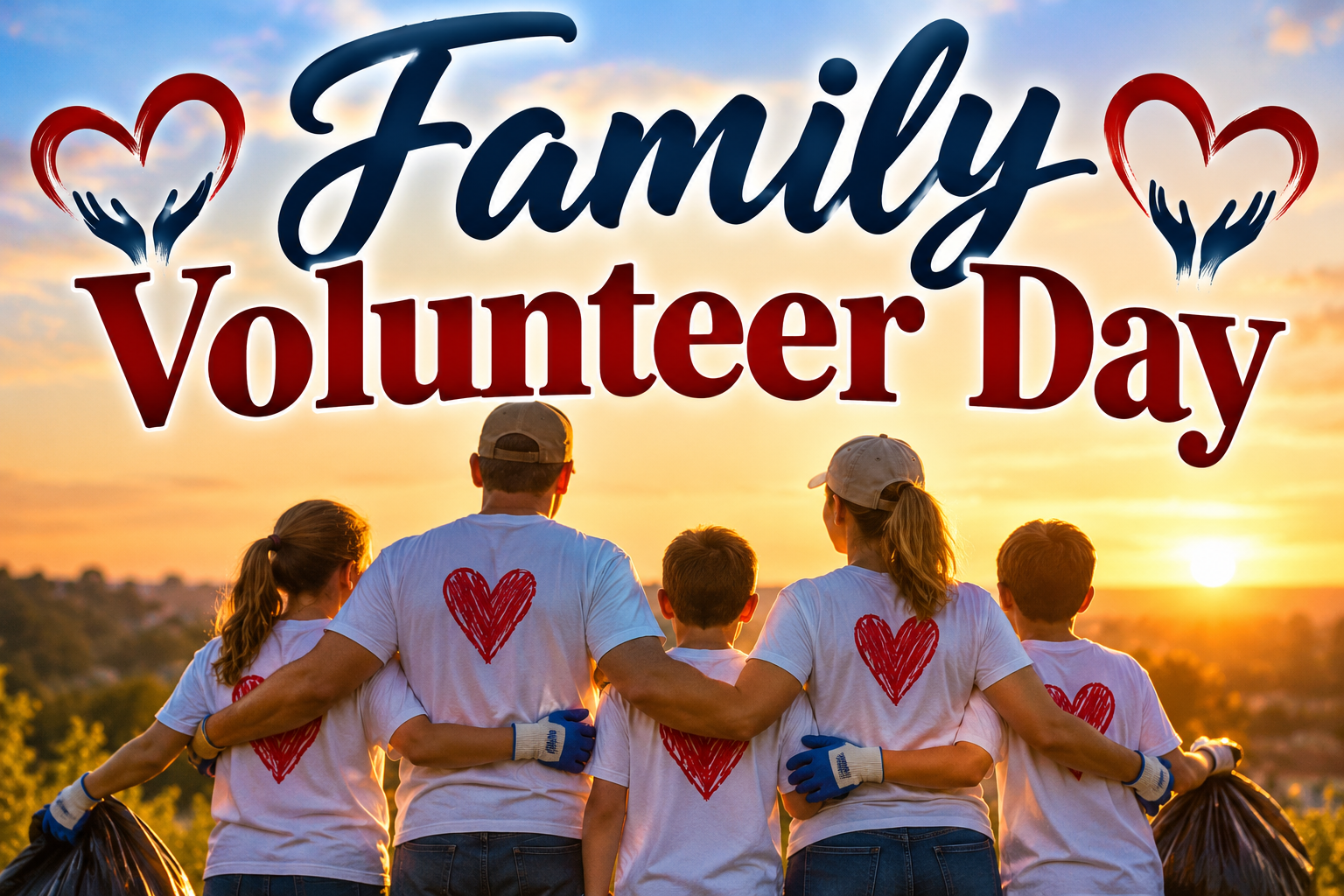
Celebrated on the Saturday before Thanksgiving, Family Volunteer Day reminds us that one of the greatest gifts a family can share is the opportunity to make a difference in someone else’s life.
In a world where busy schedules, work responsibilities, school activities, and everyday distractions often compete for our attention, finding meaningful ways to spend time together can be challenging. Family Volunteer Day encourages families to reconnect through compassion, generosity, and community service.
This special observance celebrates the power of families working together to help others. Whether preparing meals for people experiencing homelessness, collecting donations for families in need, cleaning up a neighborhood park, or visiting older adults who may feel lonely, every act of kindness contributes to a stronger and more caring community.
Family Volunteer Day is about more than volunteering. It is about teaching children the importance of empathy, creating lasting memories, strengthening family relationships, and demonstrating that even small actions can make a meaningful difference.
When Is Family Volunteer Day Celebrated?
Family Volunteer Day takes place annually on the Saturday before Thanksgiving in the United States.
Upcoming observances:
-
2026: Saturday, November 21
-
2027: Saturday, November 20
-
2028: Saturday, November 18
-
2029: Saturday, November 17
-
2030: Saturday, November 23
The timing is especially meaningful because Thanksgiving is traditionally associated with gratitude, generosity, and appreciation for life’s blessings.
Family Volunteer Day provides an opportunity to turn those feelings of gratitude into positive action.
Rather than simply reflecting on what we are thankful for, families are encouraged to share their time, energy, and resources with people who may need additional support.
The History of Family Volunteer Day
Family Volunteer Day was established in 1991 by Points of Light, an organization dedicated to encouraging volunteerism and civic engagement.
The observance was created to promote family involvement in community service and demonstrate how volunteering together can strengthen relationships while addressing important community needs.
Over the years, Family Volunteer Day has grown into a recognized occasion for families, schools, nonprofit organizations, faith communities, and volunteer groups to organize service activities.
The observance also helps introduce younger generations to the importance of civic responsibility.
Children who participate in volunteer activities alongside parents, grandparents, siblings, and other relatives have opportunities to witness compassion in action.
These experiences can shape how young people understand generosity, responsibility, and the importance of helping others.
Why Family Volunteer Day Matters
Volunteering is often viewed as something individuals do to support charitable organizations or community projects. However, when families volunteer together, the benefits extend beyond those receiving assistance.
Family volunteering creates opportunities for shared experiences, meaningful conversations, and personal growth.
1. Strengthening Family Relationships
Spending quality time together is essential for maintaining healthy family relationships.
Volunteering allows family members to work toward a common goal while communicating, cooperating, and supporting one another.
Whether assembling care packages, planting trees, or preparing food donations, families experience the satisfaction of accomplishing something meaningful together.
These shared experiences can become cherished family memories.
2. Teaching Children Compassion
Children often learn important values by observing the behavior of adults.
When parents demonstrate kindness, generosity, and respect for others, they provide examples that children can carry into adulthood.
Volunteering helps young people recognize that people experience different challenges and circumstances.
It encourages them to look beyond their own needs and consider how their actions might improve another person’s life.
3. Building Stronger Communities
Communities thrive when residents actively participate in improving their surroundings.
Volunteer efforts support food banks, shelters, schools, hospitals, environmental organizations, and countless other community programs.
Families who volunteer together contribute to these efforts while developing stronger connections with their neighbors.
4. Encouraging Gratitude
Volunteering can help families develop a deeper appreciation for their own circumstances.
Helping others encourages reflection on the importance of food, housing, friendship, safety, and emotional support.
It also reminds us that gratitude becomes even more meaningful when expressed through generosity.
5. Creating a Tradition of Giving
Family traditions do not always have to revolve around holidays, gifts, or celebrations.
Volunteering can become a meaningful tradition that families continue for generations.
An annual food drive, neighborhood cleanup, or holiday donation project can create a lasting family legacy centered on compassion.
15 Meaningful Ways to Celebrate Family Volunteer Day
Families do not need large budgets or extensive planning to participate.
There are countless ways to volunteer, and many activities can be adapted to accommodate different ages, abilities, and schedules.
1. Volunteer at a Local Food Bank
Help sort donations, pack food boxes, or organize supplies for individuals and families experiencing food insecurity.
Many food banks welcome family volunteer groups, although age requirements may apply.
2. Prepare Care Packages
Create packages containing hygiene products, socks, snacks, and other useful items for people experiencing homelessness.
Work with a local outreach organization to ensure donations meet actual community needs.
3. Clean Up a Neighborhood Park
Gather family members to collect litter and help maintain public spaces.
Contact local park officials about organized cleanup opportunities and follow appropriate safety guidelines.
4. Donate Clothing and Blankets
Go through closets together and collect gently used clothing, jackets, shoes, and blankets.
Donate suitable items to organizations that distribute them to people in need.
5. Support an Animal Shelter
Animal shelters frequently need volunteers to assist with cleaning, organizing supplies, and other approved activities.
Families can also donate pet food, blankets, and toys.
6. Write Letters to Older Adults
Create thoughtful letters or greeting cards for residents of nursing homes and assisted living communities.
A kind message can brighten someone’s day and remind them that they are remembered.
7. Organize a Neighborhood Food Drive
Invite neighbors, friends, and relatives to donate nonperishable food items.
Coordinate with a food pantry before collecting donations to learn which supplies are most needed.
8. Make Holiday Cards for Hospital Patients
Create cheerful cards with encouraging messages for individuals receiving medical care.
Contact hospitals beforehand to confirm whether they accept handmade cards and what guidelines apply.
9. Help an Elderly Neighbor
Offer assistance with appropriate household tasks, yard maintenance, grocery shopping, or other everyday responsibilities.
Sometimes the most meaningful acts of service happen close to home.
10. Participate in a Community Garden
Help plant vegetables, remove weeds, water plants, or maintain shared garden spaces.
Community gardening combines environmental responsibility with opportunities to support local food programs.
11. Donate Books to Children
Collect age-appropriate books for schools, literacy organizations, or community programs that accept donations.
Encourage children to select books they believe other young readers might enjoy.
12. Support Military Families
Participate in approved donation drives or write appreciation letters through organizations serving military personnel and their families.
13. Assemble School Supply Kits
Collect pencils, notebooks, crayons, folders, and other classroom essentials.
Work with schools or community organizations to distribute supplies to students who need them.
14. Help a Local Charity
Contact a nonprofit organization and ask about family-friendly volunteer opportunities.
Possible activities include sorting donations, preparing event materials, or assisting with community outreach projects.
15. Perform Random Acts of Kindness
Not every act of service requires joining an organized volunteer program.
Families can help neighbors, share encouraging messages, or complete thoughtful tasks for people who could use additional support.
The most important part is approaching each activity with genuine compassion.
How to Get Children Excited About Volunteering
Introducing children to volunteerism should be a positive and rewarding experience.
Parents and caregivers can encourage participation by selecting activities that match children’s interests and abilities.
Younger children might enjoy decorating greeting cards, assembling donation bags, or helping organize supplies.
Older children and teenagers may prefer environmental projects, food distribution programs, or community improvement activities.
Allowing children to help choose volunteer opportunities gives them a sense of ownership and responsibility.
Families can also discuss why their chosen activity matters.
For example, before donating food, parents might explain how food pantries help households experiencing financial difficulties.
After volunteering, families can reflect on their experiences.
Ask children what they enjoyed, what surprised them, and how they felt about helping others.
These conversations can transform a simple volunteer activity into a valuable life lesson.
The Emotional Benefits of Helping Others
Helping others can provide a sense of purpose, connection, and personal fulfillment.
Volunteering creates opportunities to build relationships, develop confidence, and experience the satisfaction of contributing to something meaningful.
For families experiencing difficult circumstances, participating in community service may also provide moments of encouragement and connection.
People dealing with grief, loneliness, or major life changes sometimes find meaning in helping others.
However, volunteering should never be viewed as a requirement for healing or a replacement for emotional support.
Everyone experiences challenges differently.
The important thing is recognizing that kindness can create meaningful connections, both for those giving and those receiving assistance.
Celebrating Family Volunteer Day When Your Family Looks Different
Not every family fits the traditional image of parents and children living together.
Families may include grandparents raising grandchildren, single parents, blended households, extended relatives, or close friends who have become chosen family.
Some individuals may also be remembering loved ones who are no longer physically present.
Family Volunteer Day belongs to all of them.
A person volunteering alone in honor of a loved one can still participate in the spirit of the occasion.
Preparing meals, donating to a meaningful cause, or helping someone facing hardship can become a beautiful way to honor a family member’s memory.
Love does not disappear simply because someone’s circumstances have changed.
Sometimes that love finds new expression through the kindness we extend to others.
Making Volunteering a Year-Round Family Tradition
Although Family Volunteer Day occurs once each year, its message should not be limited to a single Saturday.
Families can make community service a regular part of their lives by choosing simple, sustainable activities.
Monthly neighborhood cleanups, seasonal clothing drives, holiday food donations, and regular support for local charities can help establish lasting traditions.
The goal is not to volunteer more hours than everyone else or accomplish the largest project.
The goal is to make compassion a natural part of everyday family life.
Even one hour spent helping another person can make a difference.
Consistency, sincerity, and willingness to serve are often more important than the size of the contribution.
The True Meaning of Family Volunteer Day
Family Volunteer Day reminds us that the strongest families are not necessarily those with the most possessions, the busiest schedules, or the greatest accomplishments.
They are families that find ways to support one another while extending compassion to the world around them.
Volunteering teaches that generosity is not measured solely by money.
Sometimes generosity means offering time, listening to someone who feels forgotten, sharing a meal, or helping a neighbor complete a difficult task.
These moments may seem small, but their impact can extend far beyond a single day.
Children remember the values demonstrated by the people who raise them.
Communities remember the kindness of those who step forward when help is needed.
And families often remember the moments when they came together to accomplish something meaningful.
Final Thoughts
Family Volunteer Day is a celebration of compassion, togetherness, and the incredible difference ordinary people can make through simple acts of service.
As Thanksgiving approaches, this observance encourages families to look beyond their own celebrations and consider how they can bring hope, comfort, and encouragement to others.
Whether volunteering at a food bank, supporting a local charity, cleaning a park, or helping a neighbor, every contribution matters.
The greatest gift we can offer is not always something that can be purchased or wrapped.
Sometimes the greatest gift is simply showing up for someone who needs us.
Because when families come together to help others, they do more than change their communities. They create memories, strengthen relationships, and build a legacy of kindness that can last for generations.
How will you and your family make a difference this Family Volunteer Day?



Leave a Reply