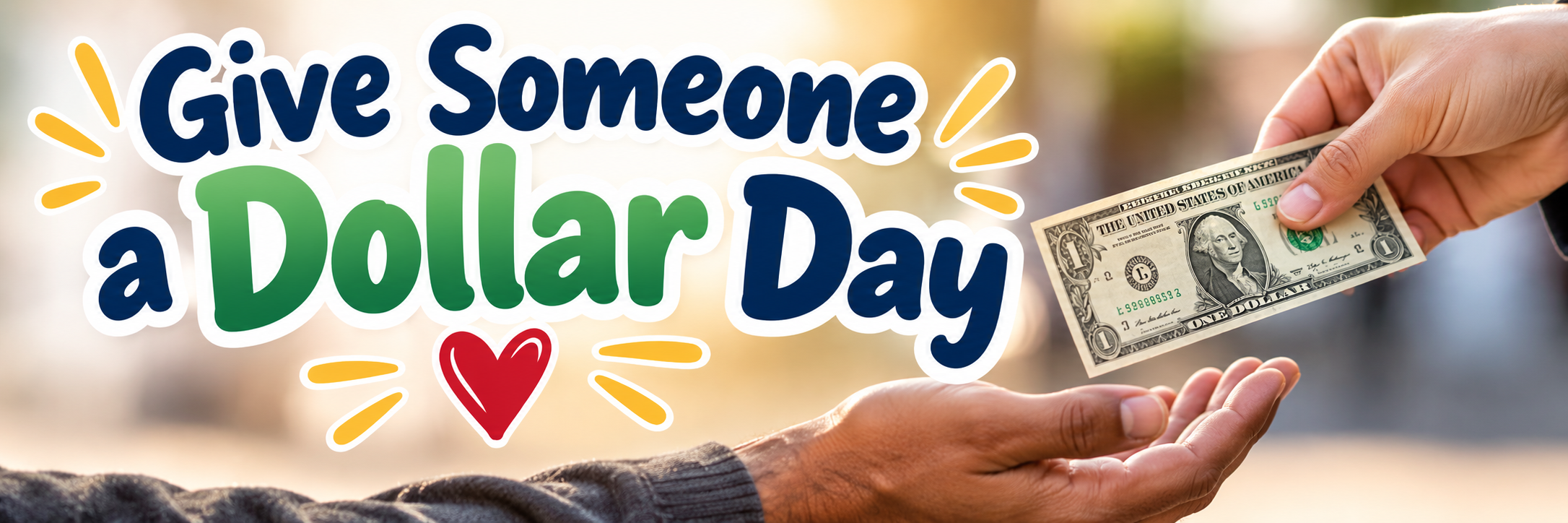
Sometimes One Dollar Can Change Someone’s Day
In a world where everything seems to be getting more expensive, it is easy to believe that making a difference requires a lot of money. We often associate generosity with large donations, expensive gifts, or grand gestures. But what if something as simple as giving someone a single dollar could make a meaningful difference?
That is the beautiful idea behind Give Someone a Dollar Day, a lighthearted celebration that encourages people to practice generosity, spread kindness, and remember that even the smallest gestures can have a positive impact.
A dollar might not seem like much. It may not buy a full meal, pay someone’s rent, or solve a financial problem. However, the true value of giving is not always measured by the amount of money exchanged.
Sometimes, the most important part of giving is letting another person know that someone cares.
Whether you give a dollar to a stranger, help someone who is struggling, contribute to a charitable cause, or surprise a friend with a small gift, this day reminds us that generosity begins with the willingness to give.
And sometimes, one small act of kindness inspires another.
What Is Give Someone a Dollar Day?
Give Someone a Dollar Day is observed on November 3 and encourages people to give someone a dollar as a simple expression of generosity.
Unlike holidays that require elaborate celebrations, expensive purchases, or extensive planning, this observance focuses on something almost anyone with a spare dollar can participate in.
The concept is straightforward: find someone and give them a dollar.
But the meaning behind that simple action goes much deeper.
The day encourages us to recognize opportunities to help others, appreciate the importance of generosity, and understand that small contributions can make a difference.
It is not necessarily about giving money to someone who desperately needs it. It can also be about creating a moment of happiness, expressing appreciation, or reminding someone that kindness still exists.
For example, imagine handing a dollar to a child and encouraging them to save it, giving a dollar to someone collecting donations for a community cause, or adding a dollar to a tip to show appreciation for excellent service.
Each action may seem insignificant on its own, but the spirit behind it can be powerful.
Give Someone a Dollar Day reminds us that generosity does not have to be complicated.
Sometimes, all it takes is a dollar and a caring heart.
The History of Give Someone a Dollar Day
The exact origins of Give Someone a Dollar Day are not widely documented. There is no clearly established founder or universally recognized historical event responsible for creating the observance.
However, its message reflects a long tradition of encouraging charitable giving, generosity, and acts of kindness.
Throughout history, communities have recognized the importance of helping neighbors, supporting those experiencing hardship, and sharing resources with others.
From collecting spare change for charitable organizations to placing money in donation jars, small financial contributions have long been part of community life.
Give Someone a Dollar Day builds upon this tradition by encouraging people to participate in generosity at a simple, accessible level.
The observance also provides an opportunity to teach children about giving, encourage community involvement, and remind adults that generosity is not limited to those with substantial financial resources.
Although its origins may be uncertain, the message behind the day remains meaningful.
You do not have to be wealthy to be generous.
You simply need a willingness to share what you can.
Why Giving Just One Dollar Matters
At first glance, giving someone a dollar might seem like a gesture too small to make a meaningful difference.
After all, what can someone really accomplish with a single dollar?
The answer depends on how we measure its value.
If we look only at purchasing power, a dollar may seem insignificant. But when we consider the emotional, social, and symbolic meaning of generosity, its value becomes much greater.
1. It Shows Someone They Matter
One of the most meaningful aspects of generosity is the message it communicates.
When someone receives an unexpected act of kindness, they may feel appreciated, noticed, or supported.
The dollar itself may not be life-changing, but the gesture can brighten someone’s day.
In a society where many people feel overlooked or disconnected, small reminders of kindness can be especially meaningful.
2. It Encourages a Giving Mindset
Generosity is a habit that can grow through practice.
When we begin looking for small opportunities to give, we may become more aware of the needs of others.
A single dollar can become the starting point for a broader commitment to kindness.
Perhaps today’s dollar inspires someone to volunteer next week, donate clothing next month, or support a community organization later in the year.
Small actions can help develop lasting habits.
3. It Makes Generosity More Accessible
Not everyone can afford to make large donations.
Many families are working hard just to cover everyday expenses, and financial limitations can make charitable giving difficult.
Give Someone a Dollar Day reminds us that generosity does not have to involve a significant amount of money.
Even a small contribution can represent genuine compassion.
Of course, if someone cannot afford to give a dollar, they should never feel pressured to do so. Offering encouragement, helping a neighbor, or simply being kind can be equally meaningful.
4. It Can Inspire Others
Kindness often influences the people who witness it.
When someone experiences generosity, they may feel inspired to extend kindness to another person.
Imagine giving someone a dollar and encouraging them to do something positive with it.
That person might decide to donate it, add another dollar, or use the experience as motivation to help someone else.
There is no guarantee that a single gesture will create a chain reaction, but every act of generosity creates the possibility.
5. It Reminds Us to Appreciate What We Have
Giving also encourages gratitude.
When we share something with another person, we may become more aware of the resources, opportunities, and blessings in our own lives.
A dollar might be a small amount, but the act of giving can remind us to appreciate what we have rather than focusing entirely on what we lack.
Gratitude and generosity often complement one another.
The more we appreciate our blessings, the more willing we may become to share them.
10 Meaningful Ways to Celebrate Give Someone a Dollar Day
Simple ideas for November 3
You do not need an elaborate plan to participate in Give Someone a Dollar Day. Here are ten thoughtful ways to celebrate.
1. Give a dollar to someone who needs a little help. If you encounter someone asking for assistance, consider offering a dollar without judgment or expectations.
2. Add an extra dollar to a tip. Show appreciation for a server, barista, delivery driver, or another service worker.
3. Donate a dollar to a charitable organization. Choose a cause that matters to you, whether it supports families, children, animals, or community programs.
4. Give a child a dollar and teach them about generosity. Encourage them to save it, spend it thoughtfully, or donate it to a cause they care about.
5. Surprise a friend or family member. Include a dollar in a card with a positive message about kindness and appreciation.
6. Contribute to a local food pantry. Even a small financial donation may help support community assistance programs, depending on their donation policies.
7. Start a kindness jar. Place a dollar inside and invite family members to contribute spare change throughout the month.
8. Support a community fundraiser. Look for a school, neighborhood project, or local nonprofit accepting small contributions.
9. Give a dollar anonymously. Make a small donation without expecting recognition or praise.
10. Encourage someone else to participate. Invite a friend to celebrate by giving a dollar or performing another simple act of kindness.
The goal is not to impress anyone with the amount you give.
The goal is to make kindness part of your day.
Teaching Children the Value of Giving
Give Someone a Dollar Day provides a wonderful opportunity for parents, grandparents, teachers, and caregivers to introduce children to the importance of generosity.
Children often learn important life lessons through simple experiences.
Giving them a dollar and allowing them to decide how to use it can encourage thoughtful conversations about money, kindness, and helping others.
For example, a parent might give their child three dollars and explain that they can spend one, save one, and give one away.
This simple activity introduces three important financial concepts while also encouraging compassion.
Children can also participate by choosing a charity, contributing to a classroom fundraiser, or helping purchase supplies for someone in need.
The experience becomes even more meaningful when adults explain why giving matters.
Instead of focusing exclusively on the amount donated, talk about how kindness can make another person feel.
Ask children how they would feel if someone unexpectedly helped them.
Encourage them to recognize that everyone experiences challenges and that even small gestures can provide encouragement.
Most importantly, demonstrate generosity through your own actions.
Children often learn more from what adults do than from what adults say.
The Difference Between Giving and Expecting Something in Return
One of the most important lessons associated with Give Someone a Dollar Day is understanding the meaning of genuine generosity.
True generosity does not require repayment, recognition, or personal benefit.
When we give with the expectation of receiving something in return, the act can become more of a transaction than a gift.
That does not mean it is wrong to feel happy after helping someone.
In fact, giving can create a sense of satisfaction and connection.
However, the purpose of generosity should remain focused on the person receiving the gift.
If you give someone a dollar, you do not need to know exactly how they spend it.
You do not need to photograph the moment, post it online, or tell everyone about your kindness.
Sometimes, the most meaningful acts of generosity happen quietly.
A dollar given with compassion and respect can communicate far more than a larger gift accompanied by judgment or expectations.
Kindness is most powerful when it protects the dignity of the person receiving it.
How Small Donations Can Add Up
One of the most encouraging aspects of Give Someone a Dollar Day is the potential impact of collective giving.
A single dollar may have limited purchasing power, but when many people contribute small amounts toward a shared goal, those contributions can become substantial.
Consider what happens when a community participates together.
The power of one dollar
100
People giving $1
$100
1,000
People giving $1
$1,000
10,000
People giving $1
$10,000
Illustrative totals before any donation processing fees.
These amounts demonstrate why small contributions should never automatically be dismissed as insignificant.
Community organizations, charitable programs, and fundraising campaigns often depend on people coming together around shared goals.
Not everyone can donate hundreds of dollars, but many people working together can sometimes accomplish what one person cannot.
This principle applies beyond financial donations.
A community where people consistently contribute small acts of kindness, encouragement, and assistance can become more supportive and connected.
The size of an individual contribution is not always the best measure of its importance.
Why Kindness Matters in a Difficult World
Life can be challenging.
People face financial hardship, relationship difficulties, grief, loneliness, health concerns, and countless struggles that may not be visible to those around them.
We often pass people in stores, restaurants, workplaces, and neighborhoods without knowing what they are experiencing.
The person standing behind you in line might be dealing with a family crisis.
A coworker might be struggling with overwhelming responsibilities.
A neighbor might be grieving someone they love.
A stranger might simply be having an incredibly difficult day.
While a dollar cannot solve these challenges, an unexpected gesture of kindness can remind someone that compassion still exists.
Sometimes, what people need most is not a solution to every problem.
Sometimes, they need to know they have not been forgotten.
Give Someone a Dollar Day encourages us to approach others with greater awareness and understanding.
It reminds us that everyone deserves respect, regardless of their circumstances.
And it challenges us to look beyond our own daily routines to recognize opportunities to make someone else’s day a little brighter.
Generosity Is About More Than Money
Although Give Someone a Dollar Day focuses on giving money, its message can extend into other areas of life.
Not everyone has an extra dollar available, especially during financially difficult times.
Fortunately, generosity can take many forms.
You can give someone your time by listening when they need to talk.
You can offer encouragement to someone who feels discouraged.
You can help a neighbor carry groceries, check on an elderly relative, or assist someone with a difficult task.
You can write a thoughtful message to a friend who has been struggling.
You can offer forgiveness, understanding, or patience when someone makes a mistake.
These actions may not involve money, but they still represent meaningful generosity.
In many situations, giving someone your attention and compassion can have a lasting emotional impact.
A dollar can be spent quickly.
But a kind word or supportive gesture may be remembered for years.
The important lesson is that everyone has something valuable to offer, even when financial resources are limited.
The Emotional Benefits of Helping Others
Generosity does not only benefit the person receiving assistance.
Research into prosocial behavior suggests that helping others can also support emotional well-being, strengthen social connections, and contribute to a sense of purpose.
People may experience positive feelings when they know their actions have helped someone else.
Giving can also create opportunities for connection and encourage a greater sense of belonging within a community.
However, generosity should not become another source of pressure.
You do not need to give beyond your means, sacrifice your own essential needs, or constantly put others before yourself to be considered a kind person.
Healthy generosity includes recognizing personal boundaries.
Sometimes, the best gift you can offer is a small act that fits comfortably within your circumstances.
What matters is the intention behind the action.
A Faith-Based Reflection on Giving
For those who approach generosity through faith, Give Someone a Dollar Day can also serve as a reminder of the importance of compassion and helping others.
The Bible frequently encourages generosity, kindness, and concern for people in need.
One particularly meaningful passage comes from 2 Corinthians 9:7:
“Every man according as he purposeth in his heart, so let him give; not grudgingly, or of necessity: for God loveth a cheerful giver.” — 2 Corinthians 9:7 (KJV)
This verse emphasizes that giving should come from the heart rather than from pressure or obligation.
It is not simply about how much someone contributes.
It is about the spirit in which the gift is offered.
Another meaningful verse is Proverbs 19:17:
“He that hath pity upon the poor lendeth unto the LORD; and that which he hath given will he pay him again.” — Proverbs 19:17 (KJV)
These passages remind believers that compassion and generosity are important expressions of faith.
A person does not need extraordinary wealth to demonstrate love toward others.
Sometimes, faith is reflected through the smallest everyday actions.
A helping hand, a thoughtful conversation, or a single dollar offered with kindness can become a practical expression of compassion.
Making Generosity a Year-Round Habit
While Give Someone a Dollar Day is celebrated on November 3, there is no reason to limit generosity to one day each year.
In fact, the greatest value of this observance may be its ability to inspire ongoing acts of kindness.
Imagine setting aside one dollar every week for a charitable cause.
Over the course of a year, that small habit could result in approximately $52 in donations.
Or imagine choosing one day each month to perform an unexpected act of kindness.
You might help a neighbor, support a local fundraiser, send an encouraging message, or donate an item you no longer need.
These small practices can gradually become part of your lifestyle.
Generosity does not need to be dramatic to be meaningful.
Consistency can matter more than the size of an individual gift.
By making kindness a regular part of our lives, we create more opportunities to positively influence the people around us.
How Communities Can Celebrate Together
Give Someone a Dollar Day can also become a meaningful community activity.
Schools, churches, workplaces, neighborhood groups, and community organizations can use the observance to encourage generosity and teamwork.
A classroom might organize a small fundraising activity where students voluntarily contribute a dollar toward a selected cause.
A workplace might invite employees to support a community food pantry or another local nonprofit.
A church group could use the day to discuss charitable giving and identify opportunities to assist families experiencing hardship.
Community organizations might organize a voluntary dollar-donation campaign, with clear information about where the contributions will go.
The most important consideration is making participation welcoming and voluntary.
No one should feel embarrassed or excluded because they cannot afford to contribute financially.
People who are unable to donate money can still participate by volunteering, sharing information about a cause, or offering encouragement.
A successful community celebration should focus on inclusion, compassion, and shared purpose.
A Simple Challenge for November 3
This Give Someone a Dollar Day, consider challenging yourself to do something small but meaningful.
Find one opportunity to practice generosity.
It might involve giving someone a dollar, supporting a cause you believe in, or helping another person in a way that does not involve money.
Then, take a moment to reflect on the experience.
Did it make someone smile?
Did it encourage a conversation?
Did it remind you of the importance of appreciating what you have?
Did it inspire you to look for another opportunity to help?
The goal is not to measure your kindness by someone else’s reaction.
The goal is to become more intentional about making generosity part of your everyday life.
You may never know the full impact of a thoughtful gesture.
And that is perfectly fine.
Not every act of kindness needs to produce a visible result to be worthwhile.
Final Thoughts: A Dollar May Be Small, but Kindness Is Priceless
Give Someone a Dollar Day reminds us of something simple yet powerful: making a difference does not always require extraordinary resources.
Sometimes, it begins with a single dollar.
Sometimes, it begins with a smile, a helping hand, or a thoughtful word.
And sometimes, the smallest gesture arrives at exactly the moment someone needs encouragement.
We live in a world where people often focus on how much they have, how much they earn, and how much they can accomplish.
But generosity invites us to ask a different question.
What can I give that might make someone else’s life a little better?
The answer does not have to be complicated.
It does not have to be expensive.
And it certainly does not have to attract attention.
This November 3, consider giving someone a dollar simply because you want to spread a little kindness.
If you can give more, wonderful.
If you cannot give money, find another way to make someone feel appreciated.
Because ultimately, Give Someone a Dollar Day is not really about the dollar.
It is about the heart behind the gift, the compassion we show others, and the reminder that even small acts of generosity can help make the world a kinder place.
And that is something worth celebrating every day.
Join the Conversation
Have you ever received a small act of kindness that meant more to you than the person giving it could have imagined? How do you plan to celebrate Give Someone a Dollar Day this November 3?
Share your thoughts and experiences in the comments. Your story might inspire someone else to spread a little kindness.


Leave a Reply