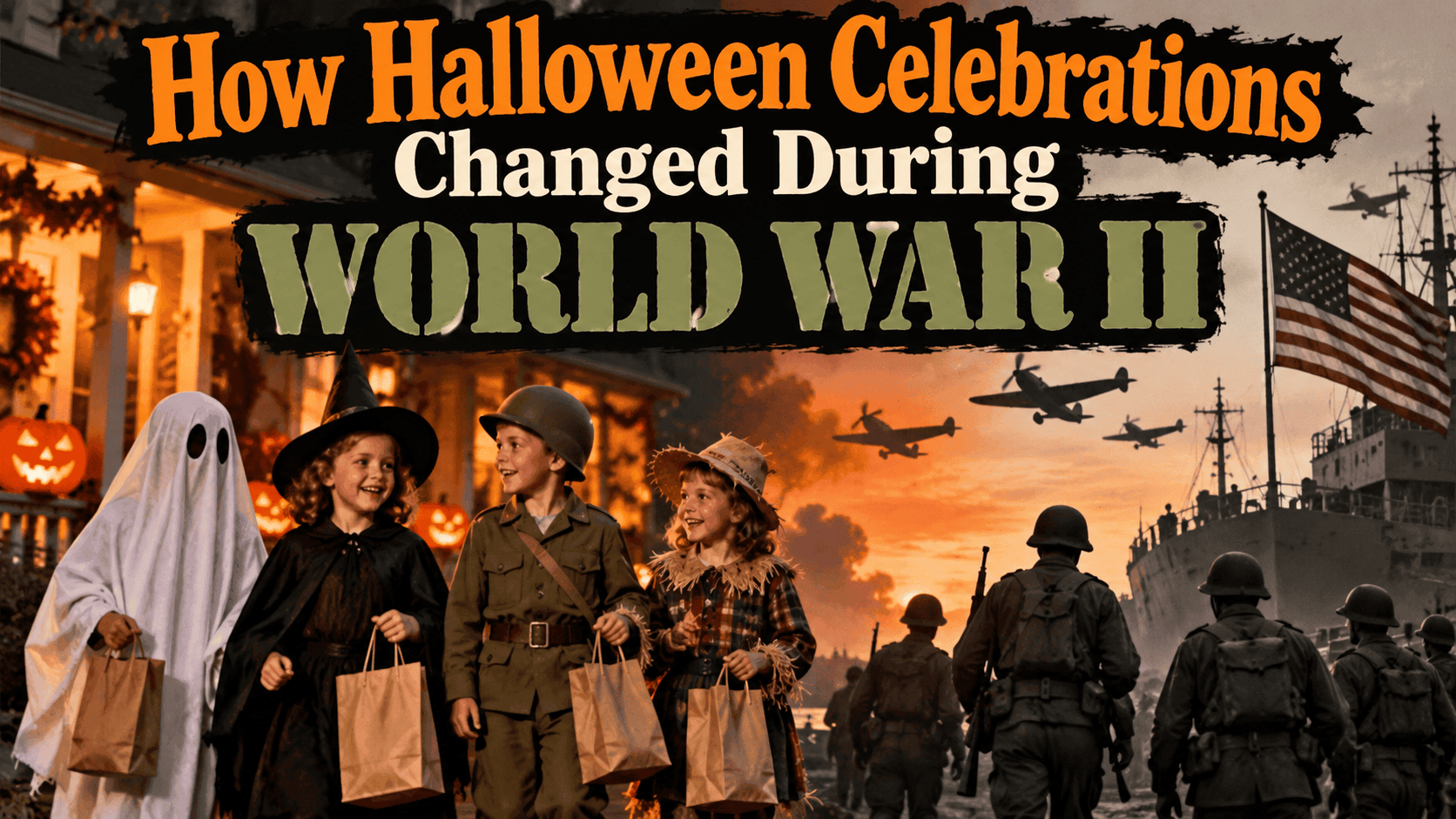
Halloween has always been a holiday filled with costumes, candy, spooky decorations, and neighborhood traditions. However, during World War II, Halloween celebrations in America looked very different from the festivities we know today. Between 1941 and 1945, American families faced wartime rationing, shortages, blackouts, and the emotional strain of having loved ones serving overseas.
Despite these challenges, Halloween did not disappear. Instead, Americans adapted their celebrations to fit the realities of wartime life. Homemade costumes replaced expensive store-bought outfits, families found creative alternatives to traditional treats, and community gatherings helped maintain a sense of normalcy during uncertain times.
The changes that occurred during World War II reveal how Americans preserved holiday traditions while supporting the war effort.
Halloween in America Before World War II
Before the United States entered World War II in December 1941, Halloween was already becoming a popular community holiday.
Throughout the 1920s and 1930s, Americans increasingly celebrated Halloween with costume parties, neighborhood gatherings, school events, and children’s activities.
However, Halloween was not yet the enormous commercial holiday it would become in later decades.
Many families created their own costumes using clothing, fabric scraps, and household materials. Children participated in games, told ghost stories, carved pumpkins, and enjoyed seasonal treats.
Trick-or-treating existed in some American communities before the war, but it was not yet a universal national tradition.
Halloween also had a mischievous side. Pranks involving soap-covered windows, overturned objects, and other neighborhood disturbances were common in some communities.
Local organizations encouraged supervised Halloween activities as a way to reduce vandalism and provide safer entertainment for children.
When World War II began, these developing traditions encountered new challenges.
1. Wartime Rationing Changed Halloween Candy
One of the most noticeable changes to Halloween during World War II involved candy.
After the United States entered the war, the federal government introduced rationing programs to ensure that essential supplies were available for military personnel and civilians.
Sugar became rationed in 1942, significantly affecting American households and candy manufacturers.
Because sugar was an important ingredient in chocolate bars, hard candies, cookies, and other sweets, families had fewer opportunities to purchase or prepare traditional Halloween treats.
Candy manufacturers also faced shortages of ingredients, packaging materials, and labor.
Some confectionery production was directed toward military needs, while civilian candy supplies became more limited.
As a result, Halloween treats were not always as plentiful as they had been before the war.
Families adapted by offering whatever refreshments were available or organizing activities that did not depend on large quantities of sweets.
Homemade popcorn, apples, and other seasonal foods could provide alternatives, depending on local availability.
The wartime candy shortage also demonstrated how deeply the war affected everyday American life.
Even a simple childhood holiday required families to make sacrifices.
2. Homemade Halloween Costumes Became More Important
Halloween costumes were another area affected by wartime shortages.
During World War II, Americans were encouraged to conserve materials needed for military production.
Textiles, rubber, metal, and other resources were valuable to the war effort.
Although homemade costumes had been common long before the war, shortages and household budgets made creative costume-making especially practical.
Parents and children used old clothing, leftover fabric, cardboard, paper, and household objects to create disguises.
A bedsheet could become a ghost costume, while an old dress or coat might be transformed into a witch, scarecrow, or other character.
Children could also dress as familiar figures from stories, movies, and popular culture.
Some costumes reflected wartime patriotism, including soldiers, sailors, nurses, and other recognizable figures associated with national service.
The emphasis was often on imagination rather than expensive materials.
These homemade creations became part of the broader American practice of making do with what was available.
3. Blackout Precautions Affected Halloween Activities
World War II brought concerns about possible enemy attacks, particularly during the early years of American involvement.
Coastal communities and other areas considered vulnerable to attack sometimes practiced blackouts or imposed restrictions on outdoor lighting.
These precautions were designed to make buildings, streets, and important facilities less visible to enemy aircraft or ships.
Halloween traditionally involved evening activities, illuminated decorations, and children moving through neighborhoods after dark.
In places where blackout rules or civil defense precautions applied, those activities could become more complicated.
Communities sometimes had to adjust outdoor gatherings, lighting, or evening schedules to comply with local safety requirements.
However, blackout restrictions were not identical throughout the United States, and they did not affect every Halloween celebration in the same way.
Some communities continued familiar activities, while others emphasized supervised indoor entertainment or earlier gatherings.
The war introduced a new consideration into Halloween planning: public safety was no longer simply about preventing pranks or accidents.
It could also involve national defense.
4. Halloween Parties Helped Maintain Morale
During wartime, Americans experienced considerable uncertainty.
Millions of families had relatives serving in the armed forces, and news from overseas was a constant reminder of the conflict.
Holiday celebrations offered an opportunity to escape daily worries, even temporarily.
Halloween parties at schools, churches, community centers, and private homes provided entertainment and companionship.
Children could enjoy games, costumes, storytelling, and seasonal activities while adults experienced a welcome sense of normalcy.
Popular party games included bobbing for apples, guessing games, costume contests, and other inexpensive entertainment.
These activities required relatively few scarce resources.
Community organizations could also use supervised celebrations to bring neighbors together and encourage positive recreational activities.
Halloween was not a solution to wartime anxiety, but it offered families a way to preserve familiar routines.
For children especially, maintaining traditions could make an uncertain world feel more recognizable.
5. Trick-or-Treating Developed Differently During the War
Modern Americans often associate Halloween with children traveling door to door collecting large bags of candy.
During World War II, however, trick-or-treating was still developing as a widespread American custom.
Door-to-door Halloween activities had existed before the war, but practices varied considerably between communities.
Some neighborhoods embraced organized trick-or-treating, while others favored school parties, costume parades, or neighborhood celebrations.
Wartime sugar rationing made the distribution of candy more difficult.
Families that wanted to participate might have limited treats available, and some communities emphasized group entertainment instead.
Nevertheless, it would be inaccurate to say that World War II completely stopped trick-or-treating across America.
The holiday continued in different forms depending on local conditions.
After the war, trick-or-treating became increasingly widespread, especially during the late 1940s and 1950s.
Growing suburban neighborhoods, expanding consumer production, and greater availability of packaged candy helped transform it into a familiar national tradition.
6. Halloween Decorations Became Simpler
Halloween decorations also reflected wartime conservation.
Before World War II, families already decorated homes and party spaces with paper cutouts, pumpkins, homemade lanterns, and seasonal displays.
During the war, conserving materials became an important part of everyday life.
Paper, metals, and other resources were collected or conserved for wartime needs.
Families could reuse decorations from previous years or create simple displays from materials already available at home.
Paper ghosts, handmade witches, carved pumpkins, and drawings offered inexpensive ways to celebrate.
Elaborate commercial displays were not necessary for a festive atmosphere.
A few decorations, a homemade costume, and traditional Halloween games could create an enjoyable celebration.
This resourcefulness reflected a broader wartime attitude: Americans were encouraged to avoid unnecessary waste and make existing supplies last longer.
7. Halloween Mischief Continued to Concern Communities
Halloween pranks were already a longstanding concern before World War II.
In some communities, the holiday had become associated with property damage, disruptive behavior, and neighborhood vandalism.
Common mischief included soaping windows, moving outdoor furniture, and damaging property.
During wartime, such activities could carry additional consequences.
Communities were already dealing with civil defense responsibilities, material shortages, and demands on public services.
Damaging valuable property or wasting resources was particularly unwelcome.
Local leaders, schools, and civic organizations continued encouraging supervised Halloween entertainment as an alternative to destructive pranks.
Costume contests, community parties, and organized children’s events helped channel holiday excitement into safer activities.
The effort to make Halloween more family-friendly had begun before the war, but wartime circumstances gave communities additional reasons to discourage wasteful or destructive behavior.
8. Patriotic Themes Appeared in Halloween Celebrations
World War II influenced many aspects of American popular culture, including children’s entertainment.
Patriotic imagery appeared in advertisements, posters, movies, and everyday activities.
Halloween celebrations could reflect this atmosphere through costumes representing military personnel, nurses, or patriotic figures.
Some gatherings also incorporated wartime fundraising or community service activities.
Schools and civic organizations throughout the war encouraged children to participate in activities such as collecting scrap materials, purchasing war stamps, and supporting relief efforts.
Although these efforts were not exclusive to Halloween, they shaped the environment in which holiday celebrations took place.
Children were frequently encouraged to see themselves as participants in the national war effort.
Wartime patriotism therefore became part of the cultural background of Halloween, even as traditional ghosts, witches, pumpkins, and spooky stories remained popular.
9. Families Celebrated While Loved Ones Were Overseas
Perhaps the most emotional difference between wartime Halloween and earlier celebrations was the absence of family members.
Millions of American service members spent the war years stationed away from home.
For some families, Halloween arrived while a father, brother, husband, or other loved one was serving overseas.
Other households were coping with injuries, uncertainty, or the death of someone in military service.
These experiences could change the meaning of a holiday.
A family might still carve a pumpkin or organize a party for children while privately worrying about someone far away.
Parents often worked to preserve familiar celebrations despite personal anxiety.
Halloween offered a chance for children to experience enjoyment and community even when the adults around them were carrying serious concerns.
Not every wartime household experienced the holiday in the same way.
Some families celebrated enthusiastically, while others had little interest in festivities because of their circumstances.
The holiday reflected both the resilience and the emotional burden of life on the American home front.
10. Schools and Community Organizations Played an Important Role
During World War II, schools, churches, civic clubs, and neighborhood organizations helped maintain recreational opportunities for children.
Organized Halloween activities were especially useful when families faced restrictions on supplies or outdoor entertainment.
A school celebration might include a costume parade, homemade decorations, simple games, and refreshments.
Community centers could host parties that brought together children from surrounding neighborhoods.
These gatherings also supported a longstanding movement toward making Halloween safer and more organized.
Instead of leaving children to engage in unsupervised mischief, adults encouraged planned activities.
The movement toward community-centered Halloween celebrations would continue influencing the holiday after the war.
11. The End of World War II Helped Transform Halloween
World War II ended in 1945, but its effects on American holidays continued into the following years.
Rationing restrictions were gradually lifted, although sugar rationing in the United States continued until 1947.
As civilian manufacturing expanded and consumer goods became more widely available, Halloween celebrations entered a period of significant growth.
Candy companies increasingly marketed products for Halloween.
Manufacturers produced more commercially available costumes, masks, and decorations.
Families also moved into expanding suburban neighborhoods, where door-to-door trick-or-treating became a popular community activity.
By the 1950s, trick-or-treating had become much more established across the United States.
Television, advertising, and popular entertainment helped spread recognizable Halloween customs.
The holiday increasingly centered on children, costumes, candy, and neighborhood participation.
These changes were not caused by World War II alone.
They were also connected to suburban development, postwar prosperity, commercial marketing, and broader changes in American family life.
Nevertheless, the contrast between wartime scarcity and postwar consumer abundance was significant.
12. What World War II Halloween Celebrations Teach Us Today
Looking back at Halloween during World War II reveals that the holiday was about more than decorations and candy.
It was also about community, creativity, and maintaining traditions during difficult circumstances.
Families found ways to celebrate even when ingredients were rationed, materials were scarce, and loved ones were far from home.
Children wore homemade costumes, participated in simple games, and enjoyed whatever treats were available.
Neighbors organized gatherings that provided entertainment without requiring elaborate purchases.
These celebrations demonstrated that Halloween could survive even when everyday life changed dramatically.
The holiday did not need expensive decorations or large quantities of candy to remain meaningful.
Its traditions continued because people valued the experience of gathering together, creating memories, and allowing children to enjoy a special occasion.
How Halloween During World War II Compared With Halloween Today
| Halloween tradition | During World War II | Today |
|---|---|---|
| Candy | Limited by sugar rationing and shortages | Widely available in seasonal packaging |
| Costumes | Frequently homemade or reused | Homemade and commercially produced |
| Decorations | Often simple, reusable, or handmade | Wide variety of commercial and homemade displays |
| Trick-or-treating | Varied by community and was not yet universal | Established tradition in many neighborhoods |
| Parties | School, church, home, and community gatherings | Home parties, public events, and organized attractions |
| Safety concerns | Pranks, wartime precautions, and local restrictions | Traffic, visibility, food safety, and supervision |
| Holiday spending | Influenced by conservation and wartime scarcity | Major seasonal consumer spending |
Frequently Asked Questions About Halloween During World War II
Was Halloween celebrated during World War II?
Yes. Americans continued celebrating Halloween throughout World War II, although wartime shortages, rationing, local safety restrictions, and family circumstances affected how celebrations were organized.
Did children trick-or-treat during World War II?
Some children participated in door-to-door Halloween activities, but trick-or-treating was not yet as widespread or standardized as it became after the war. Customs varied by community, and sugar rationing limited available treats.
Was Halloween candy rationed during World War II?
Sugar was rationed in the United States beginning in 1942, affecting candy production and household supplies. Candy itself was not universally distributed through a separate nationwide Halloween rationing system, but sugar shortages made sweets harder to obtain.
What did children wear for Halloween during World War II?
Children often wore homemade costumes made from old clothes, fabric scraps, paper, cardboard, and household materials. Popular choices included ghosts, witches, scarecrows, and familiar storybook characters.
Did World War II stop Halloween celebrations?
No. The war changed how many Americans celebrated, but Halloween continued through parties, school activities, costumes, neighborhood gatherings, and traditional games.
Why did Halloween become more popular after World War II?
Postwar prosperity, suburban growth, increased candy production, commercial costumes, and advertising all contributed to Halloween’s expansion during the late 1940s and 1950s.
Final Thoughts: Halloween Survived a World at War
Halloween during World War II was a reflection of American life during one of the most challenging periods in modern history.
Families faced shortages, rationing, uncertainty, and the absence of loved ones serving overseas. Yet many still found ways to preserve the excitement and traditions of October 31.
The costumes were often homemade. The treats were sometimes limited. The decorations were simple, and celebrations frequently depended on the efforts of families, schools, and local communities.
What remained was the desire to create moments of happiness during difficult times.
After the war, Halloween gradually developed into the candy-filled, costume-centered holiday familiar to millions of Americans today.
The wartime years remain an important chapter in that transformation, reminding us that even during a global conflict, people continued searching for opportunities to celebrate, connect, and bring joy into their communities.
If you had lived through World War II, would you have preferred a simple homemade Halloween celebration or one of the larger community parties that helped bring neighbors together?
Leave a Reply