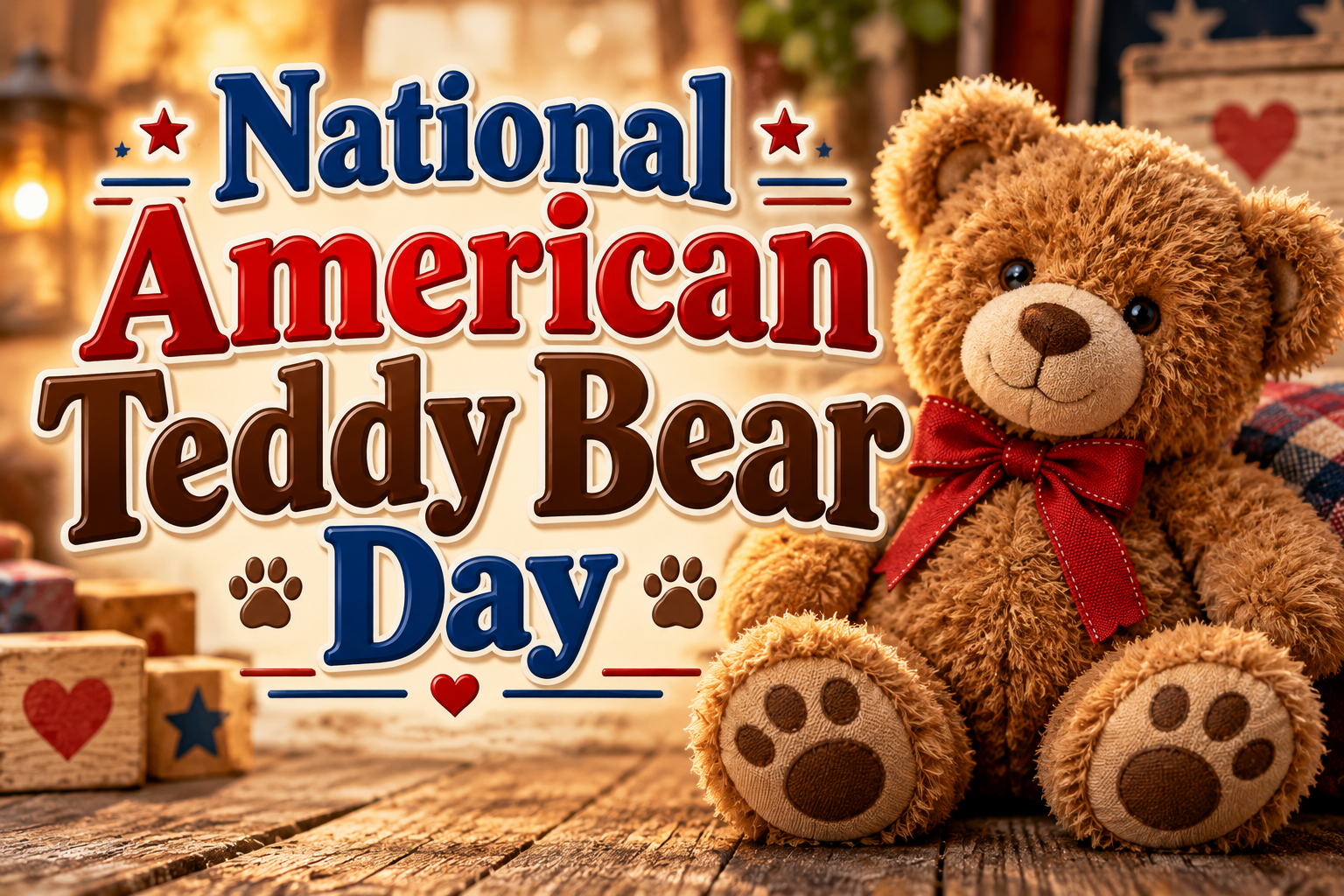
There is something special about a teddy bear. Whether it is a child’s first stuffed animal, a treasured childhood keepsake, or a thoughtful gift from someone who cares, teddy bears have a remarkable ability to bring comfort, happiness, and a sense of security.
National American Teddy Bear Day celebrates these beloved stuffed companions and the special place they hold in American history and in the hearts of people around the world.
For more than a century, teddy bears have been symbols of childhood innocence, unconditional love, friendship, and emotional comfort. They have accompanied children through their earliest adventures, comforted people during difficult times, and become treasured reminders of meaningful relationships.
But how did teddy bears become such an important part of American culture? Why are they named after a United States president? And what makes these simple stuffed animals so emotionally meaningful?
Let’s explore the fascinating history, traditions, and enduring significance of National American Teddy Bear Day.
What Is National American Teddy Bear Day?
National American Teddy Bear Day is an informal celebration recognizing the history, cultural importance, and emotional significance of teddy bears.
The observance is associated with November 14, although it is not a federally recognized holiday, and its original organizer and founding history are not well documented.
It provides an opportunity to appreciate teddy bears as more than ordinary toys. For generations, these stuffed companions have represented warmth, affection, reassurance, and the simple joys of childhood.
The celebration also highlights the American origins of the teddy bear, particularly its connection to President Theodore Roosevelt and an incident that occurred during a hunting trip in 1902.
Today, teddy bears are found in homes, hospitals, schools, charitable organizations, and personal collections worldwide.
For some people, they represent childhood memories. For others, they provide comfort during loneliness, illness, grief, or emotional distress.
Regardless of age, teddy bears continue to remind us that sometimes the simplest things can carry the greatest emotional meaning.
The Fascinating History of the Teddy Bear
The story of the teddy bear begins with one of America’s most recognizable presidents, Theodore Roosevelt.
In November 1902, President Roosevelt participated in a bear-hunting trip in Mississippi.
During the expedition, members of his hunting party captured and restrained a black bear after Roosevelt had been unable to find one himself.
When Roosevelt was offered the opportunity to shoot the restrained animal, he refused, believing it would be unsportsmanlike.
The incident quickly attracted national attention.
Political cartoonist Clifford Berryman illustrated the event in a cartoon published in The Washington Post on November 16, 1902.
The cartoon portrayed Roosevelt refusing to shoot the bear and helped establish the image that would eventually inspire one of America’s most beloved toys.
How the Teddy Bear Got Its Name
After the Roosevelt hunting incident became widely known, Brooklyn shopkeepers Morris and Rose Michtom created a stuffed bear inspired by the story.
They displayed the bear in their shop and called it “Teddy’s Bear,” using Roosevelt’s popular nickname.
According to the familiar account, Morris Michtom requested Roosevelt’s permission to use the name.
The toy became popular, and the Michtoms eventually helped establish the Ideal Novelty and Toy Company.
Around the same period, the German company Steiff was developing its own jointed stuffed bears.
These developments contributed to the emergence of the modern teddy bear industry.
By the early twentieth century, teddy bears were becoming popular gifts and cherished childhood companions.
What began with a presidential hunting story eventually developed into a worldwide cultural phenomenon.
Why Teddy Bears Became So Popular
The success of teddy bears was not simply the result of clever marketing or a connection to a famous president.
Teddy bears offered children something emotionally meaningful.
Unlike many traditional toys of the early twentieth century, teddy bears were soft, cuddly, and designed to be held.
Their rounded faces, gentle expressions, and comforting appearance made them especially appealing.
Children could carry them, sleep beside them, talk to them, and include them in imaginative adventures.
As manufacturing techniques improved, teddy bears became increasingly accessible to families.
Over time, they evolved from relatively expensive novelty toys into familiar companions found in households across the country.
Today, teddy bears are available in countless sizes, colors, designs, and materials, but their emotional appeal remains remarkably consistent.
The Emotional Importance of Teddy Bears
One of the most fascinating aspects of teddy bears is their ability to provide emotional comfort.
For young children, a favorite teddy bear can become what psychologists call a transitional object.
A transitional object is something familiar that helps a child feel secure while developing independence.
A teddy bear may provide reassurance during bedtime, separation from parents, unfamiliar environments, or stressful experiences.
The familiar texture and presence of a beloved stuffed animal can help children manage difficult emotions.
Teddy Bears and Childhood Security
Many children develop strong attachments to particular stuffed animals.
A teddy bear may accompany a child on family vacations, during hospital visits, or through important childhood milestones.
Even when a bear becomes worn, faded, or damaged, its emotional importance may grow rather than diminish.
That is because the bear represents familiarity, security, and countless shared experiences.
Parents often recognize that replacing a child’s favorite teddy bear with an identical new one does not necessarily recreate the same emotional connection.
The original bear carries memories that cannot simply be replaced.
Why Adults Still Love Teddy Bears
Although teddy bears are traditionally associated with childhood, their appeal does not disappear when people grow older.
Many adults keep teddy bears from their childhood or receive them as meaningful gifts during adulthood.
For some, a teddy bear represents a beloved family member, a special relationship, or a cherished memory.
Others appreciate teddy bears because they provide a sense of nostalgia and emotional warmth.
Holding a familiar stuffed animal may help some people feel calmer during stressful moments.
There is nothing unusual about finding comfort in an object connected to positive memories.
Emotional attachments are not limited by age.
Sometimes a teddy bear is valuable not because of what it costs, but because of the person, place, or experience it represents.
Teddy Bears as Symbols of Love and Remembrance
Teddy bears frequently appear during some of life’s most emotional moments.
They are given to newborn babies, exchanged between romantic partners, presented to hospitalized children, and included in memorial displays.
A teddy bear can represent love when words are difficult to find.
For someone experiencing grief, a stuffed animal connected to a loved one may become a treasured keepsake.
Some families preserve teddy bears that belonged to children or other relatives who have passed away.
Others have memory bears created from clothing belonging to someone they loved.
These keepsakes can provide a tangible connection to meaningful memories.
While a teddy bear cannot remove grief or replace a loved one, it can serve as a gentle reminder of the love that remains.
This emotional significance helps explain why teddy bears continue to hold such an important place in family traditions.
How Teddy Bears Help Children During Difficult Times
Teddy bears are often used by hospitals, emergency responders, charities, and community organizations to comfort children experiencing stressful circumstances.
A child facing a medical procedure, an emergency, or an unfamiliar situation may find reassurance in receiving a soft stuffed animal.
The bear can offer something familiar to hold when the surrounding environment feels overwhelming.
Some charitable programs distribute teddy bears to children affected by disasters, family hardships, or other challenging situations.
These gifts are simple, but their emotional impact can be meaningful.
They communicate an important message: someone cares.
Teddy bears can also help children express feelings through imaginative play.
A child may explain fears, worries, or experiences through conversations with a stuffed animal.
Although teddy bears are not substitutes for professional emotional or psychological support when needed, they can be helpful sources of everyday comfort.
How to Celebrate National American Teddy Bear Day
National American Teddy Bear Day offers an opportunity to celebrate cherished memories while spreading kindness to others.
Here are several meaningful ways to participate.
1. Revisit Your Childhood Teddy Bear
If you still have a teddy bear from childhood, take a moment to appreciate the memories associated with it.
Think about where it came from, who gave it to you, and the experiences it accompanied you through.
2. Give a Teddy Bear as a Gift
Surprise someone with a teddy bear as a simple expression of love, friendship, or appreciation.
It does not have to be an expensive gift to be meaningful.
3. Donate a New Teddy Bear
Consider donating a new stuffed bear to a children’s charity, hospital, shelter, or community organization that accepts them.
Always check donation requirements before contributing, as many organizations accept only new, unused stuffed animals.
4. Share Your Teddy Bear Memories
Ask family members about their favorite childhood stuffed animals.
You may discover wonderful stories about toys that provided comfort during important moments.
5. Host a Teddy Bear Picnic
Families with young children can organize a teddy bear picnic at home or outdoors.
Invite children to bring their favorite stuffed companions and enjoy snacks, stories, and imaginative activities.
6. Learn About Theodore Roosevelt
Explore the historical incident that inspired the teddy bear’s name.
It is an interesting opportunity to introduce children to American presidential history.
7. Preserve a Special Teddy Bear
If you own a sentimental teddy bear, consider carefully cleaning and storing it to protect its condition.
Older collectible bears may require specialized preservation techniques.
8. Spread Kindness Through a Teddy Bear
Give a teddy bear to someone going through a difficult time, accompanied by a thoughtful message.
Sometimes a small gesture can remind someone that they are remembered and valued.
Interesting Facts About Teddy Bears
The history of teddy bears includes several surprising details.
-
The teddy bear received its name from President Theodore Roosevelt’s nickname, Teddy.
-
The famous hunting incident occurred in Mississippi in November 1902.
-
Clifford Berryman’s political cartoon helped popularize the story that inspired the toy.
-
American and German manufacturers played important roles in the early development of teddy bears.
-
Early teddy bears were often made with mohair fabric and featured movable joints.
-
Antique teddy bears have become highly collectible, with rare examples selling for substantial amounts.
-
Teddy bears are frequently used as comfort gifts in hospitals and charitable programs.
-
September 9 is also widely celebrated as Teddy Bear Day, a separate informal observance.
-
Teddy bears have inspired countless children’s books, movies, television programs, and fictional characters.
-
Some families preserve sentimental teddy bears across multiple generations.
These facts demonstrate how a simple stuffed animal became a lasting part of American and international culture.
The Teddy Bear’s Influence on Popular Culture
Teddy bears have inspired some of the most recognizable fictional characters in children’s entertainment.
Perhaps the most famous is Winnie-the-Pooh, created by author A. A. Milne and introduced in the 1920s.
The character was inspired by a stuffed bear belonging to Milne’s son, Christopher Robin.
Other beloved bear characters include Paddington Bear, Corduroy, and the Care Bears.
Although these characters have different personalities and stories, they share themes of friendship, kindness, imagination, and belonging.
Teddy bears also appear in holiday decorations, greeting cards, advertisements, and collectible merchandise.
Their recognizable appearance has made them enduring symbols of affection and comfort.
Why National American Teddy Bear Day Still Matters
In a world increasingly dominated by technology and digital entertainment, teddy bears represent something wonderfully simple.
They do not require batteries, internet connections, or complicated instructions.
Their value comes from the emotional connections people create with them.
A teddy bear can remind someone of a parent who gave it as a gift, a grandparent who treasured it, or a childhood filled with imagination.
It can represent comfort during difficult nights or happiness during special celebrations.
For children, teddy bears can encourage creativity, nurturing behavior, and emotional expression.
For adults, they can preserve memories and offer a comforting reminder of the past.
National American Teddy Bear Day celebrates these connections and encourages people to recognize the importance of small acts of kindness.
It also reminds us that meaningful gifts are not necessarily expensive or elaborate.
Sometimes the most treasured possessions are the ones that make us feel loved.
Final Thoughts: A Small Bear With a Big Meaning
National American Teddy Bear Day is more than a celebration of stuffed animals. It is a reminder of childhood memories, emotional connections, compassion, and the lasting importance of love.
From its origins in a 1902 presidential hunting incident to its place in modern homes, the teddy bear has become an enduring symbol of comfort and affection.
For some, a teddy bear is a childhood friend. For others, it is a sentimental reminder of someone special. And for those facing difficult circumstances, it may offer a small but meaningful source of reassurance.
The beauty of a teddy bear is not found in its appearance, price, or condition. It is found in the memories and emotions attached to it.
On National American Teddy Bear Day, take a moment to appreciate these timeless companions, share a cherished memory, or brighten someone’s day with a simple gift.
Because sometimes, something as small as a teddy bear can hold a lifetime of love.
Did you have a favorite teddy bear growing up, and do you still have it today? What special memories does it bring back?


Leave a Reply