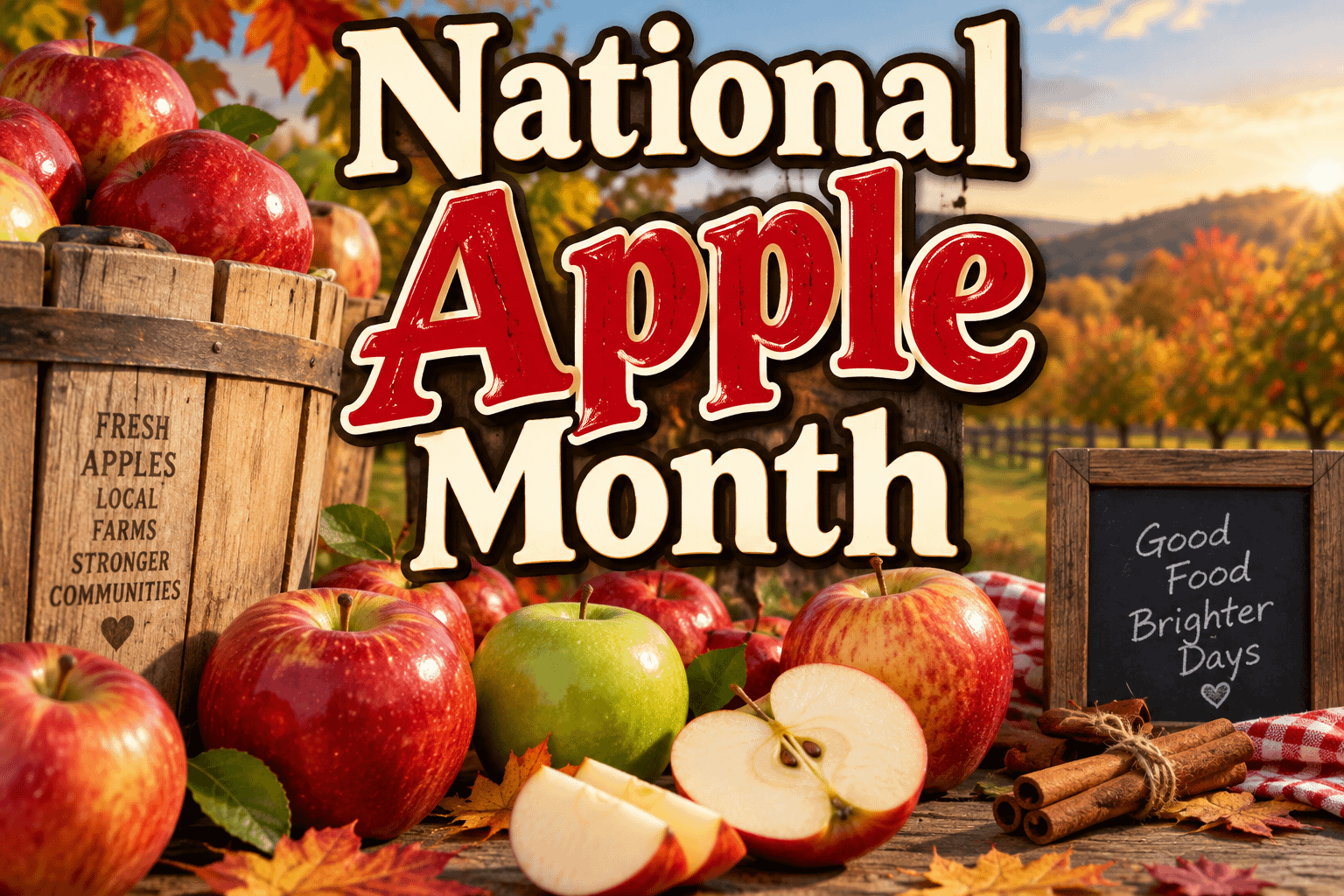
Crisp, sweet, tart, juicy, and incredibly versatile, apples have earned a permanent place in kitchens, lunchboxes, orchards, and family traditions. National Apple Month, celebrated during October, is a perfect opportunity to appreciate this classic fruit and everything that makes it special.
October arrives right in the heart of apple season in many parts of the United States. Orchards are busy, farmers markets are filled with colorful varieties, and kitchens begin smelling like cinnamon, baked apples, apple pie, and warm cider.
But National Apple Month is about more than desserts.
Apples can be eaten fresh, baked, roasted, simmered, blended, pressed, chopped into salads, paired with savory foods, or transformed into countless recipes. They also have a fascinating agricultural history and remain an important crop for farmers across the country.
Whether you prefer a tart Granny Smith, a sweet Honeycrisp, a classic Red Delicious, or something you’ve discovered at a local orchard, October is a wonderful month to celebrate the apple.
Why Celebrate National Apple Month?
There is something especially fitting about celebrating apples during October.
Fall and apples seem made for each other.
As temperatures cool and leaves begin changing colors, apple orchards become popular destinations for families and friends. Apple picking, hayrides, pumpkin patches, cider, and fresh-baked treats have become traditions in communities throughout the country.
Apples also represent the harvest season itself.
For generations, harvesting apples was an important part of preparing for the colder months. Families could enjoy fresh apples while preserving part of their harvest as applesauce, apple butter, dried apples, cider, jams, jellies, and other foods.
Modern supermarkets allow us to purchase apples throughout much of the year, but autumn remains one of the best times to appreciate where they come from.
National Apple Month gives us an excuse to reconnect with that tradition.
A Fruit With a Long History
Humans have enjoyed apples for thousands of years.
The ancestors of modern cultivated apples are generally traced to Central Asia. Over centuries, apples traveled along trade routes and spread throughout Europe and eventually around the world.
European settlers brought apple seeds and trees to North America, where orchards became an important part of agricultural life.
One of America’s most famous apple-related figures was John Chapman, better known as Johnny Appleseed.
Chapman traveled through parts of the American frontier planting and tending apple nurseries during the late 1700s and early 1800s. His life eventually became surrounded by folklore, but there was a real person behind the legend.
Today, apples are grown commercially across numerous states, with different climates producing different varieties and harvest schedules.
There Is an Apple for Almost Everyone
One reason apples remain so popular is the incredible variety available.
Walk through a well-stocked produce department or farmers market during apple season and you may find dozens of choices.
Some apples are extremely sweet.
Others are noticeably tart.
Some remain firm when baked, while others soften quickly and work beautifully in sauces.
A few popular varieties include:
- Honeycrisp — known for its crisp texture and sweet-tart flavor.
- Granny Smith — bright green, firm, and distinctly tart.
- Fuji — typically sweet, crisp, and juicy.
- Gala — mild and sweet, making it a popular snacking apple.
- Pink Lady — crisp with a balance of sweetness and acidity.
- Golden Delicious — sweet and versatile for eating and cooking.
- Red Delicious — one of the most recognizable traditional American apples.
- McIntosh — softer and aromatic with a sweet-tart flavor.
- Braeburn — crisp with a complex balance of sweet and tart.
- Jonagold — combines characteristics of Jonathan and Golden Delicious apples.
And those are only a small sampling.
Local orchards may grow varieties you rarely see in supermarkets, making National Apple Month an excellent time to try something different.
Visit a Local Apple Orchard
One of the best ways to celebrate National Apple Month is to visit an orchard.
Apple picking turns buying fruit into an experience.
Instead of simply grabbing a bag from the grocery store, you get to walk among the trees and see where your food grows.
For children, this can also provide a simple lesson about agriculture. Food doesn’t magically appear on supermarket shelves. Someone has to plant, prune, protect, harvest, pack, transport, and sell it.
Many orchards turn the fall harvest into a larger seasonal celebration with activities such as hayrides, corn mazes, farm stands, cider tastings, baked goods, pumpkins, and family activities.
Purchasing directly from a farm can also be a meaningful way to support local agriculture.
Apples Can Be Part of a Nutritious Diet
Apples aren’t only delicious.
They can also contribute useful nutrients as part of a balanced diet. Apples provide dietary fiber and contain vitamin C along with various naturally occurring plant compounds.
Eating the whole fruit rather than relying exclusively on apple juice also preserves the fiber found in the fruit.
Apples can make an especially convenient snack because they require very little preparation. Wash one and it is ready to eat.
For something more filling, pair apple slices with foods such as peanut butter, cheese, yogurt, nuts, or another source of protein or healthy fat.
A simple apple can become part of breakfast, lunch, dinner, dessert, or an afternoon snack.
The Incredible Versatility of Apples
Few fruits move between sweet and savory dishes as easily as apples.
Naturally, we think about desserts first.
Apple pie may be the superstar, but there are plenty of other possibilities:
Apple crisp, apple cobbler, baked apples, apple turnovers, apple cake, caramel apples, apple fritters, apple bread, apple muffins, apple doughnuts, apple pancakes, and cinnamon apples can all showcase the fruit beautifully.
Then there are beverages.
Fresh apple cider is practically synonymous with autumn. It can be enjoyed cold or warmed with seasonal spices such as cinnamon and cloves.
But apples don’t have to be sweet.
Try adding chopped apples to a salad with greens, nuts, cheese, and a vinaigrette.
Apples can also complement pork, chicken, stuffing, roasted vegetables, sandwiches, grain bowls, and cheese boards.
Their combination of sweetness, acidity, and texture allows them to brighten many savory dishes.
Bake a Homemade Apple Pie
If National Apple Month needs an unofficial centerpiece, homemade apple pie would certainly be a contender.
There is something comforting about the aroma of apples and cinnamon baking together.
You don’t need to make an elaborate pie to participate.
Start with sliced apples and season them with cinnamon, a little sugar, and perhaps nutmeg or lemon juice. Place them inside your favorite pie crust and bake according to your recipe.
Different apples produce different results.
Many bakers like using a combination of varieties because mixing sweet and tart apples creates a more complex flavor.
Granny Smith apples are often chosen because their tart flavor can balance the sweetness of a pie filling.
Experiment and discover the combination you enjoy most.
Make Homemade Applesauce
Applesauce is another simple way to celebrate.
Peel apples if desired, remove the cores, cut the fruit into pieces, and gently cook it with a small amount of water until tender.
Then mash or blend the apples to your preferred consistency.
Cinnamon can add warmth, while lemon juice can provide brightness. Depending on the apples you use, you may discover that very little additional sweetener is necessary.
Homemade applesauce also allows you to control the texture.
Make it completely smooth or leave chunks of tender apple throughout.
Enjoy a Caramel Apple
Some treats instantly bring back memories of autumn fairs, Halloween celebrations, and childhood.
Caramel apples are one of them.
The basic idea couldn’t be simpler: a crisp apple covered in sweet caramel.
From there, creativity takes over.
Caramel apples can be rolled in chopped nuts, crushed cookies, chocolate pieces, sprinkles, coconut, or other toppings.
The contrast is what makes them so enjoyable.
You get the crisp freshness and slight acidity of the apple followed by the rich sweetness of caramel.
National Apple Month gives you a perfect excuse to make a batch.
Host an Apple Taste Test
Here’s an easy National Apple Month activity that works for families, classrooms, workplaces, or gatherings.
Buy several different varieties of apples.
Slice them and place each variety on a separate plate without revealing its name. Have everyone taste the apples and rank them according to characteristics such as sweetness, tartness, crunch, juiciness, and overall preference.
After everyone chooses a favorite, reveal the varieties.
You might be surprised by the winner.
Someone who always buys the same type of apple may discover an entirely new favorite.
Learn About Local Apple Varieties
Supermarkets tend to emphasize varieties that can withstand transportation and storage.
Local orchards can introduce you to an entirely different apple experience.
Some varieties may have unusual shapes, colors, flavors, or textures.
Ask growers which apples are best for fresh eating, pies, applesauce, cider, or baking.
Farmers know their crops.
Talking with them can help you understand how much diversity exists within something as seemingly ordinary as an apple.
Reduce Food Waste
National Apple Month can also be an opportunity to think about food waste.
An apple doesn’t have to look perfect to taste good.
Small blemishes or unusual shapes don’t automatically mean the fruit belongs in the trash.
Apples that have become slightly soft may still work wonderfully in cooked dishes.
Turn them into applesauce.
Bake them.
Add them to oatmeal.
Make apple butter.
Cook them into a compote.
Use them in muffins or bread.
The goal doesn’t always have to be finding the prettiest apple. Sometimes the slightly imperfect fruit can become the beginning of something delicious.
Apples and Fall Traditions
Apples are woven deeply into American autumn traditions.
Think about a cool October afternoon at an orchard.
You hear children laughing as families walk between rows of trees. Somewhere nearby, cider is being poured. The smell of cinnamon and baked goods drifts through the air.
Someone carries a bag overflowing with freshly picked apples.
Another family is choosing pumpkins.
These simple experiences become memories.
That may be one of the best things about National Apple Month.
It isn’t really just about fruit.
It’s about the season surrounding it.
It’s about cooking with family.
It’s about passing recipes from one generation to another.
It’s about visiting farms, supporting growers, experimenting in the kitchen, and appreciating foods that we often take for granted.
Simple Ways to Celebrate National Apple Month
You don’t need an elaborate celebration.
Pick apples at a local orchard. Try an apple variety you’ve never tasted. Bake an apple pie or crisp. Make homemade applesauce. Drink fresh cider. Add apples to your breakfast oatmeal. Prepare a savory apple recipe. Make caramel apples with your children or grandchildren. Visit a farmers market and talk with a local grower.
You could even declare one night an apple-themed dinner.
Start with an apple and walnut salad, prepare a savory main dish incorporating apples, and finish with warm apple crisp.
The possibilities are nearly endless.
Appreciate the Farmers Behind the Harvest
National Apple Month is also a good time to recognize the work involved in producing the apples we enjoy.
An orchard doesn’t appear overnight.
Apple trees require years of care, and successful harvests depend on numerous factors, including weather, soil, pollination, pest management, pruning, irrigation, labor, and timing.
When we see a polished apple sitting in a grocery store display, it’s easy to forget everything that happened before it reached us.
Take a moment this October to appreciate the growers, farmworkers, packers, truck drivers, market workers, and others involved in bringing the harvest from orchard to table.
Celebrate the Simple Apple
Sometimes the foods most deserving of celebration aren’t complicated.
An apple doesn’t need frosting, fancy preparation, or expensive ingredients.
Take a fresh apple.
Wash it.
Take a bite.
Hear that unmistakable crunch.
Taste the sweetness and tartness.
That’s enough.
National Apple Month reminds us that some of life’s best foods have been sitting in front of us all along.
During October, explore the enormous world of apples. Visit an orchard, bake something warm, drink cider, support a local farmer, experiment with a new variety, or simply pack an apple with your lunch.
From orchard trees to kitchen tables, apples continue to bring flavor, nutrition, tradition, and a little taste of autumn into our lives.
What’s your favorite way to enjoy apples—fresh from the tree, baked into a pie, dipped in caramel, or turned into warm apple cider?
Leave a Reply