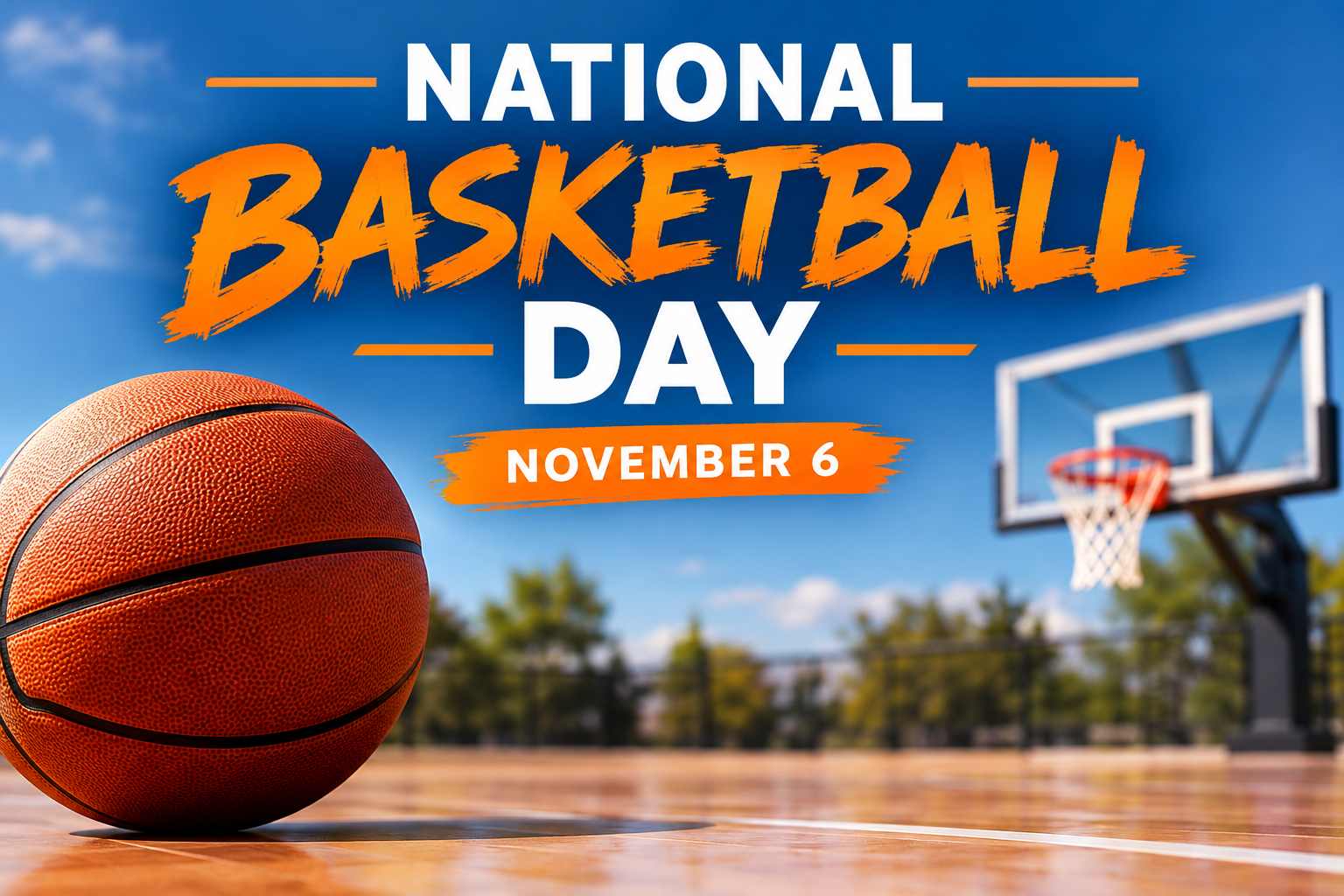
Basketball is more than just a sport. It is a game that brings communities together, inspires young athletes, creates unforgettable memories, and teaches valuable lessons about teamwork, determination, and perseverance.
National Basketball Day, observed on November 6 on some unofficial national-day calendars, is an opportunity to celebrate one of the world’s most popular sports. From neighborhood basketball courts to packed professional arenas, basketball has become a powerful symbol of competition, friendship, and opportunity.
Whether you enjoy shooting hoops in your driveway, cheering for your favorite NBA team, watching college basketball, or supporting young athletes at a local school, this celebration is about recognizing the impact basketball has had on generations of players and fans.
Today, we celebrate the athletes, coaches, fans, and communities that make basketball such an important part of our lives.
What Is National Basketball Day?
National Basketball Day is an informal observance dedicated to celebrating basketball and its influence on sports, entertainment, education, and communities around the world.
Unlike an official federal holiday, National Basketball Day does not come with government recognition or a day off from work. Instead, it provides basketball enthusiasts with an opportunity to appreciate the sport and participate in activities that celebrate its history and traditions.
Basketball has grown from a simple indoor activity into a worldwide phenomenon enjoyed by millions of people.
The game encourages physical fitness, teamwork, leadership, and healthy competition. It also provides opportunities for young people to develop confidence and build meaningful relationships.
One of the greatest things about basketball is its accessibility. You do not need an expensive facility or professional equipment to enjoy the game. A basketball, a hoop, and a little determination are often all it takes.
The History of Basketball: How It All Began
Basketball was invented in December 1891 by Dr. James Naismith, a Canadian physical education instructor working at the International YMCA Training School in Springfield, Massachusetts.
Naismith was challenged to develop an indoor activity that would keep students physically active during the cold winter months.
He wanted a game that required skill, movement, and cooperation while reducing the physical contact associated with other sports.
His solution was basketball.
The original game used a soccer ball and two peach baskets attached to an elevated surface. Players attempted to throw the ball into the opposing team’s basket to score points.
The first version of basketball featured nine players on each team and 13 original rules.
Unlike modern basketball, players initially could not move while holding the ball. Dribbling developed later as the game evolved.
The sport quickly became popular at YMCA facilities, schools, and colleges.
Over the following decades, basketball continued to grow, eventually becoming one of the most widely played sports in the world.
Important Milestones in Basketball History
Several significant moments helped transform basketball into the sport we know today.
-
1891: James Naismith invents basketball in Springfield, Massachusetts.
-
1892: The original 13 rules of basketball are published.
-
1936: Men’s basketball becomes an official Olympic medal sport at the Berlin Olympics.
-
1946: The Basketball Association of America is founded.
-
1949: The BAA merges with the National Basketball League to form the National Basketball Association (NBA).
-
1976: Women’s basketball makes its Olympic debut.
-
1979: The NBA introduces the three-point line.
-
1996: The Women’s National Basketball Association (WNBA) is established.
-
1997: The WNBA begins its inaugural season.
These milestones demonstrate how basketball has evolved from a recreational activity into an internationally recognized sport.
Why Basketball Is One of the Most Popular Sports in the World
Basketball’s popularity comes from its combination of speed, skill, excitement, and accessibility.
Unlike some sports that require large fields or specialized equipment, basketball can be played in relatively small spaces.
A driveway, neighborhood park, school gymnasium, or community recreation center can become a place where athletes develop their skills.
Basketball is also exciting to watch.
A game can change dramatically in just a few seconds. A perfectly timed steal, a spectacular dunk, or a last-second three-pointer can turn an ordinary matchup into an unforgettable experience.
Fans appreciate the athleticism, strategy, and creativity that make every game different.
However, basketball’s appeal extends beyond professional competition.
For many families, basketball is part of their traditions. Parents attend their children’s games, friends gather to watch their favorite teams, and communities support local athletes.
These shared experiences help explain why basketball continues to attract new generations of players and fans.
The Importance of Teamwork in Basketball
One of basketball’s greatest lessons is the importance of teamwork.
Although individual players can produce extraordinary performances, successful basketball teams depend on cooperation.
Players must communicate, understand their responsibilities, and trust one another.
A successful possession often involves several athletes working together.
One player makes a defensive stop. Another collects the rebound. A teammate delivers an accurate pass, allowing someone else to score.
Every contribution matters.
Basketball teaches athletes that personal accomplishments are important, but collective success often requires putting the team’s needs first.
These lessons extend beyond sports.
Teamwork, communication, patience, and accountability are valuable qualities in schools, workplaces, families, and communities.
A young athlete who learns to support teammates and accept constructive criticism may carry those skills throughout life.
How Basketball Benefits Physical Health
Basketball provides an enjoyable way to stay physically active.
The sport combines cardiovascular exercise, coordination, strength, and agility.
Players frequently run, jump, change direction, and react quickly to changing situations.
Regular participation can contribute to improved physical fitness and overall well-being.
1. Improves Cardiovascular Fitness
Basketball involves repeated periods of movement and physical activity.
Running up and down the court can strengthen cardiovascular endurance and help improve stamina.
2. Develops Coordination and Balance
Dribbling, passing, shooting, and defending require coordination between the hands, eyes, and feet.
Practicing these skills can improve balance and body control.
3. Builds Muscular Strength
Jumping, running, and changing direction engage multiple muscle groups.
Basketball particularly challenges the legs and core while also requiring upper-body coordination.
4. Encourages an Active Lifestyle
Basketball can make exercise feel more enjoyable because participants focus on playing rather than simply completing a workout.
This enjoyment may encourage people to remain physically active.
5. Supports Healthy Social Interaction
Playing basketball creates opportunities to meet people, develop friendships, and participate in group activities.
The social aspect can make physical activity more rewarding.
People of different ages and abilities can participate in modified basketball activities that match their fitness levels.
The Mental and Emotional Benefits of Basketball
Basketball can also positively influence mental and emotional well-being.
Physical activity is associated with improved mood, reduced stress, and better overall psychological health.
For many people, basketball provides a temporary escape from everyday responsibilities.
Stepping onto the court creates an opportunity to concentrate on the present moment.
Players focus on their movements, teammates, and the next play rather than the challenges waiting outside the gym.
Basketball can also help develop emotional resilience.
Athletes experience victories, defeats, mistakes, and unexpected challenges.
Learning to respond constructively to these experiences builds patience and perseverance.
A missed shot does not mean the game is over. A difficult first half does not prevent a comeback.
These experiences reinforce an important lesson: setbacks do not have to determine the final outcome.
Basketball Legends Who Changed the Game
Throughout basketball history, extraordinary athletes have inspired generations of players and fans.
Their accomplishments helped shape the sport and expand its popularity.
Michael Jordan
Michael Jordan became one of the most recognizable athletes in history.
His six NBA championships with the Chicago Bulls, competitive intensity, and spectacular performances helped basketball reach an enormous international audience.
Jordan’s influence extended beyond the court into fashion, entertainment, and popular culture.
Kobe Bryant
Kobe Bryant inspired countless athletes through his dedication, preparation, and determination.
His five NBA championships and commitment to improving his skills made him one of basketball’s most respected competitors.
His famous Mamba Mentality emphasized hard work, discipline, and continuous improvement.
LeBron James
LeBron James has influenced basketball through his versatility, longevity, leadership, and accomplishments.
His impact also extends into education, philanthropy, and community development.
Stephen Curry
Stephen Curry helped transform modern basketball through his extraordinary three-point shooting.
His success encouraged players and teams to place greater emphasis on long-range shooting, spacing, and offensive creativity.
Lisa Leslie
Lisa Leslie played an important role in establishing women’s professional basketball.
Her athletic accomplishments and leadership helped inspire young female athletes.
Diana Taurasi
Diana Taurasi became one of the most accomplished players in women’s basketball history.
Her scoring ability, competitive spirit, and sustained excellence helped elevate the visibility of women’s basketball.
These athletes represent only a small portion of the remarkable individuals who have contributed to basketball’s history.
The Growth of Women’s Basketball
Women’s basketball has experienced tremendous growth since the sport’s earliest years.
Women began playing basketball in the 1890s, shortly after the game was invented.
Over time, opportunities expanded through schools, colleges, international competitions, and professional leagues.
The creation of the WNBA in 1996 represented a significant milestone for women’s professional sports in the United States.
The league provided talented female athletes with a prominent professional platform.
Women’s college basketball has also played a major role in the sport’s development.
Programs across the country have built passionate fan bases and introduced audiences to exceptional athletes.
The increasing visibility of women’s basketball has encouraged more girls to participate in sports and pursue their athletic goals.
National Basketball Day is an excellent opportunity to recognize the achievements of female players, coaches, officials, and advocates who have helped advance the game.
How Basketball Brings Communities Together
Basketball courts often serve as gathering places for neighborhoods.
People from different backgrounds can come together through their shared interest in the game.
Community basketball programs provide opportunities for young people to stay active, develop friendships, and learn from positive role models.
Local coaches frequently do much more than teach basketball fundamentals.
They encourage academic achievement, promote responsible behavior, and help athletes build confidence.
Youth basketball leagues also bring families together.
Parents volunteer, organize events, transport players, and cheer from the sidelines.
These experiences create connections that extend beyond the basketball season.
For some young athletes, basketball becomes a source of stability, encouragement, and belonging.
A supportive coach or teammate can make a meaningful difference in someone’s life.
How to Celebrate National Basketball Day
There are many enjoyable ways to recognize National Basketball Day, whether you are an experienced player or simply enjoy watching the sport.
1. Play a Game of Basketball
Gather friends or family members for a friendly basketball game.
You can organize a full-court matchup, play three-on-three, or enjoy a simple game of H-O-R-S-E.
The goal is to have fun and appreciate the sport.
2. Watch Your Favorite Basketball Team
Spend time watching an NBA, WNBA, college, or local basketball game.
Invite friends or family members to join you and turn the experience into a basketball celebration.
3. Practice Your Basketball Skills
Take some time to improve your shooting, passing, or dribbling.
Even a short practice session can help develop confidence and coordination.
4. Support a Youth Basketball Program
Consider attending a local youth basketball game or supporting a community recreation program.
Young athletes benefit from encouragement and positive role models.
5. Learn About Basketball History
Explore the origins of basketball and the athletes who helped develop the sport.
Understanding basketball’s history can create a greater appreciation for the game.
6. Thank a Basketball Coach
Coaches invest significant time and energy into helping athletes improve.
National Basketball Day is an opportunity to recognize their dedication.
A simple thank-you message can mean a great deal.
7. Organize a Family Basketball Challenge
Create a friendly shooting competition with family members.
You might compete in free throws, three-point shooting, or creative trick shots.
Remember to keep the activity enjoyable for everyone.
8. Share Your Favorite Basketball Memory
Think about a memorable game, favorite player, or special basketball experience.
Sharing these memories can spark conversations and strengthen connections with fellow fans.
Fun and Interesting Basketball Facts
Basketball has a fascinating history filled with surprising details.
Here are several facts worth sharing on National Basketball Day.
-
The first basketball hoops were actual peach baskets.
-
Early basketball games used a soccer ball rather than a specially designed basketball.
-
Basketball originally featured nine players on each team.
-
The original game did not include the modern style of dribbling.
-
The standard NBA basketball hoop stands 10 feet above the playing surface.
-
A regulation NBA game consists of four 12-minute quarters.
-
Most international basketball games under FIBA rules use four 10-minute quarters.
-
The NBA’s three-point line was introduced for the 1979–80 season.
-
Basketball became an Olympic medal sport for men in 1936 and women in 1976.
-
The Naismith Memorial Basketball Hall of Fame is located in Springfield, Massachusetts.
These facts demonstrate how much basketball has changed since its invention more than a century ago.
Why Youth Basketball Matters
Youth basketball plays an important role in helping children develop physical, emotional, and social skills.
Participating in organized sports can introduce children to responsibility, discipline, and cooperation.
Players learn the importance of attending practices, listening to coaches, and supporting teammates.
They also discover that improvement requires consistent effort.
Not every child will become a professional basketball player, but the lessons learned through participation can remain valuable throughout adulthood.
Youth sports can also encourage healthy habits and provide opportunities for positive social interaction.
Perhaps most importantly, basketball gives children a place to belong.
Being part of a team can help young athletes develop friendships and feel connected to their communities.
Parents and coaches can support this development by emphasizing effort, enjoyment, respect, and personal growth rather than focusing exclusively on winning.
Basketball Teaches Lessons That Go Beyond the Court
Basketball offers powerful lessons about life.
Every player eventually misses a shot, makes a mistake, or experiences a disappointing loss.
What matters is how they respond.
Successful athletes learn to keep practicing, remain focused, and support their teammates.
The same principles apply to everyday challenges.
Life does not always go according to plan. Sometimes we work hard and still fall short of our expectations.
Basketball reminds us that improvement takes time and that perseverance matters.
It also teaches us to recognize the contributions of others.
A player who scores the winning basket often receives the attention, but that moment may have been made possible by teammates who defended, passed, and created the opportunity.
Success is rarely achieved entirely alone.
Basketball encourages us to appreciate the people who help us along the way.
The Future of Basketball
Basketball continues to evolve as technology, training methods, and international participation influence the game.
Modern athletes benefit from advanced performance analysis, improved training programs, and greater access to basketball education.
Professional teams increasingly use statistics and analytics to evaluate strategies and player performance.
The international growth of basketball has also introduced talented athletes from countries around the world to major professional leagues.
At the same time, grassroots basketball remains essential.
Neighborhood courts, school programs, and youth leagues continue to introduce new generations to the sport.
Women’s basketball, adaptive basketball, and community programs are expanding opportunities for more people to participate.
The future of basketball will be shaped not only by professional stars but also by the coaches, volunteers, families, and young athletes who keep the game alive.
Why National Basketball Day Is Worth Celebrating
National Basketball Day represents more than an opportunity to recognize a popular sport.
It celebrates the relationships, memories, and life lessons that basketball creates.
For some people, basketball brings back childhood memories of playing outside with friends until the sun went down.
For others, it recalls attending games with parents, watching a favorite team win a championship, or celebrating a child’s first basket.
Basketball creates moments that people remember for years.
The sport also demonstrates how shared interests can bring people together.
Individuals who might otherwise have little in common can connect through their love of basketball.
A simple conversation about a favorite player or memorable game can lead to a lasting friendship.
These connections are part of what makes basketball special.
Final Thoughts: Celebrating the Love of Basketball
National Basketball Day is a reminder that some of life’s greatest lessons can be learned through sports.
Basketball teaches teamwork, patience, dedication, leadership, and resilience.
It brings families together, strengthens communities, and gives athletes opportunities to challenge themselves.
From the first peach baskets in 1891 to today’s professional arenas and neighborhood courts, basketball has developed into a sport that continues to inspire people around the world.
You do not have to be a professional athlete to appreciate its impact.
Whether you play, coach, volunteer, or cheer from the sidelines, you are part of the basketball community.
This National Basketball Day, take a moment to appreciate the game, the people who play it, and the memories it creates.
Because basketball is not just about the points on the scoreboard. It is about the teamwork, friendships, determination, and unforgettable moments that happen along the way.
What is your favorite basketball memory, and which basketball player or team has inspired you the most?


Leave a Reply